Reviewed · KILIMANJARO CLIMBS
Kilimanjaro Climbing 5 days Marangu route
Kilimanjaro in five days is a real test. This Marangu route run is built around hut nights, a clear step-by-step plan, and a friendly team that climbers repeatedly credit for getting them through the tough parts, including summit night and the cold early hours. I like that you are supported by named guides such as Victor, Tyson, and Thomas, plus chefs known for strong food and care.
Two things I really like: the way the trek is paced stage by stage, and the practical food setup (including accommodations for special diets like vegan meals). One heads-up: don’t assume everything park-related is in the base price, because some people reported big last-minute additions once they learned the Kilimanjaro National Park fee for their specific route.
In This Review
- Key highlights before you lace up
- The Marangu route, five days, and what that timing really means
- Day 1: From Marangu Gate into the rainforest to Mandara Hut
- Day 2: Mandara to Horombo Hut, when the trail shifts into moorland
- Day 3: Horombo to Kibo Hut, two paths and the long push upward
- Day 4: Summit night to Uhuru Peak, with a midnight start
- Day 5: Horombo back to the park gate through forest
- Price and logistics: what $900 gets you, and what you must confirm
- Guides, chefs, and porters: the support you feel most on hard days
- What to pack and how to use the five days wisely
- Who this climb suits best, and who should think twice
- Should you book this Kilimanjaro Marangu climb?
- FAQ
- What route and summit does this 5-day climb include?
- What are the daily stops on the trek?
- How does summit night timing work?
- Is pickup included, and where does it start?
- What does the tour price include?
- What costs are not included?
- What is the cancellation window?
Key highlights before you lace up
- Uhuru Peak summit night pacing with a wake-up around 11pm and a midnight start for the final push
- Hut-based camping at Mandara, Horombo, and Kibo, which keeps nights organized and sheltered
- Guides with real rapport, with multiple climbs praising Victor, Tyson, and Thomas by name
- Food that matters at altitude, including large portions, purified drinking water, and diet support like vegan meals
- Porter support and ethics, with explicit mention of fair treatment and teams carrying heavy loads with hot meals
- Big-picture logistics, including Moshi pickup and an overall group cap of 50
The Marangu route, five days, and what that timing really means
A five-day Kilimanjaro climb is short enough to feel intense, but it also gives you structure. The plan climbs in altitude steps over several days: rainforest up to Mandara Hut, then to Horombo Hut, then toward Kibo Hut, before the summit push that starts in the late-night cold.
On this route, each day has a job. Day 1 is about getting moving from Marangu Gate at around 1,600m into the forest and up to Mandara Hut at about 2,700m. Day 2 continues higher to Horombo Hut at about 3,700m, and Day 4 is the summit night. That rhythm helps you know what to focus on, rather than guessing.
I also like that the offer is built around a professional support team: mountain guides, porters, and a cook. You are not expected to manage camp setup, cooking, or gear handling. Multiple reviews specifically mention that the crew handled tents and logistics so climbers could concentrate on their breathing, legs, and headlamp timing.
More Kilimanjaro climbs:
- 7 Days Kilimanjaro via Machame route affordable price
★ 5.0 · 110 reviews - Kilimanjaro Airport taxi to/from Moshi town/Arusha town
★ 5.0 · 60 reviews - 6 Days Climbing Mount Kilimanjaro Machame Route
★ 5.0 · 40 reviews
Day 1: From Marangu Gate into the rainforest to Mandara Hut
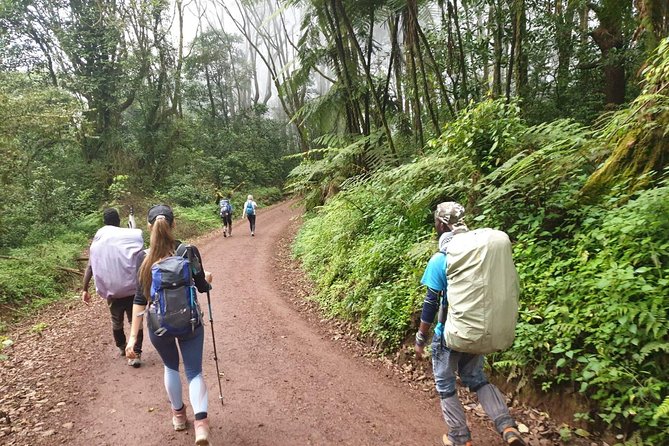
You start at the Marangu Gate, roughly 1,600m, and the trail climbs through rainforest. It is a gentler day by design, taking about 4 hours at a steady pace to reach Mandara Hut (around 2,700m).
Why this first day matters: your body is still adjusting from Tanzania lowlands life to altitude life. The forest helps with comfort, but you still feel the climb. This is the day to keep your effort controlled, because you want to arrive at Mandara with enough energy to sleep, eat, and get ready for a higher day.
What makes this day feel “organized” in a good way is that everything is carried for you. The itinerary is clear: you are taken to the gate, you walk, you end at the hut. One of the reviews also mentions a surprise level of comfort in the huts and consistently good food, and Day 1 is where you first feel whether that is true.
Practical tip from how these climbs usually go, and what your schedule suggests: keep your clothing layers ready early. You might start warm in the forest, then cool off as you near camp.
Day 2: Mandara to Horombo Hut, when the trail shifts into moorland
On Day 2, you leave Mandara around 9 o’clock. The first part continues through the rain forest, then the route emerges into alpine moorland. From there, it is a longer hike, about 7 hours, to Horombo Hut at around 3,700m.
This is where you can feel the altitude more clearly. The moorland tends to be colder and often feels more open, so wind and temperature can change how hard the same pace feels. The itinerary’s half-day rainforest and half-day moorland split is useful, because you can mentally plan for that shift.
You will likely rely on the rhythm of breaks, plus the steady pace your guide sets. Reviews repeatedly praise named guides for moral and physical support, and that usually shows up on the second day, when the novelty wears off and the altitude starts doing its thing.
Also check what you packed for a hut night, not just for hiking. Horombo is higher, so your “awake comfort” matters. You will have dinner and breakfast included, and purified drinking water is part of the deal, but you still need to manage how you feel when you are resting.
Day 3: Horombo to Kibo Hut, two paths and the long push upward
Day 3 moves you from Horombo Hut (about 3,700m) toward Kibo Hut. The plan notes two paths from Horombo to Kibo: an upper route that is older and steeper uphill from Horombo to the foot of Mawenzi, followed by a descent to the saddle.
Even if you do not choose the route yourself, it helps to know that there are different options. That means you are not walking blindly into one fixed pattern, and your guide team can match the plan to conditions and your group.
Why this day can be mentally hard: Kibo is the “base” for summit night. Getting there does not mean you are done, it means you are close enough that the next day becomes your life focus. This is also the day where your body often decides whether it is coping well.
Reviews are consistent about how guides keep people moving through fatigue. The support gets credited directly to people like Victor and Thomas, with mentions of help that is both moral and physical. That matters here, because when you are tired and the sky stays cold, you need someone to keep your effort steady.
A good, practical mindset for Day 3: eat and hydrate on schedule, not when you feel like it. Your day timing is built around huts and meals, so trust the routine.
A few more Kilimanjaro trips to compare
- Great Migration Safari In Tanzania
★ 5.0 · 71 reviews - 6 Days Tanzania Classic Safari
★ 5.0 · 52 reviews - 8 Days Kilimanjaro Hike via Lemosho Route
★ 5.0 · 39 reviews - 7-Day Machame Route Kilimajaro
★ 5.0 · 28 reviews
Day 4: Summit night to Uhuru Peak, with a midnight start
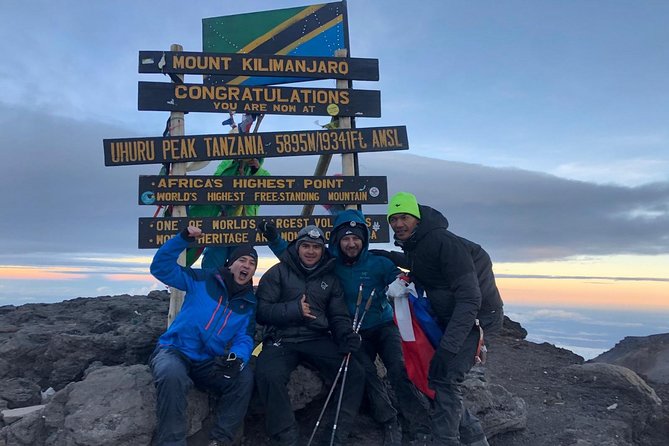
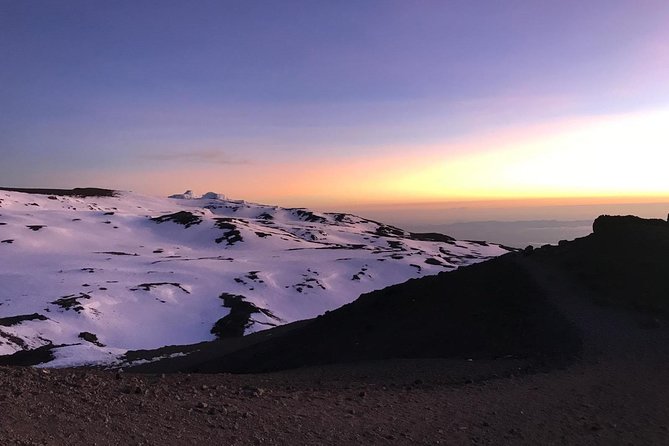
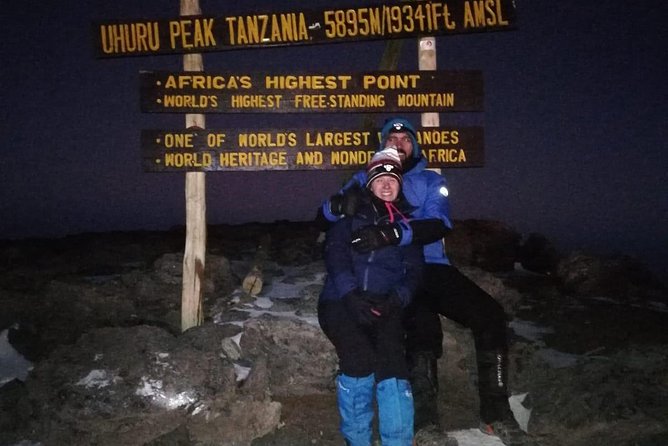
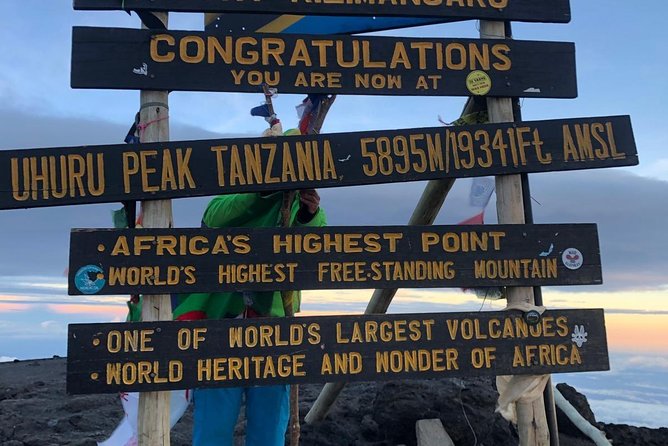
Day 4 is the big one. You are woken around 11pm, dressed in warm clothing, given a hot drink, and then set off at about midnight toward the summit. After reaching Uhuru Peak, you descend back to Horombo Hut.
That midnight timing is not a small detail. It means you spend hours moving in cold, low visibility, and often with a strong focus on footing. It is also why having the right layers matters. The plan explicitly calls for dressing in all warm clothing at the wake-up.
What I like about how this climb is laid out is that it treats the summit night as part of a process, not a sudden leap. You get a clear start time, you get a hot drink, and you move as a team with professional guides.
Reviews mention that porters and guides carry heavy loads and still show warmth, including hot meals each day. On summit night, that practical service becomes emotional support too. People are not just “there,” they are actively helping the group function.
One more thing: after the summit, you descend to Horombo. That matters for recovery. Many people fear the downhill more than the uphill, but it is also where you regain control over your breathing and body temperature.
Day 5: Horombo back to the park gate through forest
On Day 5, you descend from Horombo Hut to Mandara Hut in about 3 hours, then continue down through forest to Marangu Gate, another 2 hours. That means your final day is mostly about controlled downhill effort and finishing strong.
This is where your legs may feel like they belong to someone else. Descents can be tough on knees and hips, especially after summit night. The itinerary gives you a structured descent, and that is a real benefit because you are less likely to wander or lose time.
The final forest section has a payoff feeling. You started in rainforest on Day 1, and you close the loop the same way. When you reach the gate area, you have that “it’s really over” sensation, but it happens at the end of a still-demanding walk.
I also like that the day ends back at the meeting point area. You do not get dropped into chaos. You have a defined end, and you can plan your next step.
Price and logistics: what $900 gets you, and what you must confirm
This climb is listed at $900 per person for a five-day Mount Kilimanjaro Marangu route. In plain terms, that price covers your core climbing support: guides, porters, cook salaries, hut nights, and meals (breakfast, lunch, dinner), plus purified drinking water.
Where value can get messy is what is not included. You will likely pay a Tanzania visa (listed as $50 per person on arrival), plus the Kilimanjaro National Park fee, which is not included. One review described a last-day message that added $750 per person for park fees, and even though your amount could differ, the lesson is the same.
So here is my practical advice: before you pay the final balance, confirm the exact park fee for your route and dates. Ask what the total will be including visa and park charges, so there are no surprises when you are already at the start line.
Also check the start logistics carefully. The offer mentions pickup from your hotel in Moshi, but the meeting point listed for the experience begins at Kilimanjaro International Airport area with a start time of 8:00am. If you are flying in, you will want to make sure the pickup time and where you are expected to meet actually match your travel plan.
Guides, chefs, and porters: the support you feel most on hard days
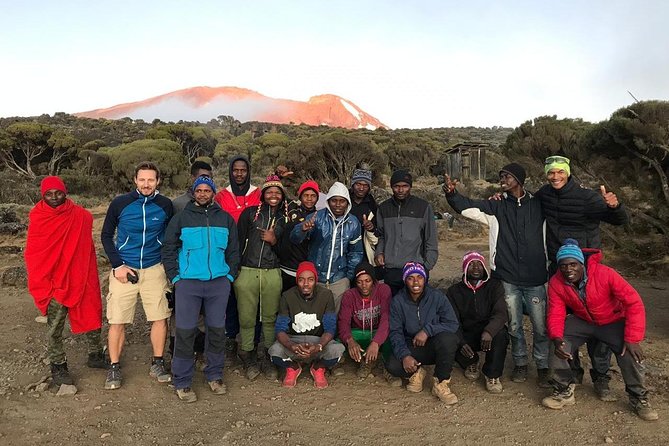
This is one of the best-supported climbs in the way that counts. Multiple reviews call out the guide team as professional, friendly, and well organized, with specific names showing up again and again: Victor, Tyson, and Thomas.
You can think of your guide as three roles in one. They set pace. They manage safety. They manage your thinking when your body is negotiating with reality. One review specifically praises moral and physical support from Victor, and another credits Thomas with organizing every little detail for the summit push and taking an entire group of 12 up.
Then there is the food side. The included meals are not a small perk. At altitude, eating and drinking regularly helps you keep going. Reviews mention that the chefs handled dietary needs, including vegan meals, and that certain chefs like Joseph were especially impressive. If food is the main comfort you have in a cold hut, it is a big deal.
Porters are another major part of the experience. The included info explicitly mentions fair and ethical treatment of porters, and reviews repeatedly describe porters carrying heavy loads with a smile, plus keeping hot meals coming each day. That is hard work, and it shows in whether your group stays functional.
If you want the simplest way to judge this company, it is this: you should not be worrying about tents, cooking, or your gear. When that stuff is handled smoothly, you spend your energy where it matters.
What to pack and how to use the five days wisely
The trek requires warm clothing for summit night. The itinerary explicitly says you are dressed in all warm clothing when you are woken at 11pm, so plan for that cold window rather than packing only for daytime.
Your daily routine is mostly hikes plus meals at altitude huts. So your packing list is less about fancy gear and more about comfort and consistency. You will likely appreciate layers you can adjust during the forest-to-moorland shift on Day 2 and the colder night temperatures on summit day.
Some climbers also mention comfort touches like a sleeping bag and lounge clothes for downtime. Even if you bring your own comfort items, it is worth knowing that the experience seems set up to keep you calmer at camp.
How to pace yourself over five days:
- Keep Day 1 and Day 2 effort controlled, even when you feel okay.
- Eat on schedule, especially Day 3 when you are building toward Kibo.
- Save your focus for the midnight start on Day 4, meaning layers, headlamp readiness, and calm breathing.
- On Day 5, treat the descent like training, not punishment.
And one non-negotiable rule: altitude does not care about your confidence. You still need to follow guide advice and move at the pace your guide sets.
Who this climb suits best, and who should think twice
This is for people with at least moderate physical fitness who are okay with a five-day effort that includes a midnight summit attempt. The plan also runs with a group cap of up to 50 travelers, so you are not in a tiny private bubble, but you also are not stuck in a chaotic crowd either.
You will likely enjoy this style of climb if you want:
- A structured schedule with hut nights and clear daily milestones
- A strong support team that handles camp setup and meals
- A focus on getting to Uhuru Peak with experienced guidance and porter support
You might think twice if you hate cold nights and long, early starts. Summit night begins with a wake-up around 11pm and a midnight start, which is demanding even for fit hikers. Also, if you strongly dislike paying separate park fees and visa costs, make sure you budget fully before you commit.
Finally, if you have dietary restrictions, the reviews suggest the chefs can accommodate, including vegan diets. Still, you should confirm details directly so your needs are handled exactly.
Should you book this Kilimanjaro Marangu climb?
If you want a five-day climb that is built around hut nights, guided support, and steady meals, I think this one is worth serious consideration. The repeated praise for guides like Victor, Tyson, and Thomas, plus chef Joseph and supportive porters, points to a team that knows how to run a smooth summit journey.
Book it if you:
- Want a clear five-day structure to Uhuru Peak
- Appreciate professional handling of guides, porters, tents, and meals
- Are willing to confirm the Kilimanjaro National Park fee amount and total costs up front
I would pause before booking if you are worried about last-minute charges, because the park fee is the one wildcard that can change your budget. The smartest move is to verify all mandatory fees and your pickup timing early, so your money matches your expectations.
If you do that homework, this climb has the ingredients that matter at 5,000m plus: competent people, dependable routines, and a team that helps you keep your head when the mountain gets loud.
FAQ
What route and summit does this 5-day climb include?
This is a Kilimanjaro 5-day climb using the Marangu route. The plan is to depart from Marangu, climb up to Uhuru Peak, and then descend back down toward the park gate.
What are the daily stops on the trek?
The schedule runs from Marangu Gate to Mandara Hut on day 1, Mandara to Horombo Hut on day 2, Horombo to Kibo Hut on day 3, summit then descent to Horombo on day 4, and finally Horombo to Mandara Hut, then down to Marangu Gate on day 5.
How does summit night timing work?
You are woken at about 11pm, given a hot drink and dressed in warm clothing, then you start the summit push around midnight.
Is pickup included, and where does it start?
Pickup is mentioned from your hotel in Moshi. The listed start time is 8:00am, and the meeting point is Kilimanjaro International Airport area. Double-check your exact pickup and meeting instructions before departure.
What does the tour price include?
Included are breakfast, lunch, and dinner, all mountain nights accommodation, professional guides, porters and cook salaries, large portions of fresh nutritious food, and clean purified drinking water. Fair and ethical treatment of porters is also included.
What costs are not included?
Not included are alcoholic beverages, Tanzania visa fees (listed as $50 per person on arrival), personal expenses, optional tours, tips and personal items, and the Kilimanjaro National Park fee.
What is the cancellation window?
Free cancellation is available up to 24 hours in advance for a full refund. Changes within 24 hours of the start time are not accepted, and the experience requires good weather, with an alternate date or a full refund if canceled due to poor weather.
Just posted around Kilimanjaro
- 5 days Serengeti Wildebeest Migration Safari★ 5.0 · 3 reviews
- Mount Kilimanjaro 6 days – Machame route★ 4.0 · 5 reviews
- Lemosho Route★ 5.0 · 21 reviews
- 6 Days Machame Route Kilimanjaro Trekking★ 5.0 · 13 reviews
- Mount Kilimanjaro 7 Days – Machame Route★ 5.0 · 5 reviews
- Amazing 4 Days Safari 3 Nights: Tarangire, Ngorongoro, Serengeti★ 5.0 · 6 reviews
- 9 Days – Best of Tanzania Safari★ 5.0 · 4 reviews
- Tanzania Safari and Kilimanjaro Climb Multi-Day Experience★ 5.0 · 3 reviews
Kilimanjaro Climbs, compared.
8-Day Small-group Lemosho Kilimanjaro Summit Trekking
Read our review →
5 Days Best of Tanzania Luxury Safari Northern Circuit
Read our review →
Climbing Kilimanjaro through 7 days Machame Route
Read our review →