Reviewed · KILIMANJARO CLIMBS
6 Days Climbing Mount Kilimanjaro Machame Route
Climbing Kilimanjaro in six days is intense, but doable. This Machame-route plan is built around steady altitude gains, real acclimatization, and the kind of early-morning summit push that makes the photos worth the pain. You start and finish in the Kilimanjaro region, with Moshi as your home base, and you move through classic camp stops on the mountain.
I like that the day structure is clear and practical, with hiking times and distances laid out, plus full-board meals on multiple days so you are not scrambling for food. I also like that you get the basics handled for you, including camping gear like tents and mattresses, and you are picked up and dropped off so travel days feel less stressful.
One consideration: even with six days, you are still hiking high altitude for long stretches, and the itinerary includes some steep, uneven sections plus mud risk on the lower and final days. If you do not have decent fitness and stamina, this tour will feel harder than the nice camp names make it sound.
In This Review
- Key highlights of this 6-day Machame Kilimanjaro climb
- Why the Machame Route is a strong choice for 6 days
- Price and value: what $2,200 covers (and what it does not)
- Day 1: Moshi to Machame Camp through montane forest trails
- Day 2: Out of the rainforest to moorland and Shira Cave Camp
- Day 3: Lava Tower views, Great Barranco descent, and semi-desert air
- Day 4: Barranco Wall climb to Barafu Camp for the summit push
- Day 5: Summit sunrise toward Uhuru Peak, then down to Mweka Camp
- Day 6: Mweka Park Gate certificates and the final forest descent
- Gear, pace, and altitude reality check (the stuff that keeps you comfortable)
- Food, equipment, and the team you rely on each day
- Does this Machame plan match your style?
- Should you book this 6-day Machame Kilimanjaro climb?
- FAQ
- Where does this Kilimanjaro Machame tour start?
- What are the main camp stops on the Machame route?
- How long are the hiking days during the 6-day itinerary?
- Is the summit attempt on Day 5?
- What meals are included?
- What camping gear is included?
- Are park fees and admission tickets included?
- What costs are not included?
Key highlights of this 6-day Machame Kilimanjaro climb
- Machame Route pacing with acclimatization time and a classic circuit feel across multiple habitats
- Full-board camp days on Shira Cave Camp, Barranco Camp, and Barafu Camp, plus breakfast on summit-to-descent day
- A summit sunrise plan that starts early from Barafu toward Uhuru Peak (5895 m)
- Straightforward logistics from Moshi with private transport and a drive back after certificate collection
- Camp-to-camp variety, from rainforest trails to moorland and semi-desert sections
- Gear tips for wet trail conditions, especially gaiters and trekking poles during muddy parts
Why the Machame Route is a strong choice for 6 days
The Machame Route is popular for a reason: it gives you a good mix of scenery and altitude movement without wasting days. For a six-day schedule, that matters. You are not just grinding upward every day, you are also getting periods where your body can adjust.
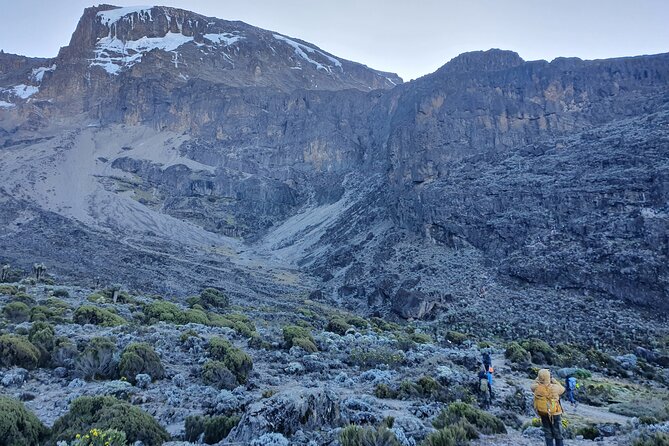
This plan follows a classic rhythm. You start in the montane forest around Machame Camp, then you gradually climb into moorland and higher zones, and later you transition into semi-desert and alpine desert. That habitat change is not just for show, it usually comes with different trail textures and temperatures, so your clothing and pacing need to adapt.
One more Machame advantage for your planning: the itinerary sets you up for the big summit attempt from Barafu on Day 5. If your goal is the summit, this is a route structure that keeps the timeline tight enough to feel like a real expedition, but not so rushed that acclimatization gets ignored.
More Kilimanjaro climbs:
- 7 Days Kilimanjaro via Machame route affordable price
★ 5.0 · 110 reviews - Kilimanjaro Airport taxi to/from Moshi town/Arusha town
★ 5.0 · 60 reviews - 8 Days Kilimanjaro Hike via Lemosho Route
★ 5.0 · 39 reviews
Price and value: what $2,200 covers (and what it does not)
At $2,200 per person for a 6-day climb, the price is best judged by what is included. Here, a lot of the expensive and annoying parts are handled for you.
What you get included:
- Camping equipment such as tents and mattresses
- Private transportation
- Pick up and drop off Airport
- Accommodation before hiking and after hiking
- Meals listed as lunch (5), dinner (5), and breakfast (5)
- All fees and taxes
- Mobile ticket
What is not included:
- Visa
- Medical insurance
- Laundry services
- Tips to mountain crews
- International or domestic flights
- Personal items
That “all fees and taxes” line is the kind of detail that saves you from last-minute surprises. You still need to budget for your own visa and travel logistics, but the on-mountain costs and core travel services are covered.
Is it a bargain? Not exactly. But compared with climbs where you later learn you also have to pay for guide, camp, and core logistics separately, this price looks like a more complete package.
Day 1: Moshi to Machame Camp through montane forest trails
Your day starts with a drive from Moshi to the Kilimanjaro National Park Gate, about 50 minutes. Then you move from the gate onto a rainforest trail that climbs via a winding ridge. Lower down, the trail can be muddy and slippery, so this is the day to get your footwork and your gear habits right.
You will hike roughly 11 km with 5 to 7 hours on Day 1. You end at Machame Camp (with the itinerary listing a wide elevation band, but you will clearly gain a lot by the time you camp).
What I’d expect to matter here:
- The forest starts warmer and wetter, so you will likely sweat before altitude makes you breathe faster.
- Mud management is real. This is where gaiters and trekking poles help with confidence and balance.
If you tend to start fast, resist it. Day 1 feels “easy” compared to summit day, but it is also your first altitude test. Going too hard here can make tomorrow’s breathing feel worse.
Day 2: Out of the rainforest to moorland and Shira Cave Camp
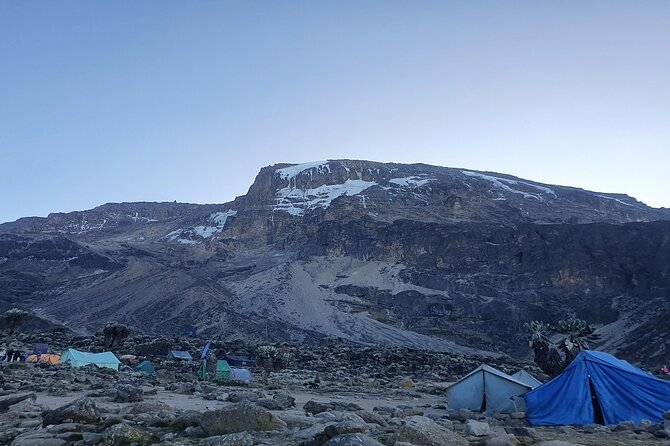
Day 2 is a big transition day. After breakfast, you leave the glades of the rainforest and climb onto an ascending path. You cross valleys and move along steep, rocky ridges, then continue through a westward river gorge section to reach Shira Cave Camp.
Your walking is listed around 9 km and 4 to 6 hours. The habitat shift is important: you are moving into moorland, and the air can feel cooler and drier than Day 1.
This day’s practical challenge is footing. Rocky sections and steep ridges punish sloppy pacing. Trekking poles are still your friend, and your hydration matters because the air can feel less wet but the effort is still high.
Value tip: because you are going higher into a different habitat, this is one of the days where acclimatization makes a real difference. A good operator uses this day to balance progress with body control, and the itinerary’s structure reflects that.
A few more Kilimanjaro trips to compare
- Great Migration Safari In Tanzania
★ 5.0 · 71 reviews - 6 Days Tanzania Classic Safari
★ 5.0 · 52 reviews - 8 Days Great Wildebeest Migration – Mara River Crossing
★ 5.0 · 28 reviews - 7-Day Machame Route Kilimajaro
★ 5.0 · 28 reviews
Day 3: Lava Tower views, Great Barranco descent, and semi-desert air
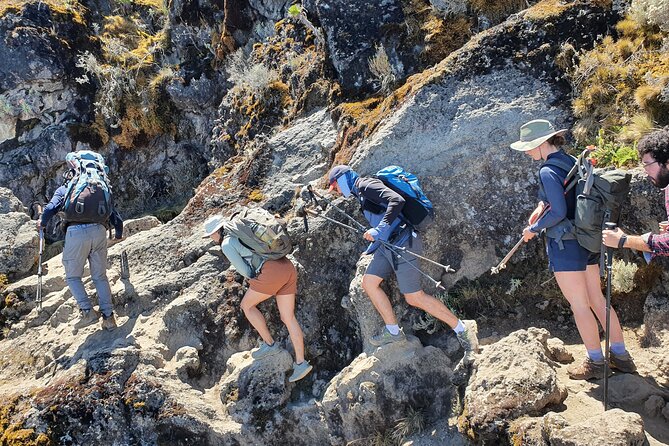
Day 3 is the day that people usually remember for views and for how the trail feels. You go from Shira Camp to Barranco Camp, with a listed walk of 15 km and 5 to 7 hours.
The route describes a gentle ascent with panoramic views, then a traverse on the southwest side passing beneath features like the Lava Tower and sections linked to the Western Breach. You take a hot lunch at the bottom of the Lava Tower area around 4,600 m, then you descend into the Great Barranco Valley, camping at 3,950 m.
Two things make this day special:
- You get a sense of the mountain’s scale as the route opens up beyond forest.
- The Big Barranco Valley descent is a different kind of challenge. Even when the effort is steady, descending can burn your quads and shake your pace if you are not careful.
This is also a good day to practice your summit-day discipline in miniature: eat when you can, drink often, and do not race the person in front of you.
Day 4: Barranco Wall climb to Barafu Camp for the summit push
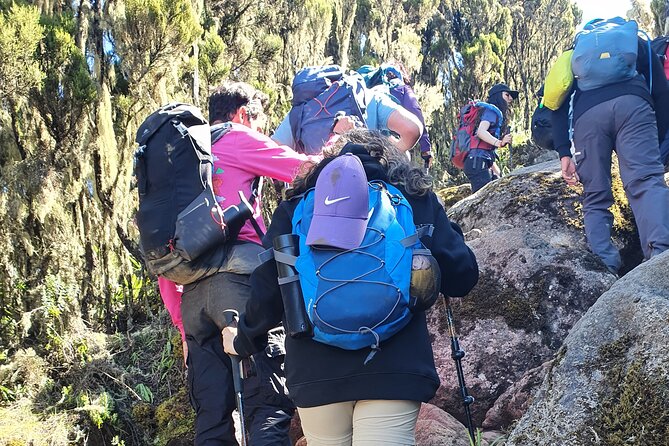
If Day 3 is about views, Day 4 is about positioning. You hike from Barranco Camp to Barafu Camp, roughly 9 km with an estimated 6 to 8 hours.
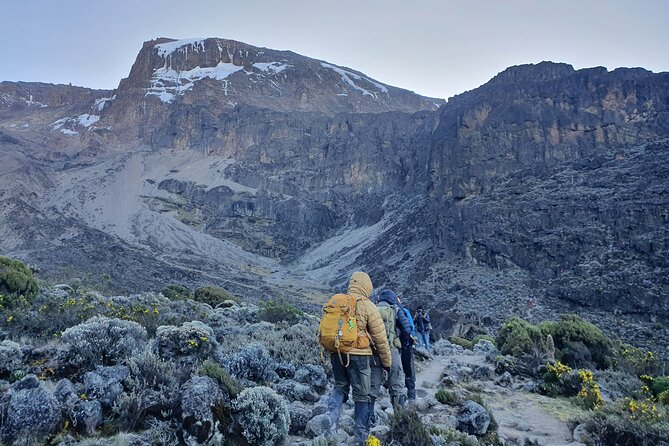
The itinerary points out the key elements: a steep climb up the Barranco Wall and then a route through the Karanga Valley before connecting with the Mweka Trail junction area and continuing up to Barafu Camp.
You camp at Barafu with the text listing an alpine desert habitat. The air can feel harsher here. The trail is often more exposed, and your pace may need to get slower than you want.
Why Day 4 matters for your summit odds:
- You are gaining altitude toward a launch point for an overnight or very early summit attempt.
- Your energy management becomes everything. This is not a day to prove you are the strongest person in the group.
Also, expect that you will be thinking about the next morning long before you reach camp. Barafu is where you switch from sightseeing mode to mission mode.
Day 5: Summit sunrise toward Uhuru Peak, then down to Mweka Camp
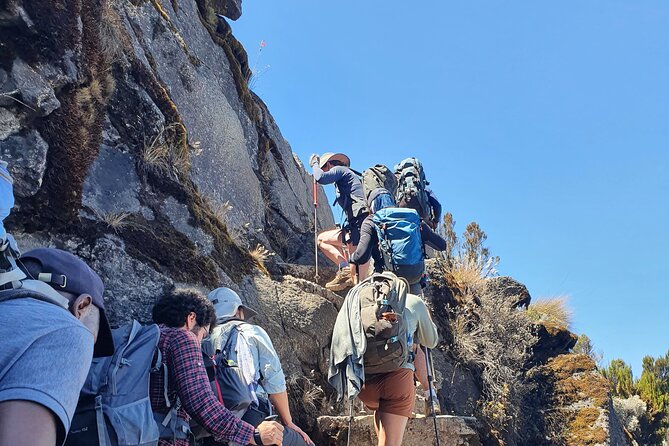
Day 5 is the big one. You leave Barafu Camp early and make your way toward Uhuru Peak at 5,895 m. The route description calls out a sunrise experience over Africa, and that is the whole point of the early start.
The itinerary lists a tough day by distance and time:
- 6 km up and 13 km down
- 5 to 7 hours up
- 5 to 6 hours down
You finish by descending to Mweka Camp around 3,090 m.
What you should know before you mentally commit:
- Summit day is not just “hiking harder.” It is also cold, sometimes windy, and usually harder on your breathing than you expect if you have not acclimatized well.
- The descent is long and can be more exhausting than the climb for your knees and ankles.
This is also where the operator’s experience shows. A solid team helps keep your pace steady and your timing realistic, especially during the final grind where people often want to speed up.
Day 6: Mweka Park Gate certificates and the final forest descent
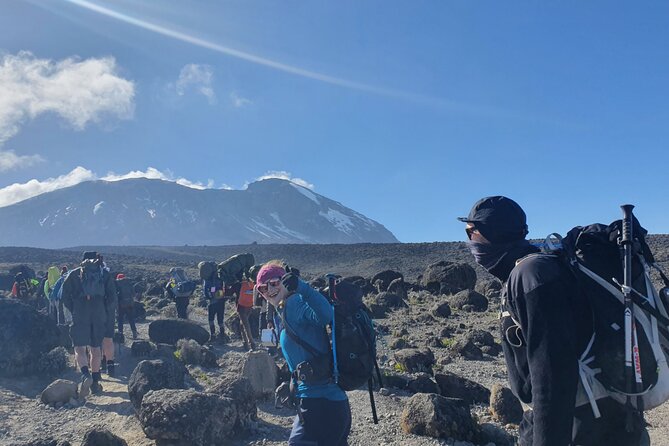
Day 6 is shorter on paper, but it still deserves respect. After breakfast, you descend down to Mweka Park Gate for your summit certificates. Then a drive brings you back to your hotel in Arusha or Moshi.
The hiking on Day 6 is listed as about 10 km with 3 to 4 hours walking, in a forest habitat. The notes call out that lower elevations can be wet and muddy, and that is not unusual after a summit day and big temperature swings.
Packing and comfort tips you should take seriously here:
- Bring rain gear and expect wet ground.
- Gaiters and trekking poles can still help on muddy sections.
- Shorts and T-shirts might be enough for the lower part, but keep warmer layers available since you can still be cold early in the day.
Once you collect certificates, the “done” feeling hits fast. Then you get the drive back and finally trade altitude breathing for regular air.
Gear, pace, and altitude reality check (the stuff that keeps you comfortable)
You are climbing a real mountain at real altitude. Even the best route does not change physics, so you need a plan for your body.
From what’s built into this itinerary, here is the comfort math:
- Mud risk shows up early (Day 1) and again on the lower descent (Day 6).
- Trail conditions shift from forest to rocky ridges to exposed alpine desert, so footwear and layers must handle changing ground and weather.
- Summit day uses early hours, and that means cold management and pacing discipline.
You should consider these practical items because the plan itself points them out:
- Gaiters for muddy stretches and grit
- Trekking poles for steep sections and descents
- Rain gear plus some warmer clothing for temperature swings
- Good hiking footwear with traction for rocky, slippery moments
Training advice without overcomplicating it: aim for steady uphill walking and spend time on your legs so Day 4 and Day 5 do not feel like a betrayal. If you are strong on stairs, that helps. If you have never hiked with a pack before, you might find Day 3 and Day 4 feel longer than expected.
Food, equipment, and the team you rely on each day
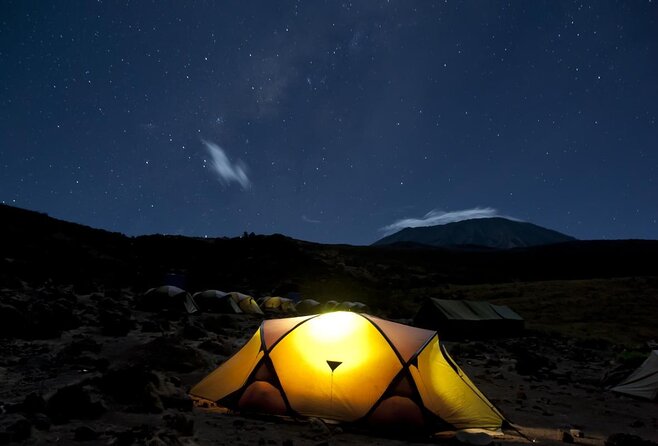
This climb is camp-based, not lodge-based. That means you depend on your crew for shelter setup, cooking, and the day-to-day rhythm.
The included equipment list includes tents and mattresses, which is huge for comfort. It also means you do not have to travel with bulky camping gear.
Meals are listed as breakfast, lunch, and dinner across the program. The itinerary also specifically calls out full-board at key camps: Shira Cave Camp, Barranco Camp, and Barafu Camp, with breakfast (B) on Day 6.
In the feedback for Eddy Tours and Safaris, I saw repeated praise around service quality and organization, and I also saw staff names tied to Kilimanjaro experiences, including Thomas as a guide, Chef Joseph for food, and Waiter John for service. I also saw January credited as a guide and Edwin credited as an assistant in a Kilimanjaro climb. You should not assume those exact people will be on your date, but it does tell you what the operator values, good meals and a steady, supportive team.
For you, that matters because food and warmth are not luxuries on Kilimanjaro. They are part of acclimatization and decision-making. When your body wants to slow down or rest, you need to still have fuel and comfort.
Does this Machame plan match your style?
This tour fits people who want a structured climbing challenge with a known route and a real sense of accomplishment. You’ll enjoy it most if you:
- can handle multi-hour hikes with elevation
- like clear daily goals and camp-based travel
- want sunrise summit energy rather than a purely casual trek
It might feel like too much if you are:
- expecting a flat walk with frequent breaks
- planning this without having trained for sustained uphill effort
- very sensitive to cold or wet weather
Also note the tour is described as private, meaning only your group participates. That can be a big deal if you prefer your own pacing instead of being stuck with strangers.
Should you book this 6-day Machame Kilimanjaro climb?
If you want the classic Machame experience on a six-day timeline, this tour looks like a solid choice. The biggest selling points for value are the included camp equipment, the listed meal plan, and the fact that core fees and taxes are covered. The summit plan is clear, and the route pacing through rainforest, moorland, and higher zones is built for acclimatization.
Before you book, do one reality check: can you comfortably hike 5 to 8 hours on uneven ground at altitude, including a steep Day 4 and a very demanding Day 5? If yes, you are in the right place. If not, you might still love Kilimanjaro, but you may need a slower itinerary or a more gradual preparation plan.
If you tell me your fitness level, hiking experience, and travel month, I can help you sanity-check whether six days on Machame matches your body and schedule.
FAQ
Where does this Kilimanjaro Machame tour start?
The tour meeting point is Kilimanjaro International Airport, Kilimanjaro Airport Rd, Tanzania, with a start time of 7:00 am. Pickup is offered.
What are the main camp stops on the Machame route?
You will camp at Machame Camp, Shira Cave Camp, Barranco Camp, Barafu Camp, and Mweka Camp.
How long are the hiking days during the 6-day itinerary?
Day 1 is about 5 to 7 hours (11 km), Day 2 about 4 to 6 hours (9 km), Day 3 about 5 to 7 hours (15 km), Day 4 about 6 to 8 hours (9 km), Day 5 about 5 to 7 hours up and 5 to 6 hours down, and Day 6 about 3 to 4 hours (10 km).
Is the summit attempt on Day 5?
Yes. Day 5 is the final ascent early in the morning toward Uhuru Peak (5895 m), followed by descent to Mweka Camp.
What meals are included?
Meals are listed as lunch (5), dinner (5), and breakfast (5). The itinerary also calls out full-board at Shira Cave Camp, Barranco Camp, and Barafu Camp, and breakfast on Day 6.
What camping gear is included?
Camping equipment is included, including tents and mattresses.
Are park fees and admission tickets included?
Yes. The itinerary notes admission ticket included on each day, and the package includes all fees and taxes.
What costs are not included?
Not included are visa, medical insurance, laundry services, tips to mountain crews, flights, and personal items.
Just posted around Kilimanjaro
- 5 days Serengeti Wildebeest Migration Safari★ 5.0 · 3 reviews
- Mount Kilimanjaro 6 days – Machame route★ 4.0 · 5 reviews
- Lemosho Route★ 5.0 · 21 reviews
- 6 Days Machame Route Kilimanjaro Trekking★ 5.0 · 13 reviews
- Mount Kilimanjaro 7 Days – Machame Route★ 5.0 · 5 reviews
- Amazing 4 Days Safari 3 Nights: Tarangire, Ngorongoro, Serengeti★ 5.0 · 6 reviews
- 9 Days – Best of Tanzania Safari★ 5.0 · 4 reviews
- Tanzania Safari and Kilimanjaro Climb Multi-Day Experience★ 5.0 · 3 reviews
Kilimanjaro Climbs, compared.
8-Day Small-group Lemosho Kilimanjaro Summit Trekking
Read our review →
5 Days Best of Tanzania Luxury Safari Northern Circuit
Read our review →
Climbing Kilimanjaro through 7 days Machame Route
Read our review →