
Reviewed · KILIMANJARO CLIMBS
8-Day Small-group Lemosho Kilimanjaro Summit Trekking
Mount Kilimanjaro tests you, then rewards you. This 8-day Lemosho summit trek is interesting because you’re not just hiking uphill, you’re stepping through different climate zones while your body adapts to low oxygen. You start on the western side with check-in at the Londorossi gate, then ease into camp in the rain forest at Mti Mkubwa, also called Big Tree.
Two things I love: you get round-trip transfers from your Arusha hotel, and the trip feels truly all-inclusive because camping equipment, fees, and meals are included. That means less time worrying about logistics, more time focusing on your pace.
One consideration: you should have strong physical fitness, because summit night is a long, steep push on a non-technical route, plus Kosovo Camp sits on an exposed ridge, so you will want to be comfortable moving in low light and chilly wind.
In This Review
- Key highlights that matter on Kilimanjaro
- The Lemosho Route’s Advantage: Time, Variety, and Acclimatization
- Arusha Logistics That Reduce Stress: Transfers, Timing, and a Mobile Ticket
- Day 1 in the Rain Forest: Londorossi Gate to Mti Mkubwa
- Day 2 into the Shira Ridge: First Big Views at Higher Altitude
- Day 3 Across the Shira Plateau: Kibo Views and a Optional Cone
- Day 4 Acclimatization to Lava Tower and Arrow Glacier, Then Barranco
- Day 5 Barranco Valley to the South Circuit: Up the Wall, Into the Arctic Zone
- Day 6 Kosovo Camp Prep: Barafu Pass, Kibo and Mawenzi Views, and Exposed Ground
- Day 7 Summit Night to Stella Point and Uhuru Peak: The Steep Mental Test
- Day 8 Down to Mweka Gate and Back to a Real Bed
- Guides and Crew: Why Small Group Size Changes the Experience
- Food, Camping Gear, and the Meaning of All-Inclusive
- Summit-Day Reality Check: What to Plan For Before You Go
- Price and Value: What $2,895 Covers (and Why That Matters)
- Should You Book This 8-Day Lemosho Summit Trek?
- FAQ
- How long is the Kilimanjaro trek?
- Where does this Kilimanjaro trek start?
- What is the group size limit?
- What does the price include?
- Are transfers included?
- What is the start time?
- When do you start summit night?
- Is the route technical?
- What fitness level is required?
- Can I cancel for a full refund?
Key highlights that matter on Kilimanjaro
- Small group cap (maximum 15) means less crowding and more attention when you’re tired or breathing hard
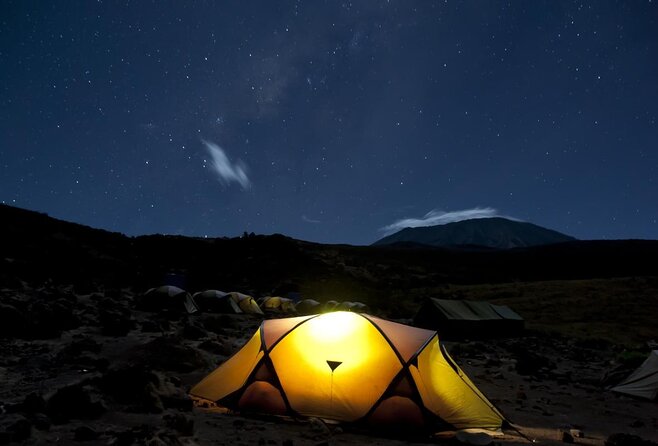
- Route built for acclimatization includes a full Shira plateau exploration and an extra acclimatization day toward Lava Tower
- Camp setup with your belongings handled lets you spend energy on trekking, not tent logistics
- Summit timing for sunrise starts around midnight, targets Stella Point, then the final hour to Uhuru Peak
- Lemosho to Barranco to Karanga to Kosovo gives you variety, plus the classic Barranco Valley and wall moment
- Strong guide and crew emphasis on safety shows up in guide styles named in past trips, like Raymond, Steve, Amani, Herment Mosha, and others
The Lemosho Route’s Advantage: Time, Variety, and Acclimatization
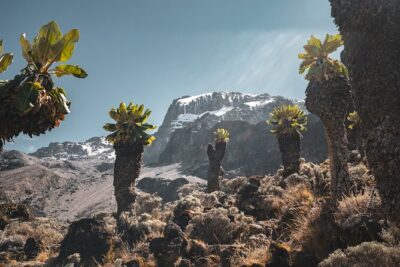
The Lemosho route is popular for a simple reason: it gives you time to adjust before asking you to climb high. Over 8 days, you move from montane forest into savannah-like terrain, then up into the high-altitude desert plateau of Shira. After that, you transition into glacier-adjacent terrain where the air feels thinner and the temperature swings get serious.
On this trek, the altitude plan is not an afterthought. You get days that are clearly designed around acclimatization, not just covering distance. That shows up in how the route spends time exploring the Shira plateau, then adds an acclimatization day that goes up toward Lava Tower and Arrow Glacier before reaching Barranco Camp.
And yes, the trek is described as having a very high summit rate and being suitable for both beginner and advanced climbers. Still, Kilimanjaro does not care how experienced you are. Your body’s response to low oxygen is the real boss. Your job is to follow pace guidance, hydrate, and accept that “slow” is often the fastest way to summit.
More Hiking Trips in Arusha
- Mountain Kilimanjaro Day Hike
★ 5.0 · 102 reviews - Private Full Day Hiking Experience to Marangu Route
★ 5.0 · 61 reviews - 4 Days Mount Meru Trekking
★ 5.0 · 55 reviews
Arusha Logistics That Reduce Stress: Transfers, Timing, and a Mobile Ticket
Kilimanjaro success is partly planning, partly sleep, and partly not getting stressed by logistics. This trip helps with that. You have pickup offered and round-trip transfers between your Arusha hotel and the trek start. Start time is listed as 8:00 am, so you’ll want a calm morning routine and an early night before.
You also get a mobile ticket, which matters because the first day involves check-in and paperwork at the gate. Less friction early usually means less rushing, and less rushing means you start with clear headspace.
On the last day, you’ll walk to Mweka gate, then have a vehicle transfer back to your hotel for a much-needed shower. That shower is not a small thing after summit night.
Day 1 in the Rain Forest: Londorossi Gate to Mti Mkubwa
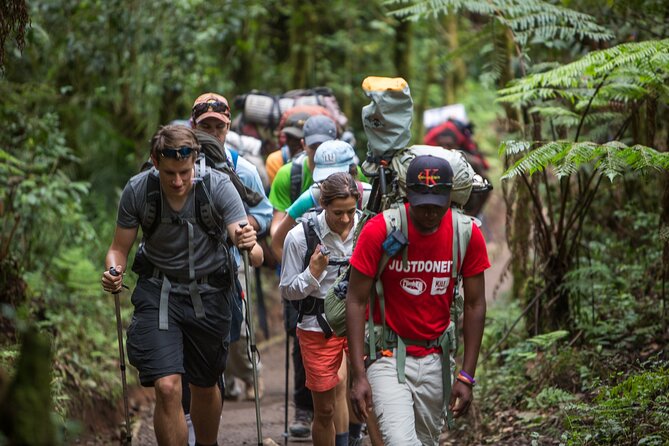
You start after a restful night in your hotel, then head to check-in at the Londorossi gate on the western side. The trail begins with a gentle climb through montane forest, with a natural rhythm that helps you settle in. There’s something psychologically important about that first day: it lets you start moving without the immediate pressure of thin air.
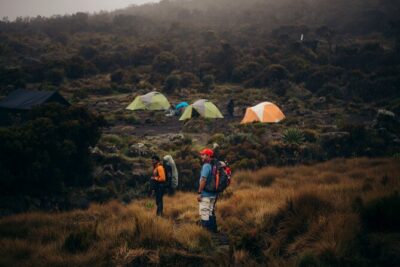
Your first camp is in the Kilimanjaro rain forest at Mti Mkubwa (Big Tree). Expect cooler, damp air and a greener feel compared with what comes next. Even if you’re excited, Day 1 is where you should treat breathing like a skill you’re practicing, not a performance you’re trying to nail.
- Typical effort: about 3 to 4 hours of hiking
- Elevation context: around 2,360 m (about 7,742 ft)
If you tend to start fast when you’re pumped, this day is a good moment to set a slower habit early.
Day 2 into the Shira Ridge: First Big Views at Higher Altitude
Day 2 is a noticeable shift. The route leaves the forest and moves into a savannah-like zone with tall grasses, heather, and volcanic rock draped with lichen. You’ll feel like the mountain is opening up, because you’re closer to broad views and that “high up” feeling.
In the afternoon, you follow the Shira ridge, part of the high-altitude desert plateau. This is where Mt. Kilimanjaro starts showing on the horizon in a way that feels more real than photos.
- Typical effort: about 5 to 6 hours
- Elevation context: around 3,505 m (about 11,500 ft)
The possible drawback on Day 2 is that you will be higher, and higher can make everything feel harder, even if the trail isn’t technical. This is exactly when you want steady breathing and regular small water sips.
More Kilimanjaro climbs:
- 5 Days Best of Tanzania Luxury Safari Northern Circuit
★ 5.0 · 174 reviews - 7-Day Machame Kilimanjaro Summit Tour from Arusha
★ 5.0 · 125 reviews - 4 days Best experience Kilimanjaro Hike, Serengeti &Ngorongoro
★ 5.0 · 54 reviews - From Arusha/Moshi: Kilimanjaro Hike Marangu Route Day Trip
★ 4.5 · 54 reviews
Day 3 Across the Shira Plateau: Kibo Views and a Optional Cone
Day 3 is a full day exploring the Shira plateau, trekking east toward Kibo’s glaciated peak. This is one of those days where the effort can feel “worth it” because you’re not only moving to the next camp, you’re actively experiencing the high country.
You also have an option to visit the ancient collapsed Shira cone. That kind of detour is valuable because it breaks up routine trekking and gives you something specific to focus on besides distance.
You’ll end at Moir Camp, described as sitting in a huge gorge at the end of a dormant lava flow. Gorge-side camps can feel dramatic at dusk, and the air tends to feel colder at altitude.
- Typical effort: about 5 to 7 hours
- Elevation context: about 4,206 m (about 13,800 ft)
If you’re prone to altitude headaches or nausea, this is a day to be extra disciplined: tell your guide early if something feels off, and do not try to “tough it out” without communication.
Day 4 Acclimatization to Lava Tower and Arrow Glacier, Then Barranco
This is one of the most purposeful days of the whole trek. You take an acclimatization hike up to Lava Tower (about 15,000 ft / 4,500 m). Shortly after, you reach a second junction that brings you toward the Arrow Glacier.
The value of doing this is that you gain altitude while still giving your body a reason to adjust. You rest at the tower area, then descend toward Senecio forest and a waterfall before arriving at Barranco Camp.
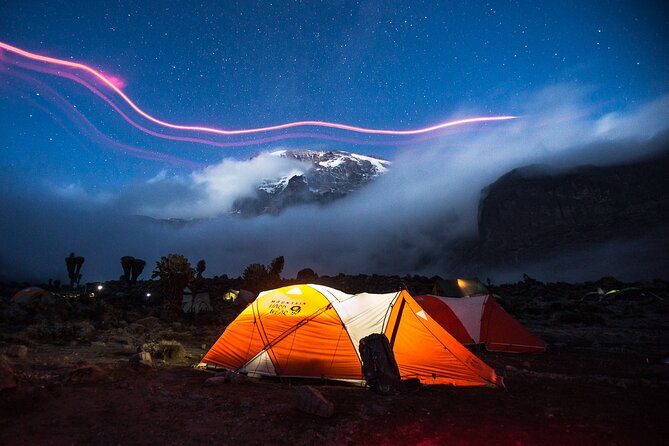
Barranco Camp is set near the massive Barranco wall, with breezes that can carry clouds from the Barranco Valley. In practice, that means you might experience quick shifts in weather while you’re at camp.
- Typical effort: about 4 to 6 hours
- Elevation context: around 3,962 m (about 13,000 ft)
The main drawback is cold. Even if you are moving steadily, temperatures around higher camps and near glaciated zones can drop fast. Layering and keeping warm between walking segments matters.
Day 5 Barranco Valley to the South Circuit: Up the Wall, Into the Arctic Zone
Day 5 is where the trek gets more “adventurous” in a classic Kilimanjaro way. You conquer the Barranco Valley, then climb the Barranco wall, described as an adventurous stretch that ushers you toward the arctic zone of Kilimanjaro.
After that, you continue along the South Circuit path through the Karanga Valley to Karanga Camp.
- Typical effort: about 4 to 5 hours
- Elevation context: around 3,992 m (about 13,100 ft)
The benefit of this day is confidence. If you can handle Day 5, you’re proving to yourself that the mountain is climbable for you, even when it’s steep.
The possible drawback is mental fatigue. Barranco’s steep sections ask for focus. If you rush or fight the pace, you will feel it in your legs before you reach camp.
Day 6 Kosovo Camp Prep: Barafu Pass, Kibo and Mawenzi Views, and Exposed Ground
On Day 6, the plan is slower. You trek up to Kosovo Camp at around 4,876 m (about 16,000 ft) at an intentionally slow pace. Along the way, you pass Barafu camp, where you can get excellent views of Kibo and Mawenzi.
Kosovo Camp is described as being on an exposed ridge. That means you should plan to be practical about your movement before dark. You’ll want to understand the terrain around camp, because at elevation, you do not want late-day surprises.
- Typical effort: about 5 to 6 hours
- Elevation context: about 4,876 m (about 16,000 ft)
The drawback is not “difficulty” in the workout sense, it’s cold wind and exposure. It can feel like you’re standing still while the weather does the hard work.
This is also a key prep day for summit night. Many climbers treat it as a quiet day. You’ll likely feel that too, because your body is saving energy for midnight.
Day 7 Summit Night to Stella Point and Uhuru Peak: The Steep Mental Test
Day 7 is the night. You start around midnight to climb to Stella Point for sunrise. The route is described as one of the steepest on the non-technical paths of Kilimanjaro.
The timing is demanding: about 6 to 7 hours ascent and then 4 to 6 hours descent. The climb goes toward the crater rim with heavy scree, and you’ll be working both physically and mentally.
Here is the key summit sequence: from Stella Point, the summit is visible, and it’s about 1 hour to Uhuru Peak. You then descend to Mweka Camp for dinner and celebration.
- Typical effort: about 11 hours total hiking time
- Elevation context: Uhuru Peak around 5,895 m (about 19,340 ft) and Stella Point on the crater rim
What makes this day so hard is not technical climbing, it’s the combination of altitude, cold, and the way scree forces constant micro-adjustments. If you are one of those people who thinks mind over matter will fix altitude, remember that your guide’s pacing matters. Trust the pace, follow instructions, and communicate early if you feel unwell.
Day 8 Down to Mweka Gate and Back to a Real Bed
Your last day is recovery mode. You hike from Mweka Camp down to Mweka gate, ending around 1,645 m (about 5,400 ft). Then Climb Kili’s vehicle is waiting to transfer you back to your hotel, with that shower waiting like a finish-line trophy.
- Typical effort: about 3 to 4 hours
- Elevation context: down to about 1,645 m
The possible drawback is obvious but real: your legs will be tired. Summit day takes a toll even if everything goes well. Your goal should be steady walking, not speed.
Guides and Crew: Why Small Group Size Changes the Experience
The best Kilimanjaro trips feel like a team sport. This one is set up for that because of the small group limit, maximum 15 travelers, plus a crew that works close to you at altitude.
From the guide names that show up in past experiences, you may meet lead guides like Raymond, Amani, Steve, Herment Mosha, Manny, John, or Veda. You might also work with assistant guides such as Isaya, Emmanuel, Emanuel, Jackson, Dastan, or Cinga. Porters are part of the engine too, and names like Luigi come up for that on-the-ground support.
What I like about this kind of crew is the role they play beyond route knowledge. In past trips tied to this company, the guide style described includes safety-first decision-making and active check-ins, plus a positive attitude that helps when your brain starts bargaining with the mountain. Some crews even get noted for details like Swahili teaching, or coffee wake-ups by a porter team member.
None of that guarantees summit success. But it does mean you are less likely to feel alone inside a hard moment. And on Kilimanjaro, less loneliness can make a big difference.
Food, Camping Gear, and the Meaning of All-Inclusive
A lot of people underestimate how important food and basic comfort are at high altitude. When you’re cold, tired, and breathing hard, low-quality meals or missing gear turn into preventable problems.
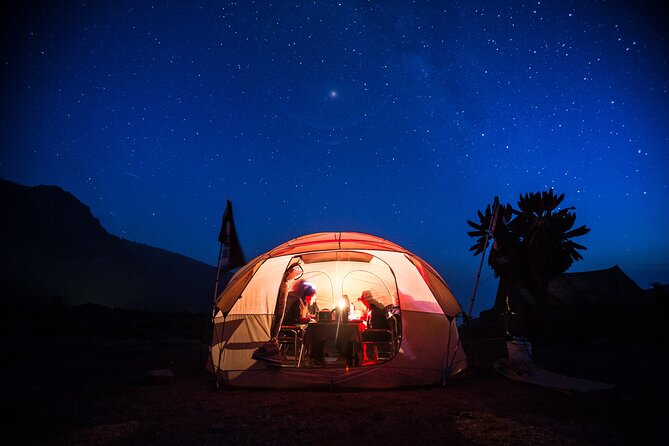
This trek includes meals, camping equipment, and fees. That matters because you avoid the common situation where you end up sourcing essentials on your own while already exhausted from travel. You also avoid the “did we pack the right thing” stress right before your summit push.
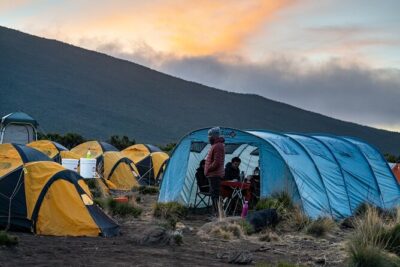
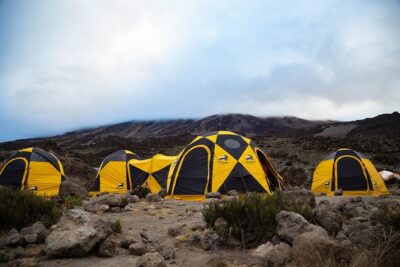
You’ll also see that tents are set up at camp with your belongings inside. That is practical and worth it because it preserves energy. Instead of turning camp into a second job, you can focus on hydration, warming up, and rest.
If you love the idea of being looked after, the feedback tied to crews here strongly emphasizes comfort and preparation, including things like chef support (names such as Simon show up) and warm, encouraging team energy.
Summit-Day Reality Check: What to Plan For Before You Go
If your goal is the sunrise at Stella Point, treat summit night like a plan, not a wish. The trek’s schedule gives you a route that is considered steep, non-technical, and very mentally challenging. That means your preparation needs to match the reality.
Here’s what you should take seriously based on the route design:
- Cold will be a factor, especially near ridge camps and on summit night
- Exposure can be part of camp life at places like Kosovo Camp
- Heavy scree means steady footwork matters more than speed
- Communication with your guide matters, because pacing is a safety tool
Also, this is not an “athletic stunt” only for experts. It’s described as suitable for beginners too, but suitability still depends on your commitment to fitness and pacing. Strong physical fitness is explicitly recommended.
Price and Value: What $2,895 Covers (and Why That Matters)
At $2,895 per person, this is not a budget trek. But it also is not a stripped-down deal where you pay extra for the big stuff.
From the details provided, the price aligns with what most people want included on Kilimanjaro:
- Round-trip transfers from your Arusha hotel
- Camping equipment
- Meals
- Fees and admission tickets
- A small-group structure that supports guide attention
- A straightforward finish with vehicle transfer and shower at the hotel
So the value question is not just “is it expensive.” It’s “does it bundle the core on-mountain costs and reduce decision fatigue while you’re already dealing with altitude.” For many climbers, that bundled feel is worth paying for, especially when summit night is the main event.
Should You Book This 8-Day Lemosho Summit Trek?
Book this trek if you want:
- A small-group experience with more attention on tricky altitude days
- A route that builds in acclimatization time, not only distance
- A classic Kilimanjaro progression through rain forest, Shira plateau, Barranco, Karanga, and Kosovo
- Summit day structured around Stella Point and sunrise, then the final push to Uhuru Peak
Skip it, or at least reconsider, if:
- You know you struggle with extended high-altitude climbs and long nights
- You’re not ready for the steep, mentally tough summit section or the exposure at Kosovo Camp
- You’re looking for a gentle stroll rather than a true expedition
If you’re the right fit, this is the kind of Kilimanjaro trip where the logistics are handled and your main job is to keep moving well and listen to your guide when altitude tells you to slow down.
FAQ
How long is the Kilimanjaro trek?
The trek is 8 days (approximately).
Where does this Kilimanjaro trek start?
It starts in the western side checking in at the Londorossi gate, after a restful night at your Arusha hotel.
What is the group size limit?
This activity has a maximum of 15 travelers.
What does the price include?
The package includes all camping equipment, fees, and meals. It also includes admission tickets as listed for each trekking day.
Are transfers included?
Yes. Pickup is offered, and round-trip transfers from your Arusha hotel are included. On the final day, a vehicle transfer returns you to your hotel.
What is the start time?
The listed start time is 8:00 am.
When do you start summit night?
You start on the night for summit, with a midnight start to reach Stella Point for sunrise.
Is the route technical?
The summit section is described as steep but on non-technical paths of Kilimanjaro.
What fitness level is required?
Travelers should have a strong physical fitness level.
Can I cancel for a full refund?
Free cancellation is available if you cancel up to 24 hours in advance of the experience start time for a full refund.
More Hiking & Trekking in Arusha
- 6 Days Serengeti Safari(hiking waterfalls &coffee tour)
★ 5.0 · 48 reviews - Arusha: Napuru Waterfalls Guided Hike
★ 4.8 · 39 reviews - Mount Kilimanjaro Day Hike Through Marangu Route to Mandara Hut
★ 5.0 · 37 reviews - 5 days safari, hiking & culture (Serengeti & kilimanjaro)
★ 5.0 · 27 reviews
Just posted around Arusha
- 8 Days Serengeti Migration safari★ 5.0 · 11 reviews
- tarangire & ngorongoro 2 days tour★ 5.0 · 14 reviews
- serengeti, ngorongoro & tarangire 4 days private tour★ 5.0 · 18 reviews
- tarangire, ngorongoro & lake manyara park 3 days private tour★ 5.0 · 11 reviews
- serengeti & ngorongoro 3 days private tour★ 5.0 · 15 reviews
- climb the KILIMANJARO via Lemosho route★ 5.0 · 4 reviews
- Mt. Kilimanjaro: Shira plateau to Cathedral point 3872m Day hike★ 5.0 · 7 reviews
- Kilimanjaro Waterfalls Hike & Moshi Hot Springs Day Trip Tour★ 5.0 · 4 reviews
Kilimanjaro Climbs, compared.
5 Days Best of Tanzania Luxury Safari Northern Circuit
Read our review →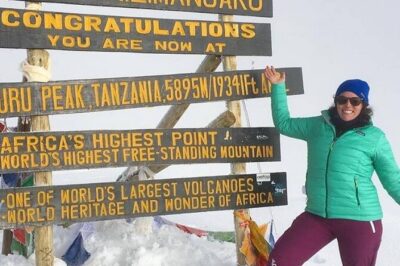
Climbing Kilimanjaro through 7 days Machame Route
Read our review →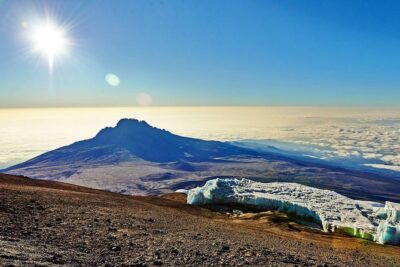
Browse the lists this tour appears in