Reviewed · KILIMANJARO CLIMBS
7-Day Machame Kilimanjaro Summit Tour from Arusha
Kilimanjaro, without the chaos. This Machame trek packs serious altitude work into a small group format, with day after day of sweeping climate changes that keep you moving and focused. The big moment is the midnight push toward sunrise views, then the final hop to Uhuru Peak.
What I like most is the easy round-trip transfer from your Arusha hotel, so you spend energy on the climb, not the logistics. I also like that camping equipment, fees, and meals are included, which removes a lot of last-minute stress and lets you travel lighter.
One thing to consider up front: this is a tougher route than Marangu, so you truly need strong fitness before you even think about the summit night.
In This Review
- Key points to know before you go
- Machame Trek Value From Arusha: small-group support on a hard route
- Who this 7-day Machame climb suits (and who should think twice)
- Day-by-Day Machame Itinerary: rainforest to crater rim, one day at a time
- Day 1: Machame Gate to Machame Camp, the rainforest start
- Day 2: Shira Camp, moorland and rocky ridge walking
- Day 3: Lava Tower acclimatization and Barranco Camp arrival
- Day 4: Barranco Valley to Karanga Camp, the arctic zone transition
- Day 5: Kosovo Camp, passing Barafu with summit views
- Day 6: Midnight summit, Stella Point sunrise, then Uhuru Peak
- Day 7: Mweka Gate and the return to Arusha
- What “included” actually means for your planning day-to-day
- Guides, crew, and the real reason small groups feel different
- Price and Logistics: what $2,695 covers, and when it is worth it
- Should you book this 7-day Machame summit tour?
- FAQ
- How much does the 7-day Machame Kilimanjaro summit tour cost?
- Where does the tour start and when?
- How long is the trek?
- How many people are in the group?
- Are hotel transfers included?
- What is included during the climb?
- Is there a cancellation window for a full refund?
Key points to know before you go
- Small group cap of 6 for more attention on a route where pace matters.
- Machame trail climate variety starting in rainforest and building to the arctic zone.
- Included camping setup and meals, plus park fees, so your daily routine is simpler.
- Acclimatization built in, including the Lava Tower stop and a Barranco Wall challenge.
- Midnight summit schedule with sunrise from Stella Point on the crater rim.
Machame Trek Value From Arusha: small-group support on a hard route
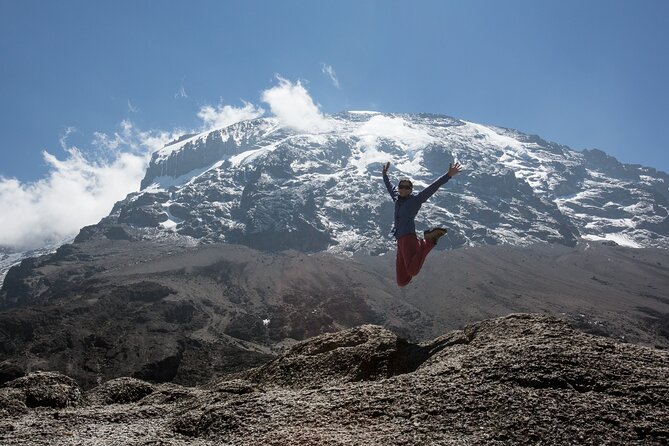
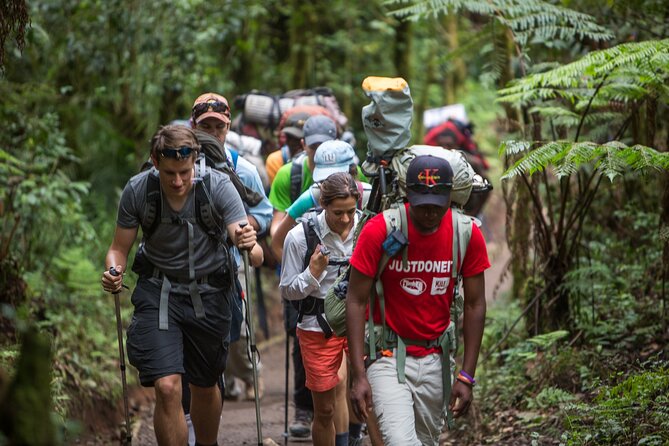
This 7-day Machame climb is built for travelers who want the classic Kilimanjaro challenge, but without feeling like you are just another name on a spreadsheet. Starting in Arusha, you get picked up from your hotel and transferred to the Machame Gate, then you move step by step through rainforest, moorland, and into the colder zones higher up. The Machame route is widely treated as tougher than Marangu, and this itinerary does not hide that reality.
For me, the value starts with what is included. Camping gear, park fees, and meals are all part of the package, and you also get round-trip transfers from your Arusha hotel. That matters because Kilimanjaro is not just the summit day. It is the whole week of coordinating tents, food, guides, and porters while you acclimatize at altitude.
In the strongest feedback from past climbers, the recurring theme is safety and care. Names that come up again and again include Herment Moshi and Florian, plus guides like Steve, with people praising how well they were supported throughout the trek. If you like the idea of a team that monitors you day by day, this kind of operation is the right fit.
More Kilimanjaro climbs:
- 8-Day Small-group Lemosho Kilimanjaro Summit Trekking
★ 5.0 · 186 reviews - 5 Days Best of Tanzania Luxury Safari Northern Circuit
★ 5.0 · 174 reviews - Mountain Kilimanjaro Day Hike
★ 5.0 · 102 reviews
Who this 7-day Machame climb suits (and who should think twice)
This climb is not framed as a beginner hike. The info is clear that you should have a strong physical fitness level and previous hiking experience. If you have only done easy day walks, you might find the Machame profile demanding, especially once the trail turns rocky and the air gets thin.
The route also asks you to handle altitude work and a very specific kind of fatigue. Day 6 is a long, steep non-technical hike with a midnight start, and the itinerary notes it as one of the steepest sections on Kilimanjaro’s non-technical paths. That is why pacing, mental stamina, and consistency matter more than speed.
If you already hike regularly and are comfortable with multi-day mountain walking, this tour makes sense. The small group cap also helps because it can reduce the chaos of too many people moving at once.
Day-by-Day Machame Itinerary: rainforest to crater rim, one day at a time
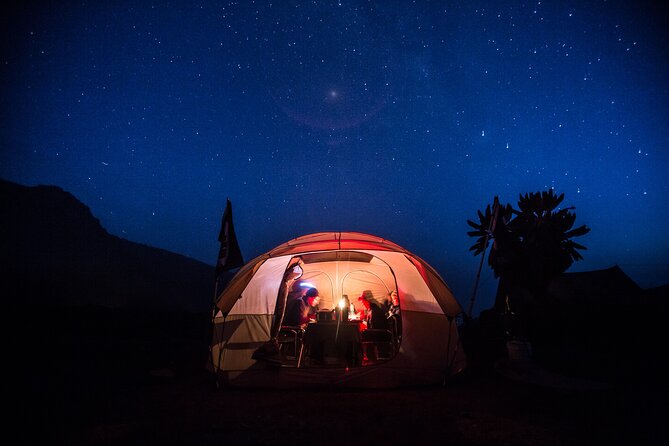
Here is how the week unfolds, and why each day matters for your body and your plans.
Day 1: Machame Gate to Machame Camp, the rainforest start
You meet your Climb Kili guide and mountain crew after breakfast, then transfer from Arusha to Machame Gate. The trail immediately leaves the gate and climbs through rain forest along a winding ridge. Lower down, it can be muddy and slippery, and the itinerary specifically points out that gaiters and trekking poles are a good idea.
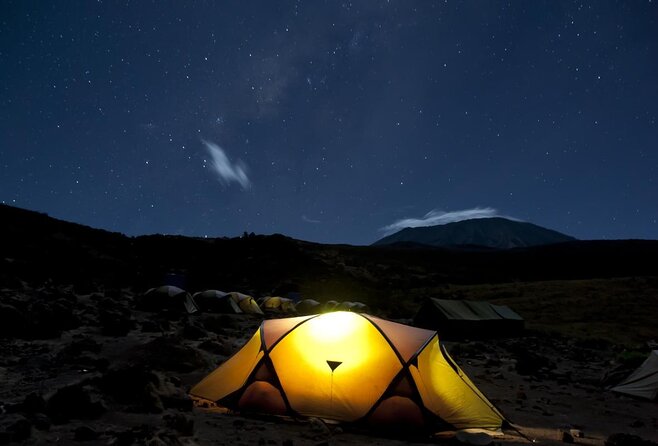
By late afternoon you reach Machame Camp, where tents are set up and personal belongings are ready for you, plus dinner. This first day is a warm-up, but you still want to start steady and avoid rushing.
A few more Arusha trips to compare
- Balloon Safari & Bush Breakfast in Serengeti – Miracle Experience
★ 5.0 · 1,646 reviews - Tanzania Classic – 7 Days
★ 5.0 · 1,151 reviews - 4 Days Group Camping Safari
★ 5.0 · 1,101 reviews - 5 Days Group Camping Safari
★ 5.0 · 730 reviews
Day 2: Shira Camp, moorland and rocky ridge walking
After breakfast you leave the rain forest glades and enter higher terrain. The climb moves into moorland with heather, then turns west along a dry river gorge. Even though the day is shorter than some, the environment is more rugged and the altitude is already rising.
You reach Shira Camp in time to rest, eat dinner, and sleep. This is one of the key moments where you should expect your pace to change, because your breathing will start to feel different.
Day 3: Lava Tower acclimatization and Barranco Camp arrival
Today is the acclimatization day, and it is one of the most important parts of making summit day survivable. You hike to Lava Tower at around 15,000 feet (about 4,500 m), then continue toward the Arrow Glacier area at the second junction. After resting, you descend through Senecio forest, with the itinerary mentioning a waterfall before reaching Barranco Camp.
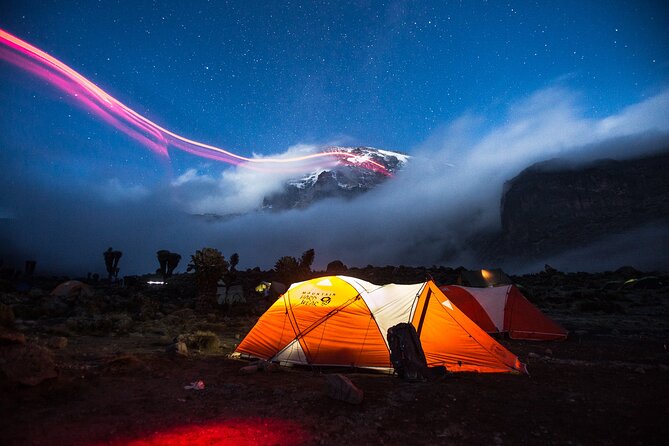
Barranco Camp sits in the shadow of the Barranco wall, and the description notes that breeze and clouds often move through the Barranco Valley. This is great for views, but it also means you can feel the weather change quickly at camp.
Day 4: Barranco Valley to Karanga Camp, the arctic zone transition
Day 4 tackles one of Kilimanjaro’s signature challenges: you climb the Barranco Valley and then go up the Barranco wall. The itinerary describes this as an adventurous stretch that leads you into the arctic zone of Kili. That jump is not just a cool word. It means your body will feel the shift in cold and air density even if the hike time feels manageable on paper.
Then you continue on the South Circuit path through Karanga Valley, and camp at Karanga Camp. Expect this to feel more exposed and colder than the earlier days, and plan to move carefully on uneven ground.
Day 5: Kosovo Camp, passing Barafu with summit views
You take a slow pace to Kosovo Camp, and the route notes that you pass Barafu Camp along the way. The itinerary calls out excellent views of Kibo and Mawenzi from this area, which is a morale boost before summit day. Since Kosovo Camp is on an exposed ridge, the plan also notes you should familiarize yourself with the terrain before dark.
This is a crucial day for preparation. The itinerary explicitly mentions rest, relaxation, and necessary preparation for the summit night.
Day 6: Midnight summit, Stella Point sunrise, then Uhuru Peak
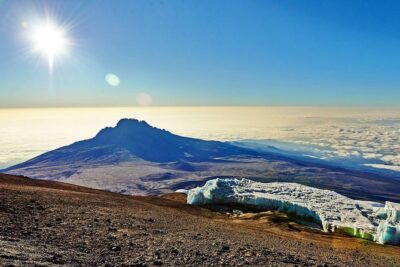
This is the big day. You start around midnight to hike the steepest-feeling section toward Stella Point for sunrise. The itinerary calls this one of the steepest non-technical parts of Kilimanjaro and estimates about 6-7 hours ascent to Stella Point, then 4-6 hours descent after.
The route continues through heavy scree toward the crater rim, with key waypoints including the Rebmann and Ratzel glaciers mentioned in the description. The mental and physical work here is real, and the itinerary is honest about this being the most challenging segment.
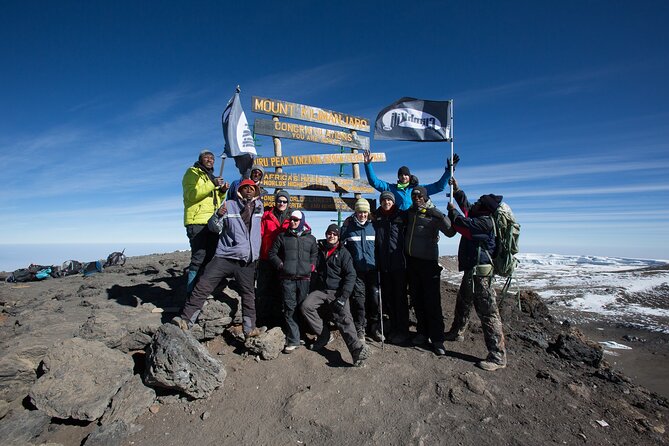
From Stella Point, the description says you can see the summit, then it is about 1 hour to Uhuru Peak, Kilimanjaro’s highest point. After that, you descend to Mweka Camp for dinner and celebration.
Day 7: Mweka Gate and the return to Arusha
On your final day, you walk to Mweka Gate, then reflect on everything you have done over the week. The itinerary describes a 3-4 hour walk, then your Climb Kili vehicle transfers you back to your hotel for a very welcome shower.
This is the day your legs feel the effects of summit day, so take your time and enjoy the finish.
What “included” actually means for your planning day-to-day
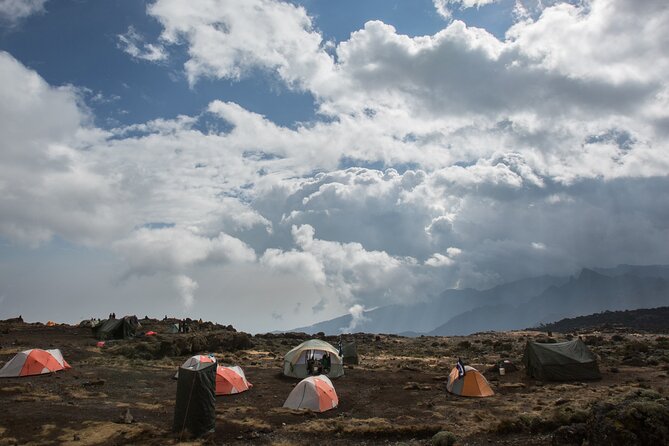
On paper, “included” can sound vague. Here, the details help.
You get all camping equipment, plus fees and meals during the trek. That matters because Kilimanjaro costs are not just guide labor. It is tents, cooking support, food planning, and the mountain logistics that keep a group moving safely through remote sections.
Also, the transfers are clearly part of the deal. You get round-trip transport from your Arusha hotel to the trek start area and back at the end of the climb. In practical terms, that reduces stress before day 1 and after day 7 when you are already tired.
One more detail I appreciate: the itinerary mentions tents being set up at camp and belongings being ready. That is not flashy, but it is the small stuff that makes multi-day trekking easier.
Guides, crew, and the real reason small groups feel different
A small group size, max 6 travelers, is not just a nice-to-have on a mountain. It affects how well the team can manage pace and safety. When you are at altitude, the gap between comfortable and struggling can be just a few steps and a few breaths.
In the past trip feedback, several names stand out, especially Herment Moshi as a lead guide and Florian as an assistant. People also mention other guides like Steve, praising communication and a sense of safety. One reason this matters for you is simple: the summit night works best when the team is consistent and attentive, not when everyone is trying to do their own thing.
If you want guidance that is hands-on and supportive, this format is a strong match.
Price and Logistics: what $2,695 covers, and when it is worth it
At $2,695 per person, this is not a budget trek. But it also is not just paying for a guide to walk beside you. You are paying for a full operating system on Kilimanjaro: included camping setup, meals, and park fees, plus the guide and mountain crew needed for the Machame route.
So when is this price a good fit? It is a good fit when you want to remove planning variables. Instead of shopping for gear, budgeting for park access, and trying to coordinate camp logistics yourself, you get a structured week with equipment and food handled. That is especially valuable if you are traveling from far away and do not want to spend days sorting details before your summit attempt.
One balancing note from the overall feedback style: a few people have flagged that hotels before and after the climb can be a mixed experience depending on what you expected at that price point. The trek itself is where the operator seems to put the most strength, so I’d match my expectations to that.
Should you book this 7-day Machame summit tour?
Book it if you:
- Want the Machame route specifically, with built-in acclimatization like the Lava Tower day.
- Prefer a small group setup and value close guide support.
- Are physically prepared for a tougher profile than Marangu, especially the midnight summit push.
Skip or compare if you:
- Want a gentler, more relaxed hike with less altitude intensity. This itinerary is clearly designed as a serious challenge.
- Feel nervous about long summit-day effort. The plan is steep and mentally demanding, and the schedule starts at midnight.
If you are the kind of person who likes structure, wants logistics handled, and is ready to work for the summit, this Machame tour from Arusha is a strong, practical choice.
FAQ
How much does the 7-day Machame Kilimanjaro summit tour cost?
The tour price is $2,695.00 per person.
Where does the tour start and when?
It starts at Summit Lodge, Sakina Raskazone Arusha, Tanzania, with a start time of 8:00 am.
How long is the trek?
The duration is about 7 days.
How many people are in the group?
The maximum group size is 6 travelers.
Are hotel transfers included?
Yes. The tour includes round-trip transfers from your Arusha hotel.
What is included during the climb?
Camping equipment, fees, and meals are included, along with admission tickets during the trek days described.
Is there a cancellation window for a full refund?
Yes. You can cancel up to 24 hours in advance for a full refund. If you cancel less than 24 hours before the start time, the amount paid is not refunded.
Just posted around Arusha
- 8 Days Serengeti Migration safari★ 5.0 · 11 reviews
- tarangire & ngorongoro 2 days tour★ 5.0 · 14 reviews
- serengeti, ngorongoro & tarangire 4 days private tour★ 5.0 · 18 reviews
- tarangire, ngorongoro & lake manyara park 3 days private tour★ 5.0 · 11 reviews
- serengeti & ngorongoro 3 days private tour★ 5.0 · 15 reviews
- climb the KILIMANJARO via Lemosho route★ 5.0 · 4 reviews
- Mt. Kilimanjaro: Shira plateau to Cathedral point 3872m Day hike★ 5.0 · 7 reviews
- 2 Days Tanzania Midrange Group Join Safari★ 5.0 · 7 reviews
Kilimanjaro Climbs, compared.
8-Day Small-group Lemosho Kilimanjaro Summit Trekking
Read our review →
5 Days Best of Tanzania Luxury Safari Northern Circuit
Read our review →
Climbing Kilimanjaro through 7 days Machame Route
Read our review →