Reviewed · KILIMANJARO CLIMBS
climb the KILIMANJARO via Lemosho route
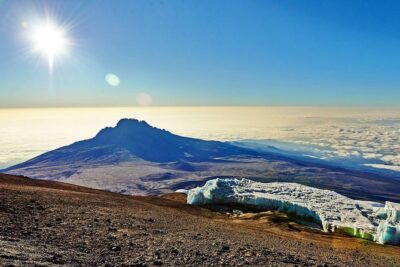
One word: altitude. This private Lemosho climb takes you from a rainforest start to summit push, with extra time for acclimatization. I especially love the way the route builds in chances to adjust to elevation, and how the crew you’re paired with feels like real team support. The main drawback to plan for is the cold, especially on summit night and the phone-camera reality check.
You’ll also get a straightforward rhythm to each day, with clear camp-to-camp walking times and altitude gains. Your price includes a lot of the trip structure (pickup and a mobile ticket), but admission items are listed as mixed across the days, so you’ll want to read your exact inclusions before you go. If you know you can handle a long, slow mountain effort, this climb can feel powerful, not just challenging.
In This Review
- Key highlights before you commit
- Why the Lemosho route is a smart choice on Kilimanjaro
- Value, price, and what you’re actually paying for
- Your crew: guides, cooks, and why this trip feels personal
- Day 1: Londorossi Gate rainforest walk to Forest Camp (2830m)
- What to watch for on Day 1
- Day 2: Big Tree to Shira 1 at 3509m, ridge walking and Kibo views
- Day 3: Two acclimatization routes, Shira Cathedral or Moer Hut (4200m)
- Which option to choose
- Day 4: Lava Tower at 4605m to Great Barranco Camp (3940m)
- The likely challenge on Day 4
- Day 5: Barranco wall work to Karanga Camp at 4000m
- What makes Day 5 different
- Day 6: Barafu Hut to Stella Point and Uhuru Peak summit day
- How to make summit day feel less chaotic
- Day 7: Descent to Mweka Hut at 3100m and a calmer night
- What you should watch for
- Day 8: Rainforest descent to Mweka Gate and your certificate moment
- When to plan your celebration
- What you should pack and plan for cold and camera limits
- Who this climb suits best, and who might rethink it
- Should you book this Kilimanjaro climb via Lemosho?
- FAQ
- How long is the Kilimanjaro climb via the Lemosho route?
- Where does the climb start, and do you get pickup?
- Is this a private tour or a shared group?
- What fitness level do I need?
- Are park admission tickets included?
- What happens if weather is bad or minimum travelers are not met?
Key highlights before you commit
- Private group feel so your pace and needs get handled with less crowd pressure
- Lemosho route timing that includes scenic ridges and acclimatization stops along the way
- Two Day 3 acclimatization options (Shira Cathedral route or the lower connection)
- Summit day approach through Stella Point and on to Uhuru Peak, then a controlled descent back to Barafu Hut
- A guide named Paul Bernad is highlighted in past climbs for being responsive to different abilities
- Cold-weather prep advice that matters, based on real summit-day lessons
Why the Lemosho route is a smart choice on Kilimanjaro
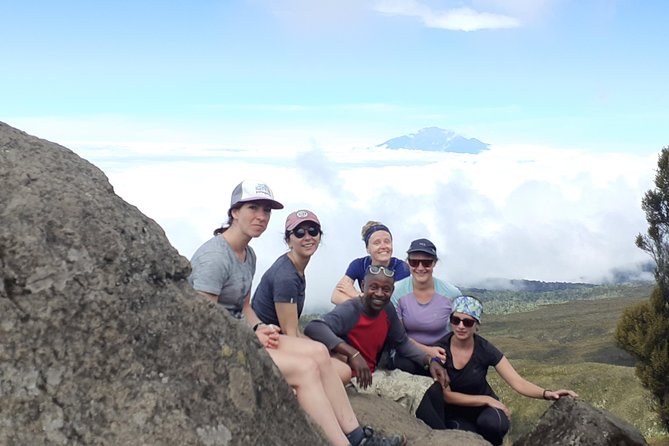
The Lemosho route has a classic Kilimanjaro logic: you climb in stages, not in a single leap. That means you spend time moving through different altitude zones and camp areas, which helps your body adjust. You also get the benefit of variety. You start in forest, then move into moorland and savanna-like terrain, and later shift into stark rock and alpine desert conditions.
On this itinerary, the day-by-day profile gives you repeated acclimatization moments. You crest and adjust at higher points, then come down to sleep. That matters because Kilimanjaro punishes fast climbs. The trip is built to make your summit attempt more realistic by giving you extra breathing room before the big push.
Still, altitude is altitude. Even with smart pacing, your success depends on how you manage the last days. If you push too hard because you feel good early on, you can pay for it later. The best mindset is steady, patient, and honest about how you feel each morning.
More Kilimanjaro climbs:
- 8-Day Small-group Lemosho Kilimanjaro Summit Trekking
★ 5.0 · 186 reviews - 5 Days Best of Tanzania Luxury Safari Northern Circuit
★ 5.0 · 174 reviews - 7-Day Machame Kilimanjaro Summit Tour from Arusha
★ 5.0 · 125 reviews
Value, price, and what you’re actually paying for
The price is $2,564.11 per person for an 8-day experience, with pickup offered and a mobile ticket. That private setup usually means more attention from your guide and the team on the mountain. You’re not just buying hours of walking, you’re buying the full machine behind the climb: guidance, camp support, meals, and day-to-day decisions.
Admission and park-fee items are shown as mixed. Day 1 lists admission ticket as included, Days 2 through 6 show admission as free, while Day 7 and Day 8 show admission as not included. That can easily become a surprise if you assume everything is covered end-to-end, so treat it like a checklist item for your confirmation.
What makes this climb feel like good value is not just the price tag, it’s the way the days are structured and the attention your guide and cooks provide. Past experiences called out strong food and a guide who adjusted to different ability levels, including a climb led by Paul Bernad with a small group of four.
Your crew: guides, cooks, and why this trip feels personal
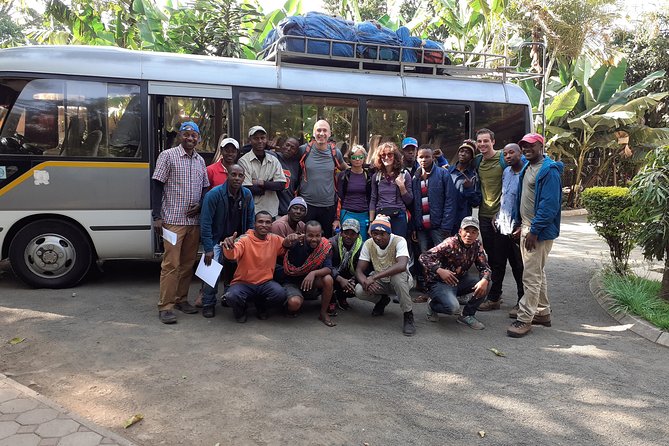
Kilimanjaro is not the moment to “figure it out yourself.” The difference-maker is your guide and the way they manage pace, comfort, and safety. A past highlight was that the guide, Paul, stayed responsive to each person’s abilities. That kind of flexibility matters when you have walkers with different comfort levels, especially on the climb’s steeper sections.
You’ll also notice how the support team affects your morale. A great crew makes long days feel more doable, because you can focus on walking and resting instead of constantly handling logistics. The food gets direct praise too. That’s not a small detail on an 8-day trek, because your appetite can swing with altitude and cold.
And yes, expect an emotional component. People describe reaching the summit as a life moment, not a box to check. When you work with the right team, the mountain effort turns into something you can be proud of.
Day 1: Londorossi Gate rainforest walk to Forest Camp (2830m)
Day 1 starts with the drive from Arusha or Moshi to Londorossi Gate at 2200m for registration. After registration, you head back to the starting point. This first stretch includes time passing Fill’s farms and planted areas, then a shift into rainforest.
The walking portion is described as about 5 km (around 4 hours) to Forest Camp at 2830m. The route description highlights potential big wildlife sightings such as elephants, buffalo, and eland, plus lots of birds and flowers. Even if you don’t see everything, the point is that Day 1 is not just a transfer day. It’s your transition into the mountain world.
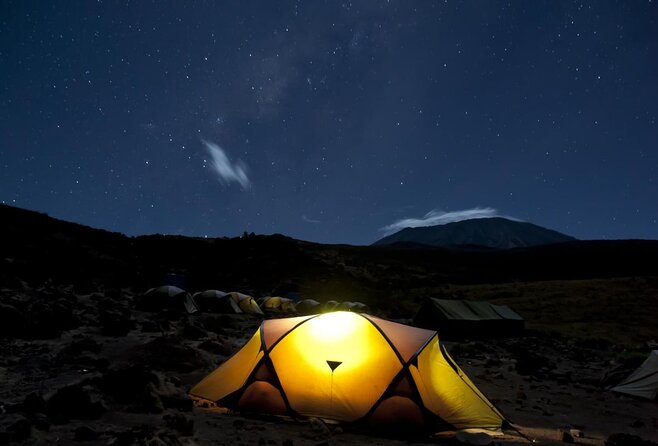
You’ll spend the first night at Forest Camp. It’s a good moment to get into a routine: slow steps, water intake, and a calm check of gear before tomorrow’s elevation jump.
A few more Arusha trips to compare
- Balloon Safari & Bush Breakfast in Serengeti – Miracle Experience
★ 5.0 · 1,646 reviews - Tanzania Classic – 7 Days
★ 5.0 · 1,151 reviews - 4 Days Group Camping Safari
★ 5.0 · 1,101 reviews - 5 Days Group Camping Safari
★ 5.0 · 730 reviews
What to watch for on Day 1
Forest start days can tempt you to walk faster than you should. Resist that urge. Your goal on Kilimanjaro is not to “win” the first hour. It’s to arrive at camp still feeling steady.
Day 2: Big Tree to Shira 1 at 3509m, ridge walking and Kibo views
Day 2 is where the climb starts turning into classic high-altitude trekking. You start climbing from Big Tree toward Shira 1, described at 3509m. The walk is about 4 to 6 hours over roughly 7 km.
You move onto narrow paths and then into heather moorland, with uphill progress along the Shira Plateau ridge. The vegetation is described with Erica family tree species and savanna grass land. If the sky is clear, your arrival at Shira 1 camp comes with a chance to view Kibo, which is the main summit mass of Kilimanjaro.
You’ll have dinner and sleep at Shira 1 camp. This day matters because it’s a “build” day, not a summit day. You’re learning how your body responds, and your guide is learning what pace works for each person.
Day 3: Two acclimatization routes, Shira Cathedral or Moer Hut (4200m)
Day 3 is one of the most interesting decisions points in the whole plan. You get two options for acclimatization, which tells you the itinerary is designed around managing how you feel at altitude.
Option A: Upper route
- After a heavy breakfast, walk about 4 to 5 hours over 6 km
- Go toward Shira Cathedral at 3920m
- Then climb onward to Shira 2 camp at 3840m for dinner and overnight
Option B: Lower route
- After breakfast, you can take the lower connection via rescue road
- Head directly to Moer Hut at 4200m, then overnight there with dinner
Both options keep the day’s theme the same: you’re gaining altitude thoughtfully and preparing your body for later camp heights.
Which option to choose
The itinerary doesn’t explain who should choose what, so the safest approach is to listen to your guide and honestly report symptoms. If you feel strong and steady, the upper route may be okay. If you feel off, choose the option that gives you the most controlled day.
Day 4: Lava Tower at 4605m to Great Barranco Camp (3940m)
Day 4 pushes into harsher terrain, and that’s where Kilimanjaro starts looking dramatic. After breakfast, you walk around 5 to 6 hours over about 9.5 km, climbing through rock desert zone via Lava Tower.
You reach about 4605m for lunch, then you descend to Great Barranco Camp at 3940m. This swing up and then down is a key acclimatization pattern. You’re letting your body spend time at a higher point without turning sleep into the highest night possible.
The description calls out awesome views, and this is often where those views become less about rainforest beauty and more about raw scale.
The likely challenge on Day 4
Rock desert and strong sun can dry you out and make you feel slower. Pace yourself, keep sipping water, and don’t overreact to how your breathing feels at first. It’s normal for it to be working harder here.
Day 5: Barranco wall work to Karanga Camp at 4000m
Day 5 starts with another push, then includes one of Kilimanjaro’s signature effort sections: the Barranco wall.
After breakfast, it’s about 3 to 4 hours over 5.5 km with rock climbing. The route description places the Barranco wall around 4200m, and then you continue on to Karanga Camp at 4000m.
You’ll get hot lunch and then rest at Karanga camp overnight.
What makes Day 5 different
This day usually feels like “real trekking” rather than smooth walking. Even when it’s not technically complicated, it can feel mentally sharper because you’re dealing with a steeper path and a more active climb.
If you’re carrying extra anxiety, that can make this day tougher than it needs to be. The better plan is to keep your effort measured and let the team’s pace guidance do its job.
Day 6: Barafu Hut to Stella Point and Uhuru Peak summit day
Day 6 is the big one. You start ascending from Karanga camp to Barafu Hut, climbing about 3 to 4 hours over 5 km to roughly 4620m.
Then comes the summit push described as a 6-hour climb through alpine desert terrain. You pass Stella Point at 5756m and then reach Uhuru Peak, listed at 5896m. The itinerary also notes a longer descent block back to Barafu Hut, around 3 hours to sleep again.
This day is where cold and timing matter most. One piece of practical advice from a past climb experience: prepare well for the cold, and don’t rely on your phone for photos. Batteries and low temperatures can work against you right when you want to capture summit moments.
How to make summit day feel less chaotic
Your best strategy is simple:
- Follow your guide’s pace.
- Take photos when it’s safe and quick.
- Don’t burn extra energy to chase one perfect shot.
The people who enjoy summit day most tend to focus on the experience and not the gear.
Day 7: Descent to Mweka Hut at 3100m and a calmer night
After the summit and the return to Barafu Hut, Day 7 becomes about recovery. You rest on the descent process with a 1 hour food rest, then continue down all the way to Mweka Hut at 3100m.
The day is described as about 6 hours, finishing with dinner and your last night at the higher camp level. This is a good day to reset mentally. You’ve already done the hard part.
What you should watch for
Even after the summit, legs can feel heavy. The downhill can be rough on knees and ankles. Use steady steps and don’t let speed distract you from balance.
Day 8: Rainforest descent to Mweka Gate and your certificate moment
Day 8 starts early with breakfast. You then descend about 4 hours over roughly 8 km through the rainforest down to Mweka Gate at 1760m.
You sign out, receive a certificate of hard work, and then drive back to your hotel. The drive back is listed as about 4 hours, with timing adjusted to your return plan.
This last day can feel surprisingly emotional, because you’re leaving behind the high-altitude stages and returning to a wetter, greener Tanzania at lower elevation.
When to plan your celebration
Don’t overbook yourself after the climb. You’ll likely be tired, even if you feel proud and energized. Give yourself time to eat, shower, and properly decompress.
What you should pack and plan for cold and camera limits
Based on real summit lessons, the cold can surprise you. The solution is not just a jacket, it’s layered thinking. You want warmth that works in low temperatures, especially during the summit push and early-morning cold hours.
Also, plan for photos like a realist. Don’t depend on your phone. Bring extra charging strategies if you have them, and understand that the phone might not be your reliable summit camera.
If you want one simple mindset tip: focus on the moment. A good summit memory is usually the one you actually live through, not the one you try to perfectly film.
Who this climb suits best, and who might rethink it
This experience is listed for travelers with moderate physical fitness. It’s also described as private, so it’s ideal if you want a guided pace and team support rather than a crowded, fixed schedule.
This is a strong fit for:
- People who want private guidance and attention on acclimatization
- Walkers who like a step-by-step route with defined camp days
- Anyone who values a guide who can adjust to the group, as seen in the Paul Bernad examples
You might rethink if:
- You know cold conditions derail you
- You feel tempted to sprint early and ignore how your body signals you should slow down
- You’re not comfortable with a multi-day, altitude-focused effort where each day has a job to do
Should you book this Kilimanjaro climb via Lemosho?
I think this is a good booking decision if you want the Lemosho route structure and you care about having a supportive crew, not just reaching a summit target. The route’s staged acclimatization, the private group feel, and the guidance style associated with Paul Bernad are the kind of combination that makes a huge climb feel manageable.
I’d be more cautious if you are not prepared for cold or if you expect the phone to do all your picture work. The mountain makes fools of those assumptions. The team can help, but it cannot change physics.
If you go in with realistic expectations, bring smart layers, and trust a steady pace, this climb can deliver the kind of one-in-a-lifetime accomplishment that stays with you long after you’re back in Tanzania at lower elevation.
FAQ
How long is the Kilimanjaro climb via the Lemosho route?
It’s listed as 8 days (approx.).
Where does the climb start, and do you get pickup?
You start with a drive from Arusha/Moshi to Londorossi Gate (2200m) for registration, and pickup is offered.
Is this a private tour or a shared group?
It’s described as a private tour/activity, meaning only your group participates.
What fitness level do I need?
The information provided says travelers should have a moderate physical fitness level.
Are park admission tickets included?
Admission ticket notes are listed as included on Day 1, free for Days 2 through 6, and not included on Days 7 and 8.
What happens if weather is bad or minimum travelers are not met?
This experience requires good weather. If it’s canceled due to poor weather, you’ll be offered a different date or a full refund. It also requires a minimum number of travelers, and if that minimum isn’t met, you’ll get a different date or a full refund.
Just posted around Arusha
- 8 Days Serengeti Migration safari★ 5.0 · 11 reviews
- tarangire & ngorongoro 2 days tour★ 5.0 · 14 reviews
- serengeti, ngorongoro & tarangire 4 days private tour★ 5.0 · 18 reviews
- tarangire, ngorongoro & lake manyara park 3 days private tour★ 5.0 · 11 reviews
- serengeti & ngorongoro 3 days private tour★ 5.0 · 15 reviews
- Mt. Kilimanjaro: Shira plateau to Cathedral point 3872m Day hike★ 5.0 · 7 reviews
- 2 Days Tanzania Midrange Group Join Safari★ 5.0 · 7 reviews
- Kilimanjaro Waterfalls Hike & Moshi Hot Springs Day Trip Tour★ 5.0 · 4 reviews
Kilimanjaro Climbs, compared.
8-Day Small-group Lemosho Kilimanjaro Summit Trekking
Read our review →
5 Days Best of Tanzania Luxury Safari Northern Circuit
Read our review →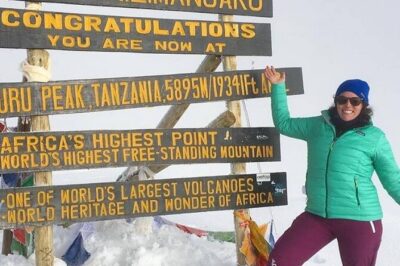
Climbing Kilimanjaro through 7 days Machame Route
Read our review →