Reviewed · KILIMANJARO CLIMBS
Climbing Kilimanjaro – Machame Route
Kilimanjaro feels different when porters handle the load. The Machame Route is one of the most scenic ways up, with nonstop scenery changes and real camp-life comfort for a trekking challenge that still keeps you focused. You’ll climb rainforest, moorland, semi-desert, and alpine desert, then earn your views in the dark on summit night.
I especially like that you do not have to plan logistics. Guides and porters handle the mountain setup, and the cook runs camp meals so you can just breathe, walk, and look up at Kili. I also like the human side of the trip, since the team support shows up in practical moments like guide care when someone is coughing, and in the steady guidance through the hardest stretches.
One consideration: cold, exposed terrain is part of the deal. Nights can drop well below freezing, and the ridge on the way to Barafu can feel narrow and gusty, so you need to stay calm, careful, and ready for a tough schedule even though it is only six days.
In This Review
- Key things that make the Machame climb click
- Why the Machame Route feels like the right kind of challenge
- Day 1: Moshi transfer, Machame Gate, and rainforest into camp
- Day 2 to Shira camp: moorland gradients and a first glacier peek
- Day 3 toward Lava Tower and Barranco camp: where altitude starts to bite
- Day 4: Barranco to Karanga Valley and Barafu camp, the exposed ridge day
- Day 5: the night climb, Stella Point, and reaching Uhuru Peak
- Day 6: Mweka descent through forest and the Springlands Hotel reset
- Price and logistics: what $2,322 is buying you on Kilimanjaro
- Safety and altitude support: the extras that matter, and what you still control
- Guides and team care: what the best parts of Kilimanjaro look like
- Who this Machame trek fits best, and who should think twice
- Should you book this Machame Route climb?
Key things that make the Machame climb click
- Porters, cook, and mess setup so you focus on trekking, not hauling
- Shira to the glacier view zone, including the Western Breach perspective
- Lava Tower day is the tough pivot, with altitude symptoms commonly starting around 4,630m
- Barafu ridge summit prep the same night, with gales and an exposed camp feel
- Stella Point sunrise moment as the mental high point of the climb
- Certificate system based on progress, green for Stella Point and gold for Uhuru Peak
Why the Machame Route feels like the right kind of challenge
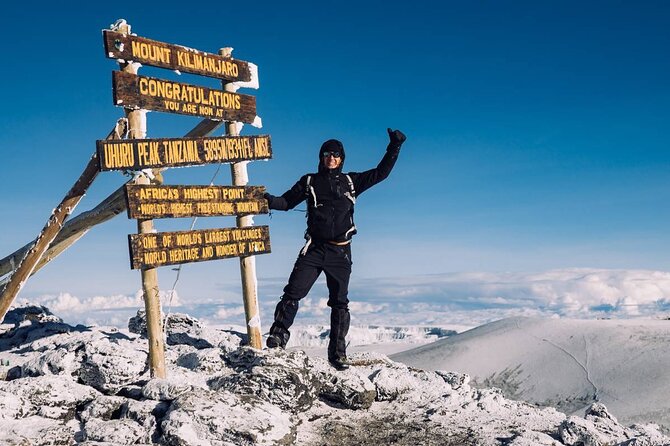
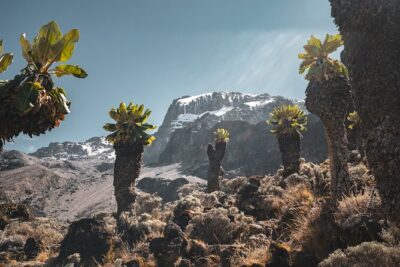
The Machame Route works because it gives you variety every day. You start in montane forest, then shift into moorland, then move into rocky semi-desert and finally the high alpine desert where the air gets thinner and the world gets harsher. That constant change is not just pretty. It also spreads the effort in a way that feels more like real trekking than one long grind.
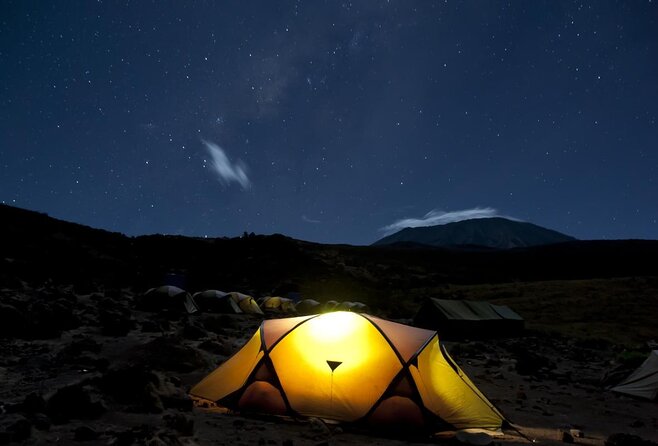
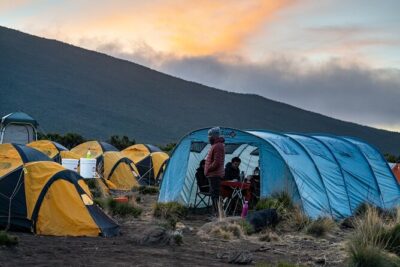
Another big reason this route hits is that camp life is built in. You’ll sleep in tents on the mountain, with sleeping mattresses provided, and you eat in a mess tent or sometimes outside. That matters because on Kilimanjaro, the summit is only one day. What you do before that, how you recover at camp, and whether you can eat something decent can affect how the final night feels.
Still, this is not a gentle walk. The Machame is known for challenging terrain and a serious final push. If you want a casual hike, this will not be it. But if you want a meaningful climb with strong support and a great chance to earn the top, Machame makes sense.
More Kilimanjaro climbs:
- Kilimanjaro climb by Lemosho Route (7-day)
★ 5.0 · 651 reviews - Kilimanjaro climb, Machame Route (7-day)
★ 5.0 · 262 reviews - Kilimanjaro Climbing Lemosho Route 8 Days.
★ 5.0 · 186 reviews
Day 1: Moshi transfer, Machame Gate, and rainforest into camp
Your day starts early with a briefing, then breakfast and a drive from Moshi (910m) up toward the mountain. You are aiming for Machame village (1490m), then you deal with one of the most common early-journey realities: the road might be rough.
If you can drive all the way to Machame Gate, the logistics are straightforward. If not, you can expect a muddy walk of about 3 km from the village, which takes roughly an hour. Either way, the goal is the same. You register at the gate office, grab your lunch pack, and step into the rainforest.
Day 1 climbs to Machame camp at about 2,980m. It is around 18 km and about 7 hours of hiking time, depending on conditions. I like day 1 on Machame because the rainforest start keeps things interesting. You get shade, constant movement, and a slower introduction to the altitude, before the trek begins getting more exposed later.
A practical note: even on day 1, you are climbing. You’ll feel the pace. Bring patience. Let the first day set your rhythm instead of racing it.
Day 2 to Shira camp: moorland gradients and a first glacier peek
Day 2 goes from Machame camp (2,980m) to Shira camp (3,840m). It is about 9 km, roughly 6 hours, and it is built with a gradual feel early on. You rise, have breakfast, then climb for about an hour through the forest zone. After that, you move onto moorland and get around two hours of a gentler gradient.
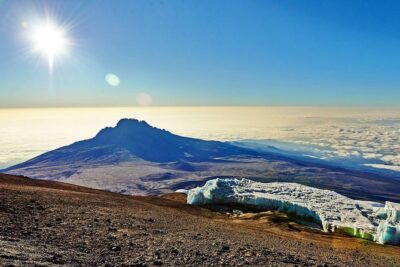
This is the day when views start turning into something you remember. As you hike, you can look easterly and spot the Western Breach with stunning glaciers. You are also due west of Kibo, which helps make the mountain feel close and real, not like a faraway photo.
Then you finish with a hike onto the Shira plateau and into an exposed campsite. Shira camp sits at 3,840m, and the temperature drop is noticeable. The cold can get serious, with nights that can fall well below freezing, so your sleep setup and warm clothing matter.
You’ll also benefit from the way camp logistics work here. Porters boil drinking and washing water, and you get dinner after camp life settles. That sounds small, but it is a huge quality-of-life factor when you are tired and cold.
Day 3 toward Lava Tower and Barranco camp: where altitude starts to bite
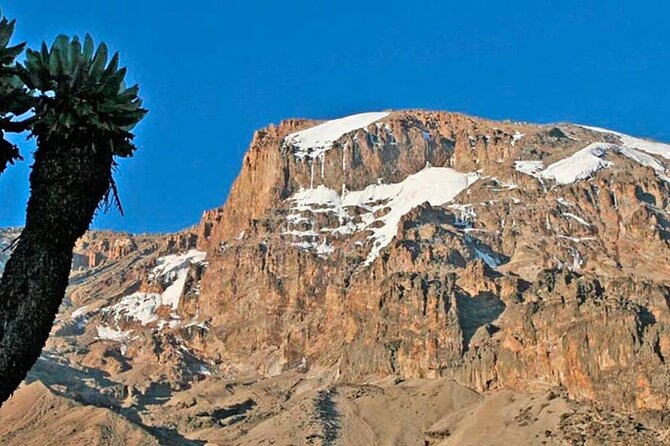
Day 3 is the route’s big reality check. It runs from Shira (3,840m) to Lava Tower (4,630m), then down to Barranco camp (about 3,950m). Expect about 15 km total and around 7 hours.
The terrain shifts fast. The route turns east into a semi-desert and rocky area. You reach 4,630m after roughly 5 hours, then lunch comes before you tackle the scree and rocky path to Lava Tower.
This is also where altitude symptoms often show up. Around this point, some climbers feel breathlessness, irritability, and headaches. That does not mean something is automatically wrong, but it is your cue to follow your guide’s pace, keep breathing steady, and focus on recovery.
The tricky part is that the day is not only about going up. You also descend nearly 680m back down toward Barranco camp. That means your legs get a workout twice, and you have to stay careful on uneven ground.
What I like about this day, even though it is tough, is that it sets you up for the Barranco section ahead. It also keeps the experience moving. Instead of one long, monotonous climb, you get that push, then a controlled descent, then you reset for the next stage.
A few more Moshi trips to compare
- Safari Serengeti And Ngorongoro
★ 5.0 · 288 reviews - Climbing Kilimanjaro through 7 days Machame Route
★ 5.0 · 151 reviews - Kilimanjaro climb, Lemosho Route (8-day)
★ 5.0 · 148 reviews - Kilimanjaro climb, Lemosho Route (6-day)
★ 5.0 · 129 reviews
Day 4: Barranco to Karanga Valley and Barafu camp, the exposed ridge day
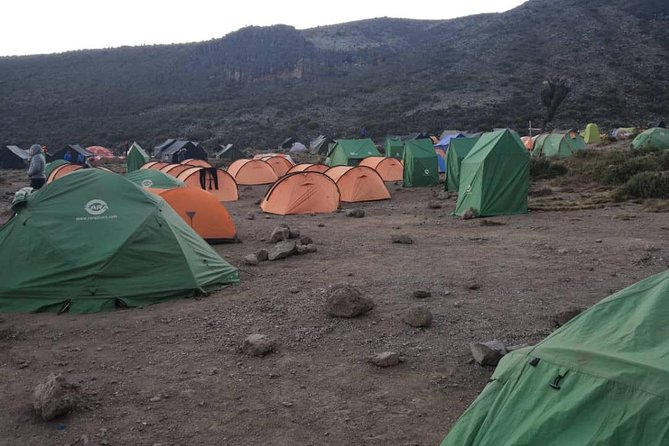
Day 4 connects Barranco to Karanga Valley and ends at Barafu camp at about 4,550m. It is roughly 13 km and about 7 hours of hiking time, and the habitat shifts to alpine desert.
The key feeling here is exposure. You’re on a narrow, stony ridge, and you can be dealing with gales. Tents are pitched on that ridge, so wind is not theoretical. It is part of your camp experience.
This is the day I’d be most firm with you on one rule: get your bearings in daylight. The terrain can be dangerous at night, so you want to familiarize yourself with footing and tent placement before dark. When you are tired, your brain cuts corners. Don’t.
Also, this is the day before summit night in a practical sense. The summit is about 1,345m higher, and your final ascent starts the same night. So you will need to prepare equipment and clothing early. Think about thermal layers, a ski stick, and how you will handle power for headlamps and cameras.
One more practical point: plan for water to avoid freezing. On Kilimanjaro, a frozen bottle is a misery multiplier, and the cold is intense enough that it is worth taking seriously.
Day 5: the night climb, Stella Point, and reaching Uhuru Peak
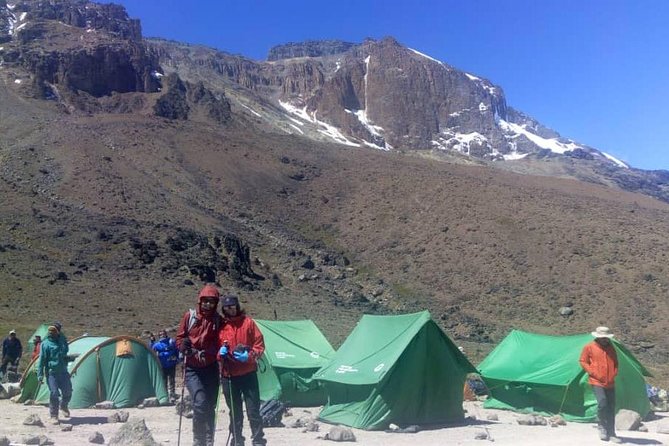
This is the big day. You rise around 23:30, with tea and biscuits, then shuffle into the night ascent. You head northwesterly and climb through heavy scree toward Stella Point on the crater rim.
The push to Stella Point takes about 6 hours. Many people find it mentally and physically the hardest part of the trek. I’d take that seriously, because it is where you are fighting cold, low oxygen, and the fatigue that builds after days on the mountain.
Stella Point sits at about 5,685m. You stop briefly and get rewarded with the sunrise. It is one of those moments that people describe as unforgettable, because you can see light breaking across the crater world while you feel the effort in your bones.
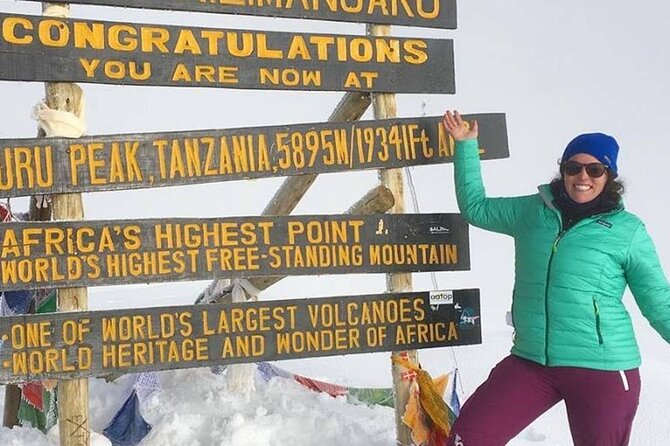
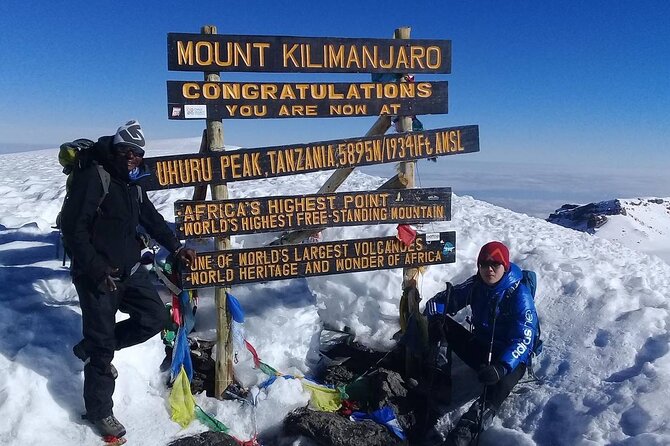
From there, you continue on to Uhuru Peak at 5,895m. Your hiking time to reach Uhuru Peak is listed at around 8 hours total for the day. Then you descend toward Mweka camp, usually taking about 7 to 8 hours and covering roughly 23 km of descent.
If you want a realistic mindset: day 5 is not just walking to the summit. It is managing discomfort while moving efficiently. Your guides and crew are the difference between panicking and pacing.
Day 6: Mweka descent through forest and the Springlands Hotel reset
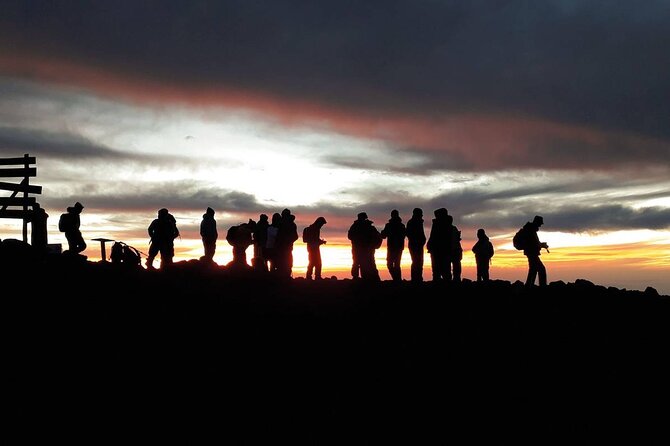
Day 6 is shorter on paper and longer in emotional value. You hike down from Mweka camp (about 3,100m) to Mweka Gate (about 1,980m). Expect around 3 hours and about 15 km, mostly through forest habitat.
The descent can feel easier in oxygen terms, but it is hard on knees and ankles. The trail can still be muddy, and you’ll walk a long way on tired legs. The good news is that after you reach the gate, the tour is designed to give you a proper finish.
You drive to Springlands Hotel in Moshi for a hot lunch. Then you continue back to Moshi for a hot shower and an overnight stay at the hotel. That combination matters. It is a real reset after days of cold, dust, and camp routines.
This is also where the summit certificates come in. If you reached Stella Point (5,685m), you receive a green certificate. If you reached Uhuru Peak (5,895m), you receive a gold certificate. It is a nice structure because it acknowledges progress, not only the peak.
Price and logistics: what $2,322 is buying you on Kilimanjaro
At $2,322.06 per person, this is not a bargain. But on Kilimanjaro, pricing is mostly about three things: mountain staff, permits, and camp support.
Here, you are paying for a full working team, not just a guide. Porters carry your equipment and supplies, and the cook handles meals. You also get tents and sleeping mattresses, camp eating tools, rescue fees, and a national park fees package. On top of that, you get boiled drinking and washing water on the mountain, plus meals every day you are trekking.
You also get two nights at Springlands Hotel before and after. That is not just comfort. It is preparation time. It helps you start the climb rested and lets you recover with heat and a real bed after.
Is there anything missing? Yes. Your own climbing gear is not included. Emergency oxygen is also not included. And tips for guides, porters, cook, and waiters are not included either. So the final cost can creep up a bit depending on your choices and how much you tip, but the big mountain costs are already handled.
For value, the deciding question is simple: do you want your time spent on breathing and walking, or do you want to manage permits, logistics, camping gear, and mountain staff yourself? This package leans hard toward the first option.
Safety and altitude support: the extras that matter, and what you still control
Altitude is the main risk. The schedule and route design attempt to manage it, with a day that climbs high, a day that includes a tough Lava Tower stretch, then a summit push at night. Along the way, the trek includes tools meant to support safety.
You have pulse oximeters and a first aid kit included. Rescue fees are included too. Those details are reassuring because they show the operator is thinking about the whole system, not only the summit.
Still, you remain the biggest variable. You can be perfectly prepared and still feel bad at altitude. That is why pacing matters. On a route like Machame, the day you reach Lava Tower height is where you might feel breathlessness, headaches, or irritability. If that happens, treat it as information, not a personal failure.
Also, keep expectations realistic. This is a hard climb with challenging terrain and exposed moments. Some people do wish they had more time to recover, especially if they are older, returning from illness, or carrying less fitness than planned. If you are in that category, I’d strongly consider training hard and also being open to longer routes in general, because a little extra recovery can make a real difference on summit week.
Guides and team care: what the best parts of Kilimanjaro look like
The best Kilimanjaro climbs feel like a team sport. You are slow some days. You feel better other days. A good guide keeps your head on straight, and a strong crew keeps camp running even when weather changes.
This route is staffed with qualified guides plus a mountain crew. Reviews you can use as a guide for what to expect point to consistent care, including English-speaking support. Names you might hear include Salim, Yesse Lema, Julius, Abdallah Chombo (also called Soap), and others such as Pesto and Mike, depending on your departure date.
The small moments are often the most memorable. One example from past participants is the idea of someone with a cough being given honey for tea by a guide named Salim. That kind of gesture does not fix altitude, but it does reduce stress. Less stress can mean better breathing habits and better sleep.
You can also see the importance of porters beyond hauling. In one story, a porter named Reggie carried someone’s backpack for the final push. That is exactly the kind of help that turns a bad moment into a summit moment.
Who this Machame trek fits best, and who should think twice
This trek suits adventurous hikers who want a scenic route with real altitude drama and a structured plan that removes logistics. It is a good fit if you have moderate fitness and you like being outdoors for long days with minimal fuss.
It is also a good match if you want small group energy. The maximum group size is 12 travelers, so you avoid the chaos of massive trekking crowds. That makes instruction and pacing easier for guides.
Who should think twice? If you know you struggle with steep, rocky walking, or if cold weather is a problem for you, be honest. The route includes exposed ridge camp conditions, and summit night is a long, uncomfortable cold climb. Also, since this is a six-day plan, if you personally recover slowly or you’re not currently in strong training shape, you might feel that the schedule is tight. When in doubt, I’d plan extra training and consider an option with more acclimatization time.
Should you book this Machame Route climb?
If you want Kilimanjaro with guides, porters, camp meals, tents, and permits handled, then yes, this Machame setup is a strong choice. You get real route variety, a clear summit-night structure, and support you can lean on when altitude and cold test you.
Book it if you are willing to train, accept that this is hard, and follow your guide’s pace without trying to “win” the trail. It is also a good pick if you like the idea of earning certificates tied to progress, with green for Stella Point and gold for Uhuru Peak.
Skip it, or at least reconsider the plan length, if you want an easy hike or if you know you need more time to recover between big elevation days. Machame gives a lot, but it demands respect.
Just posted around Moshi
- machame route★ 5.0 · 16 reviews
- Kilimanjaro Climbing Umbwe Route★ 5.0 · 3 reviews
- Wildlife Extravaganza: Manyara, Tarangire & Ngorongoro in 3 Days★ 5.0 · 3 reviews
- Mt Kilimanjaro 6 days Marangu route hike★ 5.0 · 3 reviews
- 3 Days Private E-Bike Tour in West Kilimanjaro★ 5.0 · 3 reviews
- West Kilimanjaro cycling Adventures★ 4.5 · 8 reviews
- Kilimanjaro Climb • Marangu Route ~ 9 Day★ 5.0 · 4 reviews
- Private Cycle to Kilimanjaro Bike Park Safari★ 5.0 · 6 reviews
Kilimanjaro Climbs, compared.
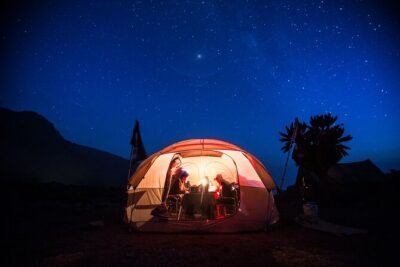
8-Day Small-group Lemosho Kilimanjaro Summit Trekking
Read our review →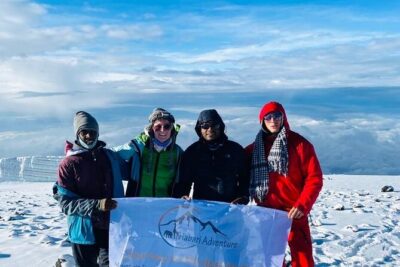
5 Days Best of Tanzania Luxury Safari Northern Circuit
Read our review →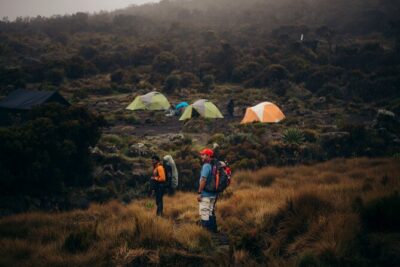
Climbing Kilimanjaro through 7 days Machame Route
Read our review →