Reviewed · KILIMANJARO CLIMBS
Kilimanjaro climb, Lemosho Route (6-day)
Kilimanjaro by Lemosho is not just hard, it is smart. This 6-day climb plus two hotel days uses the Lemosho route’s gradual acclimatization profile, helping you move through big altitude changes with fewer surprises. I love the certified Wilderness First Responder guidance plus the built-in medical support, including oxygen tanks and oximeters, so you are not guessing when your body gets loud.
Second, I really like how the experience handles the small stuff that matters on Kilimanjaro. The crew sets you up with customized tents for the mountain and all the camp basics, and the meals are treated like part of the climb, not an afterthought. My only caution is the obvious one: even when the technical hiking is straightforward, the altitude and especially the descent are where things can go wrong, so you still have to take pace and foot care seriously.
In This Review
- Key Points at a Glance
- Lemosho Route, Six Days: Why This Profile Usually Feels More Manageable
- First Day in Moshi and at JRO: Getting Off on the Right Foot
- Day 2: Londorossi Gate to Off-Road Drop-Off Near 3,500 m
- Day 3: Shira 2 to Lava Tower (4,630 m) and Then Down to Barranco Wall
- Day 4: Barranco Wall Up, Karanga Camp, and an Acclimatization Stroll Toward Barafu
- Day 5: Barafu Summit Camp Setup, Kosovo Summit Hike, and Night Summit Prep
- Day 6: Uhuru Peak 5,895 m, Personal Guide Support, Then the Descent to Millennium Camp
- Day 7: Millennium Camp to Mweka Gate Through Tropical Rainforest
- Day 8: Hotel Rest and Airport Transfer
- Price and Value: What $3,034 Covers and Why It Adds Up
- Crew Culture on Kilimanjaro: Why People Keep Thanking the Same Roles
- What to Bring, What You Can Hire, and How to Not Burn Out
- Who Should Book This Lemosho Climb, and Who Should Think Twice
- Should You Book Altezza’s Lemosho Route 6-Day Climb?
- FAQ
- How long is the full trip, and how many days are actual hiking?
- What’s included in the price of $3,034 per person?
- Do you get medical support and oxygen on the mountain?
- What about visas and insurance?
- Is this a private climb, and are tents shared?
- Is free cancellation available?
Key Points at a Glance
- Wilderness First Responder certified guides plus medical checkups during the trek
- Oxygen tanks, oximeters, and medical kits included for peace of mind
- Lemosho route pacing built for acclimatization, including time near Lava Tower
- Camp logistics handled well, with customized mountain tents and group equipment
- Food and drinks included, with multiple dietary options available
- Private-group feel, since only your group participates, plus shared-tent setup (2 hikers per tent)
Lemosho Route, Six Days: Why This Profile Usually Feels More Manageable
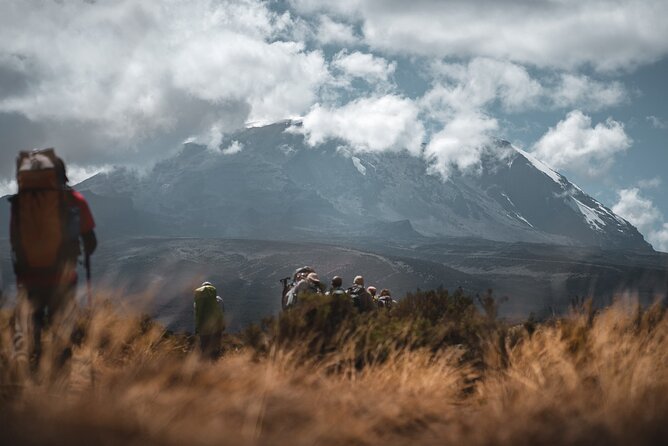
If you want the Kilimanjaro challenge without chaos, the Lemosho route is a strong choice. The route is selected for ease of acclimatization and it also moves you through a diverse range of climate zones, which is part of what makes Lemosho feel like more than just “walk uphill.” Day by day, you build altitude exposure more gradually, and the itinerary uses specific high points to help your body adjust.
Here is the real deal: acclimatization does not guarantee success. But it does improve your odds, and this plan keeps you on a track where you spend time at key elevations instead of rushing. You also get a structured rhythm: hiking in the day, sleeping in altitude camps, and then deliberate rest blocks that set up your night summit attempt.
Another thing I like is the balance between effort and support. You are hiking, yes. But you are not doing it with guesswork. The crew includes a professional climbing team (porters, camp masters, cooks), plus certified first-response capability and medical gear.
More Kilimanjaro climbs:
- Kilimanjaro climb by Lemosho Route (7-day)
★ 5.0 · 651 reviews - Kilimanjaro climb, Machame Route (7-day)
★ 5.0 · 262 reviews - Kilimanjaro Climbing Lemosho Route 8 Days.
★ 5.0 · 186 reviews
First Day in Moshi and at JRO: Getting Off on the Right Foot
Your trip starts around Kilimanjaro International Airport (JRO) with pickup and a transfer to the hotel. You meet an Altezza Travel representative, then settle in at Aishi Machame Hotel.
This first day matters more than people think. You get a hotel check-in window (check-in starts at 2:00 PM), hot water, internet access, and a swimming pool. There is also an evening briefing with managers to make sure you are ready before anything steep starts. That briefing piece is one of the quiet advantages of pre-organized climbs. You do not show up to a mountain full of logistics and hope it works out.
You should plan to arrive with enough time to check in comfortably and rest. Even a short delay in the first day can affect how you feel on day two.
Day 2: Londorossi Gate to Off-Road Drop-Off Near 3,500 m
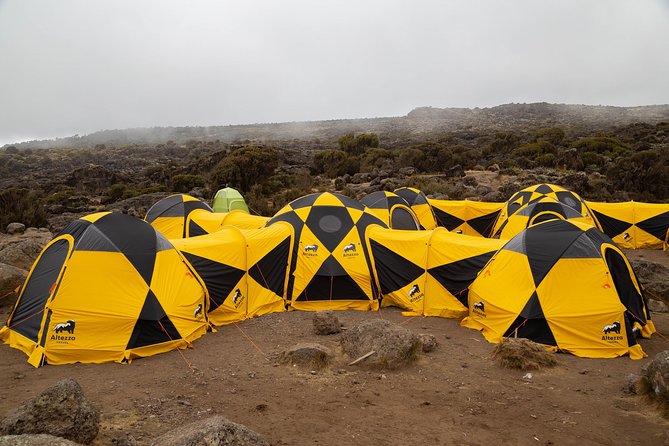
On day two you meet your guide and support crew in the morning for another briefing. Then you ride by vehicle roughly 3 to 4 hours to Kilimanjaro National Park’s western entrance at Londorossi Gate (2,200 m).
From there, you handle permits and registration with the search and rescue service. After that, you do something that makes this route more efficient: you continue upwards by off-road vehicles to the route’s drop-off area around 3,500 m. The idea is simple. You get to the real hiking part without spending day two on a long slog that adds altitude stress without much benefit.
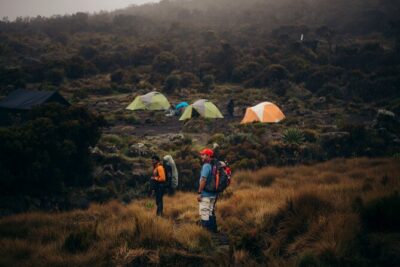
Once you start hiking from the drop-off point, you get your first major view moments, including the Shira Plateau. You will work toward Shira 2 Camp (3,900 m) with moderate altitude gain, and the day is long but not designed to crush you.
Practical takeaway: treat day two as your warm-up for patience. Your body is already learning how to breathe at altitude.
Day 3: Shira 2 to Lava Tower (4,630 m) and Then Down to Barranco Wall
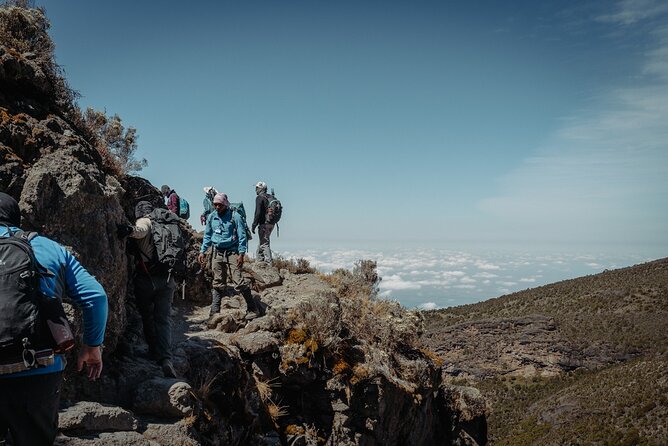
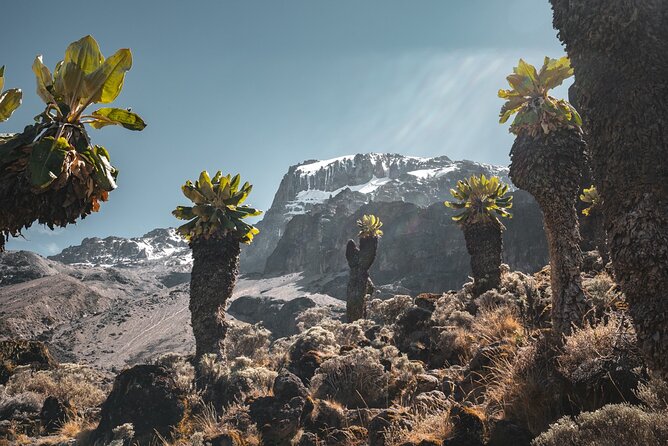
Day three is the “important acclimatization” day. After breakfast at Shira 2 Camp (3,900 m), you head toward Lava Tower (4,630 m).
This section has a lot of ascents and descents. It can feel tedious, but that is the point. You are training your body to handle repeated altitude changes while moving toward a high marker. You also stop at the right time. The plan includes spending at least 1 to 2 hours near this area for acclimatization, and lunch happens there.
Then you descend to Barranco Camp (3,960 m). This is where you get one of Kilimanjaro’s signature scenes: the Barranco Wall. You see it before you climb it, so the next day feels more like a planned challenge instead of a surprise obstacle.
The drawback to consider here is that day three can feel uncomfortable even when the route is working as designed. If you are prone to altitude headaches or nausea, this is one of the days to watch your pace and water intake.
A few more Moshi trips to compare
- Safari Serengeti And Ngorongoro
★ 5.0 · 288 reviews - Climbing Kilimanjaro – Machame Route
★ 5.0 · 170 reviews - Climbing Kilimanjaro through 7 days Machame Route
★ 5.0 · 151 reviews - Kilimanjaro climb, Lemosho Route (8-day)
★ 5.0 · 148 reviews
Day 4: Barranco Wall Up, Karanga Camp, and an Acclimatization Stroll Toward Barafu
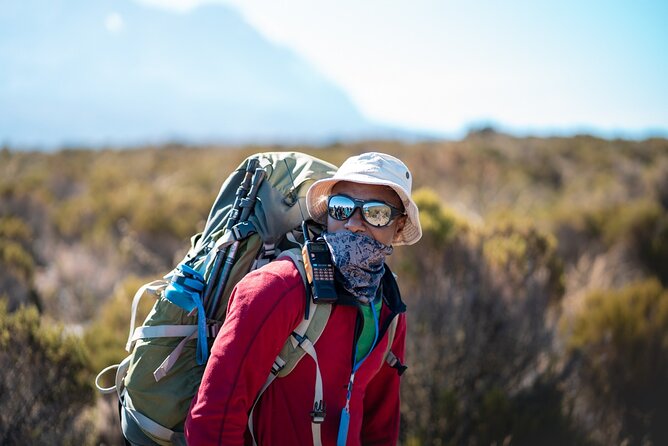
Day four starts early. You hike up Barranco Wall, and the climb through the gorge wall takes about an hour. Leaving early is recommended to avoid crowd buildup. Even if you do not think you will mind crowds, on Kilimanjaro they matter. Everyone is moving in thin air, and traffic on narrow paths can mess with your pacing.
After that, you get a payoff moment with photos in front of Kibo volcano. Then the day shifts into more hiking variety as you make your way to Karanga Camp (over 4,035 m, with the itinerary describing altitude changes along the way).
This day includes numerous ascents and descents, but the itinerary stresses a group pace chosen by expert guides. When you arrive, you get a warm lunch, and then after a couple of hours you do an acclimatization hike in the direction of Barafu.
Practical note: think of this as “climb a bit, come back smarter.” You are not trying to win the day. You are trying to arrive at day five ready to sleep well.
Day 5: Barafu Summit Camp Setup, Kosovo Summit Hike, and Night Summit Prep
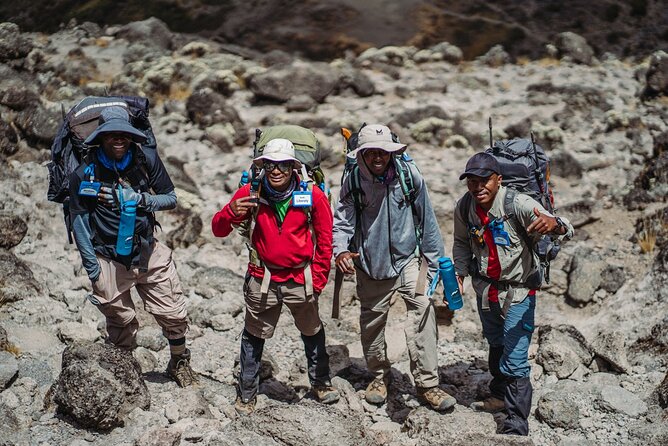
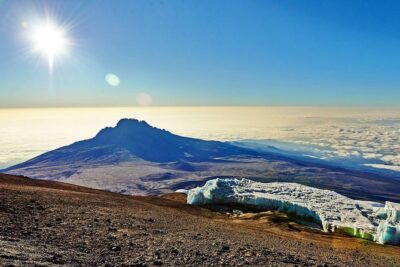
By morning on day five, you head to Barafu Summit Camp (4,640 m). This is the key launching point for the night climb to Uhuru Peak (5,895 m).
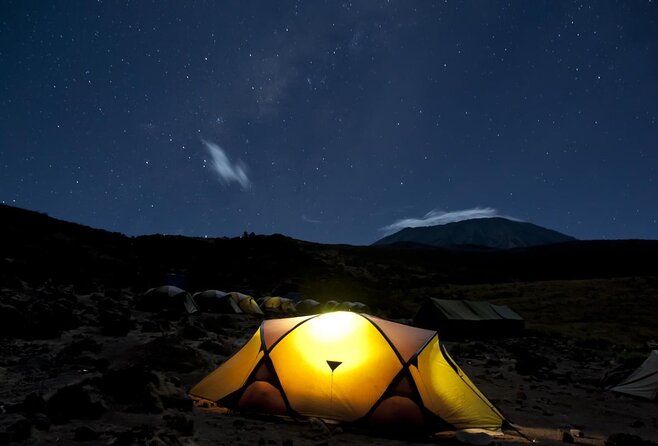
One of the most comforting parts of the day is that the team sets up your camp ahead of time, including your tents and sleeping bags. That means you are not spending energy on camp chores. On Kilimanjaro, saving energy is not a luxury, it is survival math.
Once you settle, you rest, then you do an acclimatization hike toward Kosovo Summit Camp (4,800 m) and return to Barafu. After that, you get a hot dinner, and the itinerary strongly suggests spending the remaining time resting before your summit push.
Food here is not just nice. It is fuel. And this operator provides three meals a day with options plus drinks like tea, coffee, juices, and soda. Dietary needs are supported too, including vegetarian, vegan, lactose-free, gluten-free, halal, and other plans.
My advice: on summit night, you need calm, not chaos. If you get restless, you can waste energy just thinking about the climb. Use the time before departure for proper down time.
Day 6: Uhuru Peak 5,895 m, Personal Guide Support, Then the Descent to Millennium Camp
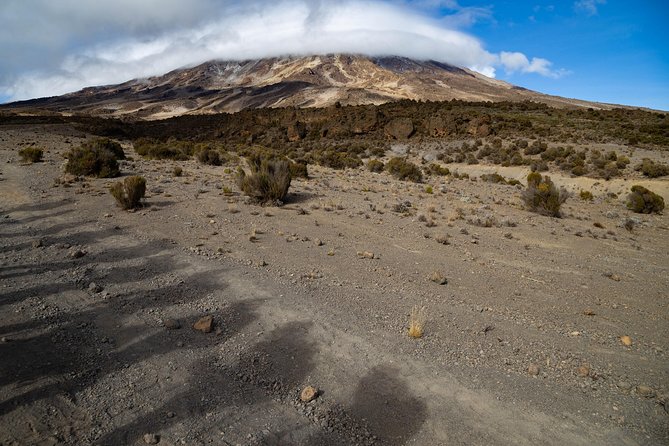
Night departure happens from Barafu at night. You start summiting toward Uhuru Peak (5,895 m).
The itinerary notes something that matches how many people experience Kilimanjaro: technically the climb is relatively simple, but the hardest part is high altitude. That is not motivational talk. That is physics.
Here is a strong detail in the plan: each pair of climbers gets a personal guide for the entire ascent to monitor physical and mental conditions. That kind of support matters at 5,000 plus meters, where fear and fatigue can feed each other fast.
If you reach the summit, you have an optional extra: you can descend to the nearest glacier if desired. After that, you return to Barafu, rest for about two hours, then continue your descent to Millennium Camp (3,820 m).
The most important caution in the itinerary is direct: 90% of all accidents occur during the descent, including broken arms and legs. You will hear versions of this almost everywhere on Kilimanjaro, but this trip explicitly calls it out. So take it seriously. The descent is when legs get shaky and attention slips.
Day 7: Millennium Camp to Mweka Gate Through Tropical Rainforest
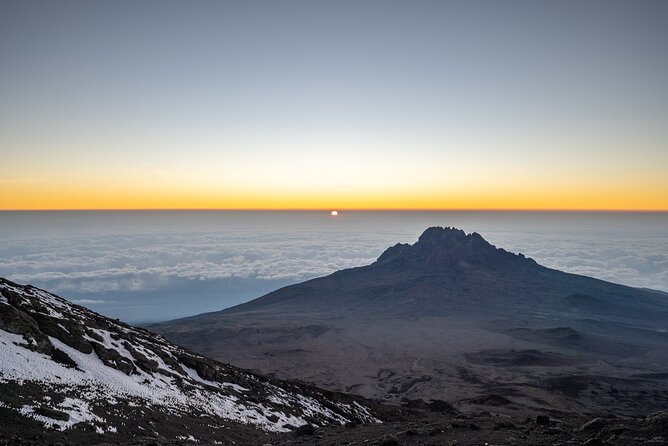
Day seven is the emotional shift day. Your camp sits in a tropical rainforest, and the day begins with the relief that altitude drops. After a warm breakfast, you head for the park exit at Mweka Gate (1,640 m).
The itinerary describes this as about 12 km with 4 to 5 hours of hiking. This is one of the days where you will feel how much your summit day took, and it is also the day where your success finally feels real because you are walking out of the mountain environment instead of toward it.
When you reach the exit, the whole group gathers for congratulations. You also get the chance to share thoughts in a guestbook, and you receive commemorative certificates. After that, you transfer back to the hotel.
This is also when you should slow down. Feet might feel good for the first 30 minutes, then start complaining. Keep using trekking rhythm and watch footing, especially if it is wet or muddy.
Day 8: Hotel Rest and Airport Transfer
Your final day is simpler. You rest at the hotel and transfer to the airport. Hotel checkout is at 11:00 AM, and if your flight is later you can extend your stay for an extra fee.
This is the practical part of a good climb package. Nobody wants to scramble around Moshi while trying to recover after days at high altitude.
Price and Value: What $3,034 Covers and Why It Adds Up
The price is $3,034 per person. That number can feel big until you list what is actually included.
In this package, you get:
- JRO pickup and drop-off, plus all ground transportation
- Two nights in Aishi Machame Hotel (2 guests per room, except solo climbs)
- Park fees collected by Kilimanjaro National Park
- Mountain-ready tents customized for Kilimanjaro (North Face VE-25, typically 2 hikers per tent)
- Group equipment like dining tent, sleeping pads, table and chairs, crockery and cutlery
- Three meals a day with choice options, plus drinks
- Certified Wilderness First Responder guides, plus a professional climbing crew (porters, camp masters, cooks)
- Medical checkups during the trek
- Oxygen tanks and oximeters, plus medical kits
- Lunch and dinner are included on trekking days
That is a lot more than just “guides and a route.” For Kilimanjaro, the real cost drivers are permits, logistics, trained medical capability, and running a camp at altitude. When you compare it that way, the price looks more like paying for a full operating system, not just access to a trail.
What is not included is also clear:
- Air tickets to Tanzania
- Visa fee
- Personal gear like hiking outfit, boots, sleeping bag (available for hire)
- Insurance, which is strongly recommended to cover mountain trekking activities
- Tips for crew (optional, based on satisfaction)
My bottom line on value: if you want a professional crew that takes safety and camp execution seriously, this price is trying to buy you fewer headaches, not just scenic bragging rights.
Crew Culture on Kilimanjaro: Why People Keep Thanking the Same Roles
One of the most praised themes in the feedback is how the crew shows up for you every day. People repeatedly call out that the guides and porters are friendly and that health and safety are treated as priority number one. They also talk about camp setup being ready when you arrive, so you spend your energy hiking instead of organizing gear.
Food is another consistent highlight. A chef doing reliable meals every day matters because you need calories for cold nights and thin-air mornings. You will also get options for dietary preferences, which is genuinely useful if you have restrictions.
Motivation style shows up too. Some names that have come up include Osman for singing and chanting and chief guides like Stanford and Athumani Omary Goigoi. Assistant guide names like Aniny Rangya Lema show up as well, alongside other guides such as Eliakim, Innocent, Joseph, Michael, Mwara, Aggrey, Frank, Hance, Lema, Israel, Jonas, Othman, Emmanuel, Richard, and Elia.
I am not saying you will have the exact same team on your dates. But the pattern is clear: you are not just hiring a route. You are hiring people who make camp life work and who keep the group moving safely.
What to Bring, What You Can Hire, and How to Not Burn Out
You are responsible for personal equipment such as your hiking outfit, boots, and sleeping bag. That said, equipment hire is available, which is helpful if you do not own mountain-ready gear.
This trip also gives you a lot of the critical support items: oxygen tanks, oximeters, medical kits, tents, sleeping pads, and camp equipment. So you do not need to overbuy everything. You do need to make sure you have what you personally require to stay warm and steady on rocky ground, especially during the descent when fatigue hits.
Your best strategy for not burning out is using the itinerary’s pacing logic. Start slower than you think, follow the guides’ plan, and don’t turn the acclimatization days into speed trials.
Who Should Book This Lemosho Climb, and Who Should Think Twice
This experience is for people with moderate physical fitness who want a professional operation and a structured acclimatization profile. It also fits well if you value safety infrastructure like Wilderness First Responder guidance, medical checkups, oxygen tanks, and oximeters.
You might want to think twice if:
- You are not comfortable with altitude, or you have health concerns that need more specific medical clearance.
- You tend to rush once the hiking feels manageable, because day six and day seven punish sloppy descending habits.
- You cannot afford the price and you are hoping to self-organize the missing pieces. The included logistics are a major part of the value here.
If you train for endurance and you respect the descent, you are setting yourself up for a better outcome.
Should You Book Altezza’s Lemosho Route 6-Day Climb?
I would book it if your priorities are professional crew execution, real medical support, and a route profile designed to help your body acclimatize. The included park fees, hotels, camp tents built for Kilimanjaro, oxygen and monitoring tools, and the guided ascent structure are the kind of details that reduce risk and stress.
I would pause if you are chasing the lowest price or you are not willing to prepare for the altitude experience. Kilimanjaro is still Kilimanjaro. This plan helps, but it cannot replace your effort, your pacing discipline, and your care with footing on the descent.
If that sounds like your style, this is a solid, safety-minded way to take on the Lemosho climb.
FAQ
How long is the full trip, and how many days are actual hiking?
The full experience runs about 8 days, with the main Kilimanjaro climb taking 6 days. The other days are for airport arrival and hotel time before and after the trek.
What’s included in the price of $3,034 per person?
The price includes JRO pickup and drop-off, ground transportation, two nights at Aishi Machame Hotel, Kilimanjaro National Park fees, mountain tents (North Face VE-25), group camping equipment, meals (three meals a day with options) and drinks, Wilderness First Responder certified guides, a professional climbing crew, medical checkups, and oxygen tanks, oximeters, and medical kits.
Do you get medical support and oxygen on the mountain?
Yes. Guides are certified Wilderness First Responders, there are medical checkups during the hike, and the trip includes oxygen tanks and oximeters, plus medical kits.
What about visas and insurance?
Visa fees are not included. The visa can be obtained at JRO for USD 50 for most nationals and USD 100 for US passport holders. Insurance is highly recommended and should cover mountain trekking activities.
Is this a private climb, and are tents shared?
Yes, this is a private tour/activity, so only your group participates. Tents are set up for 2 hikers per tent on Kilimanjaro (solo climbs use different arrangements).
Is free cancellation available?
Yes, free cancellation is available up to 24 hours in advance of the experience start time for a full refund. If you cancel less than 24 hours before the start time, the amount paid is not refunded.
Just posted around Moshi
- machame route★ 5.0 · 16 reviews
- Kilimanjaro Climbing Umbwe Route★ 5.0 · 3 reviews
- Wildlife Extravaganza: Manyara, Tarangire & Ngorongoro in 3 Days★ 5.0 · 3 reviews
- Mt Kilimanjaro 6 days Marangu route hike★ 5.0 · 3 reviews
- 3 Days Private E-Bike Tour in West Kilimanjaro★ 5.0 · 3 reviews
- West Kilimanjaro cycling Adventures★ 4.5 · 8 reviews
- Kilimanjaro Climb • Marangu Route ~ 9 Day★ 5.0 · 4 reviews
- Private Cycle to Kilimanjaro Bike Park Safari★ 5.0 · 6 reviews
Kilimanjaro Climbs, compared.
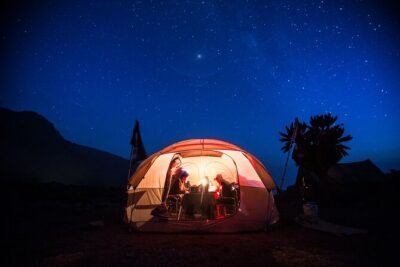
8-Day Small-group Lemosho Kilimanjaro Summit Trekking
Read our review →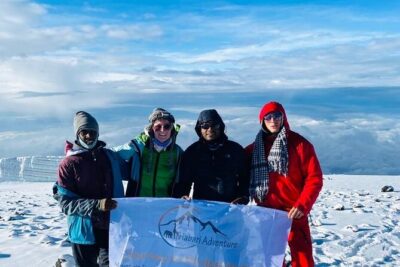
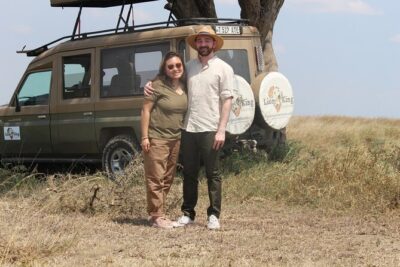
5 Days Best of Tanzania Luxury Safari Northern Circuit
Read our review →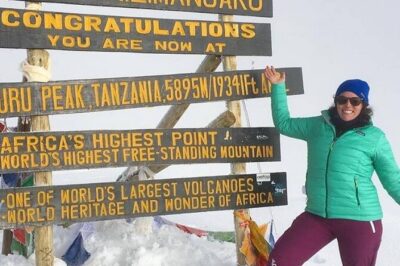
Climbing Kilimanjaro through 7 days Machame Route
Read our review →