Reviewed · 7-DAY EXPERIENCES
7 Days Highlight of Tanzania Mid-Range Standard
A week in Tanzania is never quiet. This mid-range safari packs Tarangire elephants, Serengeti big cats, and a high-impact Ngorongoro Crater descent into a tight 7 days. I like the way the route keeps you moving between very different habitats, so you are not just repeating the same game drive twice. I also like that meals and national park fees are included, so your budget stays sane once you land. One consideration: the days are long, and the early starts can feel like you have an alarm clock glued to your head.
In the feedback I read for Enticing Journeys, guide names like Baraka and George Mollel came up often, along with praise for friendly service and safe driving. If you care about getting good sightings without feeling rushed, that matters. You should also double-check one detail in advance: the big-picture description mentions Lake Eyasi, but the day-by-day route provided here ends after Ngorongoro.
In This Review
- Key highlights you should pay attention to
- A 7-day safari rhythm: private, packed, and built for sightings
- Tarangire National Park on day 1: elephants first, then everything else
- Lake Manyara: bird-rich habitats and the tree-climbing lion twist
- Serengeti game drives: central predators and Mara River drama in the north
- Day 3: central Serengeti and big-cat odds
- Day 4: northern Serengeti and the Mara River crossing window
- Retima Hippo Pool: a hippo viewing stop that also respects your appetite
- Mara River morning on day 5: early light, strong chances, and a black rhino maybe
- Ngorongoro edge on day 6: Big Five odds before the crater floor day
- Ngorongoro Crater day 7: a 610-meter descent and a full day on the floor
- Ngoitokitok Picnic Area: hippos close enough to matter
- Food and comfort: what the included meals actually mean for your day
- Price and value: why $4,465 can make sense here, and what to budget separately
- Guides and safari safety: the names that keep showing up in feedback
- Who should book this safari, and who should adjust expectations
- Should you book this 7-day Tanzania safari highlight?
- FAQ
- Where does this safari start and end?
- Which parks and key stops are included?
- Is pickup offered?
- Are national park fees included?
- What meals are included?
- Is this a private tour or shared?
- What is not included in the price?
- Are tips included?
- Can I cancel for a full refund?
- What kind of ticket will I receive?
Key highlights you should pay attention to
- Tarangire’s elephant focus, with a camp location that’s convenient for animal movement
- Lake Manyara’s birding and tree-climbing lions, plus hot spring and forest environments
- Serengeti in two styles, central big-cat viewing and Mara River drama in the north
- Retima Hippo Pool and the Ngoitokitok picnic area, timed for hippo viewing close to food
- Big Five odds at Ngorongoro, helped by open crater terrain and a full-day crater circuit
- Private transportation with park fees included, which cuts down on decision fatigue
A 7-day safari rhythm: private, packed, and built for sightings
This is a safari built around momentum. You will drive a lot, spend serious time on game drives, and get used to a pattern of early mornings, picnic lunches, and dinners at your lodge. That rhythm is exactly what most people come to Tanzania for, because wildlife does not schedule itself neatly for visitors.
Because it is a private tour for your group, your guide can adjust timing based on what is happening on the ground. That matters in places like the Serengeti and around the Mara River, where sightings can shift hour to hour. You still follow the planned route, but you are not stuck waiting around for other cars.
The big trade-off is energy. Expect long driving days and days around 7 to 10 hours listed per stop. If you want a relaxed pace with lots of downtime, you may prefer a longer itinerary or fewer parks. If you want action, this route is tuned for it.
A few more Kilimanjaro trips to compare
- 7 Days Kilimanjaro via Machame route affordable price
★ 5.0 · 110 reviews - Great Migration Safari In Tanzania
★ 5.0 · 71 reviews - Kilimanjaro Airport taxi to/from Moshi town/Arusha town
★ 5.0 · 60 reviews
Tarangire National Park on day 1: elephants first, then everything else
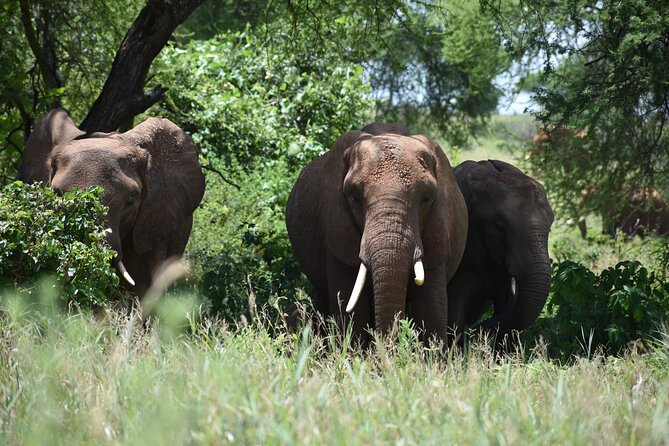
Tarangire is often treated like a warm-up stop, but it is not. The park is known for Tanzania’s big elephant population, and in the dry season animals tend to concentrate around the Tarangire River. That concentration is good for your chances, especially if you are visiting when water is scarce.
You leave Arusha after breakfast with a picnic lunch packed, and then you settle into your first safari base at Tortills Tented camp near the park. The camp’s location is a practical advantage, because when elephants move out of the park, you have a convenient corridor to watch them.
What I like about this style of first-day viewing is that you get immediate wildlife context. You are not starting with one-off sightings and then hoping the rest of the trip delivers. You start with a park that is good for big animals, plus giraffe, zebra, buffalo, and lots of antelope species.
What could be a drawback for some people? Tarangire can be more about steady sightings than dramatic, single moments like a Mara River crossing. If you are chasing only headline events, you might feel a day like this is less cinematic. But if you like consistent animal time, Tarangire is a strong opening.
Lake Manyara: bird-rich habitats and the tree-climbing lion twist
On day 2, you do two things in one flow. You get more time in Tarangire until mid-day, then you continue to Lake Manyara National Park.
Manyara is a naturalist’s dream in the sense that the park covers multiple environments: acacia woodlands, grasslands, swamps, marshes, and hot springs, plus an underground-water forest component. That variety is a sighting advantage. It also makes the drive feel different every few minutes, because the terrain changes the animal patterns.
The bird life here is a selling point. The park records 400-plus bird species, including big flocks of flamingos and migratory water birds. If you enjoy birds, this is one of the easiest parks on a safari to feel excited even between big animal sightings.
And then there is the famous Manyara lion behavior. You may hear about tree-climbing lions, which is why acacia areas can be worth slowing down for. Even if you do not see one climbing, you still benefit from the park’s mix of wildlife-friendly zones.
One thing to plan for: Manyara can be visually busy. There is a lot going on, which means you benefit from a guide who can prioritize. In the best-case scenario, you get both animals and birds, without feeling like you are being pulled in ten directions.
Serengeti game drives: central predators and Mara River drama in the north
Serengeti is where this itinerary earns its reputation. You get two dedicated days, plus a separate early Mara River morning. That structure helps because Serengeti is not one single “type” of wildlife experience.
Same base in Kilimanjaro, a completely different day:
- 6 Days Tanzania Classic Safari
★ 5.0 · 52 reviews - 6 Days Climbing Mount Kilimanjaro Machame Route
★ 5.0 · 40 reviews - 8 Days Kilimanjaro Hike via Lemosho Route
★ 5.0 · 39 reviews - 8 Days Great Wildebeest Migration – Mara River Crossing
★ 5.0 · 28 reviews
Day 3: central Serengeti and big-cat odds
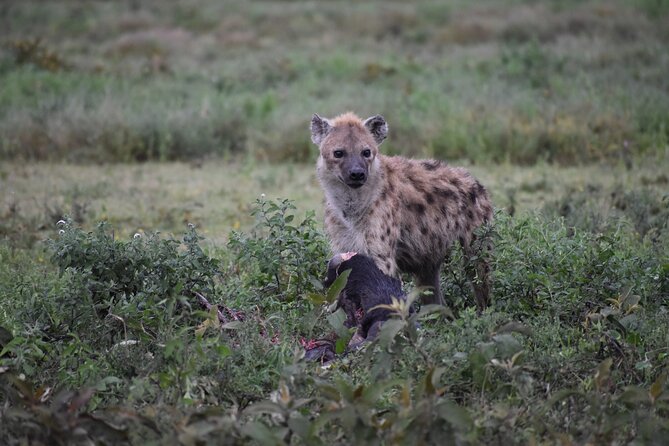
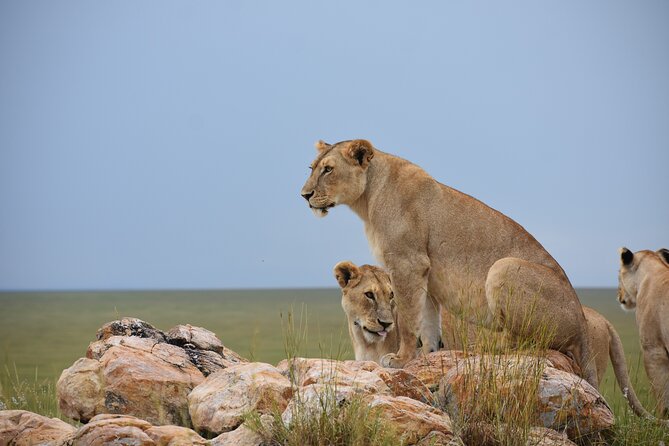
On day 3, after breakfast you head to Serengeti and begin with a picnic lunch, then continue with a game drive. This central area is known for predator abundance, especially lions, leopards, and cheetahs, with other animals like hyenas, jackals, elephants, giraffes, hippos, and buffalo also possible.
In plain terms, this day is your foundation day. It sets up what kinds of animals you are likely to see for the rest of the week, and it helps you understand the Serengeti’s “rules,” like how often herds move and where predators tend to position themselves.
You stay at Serengeti heritage Tented Camp for dinner and overnight. Lodges like this usually mean you are close enough to the action without feeling like you are sleeping inside the park. That balance is handy when you are doing a second big day next.
Day 4: northern Serengeti and the Mara River crossing window
Day 4 shifts you to the northern part of the Serengeti for a game drive along the Mara River. The itinerary calls out how crossing timing depends on rainfall, with crossings starting as early as June or as late as August.
This is the kind of day where the “what happens today” factor is huge. If the timing lines up, you can get that intense, dramatic feeling people travel for. If the timing does not line up, you still get great viewing, but the story is different, more about predators in position and animals moving toward water.
Either way, you get a big wildlife payoff. It is also a day where your guide’s patience matters. Mara River country can be slow for a while, then suddenly loud.
Retima Hippo Pool: a hippo viewing stop that also respects your appetite
Day 4 includes a second stop: Retima Hippo Pool. The plan frames it as a good place to see hippos while enjoying food.
That detail matters more than it sounds. Safari days can turn into a series of “look, look, look” moments where meals feel like an afterthought. A stop like this gives you a break while keeping the animal theme going, so you do not lose the trip’s momentum.
From a practical standpoint, this kind of structured stop is also useful for photos. Hippos can be unpredictable, but having a planned window is better than spending extra drive time in search mode.
Mara River morning on day 5: early light, strong chances, and a black rhino maybe
Day 5 starts with a morning game drive along the Mara River. The itinerary describes it as an amazing experience seeing hoofed mammals searching for water and greener pastures, followed by iconic predators.
The emphasis here is on the predator-prey cycle. You are watching animals move, then watching what follows them. This is where you tend to feel the “documentary” vibe, because the ecosystem keeps playing out even if you miss one dramatic scene.
The list of possible sightings is long: hippos, lions, cheetahs, leopards, elephants, giraffes, warthogs. It also includes a possible endangered black rhino sighting. I will be honest with you: the word may is doing a lot of work. Still, if you are going to a place where rhino sightings are possible, Mara-region effort is one of the logical spots in a wider Serengeti-and-Ngorongoro route.
After this morning push, you have an afternoon game drive and then return for dinner and overnight. The flow makes the day feel complete, not just a morning hit and run.
Ngorongoro edge on day 6: Big Five odds before the crater floor day
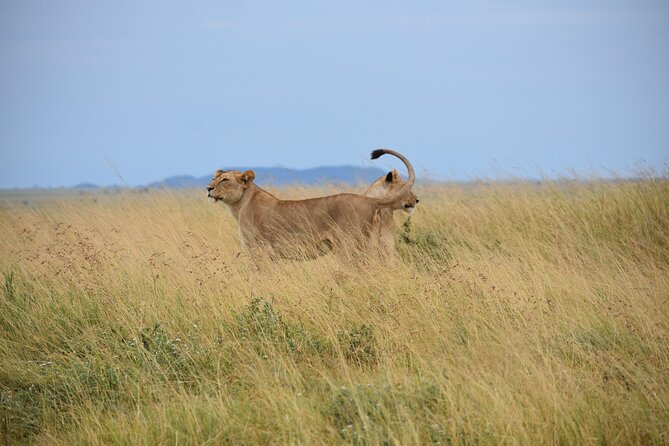
Day 6 mixes one more Serengeti drive with travel toward Ngorongoro Crater. After an early breakfast you go out again for game viewing. The itinerary notes the chance to spot the Big Five and highlights the fact that the animals roam freely in unfenced reserves, leading to uninterrupted viewing.
That detail sounds like marketing, but it is practical. Fences change how animals behave and how close you can safely get. Unfenced areas often lead to more natural animal behavior, which means you can learn more from what you see, not just check boxes.
You then move toward Ngorongoro. The plan says you arrive at the edge and get your first glimpse of what awaits the following day, including glistening streams and open grassland on the crater side. You then spend the evening and night at a mid-range partner lodge with taste-focused restaurants and rooms aimed at rest and ease.
Because the lodge is described in general terms rather than specific named property, you should treat it as mid-range comfort rather than luxury. But the key is that your day 7 crater experience will be early and intense, so you want a base where you can sleep well.
Ngorongoro Crater day 7: a 610-meter descent and a full day on the floor
Day 7 is the payoff. You leave very early and descend 610 meters into the crater floor. The itinerary describes the crater floor as about 265 square kilometers, and it calls the crater a Big Five country with open terrain that makes game viewing easier.
This is a different kind of safari than the Serengeti plains. Instead of endless open spread, you get a “bowl” effect. That can help sightings because animals are visible from multiple angles, especially around water and grazing spots.
The itinerary also gives a wildlife-number headline: about 25,000 large mammals, including black rhino, wildebeest, and zebra. It also mentions Africa’s densest concentration of large mammals, suggesting you are in one of the most wildlife-dense settings you can visit.
You spend the day exploring the crater floor, including picnic on the grasslands. That sounds simple, but it is one of the best parts of crater day. You are not constantly in transit. You are sitting with the view while grazing herds move around you.
Ngoitokitok Picnic Area: hippos close enough to matter
Day 7 also includes Ngoitokitok Picnic Area as a second stop. The plan says you dine while hippos are within walking distance.
That is a special moment because it changes the whole feel of lunch. Instead of a roadside stop, it becomes a controlled viewing experience where the animal world is right there. It is also a reason to bring a camera that you actually use, not one that sits in your bag until the end.
Food and comfort: what the included meals actually mean for your day
Food on safari is not just about taste. It is about timing. This itinerary lists breakfast 6 times, lunch 7 times, and dinner 6 times, with dinner included most nights after your game drive schedule settles.
In practice, you will likely pack picnic lunches for long drives and midday pauses. That means fewer random stops and less time negotiating with roadside food sellers. For many people, that is a real value: less friction, more time on animals.
On lodge nights, the itinerary describes dinner and overnight at Tortills Tented camp for day 1 and Serengeti heritage Tented Camp for day 3. For day 6 it mentions a mid-range partner lodge with tasteful restaurants and rooms chosen for comfort. That suggests you should expect clean, practical rooms and food that is not just “survive the hunger” level.
Your comfort will still be shaped by safari basics. Expect early mornings, dust, and a vehicle schedule that is wildlife-driven. If that sounds like fun, you are in the right place.
Price and value: why $4,465 can make sense here, and what to budget separately
The price is $4,465 per person for this mid-range, standard-highlight itinerary. That may sound steep until you look at what is included.
Included items cover all national park fees, private transportation, all fees and taxes, and the meals listed above. That is a big deal in Tanzania, where park access costs can add up quickly. You are also not dealing with separate ticket purchases for different parks day by day.
What is not included is also clear:
- Visa fees
- Tips
- Travel insurance
- Personal items
So, the real budgeting equation is not just the headline price. It is the gap between what the tour covers and what you must cover yourself. If you budget for visa, insurance, and a tip plan ahead of time, the trip becomes much easier to enjoy.
Also, because it is private transportation, you are paying for flexibility and not sharing the vehicle with unrelated groups. In a safari setting, fewer people often means less waiting and a smoother rhythm, especially around hot spots like the Mara River and the crater.
Guides and safari safety: the names that keep showing up in feedback
Even without naming the guide you will get, you can look for patterns. In the feedback for Enticing Journeys, certain guides are mentioned again and again, including Baraka, George, George Mollel, Hoza/Hozza, Nestor, Linus, and Steven.
The praise centers on a few key qualities:
- Being friendly and helpful
- Showing real care for guests’ experience
- Balancing getting you close with safety
- Being flexible when the day requires it
For your decision, this is useful because safari quality depends heavily on the guide and driver. Park signs do not matter if someone does not spot wildlife early, or if they rush you through areas that need patience.
If you book, I suggest you ask the operator ahead of time what matters most for your group, like big-cat focus versus birding versus a calmer pace. Then see whether their guide style matches what you want.
Who should book this safari, and who should adjust expectations
This itinerary fits best if you:
- Want a classic Tanzania circuit without spending weeks traveling
- Like wildlife variety across parks, from elephants to birds to predators
- Are okay with early starts and long drive days
- Care about a private safari style
It may be less ideal if you:
- Want a slower pace with lots of downtime
- Struggle with long, scheduled days
- Need a very clear lodge list for every night, since day 6 uses general mid-range partner lodge language
Also, note the earlier mismatch between the overview and what the day-by-day plan shows. The overview mentions Lake Eyasi, but the provided route ends at Ngorongoro. You should ask a simple question before you pay: does Lake Eyasi appear in your final itinerary, or is it a separate add-on?
Should you book this 7-day Tanzania safari highlight?
If you want a week that feels like you are getting “the main characters” of Tanzania wildlife, I would lean yes. The route covers Tarangire, Lake Manyara, Serengeti, and Ngorongoro Crater, and it adds smart extras like Retima Hippo Pool and Ngoitokitok Picnic Area where you can see hippos around meals.
The value angle is strong because park fees, private transportation, and meals are included. The biggest reason to hesitate is not the wildlife promise. It is the pace. If early starts and 7 to 10 hour days sound exhausting, choose a different itinerary length or adjust your expectations.
If you are the type who wakes up for sunrise without complaining too much, this is a solid booking. And if you can request a guide known for safety and serious spotting, you can turn this from a nice safari into a memorable one.
FAQ
Where does this safari start and end?
It starts in Arusha, with the route beginning immediately with drives to the safari areas. The itinerary ends after Ngorongoro Crater and the final picnic stop at Ngoitokitok Picnic Area.
Which parks and key stops are included?
The route includes Tarangire National Park, Lake Manyara National Park, Serengeti National Park, the Mara River game drives, Retima Hippo Pool, Ngorongoro Crater, and Ngoitokitok Picnic Area.
Is pickup offered?
Yes, pickup is offered, and the safari begins from Arusha.
Are national park fees included?
Yes. The package includes all national park fees, plus all fees and taxes.
What meals are included?
Breakfast is included 6 times, lunch 7 times, and dinner 6 times.
Is this a private tour or shared?
It is private. Only your group participates.
What is not included in the price?
Visa fees, tips, travel insurance, and items of a personal nature are not included.
Are tips included?
No, tips are not included.
Can I cancel for a full refund?
Yes. You can cancel up to 24 hours in advance for a full refund.
What kind of ticket will I receive?
You will receive a mobile ticket.
Just posted around Kilimanjaro
- 5 days Serengeti Wildebeest Migration Safari★ 5.0 · 3 reviews
- Mount Kilimanjaro 6 days – Machame route★ 4.0 · 5 reviews
- Lemosho Route★ 5.0 · 21 reviews
- 6 Days Machame Route Kilimanjaro Trekking★ 5.0 · 13 reviews
- Mount Kilimanjaro 7 Days – Machame Route★ 5.0 · 5 reviews
- Amazing 4 Days Safari 3 Nights: Tarangire, Ngorongoro, Serengeti★ 5.0 · 6 reviews
- 9 Days – Best of Tanzania Safari★ 5.0 · 4 reviews
- Tanzania Safari and Kilimanjaro Climb Multi-Day Experience★ 5.0 · 3 reviews
7-Day Experiences, compared.
7-Day Premium Luxury Tanzania Safari All-Inclusive
Read our review →
Group Safari 7 Days in Tanzania’s Main Parks
Read our review →
Climbing Kilimanjaro through 7 days Machame Route
Read our review →
7-Day Machame Kilimanjaro Summit Tour from Arusha
Read our review →