
Reviewed · KILIMANJARO CLIMBS
Mt Kilimanjaro 360° Trek with Once-in-a-Lifetime Crater Camping
Kilimanjaro can feel bigger than life. This 360° Northern Circuit trek is built for panoramic views and quieter trails, then tops it off with a night of crater camping under Kilimanjaro’s glaciers. I also like that the plan keeps your body in mind, with an acclimatization-focused day and a steady, well-paced rhythm from the rainforest up to the high alpine.
Two things stand out for me: the route choice (less traffic on the northern slopes, plus standout scenery like Shira Plateau and the crater) and the all-in service, including camping gear, daily wash hot water, and emergency oxygen. One consideration, though, is that it can get brutally cold in the exposed high sections, so you need to take the clothing advice seriously.
This is also run by Pinnacle Adventures & Safaris Ltd., and their team quality comes through in reviews. People repeatedly praise the professionalism and care of guides and assistant guides like JT and Jobeth, and they note how helpful the whole crew is from pickup onward.
In This Review
- Key Highlights You’ll Actually Feel on This Trek
- Moshi Pickup To Kilimanjaro Gate: The Rainforest Start That Sets the Tone
- Shira Plateau Days 2-3: Wide Views, Dropping Temperatures, Cold Night Reality
- Acclimatization and the Lava Tower Area on Day 4
- Northern Slopes Charm: Buffalo Ridge and Rongai Third Cave (Days 5-6)
- Summit Eve to Uhuru Peak: Midnight Start, School Hut, and the Crux Day (Day 7-8)
- Ash Pit Morning and the Descent Through Mweka Forest (Day 9-10)
- Guides, Porters, and the Team Care That Shows Up in Reviews
- Price and Value: What You’re Paying for at $4,211.27 Per Person
- What to Bring: Cold, Mud, and Midnight Gear Checks
- Should You Book This Kilimanjaro 360° Crater Camping Trek?
- FAQ
- How many days is this Kilimanjaro trek, 9 or 10?
- What difficulty level should I expect?
- What is included in the trip price besides guides?
- Do I need to bring my own hiking gear?
- Is the emergency oxygen meant to help with summit day?
- What is the cancellation policy?
Key Highlights You’ll Actually Feel on This Trek
- Low-traffic Northern Circuit routing for more quiet walking and big-sky views
- Crater camping under the glaciers after your summit day, not just a standard rest stop
- A deliberate acclimatization day that keeps you safe and moving smartly
- Shira Plateau cold exposure plus a chance to go higher for valley and Western Breach views
- Support that’s built in: porters, cooks, camping setup, hot water wash, and emergency oxygen
Moshi Pickup To Kilimanjaro Gate: The Rainforest Start That Sets the Tone
You start in Moshi, with pickup offered and return transfers included. The drive is about 45 minutes from Moshi to the Kilimanjaro National Park Gate. You’ll wait for permits, and you’ll see the behind-the-scenes bustle of other crews getting ready, which is a useful reality check. Once you start walking, the trail is in rainforest country, usually scenic, and sometimes wet and slick.
Day 1 climbs from about 2389m to 2785m, gaining roughly 396m. It’s a gentle start by Kilimanjaro standards, but the details matter: the rainforest trail can be muddy and slippery. I strongly recommend gaiters and trekking poles here, because your footing will do better than your confidence. Your guide also uses this day to talk local flora and fauna, so the forest walk feels purposeful, not just warmup miles.
Practical note: this first day is long enough to warm up your legs, but it’s still “get comfortable with the pace” time. Don’t burn matches. You’re saving energy for the high days when breathing gets expensive.
More Hiking Trips in Moshi
- Private Kilimanjaro Hike 7 Day Lemosho Route
★ 5.0 · 60 reviews - Best Kilimanjaro hiking day trip tour with Kilinge Adventures
★ 4.5 · 54 reviews - #1. Best Kilimanjaro Day hike Tour-Machame Route-ISMANI
★ 4.2 · 47 reviews
Shira Plateau Days 2-3: Wide Views, Dropping Temperatures, Cold Night Reality
On Day 2 you climb from 2785m up to 3504m, gaining about 719m, and you leave the rainforest behind. The trail steadies into an ascending path with wide views as you reach the rim of the Shira Plateau. This is where you start noticing the temperature change. You’ll go from damp and warm to cooler air where you feel exposed.
Day 3 continues the Shira Plateau crossing, moving from Shira Camp One (around 3504m) to Shira Camp Two (around 3895m), gaining about 391m. You’re crossing one of the highest plateaus on Earth, and the key word here is open. That openness is why you get those valley views, and also why nights can drop well below zero.
A smart moment on Day 3: if you have the energy, go a bit higher up the plateau near camp for a stunning view across the valley and toward the Western Breach. It costs some effort, but it can be worth it because the cold night is coming anyway. You might feel the altitude, but you’re also training your body to tolerate it without rushing.
The drawback of these days is simple: cold. You’ll want layers that actually work when the wind hits the plateau. You’ll also want to keep your hands and water from freezing, since that’s when comfort starts falling apart.
Acclimatization and the Lava Tower Area on Day 4
Day 4 is listed with a small overall altitude gain, from about 3895m to about 3986m. That’s intentional. You’ll keep moving east along ridges, passing the junction toward Kibo, then heading southeast toward the Lava Tower area, often called the Shark’s Tooth. The Lava Tower is around 4650m, so even if the day doesn’t look dramatic on paper, you still spend time at higher elevations than you sleep.
After the tower you reach another junction that leads to the Arrow Glacier. Then you descend to overnight at Barranco Camp. This rhythm, up to a higher point and then down to sleep lower, is a classic acclimatization technique. It gives your body a chance to adapt while reducing the “sleep high every night” stress that can make people struggle.
What I like about this day is that it teaches you how to manage effort. When you’re pushing toward the Lava Tower, you keep a steady tempo. When you drop toward Barranco Camp, you reset and focus on recovery: eating, hydration, and getting your layers right before the cold sets in.
Expect this to feel like a long but manageable day, listed around 7 hours. The payoff is that it prepares you for the big summit push without pretending altitude is a joke.
Northern Slopes Charm: Buffalo Ridge and Rongai Third Cave (Days 5-6)
Day 5 climbs out of Moir Valley and ends lower than it starts, going from about 4155m down to about 4033m. The route follows inclines and declines skirting around Kibo’s northern slopes, which means the scenery is always shifting. One of the nicer options here is a detour to climb Little Lent Hill at about 4375m, then return to the Northern Circuit trail.
You reach Buffalo Camp just after midday for lunch and a rest. This is also where the views open to the plains north of Kilimanjaro, stretching toward the Kenyan and Tanzanian border. It’s the kind of visual payoff that makes the earlier cold and mud feel worth it.
Day 6 continues in the northern rhythm, dropping from about 4033m down to about 3936m. You climb up Buffalo Ridge and then down into Pofu Camp for lunch. After that, you head east around the northern slopes to the Rongai Third Cave, arriving mid-afternoon.
This day is shorter than Day 5 and should feel better if acclimatization is going well. You’re not “saving yourself,” you’re letting your lungs catch up. That matters, because the plan requires a summit night that starts just before midnight.
One caution: even when you feel better, keep your pace controlled. With Kilimanjaro, the temptation is to speed up when you start feeling strong. Fight that urge. You want strong to be a long-lasting trait, not a one-day burst.
More Kilimanjaro climbs:
- Kilimanjaro climb by Lemosho Route (7-day)
★ 5.0 · 651 reviews - Kilimanjaro climb, Machame Route (7-day)
★ 5.0 · 262 reviews - Kilimanjaro Climbing Lemosho Route 8 Days.
★ 5.0 · 186 reviews - Climbing Kilimanjaro – Machame Route
★ 5.0 · 170 reviews
Summit Eve to Uhuru Peak: Midnight Start, School Hut, and the Crux Day (Day 7-8)
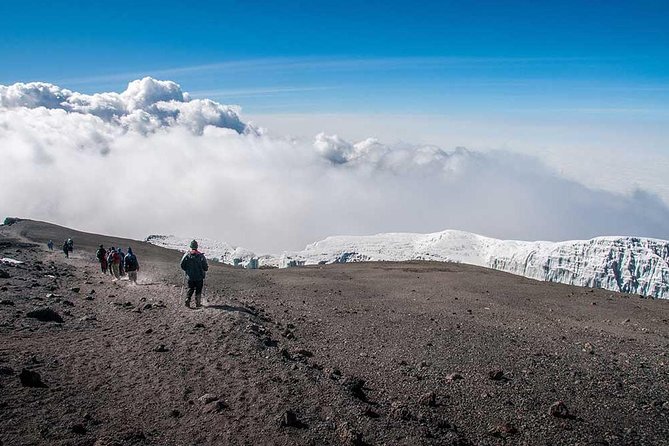
Day 7 brings the biggest effort before you even start the summit. You climb from roughly 3936m to about 4717m, gaining about 781m, reaching School Hut. After a steady ascent and crossing the saddle between Kibo and Mawenzi, you continue southwest to School Hut for an early dinner.
This is summit preparation in real time. The plan starts the summit attempt just before midnight. Before you sleep, you’ll get your gear ready in one go: warm clothes, insulated water bottles, snacks, a headlamp, and your camera. It’s not fancy, but it’s smart. If you organize it before midnight, you avoid wasting energy and time when it’s cold and dark.
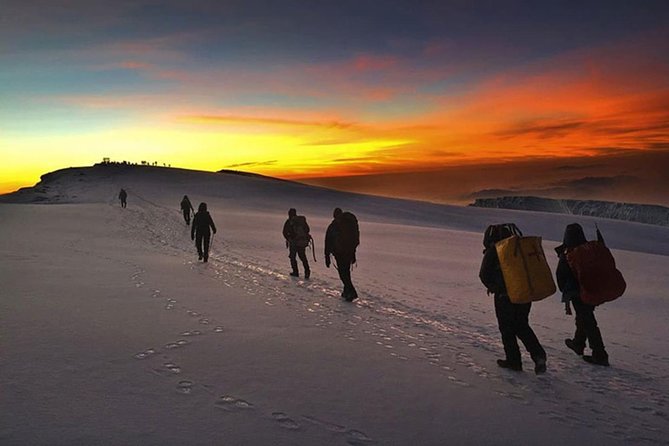
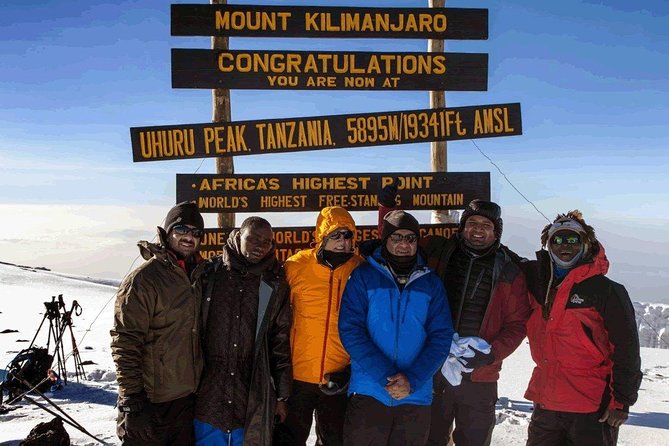
Day 8 starts your ascent to Uhuru Peak just before dawn. You celebrate at the summit, then descend into Kilimanjaro’s crater for a night at Crater Camp beneath the glaciers. The trekking time listed is about 7 to 9 hours for the ascent and descent.
This is the part you remember long after the “steps per hour” math is forgotten. Even when you’re moving slowly, your body is working hard because the air is thin and the cold is real. The upside is that the views come in layers, sunrise included, and you still end the day somewhere totally different from the usual “camp at a number” experience.
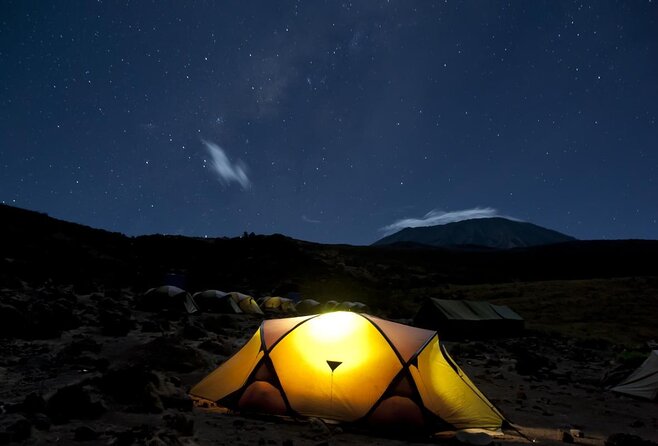
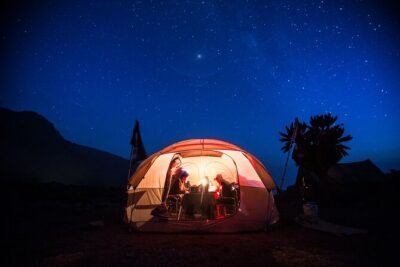
Crater camping is the headline here. It’s not just altitude drama, it’s the wow-factor of being down in the crater with glaciers overhead. Few people get that, and you can feel why it earns its nickname.
Ash Pit Morning and the Descent Through Mweka Forest (Day 9-10)
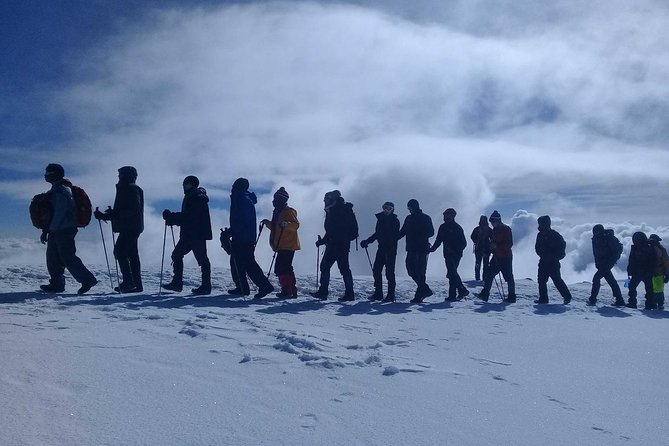
Day 9 starts with a crater exploration, including the Ash Pit area, then you descend to Millennium Camp. The trekking time listed is about 5 to 6 hours. This is a lighter-feeling day compared to the summit day, but it’s not a walk in the park. You’ll still be adjusting to your body’s post-summit rhythm, and the slope changes keep your legs working.
Day 10 is your descent through lush rainforest to Mweka Gate. You’ll get a certificate of achievement there, then drive back to Moshi for celebration and relaxation. This is a key emotional part of the trek. After days where you measure time by altitude and weather, the rainforest feels like relief you can breathe.
The practical advantage of finishing through rainforest is that your body has a smoother transition. Lower elevation still has exertion, but it’s far more comfortable than the high camps.
Also, you’ll have a hotel night after the climb with breakfast included. That’s a big quality-of-life detail. You’re not paying extra to get your feet back on solid ground.
Guides, Porters, and the Team Care That Shows Up in Reviews
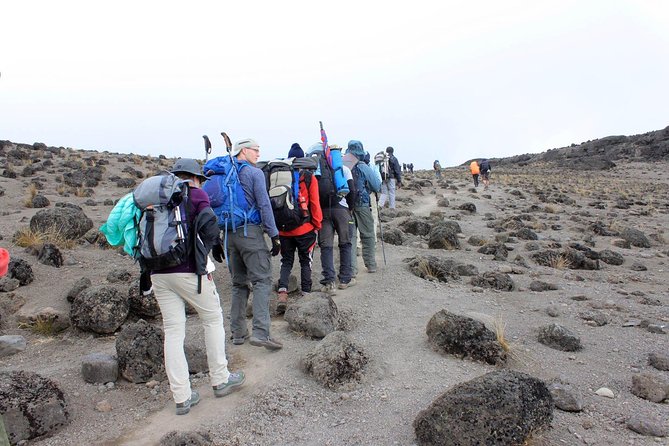
In my experience, what keeps a Kilimanjaro trek from becoming chaos is teamwork. Here, you get qualified mountain guides, assistant guides, porters, and a cook, with wages set to the standards of KINAPA. That matters because it affects reliability, not just politeness. Camp life runs better when the crew is organized.
What I value most is how reviews describe attentiveness from day zero. People talk about pickup from the airport, the guided start in the rainforest, and steady support through the summit night. They also praise specific guide talent, with names like JT and Jacob showing up in reviews, and assistant guides like Jobeth and Kennedy being called out for how helpful they were.
That kind of feedback suggests you’ll get more than “follow the person in front.” You’ll get someone managing your pace, helping with gear decisions, and keeping morale from slipping when the cold and altitude start pressing.
Price and Value: What You’re Paying for at $4,211.27 Per Person
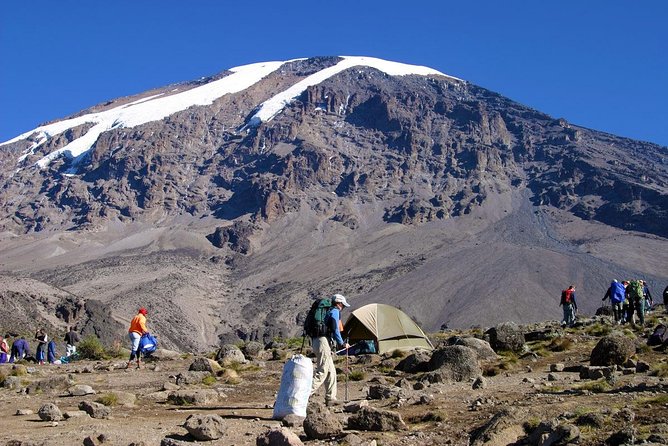
At $4,211.27 per person, this isn’t a budget trek. But for Kilimanjaro, the question is what’s actually included and how that reduces your risk.
This price includes:
- All fees and taxes, plus return transfers between Kilimanjaro airport and Moshi
- A hotel night after the climb with breakfast included
- Emergency oxygen (for emergencies only, not summit aid) and a basic first aid kit
- Qualified guide and support staff plus porters and cook wages under KINAPA standards
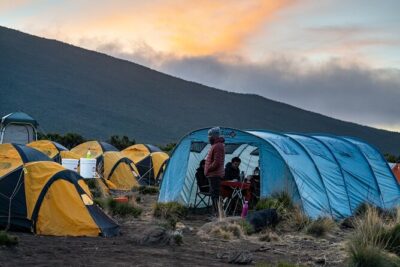
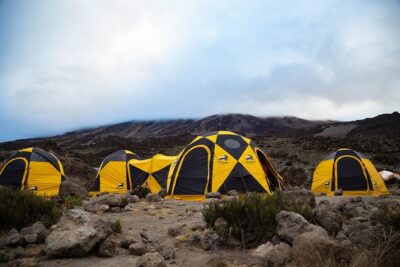
- Camping equipment like tents, camp chairs, tables, and sleeping mattress
- Fresh water for drinking and hot water for a wash daily
- Meals, including breakfast, lunch, and dinner across the trek
So what are you really buying? Less logistical stress. You are not stuck hunting for rentals, camp setup, extra meals, or basic safety items last minute. You’re also not trying to piece together transport from Moshi and back after exhaustion.
You’ll still need your own personal items, especially clothes and some medical basics, but the core operation is handled. That’s the difference between an adventure and a headache.
If you want a lower-cost option, you might shop for less service and more DIY logistics. But if you want a well-supported, full-service Northern Circuit with crater camping, this price is easier to justify.
What to Bring: Cold, Mud, and Midnight Gear Checks
This trek hits multiple climates fast, from rainforest damp to exposed plateau cold to summit-night frost. So pack for layers and function, not for looks.
Based on the trek notes:
- Day 1 can be muddy and slippery, so gaiters and trekking poles are worth it.
- Shira Plateau nights can get below zero because the plateau is exposed.
- Summit night means you should prepare warm clothes, insulated water bottles, snacks, a headlamp, and your camera before you go to sleep.
You’ll likely rent personal hiking and trekking gear in Moshi. The tour includes camping equipment, but not your personal clothing system.
A useful extra is the portable toilet. It’s listed as optional but highly recommended. If you care about comfort, don’t ignore it.
Finally, consider water purification tablets and personal medicine, since those aren’t included. And do not underestimate how much snacks help. Summit night and high altitude can turn “I ate earlier” into “I’m suddenly hungry now.”
Should You Book This Kilimanjaro 360° Crater Camping Trek?
I’d book it if you want three specific things in one package: the calmer Northern Circuit feel, the visual payoff of Shira and the northern slopes, and the once-in-a-lifetime night at Crater Camp under glaciers. The route also seems designed for people who can hike at a moderate level but still want a thoughtful acclimatization schedule.
I’d think twice if you know you hate cold, or if you’re not ready to follow gear prep instructions for the midnight summit start. Crater camping is spectacular, but it also means you’ll be dealing with altitude and temperatures in a way that’s not optional.
If you can handle the effort and you want this route style, this is a strong choice. You’re paying for a real support system, not just a permit and a name.
FAQ
How many days is this Kilimanjaro trek, 9 or 10?
The trek itself is described as a 9-day Northern Circuit, and the itinerary you provided runs across 10 days overall. The extra day typically covers the return to Moshi and the hotel night after the climb.
What difficulty level should I expect?
The trek is listed as medium difficulty, and the notes say you should have a moderate physical fitness level.
What is included in the trip price besides guides?
The inclusions list covers all fees and taxes, return transfers between the airport and Moshi, a hotel night after the climb with breakfast, camping equipment, emergency oxygen for emergencies only, hot water for a wash daily, and meals (breakfast, lunch, and dinner).
Do I need to bring my own hiking gear?
Personal hiking or trekking gear is not included, and you are advised to rent gear from equipment stores in Moshi. The trip does include camping equipment like tents and sleeping mattresses.
Is the emergency oxygen meant to help with summit day?
No. Emergency oxygen is included for emergencies only, not as summit aid.
What is the cancellation policy?
You can cancel up to 3 days in advance for a full refund. If you cancel less than 3 days before the experience’s start time, the amount paid will not be refunded.
More Hiking & Trekking in Moshi
- Best Kilimanjaro Adventure 7 days Machame route Trekking
★ 5.0 · 42 reviews - Kilimanjaro 7 Day Private Trekking Experience
★ 5.0 · 40 reviews - 8 Days Kilimanjaro Hike via Lemosho Route
★ 5.0 · 39 reviews - 6 Days Machame Route Kilimanjaro Climbing Trekking Tour
★ 5.0 · 34 reviews
Just posted around Moshi
- machame route★ 5.0 · 16 reviews
- Kilimanjaro Climbing Umbwe Route★ 5.0 · 3 reviews
- Wildlife Extravaganza: Manyara, Tarangire & Ngorongoro in 3 Days★ 5.0 · 3 reviews
- Mt Kilimanjaro 6 days Marangu route hike★ 5.0 · 3 reviews
- 3 Days Private E-Bike Tour in West Kilimanjaro★ 5.0 · 3 reviews
- West Kilimanjaro cycling Adventures★ 4.5 · 8 reviews
- Kilimanjaro Climb • Marangu Route ~ 9 Day★ 5.0 · 4 reviews
- Private Cycle to Kilimanjaro Bike Park Safari★ 5.0 · 6 reviews
Kilimanjaro Climbs, compared.
8-Day Small-group Lemosho Kilimanjaro Summit Trekking
Read our review →
5 Days Best of Tanzania Luxury Safari Northern Circuit
Read our review →
Climbing Kilimanjaro through 7 days Machame Route
Read our review →
Browse the lists this tour appears in