
Reviewed · KILIMANJARO CLIMBS
Kilimanjaro 7 Day Private Trekking Experience
Kilimanjaro night climbs change people fast. This private 7-day climb from Moshi focuses on your team, your pace, and real acclimatization, starting with a rainforest trek and ending with Uhuru Peak sunrise. I like that you get tented camps plus full crew support, so you spend less time worrying and more time moving well. One possible drawback to plan around: the price is premium, and it is non-refundable, so weather and timing matter a lot.
The logistics are also designed to feel simple. Pickup is offered in the Moshi area, you’ll deal with park registration at the gate, and the operator uses a mobile ticket. Just remember this is still high-altitude trekking, so you’ll want a strong fitness level before you go.
In This Review
- Key highlights that matter on Kilimanjaro
- Moshi start: private pacing and the team you travel with
- Day 1 on the Machame route: gate check, rainforest walking, camp at Machame
- Day 2 from rainforest to moorland: Shira Camp One and your first glacier glimpse
- Day 3: Lava Tower acclimatization, semi-desert walking, and the Barranco Camp drop
- Day 4 into Karanga Valley: Barranco Wall scramble and ridge camping
- Day 5 to Barafu Camp: South Circuit views and the shift toward the summit strategy
- Day 6 summit night: midnight departure, headlamps, ice fields, and Stella Point sunrise
- Day 7: Mweka Gate, celebrations, hot shower in Moshi, and your certificate
- Price and value: what $3,120 includes, and what you should budget for
- Team support in practice: Oscar, Saul, and the vibe of a strong local crew
- Toughness map: where you’ll feel it, and how to prepare with the info you have
- Is this the right climb for you?
- FAQ
- How long is the Kilimanjaro trek?
- Where does the trek start?
- Is pickup included?
- What is included in the price?
- Are park admission tickets included?
- Do I need special gear?
- Are guide and porter tips included?
- Is this trek private or shared?
- What if weather cancels the climb?
- Is the trip suitable for kids?
Key highlights that matter on Kilimanjaro
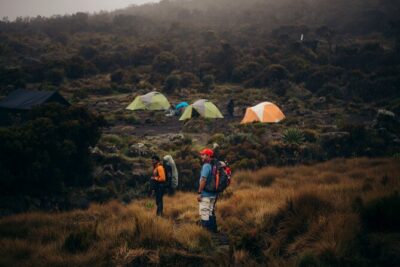
- Machame rainforest Day 1 starts gently, with a gate registration and a proper first camp finish
- Shira Plateau Day 2 is where you get your first glacier moment, after leaving the rainforest
- Lava Tower Day 3 builds acclimatization with climb high, sleep low, then drops you to Barranco Camp
- Barranco Wall Day 4 is the hands-on scramble day, plus ridge camping above the valley
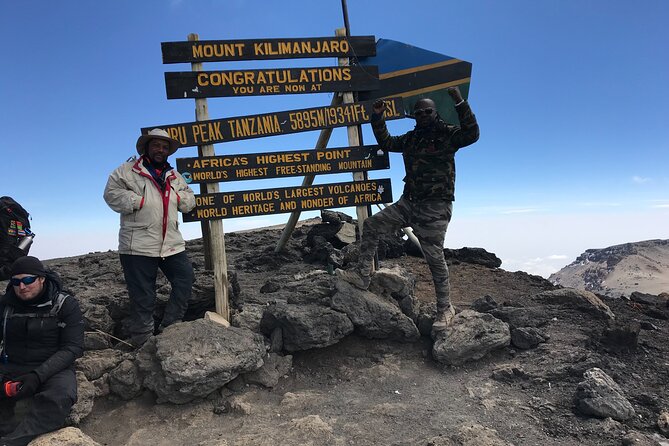
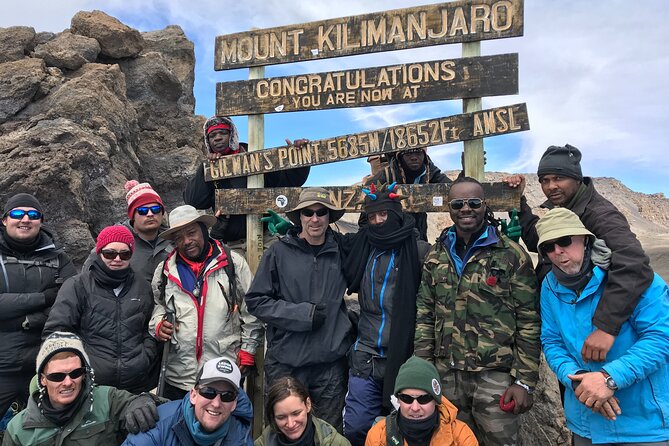
- Midnight summit Day 6 means headlamps, ice and rock, and a sunrise that’s described as emotional and unforgettable
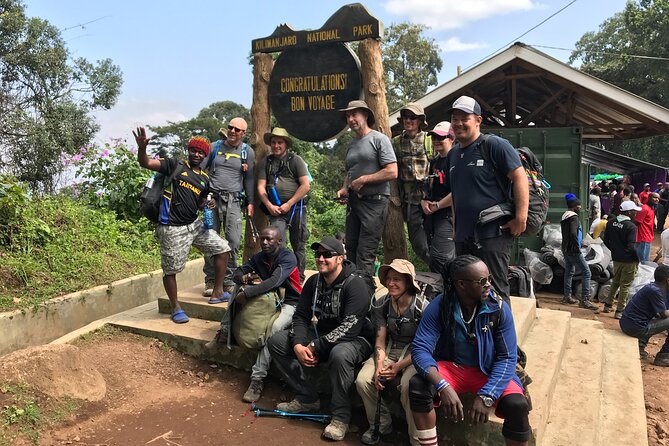
- Mweka Gate Day 7 ends with a celebratory beer or champagne, a hot shower in Moshi, and your certificate
Moshi start: private pacing and the team you travel with
This trek is sold as private, meaning your group is the only one on the experience. That matters on Kilimanjaro because your day is built around your pace, your breaks, and how you’re feeling as altitude rises.
You’ll meet the team in Moshi, then get transported to the Kilimanjaro gate area. The plan also includes pre and post climb accommodation, meals during the climb, tents, and the salaries of the mountain crew. In plain terms, this is a package built around keeping the machinery running so you can focus on the human part of altitude.
More Hiking Trips in Moshi
- Private Kilimanjaro Hike 7 Day Lemosho Route
★ 5.0 · 60 reviews - Best Kilimanjaro hiking day trip tour with Kilinge Adventures
★ 4.5 · 54 reviews - #1. Best Kilimanjaro Day hike Tour-Machame Route-ISMANI
★ 4.2 · 47 reviews
Day 1 on the Machame route: gate check, rainforest walking, camp at Machame
Your first day is all about getting your rhythm and not overdoing it. You’ll be met around 9am, then driven to the Machame Gate. If you brought things you don’t want to haul, you can leave them in a hotel lock-up before you head in.
At the gate, you’ll handle park office registration and get a packed lunch. Then you start climbing into the rainforest, with a long day mapped as about 6 hours and roughly 11 km. The scenery shift is the first real lesson here: the climb changes character from lush forest to higher terrain as you gain altitude.
One nice practical detail is the day is structured with a break halfway up to eat your packed lunch. That keeps energy steady, and it also helps you avoid the common new-trek mistake of starting too fast and then paying for it later.
Day 2 from rainforest to moorland: Shira Camp One and your first glacier glimpse
You’ll wake up after your first night with a hot drink served in your tent, around 6:30am. Then breakfast comes first, and the day begins with the key transition out of the rainforest.
The route continues through a small valley into open moorlands, where vegetation is sparse and you’re walking up toward a steep rocky ridge. After that, the route turns up through a river gorge and onto the Shira Plateau, and this is where you catch your first major glacier views, including the Western Breach.
The day is listed around 6 hours for about 9 km, with Shira Camp One as your night. If you’ve heard people talk about Kilimanjaro glaciers, this is the day when it stops being a photo idea and starts feeling real.
Day 3: Lava Tower acclimatization, semi-desert walking, and the Barranco Camp drop
Day 3 is built around acclimatization, and it’s also described as your toughest day so far. You leave Shira Camp and trek about 4 to 5 hours to Lava Tower, around 4,600m. Your lunch and a short acclimatization break happen at Lava Tower, which is one of the most important parts of the day’s pacing.
Then comes the plan’s “climb high and sleep low” approach. You descend roughly 650m to Barranco Camp after reaching Lava Tower. The idea is to push your body upward enough to stimulate acclimatization, then bring it down to rest at a lower altitude.
The walking distance is listed at about 12 km and about 7 hours, and it’s on semi-desert terrain. What that means for you is simpler ground underfoot than rainforest, but sharper altitude pressure. If you feel strong, it’s still smart to keep the effort controlled, since this is only day 3 of a long game.
More Kilimanjaro climbs:
- Kilimanjaro climb by Lemosho Route (7-day)
★ 5.0 · 651 reviews - Kilimanjaro climb, Machame Route (7-day)
★ 5.0 · 262 reviews - Kilimanjaro Climbing Lemosho Route 8 Days.
★ 5.0 · 186 reviews - Climbing Kilimanjaro – Machame Route
★ 5.0 · 170 reviews
Day 4 into Karanga Valley: Barranco Wall scramble and ridge camping
If Day 3 is tough, Day 4 is the day where your muscles get a test you can’t ignore. You leave Barranco Camp after breakfast and head toward Karanga Valley.
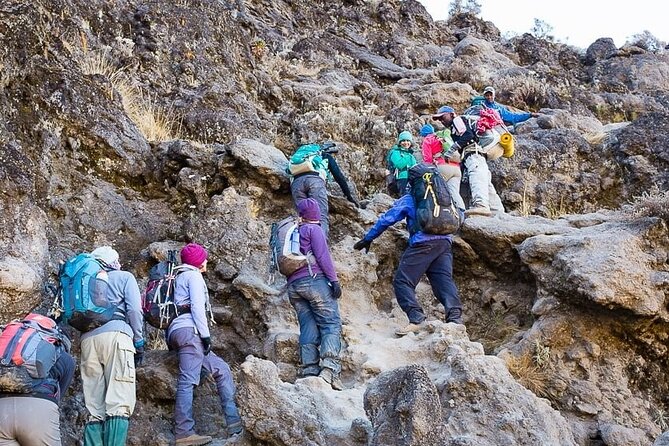
The main event is a 1.5-hour scramble up Barranco Wall. In some spots, you’ll use your hands to pull yourself up. That’s not about being fearless, it’s about moving with good body control. Take it slowly, keep your weight stable, and let your guides handle the pacing and route choices.
After you reach the top, the day transitions into a short descent into the greener Karanga Valley. You generally camp on a ridge above the valley to help with acclimatization. That ridge camping detail is practical: it keeps the camp position stable and helps the day feel like it has a reason beyond just getting to the next bed.
Day 5 to Barafu Camp: South Circuit views and the shift toward the summit strategy
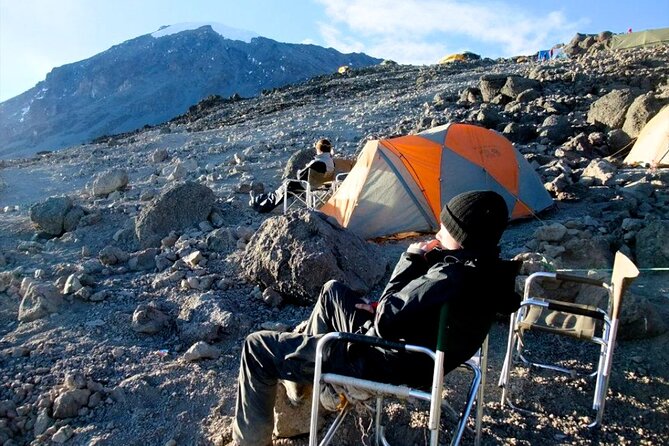
Day 5 is where the route starts to feel like you’ve moved from “getting ready” into “going for it.” After breakfast, you hike toward Barafu Camp, listed as about 6 km and roughly 7 hours.
On the way, you’ll get views of Kibo’s glaciers, and you’ll also pass the junction that connects the descent route, Mweka, with the Machame trail. The route tops out just below the Heim Glacier, and this is described as a moment where you can really appreciate Kilimanjaro’s beauty.
A key detail for your expectations: this day is part of the South Circuit, and you now have summit angles from different angles along the way. You’re still not at the final push yet, but your head starts doing that mental math where you count nights until the summit moment.
Day 6 summit night: midnight departure, headlamps, ice fields, and Stella Point sunrise
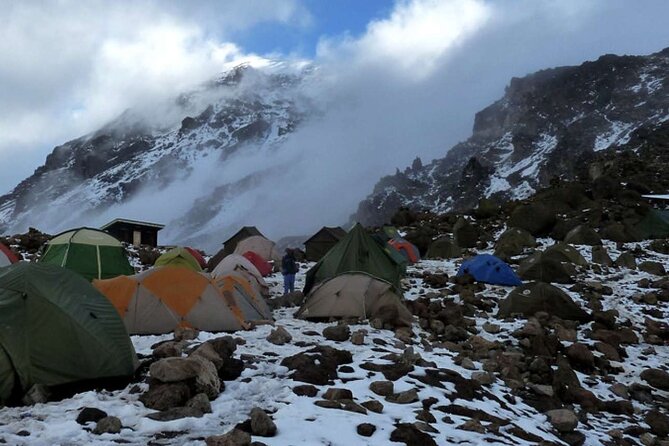
This is the day with the biggest emotional payoff and the most demanding conditions. You’ll get wake-up tea at around 11:30pm, and departure happens at midnight.
Your initial ascent is about 6 hours and begins in the dark. Headlamps and guides are what help you navigate thick screen and winding pathways through the Ratzel and Rebmann Glaciers until you reach Stella Point. The plan describes this as the most challenging part for many climbers.
Once you reach Stella Point, the reward is sunrise, described as the most emotional and beautiful sunrise the climbers can experience. Even if you don’t care about sunrise as an idea, treat this as a moment to slow your breathing and soak it in.
In altitude terms, your Day 6 route is listed with a climb from around 4,600m up to the Uhuru Peak area near 5,700m or 5,895m, then a major descent back down to about 3,100m. Distance is listed as about 7 km ascent and 23 km descent, with total trek time around 6 to 8 hours for ascent and 7 to 8 hours for descent. Translation: the summit is only half the story. The trip down is a full workout too.
Day 7: Mweka Gate, celebrations, hot shower in Moshi, and your certificate
Day 7 brings you back to humanity, not just altitude. You’ll wake for a final celebratory breakfast, and the team will congratulate you. This is also your moment to show appreciation through tips for the crew members and support staff.
Then it’s a final scenic descent to Mweka Gate. The plan lists about 3 to 4 hours and around 10 km, descending roughly from 3,100m down to 1,800m through rainforest.
At the gate, you get a celebratory beer or champagne while your equipment is loaded into the van. Then you go back to Moshi for hot shower and lunch at Kilimanjaro Wonders Hotel. After dinner, you receive your certificate of achievement.
That hot shower and meal in town is not just a perk. After days in cold air and camp routines, it’s a morale reset. It helps the whole experience feel complete, not just like you survived the mountain and then disappeared.
Price and value: what $3,120 includes, and what you should budget for
This trek costs $3,120 per person. That sounds high, but Kilimanjaro is labor-intensive. You’re paying for a full support team, tents, food, and the pre and post climb accommodation that helps you start the trek properly and recover well at the end.
Here’s what’s explicitly included:
- Food, tents, and the mountain crew salaries (guides, transfers as specified, chef and camping crew support)
- Pre and post climb accommodation
- Breakfast, lunch, and dinner during the trek days listed
- Meet-and-greet services
- Park admission is marked as free or included on the days shown, so it should not be a separate add-on you have to chase on your own
Not included items you should plan for:
- Climbing personal gear, though it can be hired locally if needed
- Guide and porter gratuities
- Personal travel and baggage insurance
- Telephone charges, and laundry
My value take: you’re paying for the whole “systems” part of a safe climb, not just a walking itinerary. The biggest difference between a good and a bad Kilimanjaro experience is how well the team manages pacing, comfort, and those small decisions that keep you from burning out.
Team support in practice: Oscar, Saul, and the vibe of a strong local crew
The operator Tanzania Escapade is repeatedly described as quick to respond and well organized. The owner Oscar comes up as someone who handles communication fast and helps plan other parts of a trip too, like safari add-ons or short activities around Moshi.
On the mountain, guide names like Saul show up in past climber stories as friendly, kind, and experienced. You may also encounter other guide and porter names, such as Mvungi, Jonas, Emmanuel, and Jac, with repeated praise for helpfulness and positive energy.
Here’s the practical point for you: on summit night and during the harder scrambling days, good guiding is not a nice-to-have. It’s what keeps you moving in a safe way when everything feels tougher. This kind of team reputation is a real indicator when you’re spending multiple days at altitude.
Toughness map: where you’ll feel it, and how to prepare with the info you have
This is a serious trek. The plan explicitly notes that you should have strong physical fitness. It’s also private, so you won’t be able to hide in a big group pace. The guides will likely set your rhythm, but you still need the engine to match the schedule.
Where the hard parts show up:
- Day 3 is described as your toughest day so far, with Lava Tower acclimatization followed by a long descent to Barranco Camp.
- Day 4 includes Barranco Wall scrambling, where you use your hands.
- Day 6 is the summit push in darkness, with ice and rock navigation, then a long descent.
- Day 7 is easier on paper, but after summit day, even a 3 to 4 hour descent can feel like a victory lap.
Preparation you can do now, without guessing about missing details:
- Start training your cardio and stamina before you go. Altitude punishes breathlessness.
- Practice walking with a consistent pace for long stretches, because your days are about 6 to 7 hours often, plus summit logistics.
- Plan mentally for cold nights. You’ll be sleeping in tents, and Day 6 starts at midnight with a very cold, very low-energy start.
Also, you’ll want to respect acclimatization. The plan emphasizes climb high and sleep low, and it builds in that pattern on purpose.
Is this the right climb for you?
Book this if you want:
- A private experience with your own team and pacing
- A climb that includes strong acclimatization steps, including Lava Tower and Barranco
- Glacier viewing moments on Day 2, plus a summit day that starts in the dark and finishes with sunrise
- The comfort of included meals, tents, and pre and post climb accommodation
Skip it or think twice if:
- You cannot afford a non-refundable trip if weather turns bad or your plans change
- You are unsure about fitness and altitude readiness. This is not a gentle nature hike.
If you like structure and you trust a professional crew, this trek fits well. If you hate schedules, long walking days, and cold nights, you’ll probably struggle.
FAQ
How long is the Kilimanjaro trek?
It runs for 7 days (approx.). The daily hikes and camp stops are scheduled across Machame, Shira Camp One, Lava Tower acclimatization, Barranco, Karanga Valley, Barafu, the summit push, and Mweka Gate.
Where does the trek start?
The trek is based in Moshi, Tanzania, and you are transported to the Machame Gate for Day 1 registration.
Is pickup included?
Pickup is offered.
What is included in the price?
The tour includes food, tents, meet-and-greet services, mountain crew salaries, and all pre and post climb accommodation. It also includes breakfast, lunch, and dinner for the trek days listed.
Are park admission tickets included?
Park admission is shown as free or included on the itinerary days. You should not need to pay those admissions separately based on the information provided for the days listed.
Do I need special gear?
Personal climbing gear is not included, but it can be hired locally if required. You should expect an equipment cross-check at the gate before you begin climbing.
Are guide and porter tips included?
No. Mountain guide and porter gratuities are not included, and you’ll have a chance to tip the team after the trek.
Is this trek private or shared?
This is a private tour/activity, so only your group will participate.
What if weather cancels the climb?
The experience requires good weather. If it is canceled due to poor weather, you’ll be offered a different date or a full refund. Cancellation for other reasons follows the non-refundable policy.
Is the trip suitable for kids?
Children below the age of 15 years need special requirements before trekking Mt. Kilimanjaro.
More Hiking & Trekking in Moshi
- Best Kilimanjaro Adventure 7 days Machame route Trekking
★ 5.0 · 42 reviews - 8 Days Kilimanjaro Hike via Lemosho Route
★ 5.0 · 39 reviews - 6 Days Machame Route Kilimanjaro Climbing Trekking Tour
★ 5.0 · 34 reviews - The Best & Unique Kilimanjaro Hiking tour 7 days Machame route
★ 5.0 · 34 reviews
Just posted around Moshi
- machame route★ 5.0 · 16 reviews
- Kilimanjaro Climbing Umbwe Route★ 5.0 · 3 reviews
- Wildlife Extravaganza: Manyara, Tarangire & Ngorongoro in 3 Days★ 5.0 · 3 reviews
- Mt Kilimanjaro 6 days Marangu route hike★ 5.0 · 3 reviews
- 3 Days Private E-Bike Tour in West Kilimanjaro★ 5.0 · 3 reviews
- West Kilimanjaro cycling Adventures★ 4.5 · 8 reviews
- Kilimanjaro Climb • Marangu Route ~ 9 Day★ 5.0 · 4 reviews
- Private Cycle to Kilimanjaro Bike Park Safari★ 5.0 · 6 reviews
Kilimanjaro Climbs, compared.
8-Day Small-group Lemosho Kilimanjaro Summit Trekking
Read our review →
5 Days Best of Tanzania Luxury Safari Northern Circuit
Read our review →
Climbing Kilimanjaro through 7 days Machame Route
Read our review →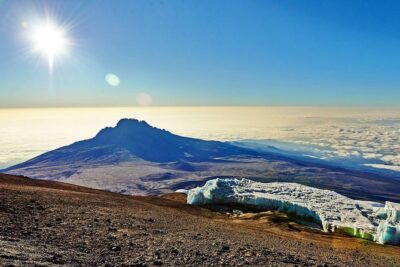
Browse the lists this tour appears in