
Reviewed · KILIMANJARO CLIMBS
Kilimanjaro Trek 7 Days – Machame Route
Kilimanjaro is a mountain that teaches you fast. This 7-day Machame route from Moshi strings together rainforest, alpine desert, and a real summit night, with camp life kept organized by Kilitwende Adventures. You get hotel nights before and after, full transfer support, and three meals daily on the trek.
What I love most is how the itinerary uses altitude smartly, especially with the Lava Tower push that helps acclimatization before you head down to Barranco. I also like the practical camp setup, including tents, mattresses, and even a portable flush toilet in a toilet tent.
One thing to consider is that this is still a serious high-altitude hike. You need moderate physical fitness, and Day 6 starts at midnight, so if you hate cold, wind, and sleeping in rugged conditions, you’ll want to plan mentally and physically.
In This Review
- Key things that make this Machame trek work
- Machame Route, Whiskey Route, and why most people pick it
- Moshi prep: transfers, pickup, and your first mountain morning
- Day 1: Machame Gate to Machame Camp through rainforest
- Day 2: Shira Plateau shift from rainforest to heath and open moorland
- Day 3: Lava Tower at 4,603 m, then back down to Barranco Camp
- Day 4: Great Barranco Wall climb, Karanga Valley, and a short acclimatization walk
- Day 5: Southern Circuit views, Barafu Hut rest, and prepping for the summit
- Day 6: Midnight summit push, Stella Point at sunrise, Uhuru Peak at 5,895 m
- Day 7: Mweka Gate sign out, summit certificates, and the rainforest finish
- Price and value: what $2,890 per person actually covers
- Kilitwende Adventures and the “safe, cared for” vibe
- Packing and gear: what you should bring, and what you may have to buy
- Who should pick this 7-day Machame trek
- Should you book the Kilimanjaro Trek 7 Days, Machame Route?
- FAQ
- What time does the trek start?
- Is pickup available in Moshi?
- Are park entry and camping fees included?
- Do you get an oxygen tank?
- How many hotel nights are included?
- What meals are included during the climb?
- What gear is not included?
Key things that make this Machame trek work
- Machame-to-Shira-to-Lava Tower route flow gives you big scenery changes without technical climbing
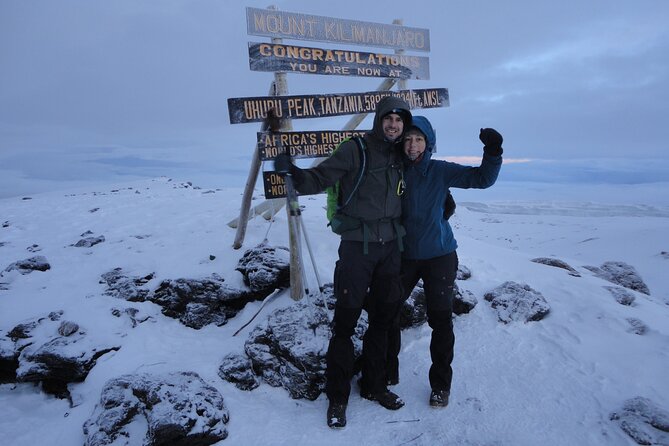
- Cold summit night logistics with an early goal, Stella Point at sunrise, and Uhuru Peak at the top
- Camp comforts that matter: sleeping mattress (foam, 1.5 inches thick), dining tents, lanterns, and more
- Included oxygen tank for emergency situations
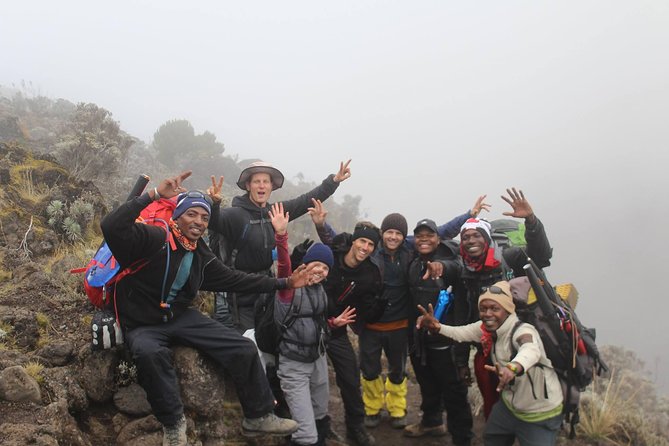
- Strong crew support highlighted by names like Jerry, Joseph, and Sadhi, plus hosts like Bobby, Robert, John, and Bob in feedback
- Private group setup, meaning it’s just your group participating
Machame Route, Whiskey Route, and why most people pick it
Machame is often called the most scenic way up Kilimanjaro, and for good reason. Over a week, you climb through multiple altitude zones, so the air, plants, and ground feel different from one day to the next. That constant “new world” feeling is exactly what you want on a mountain hike that can otherwise blur together.
The nickname Whiskey route is part of Kilimanjaro folklore, and while the details aren’t provided in your trip materials here, the practical takeaway is simple. Machame tends to attract hikers who want strong views and a more varied route experience than the more straightforward options. You should expect a trail that feels adventurous, even though the route is non-technical.
The 7-day timing is also a real factor for value. It’s popular largely because it balances enough hiking days for acclimatization with enough time to make the summit attempt. If you’re trying to do Kilimanjaro without cutting it too close, this schedule is built for that goal.
More Hiking Trips in Moshi
- Private Kilimanjaro Hike 7 Day Lemosho Route
★ 5.0 · 60 reviews - Best Kilimanjaro hiking day trip tour with Kilinge Adventures
★ 4.5 · 54 reviews - #1. Best Kilimanjaro Day hike Tour-Machame Route-ISMANI
★ 4.2 · 47 reviews
Moshi prep: transfers, pickup, and your first mountain morning
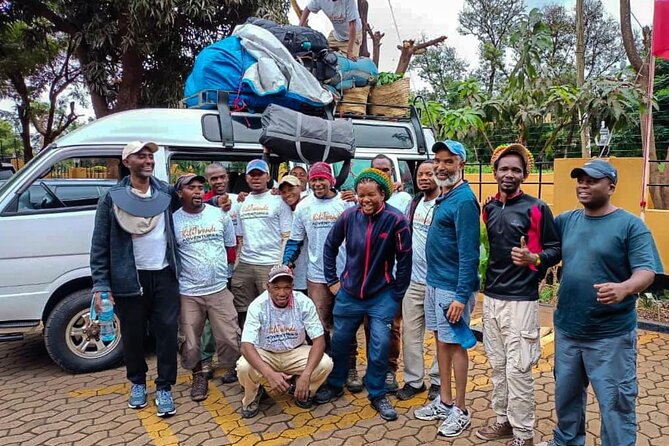
This trek is based out of Moshi, and you’re not left on your own to get to the gates. There’s pickup offered, plus transfers to and from the mountain gates, and round-trip airport transfers to Kilimanjaro International Airport (JRO). That removes one common stress: figuring out transport in a place where schedules matter.
Your meet-up timing is listed as 8:30 am, so you can plan your Moshi day with some structure. You’ll also get a hotel stay one night before and one night after the trek (bed and breakfast). For a summit hike, those extra nights are not luxury, they’re recovery, sleep buffering, and a calmer start.
You also get a mobile ticket. If you’re the type who likes everything in one place, that’s a handy detail rather than a last-minute scavenger hunt.
Day 1: Machame Gate to Machame Camp through rainforest
Day 1 begins with a drive from Moshi to the Machame gate after breakfast, about 1 hour. You pass through the village of Machame on the lower slopes, which helps you ease into the setting rather than jumping straight into altitude.
Once you register at the park gate, the trail climbs through dense rainforest. The hike is listed at 11 km (7 miles) with about 5 to 7 hours on foot, ending at Machame Camp at 2,833 m / 9,350 ft.
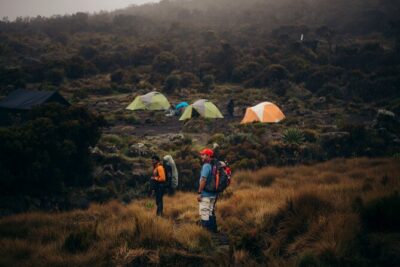
This day is not about speed. I’d treat it as your “engine check” day: pacing, hydration, and breathing rhythm. Rainforest hiking also means you may deal with humidity, damp trail sections, and cooler temps under the canopy. The upside is you’re moving on a shaded, living trail where the mountain feels near right away.
Day 2: Shira Plateau shift from rainforest to heath and open moorland
Day 2 starts with a shorter hike on paper: 5 km (3 miles) in about 4 to 6 hours. You leave the rainforest glades and transition into heath habitat, with an ascending path up toward a steep, rocky ridge.
This is one of those “pay attention to your body” days. The listed trail heads through heather and open moorlands, then crosses a large river gorge to Shira Cave Camp.
Even without climbing high yet, your body is starting to feel the altitude difference. The best move is to keep your effort steady, not heroic. If you go out too fast early in the week, Days 3 to 6 will punish it.
More Kilimanjaro climbs:
- Kilimanjaro climb by Lemosho Route (7-day)
★ 5.0 · 651 reviews - Kilimanjaro climb, Machame Route (7-day)
★ 5.0 · 262 reviews - Kilimanjaro Climbing Lemosho Route 8 Days.
★ 5.0 · 186 reviews - Climbing Kilimanjaro – Machame Route
★ 5.0 · 170 reviews
Day 3: Lava Tower at 4,603 m, then back down to Barranco Camp
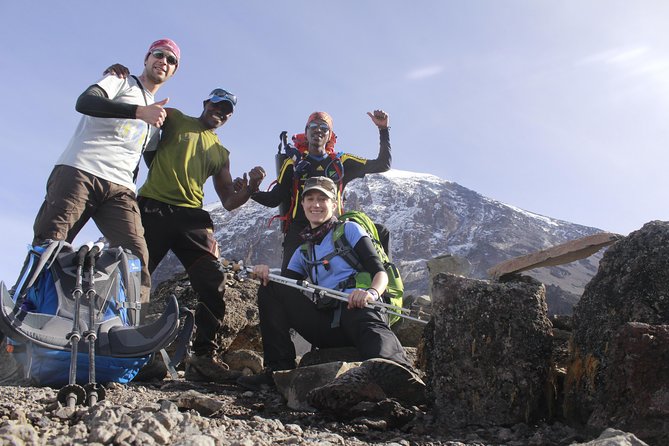
Day 3 is where Machame gets interesting in a practical way. You start by moving east up a ridge, then southeast toward Lava Tower, a volcanic rock formation noted at 4,603 m / 15,190 ft. The plan is to reach Lava Tower, then after lunch, descend to Barranco Camp at 3,953 m / 13,044 ft.
The day is split into two parts in your schedule: 7 km (4 miles) in about 4 to 5 hours plus a 3 km (2 miles) segment taking 2 to 3 hours. Total hiking time is listed around 5 hours, and that’s a helpful clue that this is not nonstop grinding.
What I like here is the acclimatization logic. The itinerary notes that beginning and ending the day at the same elevation is not a problem, because the time you spend at higher altitude is beneficial. That’s exactly the kind of planning you want on Kilimanjaro, where your body benefits from exposure without being forced into a permanent steep climb.
You also walk through Senecio Forest while descending. It sounds small on paper, but those weird high-altitude plant zones help the trek feel like more than just a long staircase.
Day 4: Great Barranco Wall climb, Karanga Valley, and a short acclimatization walk
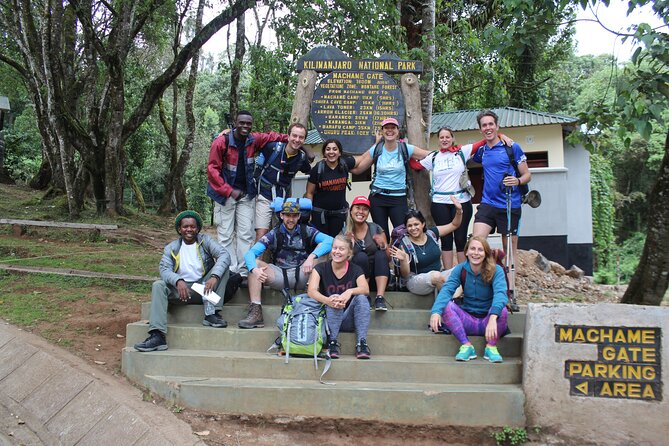
Day 4 starts with a descent into the base of the Great Barranco Wall. Then you climb the wall itself, described as non-technical but steep, and about nearly 900 ft up to the top.
After that, you cross hills and valleys and descend sharply into Karanga Valley, where Karanga River is the last water point. You then climb up to Karanga Camp for lunch, then do a shorter acclimatization walk later in the afternoon.
The schedule lists 5 km (3 miles) and about 4 to 5 hours, which can feel short until you remember that steepness changes everything. This is a day to use trekking poles if you have them, and to keep your steps controlled on the uneven sections.
The payoff is that the Barranco Wall day often gives hikers confidence. Once you’ve powered up that wall and survived the steep bits, the rest of the week feels more possible.
Day 5: Southern Circuit views, Barafu Hut rest, and prepping for the summit
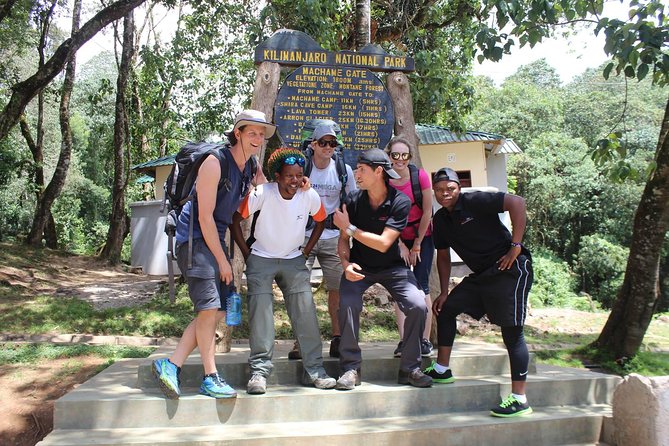
On Day 5 you hike 4 km (2 miles) for about 4 to 5 hours. The route passes the junction connecting with the Mweka Trail, and then continues up through rocky sections to Barafu Hut.
This is the part of the route where the story shifts. The schedule notes you’ve completed the Southern Circuit, and you’re arriving to rest for the summit attempt. It also notes that when the weather is clear, you can see two peaks of Mawenzi and Kibo.
That matters because the summit night can feel abstract until you can actually see Kilimanjaro’s major shapes. Even a few hours of clear visibility can make the long Day 6 easier to accept mentally.
Physically, Day 5 is about saving energy. You arrive, rest, eat early, and then prepare. Cold and wind are coming.
Day 6: Midnight summit push, Stella Point at sunrise, Uhuru Peak at 5,895 m
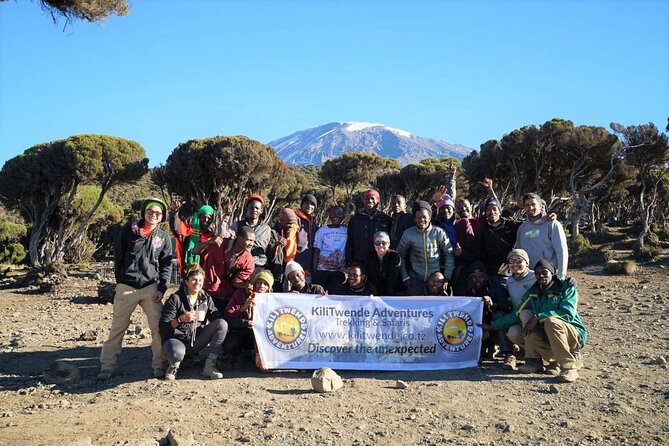
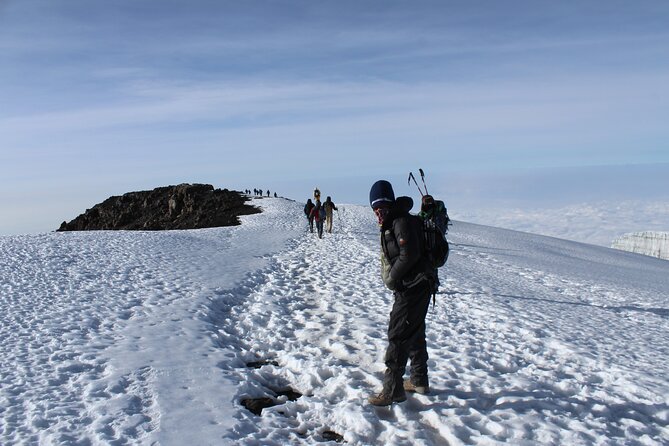
Day 6 is the moment everyone remembers. The plan starts in the midnight hours with the summit push, and this is described as the most mentally and physically challenging portion. You spend time in wind and cold weather, climbing in darkness with short breaks.
You’ll reach Stella Point (18,900 ft) at sunrise, then continue to Uhuru Peak (5,895 m / 19,341 ft), the highest point on Mount Kilimanjaro. After a short summit moment for photos, you begin the descent back toward camp.
In your schedule, the day is listed as 8 hours and the hiking portion from Uhuru Peak to Mweka Camp is shown as 12 km (7 miles) in 4 to 6 hours with rain forest habitat on the descent side of the overall route summary. Practically, that tells you this day involves big movement and big temperature swings.
If you’re trying to plan your expectations, here they are. Expect your body to work hard at low temperatures. Expect your breathing to feel sharper in the cold air. Expect your emotions to swing between determination and fatigue.
This is also where your included support matters. You have professional guides, cooks, and porters, plus an oxygen tank in case of emergency. It’s not for everyday use, but knowing it’s there can reduce panic. And if you’ve ever hiked in cold conditions, you know confidence is part of safety.
Day 7: Mweka Gate sign out, summit certificates, and the rainforest finish
Day 7 is the release valve day. After breakfast, you continue the descent for about 3 hours to Mweka Gate, where you sign out to the national park authority and collect your summit certificates.
You’ll then get a vehicle waiting at Mweka Gate to transfer back to your Moshi hotel. The route’s habitat on this day is listed as rainforest, which is a nice emotional ending. You’ve fought wind and cold at altitude, then you walk into a greener, lower world.
Even if you feel wrecked, this day is about closure. Your legs will remind you that you climbed for days, but the downhill and the sign-out steps help you shift from effort mode to completion mode.
Price and value: what $2,890 per person actually covers
At $2,890.00 per person, you’re paying for far more than the trail. Your included items cover the costly parts of Kilimanjaro logistics: park entry fees, camping fees, forest fees, rescue fees (including 18% VAT on tour fees and services), plus fair wages for crew as approved by Kilimanjaro park and association guidelines.
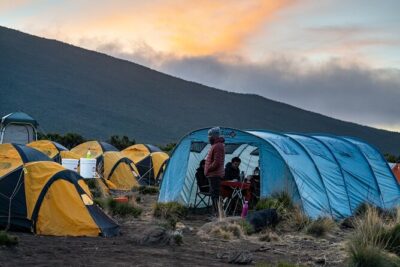
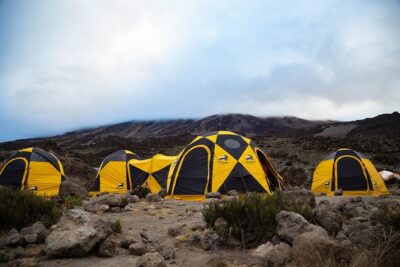
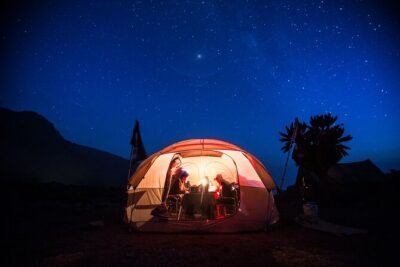
You also get camp infrastructure: sleeping tent, dining tent, sleeping mattress (foam, 1.5 inches thick), table and chairs, and camp lighting via lanterns. That’s not glamorous, but it’s practical. A bad sleep setup can ruin your summit readiness. You’re also provided a portable flush toilet with a toilet tent, which is a small thing that makes a big emotional difference after long days.
Meals are included three times daily during the climb (breakfast, lunch, dinner). If you’ve ever tried to manage meal planning at high altitude, you know how much stress that removes.
Hotel time is included too: one night before and one night after at B and B. Add transfers to gates, round-trip JRO airport transfers, and you have a full package that reduces day-to-day decision fatigue.
What is not included is your personal climbing gear and tips. Items listed as not included include sleeping bag ($40), duffle bag ($35), hiking boots ($40), walking sticks ($10). So if you’re missing key gear, your final cost can rise. I’d budget for that early, not as an afterthought.
Kilitwende Adventures and the “safe, cared for” vibe
The best feedback you can hope for on a mountain is that you felt safe and cared for when things got hard. In the available feedback, names like Jerry, Joseph, Sadhi, and hosts like Bobby, Robert, John, and Bob show up in connection with professional service and team support.
You also see praise tied to planning, patience, and attention to detail. That matters because Kilimanjaro is not just about legs. It’s about pace, timing, meal flow, water points, and knowing when someone needs extra help.
There’s also a note about accommodating needs, including diet restrictions, and comfort for solo hikers. That’s useful for you if you’re traveling alone and you worry about feeling stranded. A strong team presence can make the experience feel less like a survival test and more like a supported journey.
Packing and gear: what you should bring, and what you may have to buy
Your trip materials say personal gear is not included, and they even list some rental or purchase add-ons with prices. That’s helpful, because it signals what you might be expected to handle yourself.
At minimum, plan for these items since they’re specifically called out as not included: sleeping bag, duffle bag, hiking boots, walking sticks. If you arrive with nothing, the costs can add up quickly. If you arrive with your own gear, you avoid that add-on, but you’ll still want to make sure everything is compatible with cold, wet weather at altitude.
For your own sanity, I’d check your footwear fit before Tanzania. Kilimanjaro days are long enough that blister problems become trip-ending problems fast.
Who should pick this 7-day Machame trek
This trek fits best if you want scenery variety, a well-paced route with acclimatization built in, and you’re okay with a serious summit night. The fitness note says travelers should have moderate physical fitness, which makes this realistic for hikers who train a bit and pace well.
If you love organized camp life and want a team handling transfers, meals, and camp setup, you’ll likely enjoy the structure. If you’re the type who hates unpredictable logistics, the included transfers, tents, and toilet solution are big selling points.
If you hate cold and darkness, take that seriously. Day 6 is physically and mentally demanding, and you should be ready for wind, low temperatures, and a night start.
Should you book the Kilimanjaro Trek 7 Days, Machame Route?
Yes, I think you should book it if your priority is a popular, scenic route with strong support and a schedule that gives your body time to adjust. The combination of Machame’s varied habitats, the Lava Tower acclimatization approach, and the clear summit plan at sunrise makes this a smart choice for many hikers.
I’d hold back only if you know you cannot handle cold nights, steep climbs like the Barranco Wall, or the reality that you will be hiking almost every day for a week. Also do your math on gear, since key items like a sleeping bag and boots are listed as not included.
If you want an organized path up Africa’s highest peak, with camp comfort handled and a crew that’s praised for care, this Machame package makes a lot of sense.
FAQ
What time does the trek start?
The meeting point lists a start time of 8:30 am.
Is pickup available in Moshi?
Yes, the tour summary says pickup offered, and the itinerary includes a drive from Moshi to the Machame gate.
Are park entry and camping fees included?
Yes. Park entry fees, camping fees, forest fees, and rescue fees are included (with 18% VAT on tour fees and services).
Do you get an oxygen tank?
Yes. An oxygen tank is included in case of emergency.
How many hotel nights are included?
You get 1 night before and 1 night after the trek at a B and B.
What meals are included during the climb?
The trek includes three meals a day during the climb: breakfast, lunch, and dinner.
What gear is not included?
Personal gear is not included, and the materials list common items such as a sleeping bag ($40), duffle bag ($35), hiking boots ($40), and walking sticks ($10).
More Hiking & Trekking in Moshi
- Best Kilimanjaro Adventure 7 days Machame route Trekking
★ 5.0 · 42 reviews - Kilimanjaro 7 Day Private Trekking Experience
★ 5.0 · 40 reviews - 8 Days Kilimanjaro Hike via Lemosho Route
★ 5.0 · 39 reviews - 6 Days Machame Route Kilimanjaro Climbing Trekking Tour
★ 5.0 · 34 reviews
Just posted around Moshi
- machame route★ 5.0 · 16 reviews
- Kilimanjaro Climbing Umbwe Route★ 5.0 · 3 reviews
- Wildlife Extravaganza: Manyara, Tarangire & Ngorongoro in 3 Days★ 5.0 · 3 reviews
- Mt Kilimanjaro 6 days Marangu route hike★ 5.0 · 3 reviews
- 3 Days Private E-Bike Tour in West Kilimanjaro★ 5.0 · 3 reviews
- West Kilimanjaro cycling Adventures★ 4.5 · 8 reviews
- Kilimanjaro Climb • Marangu Route ~ 9 Day★ 5.0 · 4 reviews
- Private Cycle to Kilimanjaro Bike Park Safari★ 5.0 · 6 reviews
Kilimanjaro Climbs, compared.
8-Day Small-group Lemosho Kilimanjaro Summit Trekking
Read our review →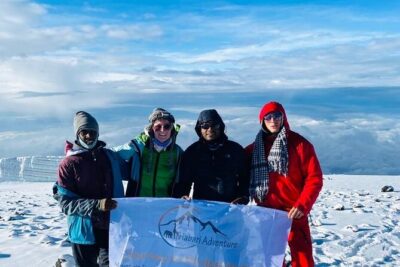
5 Days Best of Tanzania Luxury Safari Northern Circuit
Read our review →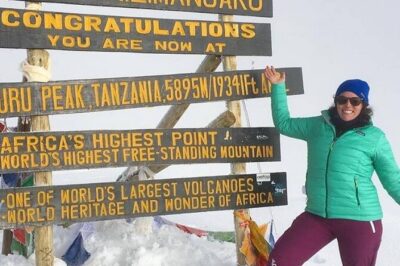
Climbing Kilimanjaro through 7 days Machame Route
Read our review →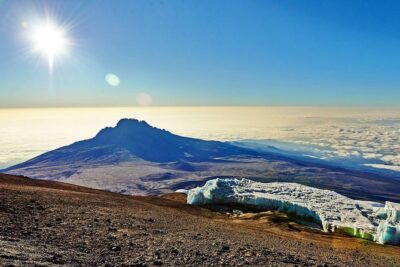
Browse the lists this tour appears in