
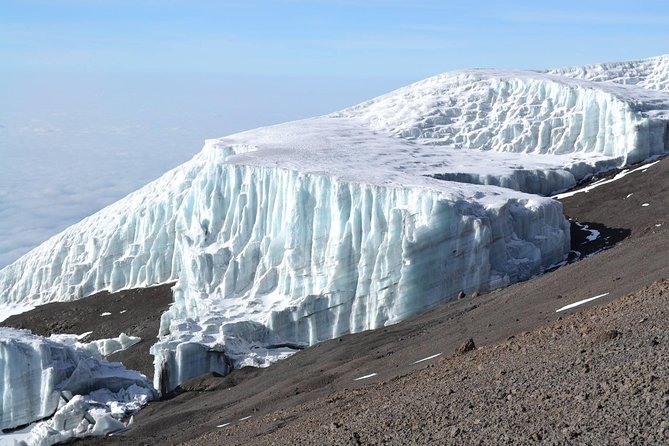
Reviewed · KILIMANJARO CLIMBS
6 Days Mount Kilimanjaro Trek Marangu Route
Kilimanjaro feels close on this route, because Marangu uses dorm huts and a clear plan from Moshi. I like that this route is often seen as the easiest way up, and I also like the people part of the trip, meals, safety focus, and smooth transfers. The tradeoff is that the summit push is still a grind, with a late-night climb that can run 12 to 15 hours.
A smart piece here is the extra acclimatization day at Horombo. If you rush the minimum timeline, the odds of reaching the top are described as lower, so this itinerary gives your body another chance to adjust.
This is also a private tour, so you are not getting shuffled around in a big herd. Expect a proper expedition rhythm, with qualified guides, assistant guides, porters, and a cook, plus emergency oxygen carried for emergencies only.
In This Review
- Key things you’ll love on this Kilimanjaro Marangu trek
- Marangu Route, the Coca-Cola Path, and Why People Start Here
- Day 1: Marangu Gate to Mandara Hut through rainforest and Maundi Crater views
- Day 2: Horombo Hut at 3,700m, timberline to heath and moor
- Day 3: The acclimatization day you will be glad you took at Horombo
- Day 4: Kibo Hut on a tough long day, Last Water and the saddle
- Day 5: Uhuru Peak from midnight, Hans Meyer Cave, Gillman’s Point sunrise, and 5,895m glory
- Day 6: Descent back to Moshi, rainforest again, and a final warm lunch at 2,700m
- Value and price: what $2,350 buys you on the mountain
- Huts, support, and the crew details that make or break a trek
- Who this 6-day Marangu plan fits best
- Should you book this Kilimanjaro Marangu trek?
- FAQ
- How long is the Kilimanjaro trek on this plan?
- Where does the trek start and where does it end?
- What route is this?
- What accommodation do you get on the Marangu route?
- Is there an acclimatization day included?
- When does the summit day begin?
- Is emergency oxygen included?
- Are transfers and hotel nights included?
- What meals are included?
- What gear or items are not included?
Key things you’ll love on this Kilimanjaro Marangu trek
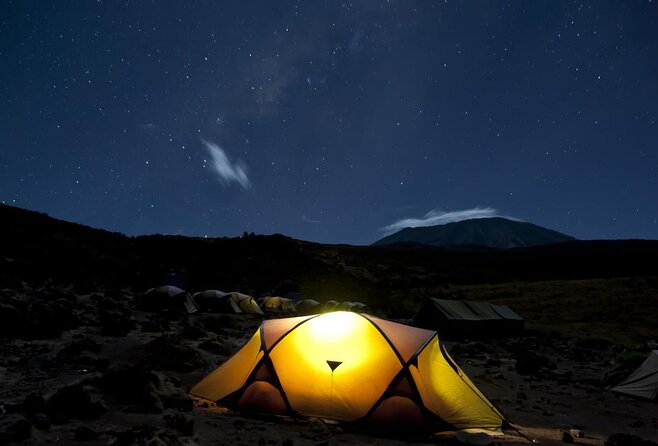
- Classic Coca-Cola Marangu route, the oldest established approach from the southeast side
- Dormitory-style hut sleeping, a big comfort win versus camping every night
- A dedicated acclimatization day at Horombo, with a hike to Mawenzi Ridge or Zebra Rock
- The real summit drama on Day 5, starting around midnight and timing sunrise near Gillman’s Point
- Fresh water for drinking plus hot water for washing daily, which matters more than you think
- Transfers and hotel nights handled, so you spend less time managing logistics in Moshi
Marangu Route, the Coca-Cola Path, and Why People Start Here
Marangu is the Kilimanjaro route most people compare first. It is called the Coca-Cola route, and it is known for being the oldest established trail up the mountain. The big reason folks choose it is simple: it is considered the easiest route on Kilimanjaro.
What I like about that, for you, is not just the trail reputation. It is the way the trip is built around practical comfort. Marangu is also the only route described as offering sleeping huts in dormitory style, which can make night after night feel less like you are living inside a tent.
Here is the part to respect: even on the easier route, altitude does not care about marketing. The minimum days for Marangu is five, but the chance of summiting in that timeframe is lower. This 6-day plan fixes that by adding an extra acclimatization day, which is why the schedule feels more like a true high-altitude effort than a forced sprint.
More Hiking Trips in Moshi
- Private Kilimanjaro Hike 7 Day Lemosho Route
★ 5.0 · 60 reviews - Best Kilimanjaro hiking day trip tour with Kilinge Adventures
★ 4.5 · 54 reviews - #1. Best Kilimanjaro Day hike Tour-Machame Route-ISMANI
★ 4.2 · 47 reviews
Day 1: Marangu Gate to Mandara Hut through rainforest and Maundi Crater views
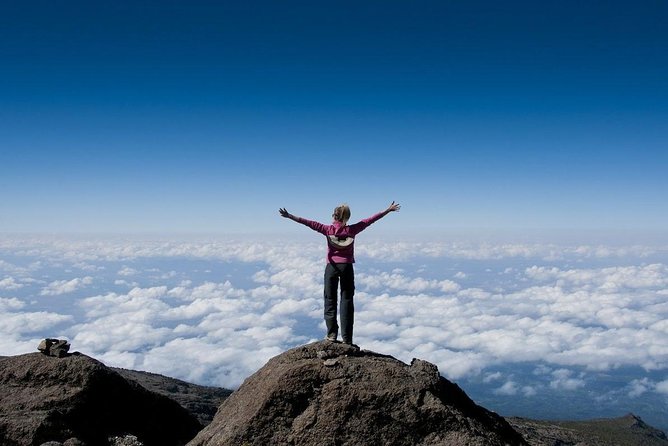
Day 1 starts with pickup from your lodge in Moshi. You drive to Marangu gate, finish the paperwork, and then start hiking through dense rainforest. This opening day is a warm-up, but it is still real walking, covering about 8.3 km in roughly 5 hours.
Along the way, you are not hiking through bland tracks. You are in the thick greenery, and you may even spot primates. That kind of wildlife moment matters because it breaks up the mental heaviness that can come later.
Your destination is Mandara Hut. From there, your guide can take you toward Maundi Crater, with views described as reaching toward the Kenyan interior. I like routes that give you at least one “wow” payoff early, because it keeps your motivation steady when the air thins.
A possible consideration for Day 1 is pacing. Rainforest hiking can feel deceptively easy until you notice how wet and tight the effort becomes. You still want to walk consistently, not recklessly fast, because your legs will be asked again on Day 2.
Day 2: Horombo Hut at 3,700m, timberline to heath and moor
After breakfast, you set out from Mandara Hut toward Horombo Hut, about 12.5 km and roughly 9 hours. The profile changes as you go. You reach timberline, then move into the heath and moor zone.
This is where Kilimanjaro starts to feel more high-altitude than tropical mountain. It is not about speed, it is about steady climbing with the air thinning bit by bit. When Horombo Hut comes into view at around 3,700 meters, you get payoff views over Mawenzi, Kibo, and the broad Masai steppe area.
I like Day 2 because it is both beautiful and educational. You can watch the mountain reveal itself layer by layer, and it gives your mind a handle on what is coming next.
One drawback to plan for: you are likely to feel tired by the time you reach Horombo, even if you did not feel “sick.” That is normal. The goal is to arrive in control, then sleep and recover properly for the next day.
Day 3: The acclimatization day you will be glad you took at Horombo
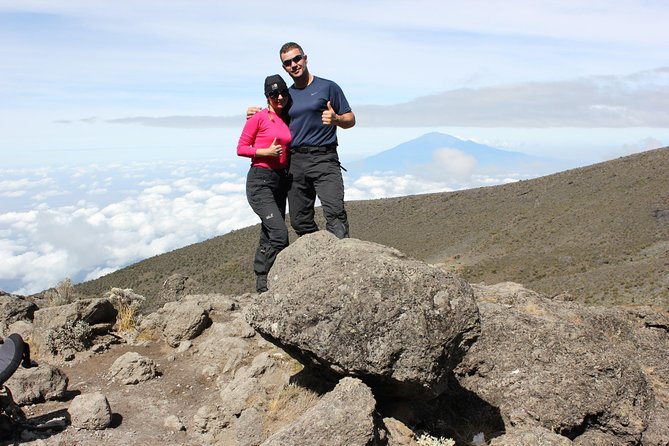
This is the day that makes the 6-day schedule different from the minimum 5-day push. Instead of moving higher immediately, you spend an extra day at Horombo for acclimatization.
Your activity is a hike to Mawenzi Ridge or Zebra Rock, described as about 4 hours total for the outing. The idea is to help your body adjust to higher altitude, then you return to Horombo Hut for lunch, rest, dinner, and overnight.
You should think of this as altitude training without the summit pressure. It is also mentally easier than the later stages, because you are not trying to “win the route” on Day 3. If you rush the plan, your body pays the price later. This day is a hedge against that.
A practical note: even though it sounds like a rest day, it is still walking. Bring the same focus you would for a main stage, just keep the effort controlled. Your reward is a better shot at handling the long climb toward Kibo and beyond.
More Kilimanjaro climbs:
- Kilimanjaro climb by Lemosho Route (7-day)
★ 5.0 · 651 reviews - Kilimanjaro climb, Machame Route (7-day)
★ 5.0 · 262 reviews - Kilimanjaro Climbing Lemosho Route 8 Days.
★ 5.0 · 186 reviews - Climbing Kilimanjaro – Machame Route
★ 5.0 · 170 reviews
Day 4: Kibo Hut on a tough long day, Last Water and the saddle
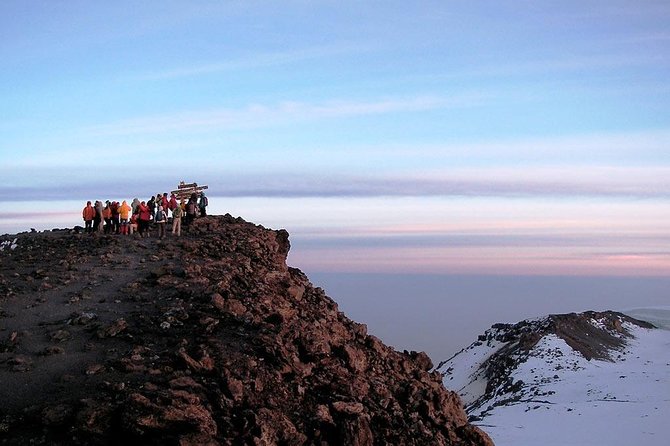
Day 4 is where the trek starts to feel serious. You cover about 9.5 km in roughly 7 hours to reach Kibo Hut.
This stage is described as long and tough. The trail is well built, but you will feel the altitude and the sustained effort. Along the way, you pass the Last Water point, then you reach the saddle. The saddle is a near-vegetation less plateau that connects the main summit area, Kibo, with Mawenzi.
Those names matter because they mark how the mountain funnels you into the summit corridor. It is not just “walking uphill,” it is moving through distinct zones.
When you reach Kibo Hut, the timing is tight for comfort. You eat early and aim for an early night, because the night will be short. That matters because Day 5 starts around midnight, so your sleep needs to be protected.
If you want one piece of advice, it is this: treat Day 4 like a logistics day for your summit bid. Do not burn energy being dramatic about the view. Save the strength for the last push, and let the early meal and early sleep do their job.
Day 5: Uhuru Peak from midnight, Hans Meyer Cave, Gillman’s Point sunrise, and 5,895m glory
Day 5 is the headline. You begin your final ascent around midnight, in a climb that is described as 12 to 15 hours total.
Along the way you pass Hans Meyer Cave at 5,220 meters. The climb slowly but surely trends upward, and the air feels thinner each step. This is where your headlamp hours turn into sunrise hours.
Then, around sunrise, you reach Gillman’s Point at 5,681 meters, the crater rim. You get the moment where the sun starts to warm the land, and suddenly the cold of the night feels manageable.
After Gillman’s Point, there is still work. You hike about 1 to 2 hours further to reach Uhuru Peak at 5,895 meters.
On the return to Kibo Hut, you are served a warm meal. Then you get a break for about 1 to 2 hours before continuing down to Horombo Hut.
Two things I consider essential for you on Day 5:
- Pacing beats hero mode. The route description already tells you it is slow, steady upward progress.
- Timing is part of the summit. Sunrise at Gillman’s Point is built into the day, so your mental goal should be to stay present, not just to reach the peak as fast as possible.
Also, emergency oxygen is included in the package for emergencies only, not as summit aid. That is an important distinction. The summit comes from acclimatization, decision making, and stamina, not from gimmicks.
Day 6: Descent back to Moshi, rainforest again, and a final warm lunch at 2,700m
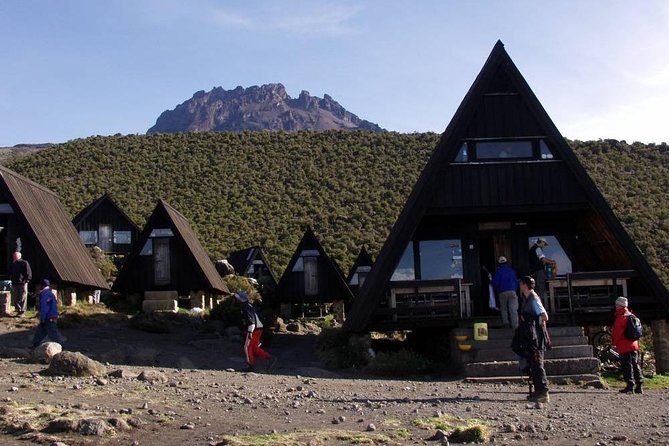
Day 6 is the long exhale. The distance listed is about 20.8 km, but the day is timed at about 8 hours, totaling roughly 6 hours trekking in the middle part.
You begin by passing back through heath and moor zone to Mandara Hut, around 2,700 meters. Here you get a warm lunch waiting for you, which is not a small detail. After a summit day, warm food at a mountain hut helps your system settle.
Soon, you return to tropical rainforest. Then, after a total of about 6 hours of trekking, you reach Kilimanjaro National Park gate at 1,860 meters. After that, you say goodbye to your mountain guides and transfer back to your hotel in Moshi.
The post-trek reward is not subtle. Plan to take a warm, relaxing shower and celebrate. Most people will feel a mix of relief and pride, and your body will be grateful you kept the last day steady rather than rushing.
One consideration: the descent can feel harder on knees than the ascent feels in your lungs. You want good foot placement and controlled steps, especially on uneven trail after the big summit day.
Value and price: what $2,350 buys you on the mountain
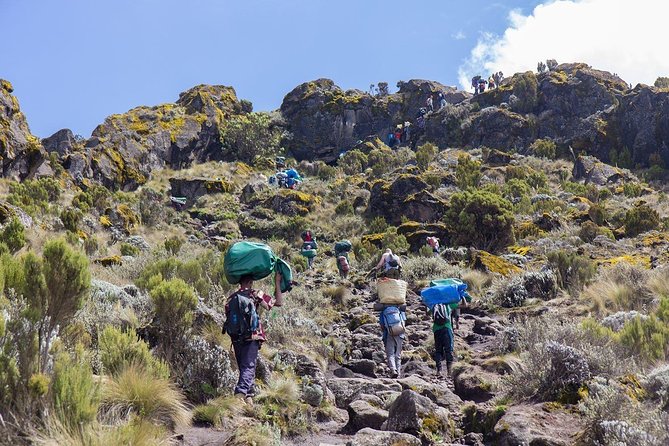
The price is $2,350 per person for a 6-day trek in Moshi, Tanzania. At first glance, Kilimanjaro costs can feel like a wall. But when you look at what is included, the value picture gets clearer.
This package includes:
- All fees and taxes
- Return transfers between Kilimanjaro airport and Moshi, plus Moshi back to the airport
- A hotel the night before and the night after the climb, with dinner and breakfast included
- Park-facing logistics covered by a professional team: qualified mountain guide, assistant guides, porters, and cook, with their wages included
- Fresh water daily for drinking and hot water for washing
- Meals built into the schedule: breakfast 5 times, dinner 5 times, lunch 6 times
- Equipment support such as camping equipment and sleeping mattresses listed in the inclusions
- Emergency oxygen for emergencies only
So what does that mean for you? Less time managing basics. You do not have to piece together meals, water handling, staff hiring, and logistics on the ground. You can focus on training, gear decisions, and pacing.
What is not included is also important. Visas, flights, and travel or health insurance are not included. Personal trekking gear is not included either, though you can rent some gear from an equipment store in Tanzania. You should also plan on personal medicine and water purifying tablets, because those are not provided in the inclusions.
My take: this is strongest for people who want a guided, managed expedition with fewer moving parts, especially if you do not want to hunt down equipment in advance.
Huts, support, and the crew details that make or break a trek
Marangu’s sleeping arrangement is a key part of the experience. You get sleeping huts in dormitory style, which can be more predictable and comfortable than full-on camping for every night.
On top of that, the package lists hot water for washing daily and fresh drinking water. That practical comfort turns out to be morale support. On Kilimanjaro, small comforts help you keep your energy for the next stage.
I also appreciate that the team setup is specific, not vague. You get qualified guides, assistant guides, porters, and a cook, and their wages are included. In other words, you are paying for ongoing support, not just a leader with a whistle.
The service stories around this company also point to food quality and smooth organization. In particular, you can see repeated praise tied to meal planning, safety being treated as a priority, and the overall team energy. There is also mention of Wence Tarimo by name, which suggests you are dealing with people who stay engaged and responsive.
One thing to keep realistic: the mountain is still the mountain. Even with perfect support, the summit day is long and cold. Your preparation still matters.
Who this 6-day Marangu plan fits best
This trek is described for travelers with moderate physical fitness. So if you can handle steady hiking days, you can likely meet the demands with good pacing.
This plan fits you best if:
- You want hut sleeping on Kilimanjaro, not tent life every night
- You want an itinerary that includes a real acclimatization day at Horombo
- You prefer a guided, structured experience with transfers, meals, and equipment support
- You like the classic Marangu corridor and want the route considered easiest by reputation
You might want to reconsider if:
- You are looking for a very short trip. The minimum five-day option exists but is described as lower odds for summiting, and this itinerary wisely adds a day.
- You know you struggle with long, late-night climbs. Day 5 is a major time commitment, and the climb starts around midnight.
Also, because this is a private tour, it suits people who want attention focused on their group. That can be a big plus if you value personal pacing.
Should you book this Kilimanjaro Marangu trek?
If you want a classic, structured Kilimanjaro route with dormitory-style huts, planned meals, daily water support, and a built-in acclimatization day at Horombo, this 6-day Marangu trek makes a lot of sense. The price is high, but you can see what you are paying for: guides plus staff support, park-related fees and taxes, hotel nights in Moshi, and expedition basics handled for you.
I would book it if your goal is a realistic attempt built around pacing and acclimatization, not a sprint. And if you are the type who sleeps better when you can count on a hut bed, Marangu is a smart match.
If you tell me your age range, your hiking background, and when you want to go, I can help you sanity-check whether this 6-day schedule is the right fit, or whether a different Kilimanjaro route would better match your tolerance for long nights and altitude.
FAQ
How long is the Kilimanjaro trek on this plan?
It is listed as 6 days approximately.
Where does the trek start and where does it end?
It starts at the Kilimanjaro National Park area and ends back at the meeting point.
What route is this?
This is the Marangu route, also known as the Coca-Cola route.
What accommodation do you get on the Marangu route?
The Marangu route is described as offering sleeping huts in dormitory style.
Is there an acclimatization day included?
Yes. The itinerary includes an extra day at Horombo for acclimatization, with a hike to Mawenzi Ridge or Zebra Rock.
When does the summit day begin?
The summit stage begins around midnight.
Is emergency oxygen included?
Yes. Emergency oxygen is included for emergencies only, not for use as summit aid.
Are transfers and hotel nights included?
Yes. Return transfers between Kilimanjaro airport and Moshi are included, and there is a hotel night before and after the climb with dinner and breakfast included.
What meals are included?
Breakfast is included 5 times, dinner is included 5 times, and lunch is included 6 times.
What gear or items are not included?
Personal hiking or trekking gear is not included, but some gear can be rented in Tanzania. Visas, flights, and travel and health insurance are also not included, and personal medicine and water purifying tablets are not listed as included.
More Hiking & Trekking in Moshi
- Best Kilimanjaro Adventure 7 days Machame route Trekking
★ 5.0 · 42 reviews - Kilimanjaro 7 Day Private Trekking Experience
★ 5.0 · 40 reviews - 8 Days Kilimanjaro Hike via Lemosho Route
★ 5.0 · 39 reviews - 6 Days Machame Route Kilimanjaro Climbing Trekking Tour
★ 5.0 · 34 reviews
Just posted around Moshi
- machame route★ 5.0 · 16 reviews
- Kilimanjaro Climbing Umbwe Route★ 5.0 · 3 reviews
- Wildlife Extravaganza: Manyara, Tarangire & Ngorongoro in 3 Days★ 5.0 · 3 reviews
- Mt Kilimanjaro 6 days Marangu route hike★ 5.0 · 3 reviews
- 3 Days Private E-Bike Tour in West Kilimanjaro★ 5.0 · 3 reviews
- West Kilimanjaro cycling Adventures★ 4.5 · 8 reviews
- Kilimanjaro Climb • Marangu Route ~ 9 Day★ 5.0 · 4 reviews
- Private Cycle to Kilimanjaro Bike Park Safari★ 5.0 · 6 reviews
Kilimanjaro Climbs, compared.
8-Day Small-group Lemosho Kilimanjaro Summit Trekking
Read our review →
5 Days Best of Tanzania Luxury Safari Northern Circuit
Read our review →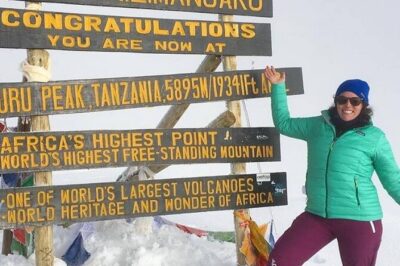
Climbing Kilimanjaro through 7 days Machame Route
Read our review →
Browse the lists this tour appears in