
Reviewed · KILIMANJARO CLIMBS
Unforgettable 8 Days Lemosho Route Trekking on Kilimanjaro
Lemosho is Kilimanjaro with breathing room. This 8-day climb from Moshi uses the Lemosho route approach for wide-open views and a steady rhythm, plus you get stretches of low-crowd hiking before the trail later merges near Lava Tower. I especially like the way the plan uses the Shira Plateau days to help your body get used to altitude, not just march upward and hope for the best.
The main drawback is the brutal timing and cold. You should plan for very late nights, including wake-ups around 11pm to 12am, and the final approach involves heavy scree and thin air. Also note the water reality on the ridge period, since the last water point is described as Karanga Valley and there is no water at Barafu, so you need to take hydration seriously from early on.
In This Review
- Key highlights worth marking on your map
- Why the Lemosho route feels calmer than most Kilimanjaro plans
- Day 1: Moshi briefing, Londorossi Gate drive, and forest to Mti Mkubwa
- Day 2: Shira Ridge crossing at 3,600m and moorland streams to Shira Camp One
- Day 3: Plateau acclimatization on Shira Camp Two, with a steadier feel
- Day 4: Lava Tower at 4,630m, the optional scramble, and Barranco Camp
- Day 5: Barafu scree slopes at 4,640m, rest, then the long night start
- Day 6: Barafu Hut and the water planning moment you should not ignore
- Day 7: Stella Point at 5,685m, heavy scree, and that sunrise pressure
- Day 8: Back down from Mweka Gate, certificates, and the hot lunch finish
- Price and what feels like value at $1,500 per person
- The human side: chief guides, Nalisis, and chef Jackson’s kind of care
- Practical tips for your Lemosho pacing, warmth, and safety
- Should you book this 8-day Lemosho climb with Rede Tours and Safaris?
- FAQ
- Where does this Kilimanjaro experience start and end?
- How long is the Lemosho route trek?
- What meals are included?
- Are park fees and admission tickets included?
- What is not included in the price?
- Is pickup offered?
- What summit certificates might you receive?
Key highlights worth marking on your map
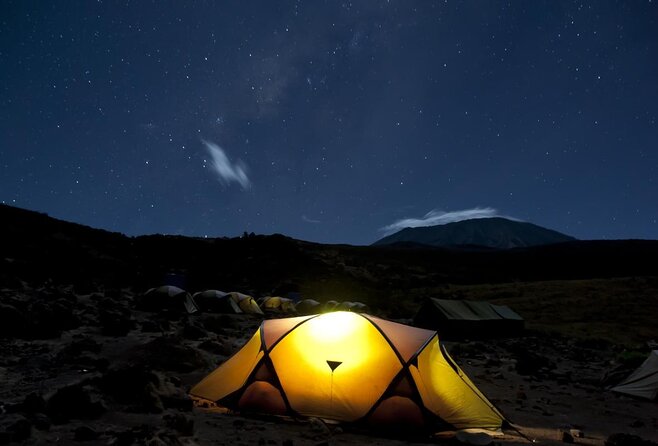
- Low-crowd start from the west before joining the busier Machame-style section near Lava Tower
- Shira Plateau acclimatization with a calmer, relatively flat traverse that helps your lungs
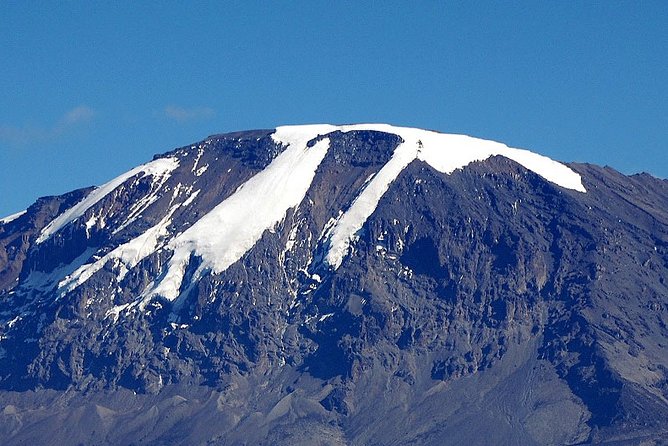
- Lava Tower landmark moment at 4,630m, plus an optional scramble for sure-footed trekkers
- Barranco-to-Barafu transition where the terrain gets steeper and more exposed
- Stella Point sunrise target around 5,685m, with green or gold certificate outcomes
- Food support with real names in the mix, including chef Jackson mentioned for standout care
Why the Lemosho route feels calmer than most Kilimanjaro plans
If you’re comparing routes, Lemosho’s biggest selling point is not just scenery, it’s how it spaces out effort. Starting from the west and working across the mountain’s major zones gives you a sense of progression. You move from forest trails into moorland, then onto the high plateau, then toward the crater rim.
In practical terms, that often means fewer people around you at the start. The route keeps crowds low until it joins the Machame route near Lava Tower, so the early days feel more like deep mountain travel and less like a moving line.
Another thing I like is the balance between “work” and “adjust.” You get a full Shira Plateau traverse (west to east) and at least one day that’s specifically paced as an acclimatization walk on moorland meadows by streams. That’s exactly what you want when altitude is doing the real climbing.
More Hiking Trips in Moshi
- Private Kilimanjaro Hike 7 Day Lemosho Route
★ 5.0 · 60 reviews - Best Kilimanjaro hiking day trip tour with Kilinge Adventures
★ 4.5 · 54 reviews - #1. Best Kilimanjaro Day hike Tour-Machame Route-ISMANI
★ 4.2 · 47 reviews
Day 1: Moshi briefing, Londorossi Gate drive, and forest to Mti Mkubwa
Most days start with a hotel briefing with your chief guide, then a drive to Londorossi Park Gate at 2,250m (about 2.5 hours). After park rules, you begin trekking into the forest.
Here’s the smart detail on day one: a 4WD vehicle takes you toward Lemosho Glades before you start walking. That cuts down early slog and gets you into proper trail walking sooner. From there, you follow forest trails to Mti Mkubwa campsite (2,390m). It’s also where you settle in for dinner and your first night.
Value for you on day one is simple. You ease into the altitude transition without draining yourself before the high sections begin. If you’re the type who needs structure, this day also helps set expectations with that morning briefing.
Potential catch: day one is still a start at elevation, and the air can feel different even before the dramatic climbs. Keep your pace gentle and focus on breathing, not speed.
Day 2: Shira Ridge crossing at 3,600m and moorland streams to Shira Camp One
Day two starts with a trail that slowly steepens and eventually enters the moorland zone. You cross Shira Ridge at 3,600m, then the route drops gently toward Shira Camp One on the Shira Plateau, beside a stream.
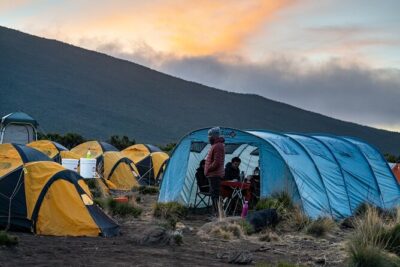
The high point here is the shift in scenery and footing. You go from forest-like conditions into open moorland with big sky. The plan calls out crossing multiple streams, so your shoes should be ready for wet feet, muddy edges, and cold air pockets.
This is also one of those days where your mindset matters. “Steep” and “gradual” can still add up when you’re moving at altitude. I like day two on Lemosho because it forces attention to effort without throwing you straight into maximum steepness immediately.
Day 3: Plateau acclimatization on Shira Camp Two, with a steadier feel
Day three is built for adaptation. You hike across the plateau to Shira Camp Two, on moorland meadows by a stream. The day is described as a moderate walk, with room for variety on the plateau to make it a stronger acclimatization day.
For your body, this kind of day helps in a very direct way. You keep moving, but you’re not doing the hardest climbing every single day. That makes it easier to wake up feeling like you’re still in control.
If you’re someone who tends to rush, day three is a good reset day. Keep the pace steady. Enjoy the long views when they appear, and use the time to practice a calm rhythm: short breaths, consistent steps, no sprinting.
More Kilimanjaro climbs:
- Kilimanjaro climb by Lemosho Route (7-day)
★ 5.0 · 651 reviews - Kilimanjaro climb, Machame Route (7-day)
★ 5.0 · 262 reviews - Kilimanjaro Climbing Lemosho Route 8 Days.
★ 5.0 · 186 reviews - Climbing Kilimanjaro – Machame Route
★ 5.0 · 170 reviews
Day 4: Lava Tower at 4,630m, the optional scramble, and Barranco Camp
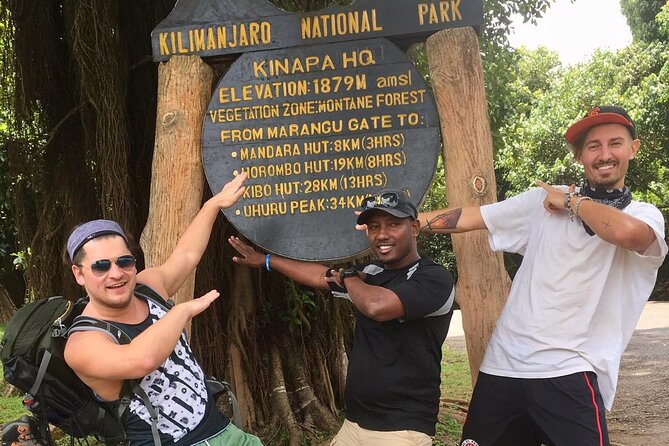
Day four brings the kind of landmark that makes Lemosho memorable. You hike east through a steep path above vegetation toward the looming mass of Kilimanjaro. After hours of walking through rocky terrain, you reach Lava Tower at 4,630m.
The trail passes right below the tower, and there’s an optional scramble for extra credit if you’re sure-footed. Even if you don’t scramble, the tower is one of those visual checkpoints that helps you feel the climb is real and measurable.
After lunch near Lava Tower, you descend for about two hours toward Barranco Camp at 3,950m. This is where the route starts feeling more like classic Kilimanjaro terrain, with more exposure and more dramatic changes in how the landscape looks around you.
Why I like this day for planning your energy: it’s a high-feeling day with a payoff moment, then it gives you time to come down to sleep.
Day 5: Barafu scree slopes at 4,640m, rest, then the long night start
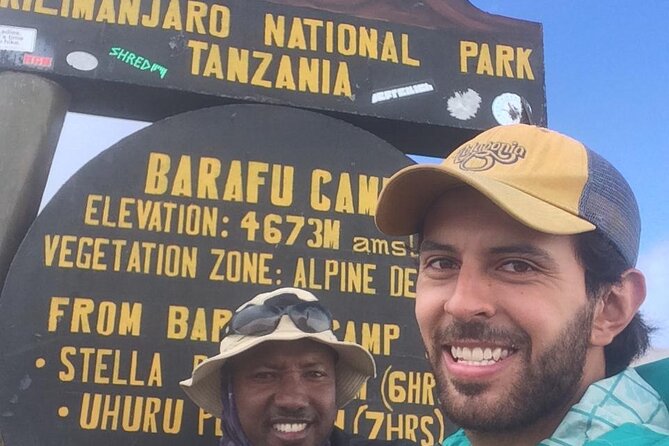
Day five is the start of the real grind. You hike to Barafu camp at 4,640m, crossing desolate scree slopes with little to no vegetation. Expect a tough steep walk, and altitude makes everything feel heavier.
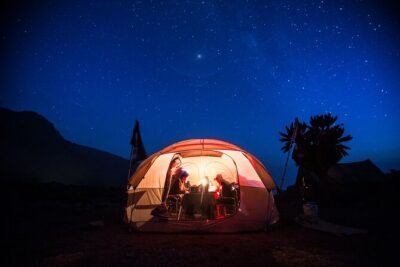
On arrival you eat, rest, and prepare for the next long stretch. The plan stresses hydration and warmth, and it also tells you you’ll be getting up between 11pm and 12am to start the climb toward the summit.
For you, the value of this day is the preparation window. It gives you time to get organized, check your layers, and settle your mind before cold and dark take over. If you’ve ever had a “great idea to sleep later” on a mountain, this day is where you put that idea away. Sleep and warmth are not optional.
Day 6: Barafu Hut and the water planning moment you should not ignore
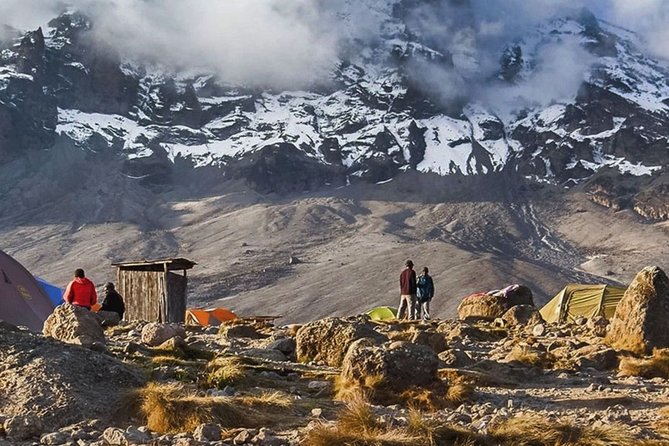
The description for day six focuses on moving over intervening ridges and valley, and then joining the Mweka Route which will act as the descent line later. You turn left toward the mountain and hike up the ridge for another hour to Barafu Hut, where you receive a hot lunch.
One line stands out because it has real consequences: there is no water at Barafu Camp, and the last water point mentioned is Karanga Valley. That means you should treat water planning as part of your climbing plan, not a last-minute worry.
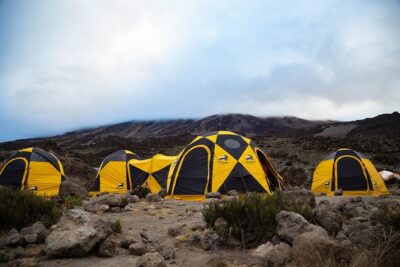
The route also notes that your tent will be pitched on a narrow, stony, wind-swept ridge. The practical takeaway is safety in darkness and before you’re fully awake. Make sure you can handle your footing and gear before it gets too cold and too dark.
Even though the schedule details can feel intense, this day is basically about positioning and staying ready. Don’t burn yourself out. The cold and the altitude will keep coming.
Day 7: Stella Point at 5,685m, heavy scree, and that sunrise pressure
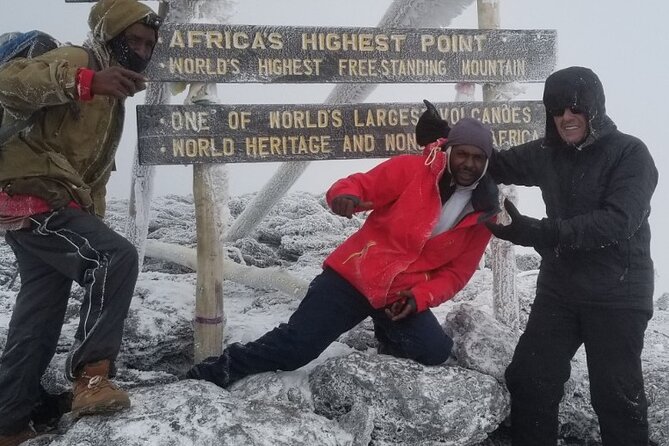
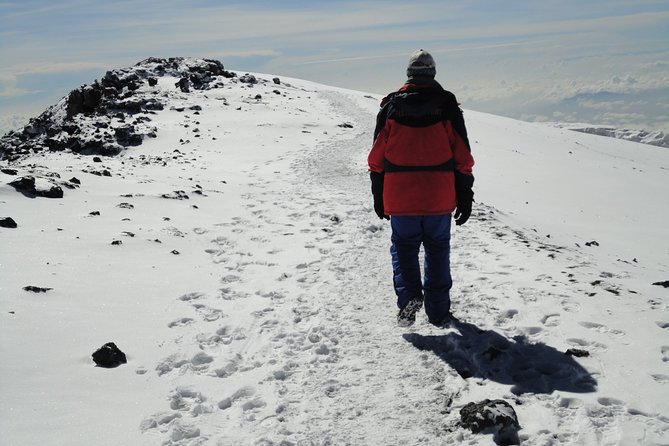
Day seven is described as a night climb. You’re up around 11:30pm, with hot tea and biscuits, then you head into the darkness. The route climbs northwest up through heavy scree between the Rebmann and Ratzel glaciers to reach Stella Point at 5,685m.
This is described as the most challenging part for most climbers, and it’s also where you stop for a short rest. The big reward is the chance to see the sunrise from Stella Point. The plan also notes you may find snow depending on the season and storms.
After Stella Point you join the top part of the Marangu Route, but the instructions are clear: don’t linger too long, because cold and exhaustion can make the restart difficult.
My advice for this day is simple. The goal is not to feel strong, it’s to keep moving safely. Heavy scree punishes rushed steps. Keep your footing deliberate, and if you feel cold, address it quickly with layers and movement, not panic.
Day 8: Back down from Mweka Gate, certificates, and the hot lunch finish
You start with breakfast, then it’s a short scenic walk, about 3 hours back to the park gate. At Mweka Gate you sign the register, and this is where successful climbers normally receive their summit certificates.
Here’s the recognition detail that’s easy to miss: green certificates are issued for reaching Stella Point, while gold certificates are for Uhuru Peak. The plan also mentions a bottle of champen after certificates.
After the gate, you continue down to Mweka Village, about 3 km, where you’re served a hot lunch. Then you’re driven back to Moshi.
One practical note you’ll appreciate: the plan says no tips are given on the way until all your gear and the rest of the crew have reached the gate safely, then you remember to tip the staff at the gate. That’s a real mountain-ops detail, and it helps keep the end of the trek calm and organized.
Price and what feels like value at $1,500 per person
At $1,500 per person for an approximately 8-day Kilimanjaro climb, the value comes down to what’s included versus what you’ll add on your own.
This price includes:
- All fees and taxes
- Meals: breakfast 8 times, lunch 8 times, dinner 7 times
- All admission tickets listed as included
- Also noted: pickup offered and a mobile ticket
What’s not included:
- Flights
- Visas
- Tipping the crew
- Additional park fees (if any)
- Non-climbing accommodation
- Private transportation
- Hiking supportive materials
For budgeting, I think this package is strong if you’re coming to Moshi ready to move and you want the trail logistics handled. The big cost drivers on Kilimanjaro are usually the mountain permits, guiding and porters, food, and camping systems. Since the tour explicitly includes fees, taxes, and ticket costs plus almost all meals, the $1,500 number feels less like a guess.
It also helps that the tour is capped at maximum 100 travelers, which usually translates to less chaos than true free-for-all operations, though crowd behavior can still vary by route conditions.
The human side: chief guides, Nalisis, and chef Jackson’s kind of care
The best part of any mountain trip is not just altitude, it’s how people manage fatigue and nerves. In the feedback you provided, names mattered.
I saw Nalisis praised as a top guide, with special mention that he made the whole experience awesome from start to finish. That kind of guide presence is huge on Kilimanjaro, because the climb is not only physical, it’s decision-making: pacing, hydration, and staying calm when your body argues with the plan.
Chef Jackson also got a special mention. Food on Kilimanjaro is a big deal. If you’re consistently fed and warmed up with meals that are actually satisfying, it changes your night-climb mindset. Even when the terrain is brutal, morale stays steadier with good cooking and clear daily rhythm.
So if you want a “feel-good operations” factor, this is one of the reasons Lemosho with this provider reads well. The route is challenging, but the team support seems to land well.
Practical tips for your Lemosho pacing, warmth, and safety
Lemosho’s profile is scenic and more forgiving than some routes on paper, but it still climbs a mountain where you can’t bully the altitude. Here are the things I’d carry into your planning based on how the climb is described.
- Treat the late-night push like a separate event. You’re up around 11pm to 12am on the plan, then again around 11:30pm on the later push described. That means your sleep, layers, and mental reset matter.
- Hydrate early and plan your last water carefully. The route description calls out that there is no water at Barafu Camp and Karanga Valley is the last water point. Don’t wait until you feel thirsty.
- Expect wind, stony ground, and dark setup. Barafu tent pitching is described as on a narrow, stony, wind-swept ridge. Make sure you know where your headlamp and essentials are before it gets dark.
- Use Lava Tower and Barranco as mental checkpoints. Lava Tower at 4,630m is a visible landmark. Barranco is a noticeable change in terrain after the tower. When your legs are tired, these checkpoints help you measure progress.
- Don’t overdo the scramble. The optional scramble to Lava Tower top is for sure-footed trekkers. If you’re not feeling confident on rock and cold, it’s totally fine to skip and save energy for later sections.
If you want the best experience on Lemosho, pace for consistency. Slow steps, steady breathing, and regular snack breaks beat heroic surges.
Should you book this 8-day Lemosho climb with Rede Tours and Safaris?
I’d say you should book if you want a scenic, west-to-east route with good acclimatization days and a less crowded early feel. The combination of forest start, Shira Plateau pacing, Lava Tower landmark day, and the Stella Point sunrise push gives you a complete Kilimanjaro story in eight days.
I’d think twice if you dislike night starts and cold conditions. The schedule includes very late wake-ups, and the climb sections involve heavy scree and wind exposure. Also, if you can’t commit to hydration discipline, the water notes around Barafu and Karanga Valley are worth taking seriously.
One more practical filter: you’re paying a set price that covers fees, taxes, and nearly all meals. If you already know you want guiding and food handled and you’re budgeting for visas, flights, and tipping, this is a straightforward way to do Kilimanjaro.
FAQ
Where does this Kilimanjaro experience start and end?
It starts at Shanty Town Road, Tanzania, and it ends back at the same meeting point.
How long is the Lemosho route trek?
The trek is listed as 8 days, approximately.
What meals are included?
Breakfast is included 8 times, lunch is included 8 times, and dinner is included 7 times.
Are park fees and admission tickets included?
Yes. The price includes all fees and taxes, and admission tickets are included.
What is not included in the price?
Flights, tipping the crew, visas, additional park fees, non-climbing accommodation, private transportation, and hiking supportive materials are not included.
Is pickup offered?
Yes, pickup is offered.
What summit certificates might you receive?
At Mweka Gate, climbers who reached Stella Point receive green certificates, and those who reached Uhuru Peak receive gold certificates.
More Hiking & Trekking in Moshi
- Best Kilimanjaro Adventure 7 days Machame route Trekking
★ 5.0 · 42 reviews - Kilimanjaro 7 Day Private Trekking Experience
★ 5.0 · 40 reviews - 8 Days Kilimanjaro Hike via Lemosho Route
★ 5.0 · 39 reviews - The Best & Unique Kilimanjaro Hiking tour 7 days Machame route
★ 5.0 · 34 reviews
Just posted around Moshi
- machame route★ 5.0 · 16 reviews
- Kilimanjaro Climbing Umbwe Route★ 5.0 · 3 reviews
- Wildlife Extravaganza: Manyara, Tarangire & Ngorongoro in 3 Days★ 5.0 · 3 reviews
- Mt Kilimanjaro 6 days Marangu route hike★ 5.0 · 3 reviews
- 3 Days Private E-Bike Tour in West Kilimanjaro★ 5.0 · 3 reviews
- West Kilimanjaro cycling Adventures★ 4.5 · 8 reviews
- Kilimanjaro Climb • Marangu Route ~ 9 Day★ 5.0 · 4 reviews
- Private Cycle to Kilimanjaro Bike Park Safari★ 5.0 · 6 reviews
Kilimanjaro Climbs, compared.
8-Day Small-group Lemosho Kilimanjaro Summit Trekking
Read our review →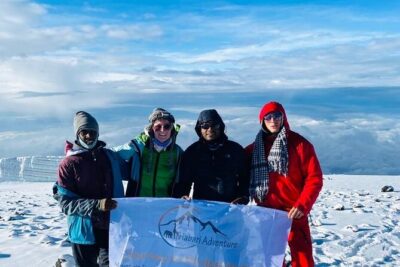
5 Days Best of Tanzania Luxury Safari Northern Circuit
Read our review →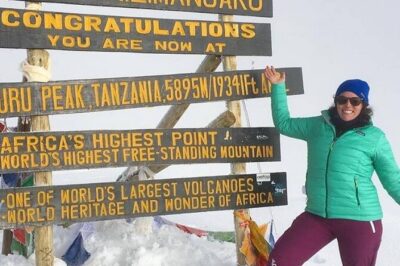
Climbing Kilimanjaro through 7 days Machame Route
Read our review →
Browse the lists this tour appears in