
Reviewed · KILIMANJARO CLIMBS
Machame Route 7-Day Private Kilimanjaro Trek
Machame Route is a smart climb plan. This 7-day private Kilimanjaro trek from Moshi brings you through rainforest, moorlands, and the high, icy zone, with lots of time to adjust to altitude. I especially like the built-in acclimatization pacing (Lava Tower and the downhill to Barranco), and I like how the day by day effort feels varied instead of repetitive. The main drawback to think about is that the summit day starts around midnight, so you need energy for a very long, cold-feeling night hike.
If you care about being well looked after, you will like this setup. People have praised guides such as William, Innocent, Kenny, Shafii, and Emmanuel, plus Jackson’s clear planning and communication ahead of time. I also like that safety gear is part of the package, including oxygen tanks and first aid kits, so you are not improvising at 5,000-plus meters.
You also get solid value for a premium price, because meals, tents, and park logistics are handled. Still, this is real hiking. You will walk steep sections, you will spend long hours on your feet, and you will want to be honest with your fitness and acclimatization needs.
In This Review
- Key things I’d highlight before you go
- Moshi start to Machame Gate: what the first day actually feels like
- Why the Machame route’s 7 days help you stay steady at altitude
- Day 1: Rainforest to Machame Camp (3,010 m)
- Day 2: Moorlands and Shira views on the way to Shira Camp (3,840 m)
- Day 3: Lava Tower acclimatization, then down to Barranco Camp (3,960 m)
- Day 4: Barranco Wall to Karanga Camp (4,035 m)
- Day 5: Steep alpine desert to Barafu Camp (4,640 m)
- Day 6: Midnight summit to Uhuru Peak (5,895 m), then down to Mweka
- Day 7: The rainforest drop to Mweka Gate and your summit certificate
- Price and value: what $2,209 per person really buys
- Guides like Jackson, William, and Innocent, and why that matters
- Meals, tents, and camping comfort you can actually plan around
- Fitness reality: what you need for this 7-day Machame climb
- Weather and summit odds: plan for the possibility of change
- Should you book this Machame Route private trek from Moshi?
Key things I’d highlight before you go
- Altitude-first planning on Machame, with Lava Tower and multiple camp changes to help your body adapt
- A real midnight summit push to Uhuru Peak, then a long descent day to Mweka Camp
- Camping comfort is included, with tents, sleeping bags, sleeping mats, and even a portable toilet
- Meals and clean drinking water are covered throughout the trek
- Safety support is built in, including oxygen tanks and first aid kits
- Strong guide teamwork, with names like William, Innocent, Kenny, Shafii, and Emmanuel showing up in past experiences
Moshi start to Machame Gate: what the first day actually feels like
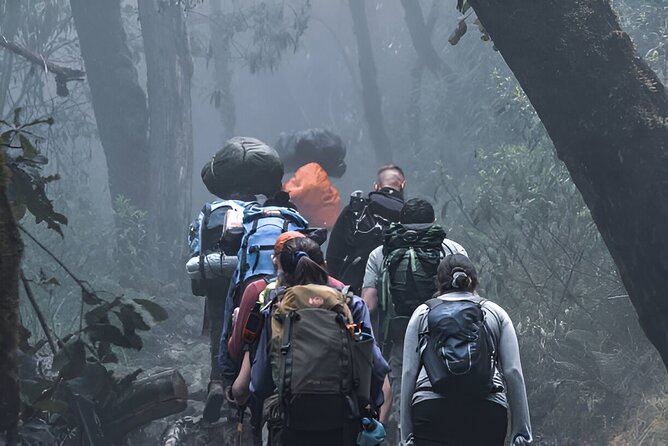
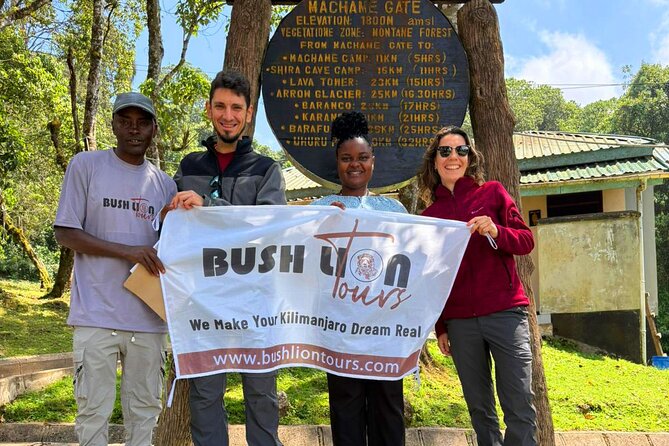
Most Kilimanjaro climbs begin with a drive, and this one starts from Moshi, heading to the Machame Gate in Kilimanjaro National Park. After you check in and get a briefing, you step into thick rainforest. Expect a classic Kilimanjaro “green tunnel” feeling, with the path shaded and alive with plants and wildlife you might spot along the way.
Day 1 is designed as a warm entry, not a test. You hike about 5 to 7 hours and cover around 11 km (7 miles), reaching Machame Camp at 3,010 meters. The rhythm matters here. You are going from low altitude comfort to a place where you start breathing a little differently, even if it feels subtle.
Practical note: day 1 is often where people try to go too fast. I like that the plan gives you a full day of hiking that is challenging but not the summit-killer yet, so you can settle into your pace and your breathing without panic.
More Hiking Trips in Moshi
- Private Kilimanjaro Hike 7 Day Lemosho Route
★ 5.0 · 60 reviews - Best Kilimanjaro hiking day trip tour with Kilinge Adventures
★ 4.5 · 54 reviews - #1. Best Kilimanjaro Day hike Tour-Machame Route-ISMANI
★ 4.2 · 47 reviews
Why the Machame route’s 7 days help you stay steady at altitude
Kilimanjaro is mostly about altitude management, not just willpower. This itinerary builds that in with several camp changes and at least one classic acclimatization move: going up to a high point, then dropping to a lower camp.
The big altitude theme across the week looks like this:
- Gradual climb from rainforest into moorland
- A “go high, sleep lower” day at Lava Tower and Barranco
- A steep-but-manageable approach via Barranco Wall and Karanga
- A final push to Barafu, then the summit night
You can still have a tough summit attempt. Nobody should treat Uhuru Peak like a guaranteed checkbox. But I like that this schedule gives your body repeated chances to adjust rather than stacking all the altitude in a couple of long days.
Day 1: Rainforest to Machame Camp (3,010 m)
Day 1 is all about atmosphere and adjustment. After the drive from Moshi and your park check-in, you start walking through rainforest for about 5 to 7 hours over roughly 11 km. When people talk about Kilimanjaro memories, this is often the first sensory shift they remember, green, cool, and very different from later zones.
You finish at Machame Camp (3,010 m). That elevation is high enough to matter, but it is not the intimidating start some routes use. The value for you is simple: you spend time hiking while your system is still learning the new rhythm.
Possible consideration: rainforest days can feel humid and tiring even when the climb seems gentle. If you tend to overheat, go slower early so you do not spend the whole day “paying interest” later.
Day 2: Moorlands and Shira views on the way to Shira Camp (3,840 m)
On day 2, the trail leaves the rainforest and moves into the moorland zone. This is where the scenery changes fast, and the effort feels different on your legs. You walk about 4 to 6 hours and cover around 5 km, then reach Shira Camp at 3,840 meters.
The key draw here is the outlook. The route brings amazing views of Mount Meru and the Shira Plateau. Even if you do not spend long staring, you feel the openness and the change in air as you transition zones.
This day is short on distance, but not easy on effort. The trail can feel steep even when the numbers look modest. I like how the plan keeps you moving without dragging this part into an endless multi-day slog.
More Kilimanjaro climbs:
- Kilimanjaro climb by Lemosho Route (7-day)
★ 5.0 · 651 reviews - Kilimanjaro climb, Machame Route (7-day)
★ 5.0 · 262 reviews - Kilimanjaro Climbing Lemosho Route 8 Days.
★ 5.0 · 186 reviews - Climbing Kilimanjaro – Machame Route
★ 5.0 · 170 reviews
Day 3: Lava Tower acclimatization, then down to Barranco Camp (3,960 m)
Day 3 is one of the most important days on the Machame 7-day plan. You hike up to Lava Tower, reaching about 4,630 meters for lunch and rest. Then you go down to Barranco Camp at 3,960 meters.
That combination is the altitude magic. You get a higher stimulus during the day, then you sleep at a lower point than you reached earlier. The route lists about 10 km (6 miles) total, with a hiking time around 6 to 8 hours.
If you want one reason this itinerary has a strong reputation, it is days like this. I like that the plan does not treat acclimatization as “one optional rest day.” It treats it as a hiking strategy.
What to watch: the hike up to Lava Tower can feel like a steady grind. The payoff is that after the lunch stop, the downhill to Barranco helps your body handle the altitude better for what comes next.
Day 4: Barranco Wall to Karanga Camp (4,035 m)
Day 4 starts with the Barranco Wall. The route says it is steep but safe and does not require special climbing skills. Once you reach the top, you get big views over the surrounding area, then the trail continues through more open terrain.
You then hike to Karanga Camp at 4,035 meters. Total distance is about 5 km (3 miles), and the hiking time is around 4 to 5 hours.
This day matters because it builds confidence. If day 3 helped your body, day 4 helps your mind. The wall is the kind of challenge that makes the trek feel real, but the “no special skills needed” note is important for your planning.
Possible drawback: steep terrain still means a slow pace. If you are the type who gets frustrated when the trail turns vertical, you will want to slow your expectations on this one.
Day 5: Steep alpine desert to Barafu Camp (4,640 m)
Day 5 is short, steep, and focused. You hike to Barafu Camp in about 4 to 5 hours, covering around 4 km (2.5 miles) through a rocky alpine desert.
You reach 4,640 meters, then the plan shifts from hiking mode to summit-night preparation. You get early dinner, then you rest so you can handle the midnight start on day 6.
I like this staging because you do not spend day 5 walking for hours just to “feel like you did something.” It is purposeful movement, followed by downtime. That matters because day 6 is a marathon.
Consideration: since day 5 sets you up for the summit push, anything that messes with your sleep can matter. Hydration and settling your gear early become part of the job, not an afterthought.
Day 6: Midnight summit to Uhuru Peak (5,895 m), then down to Mweka
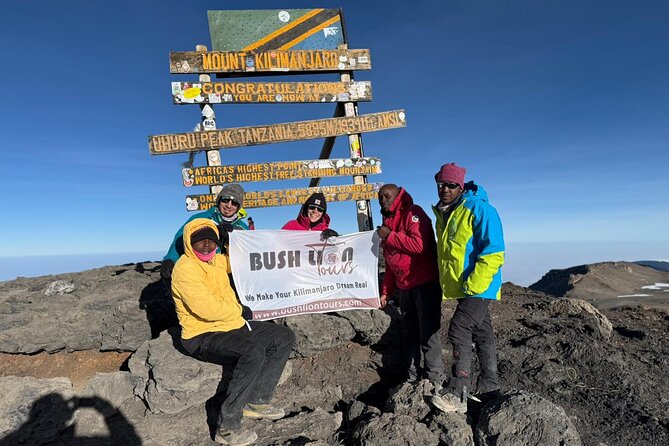
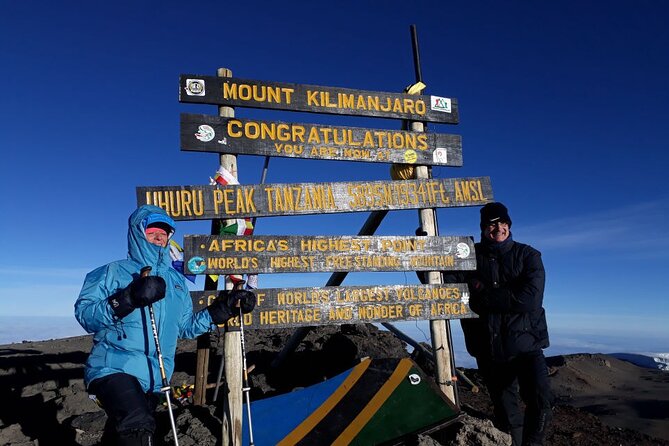
Day 6 is the big one. You start your summit hike around midnight and walk for about 7 to 8 hours to reach Uhuru Peak at 5,895 meters.
After spending time at the top, you descend to Barafu Camp for a short rest, then continue down all the way to Mweka Camp at 3,110 meters. The itinerary calls out about 17 km (11 miles) total distance and 12 to 15 hours overall.
This is where the safety and support piece becomes more than marketing. Oxygen tanks and first aid kits are listed as part of the included safety equipment, and the guided, porter-supported structure can help keep you steady when you feel slower than you want to.
In past climbs, families also reported summiting even during tough weather like a snowstorm, with the right team keeping them moving. That kind of example is a reminder that weather can change, and you need guides who can respond while keeping the group together.
Main drawback to plan for: day 6 is long. Even if you summit, your legs might feel wrecked. Make peace with the idea that this day is about endurance and safe descent, not sightseeing.
Day 7: The rainforest drop to Mweka Gate and your summit certificate
Day 7 is a relief in one way and a challenge in another. You descend through rainforest to Mweka Gate, then wrap up with your summit certificate and a drive back to Moshi.
The walk takes about 3 to 4 hours and covers around 10 km (6 miles). Then you celebrate, and you can finally breathe normally again.
I like that day 7 gives you a strong contrast from the summit night. It is quieter, greener, and more human-scaled after the high drama of Uhuru Peak.
Price and value: what $2,209 per person really buys
At $2,209 per person, this is not a cheap add-on. But it includes a lot of the things that usually cost real money and time if you arrange them separately.
Included items that drive value:
- Airport transfers to and from Kilimanjaro International Airport
- Pre-climb briefing and orientation
- Transportation to and from the trailhead
- Park fees and permits
- Experienced guides and porters
- Meals (breakfast, lunch, dinner) plus clean drinking water during the trek
- Tents and camping equipment, including sleeping bags, sleeping mats, and a portable toilet
- Safety equipment, including oxygen tanks and first aid kits
- Summit certificate
- Two nights of accommodation in addition to the trek, one night before and one night after
That is why the price starts to make more sense. You are paying for the whole moving machine, not just the hiking leadership. In other words, you are buying fewer logistics hassles and more time spent on the climb itself.
Possible drawback: what is not included is just as important. You still need air tickets, travel insurance, personal gear like boots and clothing, and you should budget for tips for guides, porters, and staff. If you have not planned those costs, the sticker price can feel larger than it is.
Guides like Jackson, William, and Innocent, and why that matters
A Kilimanjaro trek is a team sport. Even if everyone is fit, altitude fatigue can make decisions harder. That is why I pay attention to guide structure, not just route names.
In past experiences connected to this trek, people highlighted:
- Kind, helpful, professional guides
- Clear planning and fast, responsive communication from Jackson
- A supportive team that helped people feel safe throughout
- Guide names like Innocent, William, Kenny, Shafii, Emmanuel, plus others mentioned by groups
Food also comes up often. The trek includes meals across the days, and people specifically called the food delicious. On a summit attempt, that matters because you are not just hungry, you are fueling an endurance event.
If you want an authentic feeling of trust, look for that support culture. A good guide helps you pace, drink, and keep moving when you would rather stop.
Meals, tents, and camping comfort you can actually plan around
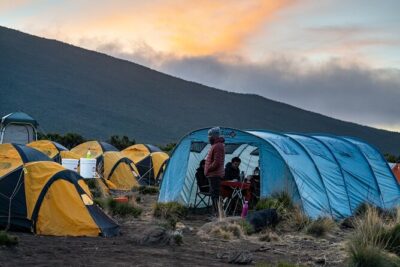
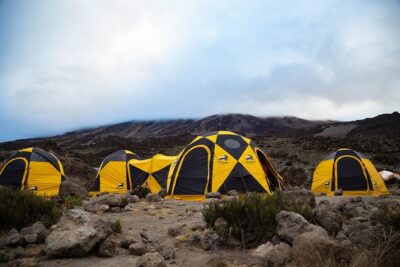
One reason this trek can feel manageable is that the camp setup is handled for you. You sleep in tents and the package lists sleeping bags and sleeping mats as included camping equipment.
It also includes a portable toilet. That is not glamorous, but it is the kind of detail that makes long treks less stressful.
You get breakfast, lunch, and dinner during the climb, plus clean drinking water. If you have ever done long hikes where you constantly worry about food, you know why this matters.
What to think about: the plan includes tents, but you still need to bring your own personal gear, like hiking boots and clothing. The listing is explicit about personal gear not being included, so do not assume you will borrow your way out of cold nights or rough footing.
Fitness reality: what you need for this 7-day Machame climb
The trek notes that you should have moderate physical fitness. That is a fair message, because this itinerary includes long days and steep sections.
You will hike:
- Day 1: 5 to 7 hours
- Day 2: 4 to 6 hours
- Day 3: 6 to 8 hours
- Day 4: 4 to 5 hours
- Day 5: 4 to 5 hours
- Day 6: 12 to 15 hours total
- Day 7: 3 to 4 hours
Even without the summit night, your legs will get a workout. The summit hike itself is listed at about 7 to 8 hours and then you still descend a lot.
My practical advice: train for stamina and steady climbing, not just speed. On Kilimanjaro, a controlled pace usually beats a heroic sprint.
Weather and summit odds: plan for the possibility of change
This experience requires good weather. If it gets canceled due to poor weather, the operator states you will be offered a different date or a full refund.
That matters for two reasons. First, it reminds you Kilimanjaro is not a theme park. Second, it tells you the planning is tied to actual conditions, not promises.
Also, the itinerary gives you a serious summit schedule, starting around midnight. When weather changes high on the mountain, the team has to manage safety first. That is another place where experienced guiding and communication matter.
Should you book this Machame Route private trek from Moshi?
I would book this trek if you want a time-tested Machame 7-day plan with altitude pacing built into the hiking schedule, plus a strong emphasis on support. The included package is also a big win if you would rather spend money on the climb itself than on piecing together permits, tents, and meals.
I would pause and ask harder questions before booking if you know you struggle with very long days, especially a midnight summit start followed by a long descent. Also, if you have not budgeted for flights, travel insurance, and your personal gear, factor those in early so the total cost feels clear.
If your goal is to reach Uhuru Peak with a guided team, meals, and camping logistics handled, this Machame private option is a compelling choice from Moshi.
More Hiking & Trekking in Moshi
- Best Kilimanjaro Adventure 7 days Machame route Trekking
★ 5.0 · 42 reviews - Kilimanjaro 7 Day Private Trekking Experience
★ 5.0 · 40 reviews - 8 Days Kilimanjaro Hike via Lemosho Route
★ 5.0 · 39 reviews - The Best & Unique Kilimanjaro Hiking tour 7 days Machame route
★ 5.0 · 34 reviews
Just posted around Moshi
- machame route★ 5.0 · 16 reviews
- Kilimanjaro Climbing Umbwe Route★ 5.0 · 3 reviews
- Wildlife Extravaganza: Manyara, Tarangire & Ngorongoro in 3 Days★ 5.0 · 3 reviews
- Mt Kilimanjaro 6 days Marangu route hike★ 5.0 · 3 reviews
- 3 Days Private E-Bike Tour in West Kilimanjaro★ 5.0 · 3 reviews
- West Kilimanjaro cycling Adventures★ 4.5 · 8 reviews
- Kilimanjaro Climb • Marangu Route ~ 9 Day★ 5.0 · 4 reviews
- Private Cycle to Kilimanjaro Bike Park Safari★ 5.0 · 6 reviews
Kilimanjaro Climbs, compared.
8-Day Small-group Lemosho Kilimanjaro Summit Trekking
Read our review →
5 Days Best of Tanzania Luxury Safari Northern Circuit
Read our review →
Climbing Kilimanjaro through 7 days Machame Route
Read our review →
Browse the lists this tour appears in