
Reviewed · KILIMANJARO CLIMBS
7 Days Kilimanjaro Climbing | Hiking Tour via the Lemosho Route
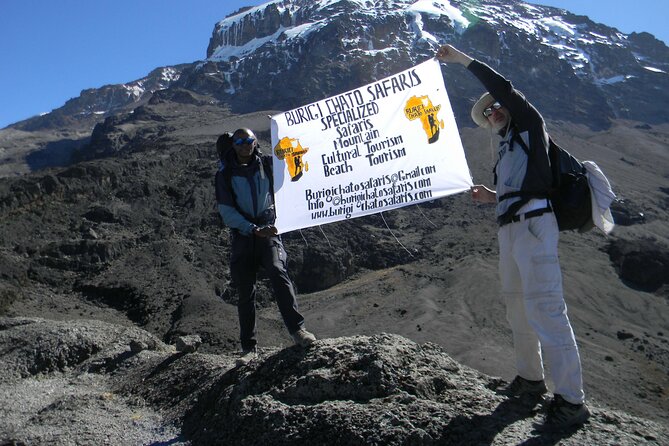
Kilimanjaro in a week is a real test. This 7-day Lemosho route aims for the summit and a safe descent, with guided camps and meals handled for you. You start in the forest, climb through moorland and lava-desert zones, then make the early push toward Uhuru Peak.
What I like most is the way the trek is paced for you, not just for speed, with days that include acclimatization and a proper summit-night rhythm. I also like that meals are included day after day, plus tents and camping gear, so you can pack lighter than you might expect for a big mountain climb.
The main thing to consider is altitude and cold. Day 6 can mean a long, frigid summit attempt, and one section notes that temperatures in June can drop to -20°C, plus very limited water for washing on the higher camps.
In This Review
- Key highlights that make this climb worth your attention
- Why the Lemosho Route is a smart fit for a 7-day Kilimanjaro climb
- Moshi meeting point and transfers: getting on the mountain without chaos
- Day 1 from Londorosi to Lemosho Door: forest walking and your first camp
- Day 2 into the Shira camps: jungle to savannah, with Kibo views
- Day 3 to Lava Tower and Barranco Camp: acclimatization that pays off later
- Day 4 through the Barranco wall to Karanga Valley: longer and tiring, but doable
- Day 5 to Barafu camp: summit-night setup and the reality of cold
- Day 6 Uhuru Peak: long summit hours, sunrise hopes, and firm pacing
- Day 7 down to Mweka Gate and back to Moshi: the finish line and certificates
- Camps, food, and camping gear: what “included” means day to day
- Price, value, and what you still need to budget
- Who this trek fits best, and who should think twice
- Should you book this 7-day Lemosho Kilimanjaro climb from Moshi?
- FAQ
- How long is the Kilimanjaro climb on this tour?
- Where does the tour start and where does it end?
- What route is used to climb Kilimanjaro?
- Is pickup from Moshi included?
- Are meals included?
- What about camping gear and tents?
- What is the start time for the experience?
- What is included in the price?
- What is not included?
- What happens if weather is poor?
Key highlights that make this climb worth your attention
- Lemosho route in 7 days, with a mix of forest, Shira Plateau time, and technical-feeling terrain like the Barranco wall
- Meals included throughout the trek, including seven lunches, which helps you keep energy up at altitude
- Camping gear and tents provided, so you are not lugging a tent bag up and down Kilimanjaro
- Moshi transfers included, with pick-up offered and a clear meeting point in Moshi
- Summit attempt from Barafu to Uhuru Peak starting around 11 pm to midnight, timed for summit-day conditions
- Support team strength, with feedback praising the director Geoffrey and the crew approach built around guides, porters, and cooks
Why the Lemosho Route is a smart fit for a 7-day Kilimanjaro climb
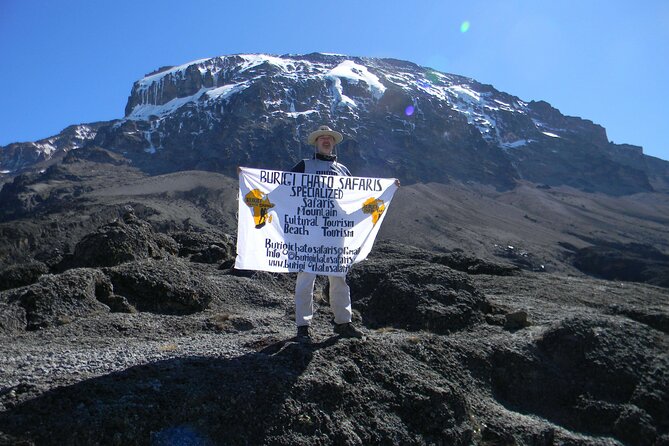
The Lemosho route is popular for a reason: it gives you time in the right places, and it does not feel like a straight-line march up a single slope. Over seven days you pass through distinct Kilimanjaro zones, from forest to moorland to high desert, which is not just scenic, it can help you mentally settle into the altitude changes.
You also get something practical: the itinerary builds in camp-to-camp moves that let you eat, rest, and keep going without constantly rushing. On Kilimanjaro, that matters as much as the map does. A steady pace helps your body adjust, and it helps your group stay together.
One more value point that is easy to miss is how “included” shows up in your day-to-day life. With meals and camping gear handled, your energy and attention are more likely to go toward the actual hiking, not logistics.
More Hiking Trips in Moshi
- Private Kilimanjaro Hike 7 Day Lemosho Route
★ 5.0 · 60 reviews - Best Kilimanjaro hiking day trip tour with Kilinge Adventures
★ 4.5 · 54 reviews - #1. Best Kilimanjaro Day hike Tour-Machame Route-ISMANI
★ 4.2 · 47 reviews
Moshi meeting point and transfers: getting on the mountain without chaos
This climb starts in Moshi, Tanzania, with a start time listed at 8:30 am. Your meeting point is at Burigi Chato Safaris CO LTD on Mkwawa Street in Moshi. The experience is designed to end back at that meeting point after you clear the park at Mweka Gate.
Transfers from Moshi are included, and pick-up is offered. That’s a real comfort factor because getting from town to the park gates is often where first-time trekkers lose time and money. Here, the plan is built around a driver taking you to the Lemosho area after a morning start.
If you are traveling independently and arriving the same day, plan for the fact that you need good energy and clarity before the drive. The tour notes that one night of hotel accommodation before the tour is not included, so if you need a buffer night in Moshi, you should budget it separately.
Day 1 from Londorosi to Lemosho Door: forest walking and your first camp
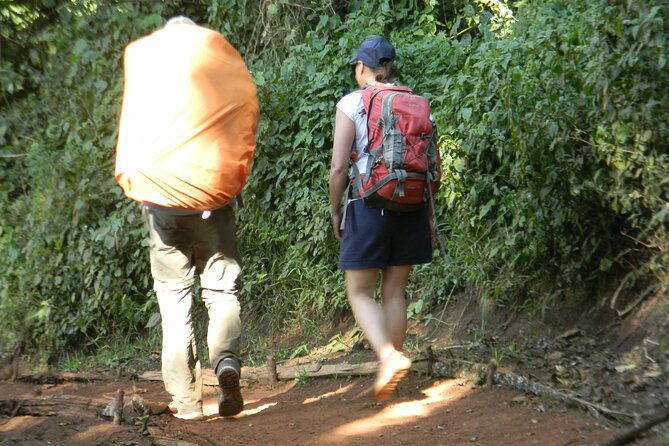
Day 1 is about getting your legs ready and letting the atmosphere sink in. After breakfast in your inn, the driver picks you up around 10:00 am to 10:30 am, then you head to Londorosi entry for park entry procedures.
You have a chance to grab lunch either at the entry point area or right before the climb begins, then the drive continues to Lemosho Door, where the hike actually starts. This first day includes a trek through forest, with the chance to spot colobus monkeys and then walk to Big Tree (Mti Mkubwa) Camp.
Why this day is worth paying attention to: you are starting at lower altitude and green vegetation, so it is ideal for practice. I like using this kind of day to dial in your shoe fit, test your walking rhythm, and confirm your water system works before the altitude gets serious.
A small potential drawback: there can be a bit of waiting time around entry procedures and small logistics at the start, so keep your mind calm. Kilimanjaro is not a hurry-up-and-go park.
Day 2 into the Shira camps: jungle to savannah, with Kibo views
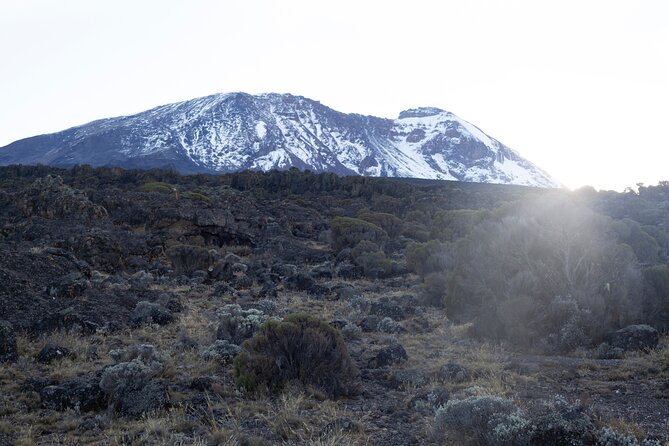
Day 2 moves you from tropical jungle toward savannah and rougher terrain. You hike around 8 km, cross different water streams, and then reach Shira Camp 1.
After lunch at Shira Camp 1, you continue up to Shira Camp 2, where you set up for the evening. One of the best moments on this day is the view of Kibo from the Shira area, along with that sharp feeling of being higher and closer to the mountain’s spine.
This is a good day to be honest with yourself about effort. The trek notes are specific about distance and trail time, but what matters is how your breathing feels. If you feel winded in the first hour, it is not a failure. It is a message: slow down, sip water, and keep your legs moving gently.
Also, because meals are included, you can focus on timing. Eat when it is offered, drink consistently, and don’t wait until you feel drained.
More Kilimanjaro climbs:
- Kilimanjaro climb by Lemosho Route (7-day)
★ 5.0 · 651 reviews - Kilimanjaro climb, Machame Route (7-day)
★ 5.0 · 262 reviews - Kilimanjaro Climbing Lemosho Route 8 Days.
★ 5.0 · 186 reviews - Climbing Kilimanjaro – Machame Route
★ 5.0 · 170 reviews
Day 3 to Lava Tower and Barranco Camp: acclimatization that pays off later
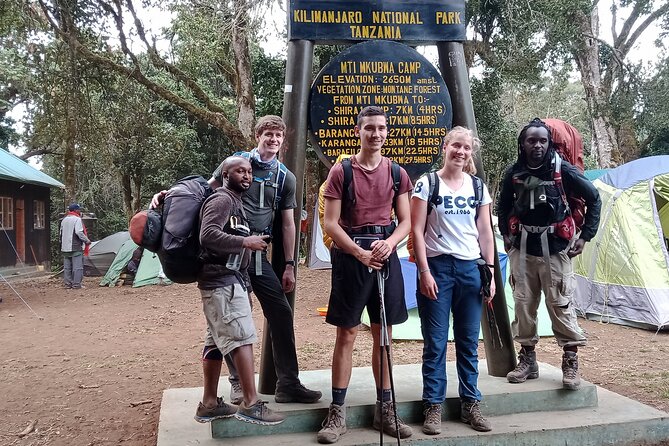
Day 3 is one of the key “smart climbing” days. You pass through moorland vegetation and monster heather, then reach Shira Plateau. The route describes Shira Plateau as one of the longest level stretches on Earth, which is exactly the kind of high-altitude setting where you want controlled effort.
Then comes the acclimatization piece: you walk up to the Lava Tower (4,640 m) for lunch, and then descend toward camp. Along the way you have the chance to spot large Senecio kilimanjari trees.
You end at Barranco Camp (3,960 m). Even though the day is shorter in terms of hiking time, it is a major altitude step. You are training your body to climb higher, then you come back down, which is how you reduce the risk of altitude problems.
If you are the type who wants to “catch up” to the group, this is a good day to practice restraint. The person who feels good today can overdo tomorrow, and tomorrow is when you pay the price.
Day 4 through the Barranco wall to Karanga Valley: longer and tiring, but doable
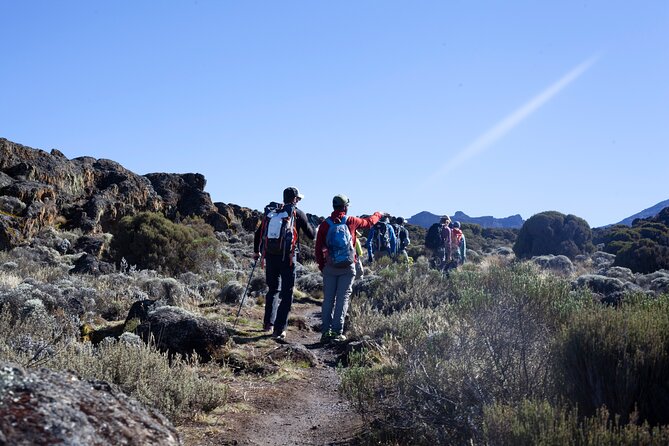
Day 4 starts with a more rugged challenge: the Barranco wall. The route calls it not too difficult but specialized and also lengthy and tiring. That combination is important. You are not just walking, you may be scrambling or working around uneven footing and steep sections.
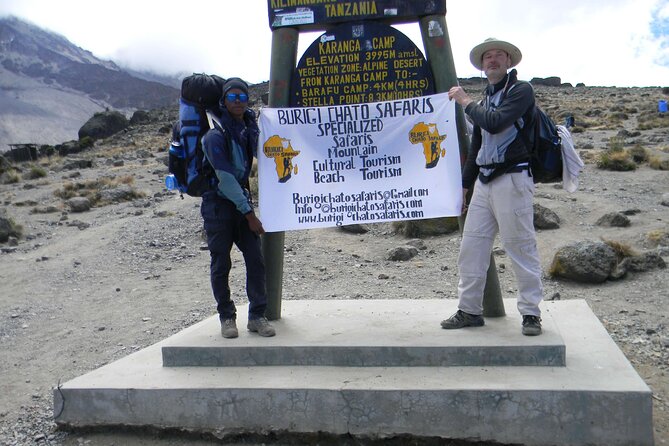
After the Barranco wall, you descend to Karanga Valley (3,963 m) for rest and time to mingle. Then you eat and return to your tent for the overnight.
This is a day where your headspace matters as much as your legs. You will feel the altitude, and your pace may naturally slow. That is normal. What is not normal is stopping too often, because you can cool down in wind and thin air.
The upside: your progress is building toward the higher camps. You are learning how the mountain changes your energy level, one day at a time.
Day 5 to Barafu camp: summit-night setup and the reality of cold
Day 5 shifts gears toward the summit push. You follow a way that is described as following a crevasse, then climbing toward the west until you reach Barafu camp (4,664 m).
The route describes a short but troublesome 3 km walk, marked by cairns, and emphasizes that you should go gradually. When you arrive, it can be very cool, and you will have your initial dinner.
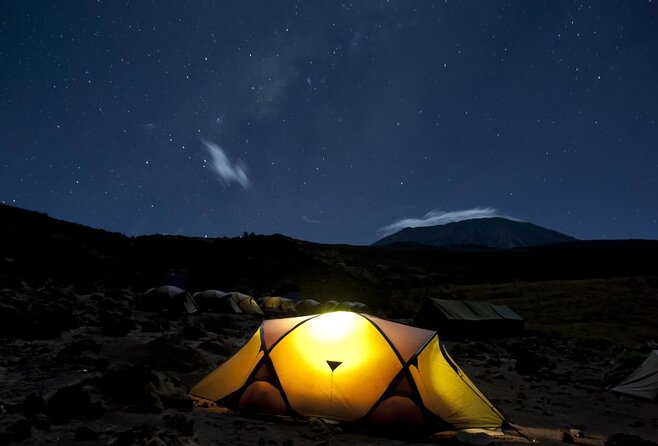
Then comes the part that makes this trek feel real: the pre-summit rest. You typically begin the summit attempt around 11 pm to 12 am.
You also get a practical warning here: above 4,000 m, the vegetation becomes elevated desert, and the guide notes white-necked ravens around the camping area. The same day also states no water for washing and no water streams over this rise.
That means you should treat this day like a packing and preparation deadline. Wash where you can earlier, plan for limited fresh water, and make sure you have everything you need for cold night hiking: layers, warm hat, gloves, and a way to keep water from freezing.
Day 6 Uhuru Peak: long summit hours, sunrise hopes, and firm pacing
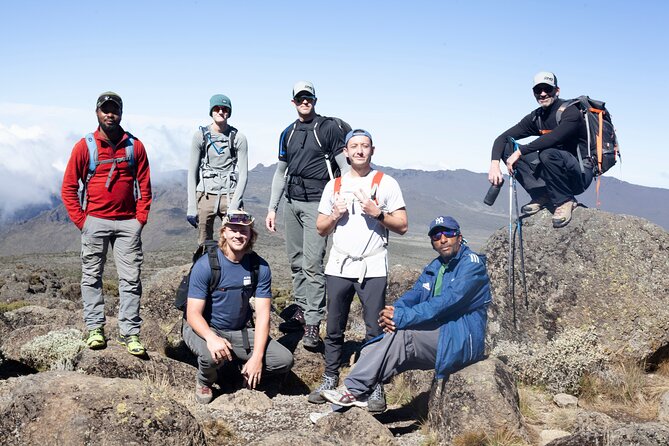
Day 6 is the big one: you go from Barafu toward Uhuru Peak, Africa’s highest peak. Before you leave, the itinerary includes coffee and treats or rolls, which is a nice morale boost when you are about to start moving in near-freezing conditions.
You then layer up fully with summit clothing. The route states that it can take about six to seven hours from Barafu to Uhuru peak, and that temperatures around the summit can be extremely cold, especially in June when it can drop to -20°C.
Once at Uhuru Peak, you can expect stunning views and a sunrise if the weather allows. After short summit moments, you head down.
Here is the practical truth: your summit success is not just about determination. It is also about weather, your health that night, and your ability to keep a steady, conservative pace during the climb. Going too fast early can break you before sunrise even happens.
The good news is that you are not alone in this phase. You have a guide and a team, and the group experience is built around doing the same critical job together: keep moving, breathe steadily, and follow instructions.
Day 7 down to Mweka Gate and back to Moshi: the finish line and certificates
Day 7 is a relief day in more ways than one. After breakfast, you descend to Mweka Gate, sign out, and receive your certificates. Then the driver-guide takes you back to Moshi Town along with the team.
This is also when you can plan your next steps. The tour notes that you might organize with your aide for a quick celebration with your group, and then you can return to your hotel and plan what comes next, like a safari trip or Zanzibar.
The emotional part of Day 7 is usually big: you are tired, you feel lighter, and you want to remember that you actually did it. I like how the final paperwork at the gate turns the climb into something official, not just a personal memory.
Camps, food, and camping gear: what “included” means day to day
This trek is built around included support, not just included tickets. The tour provides camping gear and tents, and it also includes meals across the full week: six breakfasts, seven lunches, and six dinners.
For value, that matters. Kilimanjaro is remote enough that buying food each day would turn your budget upside down quickly. Also, when meals are included, your energy planning gets simple. You eat at set times, you snack where the trek expects it, and you do not need to improvise menus in high-altitude conditions.
The other practical side of camping gear: you can pack lighter than if you needed to rent or bring your own tent and sleeping setup. That helps your hike consistency too, because less weight usually means better pacing and fewer sore muscles at the start of each day.
The crew side also stands out. People describe the operation as organized, with a director named Geoffrey providing strong help with questions and the mountain team doing their job with care and good attitudes. When cooks and porters are running smoothly, you feel it in the small things, like when you are ready to eat and when your camp is ready.
Price, value, and what you still need to budget
The price is $965 per person. For a seven-day guided Kilimanjaro climb, that price can look tempting, and here is where you should judge value carefully.
What you get included is meaningful: all fees and taxes, a guide, transfers from Moshi, all those meals, and camping gear and tents. You also get admission ticket coverage noted in the daily plan, which reduces the usual line-item headaches.
What is not included is also important: tipping the guide, visas, medical and travel insurance, flight costs, airport pick-up costs, and one night hotel accommodation before the tour. If you are flying in from far away, you should treat insurance and entry requirements as part of your real trip cost, not an optional add-on.
One more value factor is timing. This itinerary is often booked far ahead, with the listing showing an average booking window of 269 days. That does not guarantee your specific group will be huge or small, but it does suggest you should not wait until the last minute if you are aiming for a specific travel month.
Who this trek fits best, and who should think twice
This is a guided camping hike with daily walking that can reach several hours, plus a summit-night effort that takes many people into the hardest part of Kilimanjaro. If you have a solid hiking background and you can tolerate cold and low oxygen, you are a good match.
You also need to be okay with camp life. You will sleep in tents, eat at scheduled times, and spend time adjusting to altitude day by day. If you hate being cold, you can still do it, but you need to prepare properly and accept that Day 6 can be brutal.
If you are prone to altitude sickness or you have a medical condition, talk with a clinician and be honest about your limits. The itinerary gives no medical clearance, so your health decision is on you.
For the group dynamic: this tour is described with a maximum of 500 travelers, which sounds huge, but your actual on-the-ground group is typically smaller in practice. Still, you should expect shared trail time, shared camp routines, and a need to move as a team.
Should you book this 7-day Lemosho Kilimanjaro climb from Moshi?
I’d say book it if you want a structured, guided week-long attempt on Kilimanjaro that already includes the big moving parts: guide support, meals, tents, and Moshi transfers. The Lemosho-to-Uhuru flow is built to give you acclimatization time and then a real summit push, and the crew support seems to be a strong point of the operation.
I would hold off if you know you will struggle with very cold conditions at altitude, or if your budget cannot handle what is not included, like insurance and tipping. Also, consider choosing this route only if you can commit mentally to going slowly and following the guide’s pacing advice during the summit night window.
If you want the confidence that you are not hiking blind, and you like the idea of camping with meals managed for you, this is a solid option for tackling Kilimanjaro in seven days.
FAQ
How long is the Kilimanjaro climb on this tour?
The tour runs for 7 days.
Where does the tour start and where does it end?
It starts in Moshi at the Burigi Chato Safaris CO LTD meeting point and ends back at the meeting point after the descent.
What route is used to climb Kilimanjaro?
The route is the Lemosho route.
Is pickup from Moshi included?
Transfers from Moshi are included, and pickup is offered.
Are meals included?
Yes. The plan includes 6 breakfasts, 7 lunches, and 6 dinners.
What about camping gear and tents?
Camping gear is provided and tents are included.
What is the start time for the experience?
The start time is listed as 8:30 am.
What is included in the price?
Included items are all fees and taxes, a guide, meals (breakfast, lunch, dinner as listed), and admission ticket access.
What is not included?
Not included items are tipping the guide, visas, medical and travel insurance, local and international flight costs, airport pick up costs, and one night hotel accommodation before the tour.
What happens if weather is poor?
The experience requires good weather. If it is canceled due to poor weather, you are offered a different date or a full refund.
More Hiking & Trekking in Moshi
- Best Kilimanjaro Adventure 7 days Machame route Trekking
★ 5.0 · 42 reviews - Kilimanjaro 7 Day Private Trekking Experience
★ 5.0 · 40 reviews - 8 Days Kilimanjaro Hike via Lemosho Route
★ 5.0 · 39 reviews - The Best & Unique Kilimanjaro Hiking tour 7 days Machame route
★ 5.0 · 34 reviews
Just posted around Moshi
- machame route★ 5.0 · 16 reviews
- Kilimanjaro Climbing Umbwe Route★ 5.0 · 3 reviews
- Wildlife Extravaganza: Manyara, Tarangire & Ngorongoro in 3 Days★ 5.0 · 3 reviews
- Mt Kilimanjaro 6 days Marangu route hike★ 5.0 · 3 reviews
- 3 Days Private E-Bike Tour in West Kilimanjaro★ 5.0 · 3 reviews
- West Kilimanjaro cycling Adventures★ 4.5 · 8 reviews
- Kilimanjaro Climb • Marangu Route ~ 9 Day★ 5.0 · 4 reviews
- Private Cycle to Kilimanjaro Bike Park Safari★ 5.0 · 6 reviews
Kilimanjaro Climbs, compared.
8-Day Small-group Lemosho Kilimanjaro Summit Trekking
Read our review →
5 Days Best of Tanzania Luxury Safari Northern Circuit
Read our review →
Climbing Kilimanjaro through 7 days Machame Route
Read our review →
Browse the lists this tour appears in