
Reviewed · KILIMANJARO CLIMBS
6 Days Kilimanjaro climbing | Hiking Tour via the Rongai Route
Six days on Kilimanjaro is a serious test. This Rongai Route trek is interesting because you move through different camp zones and get built-in time to acclimatize before the summit push.
What I like most is the day-by-day pacing, including the slow start through Cave Camps and the deliberate climb toward Mawenzi and Kibo. The second big plus is the on-the-ground care: you’re met at camp, tents are set up, and you get hot water for washing, which matters when nights turn very cold.
The main drawback to consider is simple: it is still a high-altitude trek with long hiking days and a very cold summit-night schedule, so you need to be comfortable moving at altitude for hours.
In This Review
- Key Things I’d Bet On Before You Go
- Rongai Route: Why This 6-Day Plan Feels More Manageable
- Price and Value: What $930 Covers (and What It Doesn’t)
- Moshi Meet-Up and How the Day Starts at 8:30
- Day 1, 1,950m to Cave Camp 1: Forest Trails and Camp Comfort
- Day 2: Cave Camp 1 to Kikelelwa Cave at 3,600m
- Day 3: Kikelelwa to Mawenzi Tarn Camp (4,330m) and a Better View
- Day 4: Saddle Connections, Alpine Desert Feel, and Kibo’s Hut
- Summit Day, Uhuru Peak: Gillman’s Point, Stella Point, and the Crater Rim
- Day 6 Descent and the Certificate Moment at Marangu Gate
- Guides, Porters, and the Human Side of Why This Trek Works
- Who This Rongai 6-Day Trek Fits Best
- Should You Book This 6-Day Rongai Route Climb?
- FAQ
- How long is the Kilimanjaro climb on this tour?
- Where does the tour start and what time does it begin?
- Is airport pickup and drop-off included?
- Are park fees included in the price?
- What certificates are awarded at the end?
- What happens if weather is poor?
Key Things I’d Bet On Before You Go
- Rongai Route timing for acclimatization with multiple nights before the summit bid
- Camp setup on arrival so you can spend more energy hiking and less on logistics
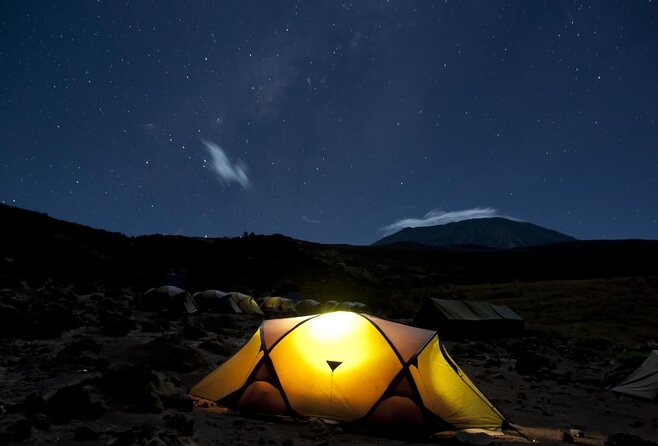
- Cold-night reality starting early, especially around Kikelelwa Cave
- Mawenzi and Kibo viewpoints from high camps, with sunset time built in
- Summit mechanics via Gillman’s Point, Stella Point, and the crater rim to Uhuru Peak
- Certificates at the finish including gold, green, and summit recognition
Rongai Route: Why This 6-Day Plan Feels More Manageable
The Rongai Route is often chosen by hikers who want a slightly different feel from the more common approaches, and this 6-day version leans into that. You start at about 1,950m and gradually climb toward Kilimanjaro’s high camps, with enough time to let your body adjust before you attempt Uhuru Peak.
Day 2 through Day 4 is where the itinerary’s structure starts working for you. You’re not just stacking altitude. You’re hiking, reaching camp, and then getting hours to rest and recover before pushing higher again. On a mountain like this, that rhythm is what keeps the summit attempt realistic rather than reckless.
One more thing: the Rongai approach is described with changing vegetation zones, from forest-type surroundings early on to an alpine desert feel as you get closer to the saddle between Mawenzi and Kibo. That variety keeps the trek from feeling monotonous, and it also gives you visual clues that altitude is increasing.
More Hiking Trips in Moshi
- Private Kilimanjaro Hike 7 Day Lemosho Route
★ 5.0 · 60 reviews - Best Kilimanjaro hiking day trip tour with Kilinge Adventures
★ 4.5 · 54 reviews - #1. Best Kilimanjaro Day hike Tour-Machame Route-ISMANI
★ 4.2 · 47 reviews
Price and Value: What $930 Covers (and What It Doesn’t)
At $930 per person, this trek can feel like a solid deal if you compare it to what most hikers end up paying for separately. The package includes a lot of the stuff that usually bites people later: airport pickup and drop, gate transfer, and crew wages. You also get a full meals schedule: breakfasts, lunches, and dinners listed across the 6 days.
The “what’s not included” list is important to plan around. Mount Kilimanjaro park fees are not included, and they can be paid directly to the park or through the tour operator. Flights are also not included, and you handle visas.
Then there’s the extra cost hikers sometimes forget: tipping the crew. It isn’t listed as included, so you should budget for it. This matters because the crew quality is repeatedly highlighted in past experiences, especially guides, cooks, and porters.
So the real value question is this: does paying $930 cover the big operational pieces well? Based on the inclusions here, yes. You’re not trying to organize camp transfers, meals, or logistics yourself. That’s the main reason tours like this are worth it, especially if it’s your first serious trek.
Moshi Meet-Up and How the Day Starts at 8:30
Your tour starts at 8:30am at Burigi Chato Safaris CO LTD on Mkwawa Street in Moshi. That matters because it sets expectations for a full day from the start. You’re not casually easing into the mountain. You’re moving.
The itinerary also includes gate transfer, and the day-to-day flow suggests you’ll use a vehicle to get you to trail access before hiking begins. Day 1 specifically notes transportation taking about 3 hours to the Rongai trail entrance area.
You’ll also end back at the meeting point, with a driver waiting to drop you off in Moshi after you finish at Marangu Gate. This is practical. It means you’re not figuring out transport right after your final descent.
Day 1, 1,950m to Cave Camp 1: Forest Trails and Camp Comfort
Day 1 begins with getting to the Rongai trail via Marangu’s Park Gate. You start at around 1,950m, and after roughly a 3-hour transfer, you begin hiking into cypress plantations and mountain forest-type surroundings. The trek description also notes you might spot giant monkeys, which is exactly the kind of small wildlife surprise that makes early days feel special.
From there, you work up to Cave Camp 1 at 2,600m, and the route description frames it as gradually allowing you to enjoy your surroundings as you go. That “gradual” part matters on day one. The goal is to get moving without exhausting yourself before the real altitude work begins.
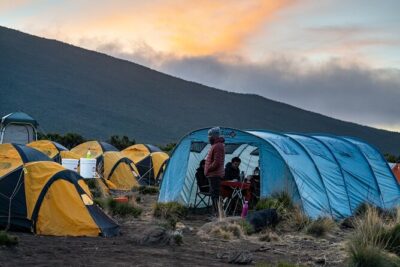
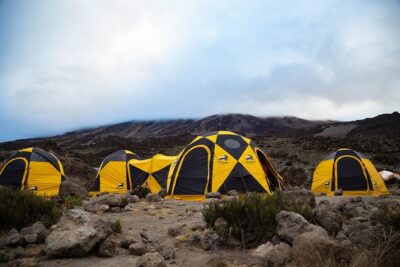
When you reach camp, the plan is that porters and cooks move quickly so you arrive to tents already set up. The details here are comforting: you’ll have hot water for washing and you’ll likely get a hot drink and even something like popcorn. After a long day at altitude, those small comforts help you eat and rest, which is what you want.
One consideration for day one: it’s still a climb. If you start too fast, you can feel it. Your best strategy is to go steady, not heroic.
More Kilimanjaro climbs:
- Kilimanjaro climb by Lemosho Route (7-day)
★ 5.0 · 651 reviews - Kilimanjaro climb, Machame Route (7-day)
★ 5.0 · 262 reviews - Kilimanjaro Climbing Lemosho Route 8 Days.
★ 5.0 · 186 reviews - Climbing Kilimanjaro – Machame Route
★ 5.0 · 170 reviews
Day 2: Cave Camp 1 to Kikelelwa Cave at 3,600m
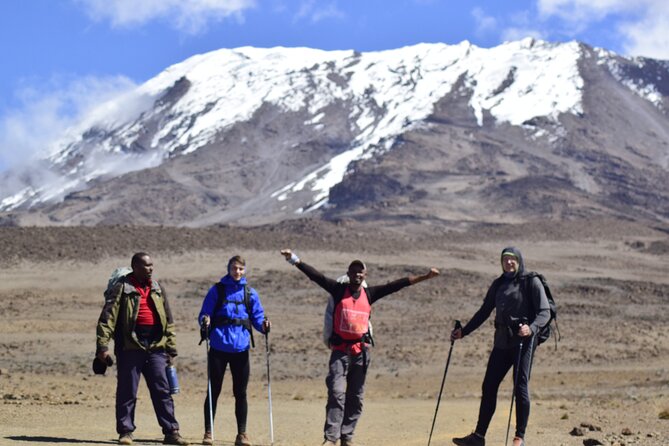
Day 2 starts with breakfast and then you move into moor-style vegetation with heather. The trail then takes you to Cave Camp 2 (3,450m) for lunch, before continuing onward to Cave Camp 3 at 3,600m, also called Kikelelwa Cave.
This day is one of the core acclimatization days in the plan. The description even calls out that this 6-day schedule gives you plenty of time to acclimate, which is the whole point of going slower than the “all-in-one” quick options.
Kikelelwa Cave is described as a camp surrounded by small caves in a valley slightly below the saddle. That setting can feel strange in a good way, like you’ve moved into a rocky high-altitude shelter rather than a normal campsite.
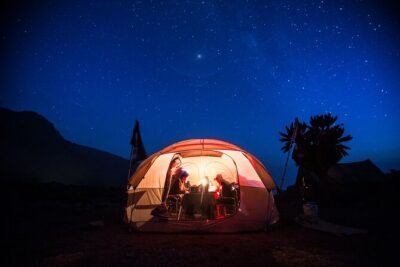
Again, camp support is part of why this plan works. You should expect the tent to be prepared, hot water for washing, and coffee or tea plus snacks. Then comes the reality check: after dinner, you’re heading to bed knowing it will be a crazy cold night. If you tend to feel cold easily, this is the day to take night prep seriously and not treat it as an afterthought.
Day 3: Kikelelwa to Mawenzi Tarn Camp (4,330m) and a Better View
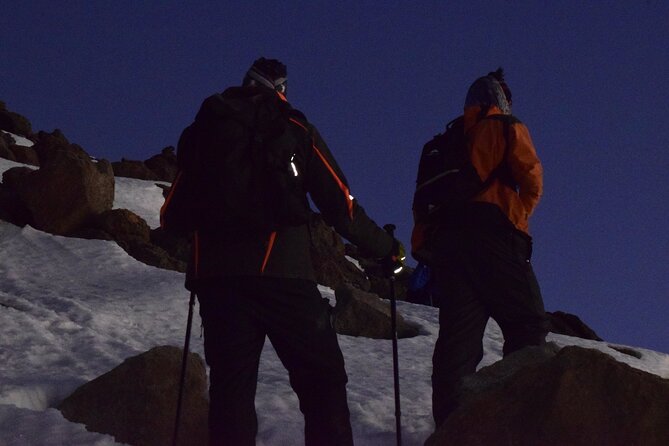
Day 3 has you starting at Kikelelwa Cave with a light breakfast and then hiking an easy to moderate incline. The description notes you’ll notice changes in the landscape and that the pass becomes steeper, so you’re gradually transitioning into more demanding altitude territory.
You reach Mawenzi Tarn camp at 4,330m. The campsite is described as sitting in a depression below the peak of Mawenzi, near a small lake. That kind of “below the peak” positioning often helps with wind exposure compared to fully exposed ridgelines, though the higher you go, the more weather can still surprise you.
What I really like about day 3 is the afternoon option. The plan gives you time to rest, relax, and explore the scenery around the camp. There’s also mention of walking some laps around ridges and towers to get great views of Kibo, the mountain you’re targeting.
The sunset setup is also built in, so you’re not stuck inside a schedule that only prioritizes moving. You get a chance to enjoy the mountain at altitude when you’re less rushed. Then you dinner and sleep, knowing tomorrow pushes higher toward Kibo.
Day 4: Saddle Connections, Alpine Desert Feel, and Kibo’s Hut
Day 4 begins with a light breakfast, then you hike up a small ridge before an easier trail on the northern part of the saddle. If conditions are good, you get stunning views around the saddle area, and the vegetation is described as an alpine desert with little grass and even eternal flowers.
This is also where the route links up conceptually with the Marangu Road network. The description notes that Rongai Road connects with Marangu Road to the saddle between Mawenzi and Kibo. Practically, that means by day 4 you’re transitioning into the stretch that leads toward the Kibo zone and the final summit attempt.
The last part of the day to Kibo’s Hut (around 4,700m) is steeper, so pace matters. You’ll arrive at lunchtime, and the key value here is rest. The plan emphasizes that you should be fully rested and acclimatized and ready for the final part of the Rongai trek.
If you’ve ever wondered why summit days fail, it’s often because people under-estimate what “rest day logistics” actually means. Day 4 is basically that rehearsal for your summit night mindset.
Summit Day, Uhuru Peak: Gillman’s Point, Stella Point, and the Crater Rim
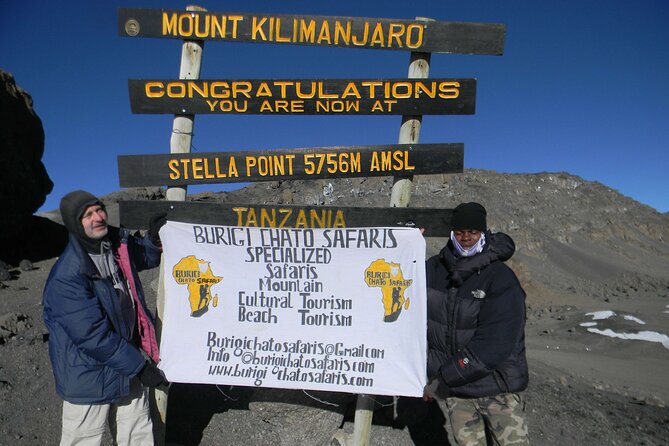
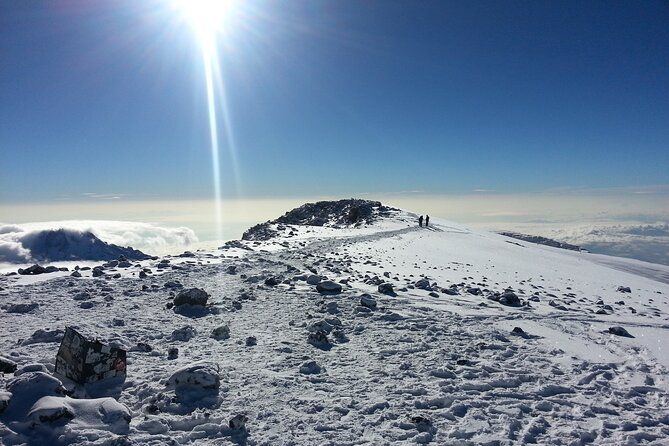
Day 5 is the summit day on Rongai Road. According to the schedule, wake-up time is around 11:00am to 11:30am. From there, the hike to the top from Gillman’s Point takes about 1.5 hours on foot.
The route is described as usually snow-covered, and it follows the crater rim toward Uhuru Peak. Along the way you pass Stella Point at an altitude of 5,752m. For many hikers, Stella Point is the psychological checkpoint on this kind of plan, because it signals you are in the final approach zone even if your legs feel like they have nothing left.
When you reach Uhuru Peak, don’t plan for long celebrations at the summit. The description specifically notes you won’t stay long, just a few minutes, and then you start heading downhill. That matches how summit efforts usually work at high altitude: you take photos, confirm the win, and move fast before conditions or cold start to drain you.
After that, you return to Kibo hut around 4,700m for lunch. Then you continue down to Horombo hut at 3,720m, which is about 3 hours.
One more practical note: summit days are long even if the walking time feels shorter than you feared. Your body is working at altitude in a different way, and the schedule here assumes you’ll keep moving efficiently after the summit.
Day 6 Descent and the Certificate Moment at Marangu Gate
Your last day starts at Horombo hut, with a heavy breakfast. Then the descent begins, passing the Mandara Hut down to Marangu Gate at about 1,980m.
Once you reach the gate, the process turns ceremonial, in a grounded way. You sign details in the register, and you receive certificates based on where you reached. The plan lists a summit certificate, a green certificate for those who reached Gillman’s Point, and a gold certificate, also called the Big Diploma, for Peak Uhuru.
You might be able to join in celebrations like songs and dances, either at Horombo in the morning or after the certificates are received at the gate. Then you head back to Moshi, with your driver waiting to drop you off.
This is one of the quiet benefits of a good trek: the mountain ends with a clear, organized finish, not a messy scramble to figure out how you’re going to get home.
Guides, Porters, and the Human Side of Why This Trek Works
The best parts of Kilimanjaro experiences are rarely the views alone. In the feedback that’s been shared with me through the patterns of prior experiences, the strongest theme is crew quality.
I’m especially encouraged by how often the guide, cook, and porters get credited. One common thread is that the hike can be tough, but a good guide keeps you moving in a way that fits your ability. That matters most on summit day when it would be easy to either rush or freeze.
There’s also a note that a solo hiker may be paired with another solo traveler by the company. If you’re traveling alone, that can turn a stressful climb into something more shared without making it feel like a huge crowd.
If you’re the type who needs structure and someone to read your energy, this kind of crew-forward operation is exactly what you want.
Who This Rongai 6-Day Trek Fits Best
This tour fits well if you want a guided, camp-supported Kilimanjaro attempt with time to acclimatize rather than a speed-run. The route includes a few steep moments, but the day-to-day structure gives you recovery time at high camps.
It’s also a good fit for hikers who value comfort between hard hiking stretches. Hot water for washing, tent setup, and meals are not luxuries here. They are part of staying functional.
Consider a different plan if you know you struggle with cold nights. The schedule calls out a very cold night after Kikelelwa Cave, and you’ll be climbing into even colder high zones on summit day.
If you want extra confidence, an idea that came up is warming up with Mount Meru first. Even if that’s not part of this specific trek, it’s a smart approach many hikers use to build altitude comfort before Kilimanjaro.
Should You Book This 6-Day Rongai Route Climb?
Yes, if your priority is a structured 6-day acclimatization plan, with meals and crew support handled so you can focus on hiking and resting at altitude. The camp routine, certificate finish, and summit route landmarks like Stella Point and Uhuru Peak make it feel like a complete, well-managed journey.
I’d book it with two conditions in mind. First, you should plan for separate park fees and also budget for tipping the crew. Second, you need to be mentally ready for cold nights and a summit day that is physically demanding.
If that sounds like you, this is a strong value way to tackle Kilimanjaro from the Rongai side, with the kind of crew attention that often makes the difference between a tough climb and a successful one.
FAQ
How long is the Kilimanjaro climb on this tour?
The tour is 6 days (approx.), running from the start time in Moshi to the descent finishing back at the meeting point.
Where does the tour start and what time does it begin?
You meet at Burigi Chato Safaris CO LTD on Mkwawa Street in Moshi, and the start time is 8:30am.
Is airport pickup and drop-off included?
Yes. The package includes airport pick up and drop, plus gate transfer.
Are park fees included in the price?
No. Mount Kilimanjaro park fees are not included, and they can be paid direct to the park or via the tour operator.
What certificates are awarded at the end?
At Marangu Gate you receive a summit certificate. You also receive a green certificate for reaching Gillman’s Point and a gold certificate (Big Diploma) for reaching Uhuru Peak.
What happens if weather is poor?
This experience requires good weather. If it’s canceled due to poor weather, you’ll be offered a different date or a full refund.
More Hiking & Trekking in Moshi
- Best Kilimanjaro Adventure 7 days Machame route Trekking
★ 5.0 · 42 reviews - Kilimanjaro 7 Day Private Trekking Experience
★ 5.0 · 40 reviews - 8 Days Kilimanjaro Hike via Lemosho Route
★ 5.0 · 39 reviews - The Best & Unique Kilimanjaro Hiking tour 7 days Machame route
★ 5.0 · 34 reviews
Just posted around Moshi
- machame route★ 5.0 · 16 reviews
- Kilimanjaro Climbing Umbwe Route★ 5.0 · 3 reviews
- Wildlife Extravaganza: Manyara, Tarangire & Ngorongoro in 3 Days★ 5.0 · 3 reviews
- Mt Kilimanjaro 6 days Marangu route hike★ 5.0 · 3 reviews
- 3 Days Private E-Bike Tour in West Kilimanjaro★ 5.0 · 3 reviews
- West Kilimanjaro cycling Adventures★ 4.5 · 8 reviews
- Kilimanjaro Climb • Marangu Route ~ 9 Day★ 5.0 · 4 reviews
- Private Cycle to Kilimanjaro Bike Park Safari★ 5.0 · 6 reviews
Kilimanjaro Climbs, compared.
8-Day Small-group Lemosho Kilimanjaro Summit Trekking
Read our review →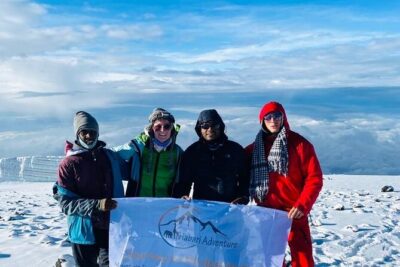
5 Days Best of Tanzania Luxury Safari Northern Circuit
Read our review →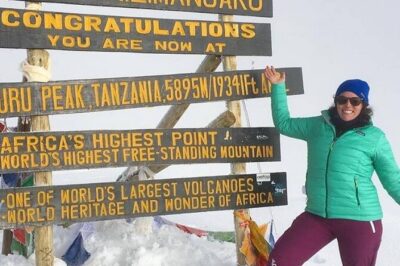
Climbing Kilimanjaro through 7 days Machame Route
Read our review →
Browse the lists this tour appears in