
Reviewed · KILIMANJARO CLIMBS
5 Days Marangu Route Kilimanjaro hiking
Kilimanjaro is a big deal, even before sunrise. This 5 days Marangu Route trek from Moshi is a calmer way up, known as the Coca-Cola route for its gradual feel and direct path. You’ll walk through rainforest and moorlands, then take on the steep summit section with help from a guide and crew.
What I like most is how the route balances comfort and challenge. You sleep in huts (not tents), and the day pacing is built around acclimatization, so you’re not forced to sprint uphill like a video-game quest. I also like the payoff on the hardest night, when you start around midnight to reach Gillman’s Point and then Uhuru Peak, with the kind of views that make your camera earn its keep.
One consideration: the summit night still gets brutally cold and steep, especially if you’re not used to high altitude. This trek is the easier route technically, but altitude is still altitude, so bring your warm layers and take it seriously.
In This Review
- Key things to know before your Marangu climb
- Why Marangu feels like the friendlier way up Kilimanjaro
- Price and logistics: what $1,014 really buys
- Moshi start point and how you actually begin the climb
- Day 1: Mandara Hut, rainforest birds, and a Maundi Crater side trip
- Day 2: Horombo moorlands and first big views of Mawenzi and Kibo
- Day 3: The saddle day, “moonscape,” and preparing for summit night
- Day 4: Midnight to Gilman’s Point, then Uhuru Peak for the photo moment
- Day 5: Mandara descent and the wet, muddy forest finish
- The crew and guides: who helps you succeed when it hurts
- What to pack for Marangu so Day 4 does not take you out
- Who should choose this 5-day Marangu climb
- Should you book this 5 days Marangu Route to Uhuru Peak?
- FAQ
- What time does the trek start?
- Is pickup included, and where do I end up afterward?
- Do we sleep in huts or tents?
- How many meals are included during the 5 days?
- What should I bring for summit night?
- Are park fees included in the price?
- Can I cancel for a full refund?
Key things to know before your Marangu climb
- Marangu is the easier Kilimanjaro option for most hikers, with a gradual slope and a direct line up
- Hut sleeping makes day-to-day life simpler than tent camping in high winds
- Summit push timing is midnight to early hours, starting steep on scree or snow
- You’ll pass big altitude zones fast, from rainforest to moorland to moonscape
- Your crew is a real part of the plan, with guides like Mudi, David, Muddy, Tadey, and Martin mentioned for motivation and care
Why Marangu feels like the friendlier way up Kilimanjaro
The Marangu Route is famous for a reason. It’s often called the Coca-Cola route because it tends to feel more gradual than other paths, and it keeps you moving along a fairly straightforward route rather than constantly wrestling technical terrain. For me, that matters because Kilimanjaro is hard enough without adding extra scrambling and stress.
You also benefit from the hut system. Sleeping in huts changes the whole rhythm of the hike. You still get hit with cold at elevation, but you’re not dealing with tent stakes, wet gear, or trying to keep everything dry while you’re exhausted. That alone makes Marangu a popular choice for hikers who want the mountain experience with a little more structure.
The route is not a walk in the park, though. The summit section is steep, and the night climb is physically demanding. Still, compared with rougher, rockier approaches, Marangu’s approach is more about steady effort and endurance.
More Hiking Trips in Moshi
- Private Kilimanjaro Hike 7 Day Lemosho Route
★ 5.0 · 60 reviews - Best Kilimanjaro hiking day trip tour with Kilinge Adventures
★ 4.5 · 54 reviews - #1. Best Kilimanjaro Day hike Tour-Machame Route-ISMANI
★ 4.2 · 47 reviews
Price and logistics: what $1,014 really buys
At $1,014.00 per person for about 5 days, this trek is aiming at full-service value. What you’re paying for is a whole working team plus the core mountain infrastructure.
Included in the package:
- Guide, cook, porters, and crew wages, with fair and sustainable crew salary support
- Gate transfer, and hut sleeping during the climb
- Meals: 5 breakfasts, 5 lunches, and 4 dinners
Not included:
- Flights, visas, and items of a personal nature
- Tipping your crew
- Park fees and tax
Here’s the practical way to think about value. This price covers the “make it happen” parts: human power, food, and the main mountain logistics. What it does not fully cover are the government costs and the human thank-you at the end. So your real budget is often price plus park fees/taxes plus a tip.
One small heads-up: the day-by-day details say admission ticket free, but park fees and tax are listed as not included. That’s exactly the kind of detail you should clarify before you pay anything, so you don’t get surprised at the gate.
Moshi start point and how you actually begin the climb
You’ll start in Moshi, Tanzania. The activity lists a start time of 8:30 am and a meeting point at Cable Millan, 3445 Rengua Rd. Pickup is offered, and gate transfer is included once you’re moving toward the national park.
Day 1 starts with a drive to the Kilimanjaro National Park gate, about 45 minutes. Then you register and begin the climb. That initial handoff matters more than you’d think. Kilimanjaro has a way of making everything feel urgent once you’re on the mountain, so having the logistics handled first is calming.
Group size is capped at 100 travelers, which suggests a larger operation rather than a tiny expedition. Even so, the mountain portion is still guided, and your success depends much more on your pace, your hydration, and your team than on having a small group number.
Day 1: Mandara Hut, rainforest birds, and a Maundi Crater side trip
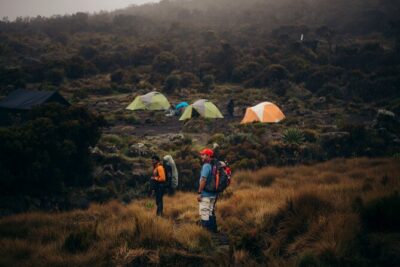
Day 1 is your rainforest intro. After breakfast and briefing, you start toward the Kilimanjaro National Park Gate and then into the forest to Mandara encampment.
You’ll climb from about 1,700 m to 2,740 m over roughly 7 km in 4 to 5 hours. The terrain here is described as rainforest hiking, and the details that stand out are the ecology: towering eucalyptus trees, birdlife, and Colobus monkeys. It’s one of those days where you look up more than you look down, because the forest hides neat things in plain sight.
A side trip to Maundi Crater is also on the schedule. This is your chance to see the bigger picture over northern Tanzania and Kenya, depending on visibility. It’s not a “push hard” day. It’s a settle in day, and you’re also getting your first taste of Kilimanjaro altitude.
You finish at Mandara Hut with lunch and dinner included. If you’re anxious about the climb, this is the day to keep it simple: drink water, eat what they serve, and let your body adjust.
What can feel tough: Day 1 is gentle, but it’s still a long walk. Start out slower than you think you should. Altitude rewards patience.
More Kilimanjaro climbs:
- Kilimanjaro climb by Lemosho Route (7-day)
★ 5.0 · 651 reviews - Kilimanjaro climb, Machame Route (7-day)
★ 5.0 · 262 reviews - Kilimanjaro Climbing Lemosho Route 8 Days.
★ 5.0 · 186 reviews - Climbing Kilimanjaro – Machame Route
★ 5.0 · 170 reviews
Day 2: Horombo moorlands and first big views of Mawenzi and Kibo
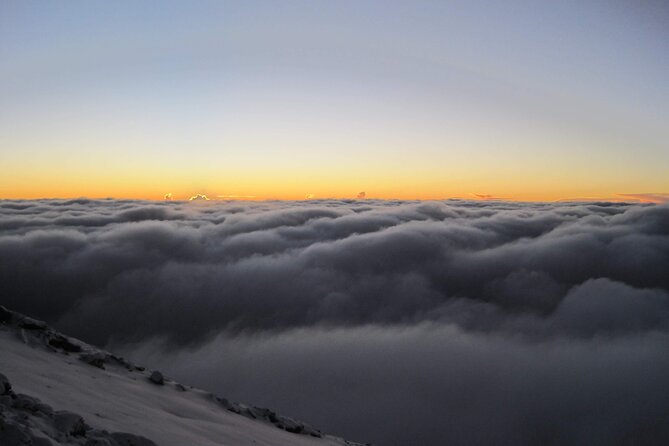
Day 2 shifts from the rainforest into moorland. You’ll follow an ascending path to Horombo encampment, covering about 8 hours on the day.
The views start to land in a more dramatic way. You’re looking at Mawenzi and the summit of Kibo. That matters because seeing the route you’re working toward helps the summit night feel less like a random jump scare.
The day is also about learning the mountain’s vegetation at higher altitude. Look for giant lobelias and groundsels. The hike gets a bit more exposed as you move into open moorlands.
Another real consideration: you may begin to feel the effects of altitude on Day 2. That doesn’t mean you’re doomed. It means you should take the strategy seriously: pace yourself, sip water regularly, and keep breathing steady.
Horombo is where you reset. You’re not just camping for comfort. You’re camping to earn the next stage of altitude gain.
Day 3: The saddle day, “moonscape,” and preparing for summit night
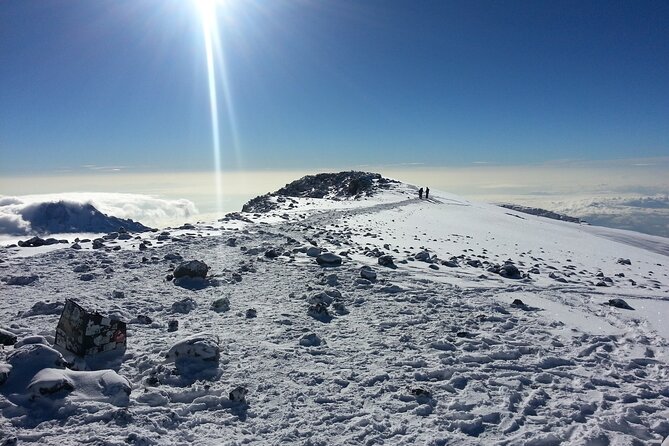
Day 3 is where Kilimanjaro stops feeling like a hike and starts feeling like a mission. You’ll ascend to the saddle between Kibo and Mawenzi, crossing the high zone where vegetation changes and the environment becomes more barren.
This day takes you from about 3,700 m to 4,700 m over roughly 10 km, with 6 to 8 hours of walking.
A detail that matters is that you pass the last watering point. In practice, that makes hydration planning important. Don’t treat water as optional here. Drink when you’re supposed to, not only when you start feeling thirsty.
The landscape gets described as moving into moonscape. That shift is your clue that conditions can change fast. Expect less shelter, more wind, and cold that sneaks up on you when you stop moving.
Meals are listed as breakfast, lunch, and dinner. You’ll rest and prepare after Day 3 dinner because Day 4 is the big one.
Day 4: Midnight to Gilman’s Point, then Uhuru Peak for the photo moment
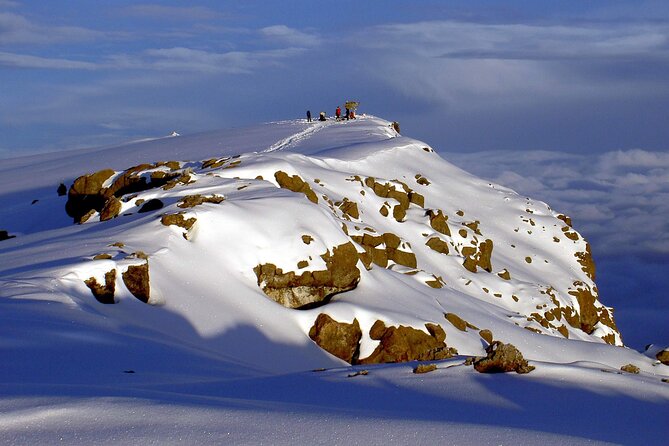
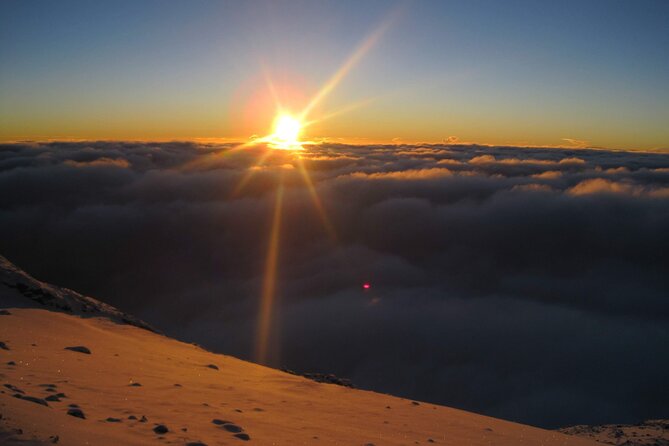
Day 4 is the classic Kilimanjaro summit day. You start very early, around midnight to 2 am, climbing toward Gillman’s Point on the crater rim.
The climb is described as steep and on heavy scree or snow. This is why headlamps and flashlights matter. It’s dark for the first part, and you need good visibility under your feet. You also need your warm layers. Cold builds at altitude, and it can feel punishing until you start descending.
Once you reach Gillman’s Point, you continue up to Uhuru Peak, the highest point in Africa. The details you get in this stage are more about experience than scenery. You’ll have views at every turn, and at the summit you’ll have your picture taken so friends and family can see you did it.
After the summit, you descend. The day includes a lunch and rest at Kibo before continuing down to Horombo encampment. That downhill matters. Your body will be tired after the cold summit effort, so the descent is a chance to recover, even if your legs will still complain.
The key reality check: If you’re choosing this trek thinking it’s an easy day because Marangu is the easier route, remember that summit night is still the hardest part of any Kilimanjaro plan. Train your patience, bring the gear, and trust your guide’s pace.
Day 5: Mandara descent and the wet, muddy forest finish
Day 5 ends your Kilimanjaro story the way a lot of hikers remember best. You go from high altitude down into forest again, with fewer dramatic elevations and more attention needed for footing.
You start after breakfast with a steady descent down through moorland to Mandara Hut, then continue down through lush forest to the National Park gate at Marangu.
The day drops from about 3,700 m to 1,700 m, covering around 18 km and taking 5 to 7 hours.
Here’s what you can expect physically:
- At lower elevations, it can be wet and muddy
- Gaiters and trekking poles help a lot
Clothing guidance is pretty practical: shorts and t-shirts may be enough at lower elevations, but keep rain gear and warmer clothing handy. The mountain can hand you weather surprises, even if you left your hotel in Moshi under clear skies.
Once you reach Marangu Gate, you meet a vehicle to drive you back to your hotel in Moshi or Arusha. Then it’s time for celebration, and yes, you should plan to tip your guides and porters.
The crew and guides: who helps you succeed when it hurts
A big part of this trek’s reputation comes down to the team running it. In the feedback provided, guide names like Mudi, David, Muddy, Tadey, Martin, Emmanuel, Migaan, Michael, and Daniel show up repeatedly. You’re not just hiring equipment movers. You’re hiring people who manage pace, morale, and the fine details that keep a long night from turning into panic.
The crews mentioned include roles beyond a simple guide-and-porters setup: camp master, waiter, and a larger support team. One review highlights a group with fifteen hiking team members in total. That kind of staffing matters on summit night, because someone is always managing food, hot drinks, supplies, and the small logistics that keep you moving.
What also comes through in the positive notes is motivation and care. Multiple mentions describe guides who know when to push and when to slow down, and that safety felt real even during the challenging summit night conditions. In plain terms, you want a guide who can read you as you fatigue.
What to pack for Marangu so Day 4 does not take you out
The essentials are already hinted at in the trek details, and you should treat them as a checklist rather than advice.
Bring:
- Headlamp or flashlight for the dark start on summit night
- Warm layers, because it stays very cold until you begin descending
- Rain gear, since lower elevations can be wet and muddy
- Trekking poles and gaiters for the descent
Also plan for flexible clothing. The itinerary suggests shorts and t-shirts may be fine lower down, but you’ll need warmth at high altitude. That means layers that you can add and remove without losing time.
If you want to avoid common mistakes: don’t show up with one warm jacket and hope for the best. Summit night is when you find out how good your layering system really is.
Who should choose this 5-day Marangu climb
This trek is a solid fit if you want:
- a Kilimanjaro hike that is generally described as one of the easier routes
- gradual slope hiking with a direct feel
- hut sleeping instead of camping tents
- a plan that gives you five days to adjust to altitude
It may be less ideal if you’re chasing total solitude or you strongly prefer more remote routes with fewer facilities. Marangu’s popularity is part of the charm and part of the tradeoff.
In terms of fitness, this is best for hikers who can walk 4 to 8 hours a day, handle steep climbs at altitude, and stay disciplined with pacing during cold, dark conditions.
Should you book this 5 days Marangu Route to Uhuru Peak?
If you want the classic Kilimanjaro win with a route that is commonly considered easier, this plan makes sense. The biggest strength is that it mixes big mountain goals with practical support: huts, a full crew, and structured days that build toward the summit night.
I’d book it if:
- you value guided support and crew organization
- you prefer huts to tents
- you want Uhuru Peak without adding extra technical pain from the route choice
I’d think twice if:
- you get nervous about cold, steep summit nights
- you’re not ready to commit to headlamps, layers, and slow pacing
Bottom line: Marangu can be a smart way to reach the roof of Africa, especially if you treat the summit night with respect and prepare your body and gear for the cold.
FAQ
What time does the trek start?
The experience start time is listed as 8:30 am, with the meeting point at Cable Millan, 3445 Rengua Rd.
Is pickup included, and where do I end up afterward?
Pickup is offered, and gate transfer during the climb is included. After the trek finishes, you meet a vehicle at Marangu Gate to drive you back to your hotel in Moshi or Arusha.
Do we sleep in huts or tents?
During the climb, you sleep in huts, not tents.
How many meals are included during the 5 days?
Meals listed as included are 5 breakfasts, 5 lunches, and 4 dinners.
What should I bring for summit night?
The trek notes that the summit climb begins in the dark, so bring a headlamp or flashlight, and bring warm layers, since it stays very cold until you start descending.
Are park fees included in the price?
Park fees and tax are listed as not included, even though the itinerary notes admission ticket free on the day breakdown. You should confirm what you personally need to pay.
Can I cancel for a full refund?
Yes. There is free cancellation, and you can cancel up to 24 hours in advance of the experience start time for a full refund.
More Hiking & Trekking in Moshi
- Best Kilimanjaro Adventure 7 days Machame route Trekking
★ 5.0 · 42 reviews - Kilimanjaro 7 Day Private Trekking Experience
★ 5.0 · 40 reviews - 8 Days Kilimanjaro Hike via Lemosho Route
★ 5.0 · 39 reviews - The Best & Unique Kilimanjaro Hiking tour 7 days Machame route
★ 5.0 · 34 reviews
Just posted around Moshi
- machame route★ 5.0 · 16 reviews
- Kilimanjaro Climbing Umbwe Route★ 5.0 · 3 reviews
- Wildlife Extravaganza: Manyara, Tarangire & Ngorongoro in 3 Days★ 5.0 · 3 reviews
- Mt Kilimanjaro 6 days Marangu route hike★ 5.0 · 3 reviews
- 3 Days Private E-Bike Tour in West Kilimanjaro★ 5.0 · 3 reviews
- West Kilimanjaro cycling Adventures★ 4.5 · 8 reviews
- Kilimanjaro Climb • Marangu Route ~ 9 Day★ 5.0 · 4 reviews
- Private Cycle to Kilimanjaro Bike Park Safari★ 5.0 · 6 reviews
Kilimanjaro Climbs, compared.
8-Day Small-group Lemosho Kilimanjaro Summit Trekking
Read our review →
5 Days Best of Tanzania Luxury Safari Northern Circuit
Read our review →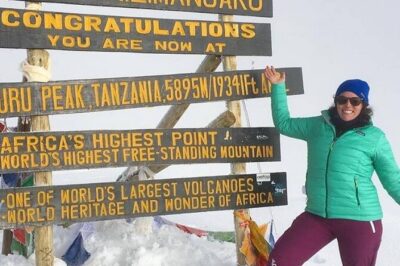
Climbing Kilimanjaro through 7 days Machame Route
Read our review →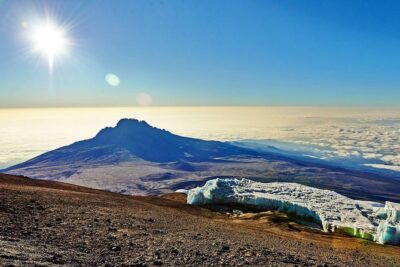
Browse the lists this tour appears in