Reviewed · KILIMANJARO CLIMBS
KILIMANJARO MACHAME ROUTE, (Climb 7days) “Whiskey” route
Kilimanjaro at midnight is a different kind of quiet. This Machame Route, 7-day Whiskey style gives you a steady climb from rain forest up through moorland and alpine zones, ending with an early summit push to Uhuru Peak and a fast but careful descent. The pacing also builds acclimatization into the route, so you are not just hiking upward every day.
What I really like is the human side of it: the team and management aim to make you feel at home, and Paul and his crew are known for care and attention on the mountain. I also like that food support is practical, including the ability to accommodate a gluten-free diet if needed.
One consideration: this is still a serious high-altitude trek. Even with acclimatization built in, the summit night involves extreme cold and wind at very high elevation, and you will need solid stamina and willingness to take it slow.
In This Review
- Key things to know before you go
- The Machame Whiskey route: why this 7-day plan works
- Day 1, Machame Gate to Machame Camp: rain forest starts slow and steady
- Day 2, Shira 2 Camp: leaving the forest for heath and a big gorge crossing
- Day 3, Lava Tower up and down again: why gaining altitude then descending helps
- Day 4, Karanga Camp: Great Barranco Wall, a steep test without technical climbing
- Day 5, Barafu Camp: the shortest feeling day that sets up the summit night
- Day 6, Barafu to Uhuru Peak and down to Mweka Camp: cold, wind, and sunrise near Stella Point
- Day 7, Mweka Camp to Mweka Gate: rain forest descent, certificates, and the last easy steps
- What the guide and camp care mean for your success
- Pickup, timing windows, and what to expect around the start and finish
- Price and value: what $2,564.11 buys on a private 7-day climb
- Who this climb suits best
- Should you book the Machame (Whiskey) 7-day climb?
- FAQ
- How long is the Kilimanjaro Machame Route climb?
- Where does the climb start on Day 1?
- What camps will you sleep in on this 7-day itinerary?
- What is the highest elevation you reach?
- When does the summit push start?
- How long is the summit day hike?
- Is this a private tour?
- Is pickup and return transport included?
- Are park admission tickets included?
- Can you accommodate gluten-free diets?
- What is the cancellation policy?
Key things to know before you go
- Private group experience so you hike with only your party.
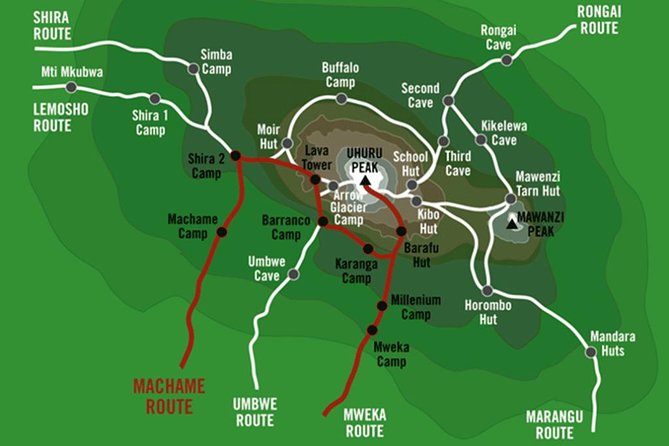
- Machame-to-Mweka route flow that takes you through rain forest, heath, alpine desert, then back down through forest.
- Smart acclimatization rhythm, including a shorter day at Karanga and a day that gains altitude then comes down the same day.
- Midnight summit push with breaks, plus a likely sunrise near Stella Point at 18,900 ft.
- Food care you can count on, including gluten-free catering based on past climbers.
- You finish with summit certificates at Mweka Gate and transport back to Moshi or Arusha.
The Machame Whiskey route: why this 7-day plan works
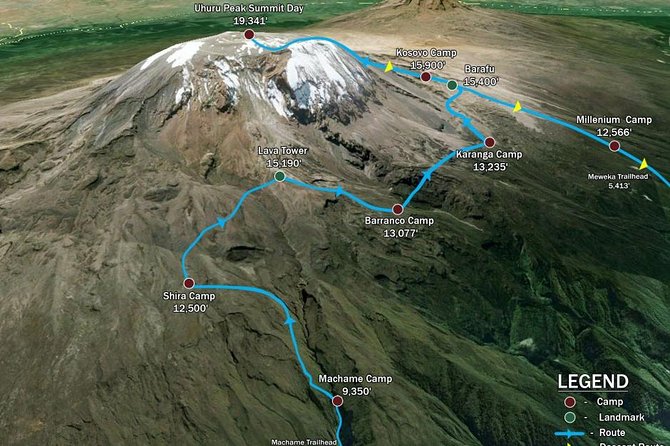
Kilimanjaro routes are judged by one thing above all: how well they help your body handle altitude. The Machame route is famous for variety, and this 7-day version uses that variety in a smart way. You start in lush rain forest around Machame Gate, then climb into heath and open moorland, move into alpine desert at higher elevations, and finally cycle back down through forest on the last day.
That mix matters because it changes what your body feels. In the lower zones you hike with warmer, wetter air and thick vegetation. As you climb, the air gets thinner and colder, and even “just hiking” becomes slower and more breathing-focused. By the time you reach the summit night, you are not arriving unprepared. You have already spent days getting used to the altitude, including at higher elevations than where you end the day.
This route also builds in rest where it counts. Some days are shorter on paper, but they are not “easy.” They are timed to help your acclimatization. For me, that is a key value. A climb like this is not won by walking faster. It is won by staying functional when the air gets thin.
More Kilimanjaro climbs:
- 8-Day Small-group Lemosho Kilimanjaro Summit Trekking
★ 5.0 · 186 reviews - 5 Days Best of Tanzania Luxury Safari Northern Circuit
★ 5.0 · 174 reviews - 7-Day Machame Kilimanjaro Summit Tour from Arusha
★ 5.0 · 125 reviews
Day 1, Machame Gate to Machame Camp: rain forest starts slow and steady
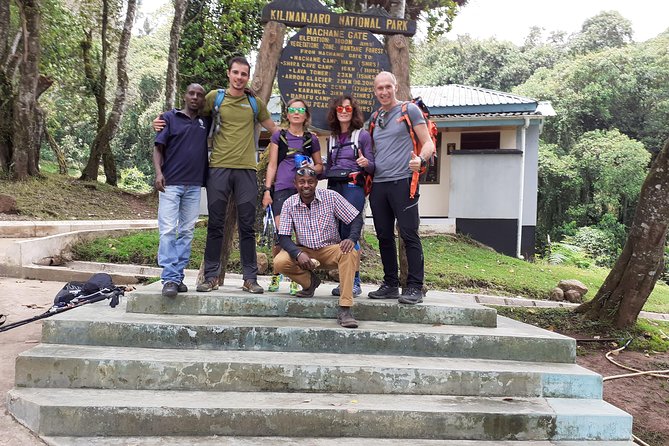
Your first day begins with a short drive from Moshi to Machame Gate, about 50 minutes. You pass through the village of Machame on the lower slopes before you enter the park. Then you hike from roughly 5,380 ft up to about 9,350 ft, covering around 11 km over 5 to 7 hours.
The big “feel” here is rain forest. Dense trees and a winding trail up a ridge make the climb gradual at first. That is a good way to find your rhythm. You are not just smashing elevation right away, you are learning how to move on this terrain while your body adjusts to being on the mountain.
What to watch for on Day 1: rain forest trails can be slippery, and your legs still work even if the altitude seems more manageable than later days. I treat Day 1 as a pace-setting day. If you go too hard here, it can show up later during colder, drier hiking.
Day 2, Shira 2 Camp: leaving the forest for heath and a big gorge crossing
Day 2 climbs from about 9,350 ft to roughly 12,500 ft, a smaller distance but a higher altitude jump. You hike around 5 km for 4 to 6 hours, moving from forest glades into open heath and moorland.
This day has two different realities at once. First, the scenery changes dramatically: fewer trees, more open ground, and windier conditions. Second, the trail can feel harder because the air is thinner even when the distance is modest.
You also cross a large river gorge on the way to Shira 2 Camp. That kind of feature is more than scenery. It adds time and footwork, especially if the ground is wet or uneven. Plan to hike with careful steps and steady breathing. You want to arrive at camp feeling like you could still walk a bit more.
Day 3, Lava Tower up and down again: why gaining altitude then descending helps
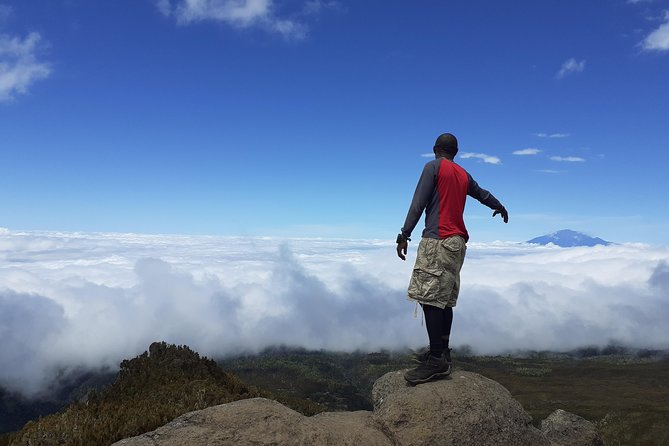
Day 3 is one of the route’s most important acclimatization tools. You start around 12,500 ft and hike up to Lava Tower at about 15,190 ft. Then you descend to Barranco Camp at roughly 13,044 ft. Total hiking time is about 4 to 5 hours for the Lava Tower section, plus 2 to 3 hours for the descent stretch.
You cover around 7 km to Lava Tower, then about 3 km to Barranco Camp. The hiking happens in alpine desert, and the descent runs through Senecio forest. This is where the route starts to feel like a full Kilimanjaro climb instead of a simple uphill hike. You gain substantial altitude and then come back down, which helps your body process the higher elevation without sleeping at the top.
That is the point. Even though you end Day 3 at an altitude similar to your starting point, you spend time higher up. That can improve acclimatization, meaning fewer surprises later.
A few more Arusha trips to compare
- Balloon Safari & Bush Breakfast in Serengeti – Miracle Experience
★ 5.0 · 1,646 reviews - Tanzania Classic – 7 Days
★ 5.0 · 1,151 reviews - 4 Days Group Camping Safari
★ 5.0 · 1,101 reviews - 5 Days Group Camping Safari
★ 5.0 · 730 reviews
Day 4, Karanga Camp: Great Barranco Wall, a steep test without technical climbing
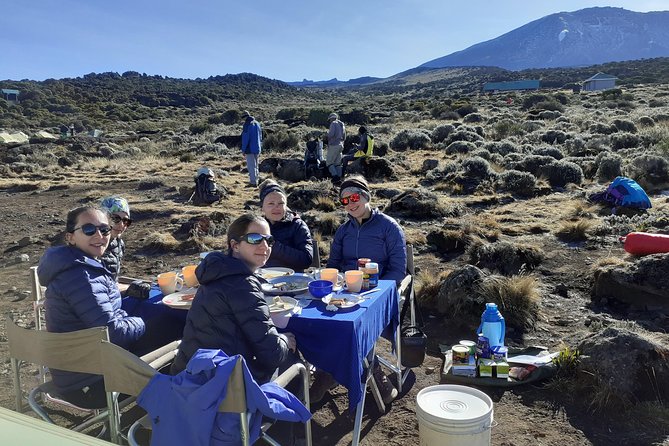
On Day 4, you move from Barranco Camp to Karanga Camp. Elevation stays in the same general zone, about 13,044 ft up to 13,106 ft, and the distance is around 5 km with 4 to 5 hours of hiking. This is not a “big altitude gain” day. It is a technique and acclimatization day.
The signature feature is the climb up the nearly 900 ft cliff of the Great Barranco Wall. The day starts with descending into a ravine, then you climb the steep wall, which is described as non-technical but still demanding. From the top, you cross rolling hills and valleys, then you descend sharply into Karanga Valley for the camp.
Why this matters: the wall gives your legs a serious workout, but you are not racing the altitude numbers. That helps you practice staying calm while your body is working hard. If you can handle the steep effort on Day 4, you are mentally better prepared for the next phase.
Day 5, Barafu Camp: the shortest feeling day that sets up the summit night
Day 5 climbs from about 13,106 ft to roughly 15,331 ft, around 4 km with 4 to 5 hours of hiking. You leave Karanga and hit the junction connecting with the Mweka Trail, then continue up to Barafu Hut.
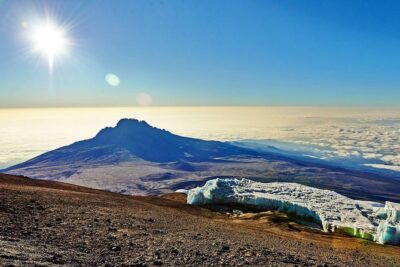
The route framing matters here. It notes that you complete the Southern Circuit, and you get summit views from multiple angles. From this position, you can see Mawenzi and Kibo, which helps make the mountain feel real. On summit eve, seeing those peaks is more than a photo opportunity. It anchors the goal in your mind.
Then you make camp at Barafu. This is when you rest and eat early to prepare for the summit push. That early dinner is not optional in practice. Summit night is long, cold, and mentally intense, so you want your body fueled before the climb starts.
Day 6, Barafu to Uhuru Peak and down to Mweka Camp: cold, wind, and sunrise near Stella Point
This is the day you remember.
You start from Barafu Camp at about 15,331 ft and go up to Uhuru Peak at roughly 19,341 ft. It’s only about 5 km, but expect 7 to 8 hours of hiking. Very early in the morning, around midnight, you begin the summit push in the dark.
The conditions at that elevation and time are described as extreme. Wind and cold can hit hard. You ascend in darkness for several hours with frequent but short breaks.
Then you get the payoff. Near Stella Point at 18,900 ft, you have the best chance of seeing an extraordinary sunrise coming over Mawenzi. This is the moment when the climb flips from suffering to meaning. It is also the time when you still need to think clearly. Sunrise is not the end of the hard part, it is the beginning of your final push and the transition into the rest of the day.
After Uhuru Peak, you descend to Mweka Camp. Elevation drops from about 19,341 ft down to around 10,065 ft, with around 12 km of hiking and 4 to 6 hours of time. That descent can feel like a relief, but it is still strenuous. Your legs absorb a lot of impact when you are tired, and the altitude drop does not automatically make your body feel great.
Practical mindset for Day 6: treat it as two separate hikes. Summit hours require slow control. Descent hours require stable footing and patient pacing, not hero moves.
Day 7, Mweka Camp to Mweka Gate: rain forest descent, certificates, and the last easy steps
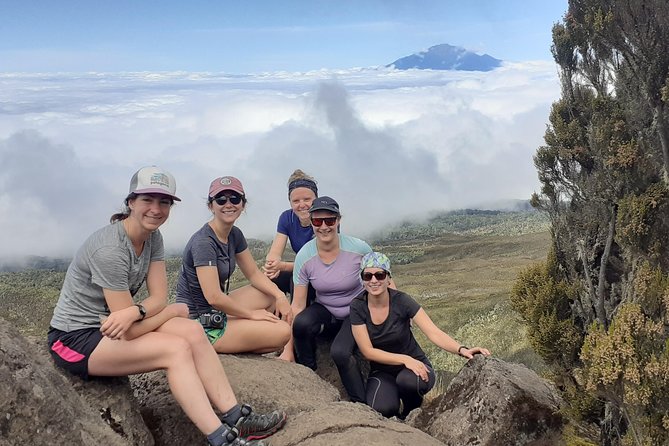
Your final day goes from Mweka Camp down to Mweka Gate. You descend from about 10,065 ft to roughly 5,380 ft over around 10 km, taking 3 to 4 hours. The environment shifts back into rain forest, and at lower elevations it can be wet and muddy.
That matters because it changes what “easy” means. You are going downhill, but slippery trail can slow you down and increase fatigue. I like Day 7 because it is the first time you can focus on finishing well, not just surviving the day.
At Mweka Gate, you collect your summit certificates. From there you continue another hour to Mweka Village, where a vehicle meets you to drive back to your hotel in Moshi or Arusha.
So yes, it’s still hiking, but it’s hiking with an ending that feels official and satisfying. That wrap-up is part of the value of a well-run itinerary. You do not spend your last energy wondering what comes next.
What the guide and camp care mean for your success
On a climb like this, the team does more than point uphill. They help you manage energy, handle pace, and keep your head steady on the rough moments.
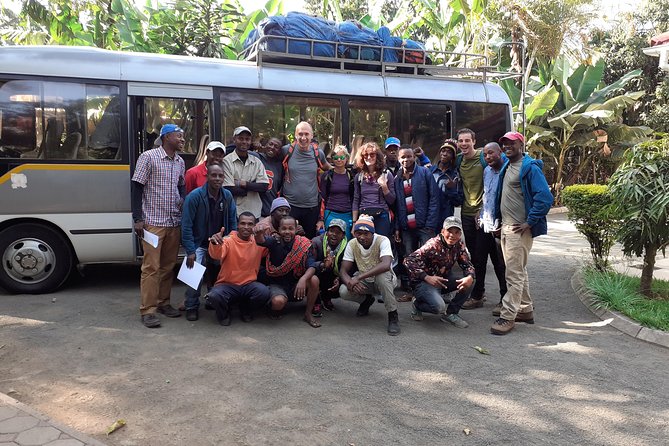
From past experiences with Paul’s team, the standout praise is consistent: care and attention. People highlight that the team makes the process feel supportive and kind, not robotic. That kind of atmosphere is not fluff. When you are cold, slow, and tired, a calm guide and consistent camp routine can help you stick to your plan.
Another big plus is food support. One climber specifically noted that Paul can cater for a gluten-free diet. That is useful because altitude climbs are hard enough without worrying about what you can eat. Even if you do not have dietary limits, it is worth choosing an operator who takes food seriously on the mountain.
One more practical note: this is described as private, meaning your group is just your party. That typically reduces confusion about timing and expectations. It can also make it easier to manage your pace as a team.
Pickup, timing windows, and what to expect around the start and finish
The climb is based out of the Arusha area, and pickup is offered. Day 1 includes a drive from Moshi to Machame Gate of about 50 minutes, and at the end you get a vehicle to return you to your hotel in Moshi or Arusha.
The operating window listed is broad, Monday through Sunday, 8:00 AM to 11:30 PM. In real life, that usually means you have flexibility around the time you are contacted or coordinated. The trip also uses a mobile ticket and you get confirmation at booking time.
Why this matters: Kilimanjaro logistics can add stress before you even start hiking. When you have pickup and a clear end-of-route transport plan, you have less day-of hassle. On summit day, less stress helps you save focus.
Price and value: what $2,564.11 buys on a private 7-day climb
At $2,564.11 per person for a 7-day Kilimanjaro climb, you are paying for more than the trail. You are paying for a whole mountain operation, including experienced guide support, cooks, and camp logistics. The itinerary also marks park admission as included on Day 1, with admission ticket marked free on the following days.
In value terms, this matters because Kilimanjaro is not a DIY trek. Costs come from staffing, carrying equipment, running meals and camp needs, and managing safety through pacing and acclimatization.
Where you should also be honest with yourself: this price does not remove the main challenge. You still have to hike in wind, cold, and thin air. If you want an easier experience, you need altitude strategy, not a higher budget. But if you want a well-run climb where someone is watching details and adjusting support to your needs, this kind of private plan can feel worth it.
Also, the private setup is a value lever. You are not sharing decisions or pace management with unrelated hikers. Your group can stay together, and your guide team can give attention where it matters most.
Who this climb suits best
This route fits you best if:
- You have moderate physical fitness and realistic expectations about a multi-day mountain effort.
- You want a plan that builds acclimatization into the schedule, not just a direct grind upward.
- You value human support in a high-stress environment, including dietary help like gluten-free options if you need it.
It may not fit you as well if you want a short, casual hike, or if you struggle with cold nights and long effort in the dark. Summit night is the heart of Kilimanjaro, and this itinerary places that challenge exactly where it belongs.
Should you book the Machame (Whiskey) 7-day climb?
I’d book this if you want the Machame route experience, but with a pace plan that respects altitude. The combination of rain forest start, a thoughtful acclimatization rhythm, and a summit push that starts around midnight, plus the strong reputation for guide care from Paul and his team, makes it a solid choice for many first-time Kilimanjaro climbers.
Skip it if you are looking for an easy vacation hike. This is a climb that asks for discipline on summit night and careful footwork on the descent. If you train for the altitude reality and you commit to slow, steady hiking, this itinerary gives you the structure to make that commitment pay off.
If you tell me your age range, fitness level, and whether you have any dietary needs, I can also suggest how to mentally and physically prepare around this exact route timing.
FAQ
How long is the Kilimanjaro Machame Route climb?
The climb is 7 days (approx.).
Where does the climb start on Day 1?
Day 1 starts at Machame Gate, reached by a drive of about 50 minutes from Moshi.
What camps will you sleep in on this 7-day itinerary?
You pass through Machame Camp, Shira 2 Camp, Barranco Camp, Karanga Camp, Barafu Camp, Mweka Camp, and then end at Mweka Gate after trekking to Mweka Village.
What is the highest elevation you reach?
You reach about 19,341 ft at Uhuru Peak. Stella Point is listed at 18,900 ft.
When does the summit push start?
The summit push starts very early in the morning, around midnight, from Barafu Camp toward Uhuru Peak.
How long is the summit day hike?
The Uhuru Peak section is listed as about 7 to 8 hours, and then Uhuru Peak to Mweka Camp is listed as about 4 to 6 hours.
Is this a private tour?
Yes. It is described as private, with only your group participating.
Is pickup and return transport included?
Pickup is offered. At the end, a vehicle meets you at Mweka Village to drive you back to your hotel in Moshi or Arusha.
Are park admission tickets included?
The itinerary indicates admission ticket included on Day 1, and admission ticket marked free on the remaining days.
Can you accommodate gluten-free diets?
One past climber noted that Paul is able to cater for a gluten-free diet.
What is the cancellation policy?
You can cancel up to 6 days in advance for a full refund. For a 50% refund, cancel 2 to 6 days before the experience start time. If you cancel less than 2 days before, the amount paid is not refunded.
Just posted around Arusha
- 8 Days Serengeti Migration safari★ 5.0 · 11 reviews
- tarangire & ngorongoro 2 days tour★ 5.0 · 14 reviews
- serengeti, ngorongoro & tarangire 4 days private tour★ 5.0 · 18 reviews
- tarangire, ngorongoro & lake manyara park 3 days private tour★ 5.0 · 11 reviews
- Mt. Kilimanjaro: Shira plateau to Cathedral point 3872m Day hike★ 5.0 · 7 reviews
- serengeti & ngorongoro 3 days private tour★ 5.0 · 15 reviews
- climb the KILIMANJARO via Lemosho route★ 5.0 · 4 reviews
- Kilimanjaro Waterfalls Hike & Moshi Hot Springs Day Trip Tour★ 5.0 · 4 reviews
Kilimanjaro Climbs, compared.
8-Day Small-group Lemosho Kilimanjaro Summit Trekking
Read our review →
5 Days Best of Tanzania Luxury Safari Northern Circuit
Read our review →
Climbing Kilimanjaro through 7 days Machame Route
Read our review →