Reviewed · KILIMANJARO CLIMBS
Kilimanjaro Climb Via Machame Route
Machame is the Kilimanjaro route you remember. This 7-day climb from Moshi builds you up through changing habitats, then takes you under the Southern Ice Field before the summit push toward Uhuru Peak. I love how the scenery changes fast day to day, and how the route gives you solid acclimatization time for the difficulty level.
My favorite part is the pacing structure, where you spend time higher than camp level and still get a “shorter day” to reset. Day 4 is a breather compared to the effort around it, and that can matter when your legs are tired but your head needs to stay clear.
One possible drawback to flag early: the Machame route is known for being steep and challenging, especially with a tighter itinerary than the longest options. If you want an easy walk, this is not it, and you should be ready for cold, wind, and long summit hours.
In This Review
- Key things to know before you climb Machame (Whiskey route)
- Why the Machame (Whiskey) route is so popular for Kilimanjaro
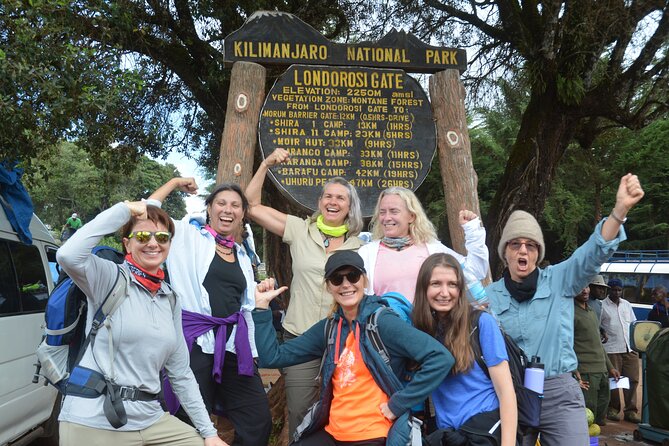
- Arriving in Moshi and Day 1 through Machame Camp rain forest climb
- Day 2 to Shira Plateau: steep ridge work and river gorge crossing
- Day 3: Lava Tower to Barranco Camp, acclimatization by going high
- Day 4: Barranco Wall and the purpose of a shorter acclimatization day
- Day 5 to Barafu Hut: Southern Circuit views from a camp built for waiting
- Day 6 summit night: Uhuru Peak at altitude, cold wind, and mental stamina
- Day 7 descent via Mweka Gate, certificates, and the muddy reality
- Meals, transport, group size, and why the price can make sense
- Who Machame is best for, and how to prepare without overthinking
- What the Sirikwa Travel experience adds on top of the trail
- Should you book this 7-day Machame climb with Sirikwa Travel?
Key things to know before you climb Machame (Whiskey route)
- It is a steep, popular route: expect effort, not just endurance, with a shorter itinerary than some alternatives
- You get multiple habitat changes: rain forest to heath, alpine desert, then arctic conditions near the top
- You summit from Barafu and descend via Mweka: a classic cycle that keeps the experience flowing
- Early midnight start for Uhuru Peak: cold and wind are real, so plan mentally for the push in darkness
- Small group size: up to 10 travelers, which helps with coordination on crowded moments
- Local operator support: transportation, meals, and guide leadership are included, and the team is repeatedly praised for keeping things organized and safe
Why the Machame (Whiskey) route is so popular for Kilimanjaro
The Machame route is famous because it hits that sweet spot between variety and ambition. You start on the lower southern slopes, move through rain forest, then climb into moorlands and heath. After that, the ground turns more barren and the air gets noticeably sharper. By the time you are in alpine desert and near arctic conditions, you feel like you are moving through an entirely different world every few days.
I also like that Machame approaches Kilimanjaro from the south and sets you up for summit views from multiple angles. Even when you are not at the highest point yet, the route is designed so you keep getting glimpses of the mountain’s geometry: ridges, volcanic rock features, and the changing sky color as altitude rises.
Now, the tradeoff. Machame is considered difficult and steep, and it’s challenging partly because it is not the longest itinerary on the mountain. That means your success depends on how you manage effort, hydrate, and follow the acclimatization plan your guide sets. If you have done high-altitude hiking or backpacking before, you will likely feel more confident. If you have not, you can still do it, but you’ll want to arrive in shape and take the altitude seriously from Day 1.
More Kilimanjaro climbs:
- 8-Day Small-group Lemosho Kilimanjaro Summit Trekking
★ 5.0 · 186 reviews - 5 Days Best of Tanzania Luxury Safari Northern Circuit
★ 5.0 · 174 reviews - 7-Day Machame Kilimanjaro Summit Tour from Arusha
★ 5.0 · 125 reviews
Arriving in Moshi and Day 1 through Machame Camp rain forest climb
Your climb starts from Arusha, with the practical base being Moshi. The drive from Moshi to Machame Gate is about 50 minutes, and you will pass through the village of Machame on the lower slopes. That quick “real Tanzania” transition is useful, because it gets you moving before the formal start and helps your body shake out travel stiffness.
Day 1 starts at roughly 5,380 ft and rises to about 9,350 ft. You cover around 11 km (7 miles) and hike about 5 to 7 hours. The habitat is rain forest, which means you start in shade, with softer footing and thicker air than higher camps. The trail climbs a winding ridge through dense rain forest until you reach Machame Camp.
What I like here is that rain forest trekking slows you down in a good way. It encourages steady effort, which matters for altitude. You are still gaining height, but it feels like a ramp rather than a sudden wall. If you go too fast, rain forest can fool you into thinking you are fine, then Day 2 shows the truth.
A small reality check: rain forest can also mean damp conditions. Even if it does not rain hard, everything can feel humid, and your gear may stay wet longer at camp. Plan for that emotionally and practically, and you’ll suffer less.
Day 2 to Shira Plateau: steep ridge work and river gorge crossing
Day 2 climbs from about 9,350 ft to roughly 12,500 ft, with about 5 km (3 miles) and 4 to 6 hours of hiking. You leave the glades of rain forest and transition into heath. The route continues with an ascending path that turns steep and rocky on a ridge.
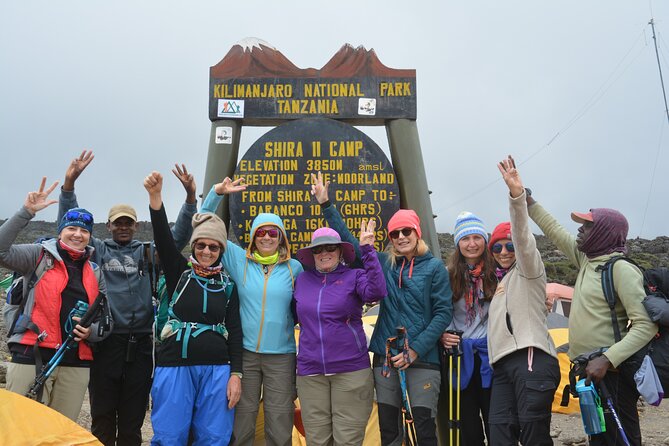
Then comes a classic Kilimanjaro moment: you reach the Shira Plateau and pass through heather and open moorlands. The big payoff is the open views and the feeling of altitude changing all at once. You also cross a large river gorge to Shira 2 Camp.
Why this day matters for you: it is shorter in distance, but it is not easier. Steep rocky ridges are where form matters. I recommend you keep your pace “small and steady,” because your lungs will decide the speed for you anyway. If you are someone who likes to charge at the start, Day 2 is where you should practice restraint.
By the time you reach Shira 2 Camp, you are living at higher altitude. That sets up the next day’s movement into alpine desert, where temperatures drop fast when the sun goes down.
Day 3: Lava Tower to Barranco Camp, acclimatization by going high
Day 3 starts around 12,500 ft and takes you up to about 15,190 ft before descending to about 13,044 ft at Barranco Camp. The hiking distance is short-ish at roughly 7 km (4 miles) plus a morning push, but the key is the altitude swing. You hike about 4 to 5 hours total for the day segment described, then continue toward Lava Tower and descend through Senecio Forest into Barranco.
Lava Tower is a volcanic rock formation about 300 ft tall. It sounds small on paper, but at altitude it becomes a dramatic landmark. You are also doing something smart here: even though you end the day lower, you spend time higher. That higher-time exposure is one of the reasons Machame is often successful when teams stick to the plan.
Senecio Forest is strange in a good way. The vegetation looks different than typical forest, and it makes the descent feel like you are walking through a plant-shaped science exhibit. You might not love how it feels on your boots, but you will remember it.
For this day specifically, the main drawback is that it can feel mentally uneven. One hour feels easy, then you hit a section that asks for patience and controlled breathing. If you expect it to feel perfectly “linear,” you might get frustrated. I’d rather think of it as altitude training with scenery as the bonus prize.
A few more Arusha trips to compare
- Balloon Safari & Bush Breakfast in Serengeti – Miracle Experience
★ 5.0 · 1,646 reviews - Tanzania Classic – 7 Days
★ 5.0 · 1,151 reviews - 4 Days Group Camping Safari
★ 5.0 · 1,101 reviews - 5 Days Group Camping Safari
★ 5.0 · 730 reviews
Day 4: Barranco Wall and the purpose of a shorter acclimatization day
Day 4 is a reset day in disguise. You start around 13,044 ft and stay in roughly the same altitude zone, ending near 13,106 ft. Distance is around 5 km (3 miles) and hike time about 4 to 5 hours, but the terrain includes a steep climb.
You begin by descending into a ravine to the base of the Great Barranco Wall. Then you climb the wall, which is non-technical but very steep, nearly 900 ft of ascent. From the top, you cross a series of hills and valleys, then descend sharply into Karanga Valley. There is a steeper climb up again toward Karanga Camp.
This is the part of Machame that I really value. The day is “shorter” in a way that helps your schedule, but the terrain still keeps your legs awake. That matters because you are preparing for the higher camps and the summit day.
The Great Barranco Wall is also where many people learn something about themselves. If you panic at steep grades, practice breathing and slow foot placement now. This is not a technical climb, but it can feel relentless. Your goal is not speed. Your goal is arriving at Karanga feeling like you can still think.
Day 5 to Barafu Hut: Southern Circuit views from a camp built for waiting
Day 5 moves from about 13,106 ft up to roughly 15,331 ft, hiking about 4 km (2 miles) for 4 to 5 hours. This day follows a junction that connects with the Mweka Trail, and you continue up to Barafu Hut.
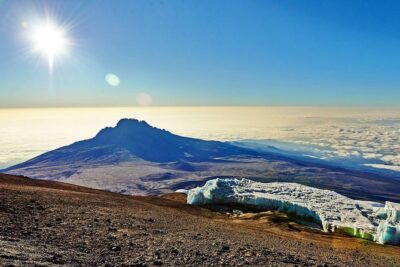
Barafu is a key waypoint because it is where you rest and prepare for summit night. You can view Mawenzi and Kibo from this position, and the idea that you have “completed the Southern Circuit” adds meaning to the long slog. You have approached the mountain in a roundabout way, and now you are positioned for the final push.
For me, the value of Day 5 is the time to get ready, not just the walking. Summit day is scheduled around midnight, which means sleep planning becomes a skill. You want to eat, adjust clothing layers, and get organized so you are not fumbling with gear in the cold.
Potential drawback: if you hate waiting, this day can be annoying. Barafu can also feel uncomfortable because your body knows the summit is coming. The fix is simple, focus on routines. Take the early dinner, hydrate, and try to rest. You’re saving energy for a 7-day experience that has a big climax.
Day 6 summit night: Uhuru Peak at altitude, cold wind, and mental stamina
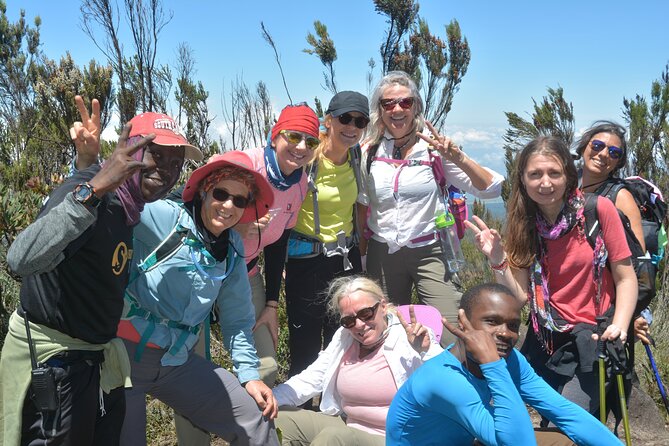
Day 6 is the summit day spine. You start around 15,331 ft and reach about 19,341 ft at the summit push. The plan described goes from Uhuru Peak to Mweka Camp, with a drop down to about 10,065 ft afterward.
The hike segment is about 5 km (3 miles) listed, but the summit effort is measured more by hours than by distance. You begin very early, around midnight, and you ascend in darkness for several hours. Wind and cold can be extreme at this elevation and time of day, so you should expect that your body will feel different from earlier days.
Near Stella Point (around 18,900 ft), you can see one of the strongest rewards of the entire trip. The sunrise coming over Mawenzi Peak is described as magnificent. This is not just a pretty photo moment. It also gives your brain something to work for when the cold makes everything feel harder.
Why I’m emphasizing the mental side: summit success is often less about peak fitness and more about how consistently you can keep going when you do not feel great. Small breaks help, but they are short. That forces steady rhythm.
Then, once you reach the summit, you descend to Mweka Camp. That descent is not a “walk it off” moment. At that point, your legs and balance are both tired. You are still moving through harsh conditions, and the cold can linger in your muscles.
Day 7 descent via Mweka Gate, certificates, and the muddy reality
Your final day goes from about 10,065 ft down to roughly 5,380 ft. Distance is about 10 km (6 miles) with 3 to 4 hours of hiking, and you move from alpine elevations back into rain forest.
You continue descent to Mweka Gate and collect summit certificates. Then you go another hour to Mweka Village, where a vehicle meets you to drive you back to your hotel in Moshi. This is one of those times when the trip feels both finished and surprisingly emotional. You get proof in hand, then you drop back toward everyday life.
A practical note: at lower elevations it can be wet and muddy. Your boots will get a workout, and you’ll probably be grateful for any dry socks you saved. If you packed too optimistically for summit weather only, Day 7 is where you learn the difference between dry cold and wet cool.
Also, this is where you should plan your hydration carefully. Even if you feel victorious, dehydration can still sneak up during a final descent when you stop moving slowly and start moving cautiously.
Meals, transport, group size, and why the price can make sense
This climb is priced at $2,550.00 per person for an approximately 7-day experience. Kilimanjaro costs vary a lot, but what matters is what you are buying: time, logistics, guiding, and the support system that makes summit day safer and more realistic.
In this package, transportation is included, and meals are covered daily: breakfast 7 times, lunch 7 times, dinner 7 times. You also have a tour guide included, plus admission ticket inclusion is listed for each hiking day segment. You’re not just paying for trails. You’re paying for the whole machine that gets you from Moshi to the gates, through camps, and back to your hotel.
The mobile ticket and pickup offered are also part of the value. Kilimanjaro is paperwork-heavy and timing-heavy. Having a simpler ticket delivery style and a defined pickup helps.
Group size is max 10 travelers. That is not tiny, but it is small enough that your guide team can manage pacing and camp logistics without turning it into a conveyor belt. One review theme in the material you provided is that coordination, hospitality, and safety feel well handled. I take that as a signal that the operator is trying to avoid chaos, not just sell a trek.
What the price might not include, based on the info you have: anything extra not mentioned. So you should budget for personal gear, tips, and any other items you decide to carry or purchase outside the stated inclusions.
Who Machame is best for, and how to prepare without overthinking
This Machame trek is described as suited for adventurous folks with some high altitude, hiking, or backpacking experience. That is not a strict rule, but it’s a helpful guide.
You should also aim for moderate physical fitness. The route is steep, with rocky ridges and long altitude days, plus the summit night push in cold and wind. If you have a hiking background, you will likely handle the climbing effort better. If you don’t, you can still give yourself a fair shot by focusing on consistency: stair practice, longer hikes on uneven ground, and learning to manage effort without going out too fast.
If you travel with kids, note that children must be accompanied by an adult. Also, the suggested dress code is smart casual, which likely applies to the hotel and transfer moments, not the summit. Still, pack like you are going into cold alpine weather where layer choices matter.
My simple preparation checklist for your head and body:
- Train for steady climbing, not sprinting
- Practice drinking even when you do not feel thirsty
- Expect cold on summit night, and pack layers accordingly
- Treat steep days like puzzles, slow steps and calm breathing
What the Sirikwa Travel experience adds on top of the trail
You are not just hiring a route. You are hiring a team that manages timing, meals, and the daily experience. The local operator in this tour is Sirikwa Travel, and the feedback you included points to hospitality and organization as repeat themes.
Several reviews in the material mention a warm, supportive team and an experienced crew. One name that comes up is Ole, described as part of the accompanying team. Another name you included is Oinoth, referenced as helping with scheduling and being part of the planning support. That kind of continuity can matter, because Kilimanjaro is not a place where you want confusion on what happens when.
More importantly, reviews you provided also highlight that groups felt supported in the days leading up to the summit, with acclimatization and control or checks in the evenings described in at least one account. While that does not guarantee every element for every trek, it does match the overall structure of a guided climb where your team is watching how you respond.
If you want an operator that keeps the pace reasonable, prioritizes safety, and helps you navigate the emotional ups and downs, this profile fits. And with max 10 travelers, you are likely to feel like a person, not just a slot in a schedule.
Should you book this 7-day Machame climb with Sirikwa Travel?
I’d book this if you want a high-energy Kilimanjaro route with dramatic habitat changes and a classic plan that includes time for acclimatization. Machame rewards you with the kind of variety that makes the trek feel like a full mountain journey, not just a slog to one point.
I would also lean toward this option if you like the idea of a midnight summit start with support on the cold, windy portion. The route makes the summit day feel planned, not improvised, and Barafu is positioned for an organized prep.
Don’t book it if you are hoping for an easy walk or if steep, rocky climbing scares you too much. Machame is challenging by design, and the shorter itinerary means you need to respect altitude from the start.
If you’re ready to work for it, this climb can be a life memory, with the kind of mountain variety that stays vivid long after you’re back in Moshi.
Just posted around Arusha
- 8 Days Serengeti Migration safari★ 5.0 · 11 reviews
- tarangire & ngorongoro 2 days tour★ 5.0 · 14 reviews
- serengeti, ngorongoro & tarangire 4 days private tour★ 5.0 · 18 reviews
- tarangire, ngorongoro & lake manyara park 3 days private tour★ 5.0 · 11 reviews
- serengeti & ngorongoro 3 days private tour★ 5.0 · 15 reviews
- climb the KILIMANJARO via Lemosho route★ 5.0 · 4 reviews
- Mt. Kilimanjaro: Shira plateau to Cathedral point 3872m Day hike★ 5.0 · 7 reviews
- Kilimanjaro Waterfalls Hike & Moshi Hot Springs Day Trip Tour★ 5.0 · 4 reviews
Kilimanjaro Climbs, compared.
8-Day Small-group Lemosho Kilimanjaro Summit Trekking
Read our review →
5 Days Best of Tanzania Luxury Safari Northern Circuit
Read our review →
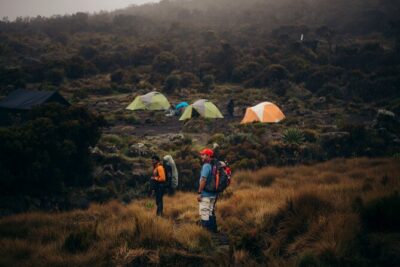
Climbing Kilimanjaro through 7 days Machame Route
Read our review →