Reviewed · KILIMANJARO CLIMBS
7 days Kilimanjaro climb via Machame route (Whiskey route)
Kilimanjaro hits hard on Machame. This 7-day Machame route, also called the Whiskey route, is Tanzania’s classic climb for its scenery, but it is also steep and demanding, with long stretches that test your lungs and legs.
What I like most is the support system you get while you’re up there, including purified drinking water, big meals, and a team that helps you keep moving even when you are running low on patience.
Second, I really appreciate the practical comfort choices built into the plan, like quality waterproof private four-season tents and organized mess setups. The one drawback to take seriously: Machame is a tough route, and the tighter itinerary means acclimatization is not something you can rush, especially if you do not have prior high-altitude hiking or solid backpacking fitness.
In This Review
- Key highlights you’ll feel on the mountain
- Machame (Whiskey Route) in plain English: how hard, how scenic, how worth it
- Day 1, Arusha to Machame Gate: mud, rain forest, and getting into the rhythm
- Day 2 to Shira campsite: moorland effort and the Western Breach view
- Day 3 to Lava Tower and down to Barranco: the toughest day that teaches acclimatization
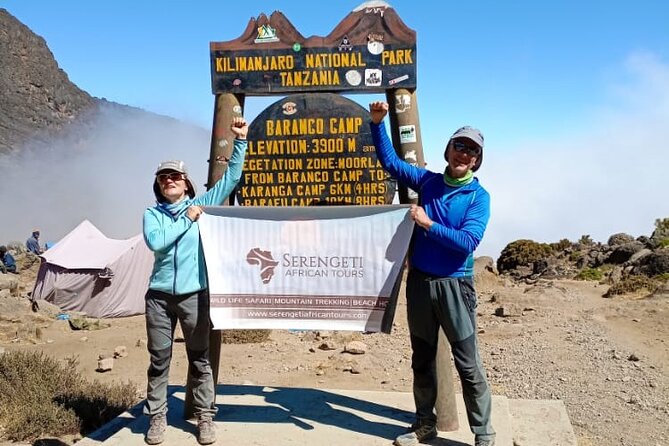
- Day 4, Great Barranco Wall: alpine desert walking with a morale boost
- Day 5, Barafu Hut and an exposed ridge rest: sleep planning becomes survival planning
- Day 6 summit night to Uhuru Peak: heavy scree, sunrise math, and pacing discipline
- Day 7 finish with celebration, certificates, and a real sense of closure
- Price and what Serengeti African Tours includes: where your money actually goes
- Who this Machame route is for, and who might consider another plan
- Should you book this Machame climb with Serengeti African Tours?
- FAQ
- How long is the Kilimanjaro climb on this Machame route?
- Where does the trip start and where do you end up?
- Is this the Machame route, and is it also called the Whiskey route?
- What is included in the price?
- What is not included?
- What are the key altitude points on the route?
- Do you have to pay for park fees or rescue fees?
- When does summit night start?
- How do certificates work at the end?
- Is free cancellation available?
Key highlights you’ll feel on the mountain
- Private tents in harsh conditions: waterproof, four-season, and meant for the real cold you’ll hit on higher camps.
- Purified drinking water and steady meals: you’re not guessing about food quality or safety at altitude.
- Shira to Lava Tower is the altitude wake-up call: Day 3 is where symptoms can start, so pacing matters.
- Great Barranco Wall is a confidence builder: a Class 2 climb that looks scarier than it usually feels.
- Summit night starts around 23h30: the long, heavy scree walk ends with a sunrise view if weather cooperates.
- Certificates add meaning to the finish: green for Stella Point, gold for Uhuru Peak.
Machame (Whiskey Route) in plain English: how hard, how scenic, how worth it
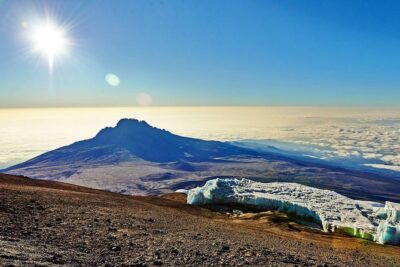
If you want Kilimanjaro for the dramatic scenery, Machame is the route that people keep choosing. The trail climbs through distinct climate zones, so you feel like you’re leveling up your world view step by step, from forest to moorland to alpine desert and the crater rim.
But Machame also earns its reputation for difficulty. The itinerary is shorter than many “let’s take it slow” plans, and the climbs include steeper days with rocky terrain. That combination is why you should treat this as an adventure hike, not a leisurely walk in the park. If you have done altitude hikes, backpacking, or serious day hikes with hills, you’ll likely feel more prepared. If you have not, you can still do it, but you need to be honest with yourself about pacing and endurance.
From a value standpoint, the price you’re paying is not just for “someone leading you.” It includes the heavy-lift items that otherwise add up fast: park and rescue fees, all meals while on the mountain, and even purified drinking water. Add in private tents, and it becomes a fairly complete package for a climb at extreme altitude.
More Kilimanjaro climbs:
- 8-Day Small-group Lemosho Kilimanjaro Summit Trekking
★ 5.0 · 186 reviews - 5 Days Best of Tanzania Luxury Safari Northern Circuit
★ 5.0 · 174 reviews - 7-Day Machame Kilimanjaro Summit Tour from Arusha
★ 5.0 · 125 reviews
Day 1, Arusha to Machame Gate: mud, rain forest, and getting into the rhythm
Your day starts in Arusha, around 1400m. After early breakfast, you’ll be picked up and driven to Machame Village, where you can buy mineral water and get a packed lunch. Then comes a very real first lesson for Kilimanjaro: sometimes roads are messy, and you might walk about 3 km through muddy conditions to reach the gate office.
Once you register at the gate, you enter the rain forest almost right away. This is a damp start, and rain is plausible. If it rains, expect soggy, muddy, slippery trail conditions. That means your first day is as much about traction and calm pacing as it is about altitude.
The good news is the structure. You have a welcome lunch stop about halfway through, so you are not left guessing. And reaching Machame Camp after around 7 hours sets the tone: slow and steady, drink, eat, and don’t sprint just because you feel okay.
Day 2 to Shira campsite: moorland effort and the Western Breach view
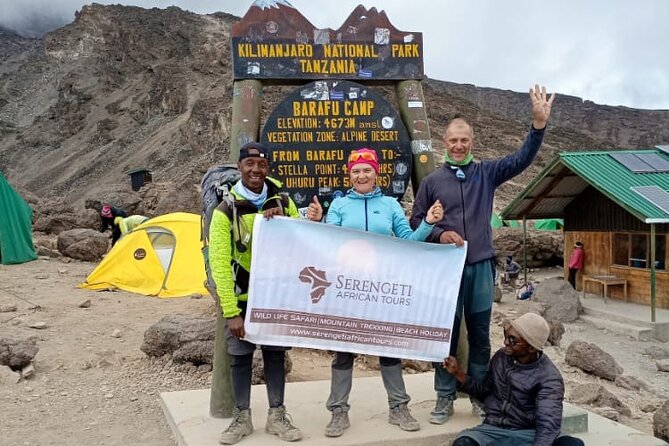
Day 2 starts with rising at Machame Camp and breakfast before you climb again. You’ll head up for about an hour through the forest zone, then transition into moorland, where the gradient is gentler for roughly 2 hours. This is one of those days that can feel less brutal than the hours ahead of you, but it’s still serious altitude work.
After lunch and rest, the trail moves onto a rocky ridge toward the Shira plateau. This is where the scenery starts rewarding you in a big way. You can look easterly toward the Western Breach with stunning glaciers, and later you’ll be due west of Kibo. The campsite is at Shira, around 3840m.
You’ll also feel how quickly temperatures change. The exposed camps can get extremely cold. Dinner and nighttime care are handled by your team, with porters boiling water for drinking and washing later in the trek, and you’ll be resting in conditions where temperatures can drop well below freezing.
Day 3 to Lava Tower and down to Barranco: the toughest day that teaches acclimatization
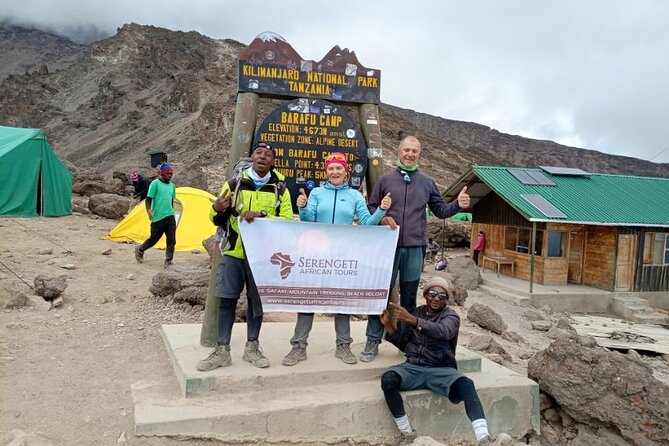
Day 3 is often the turning point. You enter a semi-desert, rocky landscape around Lava Tower. After about 5 hours of walking, you reach roughly 4630m, then you eat lunch in a designated area. After lunch, you climb up to Lava Tower at 4630m via a rocky scree path.
This is described as the toughest day so far, and that matches what many hikers experience on this portion: breathing can feel heavier, and you may notice altitude symptoms like breathlessness, irritability, or headaches. The key is that symptoms here do not automatically mean you’re failing. They mean you need to listen, slow down, and rely on your guide’s judgment.
Then the important part comes. After reaching the high point, you descend nearly 680m to Barranco camping area, staying around 4600m. Even though descending feels counterintuitive, it’s a real acclimatization tool. You gain time at altitude without forcing a straight, exhausting line upward every single day.
A few more Arusha trips to compare
- Balloon Safari & Bush Breakfast in Serengeti – Miracle Experience
★ 5.0 · 1,646 reviews - Tanzania Classic – 7 Days
★ 5.0 · 1,151 reviews - 4 Days Group Camping Safari
★ 5.0 · 1,101 reviews - 5 Days Group Camping Safari
★ 5.0 · 730 reviews
Day 4, Great Barranco Wall: alpine desert walking with a morale boost
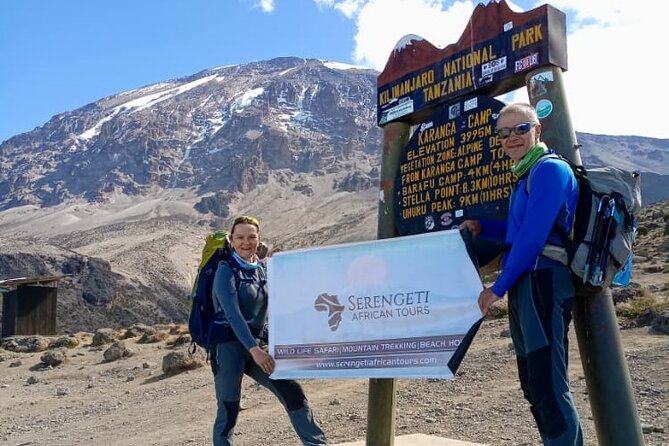
This is the day many people remember for the combination of effort and payoff. After breakfast, you head toward the Great Barranco Wall, which looks intimidating at first glance. The good detail is that it’s usually manageable as a Class 2 hike, so it’s technical enough to feel exciting, not so technical that you need rock-climbing skills.
At the top, you’ll get views of Heim Glacier and you may be above the clouds, which can make the climb feel like you’ve crossed a threshold. After that, the trail winds up and down through the Karanga Valley.
This is also described as an ideal acclimatization day. That matters because by now, your body is already negotiating with thin air. The route design gives you movement and exposure without the same steep “go higher no matter what” push as other days.
Day 5, Barafu Hut and an exposed ridge rest: sleep planning becomes survival planning
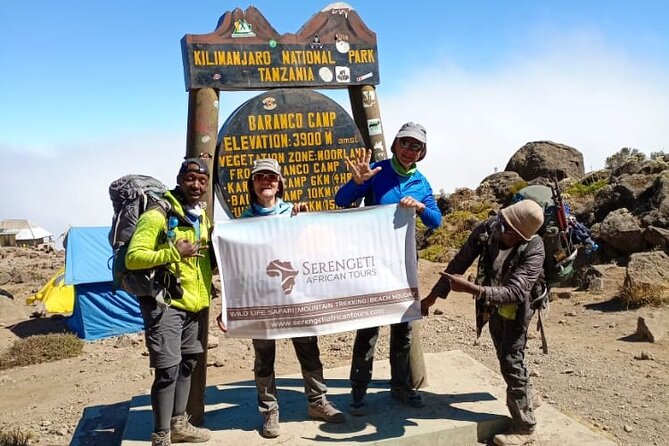
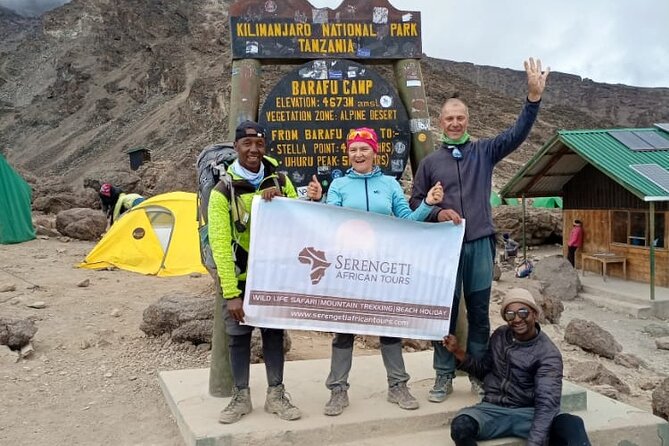
Day 5 starts at Karanga Camp, around 3959m, and the hiking time is shorter, about 2 to 3 hours. You’ll intersect with the Mweka route, the trail used for descent later, and then you’ll reach Barafu Hut. Barafu is around 4550m and sits on an exposed ridge.
There’s a practical detail here that you should treat seriously: Barafu is the last water stop for porters because there’s no accessible water at Barafu Camp. So even if you feel fine, you want to stay on top of hydration and follow your guide’s pacing instructions.
Once you arrive, you’re dealing with exposure. The wind and rocks can be part of your day even when you’re mostly resting. This is also where you can make your nighttime routine efficient. Early dinner helps you get into rest mode before the summit push begins.
The main value of this day is that it sets you up for summit night. If you waste energy late in the day, you’ll feel it later.
Day 6 summit night to Uhuru Peak: heavy scree, sunrise math, and pacing discipline
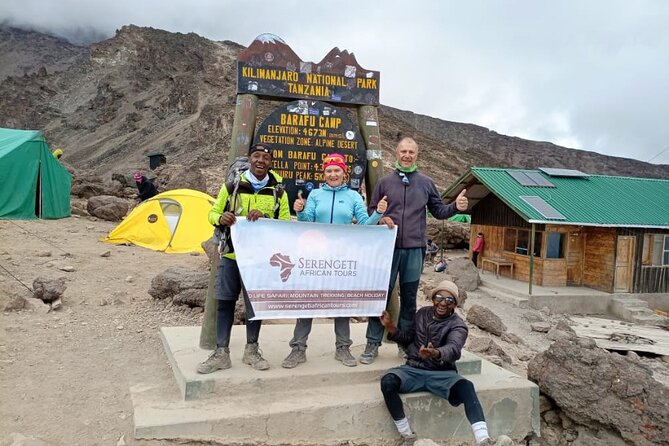
This is the big one. You rise around 23h30, with tea and biscuits, and then start walking north-westerly. The route leads through heavy scree toward Stella Point on the crater rim at 5685m.
Many climbers find the walk to Stella Point to be the most mentally and physically challenging stretch on the route. That makes sense. You’re tired, it’s cold, and the terrain is demanding under moonlight or minimal light. This is where the guide’s pacing and encouragement matter most, because your job is to conserve energy while moving steadily.
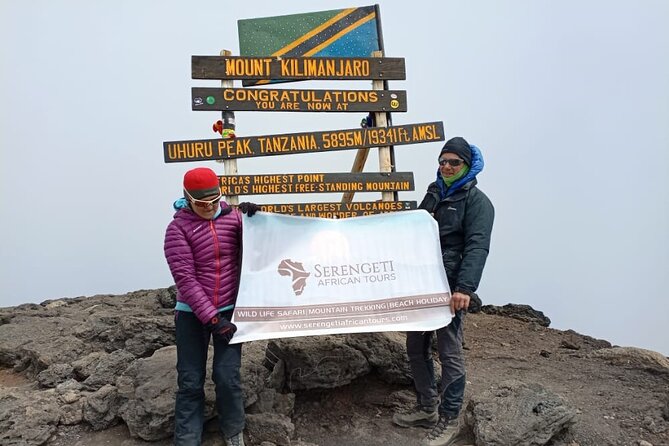
At Stella Point, you stop briefly. If the weather is right, this is where you’re rewarded with one of the best sunrises you’ll ever see. After that comes the ascent to Uhuru Peak at 5895m, which is typically around 2 hours. How long you spend at the summit depends on conditions, but the practical advice is clear: don’t linger too long. Cold and wind can make extra standing feel brutal fast.
When you think about value here, it’s not only the peak. It’s the whole summit system, starting with the late-night structure, the team support, and the careful plan to get you to Stella and Uhuru without burning out early.
Day 7 finish with celebration, certificates, and a real sense of closure
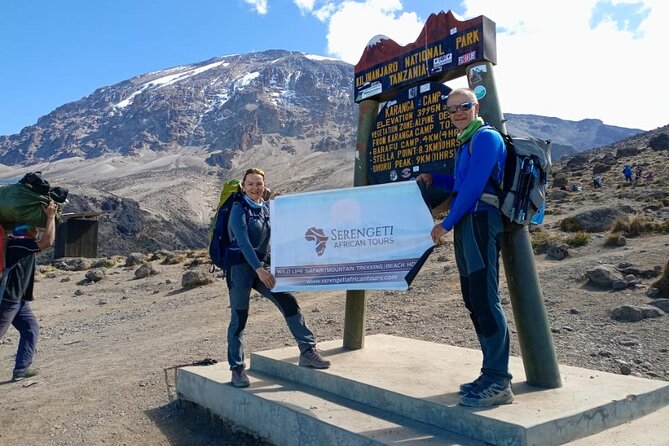
You finish with a breakfast that feels earned. After that, there’s a big celebration with dancing and singing, and this is also your tipping moment. You present tips to the guide, assistant guides, chef(s), and porters.
Then you start descending. You head down for about 3 hours to Mweka Gate, and the National Park requires hikers to sign their names to receive certificates of completion. Here’s an extra meaningful detail: if you reached Stella Point, you receive a green certificate. If you reached Uhuru Peak, you receive a gold certificate.
After the gate area, there’s another descent to Mweka village, about 1 hour and roughly 3 km. By now, your body is tired, but your head is clear. You’re not chasing altitude anymore. You’re moving toward completion.
Price and what Serengeti African Tours includes: where your money actually goes
At $2,300 per person for a 7-day climb, the price can look steep at first glance. But Kilimanjaro is not “just a hike.” You’re paying for high-altitude logistics, permits, safety systems, food carried and cooked on schedule, and trained guides and porters.
This tour includes:
- All park fees and rescue fees
- All meals on the mountain (breakfast 7, lunch 7, dinner 6)
- Clean, purified drinking water
- Quality mess tents with table and chairs
- Private four-season waterproof tents
- Fair and ethical treatment of porters
It also includes professional mountain guides and assistant support as part of the trip staffing.
Where you may feel value most is during the hardest hours. When you’re at altitude and everything tastes better than it should, you’ll appreciate that you are not rationing yourself because of weak meals or questionable water. And having a private tent matters on summit and post-summit nights because you want quiet rest, not a shared space where everyone is coughing from cold air.
In the feedback around this company, the human support comes up repeatedly. People specifically credited leaders like Lucas for fast communication before the trek, and guides such as James, David, and Gasto for helping their groups keep moving and make the summit. That points to a real strength: planning and morale.
Just remember what’s not included. Tips, flights, and personal climbing gear are on you. “Personal climbing gear” is a broad phrase, so you should plan to bring your own cold-weather kit, rain protection, and summit-ready hiking equipment.
Who this Machame route is for, and who might consider another plan
This trek fits best if you are:
- Physically ready for steep, rocky days
- Comfortable with hiking for 4 to 7 hours daily on uneven ground
- Able to follow pacing advice closely, especially around Day 3 and summit night
The tour also notes moderate physical fitness, which is encouraging. But Machame is still challenging. If you have never hiked at altitude, you’ll want to be extra careful about how hard you push, and you should have a serious discussion with your guide about risk and acclimatization.
If you want the most forgiving acclimatization profile, you might look at longer routes. If you want Kilimanjaro’s classic Machame scenery and you’re ready for the work, this is a strong choice.
Finally, group size is capped at 16 travelers, which usually helps keep the experience organized and personal, compared to very large groups.
Should you book this Machame climb with Serengeti African Tours?
I’d consider booking this Machame itinerary if you want:
- The classic Machame route with scenic variety
- A team that handles the logistics tightly, especially around summit night
- A package that includes tents, meals, purified water, and park fees, so you are not piecing together essentials
Skip it or think twice if you:
- Know you struggle with steep climbs and cold-weather camping
- Are counting on a relaxed pace, because Machame is built to be challenging
- Don’t want to manage your own gear, since personal climbing equipment is not included
If you do book, my best advice is simple: train for hills, practice steady pacing, and treat acclimatization days like they matter, because on Kilimanjaro they really do.
FAQ
How long is the Kilimanjaro climb on this Machame route?
The trek is 7 days (approximately), climbing from Machame up to the summit area and finishing with a descent back to Mweka Gate and then down toward Mweka village.
Where does the trip start and where do you end up?
It starts in Arusha, Tanzania, and the activity ends back at the meeting point in Arusha.
Is this the Machame route, and is it also called the Whiskey route?
Yes. This climb follows the Machame route, which is also known as the Whiskey route.
What is included in the price?
You get pickup offered, all park fees and rescue fees, all meals on the mountain, clean purified drinking water, mess tents with table and chairs, and quality waterproof four-season private mountain sleeping tents. Guides and ethical porter support are also included.
What is not included?
Tips, flights, and personal climbing gear are not included.
What are the key altitude points on the route?
Stella Point is at 5685m, and Uhuru Peak is at 5895m. Other camps listed include Shira (around 3840m), Lava Tower (4630m), Barafu Camp (4550m), and Shira and Barranco area altitudes during the route.
Do you have to pay for park fees or rescue fees?
No. Park fees and rescue fees are included.
When does summit night start?
You rise around 23h30 and start ascending through the night toward Stella Point, then continue to Uhuru Peak.
How do certificates work at the end?
After signing at Mweka Gate, you receive green certificates if you reached Stella Point. If you reached Uhuru Peak, you receive gold certificates.
Is free cancellation available?
Yes, free cancellation is available if you cancel at least 24 hours in advance of the experience’s start time for a full refund.
Just posted around Arusha
- 8 Days Serengeti Migration safari★ 5.0 · 11 reviews
- tarangire & ngorongoro 2 days tour★ 5.0 · 14 reviews
- tarangire, ngorongoro & lake manyara park 3 days private tour★ 5.0 · 11 reviews
- serengeti, ngorongoro & tarangire 4 days private tour★ 5.0 · 18 reviews
- serengeti & ngorongoro 3 days private tour★ 5.0 · 15 reviews
- climb the KILIMANJARO via Lemosho route★ 5.0 · 4 reviews
- Mt. Kilimanjaro: Shira plateau to Cathedral point 3872m Day hike★ 5.0 · 7 reviews
- Kilimanjaro Waterfalls Hike & Moshi Hot Springs Day Trip Tour★ 5.0 · 4 reviews
Kilimanjaro Climbs, compared.
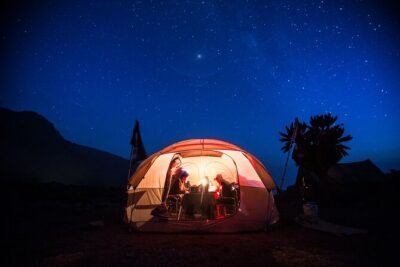
8-Day Small-group Lemosho Kilimanjaro Summit Trekking
Read our review →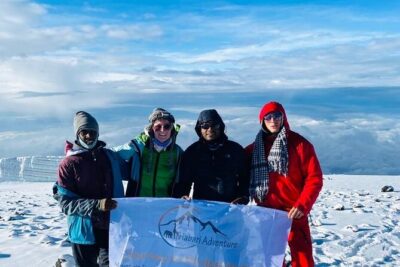
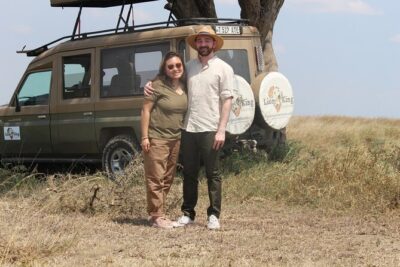
5 Days Best of Tanzania Luxury Safari Northern Circuit
Read our review →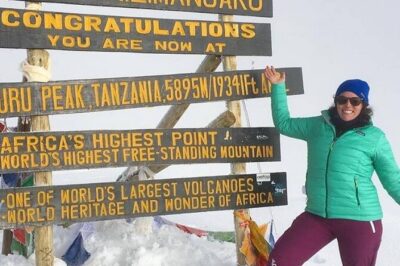
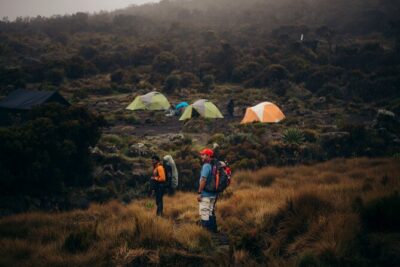
Climbing Kilimanjaro through 7 days Machame Route
Read our review →