Reviewed · KILIMANJARO CLIMBS
7 Days Kilimanjaro Climb Machame route
Seven days, one wild mountain, and you earn it. The 7 Days Kilimanjaro Climb Machame route gives you the classic south-west approach, then lines up a summit attempt via Barafu, with plenty of time to acclimatize. I love how the trek moves from mossy cloud forest into moorland and high-alpine terrain, so your eyes never get bored. I also love the human side, the way guides and a large porter team keep things organized and steady. One drawback to consider is that the itinerary still includes steep, tough sections like the Barranco Wall scramble and the crater-rim climb on summit night.
If you’re trying to climb Kilimanjaro in 7 days with a plan built around acclimatization, Machame is a smart fit. The route even gives you a big psychological payoff, Meru and other peaks can float in and out of the clouds, and the final push gets you to Uhuru Peak. Based on the people who guided and supported climbs with Hazzes Adventure Ltd, you should expect a friendly team dynamic, with names like Mtui, Emmanuel, and Noel leading the way.
In This Review
- Key highlights of the Machame climb (what matters on the mountain)
- Machame’s plan: why this route helps your body adapt
- Price and value: what $2,860 includes, and what you’ll still need
- Day 1: Machame Gate to Machame Camp through mossy cloud forest
- Day 2: Shira Plateau day, hot exposed hiking, and high-altitude plants
- Day 3: the acclimatization pivot to Barranco, with optional Lava Tower
- Day 4: Barranco Wall scramble to Karanga Valley ridge camping
- Day 5: Barafu Camp approach, glacier views, and the early sleep rule
- Day 6: midnight to Uhuru Peak, Stella Point, and the long altitude finish
- Day 7: Mweka Gate descent through cloud forest and certificate colors
- Guides, porters, and the day-to-day vibe that keeps you going
- What to bring, and how to handle the steep and cold moments
- Who should book this Machame route, and who should reconsider
- Should you book this 7-day Machame climb with Hazzes Adventure Ltd?
- FAQ
- FAQ
- How long is the Machame route climb?
- Where does the climb start?
- What’s included in the price?
- What is not included for this climb?
- Do you get pickup?
- Is there time to see Mt Meru from the trail?
- What summit certificate do you receive?
- What does the cancellation policy look like?
Key highlights of the Machame climb (what matters on the mountain)
- Cloud forest to high-alpine change, so each day feels different, not repetitive.
- Real acclimatization time, including the Shira Plateau and a specific down-up pattern before Barranco.
- Barranco Wall is the stress test, and it’s short, but hand-on help may be needed in places.
- Glacier views around Kibo, especially while approaching Barafu, including Heim, Kersten, and Decken Glaciers.
- A midnight summit window, with a headlamp start and a longer, altitude-heavy climb to Uhuru Peak.
- Summit certificates with clear milestones, green for Stella Point, golden for Uhuru Peak.
Machame’s plan: why this route helps your body adapt
The Machame route approaches Kilimanjaro from the south-west through forest and moorland. Then it joins the Shira route, and you begin the progression beneath the southern ice fields of Kibo. That matters because Kilimanjaro punishes quick travel, and this itinerary is designed to give your body time to adjust.
You’ll likely feel it most in the middle of the climb. Day 3, for example, climbs to a higher point during the day, then drops again into the next camp area, a pattern that supports acclimatization. Day 4 continues that logic with a ridge camp near Karanga Valley, which helps you keep adapting without rushing too fast.
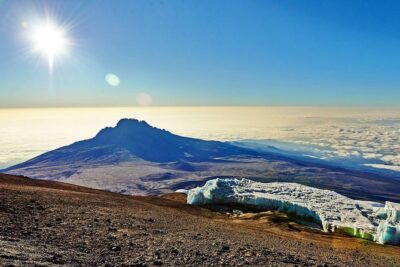
The scenery also supports the experience. The forest areas feel like you’re walking in a living, cool world, then the higher parts shift into moorland and barren terrain, and that change makes it easier to stay mentally focused. When Mt. Meru appears over the clouds, it’s the kind of view that makes you stop checking your watch.
More Kilimanjaro climbs:
- 8-Day Small-group Lemosho Kilimanjaro Summit Trekking
★ 5.0 · 186 reviews - 5 Days Best of Tanzania Luxury Safari Northern Circuit
★ 5.0 · 174 reviews - 7-Day Machame Kilimanjaro Summit Tour from Arusha
★ 5.0 · 125 reviews
Price and value: what $2,860 includes, and what you’ll still need
At $2,860 per person for a 7-day Machame climb, the value is mostly about what you don’t have to organize yourself. Meals are included every day of the trek, with breakfast, lunch, and dinner listed for the 7 days. Also, an admission ticket is included for the experience each day listed.
You also get some practical extras that reduce friction at the start. Pickup is offered, and you have group discounts and a mobile ticket. Since the tour is private and only your group participates, you’re not competing with strangers for the best timing and attention from guides and porters.
What’s not included is important. Mountain gear, trekking poles, a sleeping bag, and clothes are not included. That means you need to budget either for bringing your own or arranging rentals elsewhere, and you should not wait until the last minute. The steep sections and cold night on summit night are not places to improvise.
Day 1: Machame Gate to Machame Camp through mossy cloud forest
Your first day starts with an early move from Moshi to Machame Gate, where you meet the porters and cooks who will be with you for the whole climb. This is also when registration happens and you get time to prepare and double-check your trekking gear.
Then you begin hiking through moss-covered trees in Kilimanjaro’s cloud forest. This part is physically manageable compared with later days, but it can still surprise you with slick footing and humidity. I like Day 1 because it lets you settle into the rhythm, breathing steady, small steps, and letting the altitude build without shock.
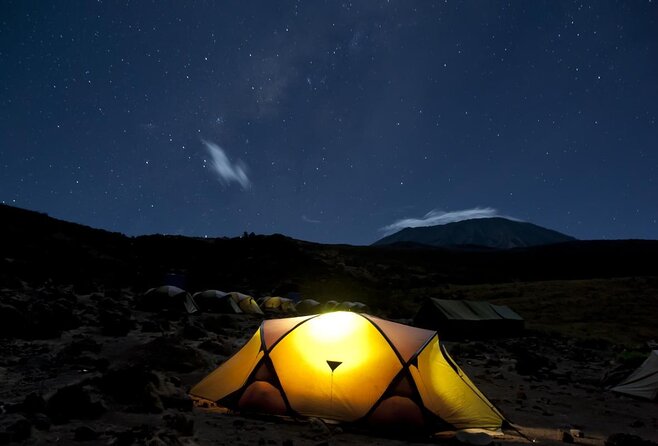
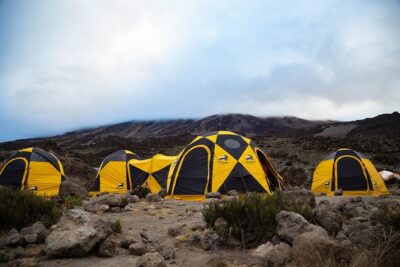
At the end of the day, porters and cooks set up camp ahead of you. That camp approach means you can focus on the trek, rather than splitting your attention between walking and logistics. When the hike ends and the forest thins, the change in vegetation starts to cue you that you’re moving toward the high-altitude plants.
Day 2: Shira Plateau day, hot exposed hiking, and high-altitude plants
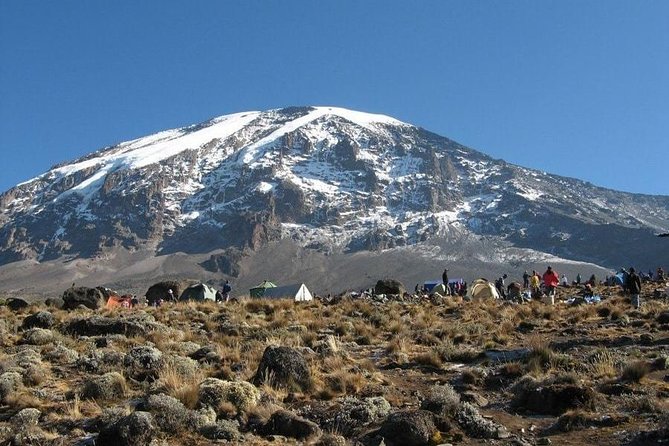
Day 2 is often called the easier day on Machame, but it still includes multiple uphill sections. The big consideration is exposure. On a clear day, it can feel hot, so carry plenty of drinking water as the route guidance suggests.
As you gain altitude, the vegetation changes in a very visible way. You’ll notice trees diminishing in size, and you’ll pass through zones with plants like Senecio kilimanjari and Lobelia deckenii. It’s one of those details that makes the trek feel educational without turning into a lecture.
After lunch, the trail climbs toward the Shira Plateau, formed when Kibo’s lava flows filled the Shira crater. Then you reach Shira Camp, where you can relax while looking toward Kibo to the west and Mount Meru to the east.
This day is valuable because it sets up your acclimatization sequence. Even when it feels easier, you still get altitude exposure, vegetation change, and viewpoints that keep your motivation up.
A few more Arusha trips to compare
- Balloon Safari & Bush Breakfast in Serengeti – Miracle Experience
★ 5.0 · 1,646 reviews - Tanzania Classic – 7 Days
★ 5.0 · 1,151 reviews - 4 Days Group Camping Safari
★ 5.0 · 1,101 reviews - 5 Days Group Camping Safari
★ 5.0 · 730 reviews
Day 3: the acclimatization pivot to Barranco, with optional Lava Tower
Day 3 includes an up and down profile and ends with only about 110 meters of elevation gain. But the route still pushes you: you climb roughly 690 meters to around 4,530 meters early in the day before descending into Barranco Camp.
That mix is the point. You hike in a way that supports acclimatization while still taking you closer to your next major terrain feature. The day also has a crucial timing element, you’re hiking east on the Shira Plateau before reaching the junction for the Shira and Lemosho connection.
Later, the terrain becomes more barren. If you take the quicker pace it can feel like less variety, but don’t underestimate how mentally important this transition is. Your optional detour can add interest: faster hikers may take a side trip to Lava Tower, a 300-foot lava formation that sticks out from the mountainside.
Then you finish the day in Barranco terrain, which sets up the big day ahead.
Day 4: Barranco Wall scramble to Karanga Valley ridge camping
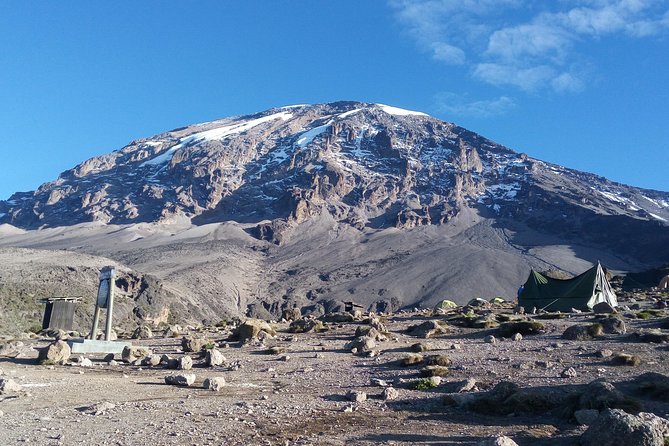
Day 4 is the one that many people remember, because it begins with a scramble up Barranco Wall. You’ll spend about 1.5 hours on the wall, and in some places you may need your hands to pull yourself up.
This is the hardest segment of the day, and it’s also a good reality check on your own comfort with steep angles. If you’re expecting a gentle hike all week, this is where the mountain corrects your expectations.
After reaching the top, you descend briefly into Karanga Valley. The route camps on a ridge above the valley, and that detail matters for acclimatization. Ridge camping can help you sleep well at a higher elevation and keep your body adapting without dropping too far.
Mentally, I like this day because it turns the route from climbing into problem-solving. You slow down, use careful footing, and it feels earned rather than rushed.
Day 5: Barafu Camp approach, glacier views, and the early sleep rule
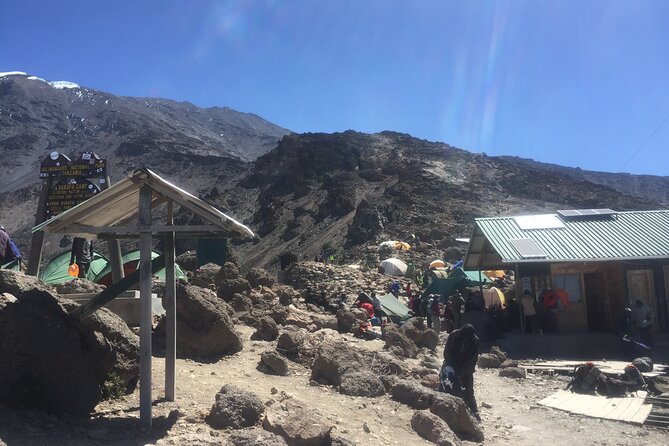
Day 5 takes you from the Barranco area to Barafu Camp. On the way, you can see Kibo’s glaciers and also the junction that connects the descent route, Mweka, with the Machame trail.
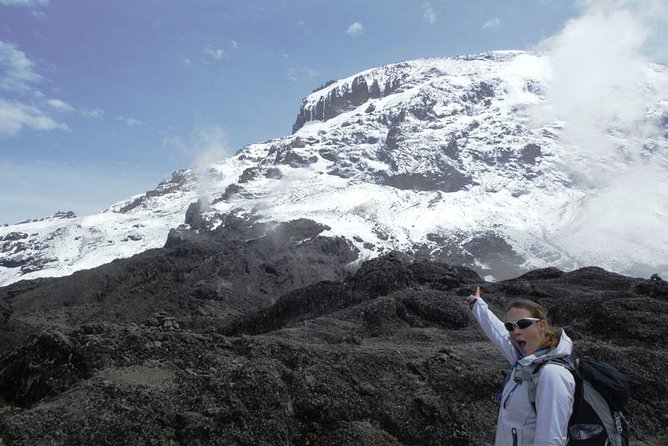
This is one of the scenic payoff days. Even though the trail passes through alpine desert with little vegetation, you get views of Kibo’s glacier systems along the way, including the Heim, Kersten, and Decken Glaciers. The contrast is striking, a stark, dry walking surface paired with massive ice visible in the distance.
When you reach Barafu Camp, views of Kibo and Mawenzi are described as stunning. The practical advice is to plan for an early night. You’ll sleep as soon as you finish dinner because you’re waking before midnight for the summit hike.
This matters for success. On summit night, your body is tired, and your mind runs hot and cold with altitude. Early sleep isn’t a luxury, it’s part of your strategy.
Day 6: midnight to Uhuru Peak, Stella Point, and the long altitude finish
Around midnight, you begin the final ascent to Uhuru Peak, the highest point in Africa. You hike for about six hours, starting by headlamp, with the steepest section being the climb up to the crater rim.
The most challenging part is described as the ascent to the crater rim until Stella Point. From Stella Point to Uhuru Peak, the grade becomes more gradual. Even if it feels less technical, altitude makes it long and tiring.
The crater rim climb takes about an hour, which helps you picture pacing. Once you reach Uhuru, you’re given time to take photos, enjoy the views, and do what you want before beginning the descent to Mweka.
Here’s the key expectation to set: summit night is not just about legs. It’s also about patience. You’ll feel it in your breathing and in how long short distances take. Having a guide and porter support team matters here, and it’s where the route’s “maximum acclimatization” idea shows up as steadier decision-making.
Day 7: Mweka Gate descent through cloud forest and certificate colors
After breakfast, you finish with a descent to Mweka Gate, and the last hiking section is described as passing through Kilimanjaro’s cloud forest. This is a relief day, but don’t go careless. The trail can be slippery on the descent, and your knees will appreciate deliberate steps.
At Mweka Gate, vehicles are waiting at the lower station to take you back to Moshi or Arusha. You also sign a name and details in a registration book. This is when climbers receive summit certificates, and the color system is clear: reaching Stella Point earns a green certificate, and reaching Uhuru Peak at 5895 meters earns a golden certificate.
Then you drive back to Moshi for a long overdue hot shower. After a week, that sounds small. It’s not.
Guides, porters, and the day-to-day vibe that keeps you going
One of the strongest parts of this climb, from the way guides and crews are described, is the level of care and organization. In past climbs with Hazzes Adventure Ltd, people highlighted that everything was well organized, including accommodations and pickups.
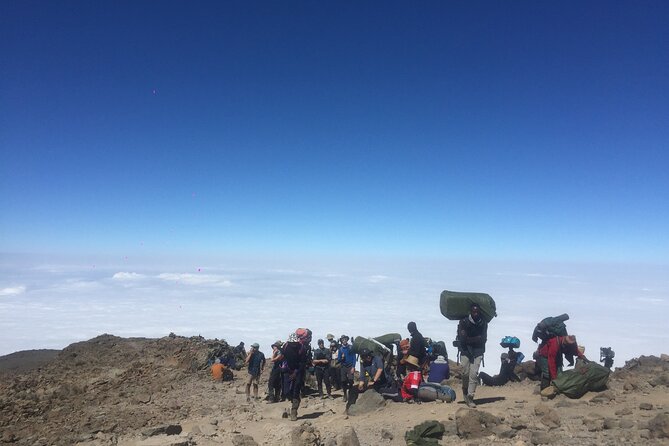
You’ll also likely remember the guide names. Emmanuel, Mtui, and Noel were specifically mentioned, along with a large porter team, described as 20+ porters. That staffing matters because it reduces your load and keeps camp running so you can focus on acclimatization and safety.
The emotional side is real too. Some climbs included songs, language lessons, and local cuisine during the trek. If you like travel that feels social, not just mechanical, you’ll probably enjoy that side of the experience. It also helps the days pass when you’re working through the boredom of “one more step.”
What to bring, and how to handle the steep and cold moments
The climb includes a few clear moments where smart planning pays off. Day 2 has exposed hiking that can be hot, so hydration matters. Day 7 can be slippery, so watch your footing and slow down on the downhills. Summit night starts around midnight and depends on headlamp light, so you should make sure your setup is ready.
From the included and not included list, gear planning is on you. Trekking poles are not included, and neither are a sleeping bag and clothes. If you don’t already own these, plan time and cost for getting them before you go.
Also remember the fitness requirement. The trip guidance says travelers should have a strong physical fitness level. That doesn’t mean you need to be an athlete, but it does mean you should train for sustained hiking with elevation changes, not just short walks.
Who should book this Machame route, and who should reconsider
This 7-day Machame route is best for you if you want a climb with time built in for acclimatization. The itinerary’s sequence through Shira Plateau and the Barranco setup gives you repeated altitude exposure without compressing everything into a few days.
You’ll also like it if you want a route that stays visually interesting, from mossy forest to moorland and alpine desert, with glacier views near Barafu. And if you enjoy a supportive team feel, the guide and porter attention described for past climbs is a big plus.
You might think twice if you want a gentle hike with no steep scrambles. Barranco Wall is tough and may require hands. Summit night involves steep climbing to the crater rim and an altitude-heavy push to Uhuru Peak.
Should you book this 7-day Machame climb with Hazzes Adventure Ltd?
If your goal is to climb Kilimanjaro in 7 days with a Machame plan that emphasizes acclimatization, this sounds like a strong choice. The combination of included meals, an admission ticket each day listed, and a sizable guide and porter team support helps you focus on walking and adjusting.
I’d book if you’re okay planning for gear since sleeping bag, trekking poles, and clothes are not included, and if you accept that the hardest parts are real. If you’re serious about preparation, this route gives you the classic Kilimanjaro experience, with glacier views, cloud forest descents, and a summit push that follows a proven sequence.
FAQ
FAQ
How long is the Machame route climb?
It’s listed as 7 days, with the trek and experience running approximately one week.
Where does the climb start?
You travel from Moshi to Machame Gate on Day 1, where you meet the porters and cooks and complete registration.
What’s included in the price?
Dinner, breakfast, and lunch are included across the 7 days. An admission ticket is also included as part of the experience on the listed days.
What is not included for this climb?
Mountain gears, trekking pole, sleeping bag, and clothes are not included.
Do you get pickup?
Pickup is offered, and vehicles are also waiting at the lower station of Mweka Gate to take you back after the trek.
Is there time to see Mt Meru from the trail?
Yes, Shira Camp is described with views of Mount Meru to the east, and the overall route includes unforgettable views of Mt. Meru floating on clouds.
What summit certificate do you receive?
If you reach Stella Point, you receive a green certificate. If you reach Uhuru Peak (5895 m), you receive a golden certificate.
What does the cancellation policy look like?
Free cancellation is offered, and you can cancel up to 24 hours in advance for a full refund, based on local experience start time. The experience requires good weather and may be offered a different date or a full refund if canceled due to poor weather.
Just posted around Arusha
- 8 Days Serengeti Migration safari★ 5.0 · 11 reviews
- tarangire & ngorongoro 2 days tour★ 5.0 · 14 reviews
- serengeti, ngorongoro & tarangire 4 days private tour★ 5.0 · 18 reviews
- tarangire, ngorongoro & lake manyara park 3 days private tour★ 5.0 · 11 reviews
- serengeti & ngorongoro 3 days private tour★ 5.0 · 15 reviews
- climb the KILIMANJARO via Lemosho route★ 5.0 · 4 reviews
- Mt. Kilimanjaro: Shira plateau to Cathedral point 3872m Day hike★ 5.0 · 7 reviews
- Kilimanjaro Waterfalls Hike & Moshi Hot Springs Day Trip Tour★ 5.0 · 4 reviews
Kilimanjaro Climbs, compared.
8-Day Small-group Lemosho Kilimanjaro Summit Trekking
Read our review →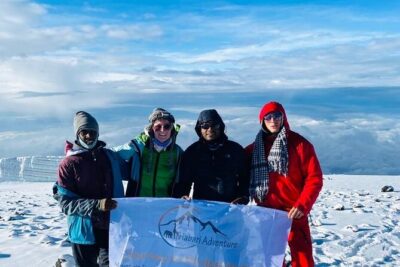
5 Days Best of Tanzania Luxury Safari Northern Circuit
Read our review →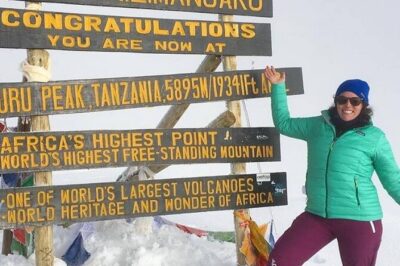
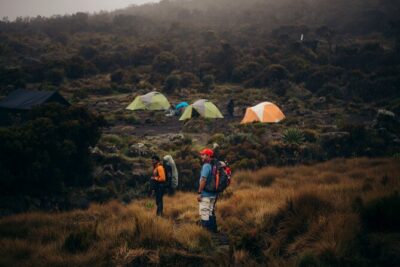
Climbing Kilimanjaro through 7 days Machame Route
Read our review →