Reviewed · KILIMANJARO CLIMBS
6 days Kilimanjaro Climbing Machame Route in Tanzania
Kilimanjaro feels close, then suddenly huge. This 6-day Machame Route climb from Arusha is for hikers who want real wilderness days, tents only, and the kind of summit views that make you forget your sore legs.
I especially like the way the trek builds rhythm, with strong acclimatization days and a final push that starts at midnight for sunrise. I also like that you are guided by a local, small-team set up run by Peter, with guides like Eli and support from the team on the mountain.
The main consideration is simple: the Machame route is longer and a bit tougher than the Marangu option. If your fitness and altitude game are shaky, you will feel it, especially on summit day.
In This Review
- Key Things I’d Pay Attention To
- Machame Route Reality Check From Arusha
- What You Get (And What You Should Plan For) In This Package
- Day 1: Rain Forest to Machame Camp (1830m to 3000m)
- Day 2: Shira Moorland and a Steeper Feel (3000m to 3840m)
- Day 3: Lava Tower, Arrow Glacier, and Barranco Hut (Shira to 3860m)
- Day 4: Barranco Wall, Karanga Valley Lunch, Barafu Camp (3900m to 4600m)
- Day 5: Midnight Summit Push to Stella Point (5685m) and Back Down
- Day 6: Mweka Park Gate Descent and Summit Certificates
- Tent Camping on Machame: The Comfort Tradeoff You Should Expect
- Guides, Team Support, and the Local Operator Advantage
- Is It Good Value at $2,800 Per Person?
- Who This Trek Suits Best
- Should You Book This 6-day Machame Climb With Twende Africa Tours?
- FAQ
- What route is this, and why do people pick it?
- How long is the Kilimanjaro climb?
- Where does the trek start and end?
- What time does the experience start?
- What is included in the price?
- What is not included?
- Is free cancellation available?
Key Things I’d Pay Attention To
- Tents only on Machame: no hut comfort, so nights can be colder and wetter than you expect.
- Acclimatization built into the plan: one day deliberately keeps the effort pattern smart, not just harder.
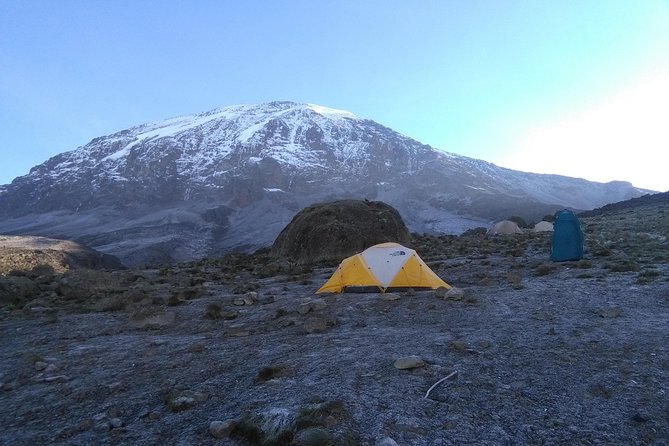
- Big views from Barafu: you camp with classic angles on both Mawenzi and Kibo.
- Stella Point sunrise: a very real, very demanding climb to the crater rim before daylight.
- Local operator feel: support from Twende Africa Tours with guides such as Eli and the team members named Elisafi and John.
Machame Route Reality Check From Arusha
Let’s set expectations early. Machame is called the Whisky Route for a reason: it’s not just a gentle hike up a mountain. It is a proper trekking route with longer days, rocky sections, and altitude that keeps climbing even when your legs want to negotiate.
This particular tour is routed through the Moshi area and Kilimanjaro National Park, starting and ending in Arusha, with a stated start time of 9:00 am. You are also told about pickup and mobile ticket usage. That matters because Kilimanjaro days begin early, and having transportation handled reduces stress before you even hit the first trail.
Cost is $2,800 per person. On Kilimanjaro, that number can range a lot depending on group size, staffing, and inclusions. Here, the package explicitly includes national park fees, private transportation, 2 nights accommodation, and round-trip shared transfer, plus daily items like dinner and admission ticket support. You should still plan your budget for the few items listed as not included, like souvenir photos and any landing and facility fees.
More Kilimanjaro climbs:
- 8-Day Small-group Lemosho Kilimanjaro Summit Trekking
★ 5.0 · 186 reviews - 5 Days Best of Tanzania Luxury Safari Northern Circuit
★ 5.0 · 174 reviews - 7-Day Machame Kilimanjaro Summit Tour from Arusha
★ 5.0 · 125 reviews
What You Get (And What You Should Plan For) In This Package
I like reading a tour like this as if I were packing for it. Included items tell you what the operator has handled. Missing items tell you what you need to handle.
Included:
- Dinner
- National Park fees
- Private transportation
- 2 nights accommodation
- Round-trip shared transfer
You’re also running a multi-day park entry style program where admission is shown as included most days and handled through the tour.
Not included:
- Souvenir photos
- Landing and facility fees
What’s not spelled out, and you should treat as your responsibility:
- Warm layering, rain gear, boots you trust, and trekking support.
- Anything personal like snacks, water treatment supplies, and basic first-aid comfort items.
The route description also points to practical gear: gaiters and trekking poles help on muddy, slippery sections and later on wet descents. If you’ve only hiked local trails without poles, consider this your sign to practice walking downhill with pole support.
Day 1: Rain Forest to Machame Camp (1830m to 3000m)
Day 1 starts with a short drive from Moshi to the Kilimanjaro National Park gate, about 45 minutes, passing through Machame village on the lower slopes. Right away, you’re moving from “vacation mode” into “trail mode,” with the start already in the mountain’s ecosystem.
Then you hike through montane forest on a winding trail up a ridge. This is the part that can feel damp and slippery. The plan notes the trail can be muddy lower down, which is exactly when gaiters can save you from soaked socks and cold feet. Trekking poles also help with balance on uneven footing.
Elevation gain is substantial on paper, 1830m to 3000m, with a hiking window of 5-7 hours and about 11 km. For you, the key is not speed. It’s steady pace and early hydration. The first day is building a breathing rhythm that will matter when the air thins later.
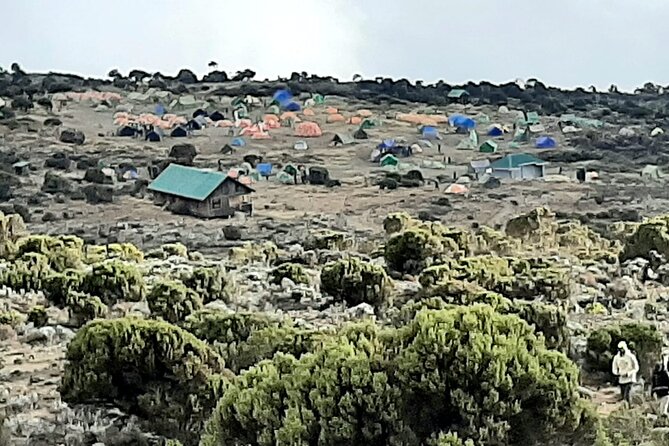
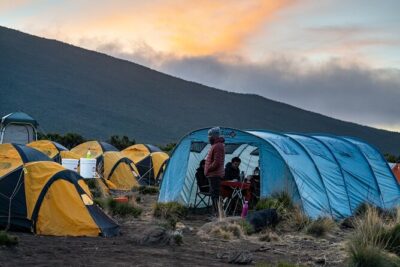
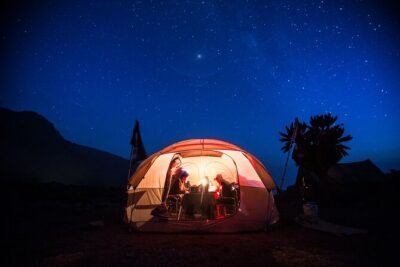
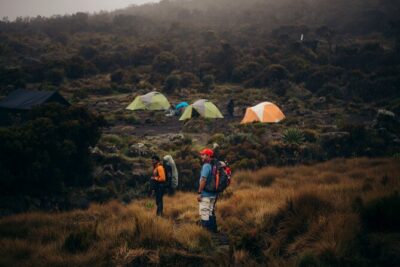
Overnight is at Machame Camp, with the tour operating on the tents only style of camping. That means you should assume night temperature drops and plan accordingly.
Day 2: Shira Moorland and a Steeper Feel (3000m to 3840m)
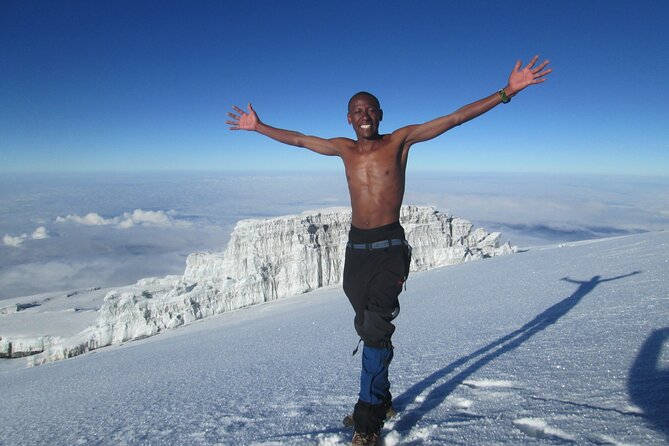
Breakfast first, then you leave the forest. The trail transitions into a more open environment, with heather and then moors. You cross a little valley and move along a steep rocky ridge before heading into a river gorge direction.
This day is shorter in distance, about 5 km, and listed as 4-5 hours, but that “shorter” number can fool you. Rocky ridges at altitude feel harder than the mileage suggests. It’s a classic Kilimanjaro pattern: fewer kilometers, more effort per step.
You end at Shira campsite around 3840m. This matters for acclimatization because your body is getting introduced to higher oxygen stress without yet going for the summit. If day 1 feels like warming up, day 2 feels like the first real message from altitude.
A few more Arusha trips to compare
- Balloon Safari & Bush Breakfast in Serengeti – Miracle Experience
★ 5.0 · 1,646 reviews - Tanzania Classic – 7 Days
★ 5.0 · 1,151 reviews - 4 Days Group Camping Safari
★ 5.0 · 1,101 reviews - 5 Days Group Camping Safari
★ 5.0 · 730 reviews
Day 3: Lava Tower, Arrow Glacier, and Barranco Hut (Shira to 3860m)
Day 3 is one of those days where the scenery and the mental workload both jump. Starting from the Shira Plateau, you continue up a ridge. The route passes junctions, then shifts direction toward Kibo’s area.
Then comes the highlight name people remember: Lava Tower, also called the Shark’s Tooth. After that, you move toward the Arrow Glacier at 4876m (about 15,997 ft). Even if the glacier itself looks less dramatic up close than summit photos, the elevation sting is real.
The day doesn’t end at the highest point you reach. You then descend to Barranco Hut at about 3860m. That “up high, then down” pattern is valuable because it helps acclimatize without keeping you at maximum stress all day.
Distance is about 11 km, hiking 5-7 hours, and the terrain is listed as semi-desert. Expect stark ground, thin air, and a lot of shifting focus between footing and breathing.
This is also a key acclimatization day described as especially important. The tour notes that you end the day around the same elevation as when you started, which is exactly the kind of altitude strategy your body likes before the final two-day push.
Day 4: Barranco Wall, Karanga Valley Lunch, Barafu Camp (3900m to 4600m)
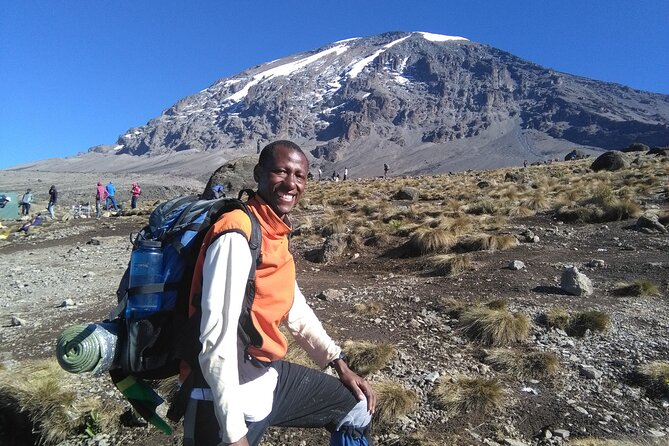
If you want one day that feels like a real “mountain day,” it’s Day 4. You leave Barranco and head toward the Barranco Wall, with a steep ridge section. Then you drop through the Karanga Valley, with lunch around 4200m (13,779 ft).
This is where trekking technique matters. Steep walking and altitude fatigue can make your steps sloppy. Poles are often a big help for rhythm, especially on the parts that feel like they’re going to test your calves.
After lunch and continued trekking, the route connects with the Mweka Trail junction, then you continue upward to Barafu Hut at about 4600m. You rest and prepare for the summit attempt.
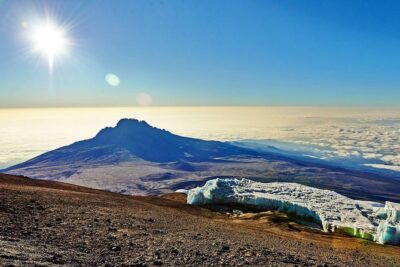
The tour notes a scenic payoff here: the route offers views of Mawenzi and Kibo from your position at Barafu. For your brain, seeing the summit area clearly before the summit day is motivating, but don’t let it speed up your pace. Save energy. Sleep matters.
Day 4 distance is about 9 km, with a long day time of around 8 hours. That time reflects the effort of steep sections and the need to keep your body working calmly.
Day 5: Midnight Summit Push to Stella Point (5685m) and Back Down
Summit day starts at midnight, 12:00am. That timing is brutal and standard for the Kilimanjaro experience, because you want summit light for the best chance at a safe, clear route and a memorable sunrise.
You ascend through heavy scree toward Stella Point on the crater rim at 5685m (18,652 ft). This is listed as the most mentally and physically challenging portion. That’s not a marketing line, it’s what the terrain does to you: your footing shifts, you burn calories fast, and your breath becomes your metronome.
At Stella Point, you stop for a short rest and are rewarded with the summit sunrise, weather permitting. The plan specifically calls out the sunrise as something you are likely to remember for a long time. After that, you continue through areas with snow toward the summit, with snow mentioned as continuing up to the summit.
Elevation profile is intense: climbing 4600m to 5895m and then descending down to about 3100m. Distance is listed as 5 km ascent and 12 km descent, with hiking time around 6-8 hours ascent and about 3 hours descent.
Here’s the practical advice I’d give you: on the ascent, focus on slow, consistent steps, and treat every rest as a chance to reset breathing, not as a chance to quit. On the descent, watch your knees and keep your footing careful. Scree can be faster on the way down, which is exactly when slips happen.
Day 6: Mweka Park Gate Descent and Summit Certificates
After breakfast, you descend to the Mweka Park Gate to receive your summit certificates. This day is shorter and should feel like relief, but altitude descent can still be tough on your legs.
At lower elevations, the tour notes it can be wet and muddy. That’s when gaiters and trekking poles earn their keep again. Wear what you can move in, and keep rain gear and warmer clothing handy.
The plan says you’ll hike about 10 km for 3-4 hours, from roughly 3100m down to 1830m. Vegetation shifts back into forest, which is a nice psychological moment: you are moving away from the lunar-feeling summit zone back into something more human.
After you reach the Mweka gate, the Twende Africa Tours vehicle meets you and drives you back to your hotel in Moshi, about 30 minutes. Even though it’s a short ride, having it included is one of those small things that prevents logistics stress on your final day.
Tent Camping on Machame: The Comfort Tradeoff You Should Expect
Machame versus Marangu is a comfort choice. Machame uses tents only. Marangu uses huts, which means you might get warmer or more sheltered resting options there.
On Machame, you’re trading hut-style comfort for a route that is described as longer and slightly more challenging, often tied to scenery you don’t see on Marangu. The tour also says about 85% of hikers make it to the summit on this route. I’d treat that as an operator claim, not a guarantee, but it does signal that Machame is commonly run in a way that helps altitude success.
So what does tent camping mean for you?
- Nights can be colder, especially at elevation camps.
- Weather changes can matter more because you’re not in a hut.
- Your clothing strategy counts. Layering is your friend.
If you like the feeling of being fully in the expedition, tent nights are part of the charm. If you want maximum comfort, this is the wrong route style.
Guides, Team Support, and the Local Operator Advantage
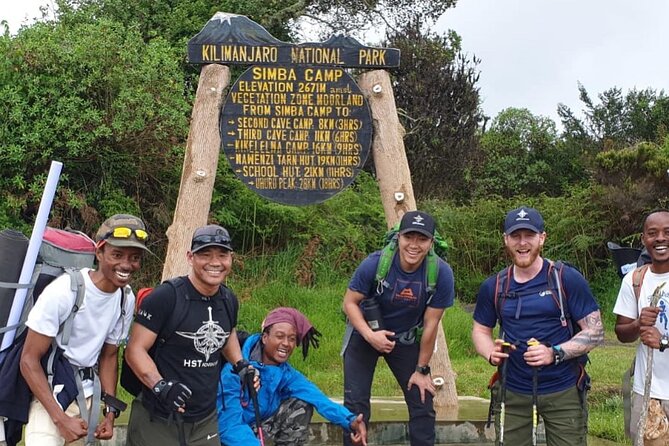
One of the strongest signals from the experience details is the local team feel. The company is Twende Africa Tours, led in part by Peter, with guides mentioned like Eli and additional team members named Elisafi and John.
That kind of naming matters. It suggests you’re not just booking a generic service. You’re booking a specific local setup that communicates clearly and adapts to needs. In the feedback style described, people repeatedly highlight that support was attentive, helpful, and organized.
What you should look for, on your side, is how this translates to your daily hike:
- A guide who keeps the pace realistic.
- A team that handles meal timing and daily check-ins.
- Porters who help move camp needs, which is a huge part of why the trail feels less overwhelming than it would otherwise.
Even though the tour notes a lot about your hiking days, the real “experience quality” often comes from the less visible parts: how quickly camp gets set up, how food arrives, and how a guide manages tough moments on steep sections.
Is It Good Value at $2,800 Per Person?
Value is not just the sticker price. It’s what’s covered and how much effort the operator puts into making the experience run smoothly.
At $2,800, you’re paying for a full multi-day trek that includes:
- National park fees
- Private transportation (which can reduce friction from Arusha to the climbing area)
- Two nights accommodation
- Round-trip shared transfer
- Dinner during the program
- Admission ticket handling throughout the days shown
You are also not paying extra for every single day of park access in the way you might with some budget climbs.
What could impact perceived value is what’s not included, like souvenir photos and landing/facility fees, plus the usual personal gear cost you’ll still have. If you already need to buy a lot, your real out-of-pocket goes up.
Still, if you want a 6-day Machame climb with a local team you can communicate with easily, this price can make sense, especially because summit day and altitude days are expensive to staff properly.
Who This Trek Suits Best
This is listed as best for people with moderate physical fitness. But Machame is still Machame. You should be comfortable hiking for 4-8 hours in altitude, with rocky terrain and occasional steep sections.
I’d say this tour fits you best if:
- You want the Machame route experience with tents only.
- You are okay starting summit night at midnight.
- You want a plan that prioritizes acclimatization, not just brute forcing.
- You like working with a local, small operator and recognizable guide team members.
Should You Book This 6-day Machame Climb With Twende Africa Tours?
Yes, consider booking if you want a classic Kilimanjaro style trek with the Machame route, a strong acclimatization flow, and the summit push to Stella Point for sunrise. The tent camping approach is the big “know what you’re signing up for” piece, and the payoff is the more rugged, scenic feel people chase on Machame.
I’d say don’t book if you need hut comfort, want zero steep rocky days, or you know you struggle with altitude routines. For most hikers who take pacing seriously and bring the right rain and cold-weather layers, this looks like a solid, well-run climb built around the real demands of Kilimanjaro.
FAQ
What route is this, and why do people pick it?
This is the Machame Route on Mount Kilimanjaro, also called the Whisky Route. It is longer and slightly more challenging than the Marangu route, and it uses tents only rather than huts.
How long is the Kilimanjaro climb?
The tour runs for 6 days (approx.), starting in the morning from Arusha and ending back at the meeting point.
Where does the trek start and end?
It starts from Arusha, Arusha Region and ends back at the meeting point.
What time does the experience start?
The start time is listed as 9:00 am.
What is included in the price?
The package includes dinner, national park fees, private transportation, 2 nights accommodation, and round-trip shared transfer. The experience also notes admission ticket inclusion during the trekking days.
What is not included?
The tour lists souvenir photos and landing and facility fees as not included.
Is free cancellation available?
Yes. You can cancel up to 24 hours in advance for a full refund, and the policy is listed as free cancellation.
Just posted around Arusha
- 8 Days Serengeti Migration safari★ 5.0 · 11 reviews
- tarangire & ngorongoro 2 days tour★ 5.0 · 14 reviews
- serengeti, ngorongoro & tarangire 4 days private tour★ 5.0 · 18 reviews
- tarangire, ngorongoro & lake manyara park 3 days private tour★ 5.0 · 11 reviews
- Mt. Kilimanjaro: Shira plateau to Cathedral point 3872m Day hike★ 5.0 · 7 reviews
- serengeti & ngorongoro 3 days private tour★ 5.0 · 15 reviews
- climb the KILIMANJARO via Lemosho route★ 5.0 · 4 reviews
- Kilimanjaro Waterfalls Hike & Moshi Hot Springs Day Trip Tour★ 5.0 · 4 reviews
Kilimanjaro Climbs, compared.
8-Day Small-group Lemosho Kilimanjaro Summit Trekking
Read our review →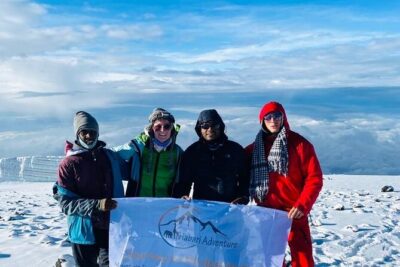
5 Days Best of Tanzania Luxury Safari Northern Circuit
Read our review →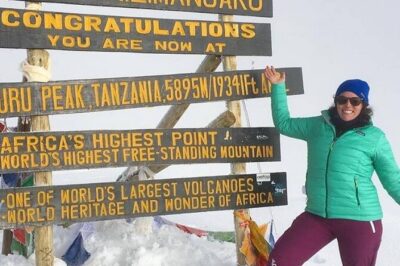
Climbing Kilimanjaro through 7 days Machame Route
Read our review →