Reviewed · KILIMANJARO CLIMBS
6-Day Guided Tour in Machame Route Mt Kilimanjaro
Rainforest day one and sunrise on the crater rim. That is the pull of the Machame Route with Climb Kili: a steady climb with acclimatization built in, not just a hard push. I also like the small max group size on this trek, because you get more real attention when altitude gets personal.
The crew matters here, and it shows in the details, from camp setup arriving before you do to guides like Goodluck keeping the pace human. The one drawback to think about is the final push, it is mentally and physically challenging, even though it is non-technical.
In This Review
- Key highlights (what I’d prioritize)
- Machame Route Kilimanjaro feels like climbing through seasons
- Arusha meeting point and a start that keeps things simple
- Day 1: Machame Gate rainforest walking, muddy ridges, and camp setup
- Day 2: Shira moorlands, heather, and reaching camp with a cushion
- Day 3: Lava Tower acclimatization and the Barranco-style payoff
- Day 4: Up the Barranco wall into the arctic path, then Karanga Camp
- Day 5 summit night: the midnight start to Stella Point, then Uhuru Peak
- Day 6: Mweka Gate, goodbye Kilimanjaro, and the hotel shower
- Guides and crew: the service details that make a difference
- Price and value: what $2,495 buys you on the mountain
- Who this Machame climb fits best, and where it might not
- Should you book this 6-day Machame Route with Climb Kili?
- FAQ
- How long is the Machame Route climb?
- What time does the tour start and where?
- Is hotel pickup offered?
- What is the group size?
- Are admission tickets included?
- What summit timing should I expect on the final night?
- Can I cancel for a full refund?
Key highlights (what I’d prioritize)
- Rainforest to moorland to arctic zone, so you feel Kilimanjaro change under your boots
- Small group of up to 6, which usually means better pacing and more hands on support
- Acclimatization on Lava Tower and the Arrow Glacier route, instead of skipping the altitude work
- Midnight summit start with sunrise at Stella Point, then the final hop to Uhuru Peak
- Camp setup before you arrive and hot meals, including vegetarian options mentioned by past climbers
Machame Route Kilimanjaro feels like climbing through seasons
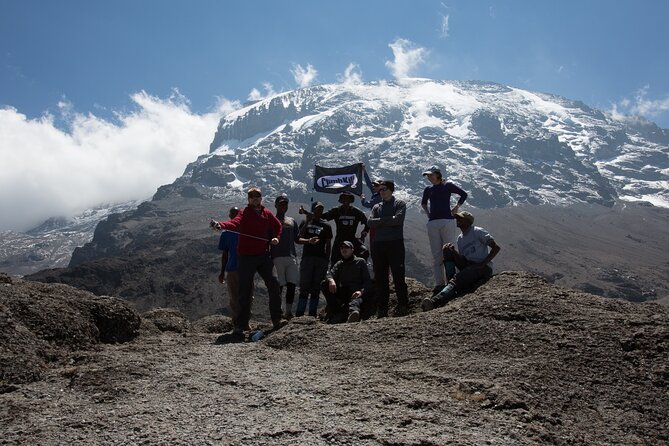
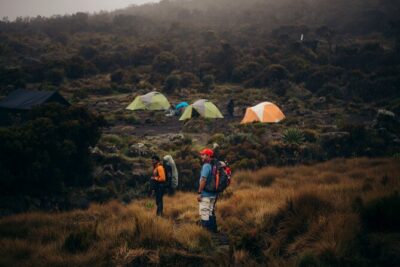
The Machame itinerary is interesting because your “terrain playlist” changes fast. You start in dense rain forest, then the air and footing shift into moorland with heather, and later you move into the colder, more barren zones where you feel that arctic-style weather. It is not just scenery, that shift helps your body adapt gradually to altitude.
For your mind, it also breaks up the monotony. You are not staring at the same type of trail day after day. On this route you’ll walk winding ridges, rocky sections, and later crater-rim scree when you are close to the top. That mix can be motivating, as long as you take it slow when the altitude starts to bite.
More Kilimanjaro climbs:
- 8-Day Small-group Lemosho Kilimanjaro Summit Trekking
★ 5.0 · 186 reviews - 5 Days Best of Tanzania Luxury Safari Northern Circuit
★ 5.0 · 174 reviews - 7-Day Machame Kilimanjaro Summit Tour from Arusha
★ 5.0 · 125 reviews
Arusha meeting point and a start that keeps things simple
This climb begins at Summit Lodge in Arusha, with the listed start time at 8:00 am. The tour notes that pickup is offered, and you’ll be using a vehicle transfer for the route timing.
Two practical things I like about how this is set up. First, a fixed start time means you are not guessing when to show up, and your day planning stays sane. Second, the maximum group size is 6 travelers, so you are less likely to get stuck behind a larger crowd when the trail narrows.
Also, you get a mobile ticket, which matters more than you think in a place where things can run on local time. You arrive with the essentials handled, then you focus on the climb itself.
Day 1: Machame Gate rainforest walking, muddy ridges, and camp setup
Day one starts at the Machame Gate after meeting your Climb Kili guide and mountain crew and transferring from your hotel. Then you do the rainforest intro walk on a winding trail up a ridge.
The trail detail that matters: lower down it can be muddy and slippery. The itinerary even points out that gaiters and trekking poles are a good idea here. That is not a random suggestion, those early conditions can decide how fresh your legs feel for the next days.
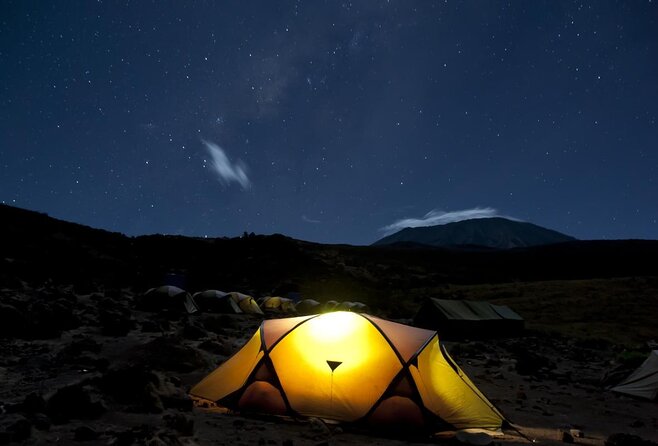
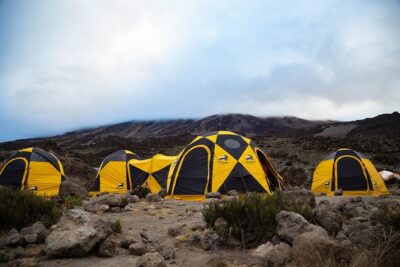
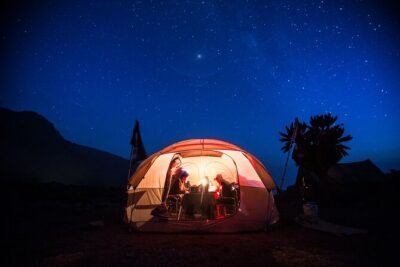
By the end of day one you reach Machame Camp, and this is where the logistics start to feel supportive. Your tent should be set up, and your personal belongings are ready before you settle. That rhythm, set camp then eat and rest, is the kind of thing that keeps you from spending energy on “camp chores” instead of altitude adjustment.
- Key walking target: around 9,400 ft (2,865 m) for the day’s high point range
- Time on trail: listed 5 to 7 hours
Day 2: Shira moorlands, heather, and reaching camp with a cushion
On day two you leave the rainforest glades and climb into a landscape that feels drier and more open. The route ascends with crossings and ridge walking, then enters the moorland zone with heather before turning west onto a dry river gorge.
That transition matters. Early Kili days can feel deceptively gentle, but once you hit moorland you often feel the cooler air more, and the trail can change how your pace feels. This is why day two is not just “more uphill,” it is a controlled push toward Shira Camp.
You reach Shira Camp with time for rest, dinner, and overnight. One thing you should watch is how you use that time. Altitude climbs work best when you take rest seriously, not just “when you have a minute.”
- Key walking target: around 12,500 ft (3,810 m)
- Time on trail: listed 4 to 6 hours
A few more Arusha trips to compare
- Balloon Safari & Bush Breakfast in Serengeti – Miracle Experience
★ 5.0 · 1,646 reviews - Tanzania Classic – 7 Days
★ 5.0 · 1,151 reviews - 4 Days Group Camping Safari
★ 5.0 · 1,101 reviews - 5 Days Group Camping Safari
★ 5.0 · 730 reviews
Day 3: Lava Tower acclimatization and the Barranco-style payoff
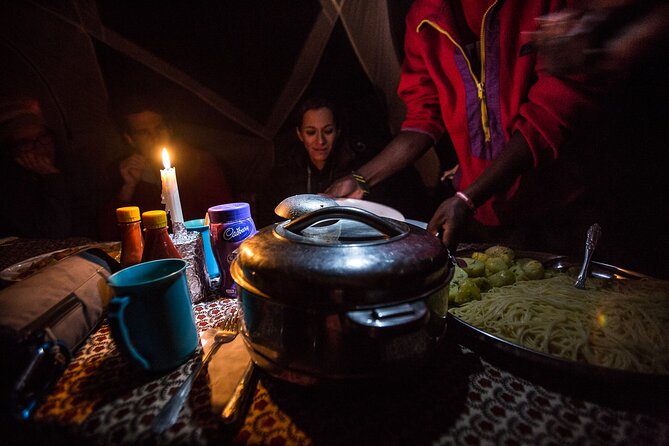
Day three includes an acclimatization trek to Lava Tower (listed up to about 15,000 ft / 4,500 m). This is not the summit push. It is altitude work that helps your body understand what comes next.
After the tower, you connect toward the Arrow Glacier junction. Then you rest near the tower area before descending through the Senecio forest. The itinerary also references a waterfall stop before reaching Barranco Camp.
The Barranco Camp part is one of those “feels like a movie scene” moments. The plan notes that the camp sits in the shadow of the Barranco wall, and breezes can carry clouds from the Barranco Valley. Whether the clouds are dramatic or just annoying, the point is this: you are getting a breather after acclimatization, and you are positioning for a more adventurous day ahead.
- Key walking target: listed around 13,000 ft (3,962 m) for the day’s range
- Time on trail: the plan shows 4 to 6 hours plus additional walking range text that effectively keeps the day in the long moderate effort zone
Day 4: Up the Barranco wall into the arctic path, then Karanga Camp
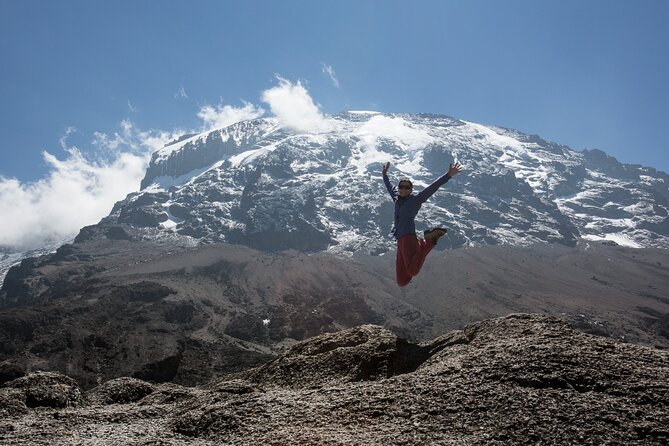
Day four takes you through Barranco Valley and up the Barranco wall, described as an adventurous stretch that brings you toward the arctic zone of Kilimanjaro. From there, the route heads along the South Circuit path through Karanga Valley.
This day is a pivot. You are moving from the “lush and scenic Kili” feeling into colder, harsher terrain. Even if the walking time sounds shorter on paper, you should expect the altitude and wind factor to raise the difficulty in a real way.
Then you camp at Karanga Camp. This is a good checkpoint day, but only if you treat it that way. Don’t use it as an excuse to overspend energy. Eat, rest, and plan for the summit night that starts on day five.
- Key walking target: around 13,100 ft (3,992 m)
- Time on trail: listed 4 to 5 hours
Day 5 summit night: the midnight start to Stella Point, then Uhuru Peak
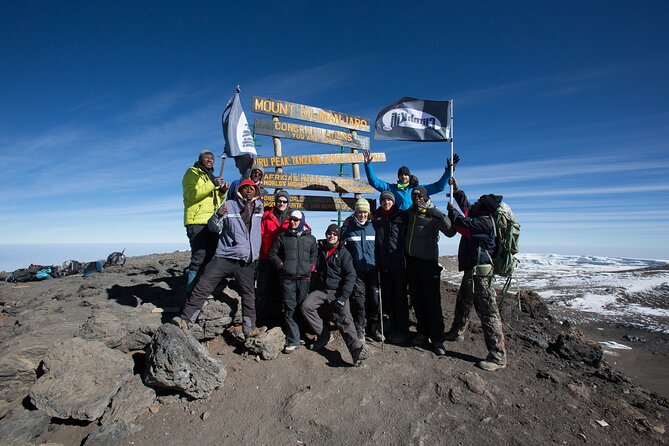
Day five is the moment most people remember, because it is the steepest mental grind on non-technical paths. The plan calls it one of the steepest sections you’ll face, and it is built around a midnight start to climb toward Stella Point for sunrise.
The itinerary’s timing is specific. It’s listed as a 6 to 7 hour hike to Stella Point. From Stella Point, you have about 1 hour to Uhuru Peak. After that, you descend down to Mweka Camp for dinner and celebration.
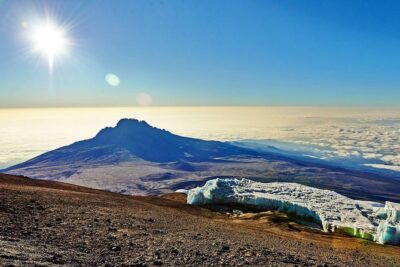
What you should really visualize is the crater-rim approach. The plan describes ascending through heavy scree toward Stella Point on the crater rim. Scree is slow and energy-draining, and in the cold it also eats your attention. Your job is to keep moving steadily, not fast.
This is also where having a supportive guide matters. Past climbers connected to Climb Kili highlighted lead guides like Goodluck and Herment, and they repeatedly mention that the crew stays supportive when someone struggles with altitude near the end. That kind of “keep going, you are not alone” support can be the difference between quitting and finishing.
- Summit targets listed: Stella Point then Uhuru Peak (the rooftop of Africa reference is used in the plan)
- Ascent and descent detail: listed as about 5 km ascent and 12 km descent on the day, plus walking blocks of 6 to 7 hours ascent and 4 to 6 hours descent
Day 6: Mweka Gate, goodbye Kilimanjaro, and the hotel shower
Day six is shorter and it feels like the transition back to normal life. The itinerary describes a morning walk to Mweka Gate, then your Climb Kili vehicle transfer back to your hotel. The plan also calls out that you’ll get a shower at the hotel, which is exactly the kind of payoff you dream about on summit night.
The walking segment is listed around 5,400 ft (1,645 m) with about 3 to 4 hours on trail, then you’re done with the climb part.
At this point, your legs may still feel tired, but your body usually moves better when the altitude is dropping fast. Think of day six as a victory lap with less pressure.
Guides and crew: the service details that make a difference
The strongest praise in the information you provided is about people, not just the route. Guides named in past feedback include Goodluck, Herment, Minja, Emanuel (Manny), and assistants such as Gabi and Omi. You also see other guide names tied to the climbing experience like Florian and Lede.
What those names add up to is a consistent theme: you get genuine support when you need it.
Here are service details you can expect to value on a Kili climb:
- Camp setup before you arrive each day, so you’re not turning every rest stop into a tent-building workshop
- Hot meals during the trek, with past climbers mentioning 3 hot meals a day
- Food that can fit different needs, including vegetarian meals noted by past climbers
- A crew vibe that includes celebration, with some reviews mentioning songs and dancing for birthdays
There is also one operational perk mentioned in the info: Climb Kili had a special permit that allows an hour head start compared with other crews camped lower. You should treat that as a “good to know” advantage, because even small timing differences on summit night can help reduce crowding and manage your pace.
Price and value: what $2,495 buys you on the mountain
At $2,495 per person, this is not a casual weekend. You are paying for guided leadership, the logistics of moving a team through protected areas, and the camp system that makes multi-day high-altitude trekking possible.
A few things support the value angle in the data you gave:
- Admission tickets are included each day in the itinerary blocks
- You get pickup offered and vehicle transfers for key movements
- The group size is capped at 6 travelers, which often reduces waiting time and improves attention
- Your climb is supported by a dedicated mountain crew that sets up tents and handles the day-to-day camp rhythm
Also, the overview states a 98% summit success rate. No one can guarantee weather or bodies, but that figure signals a company that focuses on acclimatization and team management, which is exactly what you want on a route like Machame.
Who this Machame climb fits best, and where it might not
This trek is presented as suitable for beginning trekkers and advanced climbers. That makes sense because Machame is challenging but it has structured altitude work and a route profile that builds you toward the summit day.
I think it’s especially well matched if:
- You want a guided plan with clear pacing and camp support
- You like the idea of a small group rather than a crowd
- You want the route’s acclimatization stops, not just a fast route to the top
Where you should think twice is if your fitness is not truly strong. The info specifically says you should have a strong physical fitness level. And even though the climb is non-technical, day five is still the steep, hard part, and the plan calls it one of the most mentally and physically challenging segments.
For solo travelers, past feedback tied to Climb Kili emphasizes feeling safe and supported, including mentions of guidance and team kindness on the way up.
Should you book this 6-day Machame Route with Climb Kili?
If your goal is a guided Machame climb that gives you a real shot at adapting to altitude, with a small crew size and camp support, this one makes a lot of sense. The strongest reasons to book are the route structure toward acclimatization, the focused team service, and the summit-night plan built around Stella Point and sunrise timing.
Before you commit, be honest about two things. First, day five is the big grind, so make sure you can handle long uphill effort in cold conditions and heavy scree. Second, since the trek requires strong fitness, train for endurance and uphill walking ahead of time, not just general gym workouts.
If you want Kilimanjaro with structure, supportive guides like Goodluck and Herment (and the rest of the crew), and a climb that respects altitude as much as ambition, then yes, I’d put this Machame option high on your list.
FAQ
How long is the Machame Route climb?
It runs about 6 days (listed as approximate in the tour summary).
What time does the tour start and where?
The experience starts at 8:00 am at Summit Lodge, Sakina Raskazone, Arusha, Tanzania.
Is hotel pickup offered?
Yes, pickup is offered, and you also use vehicle transfers at points during the trek.
What is the group size?
The tour has a maximum of 6 travelers.
Are admission tickets included?
Yes. The itinerary lists Admission Ticket Included on the trekking days.
What summit timing should I expect on the final night?
The plan calls for a midnight start to reach Stella Point for sunrise, then about 1 hour from Stella Point to Uhuru Peak.
Can I cancel for a full refund?
Yes. You can cancel up to 24 hours in advance for a full refund. If you cancel less than 24 hours before the start time, you will not receive a refund.
Just posted around Arusha
- 8 Days Serengeti Migration safari★ 5.0 · 11 reviews
- tarangire & ngorongoro 2 days tour★ 5.0 · 14 reviews
- serengeti, ngorongoro & tarangire 4 days private tour★ 5.0 · 18 reviews
- tarangire, ngorongoro & lake manyara park 3 days private tour★ 5.0 · 11 reviews
- serengeti & ngorongoro 3 days private tour★ 5.0 · 15 reviews
- climb the KILIMANJARO via Lemosho route★ 5.0 · 4 reviews
- Mt. Kilimanjaro: Shira plateau to Cathedral point 3872m Day hike★ 5.0 · 7 reviews
- Kilimanjaro Waterfalls Hike & Moshi Hot Springs Day Trip Tour★ 5.0 · 4 reviews
Kilimanjaro Climbs, compared.
8-Day Small-group Lemosho Kilimanjaro Summit Trekking
Read our review →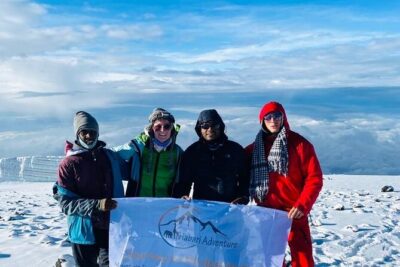
5 Days Best of Tanzania Luxury Safari Northern Circuit
Read our review →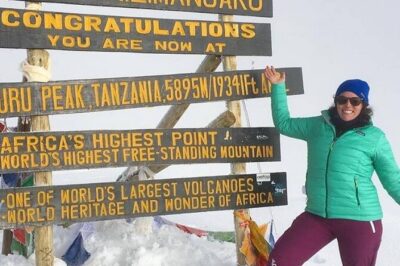
Climbing Kilimanjaro through 7 days Machame Route
Read our review →