Reviewed · KILIMANJARO CLIMBS
5 Days Classic Kilimanjaro Climb via Marangu route
Kilimanjaro wakes you up fast. This 5-day trek on the Marangu Route (often called the Coca-Cola Route) aims for steady altitude gains, hut sleeping, and classic views as you climb from rainforest into alpine zones. It is a very “organized” way to tackle Africa’s highest peak without turning the whole trip into chaos.
I like how the schedule is staged, with clear hut-to-hut goals and enough structure to manage your energy. You also get practical comfort that matters on a climb, like hot water for washing and treated drinking water throughout. And if you are lucky with your guide team, you may feel extra motivation from the Golden Trips Tanzania crew, including guides named Dickson and Bob, with small morale boosts such as a bubbly toast at the base after summiting.
One thing to think about is the difficulty curve, especially the midnight summit push and the long, demanding Day 4, even though the Marangu route is often considered gentler than some alternatives.
In This Review
- Key things to know before you go
- Marangu Route is the “classic” way up Kili
- Price and logistics: what your $2,178 really covers
- Day 1: Rainforest to Mandara Hut, plus Maundi Crater views
- Day 2: Timberline to Horombo Hut at 3,700m
- Day 3: The Last Water point to Kibo Hut
- Day 4: Midnight start, Hans Meyer Cave, Gillman’s Point, Uhuru Peak
- Day 5: Descent to Mandara Hut, then rainforest back to the gate
- The Golden Trips Tanzania team and why support matters
- Comfort that is included, and comfort you must bring yourself
- Who this Marangu 5-day climb is best for
- Should you book this 5 Days Classic Kilimanjaro Climb via Marangu?
- FAQ
- How long is the trek?
- What route is this climb?
- Where does the trip start?
- Does the price include park and rescue fees?
- Are meals included during the trek?
- Is drinking water provided?
- What is not included in the tour price?
- Is the tour private?
- When can I meet for the activity?
- Is there free cancellation?
Key things to know before you go
- Marangu Route huts: You sleep in hut stops like Mandara, Horombo, and Kibo instead of camping.
- A real structure: Each day has a clear finish point, with long travel days balanced by rest stops at altitude.
- Golden Trips Tanzania team support: Professional guides, cooks, and porters are part of the package.
- Included water and washing: Treated drinking water and hot water for washing help you feel human.
- Big summit day at night: You start the final ascent around midnight and reach the crater rim around sunrise.
- Park and rescue fees handled: All fees and taxes, plus team Kilimanjaro rescue fees, are included.
Marangu Route is the “classic” way up Kili
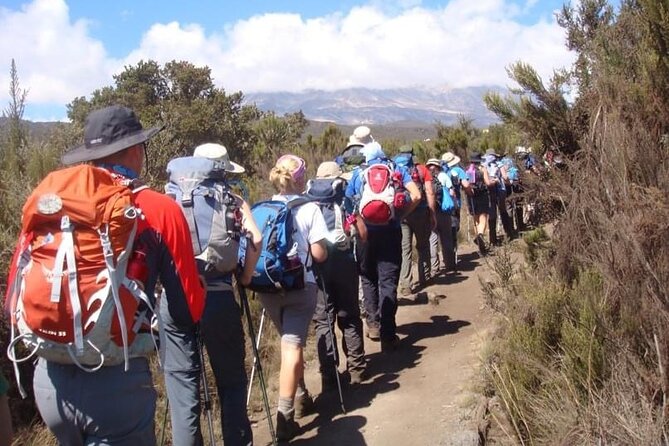
The Marangu Route is popular because it is straightforward to follow and designed around hut nights. That does not mean it is easy, but it does mean you are not constantly rebuilding a campsite or managing a mountain kitchen. You hike through rainforest first, then transition into heath and moor zones, and eventually reach the alpine and summit terrain where the air gets thin fast.
This route is also known for the kind of comfort that turns a scary idea into a trip you can actually plan. You have guided checkpoints at the Marangu gate and then hut-to-hut stages, with meals served during the day and at your hut. For a first-time attempt, that structure reduces the “what now?” moments that can wear people down.
More Kilimanjaro climbs:
- 8-Day Small-group Lemosho Kilimanjaro Summit Trekking
★ 5.0 · 186 reviews - 5 Days Best of Tanzania Luxury Safari Northern Circuit
★ 5.0 · 174 reviews - 7-Day Machame Kilimanjaro Summit Tour from Arusha
★ 5.0 · 125 reviews
Price and logistics: what your $2,178 really covers
At $2,178 per person (for about 5 days), the key value is what is folded into the total price. You are not only paying for the hiking. You are paying for the systems that keep a climb running.
What is included that you should care about:
- All fees and taxes, including government taxes and team Kilimanjaro rescue fees
- Professional guides, cook, and porters, plus an emergency first-aid kit
- Treated and filtered drinking water throughout the trek
- Hot water for washing
- Meals during the trek: 4 breakfasts, 4 dinners, and 5 lunches
- Transportation tied to the climb, including transfer to the Kilimanjaro gate and back to Arusha afterward
- A hotel night in Arusha on the last day
What is not included:
- Travel insurance
- Flights
- Hotel meals and drinks before and after the climb
- Tips for guides, porters, and cook
- Laundry and personal items/toiletries
So the real question is not just whether the price is high or low. It is whether you want to buy peace of mind in advance. When the basics like rescue fees, guides, meals, and transfers are handled, you can focus on the actual hike and your altitude management.
Day 1: Rainforest to Mandara Hut, plus Maundi Crater views
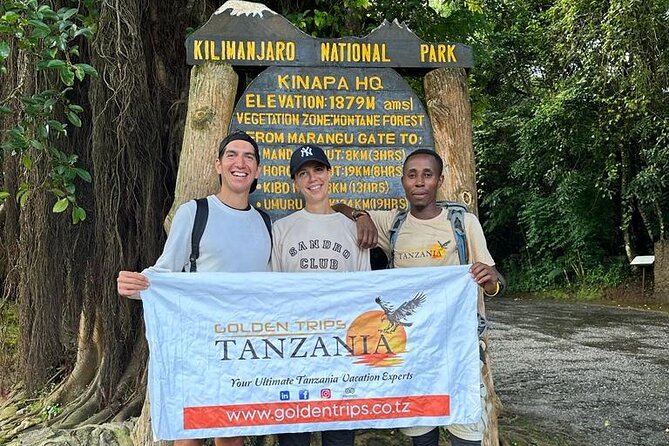
On Day 1, you are picked up in Arusha and driven to the Marangu gate. After paperwork is completed, the climb begins right away through dense rainforest. This is the part of Kili that surprises people. The air feels cooler, the trail feels busy with plants and shade, and you may spot primates as you move along.
You walk to Mandara Hut, where you rest and reset for the next day. Then you head toward the Maundi Crater area to enjoy a view toward the Kenyan interior. It is a good “orientation day.” You are not yet pushing summit speed, but you are already feeling like the mountain is real.
Practical note: Day 1 runs about 12 hours in total. That is a long day before altitude sleeping starts in earnest, so treat it like your warmup for effort and routine.
Day 2: Timberline to Horombo Hut at 3,700m
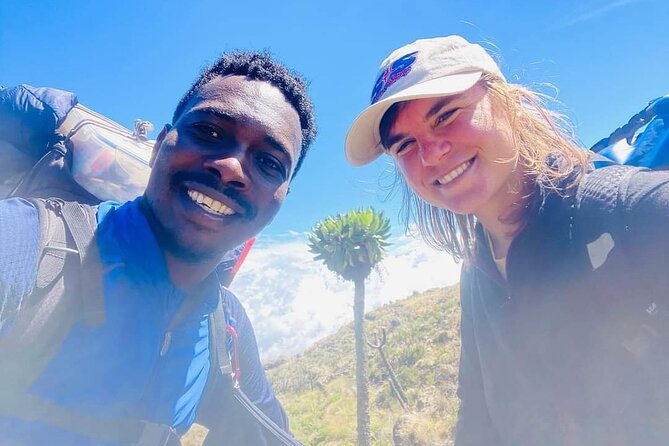
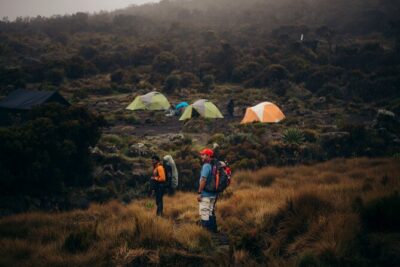
Day 2 starts with early breakfast, then you leave Mandara Hut and climb toward the timberline. The environment shifts as you continue upward, moving into the heath and moor zone. This is when the trail can feel more exposed, and the air starts to change.
After about 4 to 6 hours of hiking, Horombo Hut comes into view at 3,700m. From the hut, you get wide sightlines, including views toward Mawenzi and Kibo and the broad plain of the Masai steppe.
The stage distance is listed as about 12.5km, with a hiking time around 9 hours. That is a good length for establishing a steady pace. If you tend to go out too fast on day two, you will feel it later on the longer summit sequence, so use this day to build discipline.
A few more Arusha trips to compare
- Balloon Safari & Bush Breakfast in Serengeti – Miracle Experience
★ 5.0 · 1,646 reviews - Tanzania Classic – 7 Days
★ 5.0 · 1,151 reviews - 4 Days Group Camping Safari
★ 5.0 · 1,101 reviews - 5 Days Group Camping Safari
★ 5.0 · 730 reviews
Day 3: The Last Water point to Kibo Hut
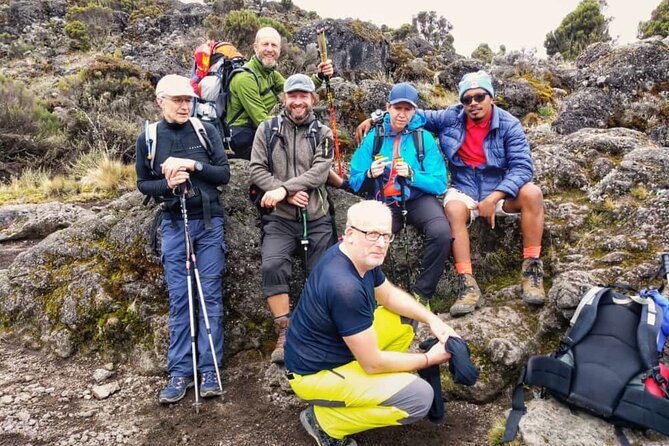
Today is the long, tougher stage. The trail continues up with a well-built route that takes you past the Last Water point. After that, the terrain changes again around the saddle, a near-vegetation-less plateau that connects the main summit area of Kibo with Mawenzi.
Your destination is Kibo Hut. You are usually looking at 5 to 6 hours to reach it, but the trek day totals about 7 hours in the schedule you have. Either way, you are not just covering distance. You are gaining altitude and spending time on a route that is less forgiving if you start the day tired.
A smart rhythm on Day 3 is what helps Day 4. Since your night at Kibo is paired with an early meal and an early start, you want rest to actually happen, not just “try to sleep while worrying.”
Day 4: Midnight start, Hans Meyer Cave, Gillman’s Point, Uhuru Peak
This is the day you plan for months, and it arrives without asking permission.
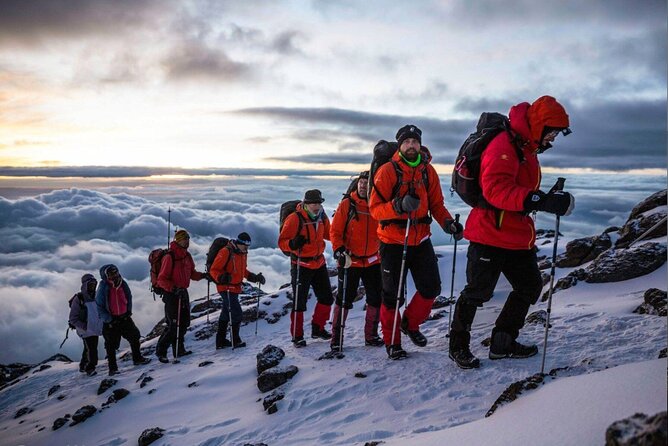
You begin your final ascent around midnight, when the cold can feel intense. Along the way you pass Hans Meyer Cave at 5220m. The climb then slowly pushes upward through the dark, step by step.
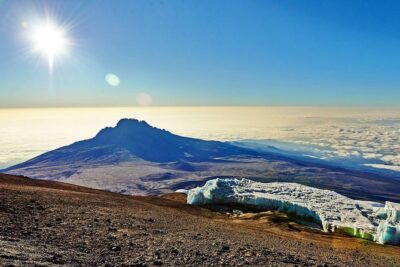
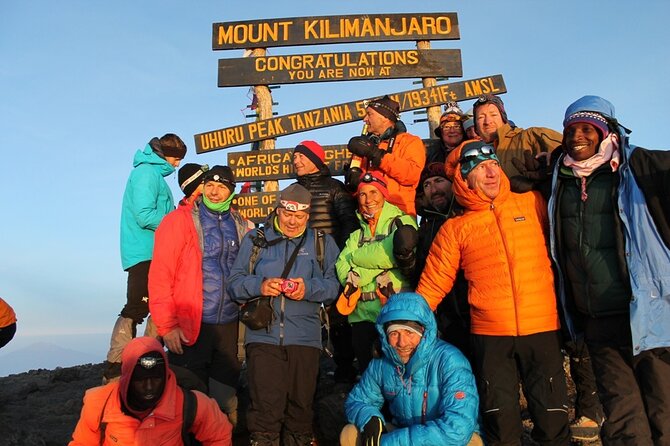
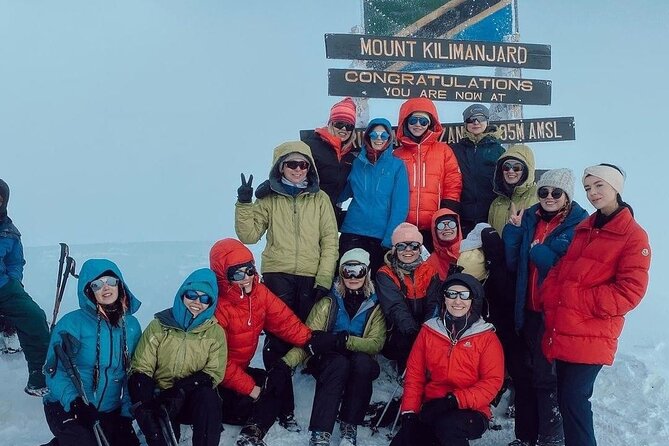
Around sunrise, you reach Gillman’s Point at 5,681m, which lines up with the crater rim. After that, the sun starts to warm the scene, and the climb to Uhuru Peak at 5,895m becomes more manageable mentally. You then head back down to Kibo Hut, where a warm meal awaits you, followed by a break before continuing down toward Horombo Hut.
This day is listed as about 15 hours total, with about 22km of distance. That is a big day even for people who are fit. The value of the guided hut approach here is that you are not trying to make decisions in the dark alone. Your team is already running the timing.
One more thing to consider: Day 4 is where altitude fatigue can bite. You can help your body by keeping your effort steady and not treating every switchback like a sprint.
Day 5: Descent to Mandara Hut, then rainforest back to the gate
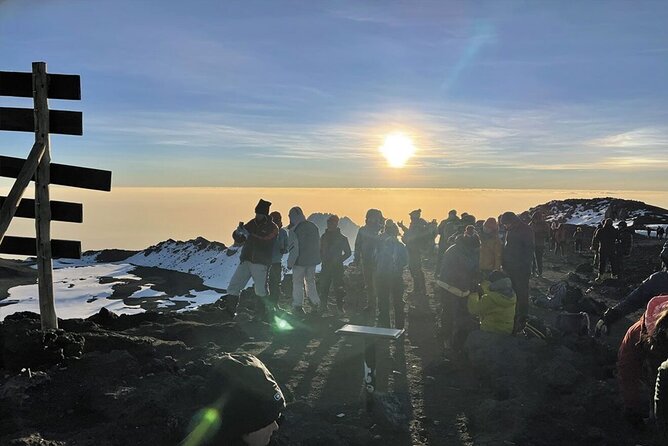
Day 5 is your “finish and breathe” day. You pass back through the heath and moor zone toward Mandara Hut, where a warm lunch is waiting at 2,700m.
From there, you continue down through the tropical rainforest and return to the Kilimanjaro National Park gate at 1,860m. The trek time is about 6 hours after the hut lunch segment, and the full day is listed as around 10 hours.
Once you are done, you say goodbye to your mountain guides and then transfer back to your hotel in Arusha. There is nothing fancy about this moment, but it matters: a warm shower and a quiet meal help your body recover while the adrenaline settles.
The Golden Trips Tanzania team and why support matters
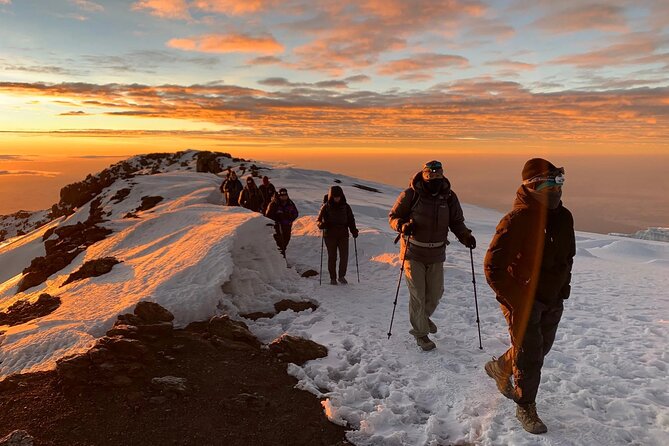
The reviews you have point to a consistent theme: the crew makes the trip feel safer and more human. Golden Trips Tanzania runs with friendly, professional guides, cooks, and porters, and that becomes important once you are at altitude and your body wants to argue with you.
Two guide names show up clearly in the feedback: Dickson and Bob. That is a good sign, because you are not just buying a route. You are buying the people who keep you on schedule, feed you on time, and help you stay calm when the mountain feels long.
There is also a morale touch that stands out: a bubbly celebration at the base after reaching the summit. It is not a life-changing feature, but it is the kind of small moment that turns “a hike” into “a memory.”
Comfort that is included, and comfort you must bring yourself
This trek includes several practical comfort points that make a real difference over multiple hut nights:
- Treated and filtered drinking water
- Hot water for washing
- All meals on the mountain (breakfast, lunch, dinner across the days)
- Enough drinking water provided throughout the trek
It also includes the big operational items:
- Emergency first-aid kit
- Team Kilimanjaro rescue fees
- All fees and taxes so you are not chasing receipts
What you still need to handle:
- Personal items and toiletries since they are not included
- Travel insurance, which is not optional if something goes wrong and you need coverage
- Tips for guides, porters, and cook, which you should plan for financially
Who this Marangu 5-day climb is best for
This version of Kilimanjaro is a strong fit if you want:
- Hut-based trekking rather than camping
- A classic route with clear daily endpoints
- A plan that includes meals, water, and hot washing, not just a guide and a map
- A summit day that is structured by the team, starting around midnight and reaching Uhuru Peak at 5,895m
It may not be your best match if you dislike long days, especially Day 4, which is the hardest and longest part of the itinerary. The schedule is demanding, but the Marangu route format helps you stay organized through it.
Should you book this 5 Days Classic Kilimanjaro Climb via Marangu?
If you want a classic Kilimanjaro climb with hut nights, included mountain meals, treated water, and a crew that handles logistics end-to-end, this is the kind of trip that lets you focus on the climb. The $2,178 price feels more reasonable when you count what is included: guides, cook and porters, rescue fees, park fees and taxes, water and washing, transport to the gate, and an Arusha night on the last day.
I would book if you are comfortable with a tough summit day starting around midnight and you can commit to using the trip structure to pace yourself. I would hesitate if you know you struggle with long effort at high altitude, because Day 4 is a serious test.
FAQ
How long is the trek?
The trek is listed as approximately 5 days.
What route is this climb?
It is the Kilimanjaro climb via the Marangu route.
Where does the trip start?
You are collected from your lodge in Arusha and taken to the Marangu gate.
Does the price include park and rescue fees?
Yes. The tour includes all fees and taxes and also covers team Kilimanjaro rescue fees.
Are meals included during the trek?
Yes. The tour includes 4 breakfasts, 5 lunches, and 4 dinners.
Is drinking water provided?
Yes. The tour includes enough treated and filtered drinking water throughout the trek.
What is not included in the tour price?
Not included are travel insurance, flights, lunches and dinners at your hotel before and after the climb, tips for guides and porters, laundry, and personal items and toiletries.
Is the tour private?
Yes. It is described as a private tour or activity, where only your group participates.
When can I meet for the activity?
Meeting point opening hours are listed as 8:00 AM to 6:00 PM, Monday through Sunday, during the date range 12/13/2024 to 06/18/2026.
Is there free cancellation?
Yes. You can cancel for a full refund up to 24 hours in advance of the experience start time.
Just posted around Arusha
- 8 Days Serengeti Migration safari★ 5.0 · 11 reviews
- tarangire & ngorongoro 2 days tour★ 5.0 · 14 reviews
- serengeti, ngorongoro & tarangire 4 days private tour★ 5.0 · 18 reviews
- tarangire, ngorongoro & lake manyara park 3 days private tour★ 5.0 · 11 reviews
- serengeti & ngorongoro 3 days private tour★ 5.0 · 15 reviews
- climb the KILIMANJARO via Lemosho route★ 5.0 · 4 reviews
- Mt. Kilimanjaro: Shira plateau to Cathedral point 3872m Day hike★ 5.0 · 7 reviews
- Kilimanjaro Waterfalls Hike & Moshi Hot Springs Day Trip Tour★ 5.0 · 4 reviews
Kilimanjaro Climbs, compared.
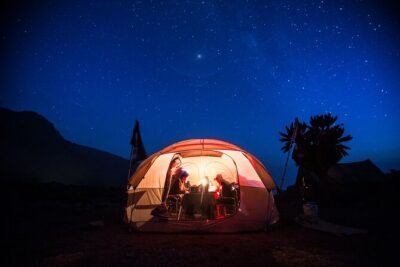
8-Day Small-group Lemosho Kilimanjaro Summit Trekking
Read our review →
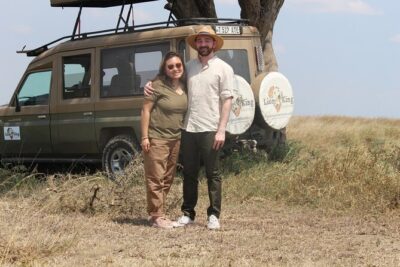
5 Days Best of Tanzania Luxury Safari Northern Circuit
Read our review →
Climbing Kilimanjaro through 7 days Machame Route
Read our review →