Reviewed · KILIMANJARO CLIMBS
5 Days cheapest Kilimanjaro Marangu Route
Five days on Kilimanjaro can feel both practical and intense. This Marangu Route is the oldest trail on the mountain, and it trades tents for sleeping huts with bunk beds, mattresses, and communal dining.
I like that the itinerary is structured with clear daily walking goals, from rainforest steps into the moorlands to a pre-dawn summit climb. I also like that your plan builds in key moments for altitude management, including the option to spend an extra acclimatization night at Horombo.
The main thing to consider is timing. Even though Marangu is known for a gradual, straightforward profile, a 5-day window can still make acclimatization feel tight, and the route is also the most crowded on Kilimanjaro.
In This Review
- Key highlights before you go
- Marangu Route, the hut-friendly path up Kilimanjaro
- Why Marangu can feel easier, yet still be tough in 5 days
- Day 1: From Marangu Village to Mandara Hut in the rainforest
- Day 2: Open moorlands to Horombo Hut with big summit views
- Day 3: To the saddle between Kibo and Mawenzi, then Kibo Hut
- Day 4: Summit day from Gilman’s Point to Uhuru Peak, then back to huts
- Day 5: The long, steady descent to Mandara and Marangu Gate
- Moorland Safari and Trekking: how the service shows up on the mountain
- Price and logistics: what $1,869.24 is really buying
- Who this 5-day Marangu plan fits best
- Should you book this Marangu climb with Moorland Safaris?
- FAQ
- How long is the Kilimanjaro Marangu route on this tour?
- Where does the experience start and what time does it begin?
- What type of lodging do you sleep in on the Marangu route?
- What are the hut facilities like?
- Is park admission included?
- Is the tour private?
- What is the cancellation policy?
Key highlights before you go
- Hut sleeping instead of camping: dorm-style bunks at Mandara, Kibo, and Horombo, with mattresses and pillows provided (sleeping bag still required).
- Park admission included each day: the days are listed with admission tickets as part of the experience.
- Scenic but not the most scenic: you get big summit views on clear days, but ascent and descent follow the same path.
- Summit night starts in the dark: prep happens around 23:30, then the push toward Gilman’s Point and Uhuru Peak begins very early.
- Moorland Safari and Trekking support: the reviews highlight strong organization, plus host and owner Nasir helping plan the Marangu approach.
- Private tour setup: only your group participates, with pickup offered and a mobile ticket.
Marangu Route, the hut-friendly path up Kilimanjaro
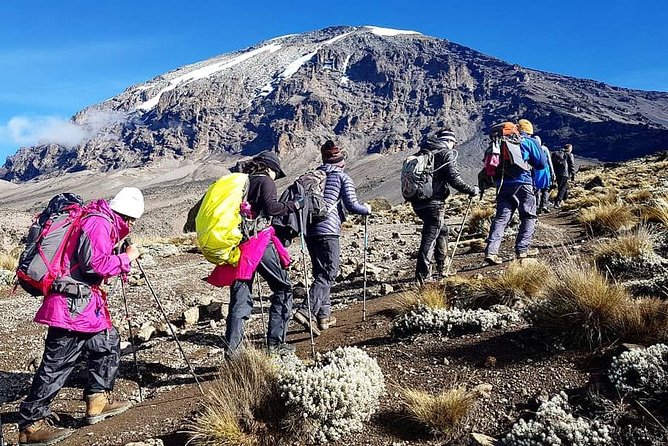
The Marangu Route, often nicknamed the Coca-Cola route, is the classic way to climb Kilimanjaro if you want a well-established routine and hut lodging. It is the oldest trail and the one with dormitory-style sleeping huts rather than camping.
That matters because the logistics of Kilimanjaro are half the battle. Instead of setting up camp every night, you sleep in huts with communal dining halls and basic washrooms. On the lower huts you get flushing toilets and running water, while higher up the facilities switch to long drop toilets and buckets of water.
One tradeoff: Marangu is less scenic than routes where you loop or take different paths up and down. Since the ascent and descent run along the same route, you will see a lot of the same terrain again on the way down.
More Kilimanjaro climbs:
- 8-Day Small-group Lemosho Kilimanjaro Summit Trekking
★ 5.0 · 186 reviews - 5 Days Best of Tanzania Luxury Safari Northern Circuit
★ 5.0 · 174 reviews - 7-Day Machame Kilimanjaro Summit Tour from Arusha
★ 5.0 · 125 reviews
Why Marangu can feel easier, yet still be tough in 5 days
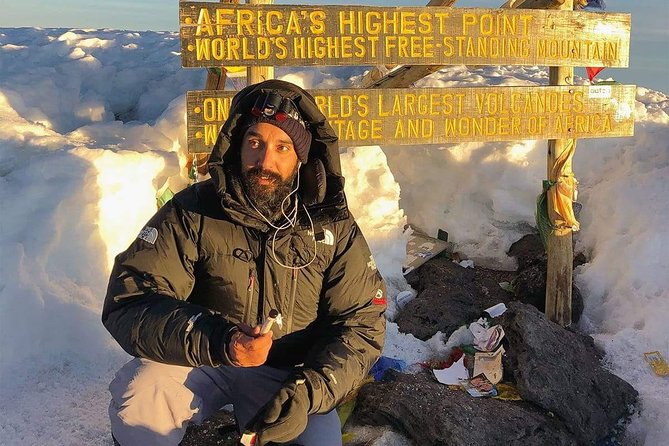
Marangu is often described as the easiest route profile on Kilimanjaro because of its gradual slope and direct approach. In practical terms, that means your daily walk is steady rather than constantly steep.
But the mountain does not care how gentle the trail is. The route is also known for being crowded, and the itinerary time window is short, which makes altitude acclimatization fairly difficult for many people. Your plan does give you an important lever: at Horombo Hut, climbers often use an extra day for acclimatization, and an extra day is available on request.
If you are the type who likes schedules that make sense, you will probably appreciate the rhythm of this plan. Each day has specific distances and time ranges, and you know where you are sleeping each night. The downside is simple: if you are altitude sensitive, you may want to seriously consider that acclimatization day rather than squeezing everything into five.
Day 1: From Marangu Village to Mandara Hut in the rainforest
You start after breakfast with a briefing, then drive toward the Kilimanjaro National Park Gate, where you register at the Kilimanjaro National Park Authority offices before the climb. This is the day you transition from “travel mode” into “mountain mode.”
The hiking starts through rainforest. The route to Mandara Hut covers about 8 km and takes roughly 3 to 4 hours, with an altitude gain of around 840 m. You reach 9,000 ft / 2,740 m, which is a solid first “step up” without going too high too fast.
There is also a side trip to Maundi Crater, and that is a smart way to get a little extra atmosphere from the northern Tanzania context. If you like little detours that break up a long day, this is the kind of add-on that helps the hike feel like more than just forward motion to the next hut.
Then you settle into Mandara Hut, with the comfort level of a hut rather than a tent. You’ll be sleeping in dorm-style quarters, and your package supplies mattresses and pillows, but a sleeping bag is still required.
Day 2: Open moorlands to Horombo Hut with big summit views
Day 2 moves you toward Horombo Hut, roughly 12 km on foot and about 5 to 7 hours, with an altitude gain listed at 1,000 m. This is where the trail changes character.
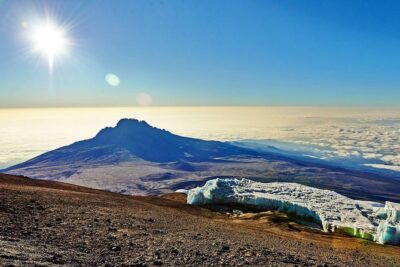
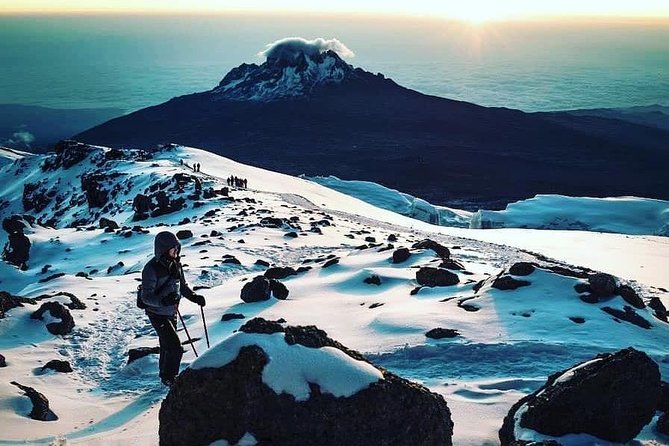
After about an hour you leave the rainforest and step into open moorlands. This shift is often where people feel the mountain get more exposed. On clear days, the views of Kibo summit and Mawenzi can be stunning and shine brightly.
You also pass through areas with giant lobelias and groundsels. That vegetation detail matters because it signals the ecosystem change you are experiencing, not just a change in scenery.
You reach Horombo Hut, which is well known as a point where many climbers use time for acclimatization. Even if your package is fixed, the option to add an extra night is part of the route logic. If you decide to request it, that is one of the clearest ways to improve your odds without changing the whole itinerary style.
A few more Arusha trips to compare
- Balloon Safari & Bush Breakfast in Serengeti – Miracle Experience
★ 5.0 · 1,646 reviews - Tanzania Classic – 7 Days
★ 5.0 · 1,151 reviews - 4 Days Group Camping Safari
★ 5.0 · 1,101 reviews - 5 Days Group Camping Safari
★ 5.0 · 730 reviews
Day 3: To the saddle between Kibo and Mawenzi, then Kibo Hut
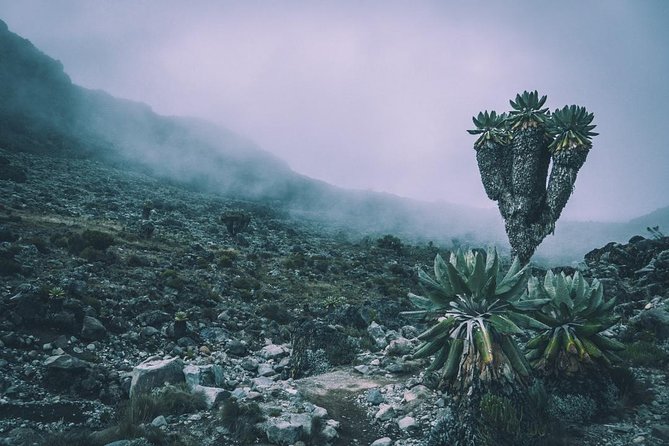
Day 3 is about moving higher and getting ready for the summit push. The walk is about 9.5 km and typically 5 to 7 hours, with an altitude gain listed as 1,000 m.
You head to the last water point and continue walking into the saddle of Kilimanjaro between Kibo and Mawenzi. Vegetation starts disappearing as you leave the upper zones and it becomes more desert-like. That shift can feel dramatic, even on a trail that is generally described as manageable.
Once you reach Kibo, you have dinner, then a nap. The key detail here is the timing: around 23:30, you prepare yourself for the summit climb. This is not a “sleep whenever you want” night. It is a planned reset so you can wake up and go when the mountain expects you to go.
Day 4: Summit day from Gilman’s Point to Uhuru Peak, then back to huts
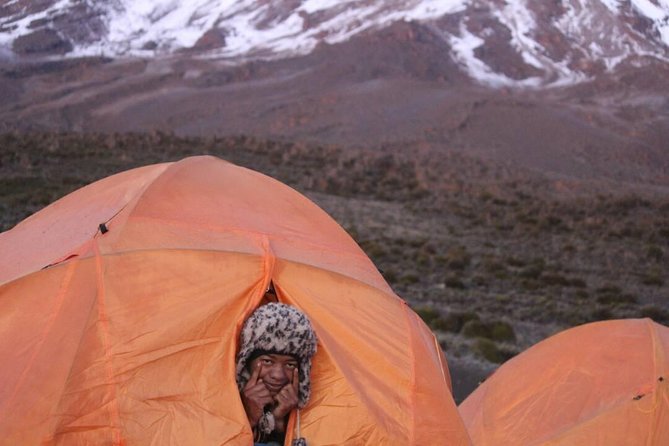
If you picture Kilimanjaro as the classic early morning grind, this is the day that matches the mental image.
You are awakened very early by your guide for a cup of coffee, tea, or hot chocolate, and the itinerary even notes a few snakes in the mix. It is a funny detail, but the real purpose is practical: you start fueling before you start climbing.
Then you go for the summit.
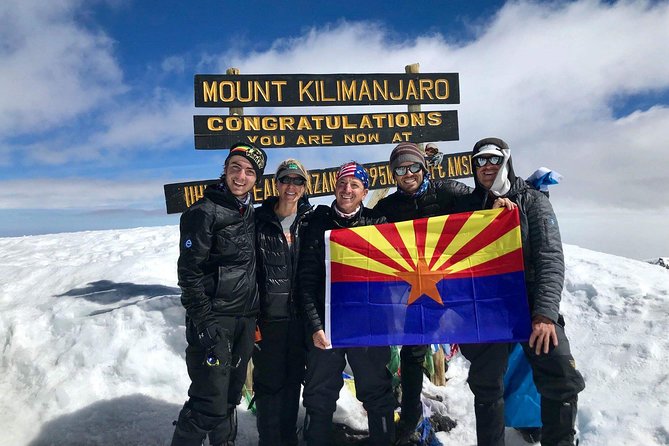
The trail takes you to Gilman’s Point on the crater rim at 18,640 ft / 5,861 m, usually 4 to 7 hours. From there you continue up to Uhuru Peak, the highest point in Africa at 19,340 ft / 5,895 m. The final push from Gilman’s Point to Uhuru Peak is listed as about 1 to 2 hours.
This is where your gear matters. The itinerary specifically calls out flashlight, camera, sunglasses, and warm clothes, because it gets very cold. If you tend to underestimate cold-weather climbs, plan to take this seriously. The summit is not just high, it is exposed.
After taking pictures at the summit, you descend back down to Kibo Hut for breakfast and rest. Then you continue descending to Horombo Hut for dinner and your overnight stay.
Day 5: The long, steady descent to Mandara and Marangu Gate
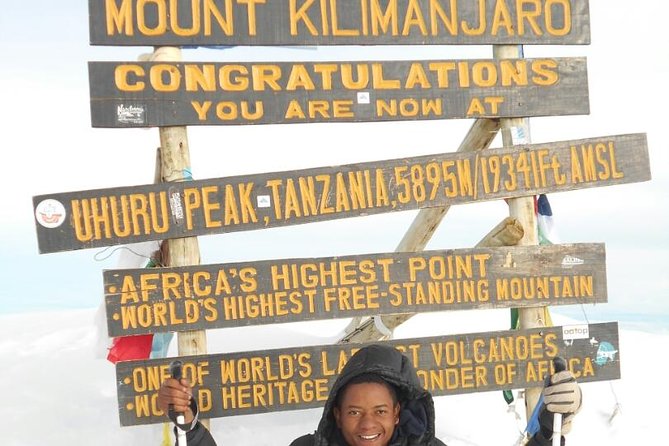
The final day is about getting your feet back to solid ground without rushing. You walk about 20 km over about 5 hours, and the altitude gain listed is 1,840 m but the day is described as a steady descent.
You start by descending through moorland to Mandara Hut at about 2,700 m. From there, you continue descending through lush forest on a good path to the National Park gate at Marangu, around 1,830 m / 6,004 ft.
At the end, a vehicle meets you in Marangu village to drive you back to your hotel in Arusha. That matters because after a summit day plus descent, “having someone meet you” is more than convenience. It is a real energy saver.
Moorland Safari and Trekking: how the service shows up on the mountain
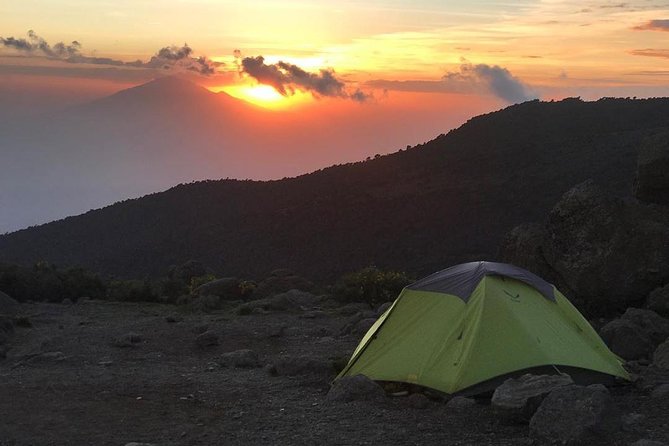
The company behind this climb is Moorland Safari and Trekking. The experience includes pickup, and it is listed as a private tour, so only your group participates. That setup tends to make a big difference on Kilimanjaro, where timing and coordination matter.
The strongest praise in the feedback centers on comfort, organization, and planning support. One standout detail from the reviews is that the host and owner Nasir helped plan for the Marangu route and keep things running smoothly during the full five days.
That lines up with how this itinerary is built. You are moving from park gate to huts to hut to summit and back, with specific timings and clear day-to-day goals. When the planning is tight, you spend less time worrying and more time focusing on pacing and getting through each day.
Price and logistics: what $1,869.24 is really buying
At $1,869.24 per person, this Marangu package positions itself as a value-focused way into a major Kilimanjaro climb. The most important question is not just the number. It is what gets handled for you.
From the itinerary details, you get admission tickets included with each listed day. You also get hut sleeping arrangements with mattresses and pillows provided, and communal hut meals are part of the overnight routine described (dinner at key points like Kibo, breakfast at Kibo after the summit, and dinner/overnight at Horombo).
You also get a more organized back end: pickup is offered, there is a mobile ticket, and on the last day a vehicle meets you at Marangu gate to return you to Arusha.
What is not spelled out in your details is the full list of every gear item you will receive. The itinerary does make one thing clear though: you still need a sleeping bag, plus summit gear like flashlight, sunglasses, and warm clothes.
So, is it a good value? If you want the hut-based style of Marangu and you want the planning to be handled end to end, the package looks reasonably priced for a five-day Kilimanjaro attempt with park admission included.
Who this 5-day Marangu plan fits best
This is a strong fit if you want the oldest, most established Kilimanjaro route and you prefer hut lodging over camping. The dorm-style huts can feel like the most “human scale” option on the mountain: beds, mattresses, communal dining halls, and basic washrooms.
It also suits hikers with moderate physical fitness, since the route is described as having medium difficult terrain and a gradual profile. If you like structure, you will probably appreciate the clear start time of 6:30 am and the day-by-day walking ranges.
This tour may be less ideal if you are chasing the most dramatic variety of scenery, since Marangu is less scenic and the same path is used up and back. It may also be a tougher match if you know you struggle with acclimatization, since a five-day approach can be challenging. In that case, the option to add extra acclimatization time at Horombo Hut is worth pressing for.
Should you book this Marangu climb with Moorland Safaris?
I would book this style of Kilimanjaro climb if you care about hut sleeping, want a well-worn route, and value an organized team that focuses on making the plan work day by day. The combination of hut logistics, included park admissions, and the praised support from Nasir is exactly what you want on a mountain that punishes sloppy planning.
I would think twice if you want the most scenic route on Kilimanjaro or if you know you need more time to adjust to altitude. In that case, you might still choose Marangu, but you should strongly consider adding the extra acclimatization day where possible.
If you like steady pacing, clear schedules, and a summit that starts in the dark with a cup of hot drink before the climb, this is a practical way to aim for Uhuru Peak.
FAQ
How long is the Kilimanjaro Marangu route on this tour?
The tour is listed as 5 days (approx.).
Where does the experience start and what time does it begin?
It takes place in Arusha, Tanzania, with a listed start time of 6:30 am.
What type of lodging do you sleep in on the Marangu route?
You sleep in huts in dormitory-style accommodations with bunk beds. The itinerary notes mattresses and pillows are supplied, and you still need a sleeping bag.
What are the hut facilities like?
Huts have communal dining halls and basic washrooms. Lower huts have flushing toilets and running water, while higher huts have long drop toilets and buckets of water.
Is park admission included?
Yes. Each day listed includes an admission ticket included note.
Is the tour private?
Yes, it is a private tour/activity, with only your group participating.
What is the cancellation policy?
You can cancel for a full refund with free cancellation up to 24 hours in advance of the experience start time. If you cancel less than 24 hours before, you are not refunded.
Just posted around Arusha
- 8 Days Serengeti Migration safari★ 5.0 · 11 reviews
- tarangire & ngorongoro 2 days tour★ 5.0 · 14 reviews
- serengeti, ngorongoro & tarangire 4 days private tour★ 5.0 · 18 reviews
- tarangire, ngorongoro & lake manyara park 3 days private tour★ 5.0 · 11 reviews
- Mt. Kilimanjaro: Shira plateau to Cathedral point 3872m Day hike★ 5.0 · 7 reviews
- serengeti & ngorongoro 3 days private tour★ 5.0 · 15 reviews
- climb the KILIMANJARO via Lemosho route★ 5.0 · 4 reviews
- Kilimanjaro Waterfalls Hike & Moshi Hot Springs Day Trip Tour★ 5.0 · 4 reviews
Kilimanjaro Climbs, compared.
8-Day Small-group Lemosho Kilimanjaro Summit Trekking
Read our review →
5 Days Best of Tanzania Luxury Safari Northern Circuit
Read our review →
Climbing Kilimanjaro through 7 days Machame Route
Read our review →