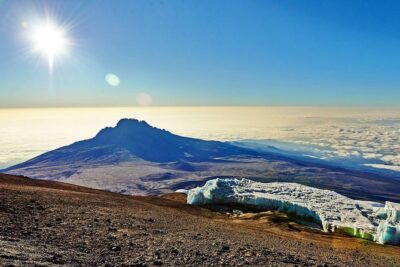
Reviewed · KILIMANJARO CLIMBS
Private 7 Days Kilimanjaro Climbing via Lemosho Route
A 7-day Kilimanjaro climb via the Lemosho route is built for gradual acclimatization, long enough to help your body adjust before the big push. I like how this itinerary strings together multiple habitats, from montane forest to heather moorland, then semi-desert and alpine desert. I also like the practical support setup, with cooker and porters plus a multilingual guide team. The main consideration is that summit day still starts in the dark and gets mentally and physically tough, even with careful pacing.
Because this trip is private, you are not stuck in a huge herd. The group size is capped at 5 travelers, so the guide can manage your speed and comfort, especially on the steep, rocky sections. Expect a real expedition rhythm, with early mornings, steady walking days, and a long descent at the end when your legs are already tired.
If you have moderate physical fitness, you can handle the walking volume, but you should take altitude seriously. The route works hard to support acclimatization, yet you can still feel the effects at higher camps, including on Day 6.
In This Review
- Key points you will feel (not just read)
- Moshi meet-up and the small-group setup that makes Lemosho easier
- Day 1: Forest track to Mti Mkubwa, your first altitude win
- Day 2: Shira Ridge and heather moorland, long hours with steady focus
- Day 3: Lava Tower, the Shark’s Tooth, then down to Barranco
- Day 4: Barranco Wall to Karanga Valley, short but steep
- Day 5: Barafu Camp, the South Circuit reset before the midnight grind
- Day 6: Midnight to Stella Point sunrise, then Uhuru Peak
- Day 7: Mweka Gate descent, wet feet and summit certificates
- Price and value: is $2,800 fair for a private 7-day Lemosho climb?
- What this tour is best at, and what to watch for
- Who should book this 7-day Lemosho climb?
- Should you book this private Lemosho 7-day climb?
- FAQ
- How long is the Kilimanjaro climb on the Lemosho route?
- Where do you start and end this tour?
- What time does summit day start?
- Are meals included?
- What is included in the price?
- What languages will the guide speak?
- Do I need to budget for tipping?
- Do you receive summit certificates?
Key points you will feel (not just read)
- Lemosho entry through montane forest, then up into giant heather moorland for a more gradual rhythm
- Lava Tower to Barranco Camp day, famous for the Shark’s Tooth views and a smart acclimatization profile
- Summit night starts between midnight and 2 am, with a Stella Point sunrise stop before Uhuru Peak
- Small-group private format (max 5), which matters on a route with steep, slow sections
- Porter and cook support, plus meals each day (breakfast, lunch, dinner through Day 6)
Moshi meet-up and the small-group setup that makes Lemosho easier
This climb is organized from Moshi, Tanzania, and you start at M84R+V94, Shantytown 7582. The tour is designed around a private group experience, and the maximum is 5 travelers, which keeps the pace more manageable than bigger group climbs.
You are not just handed a route map. You get a live guide who can work in English, Spanish, French, German, Italian, and Simplified Chinese, so you should be able to ask questions and understand safety guidance clearly. You also get cooker and porters, which is a huge deal on Kilimanjaro. When porters handle cooking and gear, you focus on breathing, pacing, and staying warm.
The trip also includes an oxygen bottle. That does not mean altitude risk vanishes, but it does reflect how the operator plans for emergencies. In real life, your best protection is pacing and acclimatization, and this itinerary is tailored for that.
More Kilimanjaro climbs:
- Kilimanjaro climb by Lemosho Route (7-day)
★ 5.0 · 651 reviews - Kilimanjaro climb, Machame Route (7-day)
★ 5.0 · 262 reviews - Kilimanjaro Climbing Lemosho Route 8 Days.
★ 5.0 · 186 reviews
Day 1: Forest track to Mti Mkubwa, your first altitude win
Day 1 is about easing into Kilimanjaro National Park. After breakfast and a briefing, you drive to the Lemosho Park Gate, then go along a forest track that requires a 4WD vehicle to reach the Lemosho Glades. The first walking is in montane forest, which is cooler and often less exposed than higher zones.
From 1,830m to 2,650m, you cover about 6 km in 2 to 3 hours. You end at Mti Mkubwa (Big Tree) campsite, and you get lunch and dinner.
What I like about this day: it sets your expectations early. You learn the basics of moving slowly, keeping your pack comfortable, and dressing for changing temps under the forest canopy. The hike time is short enough that you can still pay attention to how your body responds to the elevation, without turning Day 1 into a grind.
Day 2: Shira Ridge and heather moorland, long hours with steady focus
Day 2 pushes you into a different Kilimanjaro world. The trail gradually steepens and enters giant heather moorland. You also cross several streams, which can be slippery depending on conditions.
You go from 2,650m up to 3,850m, walking roughly 16 km over 7 to 8 hours. The day takes you over the Shira Ridge, past Shira 1 camp, and on to Shira 2 camp on moorland meadows by a stream. Meals include breakfast, lunch, and dinner.
This is the day where your “summit mindset” has to stay in check. The temptation is to speed up because the scenery looks dramatic. Instead, the win is controlled effort, because you will still be climbing later. If you keep your breathing calm and your pace conservative, Day 2 sets you up to handle the route’s later turns without feeling wrecked.
Day 3: Lava Tower, the Shark’s Tooth, then down to Barranco
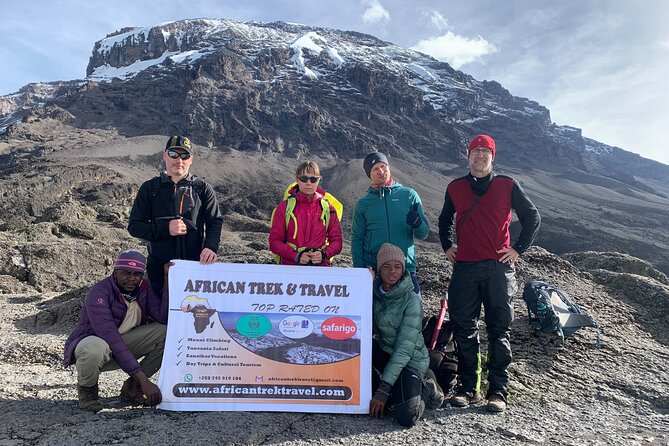
Day 3 is a classic Kilimanjaro mix of breath-taking high points and smart acclimatization. Starting from the Shira Plateau, you continue east up a ridge, pass a junction toward the Kibo peak area, then shift southeast toward Lava Tower, also known as the Shark’s Tooth. Lava Tower sits around 4,650m.
After you pass it, you continue through a junction toward the Arrow Glacier and then turn down toward Barranco Camp. The important detail here is that you end the day around roughly the same elevation where you began that section, even though you climbed higher earlier. That “up, then down” structure supports acclimatization.
You walk about 8 km in 5 to 6 hours, moving from 3,850m to 4,000m. The habitat shifts into semi-desert, and you get breakfast, lunch, and dinner. This day is one of the route’s key breathing spaces before the real steepness of the later days.
A few more Moshi trips to compare
- Safari Serengeti And Ngorongoro
★ 5.0 · 288 reviews - Climbing Kilimanjaro – Machame Route
★ 5.0 · 170 reviews - Climbing Kilimanjaro through 7 days Machame Route
★ 5.0 · 151 reviews - Kilimanjaro climb, Lemosho Route (8-day)
★ 5.0 · 148 reviews
Day 4: Barranco Wall to Karanga Valley, short but steep
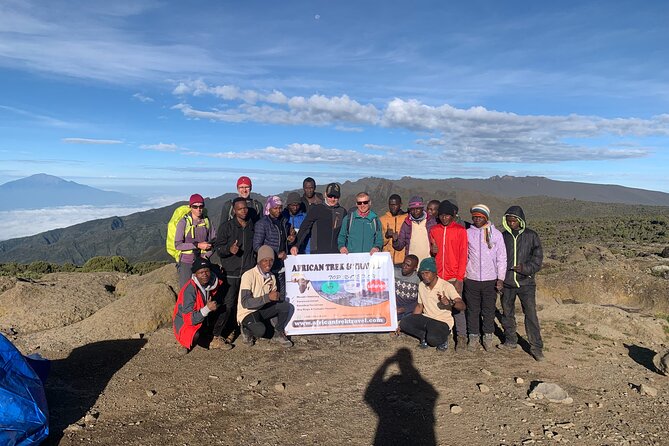
Day 4 is shorter on paper, but it can feel tough in your legs. After breakfast, you leave Barranco and head up a steep ridge, the Barranco Wall, toward the Karanga Valley and the junction that connects with the Mweka Trail.
Elevation rises slightly, from 4,000m to about 4,050m, over 5 km with 3 to 4 hours of climbing. The habitat is alpine desert. You still have breakfast, lunch, and dinner included.
The trade-off on this day is time versus effort. You might walk fewer hours than on Day 3, but the steep sections demand steady movement and careful foot placement. Trekking poles can help you keep balance when the trail gets rough, and a relaxed pace matters more than pushing through.
Day 5: Barafu Camp, the South Circuit reset before the midnight grind
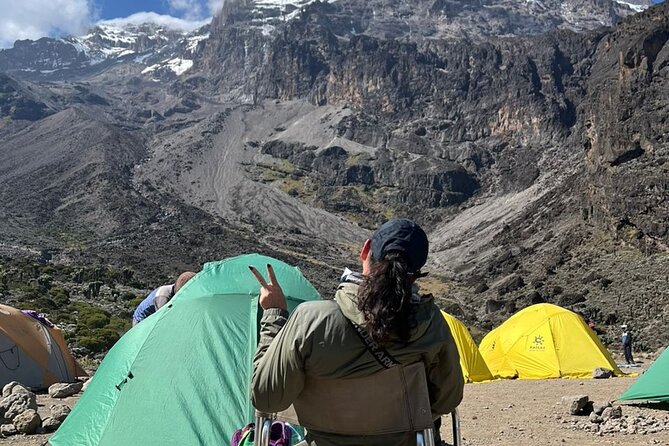
On Day 5, you continue up to Barafu Camp. This day completes the South Circuit, which is often when you start feeling the route opening up, with views of the summit from different angles.
You gain altitude from roughly 4,050m to 4,700m, and the walking section is about 4 km, taking 3 to 4 hours. You camp at Barafu Camp, in alpine desert conditions. Meals are breakfast, lunch, and dinner.
This is a rest and preparation day, even though you are still moving. You will likely want to keep warm, take care of small comfort things, and be ready for the late-night push. Summit day is where people usually mentally break down, so the quiet routine of Day 5 is not optional. It helps you start Day 6 with a clear head.
Day 6: Midnight to Stella Point sunrise, then Uhuru Peak
Day 6 is the big one. You set off very early, typically between midnight and 2 am, heading toward the summit area between the Rebmann and Ratzel glaciers. The climb shifts through heavy scree, and the direction is northwesterly as you ascend toward Stella Point on the crater rim.
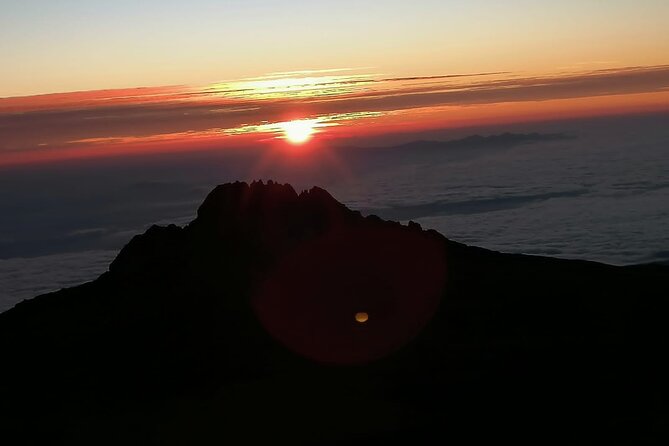
This is described as the most mentally and physically challenging part of the trek, and the reason is simple: you are climbing when you are tired, and the surface can feel unstable underfoot. You do get a major payoff at Stella Point, where you stop briefly and often catch the sunrise, one of the most memorable moments on Kilimanjaro.
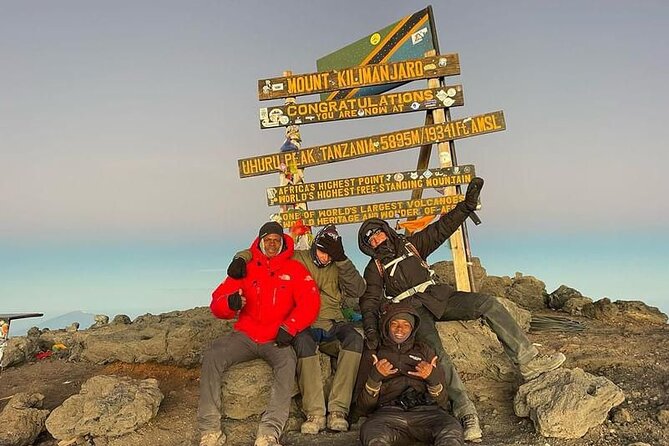
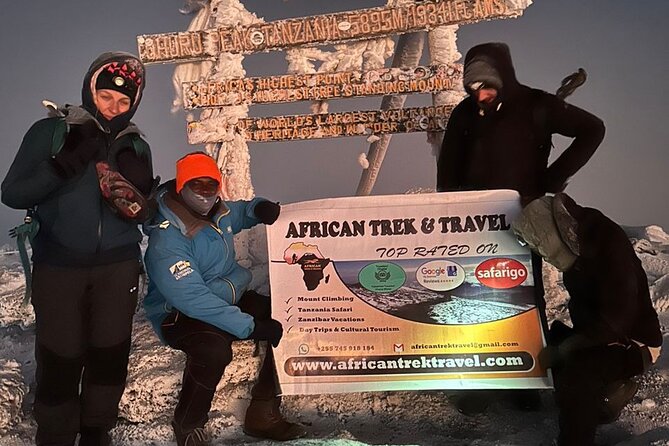
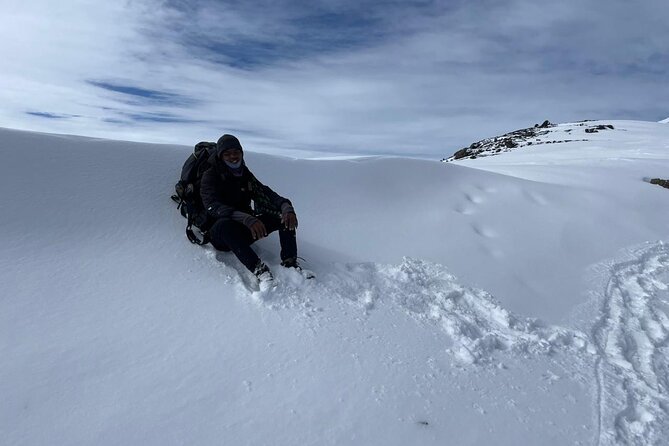
From Stella Point, you continue for about 1 more hour to reach Uhuru Peak. Snow can occur along the way, and the conditions can vary. Once you hit Uhuru Peak, you reach the highest point on Kilimanjaro and the continent of Africa.
Your total hiking time is around 7 hours on this day, with breakfast, lunch, and dinner included for the earlier portion of the itinerary. The key for you is mindset: focus on steady steps, drink water when you can, and accept that the summit is a long, slow process.
Day 7: Mweka Gate descent, wet feet and summit certificates
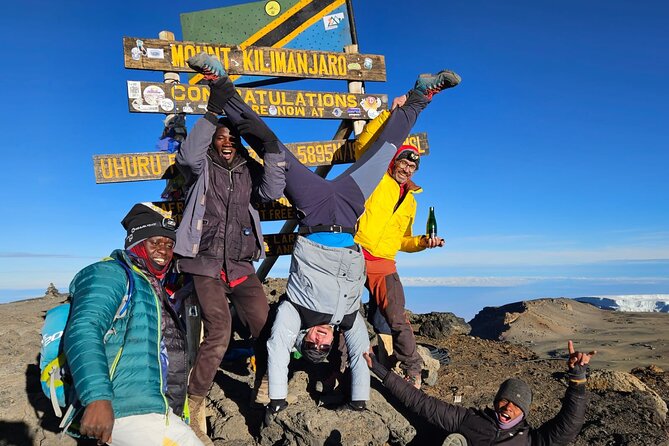
After breakfast, you start your descent down to Mweka Park Gate for your summit certificates. This final day is all about getting down safely, because conditions can change fast at lower elevations.
You drop from about 3,090m to 1,680m, walking roughly 10 km over 3 to 4 hours. The habitat transitions back to forest. Meals are breakfast only for Day 7.
This is also where you should plan for wet and muddy trails, especially if it rains. The practical advice that really helps: gaiters and trekking poles. Clothing can be simple at this point, with shorts and t-shirts likely fine, but keep rain gear and warmer layers handy because temperatures and wind can still surprise you on descent.
Once you finish at Mweka gate, an African Trek & Travel vehicle picks you up and drives you back to your hotel in Moshi, around 60 minutes.
Price and value: is $2,800 fair for a private 7-day Lemosho climb?
At $2,800 per person, this is not a budget hike. So here is the practical way to judge it: you are paying for structure, risk management, and support that directly affects how your climb feels.
This price includes a lot that usually adds up fast on Kilimanjaro:
- All fees and taxes (so you are not stacking surprise costs for access)
- Oxygen bottle included
- Cooker and porters, plus the crew system that keeps meals realistic at camp
- Guide support in multiple languages
- Meals: 6 breakfasts, 6 lunches, and 6 dinners over the climb, with Day 7 breakfast after the summit
It also has logistics built in, like pickup offered and a stated plan for returning to your hotel after Day 7. And the small-group limit of 5 travelers is part of the value, because it can influence how quickly decisions get made on-trail.
Could the cost feel high if you already have your own gear and strong fitness? Sure. But Kilimanjaro is one of those places where “self-sufficient” only gets you so far. The crew, the pacing, and the operational details help you stay focused on the hike instead of managing camp basics while tired and at altitude.
What this tour is best at, and what to watch for
This Lemosho route is strong because it gives you multiple days at altitude before the summit push. The itinerary moves through:
- Montane forest early for a comfortable start
- Heather moorland on Day 2 for long walking time at altitude
- Semi-desert around Lava Tower and Barranco for big scenery and big acclimatization lessons
- Alpine desert near Barafu and the crater rim for cold, exposed conditions
If you want photos, you will get them, but the real value is the route pacing. On Kilimanjaro, the summit is not a single dramatic day, it is the result of how you handle every earlier step.
The main drawback is also clear: summit day can be brutal, with the early departure and scree climbing toward Stella Point. The descent on Day 7 can be muddy too, so you should plan your shoes and legs for wet footing.
Who should book this 7-day Lemosho climb?
This is a great fit if you:
- Want a private-feeling climb with a small group (max 5)
- Prefer a route known for gradual acclimatization and variety, not constant maximum steepness
- Like having a full support team, including porters and a cook, so you can focus on walking and comfort
It is a tougher fit if you:
- Want a very short Kilimanjaro trip, because this is 7 days by design
- Dislike early starts, since Day 6 begins between midnight and 2 am
- Have limited flexibility for gear choices, because you will likely want trekking poles and possibly rain protection
If you are the type who likes knowing what is coming, this itinerary is well structured with clear camp goals each day.
Should you book this private Lemosho 7-day climb?
I would book this if your goal is to give yourself the best shot at acclimatization without turning the trek into a rushed sprint. The combination of 7 days, small group size, and support with porters, cooker, and multilingual guides makes the experience feel controlled, even when the summit day is not easy.
Before you commit, be honest with your fitness and your tolerance for cold, early starts, and occasional muddy footing. If that part feels manageable, this is a strong, well-supported way to climb Kilimanjaro and end with certificates and a return to Moshi.
FAQ
How long is the Kilimanjaro climb on the Lemosho route?
It is 7 days (approx.).
Where do you start and end this tour?
The start is M84R+V94, Shantytown 7582, Tanzania. The activity ends back at the meeting point after the return drive from Mweka Park Gate.
What time does summit day start?
On summit day, you continue between midnight and 2 am to reach Stella Point and then Uhuru Peak.
Are meals included?
Yes. You get breakfast, lunch, and dinner for 6 days, and breakfast on Day 7.
What is included in the price?
The listed inclusions are an oxygen bottle, all fees and taxes, cooker and porters, a live guide, and the meal plan described above.
What languages will the guide speak?
The guide is available in English, Spanish, French, German, Italian, and Simplified Chinese.
Do I need to budget for tipping?
Tipping is not included.
Do you receive summit certificates?
Yes. After descending to Mweka Park Gate on Day 7, you receive summit certificates.
Just posted around Moshi
- machame route★ 5.0 · 16 reviews
- Mt Kilimanjaro 6 days Marangu route hike★ 5.0 · 3 reviews
- Kilimanjaro Climbing Umbwe Route★ 5.0 · 3 reviews
- Wildlife Extravaganza: Manyara, Tarangire & Ngorongoro in 3 Days★ 5.0 · 3 reviews
- 3 Days Private E-Bike Tour in West Kilimanjaro★ 5.0 · 3 reviews
- West Kilimanjaro cycling Adventures★ 4.5 · 8 reviews
- Kilimanjaro Climb • Marangu Route ~ 9 Day★ 5.0 · 4 reviews
- Private Cycle to Kilimanjaro Bike Park Safari★ 5.0 · 6 reviews
Kilimanjaro Climbs, compared.
8-Day Small-group Lemosho Kilimanjaro Summit Trekking
Read our review →
5 Days Best of Tanzania Luxury Safari Northern Circuit
Read our review →
Climbing Kilimanjaro through 7 days Machame Route
Read our review →