Reviewed · KILIMANJARO CLIMBS
Mt Kilimanjaro Climbing; 6 Days Machame route
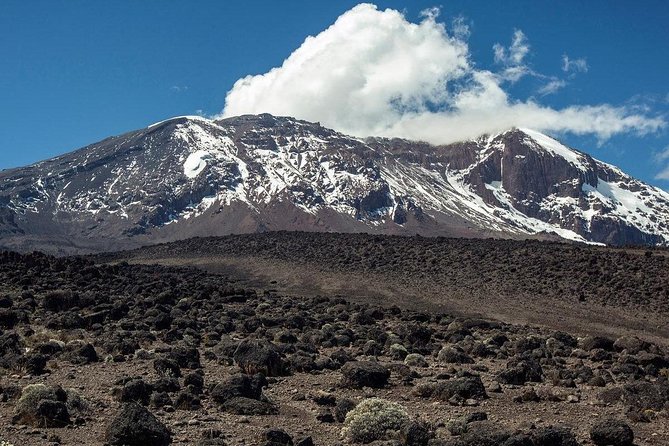
Kilimanjaro on Machame is pure work. This 6-day Machame climb strings together rainforest, moorland, semi-desert, alpine desert, and arctic zones, with camping the whole way instead of sleeping huts. I love the way the route builds altitude step by step, especially the Lava Tower day where you start feeling the benefit of acclimatization.
What really makes this trip feel good is the on-the-ground team. I like how the guides, porters, and chef run a tight operation, so you stay focused on walking, eating, and recovering, not on confusion. The possible drawback is that Machame is harder and colder at night than the hut-based options, and you are sleeping in tents, not shelters.
In This Review
- Key highlights on the Machame “Whiskey Route”
- Why the Machame Route feels like Kilimanjaro, not just a hike
- Moshi start day: from your hotel to Machame Camp in the rainforest
- Day 2’s moorland shift: Shira Camp views and Shira Caves
- Lava Tower and Barranco: the acclimatization moment at 4,600 m
- Great Barranco to Barafu: glacier country and summit prep energy
- Summit day from Barafu: Stella Point to Uhuru Peak, then down fast
- Final descent to Mweka: certificates and a return to Moshi or Arusha
- Price and value: what $2,200 covers on a private Machame climb
- Crew, chef, and safety focus: the part you remember after the peak
- Distances, habitats, and what they mean for your body
- Getting the gear right, before the mountain reminds you
- Who this Machame climb suits best
- Should you book this 6-day Machame route?
- FAQ
- How long is the Machame route climb?
- Where does the tour start and when?
- Is pickup included?
- What does sleeping look like on the Machame route?
- What are the main days and habitats you hike through?
- Are meals included in the price?
- Is water provided during the trek?
- Are park fees included?
- Is my visa or flights included?
- What is the cancellation policy?
Key highlights on the Machame “Whiskey Route”
- Rainforest-to-arctic walking across five distinct habitat zones in just 6 days
- Camping only, no sleeping huts, which keeps it more demanding but also more flexible day-to-day
- Lava Tower at 4,600 m plus a quick descent to Barranco for meaningful acclimatization
- Great Barranco and Karanga Valley terrain, with glacier views under Heim, Kersten, and Decken Glaciers
- Summit window with Stella Point before the push to Uhuru Peak and sunrise photos
Why the Machame Route feels like Kilimanjaro, not just a hike
Machame is often compared to Marangu, the more famous hut route, and the nickname makes the difference easy to remember. Machame is known as the Whiskey Route because it is tougher and you camp, not because it has anything to do with drinking. On this climb, you trade comfort for authenticity: you sleep in tents the whole way, move through varied terrain, and experience the mountain’s changing climates in real time.
The other big reason Machame is popular is pacing. Your days are designed to help you adjust to altitude without wasting time on overly long, demoralizing stretches every day. You still work hard, but the route gives you moments where your body starts to catch up, not just moments where you suffer.
More Kilimanjaro climbs:
- Kilimanjaro climb by Lemosho Route (7-day)
★ 5.0 · 651 reviews - Kilimanjaro climb, Machame Route (7-day)
★ 5.0 · 262 reviews - Kilimanjaro Climbing Lemosho Route 8 Days.
★ 5.0 · 186 reviews
Moshi start day: from your hotel to Machame Camp in the rainforest
Your day starts with pickup from the Moshi area, with a start time of 8:00 am. You’re driven from Moshi, or from Arusha or Moshi if you’re in that area, to the Kilimanjaro National Park gate. The drive passes through Machame village on the lower slopes, which is a helpful mental transition from “I’m traveling” to “I’m climbing.”
Then comes Day 1: a walk of about 11 km, typically 5 to 7 hours, through the rain forest. This is not a gentle stroll. The trail can get muddy and slippery at points, so trekking poles and gaiters are practical, not optional. If you like hiking footwear that actually grips, this is where you’ll find out if it fits the job.
You finish at Machame Camp. The big value of ending here is that it sets the tone: you settle in early enough to start functioning as a climber, not as a tourist. Dinner and rest are part of the rhythm, and the included meals help you keep energy steady instead of rationing yourself.
Day 2’s moorland shift: Shira Camp views and Shira Caves
Day 2 is shorter on paper, about 5 km and 4 to 6 hours, but the feeling changes quickly once you leave denser forest behind. You move into moorland where trees and bushes thin out and the sky often feels bigger. White-necked ravens can show up during the day, and that adds a little wildlife soundtrack to the climb.
You end at Shira Camp, set on a small plateau in the high moorlands. This is one of those camps where you get rewarded without waiting for the summit. On clear days you can look northeast toward Kibo and west toward Mount Meru, which is a nice way to connect each day’s walking to the big goal.
There’s also a small extra option near camp: the Shira Caves. Even if you keep it short, it’s a good way to stretch your legs and break up the day’s monotony. Just remember, altitude likes to humble you, so don’t treat any “quick walk” like it’s at sea level.
Lava Tower and Barranco: the acclimatization moment at 4,600 m
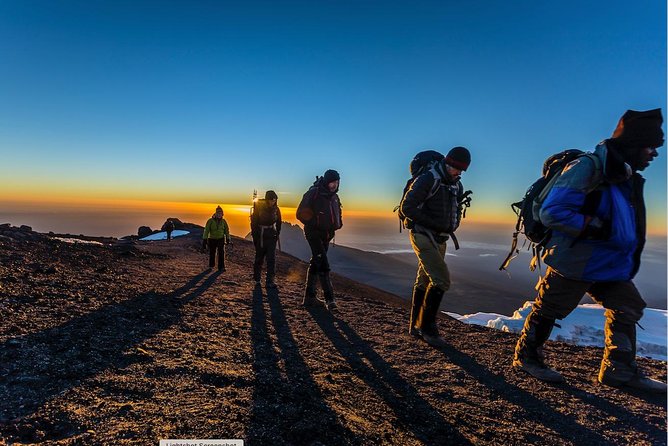
Day 3 is where the Machame route starts feeling more dramatic. You hike about 10 km over 6 to 8 hours, turning east into rocky semi-desert terrain around Lava Tower.
After a lunch stop in a designated area, you ascend toward Lava Tower. Reaching roughly 4,600 m is the highlight of the day. You might not feel like it yet, but that high point is doing real work for acclimatization, and the next part matters just as much.
Then you descend to the Barranco camping area, which takes about 2 hours. This descent is important because it gives your body a chance to rest lower while still keeping you on the altitude ladder. It’s also where you get photography-friendly views of the Western Breach and Breach Wall. If you like pictures, bring the right layers and keep your hands warm. Cold air plus fiddly zippers can turn “quick photo” into “why am I struggling.”
A few more Moshi trips to compare
- Safari Serengeti And Ngorongoro
★ 5.0 · 288 reviews - Climbing Kilimanjaro – Machame Route
★ 5.0 · 170 reviews - Climbing Kilimanjaro through 7 days Machame Route
★ 5.0 · 151 reviews - Kilimanjaro climb, Lemosho Route (8-day)
★ 5.0 · 148 reviews
Great Barranco to Barafu: glacier country and summit prep energy
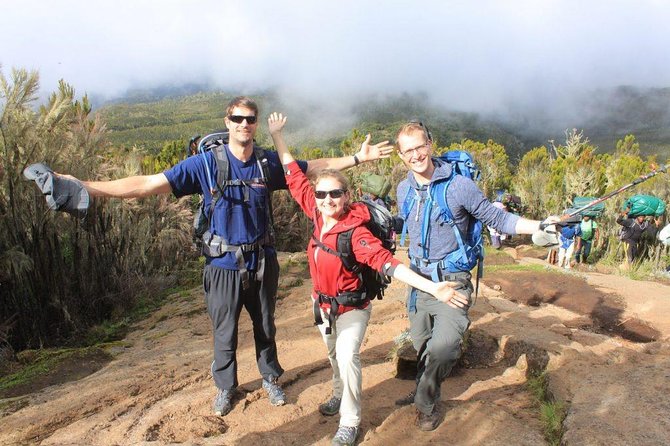
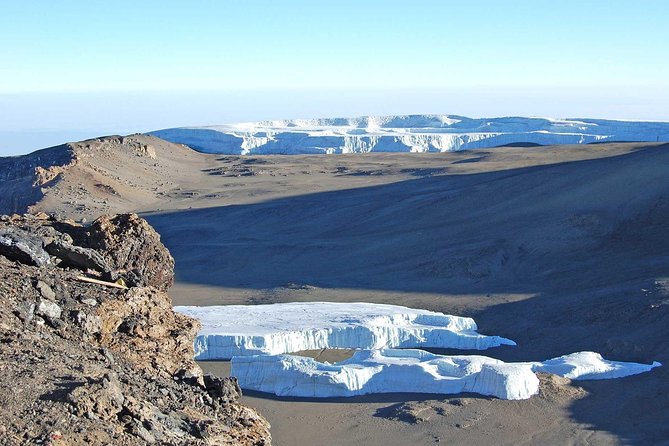
Day 4 is a longer day, about 9 km and up to 8 hours, and it adds a classic Kilimanjaro character. After breakfast, you start with a short scramble to the top of Great Barranco. Then you traverse over scree and ridges toward Karanga Valley beneath the icefalls of Heim, Kersten, and Decken glaciers.
The walking here can be mentally taxing, because the ground underfoot doesn’t always move like a nice trail. But the reward is real: glacier scenery at altitude, and a clear sense you’re nearing the mountain’s high zone.
After a break in Karanga, you cross the junction that connects with the Mweka Trail, which is used for later descent. From there, you continue up to Barafu Camp. This is your summit prep base: you rest, eat dinner, and get your gear ready for the hardest day.
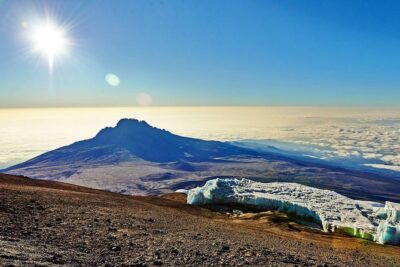
Barafu also gives you a spectacular view of the two volcanic cones: Mawenzi and Kibo peaks. If the sky cooperates, this view can be the moment you stop thinking like a hiker and start thinking like a summit climber.
Summit day from Barafu: Stella Point to Uhuru Peak, then down fast
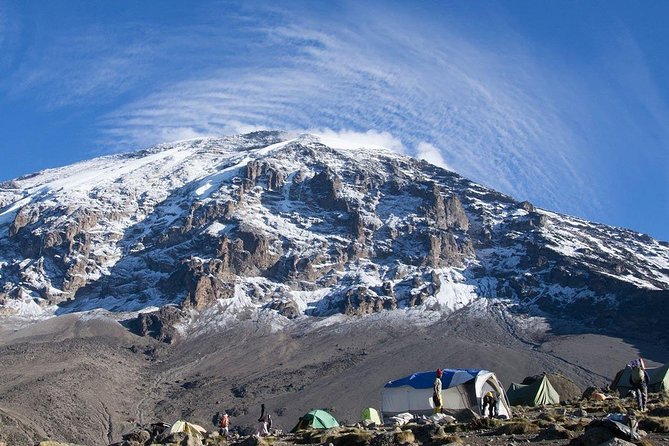
Day 5 is the big one. The walking time looks like this: about 7 to 8 hours ascent and 4 to 6 hours descent, with roughly 5 km ascent and 12 km descent. You’re in arctic conditions, so early starts and cold gear discipline matter.
You start early to reach the rim of Kibo crater between the Rebmann and Ratzel Glaciers. The final section before the rim can sometimes be snow-covered, and having an ice axe or ski stick can help with balance.
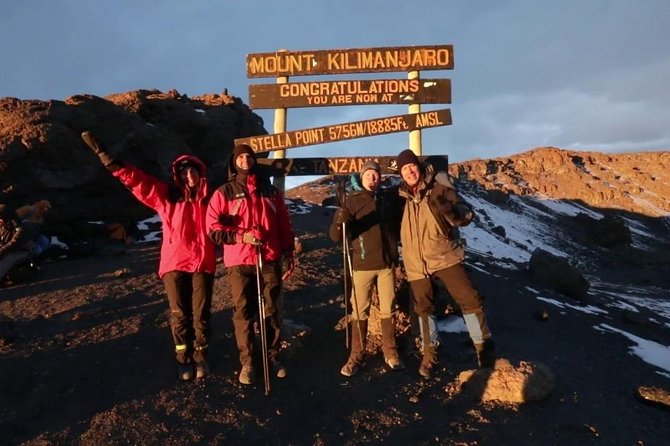
At the rim you reach Stella Point, then there’s about another hour to Uhuru Peak. That last push is where you feel why Machame is the Whiskey Route. It’s hard work, but it is also straightforward work: keep moving, keep breathing, keep your focus on the next safe step.
After a short stop for photos, you descend to Barafu Hut for rest and lunch. Then you continue past Millennium camp down to Mweka Hut, in the giant heather zone near the forest edge. This part is exhausting in a different way, because you’re going downhill on tired legs. Still, it’s a huge relief psychologically because you’re already coming down after summit success.
Final descent to Mweka: certificates and a return to Moshi or Arusha
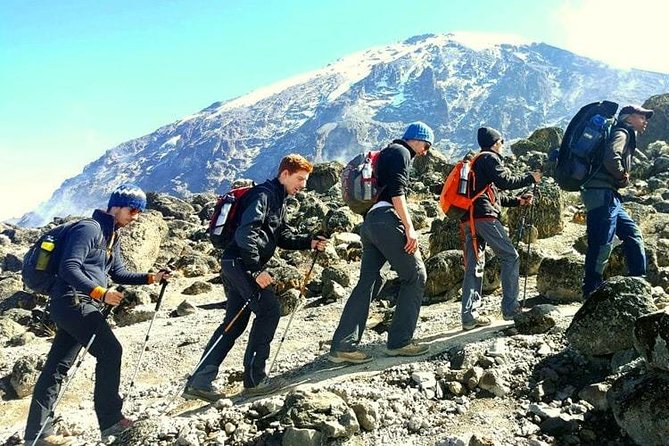
Day 6 is your finish line day. You descend about 10 km in roughly 3 to 4 hours, moving through forest again in rain forest habitat. After breakfast, you walk down to the Mweka Park Gate where you receive your summit certificates.
Then it’s another hour to Mweka Village. A vehicle meets you there and drives you back to your hotel in Moshi or Arusha. This last stretch is shorter than people fear, and it carries a special feeling. You’ve done the hard part. Now you’re just closing the loop.
Price and value: what $2,200 covers on a private Machame climb
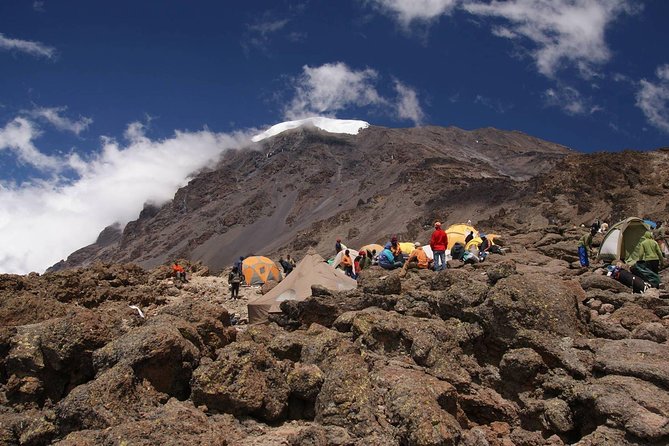
At $2,200 per person, you’re paying for a full climbing support package, not just time on a trail. Here’s what you should expect included:
- Private transportation
- All fees and taxes
- Guides and porters salaries
- Sleeping tents
- Filtered water throughout the trek
- Meals: 6 breakfasts, 5 lunches, 5 dinners
That’s a lot of “hidden” logistics handled for you. When you’re on Kilimanjaro, the time sinks are often the small things: figuring out fees, managing water, coordinating schedules, and making sure your food is actually dependable at altitude. This package is built to reduce those headaches.
What is not included matters for planning:
- Visas, insurance, and flights
- Gratitude for your mountain crew (tips)
- Personal items, including extra drinks
- Alcoholic and non-alcoholic beverages
- Laundry services
So, the real value question is this: do you want to outsource the coordination and carry the least amount of uncertainty possible? If yes, the price makes sense because a strong crew is the difference between an organized climb and a chaotic one.
Crew, chef, and safety focus: the part you remember after the peak
The best part of any Kilimanjaro climb is not only the views. It’s how you’re managed when you’re tired, cold, and slightly worried. On this Machame climb, the crew is a big selling point: guides and porters are described as professional, attentive, and experienced. That matters because the mountain punishes sloppy decisions, especially on summit night.
Food is another standout. The chef’s cooking is repeatedly praised, and in practical terms that means you’re getting meals you can actually eat, even when your appetite is not at normal levels. On long walking days, decent food and timing can mean the difference between feeling steady and feeling empty.
Porters being friendly also changes the whole vibe. You’re not just “being carried,” you’re traveling with a team that keeps the operation running and helps you stay calm and moving.
Distances, habitats, and what they mean for your body
Machame is built on habitat changes, and those habitat changes affect your walking rhythm.
- Rain forest (Day 1, and Day 6): expect mud, slippery sections, and more moisture. Poles and gaiters help.
- Moorland (Day 2): more open walking, windier feel, and big sky views.
- Semi-desert and rocky zones (Day 3): less traction, more bounce in your step, and a dry, dusty effort.
- Alpine desert (Day 4): scree and ridges, and that “everything is higher than you think” feeling.
- Arctic conditions (Day 5): colder air, colder fingers, and the need to stay organized with layers.
Also, pay attention to how the route alternates hard days and recovery movement. Day 3 climbs high and then descends quickly. Day 4 climbs toward Barafu and ends with downtime. Day 5 is brutal for long hours, but then you descend all the way. That structure is what keeps the week from becoming one continuous grind.
Getting the gear right, before the mountain reminds you
You do not need to pack like a survivalist, but you do need the essentials that match each terrain.
Here are the key items the route implicitly demands based on how it’s described:
- Trekking poles for muddy rain forest sections and uneven ground
- Gaiters for slippery trail and debris
- Warm layers for camps and summit conditions
- Ice axe or ski stick might be useful for the snow-covered section near the crater rim
You also get filtered water throughout the trek, which is a major convenience. Still, it’s smart to carry your own system for drinking and keeping bottles usable when it’s cold.
And here’s the practical mindset: you’re not just hiking, you’re sleeping at altitude in tents. Cold comfort and staying dry matter. If you’ve never camped in cold weather, treat this as a chance to practice before you arrive.
Who this Machame climb suits best
This climb is described for people with moderate physical fitness. That does not mean it is easy. Machame is simply the kind of effort you want if you’re comfortable spending 6 days actively walking and you understand that summit day is serious.
You’ll likely love it if you:
- Prefer camping and can handle tents instead of huts
- Want variety, rainforest to arctic, in one trip
- Like the idea of a private group where everything is coordinated
You might not love it if you want the more comfortable hut setup or if you know you struggle with cold nights and tent sleeping.
Should you book this 6-day Machame route?
If you want Kilimanjaro with structure, crew support, and a real sense of the mountain’s changing climates, this is a strong choice. The best reason to book is the value of what’s included: private transport, fees, tents, filtered water, and a full meal plan, plus guides and porters who keep things organized.
If your top priority is maximum comfort over challenge, then Machame might feel like too much. But if you’re ready for a demanding route with a summit day that feels like a personal milestone, this one fits the bill.
In short, you’re paying for coordination and a team that helps you keep your head while you climb into thin air. That is exactly what you want when the world gets quiet near Uhuru Peak.
FAQ
How long is the Machame route climb?
The climb is listed as 6 days (approx.).
Where does the tour start and when?
It starts from Moshi Urban, Tanzania with a start time of 8:00 am.
Is pickup included?
Yes, pickup is offered, and private transportation is included.
What does sleeping look like on the Machame route?
The Machame route here uses sleeping tents. This route is known for not having sleeping huts.
What are the main days and habitats you hike through?
You move through rain forest, moorland, semi desert, alpine desert, and arctic conditions across the 6 days.
Are meals included in the price?
Yes. Meals included are 6 breakfasts, 5 lunches, and 5 dinners.
Is water provided during the trek?
Yes. You get filtered water throughout the trek.
Are park fees included?
Yes. The package includes all fees and taxes.
Is my visa or flights included?
No. Visas, insurance, and flights are not included.
What is the cancellation policy?
You can cancel up to 24 hours in advance for a full refund. Within 24 hours, the amount is not refunded.
Just posted around Moshi
- machame route★ 5.0 · 16 reviews
- Kilimanjaro Climbing Umbwe Route★ 5.0 · 3 reviews
- Wildlife Extravaganza: Manyara, Tarangire & Ngorongoro in 3 Days★ 5.0 · 3 reviews
- Mt Kilimanjaro 6 days Marangu route hike★ 5.0 · 3 reviews
- 3 Days Private E-Bike Tour in West Kilimanjaro★ 5.0 · 3 reviews
- West Kilimanjaro cycling Adventures★ 4.5 · 8 reviews
- Kilimanjaro Climb • Marangu Route ~ 9 Day★ 5.0 · 4 reviews
- Private Cycle to Kilimanjaro Bike Park Safari★ 5.0 · 6 reviews
Kilimanjaro Climbs, compared.
8-Day Small-group Lemosho Kilimanjaro Summit Trekking
Read our review →
5 Days Best of Tanzania Luxury Safari Northern Circuit
Read our review →
Climbing Kilimanjaro through 7 days Machame Route
Read our review →