Reviewed · KILIMANJARO CLIMBS
Mountain Kilimanjaro Climbing 7 Days Machame Route
Kilimanjaro on the Machame route feels like a proper mountain challenge. You start in rainforest at Machame Gate, then work your way through the Shira Plateau and high moorland, sleeping in tents while the mountain slowly strips away the trees. It is tougher than the more gradual Marangu route, so you trade comfort for grit and big payoff views.
I especially like the way this schedule builds in acclimatization, with the walk high, sleep low approach and an altitude day at camp around 4,600m. I also like the clarity of the summit plan, with an early pre-dawn start from Barafu, so you are positioned for first light on the crater rim.
One drawback to consider is straightforward: this route is steep and can be muddy in places, plus the summit day is long. If you go in undertrained or expect an easy stroll, you will feel it fast.
In This Review
- Key Highlights You’ll Want to Know
- Why the Machame (Whiskey) Route Feels More Like a Real Climb
- Price and What $2,564.11 Covers in Real Terms
- Group Size, Crew Support, and the Moshi-to-Machame Start
- Day 1: Machame Gate Through Rainforest, Mud Included
- Day 2: Shira Plateau Ascent, with Mt Meru in the Distance
- Day 3: High Moorland, Lava Tower, and the Code Walk High, Sleep Low
- Day 4: Great Barranco Wall to Karanga Camp at 3,963m
- Day 5: Barafu Camp at 4,640m, Then the Long Night Setup
- Day 6: Midnight Ascent, Stella Point at Sunrise, and Uhuru Peak
- Day 7: Mweka Gate Descent Through Rain Forest and Proud Certificates
- Who Should Choose This 7-Day Machame Route
- Should You Book This Machame Route Tour?
- FAQ
- How long is the Machame route trek?
- Where does the trek start and where does it end?
- Do you sleep in tents or huts?
- Is pickup from Moshi included?
- What is the summit timing like?
- Is admission ticket included?
- Can I cancel for a full refund?
Key Highlights You’ll Want to Know
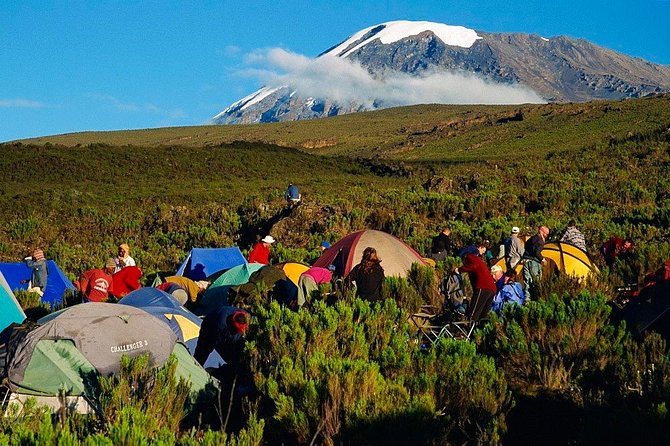
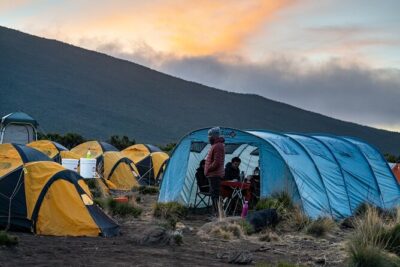
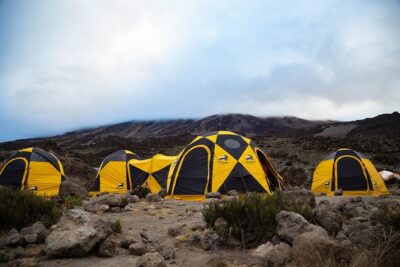
- Tents instead of huts, which changes both comfort and how you pack for weather
- A true Whiskey Route feel, steeper trails and longer uphill days compared with Marangu
- Altitude handling built in, including an ascent to about 4,600m and then lower sleeping
- Great viewpoint arcs, from the Shira Plateau and around the southern circuit
- Big summit timing, waking up around 11pm to 12am and aiming for sunrise at Stella Point
- A full finish in Moshi, rain forest descent to Mweka Gate and certificate day
Why the Machame (Whiskey) Route Feels More Like a Real Climb
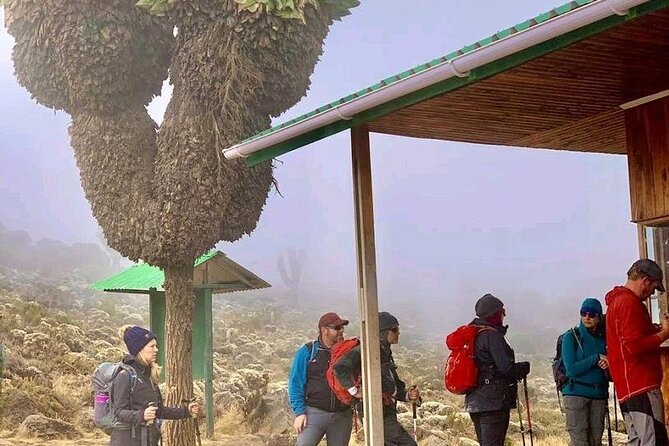
The Machame route is nicknamed the Whiskey route for a reason. Compared with the easier Marangu track, it is steeper, the days are longer uphill, and you spend more time walking on exposed ground. The reward is that you tend to feel the mountain changing in your legs, from dense rainforest to high moorland and then to stark scree.
What makes this route especially interesting is the way it builds a circuit around the mountain. You are not just heading straight for the summit and hoping for the best. You go toward the Shira Plateau, then curve along the southern circuit halfway around so you get views from different angles instead of only one long straight-line gaze.
If you are the type who likes effort that turns into payoff, Machame suits you. If you want the gentler walking style and hut life, you may prefer Marangu. On Machame, tents are part of the bargain, and so is getting used to changing weather as altitude rises.
More Kilimanjaro climbs:
- Kilimanjaro climb by Lemosho Route (7-day)
★ 5.0 · 651 reviews - Kilimanjaro climb, Machame Route (7-day)
★ 5.0 · 262 reviews - Kilimanjaro Climbing Lemosho Route 8 Days.
★ 5.0 · 186 reviews
Price and What $2,564.11 Covers in Real Terms
At $2,564.11 per person, this is not a budget hike. For that money, you are buying a full supported expedition, not just a guide leading you uphill. The experience includes pickup offered from Moshi, and it includes admission ticket coverage during the trek days listed.
You also get a group cap of maximum 15 travelers, which matters on Kilimanjaro. Smaller groups typically mean less waiting, smoother camp organization, and a better chance of matching your pace to the crew plan.
One more value factor: the summit push is planned with clear staging. You start the long climb from Barafu, you aim for the crater rim at Stella Point, then continue on to Uhuru Peak and descend back toward camp. That structure is what keeps many people focused and moving when fatigue hits.
Group Size, Crew Support, and the Moshi-to-Machame Start
You begin in Moshi, Tanzania, and then the trek proper kicks off after about a one-hour drive to Machame Gate. From there you handle park formalities, meet your crew and porters, and start climbing right away. That early start matters because it lets you get into rhythm while your energy is still high.
The group limit of 15 is also a practical plus. Kilimanjaro is crowded enough on popular routes. Keeping the group smaller usually makes it easier to manage the steep sections and the breaks, especially in places where the trail can get overgrown and wet.
You will also see mobile ticket support listed. In real terms, that usually helps reduce last-minute paper chasing so you can spend your attention where it belongs, on the route ahead and the timing of early departures.
Day 1: Machame Gate Through Rainforest, Mud Included
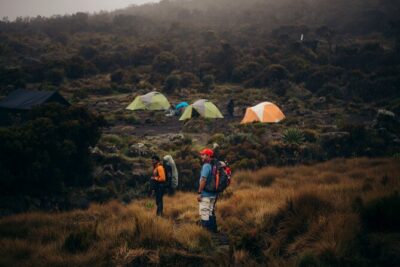
Day 1 begins at Machame Gate, with park formalities and introductions before the climb starts in dense rainforest. The first section climbs steadily, and it is one of those days where the mountain feels lush and alive but also damp.
The trail here can be overgrown in spots and often wet and muddy underfoot. That is not a reason to avoid the Machame route, it is just information you should respect. Wet ground plus altitude plus slippery roots is where good footwork beats bravado.
Expect about 6 hours on the move. The best mindset is simple: take your time, protect your footing, and let the rainforest ease you into the expedition pace. This is also where you learn the feel of the crew and the rhythm of camp life before things intensify.
A few more Moshi trips to compare
- Safari Serengeti And Ngorongoro
★ 5.0 · 288 reviews - Climbing Kilimanjaro – Machame Route
★ 5.0 · 170 reviews - Climbing Kilimanjaro through 7 days Machame Route
★ 5.0 · 151 reviews - Kilimanjaro climb, Lemosho Route (8-day)
★ 5.0 · 148 reviews
Day 2: Shira Plateau Ascent, with Mt Meru in the Distance
On Day 2, the trek continues through forest until you reach the steep ascent toward the Shira Plateau. This is the moment where you start to feel the mountain’s personality shift. The air changes, the vegetation thins, and the view starts to open up.
One of the most memorable details here is the possibility of seeing Mt Meru rising above Arusha town in the distance when you look back. That kind of sight is not just pretty, it also gives you a spatial sense of where you are relative to the region.
Day 2 is listed at about 5 hours, so it is shorter than Day 1 but still meaningful. You are climbing while the environment transitions, and that makes the day feel more intense even when the clock looks manageable.
Day 3: High Moorland, Lava Tower, and the Code Walk High, Sleep Low
Day 3 is a landscape shift day in the best way. You move onto high moorland, and the scenery gets more open and stark. You will pass beneath the Lava Tower and the final section of the Western Breach, then reach camp after time at altitude.
The route description calls out altitude up to about 4,600m on this day. That is high for your body, so the itinerary specifically follows the mountaineering code of walk high, sleep low to support acclimatization. In practical terms, this schedule is trying to reduce the chance your system is overwhelmed all at once.
Expect around 8 hours. This is also where the Machame route shows its character, because your body is working harder while the environment gives you less shade and fewer forgiving walking conditions.
Day 4: Great Barranco Wall to Karanga Camp at 3,963m
Day 4 starts with a descent into the Great Barranco, a huge ravine. Then you exit steeply up the Great Barranco Wall, which divides you from the southeastern slopes of Kibo. It is not described as technical climbing, but it is long and tiring, which is often the more frustrating kind of difficulty.
The itinerary also includes passing underneath the Heim and Kersten glaciers. Even if you are not a glacier expert, seeing those features from the trail area is a powerful reminder that you are headed into a high-alpine zone.
You then head toward Karanga valley and climb up to Karanga camp at 3,963m. There is also an optional mid-afternoon acclimatization trek up to around 4,200m, then you return to camp. This is a smart choice if you are feeling strong and your pacing is steady, but you should not force it if your body is already working hard.
Day 4 is about 5 hours total. The main payoff is that this day helps you prepare for the exposed scree and cold that come later.
Day 5: Barafu Camp at 4,640m, Then the Long Night Setup
After breakfast, Day 5 climbs to Barafu camp at about 4,640m. The route crosses desolate scree slopes with no vegetation, which means you are exposed to wind, cold, and harsh ground underfoot.
This is one of the toughest types of walking. Scree can be tiring because your steps are constantly adjusting for loose rock, and altitude makes every uphill effort feel heavier. The day is listed at about 3 hours, but do not let the time trick you. It is a steep build to the high base stage.
Once you arrive, you eat and rest, then you prepare for the night climb. The plan is early dinner, then trying to sleep while you get up between 11pm and 12pm to start the summit attempt. The practical takeaway is this: Day 5 is partly a training day for your sleep, hydration habits, and cold-weather readiness.
The itinerary also emphasizes keeping hydrated and warm. On summit night, those two things can be the difference between feeling controlled and feeling panicky.
Day 6: Midnight Ascent, Stella Point at Sunrise, and Uhuru Peak
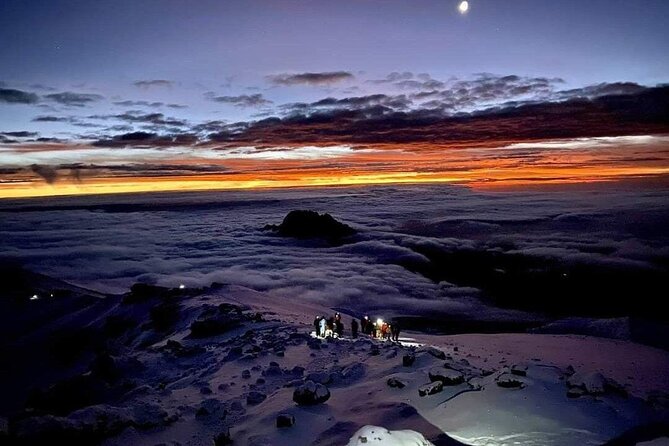
Day 6 is the big one. You start at around midnight and climb steeply toward the summit glaciers. The route calls out 4 to 5 hours of climbing scree, gaining a lot of altitude over a short distance. That description matches what many people struggle with most, steep ground when you are already tired.
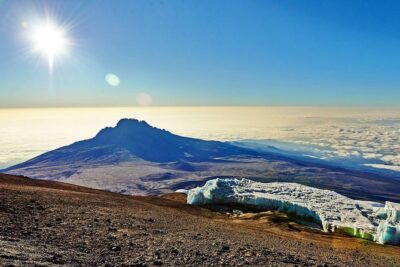
Then you aim for the crater rim at Stella Point (5,739m) as the first rays of sun hit. The description highlights ice cliffs within the crater and views of Mawenzi peak and beyond. Even if the photos look dramatic, the real value is the way the summit rim view helps you confirm you are actually there and not just climbing in fog and hope.
After Stella Point, you continue walking about another hour to Uhuru Peak (5,895m). That is the final objective, and then you begin descending by returning to Stella Point and dropping back toward Barafu Camp for breakfast.
From there, you continue to Millennium Camp for rest. The day is listed at about 15 hours, so plan on the fact that you will be tired in a deep, body-level way. This is where having a supported crew and a well-paced team matters. You are not just chasing a view, you are managing a long physical and mental push.
Day 7: Mweka Gate Descent Through Rain Forest and Proud Certificates
Day 7 is your release valve. You trek down through rain forest to Mweka Gate, where you complete park formalities and receive certificates. That last-day paperwork is not glamorous, but it gives the finish line a clear shape.
The day is about 6 hours, and it is described as a gentle trek compared with the summit push. You will still be walking after a full-on climb cycle, so the word gentle mostly means less steep, not easy.
After the gate, you are met by vehicles and return to your hotel in Moshi. You can treat yourself to a welcome hot shower, which sounds small until you have spent multiple cold nights at altitude.
Who Should Choose This 7-Day Machame Route
This Machame route fits best if you have moderate physical fitness and you can commit to long walking days with a steep, sometimes muddy start. It is also a good match if you prefer tents over huts and you accept that summit night is intense and early.
If you want a more gradual feel, you might compare it against routes like Marangu. Machame is simply more demanding underfoot and in pacing, especially around scree sections and the long summit day.
Also, this is not marketed as a huge mass-tour. With a maximum of 15 travelers, it tends to be practical for group movement and for keeping things organized at camp.
If you like milestone days and changing environments, the Machame schedule delivers. Rainforest, plateau views, high moorland, glaciers underfoot on the approach, then scree to the roof line. It is a full Kilimanjaro story told in altitude.
Should You Book This Machame Route Tour?
You should book if you want the Whiskey Route experience, meaning steeper days, tents, and a summit plan built around staging at altitude camps like Barafu. The price is not low, but the included park ticket support, pickup from Moshi, and structured summit timing help justify the cost if you want a confident expedition style.
I would think twice if you are hoping for an easy climb, because the route itself is clear about steepness and endurance. If you are realistic about mud, scree, and a long summit day, this is the kind of trek that gives you that rare feeling of finishing something big.
If you want, tell me your fitness level and when you plan to go. I can help you sanity-check whether 7 days on Machame is the right match for you.
FAQ
How long is the Machame route trek?
The trek runs for about 7 days, with a schedule that works in roughly 6 nights on the mountain.
Where does the trek start and where does it end?
It starts at Machame Gate in the southern base of Kilimanjaro and ends at Mweka Gate, followed by a return to Moshi.
Do you sleep in tents or huts?
You sleep in tents on the Machame route.
Is pickup from Moshi included?
Pickup is offered, and you also return to your hotel in Moshi after the trek.
What is the summit timing like?
You start the summit climb at night, with a wake-up between 11pm and 12am on Day 5 and a summit start around midnight on Day 6, aiming for sunrise near Stella Point.
Is admission ticket included?
Admission ticket inclusion is listed throughout the trek days.
Can I cancel for a full refund?
You can cancel up to 24 hours in advance for a full refund. If you cancel less than 24 hours before the start time, the amount paid will not be refunded.
Just posted around Moshi
- machame route★ 5.0 · 16 reviews
- Kilimanjaro Climbing Umbwe Route★ 5.0 · 3 reviews
- Wildlife Extravaganza: Manyara, Tarangire & Ngorongoro in 3 Days★ 5.0 · 3 reviews
- Mt Kilimanjaro 6 days Marangu route hike★ 5.0 · 3 reviews
- 3 Days Private E-Bike Tour in West Kilimanjaro★ 5.0 · 3 reviews
- West Kilimanjaro cycling Adventures★ 4.5 · 8 reviews
- Kilimanjaro Climb • Marangu Route ~ 9 Day★ 5.0 · 4 reviews
- Private Cycle to Kilimanjaro Bike Park Safari★ 5.0 · 6 reviews
Kilimanjaro Climbs, compared.
8-Day Small-group Lemosho Kilimanjaro Summit Trekking
Read our review →
5 Days Best of Tanzania Luxury Safari Northern Circuit
Read our review →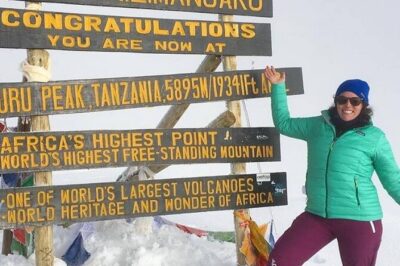
Climbing Kilimanjaro through 7 days Machame Route
Read our review →