Reviewed · KILIMANJARO CLIMBS
Mount Kilimanjaro Rongai Route
Rongai starts gentle, then demands grit. This 7-day Kilimanjaro climb from Rongai Gate gives you a gradual altitude build, hot meals at the camps, and a big final push to Uhuru Peak. I love the extra acclimatization day at Mawenzi Tarn, and I love the hands-on, watch-your-pace support that helps you keep moving safely. The one drawback to plan for is summit night, it is long and serious, even for hikers who are in good shape.
You get a private setup (only your group), with support from guides and porters, plus admission tickets included as you hike. The price is $2,700 per group up to 15, so it can be a solid value if you can fill the group, or if you want a more personal experience. Start time is 7:00 am at Kilimanjaro Airport area, with pickup offered, and the trek ends back in Moshi with a hot meal, hot shower, and time to recover.
In This Review
- Key things that make this Rongai climb worth your time
- Rongai route in plain English: what you’re really signing up for
- Price and logistics: $2,700 per group, and what that changes
- Day 1: Rongai Gate and the Simba Camp warm-up (8 km, 3 to 4 hours)
- Day 2: Second Cave lunch and the move toward Mawenzi (10 km, 5 to 6 hours)
- Day 3: Short hike, steep effort, and Mawenzi Tarn views (6 km, 3 to 4 hours)
- Day 4: Mawenzi Tarn acclimatization day that can make or break your summit
- Day 5: The Saddle to Kibo Hut, then an early dinner (8 km, 5 to 6 hours)
- Day 6: Summit night to Uhuru Peak, Gillman’s Point, and crater rim timing
- Day 7: Descent through moorland and rainforest zones to Marangu Gate
- Guides, porters, and food: the practical stuff that separates a good climb from a painful one
- Who should book the Rongai Route with Zara Tanzania Adventures
- Should you book this Kilimanjaro Rongai tour?
- FAQ
- What is the cost for the Kilimanjaro Rongai Route tour?
- How long is the trek?
- Where does the tour start, and what time does it begin?
- Is pickup included?
- Are admission tickets included?
- Is this tour private?
- What fitness level is required?
- When do you get the summit certificate?
- What is the cancellation policy?
Key things that make this Rongai climb worth your time
- Rongai Gate to Simba Camp day one, with a gentle start through farmlands and pine forest
- Second Cave lunch and moorland walking, a satisfying grind toward Mawenzi’s jagged peaks
- Mawenzi Tarn extra acclimatization day, the trip’s most important “slow down and adapt” moment
- Kibo Hut staging before midnight, so summit night starts when you have energy to spare
- Uhuru Peak push via Gillman’s Point, with a crater rim walk when weather cooperates
- Summit certificate at Marangu Gate, followed by the easy part, Moshi, shower, bed
Rongai route in plain English: what you’re really signing up for
The Rongai Route is a focused 7-day plan built around altitude pacing. Your days mix gentle stretches with some steeper work, and the schedule includes a key extra day at Mawenzi Tarn to help your body adjust.
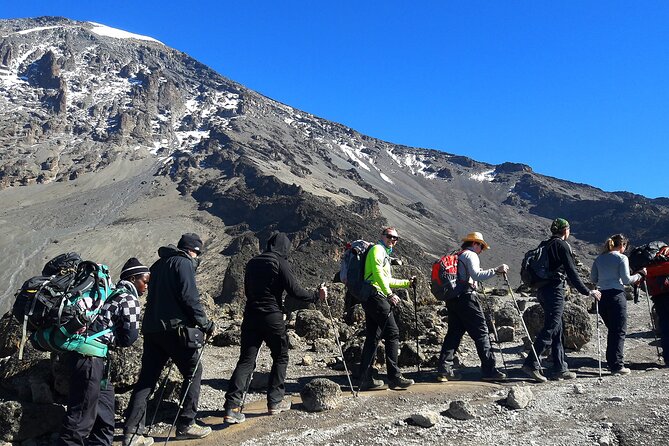
If you want a trek where you can settle into the rhythm, this fits. You spend the first days hiking through multiple terrain zones, farmlands and forests early on, then moorland and grassy slopes as you gain height. Then it gets stark and exposed near the summit area, especially around the Saddle and on summit night.
More Kilimanjaro climbs:
- Kilimanjaro climb by Lemosho Route (7-day)
★ 5.0 · 651 reviews - Kilimanjaro climb, Machame Route (7-day)
★ 5.0 · 262 reviews - Kilimanjaro Climbing Lemosho Route 8 Days.
★ 5.0 · 186 reviews
Price and logistics: $2,700 per group, and what that changes
This climb is priced at $2,700 per group for up to 15 people. Because it is per group, your per-person cost depends on how many hikers share the group price.
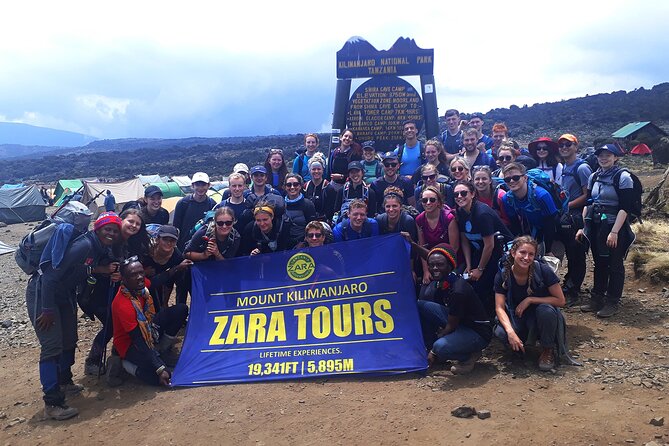
Here’s why that matters: Kilimanjaro is not just a walk. It is a moving team operation. In one example from the climb experience, Zara Tours supported a group of 27 with a professional crew of 75 working across guides, porters, cooks, and waiters. That kind of staffing is a big part of why you get hot meals and steady guidance instead of a DIY scramble.
Also, this is a private tour, meaning only your group participates. If you are traveling with friends, a family unit, or a small group of your own, you avoid the stress of mixed pacing and unclear expectations that can happen on busier group trips.
Day 1: Rongai Gate and the Simba Camp warm-up (8 km, 3 to 4 hours)
You start after breakfast and drive about 2 to 3 hours toward the Rongai Gate, passing farmlands and rural villages. Once you register at the gate, you begin hiking through lush farmlands and pine forest.
This first day is about getting your bearings, not testing your willpower. The climb runs from about 1,950 meters up to roughly 2,600 meters, with an 8 km hike that takes about 3 to 4 hours. The trail starts with a gentle ascent, which is exactly what you want at the beginning.
Along the way, you might spot wildlife such as colobus monkeys. When the route is working well, this is the day where you feel the “Kilimanjaro is real” moment without feeling completely cooked. You end at Simba Camp, enjoy a hot meal, and settle in for the night.
Possible consideration: your drive and registration day is still a travel day. Build in patience before you start hiking, especially if you are coming from Moshi and want an easy mental transition.
Day 2: Second Cave lunch and the move toward Mawenzi (10 km, 5 to 6 hours)
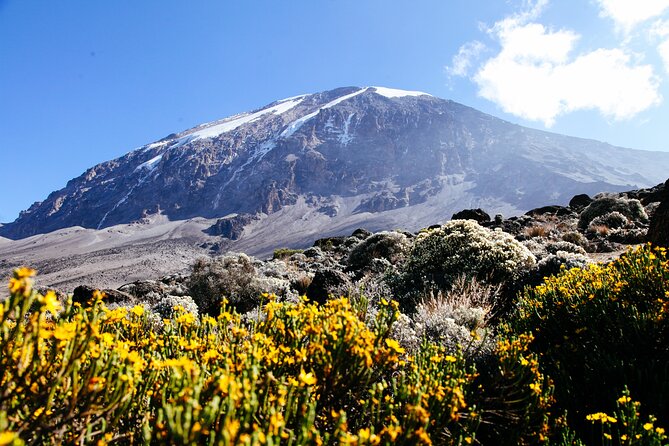
Today the altitude rises to about 3,600 meters. You hike around 10 km, with roughly 5 to 6 hours on your feet.
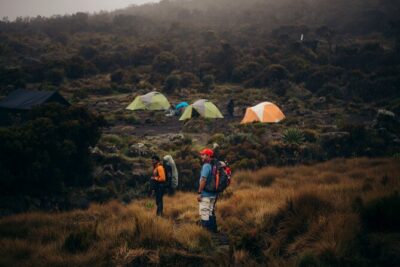
The big milestone is reaching the Second Cave for lunch, then continuing across moorland on a smaller path toward Mawenzi’s jagged peaks. This section tends to feel more remote and “high mountain” than day one. You’re not just walking uphill, you’re moving into a more open, thinner-air feeling.
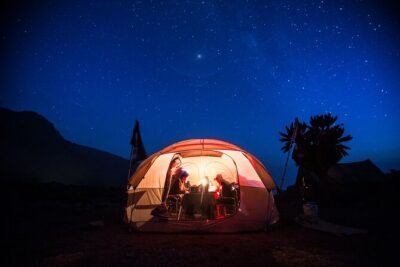
You finish at Kikelewa Camp, in a sheltered valley near Kikelewa Cave, with giant senecios around. The camp setting matters because it gives you a place to rest while your body gets time to adjust before the next push.
Why it’s a good sign: Kikelewa is where you stop and recharge instead of chasing distance just to say you did it.
A few more Moshi trips to compare
- Safari Serengeti And Ngorongoro
★ 5.0 · 288 reviews - Climbing Kilimanjaro – Machame Route
★ 5.0 · 170 reviews - Climbing Kilimanjaro through 7 days Machame Route
★ 5.0 · 151 reviews - Kilimanjaro climb, Lemosho Route (8-day)
★ 5.0 · 148 reviews
Day 3: Short hike, steep effort, and Mawenzi Tarn views (6 km, 3 to 4 hours)
Day three is shorter at 6 km, about 3 to 4 hours, but it is steeper. You climb from around 3,600 meters to about 4,315 meters.
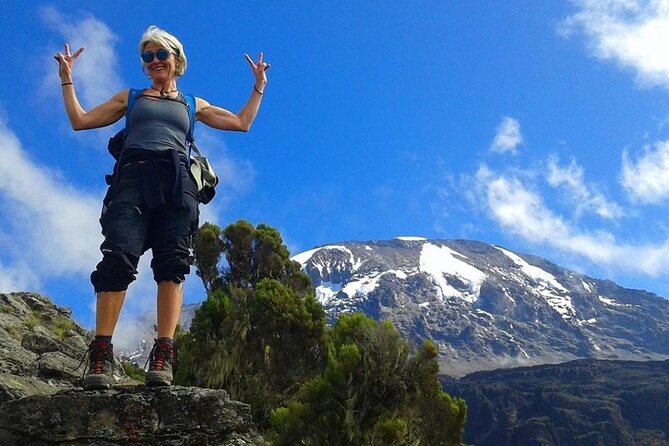
The route follows grassy slopes that lead to Mawenzi Tarn, sitting beneath the towering cliffs of Mawenzi Peak. It’s one of those moments where you look around and realize the mountain is not just big, it is dramatic.
You arrive, have a hot lunch, then get time to relax or take a short acclimatization hike. Even though the day is not long on paper, your breathing often tells the truth. In the evening, dinner comes first, then you get a briefing from your guide about what’s next, especially because the schedule is headed higher from here.
What I like about this day: the short hike reduces fatigue, but the terrain still challenges you enough to build confidence for tomorrow.
Day 4: Mawenzi Tarn acclimatization day that can make or break your summit
This is the day that earns its keep. You stay around Mawenzi Tarn at about 4,330 meters and use the time to acclimatize properly.
Your plan is to hike up toward Mawenzi Peak for acclimatization, then return to Mawenzi Tarn to rest. The goal is not speed. It is helping your body adjust to thinner air, and setting up the stamina you’ll need for the tougher trek toward Kibo Hut.
You’ll get the reminder to stay hydrated and focused, because summit success is built on small decisions made days earlier.
Possible drawback to plan for: it can feel like a “slow day” when you’re excited. But don’t treat it like a bonus vacation day. Treat it like the training day for your summit night.
Day 5: The Saddle to Kibo Hut, then an early dinner (8 km, 5 to 6 hours)
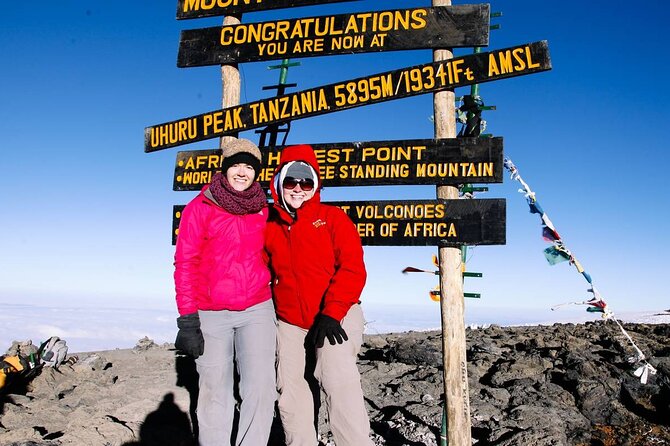
You hike from about 4,315 meters to around 4,720 meters, with an 8 km trek that takes roughly 5 to 6 hours.
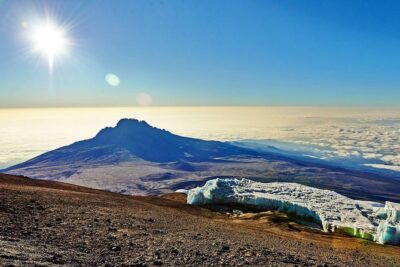
This is the day with the “lunar-like” feel. You cross the Saddle between Mawenzi and Kibo peaks. The terrain is desolate and exposed, and the summit looms in the distance in a way that can mess with your head if you expect it to be easy.
The good news is that the trail keeps a gentle incline. You still feel the altitude, but you can settle into a steady pace instead of constantly pushing.
You reach Kibo Hut and rest. Dinner is early, specifically to help you conserve energy for the summit attempt. Then your guide briefs you in detail because the ascent to Uhuru Peak starts shortly after midnight.
This is a logistics win: you are not stumbling into summit night with messy timing. You’re staged, briefed, and ready.
Day 6: Summit night to Uhuru Peak, Gillman’s Point, and crater rim timing
This is the big one. You start around midnight and the day runs long, about 12 to 15 hours total, with a hiking distance around 22 km.
The climb begins with the steep push toward Gillman’s Point at about 5,685 meters. It typically takes around six hours of steady climbing. This part tests endurance more than it tests climbing skill. Your guide support matters here because pacing is everything when the air is thin and your legs are burning.
Once you reach Gillman’s Point, you traverse the crater rim toward Uhuru Peak. Uhuru Peak is the highest point in Africa. If the weather cooperates, you’re rewarded with sunrise over the continent. After celebrating, you descend back to Kibo Hut for a short rest, then continue onward to Horombo Hut for the night.
What I think makes this day work: you are not doing it alone. You have a guide guiding the plan and porters and crew helping keep the operation moving.
Day 7: Descent through moorland and rainforest zones to Marangu Gate
After breakfast, you start the descent from about 3,720 meters down to around 1,830 meters. It’s about 20 km over roughly 6 to 7 hours.
You’ll hike through moorland and rainforest zones, which gives you a nice change in scenery compared to the summit area. By the time you reach Marangu Gate, you’re likely tired in a good way, the kind that comes from finishing something difficult.
At the gate, you receive your summit certificate. That matters because it turns the stress of the last days into something official and real. Then you drive back to Springlands Hotel in Moshi for a hot meal, a hot shower, and a comfortable bed.
If you want to keep going, you can meet with a safari coordinator to explore options such as a wildlife safari or a trip to Zanzibar.
Guides, porters, and food: the practical stuff that separates a good climb from a painful one
The summit is the headline, but the day-to-day support is what keeps you safe and steady.
From past experiences on this operator, the support team is described as attentive and professional, with guides and porters watching your pace and looking out for early signs of tiredness or altitude issues. Names that come up include Izadini and Teodori, also called Tido, on the Rongai Route experiences, plus guides like Kabilla and Amani. Other climb support mentions Stanley, also known as Baba Massive, and leaders such as Mndeme and Selemani.
That human side matters. You feel it in how often someone checks in, how quickly you get help when the pace slips, and how you’re managed around key transitions like moving from Kibo Hut to summit night.
Food is another area where expectations are set up for you. The trek includes hot meals in camp, hot lunch on hiking days, and dinner with a plan that supports summit energy. One climb example also points to a two-course dinner served at around 4,500 meters, which tells you the operation is trying to keep your morale up at high altitude.
My practical take: the climb is hard, but you should not feel neglected. When meals and team attention are handled well, your body gets the fuel it needs to keep working.
Who should book the Rongai Route with Zara Tanzania Adventures
This trek is listed as fitting travelers with moderate physical fitness. That sounds simple, but what it really means is: you should be comfortable with long hiking days, big altitude changes, and the idea that summit night is intense.
It is a great fit if:
- You want a route that includes structured acclimatization, including a dedicated Mawenzi Tarn day
- You value an organized support team, including guides and porters
- You want a private group experience instead of mixing with strangers
It may not be the best fit if:
- You hate long nights and high effort. Summit night is awake-your-body-at-midnight hard.
- You need a guarantee of weather and sunrise. The plan says sunrise depends on conditions.
Should you book this Kilimanjaro Rongai tour?
If your goal is Uhuru Peak and you want the route plan to support altitude adjustment, this is a solid choice. I especially like the pacing logic, with the extra Mawenzi Tarn acclimatization day and the way summit night is staged from Kibo Hut with an early dinner and briefing.
Before you book, do two reality checks:
- Confirm how pickup works for you around Moshi and Moshi hotel arrangements, since the start is listed around Kilimanjaro Airport with pickup offered.
- Decide what you can handle physically on summit night. Even with a smart plan, it is still a long, steep push with a lot of altitude impact.
If you want a professionally managed climb with strong team support, this Rongai Route tour is worth serious consideration.
FAQ
What is the cost for the Kilimanjaro Rongai Route tour?
The price is $2,700.00 per group, with up to 15 people.
How long is the trek?
It is listed as 7 days (approximately).
Where does the tour start, and what time does it begin?
The start is listed at Kilimanjaro Airport, and the start time is 7:00 am.
Is pickup included?
Pickup is offered.
Are admission tickets included?
Yes. Admission tickets are marked as included on the hiking days.
Is this tour private?
Yes. It is a private tour, meaning only your group will participate.
What fitness level is required?
The tour notes that travelers should have a moderate physical fitness level.
When do you get the summit certificate?
You receive your summit certificate at Marangu Gate on the final day after you descend.
What is the cancellation policy?
You can cancel for a full refund if you cancel up to 24 hours in advance of the experience start time. If you cancel less than 24 hours before, the amount paid is not refunded.
Just posted around Moshi
- machame route★ 5.0 · 16 reviews
- Kilimanjaro Climbing Umbwe Route★ 5.0 · 3 reviews
- Wildlife Extravaganza: Manyara, Tarangire & Ngorongoro in 3 Days★ 5.0 · 3 reviews
- Mt Kilimanjaro 6 days Marangu route hike★ 5.0 · 3 reviews
- 3 Days Private E-Bike Tour in West Kilimanjaro★ 5.0 · 3 reviews
- West Kilimanjaro cycling Adventures★ 4.5 · 8 reviews
- Kilimanjaro Climb • Marangu Route ~ 9 Day★ 5.0 · 4 reviews
- Private Cycle to Kilimanjaro Bike Park Safari★ 5.0 · 6 reviews
Kilimanjaro Climbs, compared.
8-Day Small-group Lemosho Kilimanjaro Summit Trekking
Read our review →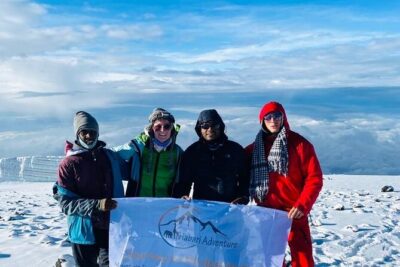
5 Days Best of Tanzania Luxury Safari Northern Circuit
Read our review →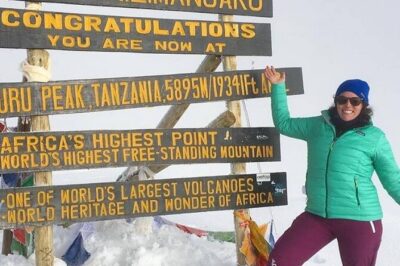
Climbing Kilimanjaro through 7 days Machame Route
Read our review →