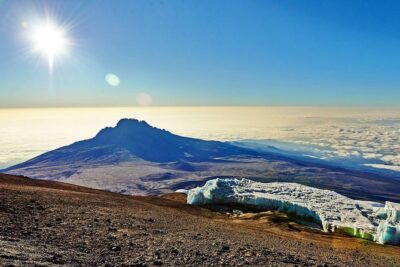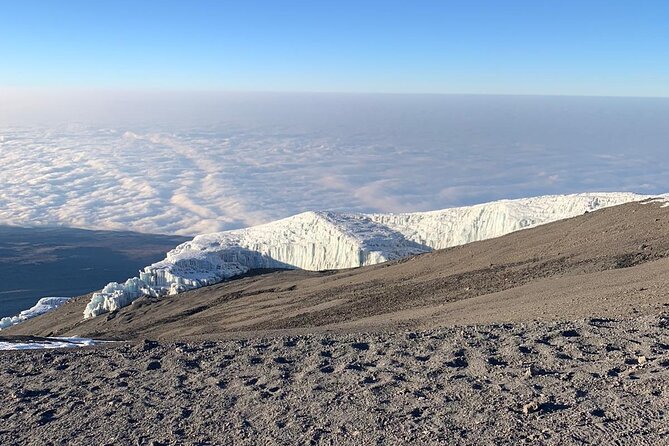
Reviewed · KILIMANJARO CLIMBS
Mount Kilimanjaro – Machame route
Seven days, one giant mountain. The Kilimanjaro Machame Route from Moshi is interesting because it walks you through multiple altitude zones, from rainforest to moorland to semi-desert and then up into the icy summit world. It is also a route where strong organization matters, since your hardest work comes on long, cold hours that start well before sunrise.
I love two things about this trip planning. First, you travel with a small group size (up to 15), which usually means less crowding at camps and a more personal pace. Second, safety comfort is built in with portable oxygen tanks and an ox meter, plus a portable first-aid kit, hot water for washing, and drinking water throughout the trek.
One possible drawback to think about up front: Kilimanjaro is not a casual hike. You should have a strong fitness level, and you will face a brutal summit day with a long climb and cold conditions, so it is worth training and planning gear early.
In This Review
- Key Things You Should Know Before You Go
- Why the Machame Route Works for a 7-Day Goal
- Your Support Team and Included Safety Gear
- Day-by-Day Plan: From Machame Gate Up to Mweka Gate
- Day 1: Machame Village and the Machame Camp, Rainforest Start
- Day 2: Shira Camp via Moorland and Rocky Ridgelines
- Day 3: Shira Heights, Lava Tower, Arrow Glacier, Barranco Camp
- Day 4: Barranco Wall Challenge and Karanga Valley, Alpine Desert
- Day 5: Barafu Hut and Summit Preparation, Alpine Desert
- Day 6: Summit Day to Uhuru Peak, Stella Point, Then Down to Mweka Hut
- Day 7: Final Descent to Mweka Gate Through Forest
- Price and Value: What $2,700 Actually Buys You
- Logistics You Can Plan Around: Timing, Pickups, and Group Size
- What to Expect on the Ground: Camps, Toilets, and the Real Comfort Level
- Gear and Body Tactics That Make This Trek Feel More Doable
- Who This Trek Fits Best
- Should You Book This Moana Tanzania Machame Trek?
- FAQ
- How long is the Kilimanjaro Machame Route trek?
- Where does this trek start and where does it end?
- What safety items are included during the trek?
- Are meals and drinking water included?
- What is not included in the price?
- How big is the group?
- Can I cancel and get a refund?
Key Things You Should Know Before You Go
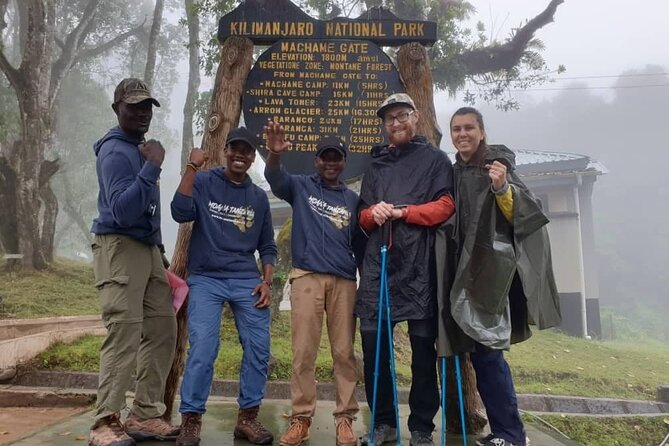
- Machame Route variety: expect rainforest, moorland, semi-desert, and alpine desert on the same 7-day climb.
- Altitude support is included: portable oxygen tanks and an ox meter, plus a first-aid kit and rescue fees.
- Small group pace: max 15 travelers helps keep logistics calmer at camps.
- Comfort touches matter: drinking water throughout and hot water for washing are included.
- A real summit plan: you aim for Stella Point first, then Uhuru Peak, followed by a long descent.
- Crew tone can be a big deal: guides such as Onesmo and Isack have been associated with a friendly, reassuring team style on this route.
Why the Machame Route Works for a 7-Day Goal
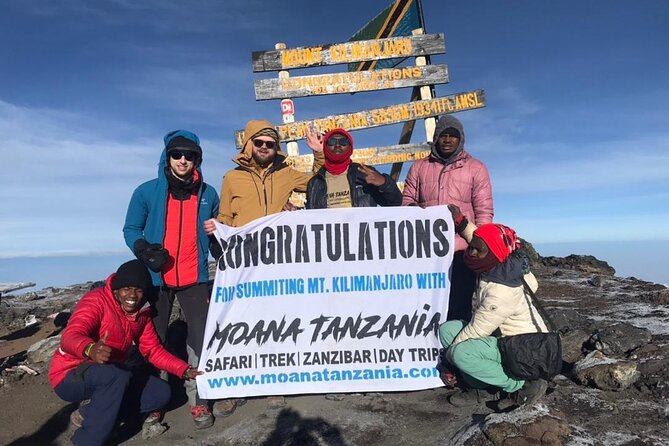
If your goal is to reach the top, the Machame Route is a smart choice because it gives you gradual acclimatization while still pushing forward with purpose. Over seven days you climb from roughly 1800m to 5895m and then descend back down to about 1650m, so your body has a chance to adjust rather than jumping to the highest elevations too fast.
The Machame Route also keeps things interesting. You start in rainforest and spend early hours moving through thick, cooler air. Then you move into moorland and semi-desert, where the air gets drier and the ground feels more exposed. By the time you are near the upper camps, the hike is mostly about steady footwork, slow breathing, and staying patient when your legs feel like they belong to someone else.
One more practical reason I like this route: it is designed around camp-to-camp progress where each day has a clear job. Some days are longer and steadier, while others are shorter but tougher, so you get training time for what summit day will feel like.
More Kilimanjaro climbs:
- Kilimanjaro climb by Lemosho Route (7-day)
★ 5.0 · 651 reviews - Kilimanjaro climb, Machame Route (7-day)
★ 5.0 · 262 reviews - Kilimanjaro Climbing Lemosho Route 8 Days.
★ 5.0 · 186 reviews
Your Support Team and Included Safety Gear
The “how” of Kilimanjaro matters as much as the “where.” This operator includes guides, cook, and porters, and you also get rescue fees covered as part of the package. That is not just paperwork. It means the operation has the logistics to respond if conditions turn serious.
You are also not going in empty-handed on summit physiology. The trip includes portable oxygen tanks and an ox meter, plus a portable first-aid kit. The oxygen gear is meant for support and monitoring, not magic. But it can make a difference in how you manage symptoms and how quickly your team can react to altitude issues.
Comfort details are included too, which you will appreciate more than you think before you go:
- Drinking water throughout the trek
- Hot water for washing
- Accommodation fees at the camps
- Private transportation in the overall ground plan
And you stay in a tight group of up to 15 travelers. That matters in practice because camp schedules and decision-making are easier when everyone is closer together.
Day-by-Day Plan: From Machame Gate Up to Mweka Gate
Day 1: Machame Village and the Machame Camp, Rainforest Start
You begin at Machame village and the nearby Machame gate, then hike from about 1800m to 3000m for roughly 11 km and 5-7 hours in rainforest.
This is the day where you find your rhythm. Rainforest trekking tends to mean damp air and mud, and it is often mentally easy at first because you are not yet fighting the thin-air struggle. Still, 5-7 hours is time on your feet, so use this day to practice slow hiking and steady breathing.
At the end of the day, you land at Machame camp. This first camp night sets the stage: hydrate, eat, and try to sleep even if your brain is buzzing from the altitude climb that is still ahead.
A few more Moshi trips to compare
- Safari Serengeti And Ngorongoro
★ 5.0 · 288 reviews - Climbing Kilimanjaro – Machame Route
★ 5.0 · 170 reviews - Climbing Kilimanjaro through 7 days Machame Route
★ 5.0 · 151 reviews - Kilimanjaro climb, Lemosho Route (8-day)
★ 5.0 · 148 reviews
Day 2: Shira Camp via Moorland and Rocky Ridgelines
Day 2 takes you from 3000m to 3850m for about 9 km and 4-6 hours in moorland. You leave the rainforest behind, then climb on an ascending path, cross a valley along a steep rocky ridge, and reach a river gorge before arriving at Shira camp.
This is where many people start feeling the altitude more clearly. The terrain can be more exposed than the first day, and ridges ask for careful pacing because one misstep costs energy. If you tend to rush early, this is a good day to slow down on purpose.
Also note the design choice: you are climbing meaningfully, but not sprinting to the highest elevations. That supports acclimatization and helps you avoid arriving to camp already wiped out.
Day 3: Shira Heights, Lava Tower, Arrow Glacier, Barranco Camp
On Day 3 you move from 3850m to 3950m for around 10 km and 6-8 hours in semi desert. From the Shira plateau you continue toward Kibo peak, pass the Lava Tower, sometimes called the shark’s tooth, and then continue up to the Arrow Glacier area before overnighting at Barranco camp.
Even if you do not know the mountain’s details, you will feel the difference in surroundings here. The semi-desert environment is drier and more open. Views can be big, but energy is precious, because you still have several high-elevation days ahead.
The “job” of this day is acclimatization through movement. You are not just walking to one point; you are preparing your body for the harder, colder stages that come next.
Day 4: Barranco Wall Challenge and Karanga Valley, Alpine Desert
Day 4 is shorter on paper: 5 km in 4-5 hours, climbing from 3950m to 4040m in alpine desert. You pass the Barranco Wall to reach the Karanga Valley, then sleep at Karanga camp.
This day is often memorable because it is not only about altitude. The Barranco Wall can feel steep and demanding, even though the distance is modest. It is a good reminder that Kilimanjaro is as much about controlled effort as it is about reaching a number on a GPS screen.
At Karanga camp, you are building experience with high-altitude fatigue before the main summit push.
Day 5: Barafu Hut and Summit Preparation, Alpine Desert
Day 5 moves from about 4040m to 4700m with 4 km and roughly 4-5 hours in alpine desert. You head to the junction that connects with the Mweka Trail, then continue up to Barafu Hut and prepare for the summit at Barafu camp.
This is a key day because it is short but it climbs. Your legs might feel like they have been through too many days already. So the practical strategy is simple: keep steps small, keep your breathing calm, and save energy for what comes overnight.
Once you arrive at Barafu camp, your rest time becomes part of your training. Eat what you can, manage your warmth, and follow your guide’s pacing instructions carefully.
Day 6: Summit Day to Uhuru Peak, Stella Point, Then Down to Mweka Hut
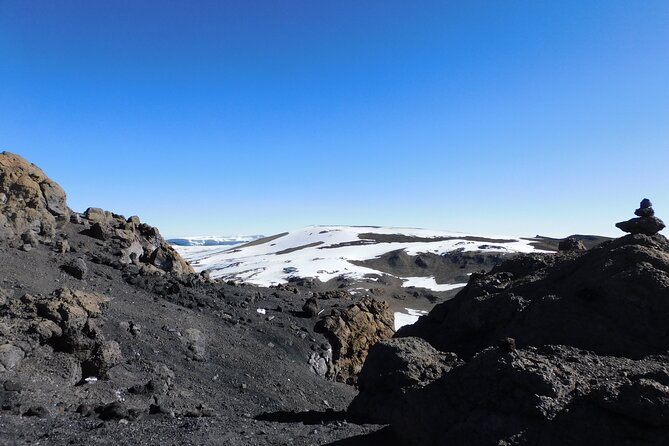
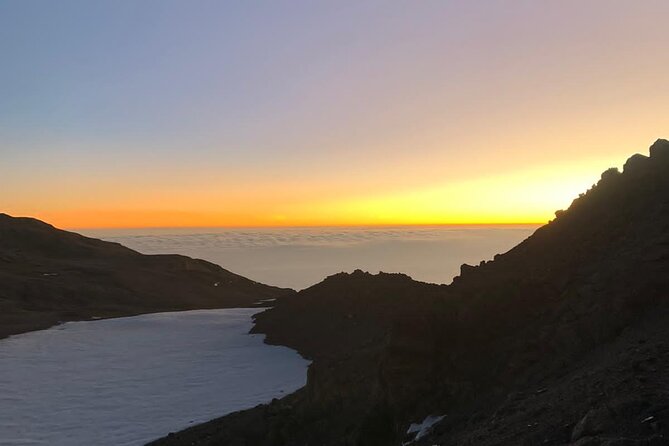
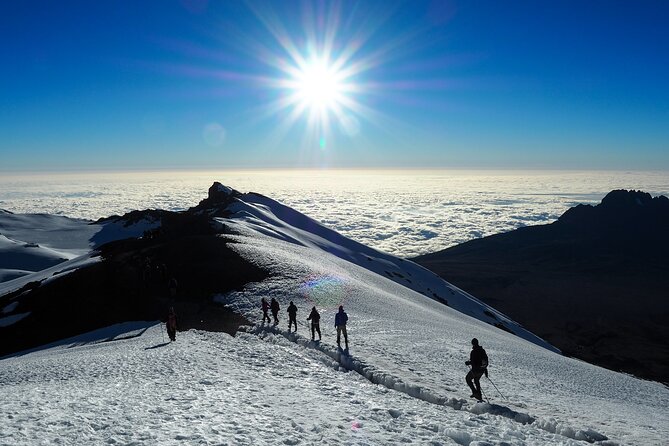
This is the day you will remember forever. You start from about 4700m, hike up to 5895m, and then descend again to about 3100m. The day can take 5-7 hours up and 5-7 hours down, with the summit area described as icy summit conditions.
Your route focuses on two big goals. You summit between the Rebmann and Ratzell glaciers, make your way to Stella Point, and then reach Uhuru Peak. After celebrating and taking pictures, you begin the long descent to Mweka Hut for the overnight.
Cold is the main villain here, along with fatigue and thin air. Even if you feel strong at first, the last push to Stella Point tends to test patience. Your plan is to move steadily, not bravely.
Descending is still hard. Your quads will feel it, and trekking poles can be a huge help if you have them.
Day 7: Final Descent to Mweka Gate Through Forest
The last day drops from around 3100m down to 1650m, for about 3-4 hours in forest. You continue your descent from Mweka hut straight to Mweka gate.
This day often feels like relief with a side of pride. Your body is still tired, but the air feels more friendly than summit night. You are mostly managing smooth walking, protecting your knees, and soaking in the fact that the hardest parts are behind you.
By the time you reach the gate, you have the satisfaction of a full route cycle: climb high, summit, and walk out.
Price and Value: What $2,700 Actually Buys You
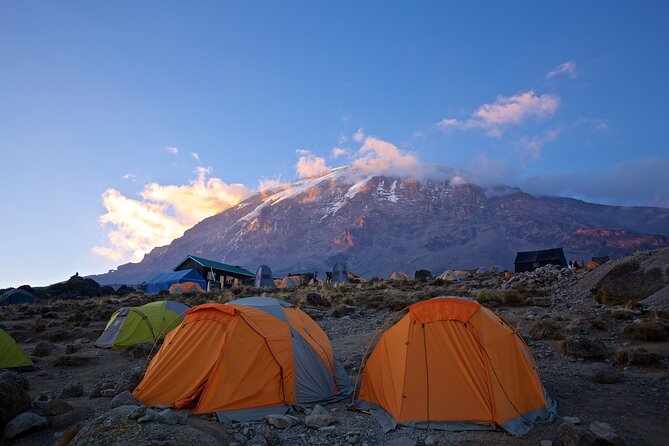
At $2,700 per person, this trek is not cheap, but it is also not just a bed and a badge. You are paying for a complete climbing support system: guides, cook, and porters, plus meals (breakfast 6, dinner 6, lunch 7), water throughout the trek, hot water for washing, and included accommodation at the camps.
You also get safety costs that many people forget to budget for. Rescue fees are included, and you have portable oxygen tanks and an ox meter as part of the package. That is the kind of planning that matters when weather, altitude, and timing do not behave.
A few things are not included, and you should budget for them:
- Personal items and toiletries
- Personal mountainclimbing gear
- Accommodation in Moshi before and after the trek
- Travel insurance
- Flight tickets
- Laundry service
So the value math is mostly about readiness. If you arrive in shape, with the right clothing and gear, you reduce stress. If you arrive underprepared, the trip can feel more expensive because you will feel the impact of every missing piece.
Logistics You Can Plan Around: Timing, Pickups, and Group Size
This trip includes private transportation, and pickup is offered in the tour summary, which is useful if you want one less moving part after you land. Meeting is set during an arrival window from 7:00 AM to 11:00 AM, and the schedule runs Monday through Sunday (within the listed date range).
There is also a built-in group cap of 15 travelers, which is a big deal on a mountain. Small groups tend to move as a unit, keep camp routines less chaotic, and make it easier for guides to manage pace.
Also, you receive a mobile ticket, which is handy for keeping things organized during your Tanzania trip.
What to Expect on the Ground: Camps, Toilets, and the Real Comfort Level
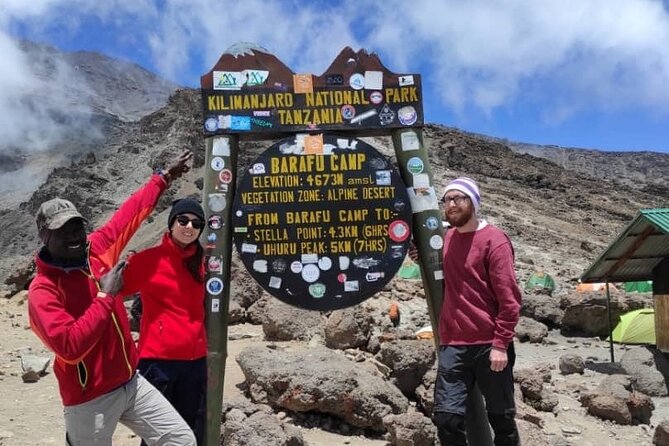
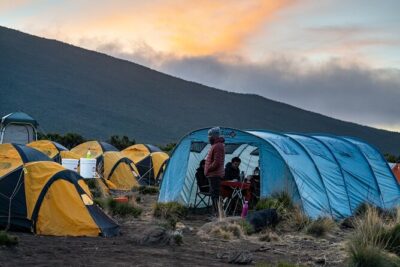
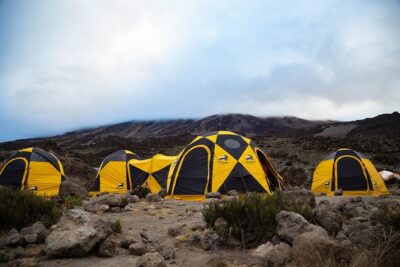
Kilimanjaro is tough, but camp infrastructure can help you recover. On this route, the Machame path is known for having a lot of base-camp stops and public toilets, which can make a real difference on multi-day hikes. When you are tired and cold, basic comfort becomes a serious quality-of-life issue.
The other comfort factor is the tone of the team. People have described a friendly atmosphere and a crew that keeps things reassuring. That matters because summit night is not only physical. It is mental, too.
If you respond well to a calm, upbeat team style, you should feel supported here, especially when you are trying to stay warm and not panic about altitude sensations.
Gear and Body Tactics That Make This Trek Feel More Doable
You are not given personal mountainclimbing gear, so plan for it. At minimum, treat cold-weather and wet conditions as real requirements. The summit day is listed as icy, and even earlier days can be damp, especially in rainforest.
Practical gear decisions to make early:
- Warm layers you can add and remove while moving
- Weather protection suited to rainforest to alpine conditions
- Footwear that works for rocky ridges and long descents
- A system for staying hydrated even when cold reduces thirst
Also plan your body. The trek requires strong physical fitness. If you want a better chance of feeling in control, train before you go, then use the early days to practice slow pacing rather than proving toughness.
And when the cold hits on summit night, follow your guide’s instructions. The goal is steady progress, not fast drama.
Who This Trek Fits Best
This Machame Route trek is a fit if you want:
- A classic Kilimanjaro route with multiple altitude zones in 7 days
- A support setup that includes oxygen gear, a first-aid kit, and rescue fees
- A small-group experience capped at 15 people
- Meals, water, and camp accommodation handled for you
It is also a good choice if you like a route with variety rather than one long, monotonous slog. Moving from rainforest to moorland to semi-desert helps keep your brain engaged, even when your legs are not.
If you are a very casual hiker, you may still be able to do it only with careful preparation and honest pacing. But based on the stated fitness requirement, you should not treat this as a beginner trek.
Should You Book This Moana Tanzania Machame Trek?
If you want a structured, safety-minded 7-day Machame Route with meals, water, camp support, and included oxygen monitoring gear, this looks like a strong option. I especially like the combination of small-group size and the practical inclusions that reduce daily decision stress, like hot water for washing and drinking water throughout.
The main reason to pause is simple: the mountain is hard. If you cannot commit to training and cold-weather readiness, you will feel it most on summit day.
My advice: book if you are prepared to treat this like a real climb, not a casual hike. If you do that, you give yourself the best shot at a smooth summit attempt and an easier return down to Mweka gate.
FAQ
How long is the Kilimanjaro Machame Route trek?
It is listed as 7 days approximately.
Where does this trek start and where does it end?
The trek starts around Machame village and Machame gate, and it ends at Mweka gate after descending from Mweka hut.
What safety items are included during the trek?
Included items list portable oxygen tanks and an ox meter, plus a portable first-aid kit. Rescue fees are also included.
Are meals and drinking water included?
Yes. The package includes breakfast 6 times, dinner 6 times, lunch 7 times, and drinking water throughout the trek.
What is not included in the price?
Not included are personal items and toiletries, personal mountainclimbing gear, accommodation in Moshi before and after the trek, travel insurance, flight tickets, and laundry service.
How big is the group?
The tour has a maximum of 15 travelers.
Can I cancel and get a refund?
You can cancel up to 6 days in advance for a full refund. For a 50 percent refund, you cancel 2 to 6 days in advance. If you cancel less than 2 days before the start time, the amount paid is not refunded.
Just posted around Moshi
- machame route★ 5.0 · 16 reviews
- Kilimanjaro Climbing Umbwe Route★ 5.0 · 3 reviews
- Wildlife Extravaganza: Manyara, Tarangire & Ngorongoro in 3 Days★ 5.0 · 3 reviews
- Mt Kilimanjaro 6 days Marangu route hike★ 5.0 · 3 reviews
- 3 Days Private E-Bike Tour in West Kilimanjaro★ 5.0 · 3 reviews
- West Kilimanjaro cycling Adventures★ 4.5 · 8 reviews
- Kilimanjaro Climb • Marangu Route ~ 9 Day★ 5.0 · 4 reviews
- Private Cycle to Kilimanjaro Bike Park Safari★ 5.0 · 6 reviews
Kilimanjaro Climbs, compared.
8-Day Small-group Lemosho Kilimanjaro Summit Trekking
Read our review →
5 Days Best of Tanzania Luxury Safari Northern Circuit
Read our review →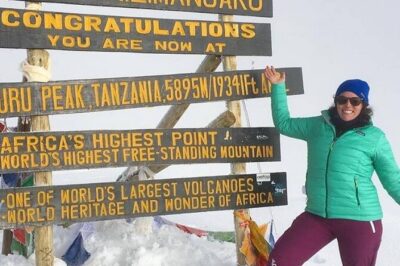
Climbing Kilimanjaro through 7 days Machame Route
Read our review →