Reviewed · KILIMANJARO CLIMBS
Mount Kilimanjaro – Lemosho Route
Kilimanjaro is a big climb, but this Lemosho route keeps things workable. What makes it interesting is the slow, layered progression from rain forest up through heath and alpine desert, finishing with a summit push from near the Rebmann and Ratzell glaciers. You also get a well-run team setup, including guides, cook, and porters, plus portable oxygen tanks and an ox meter for altitude support.
I especially like how the itinerary builds acclimatization step by step. Day 2 moves into heath and moorland, and Day 3 goes high into the alpine desert before dropping to camp again, which is exactly how you want your body to adjust. Another big plus is the human side: multiple people praised the guides for being encouraging and safety-minded, and the food has a strong reputation, including fresh meals and a vegetarian option.
One consideration: you still need strong fitness and good weather. Even with oxygen support, the summit night is hard, and cold, altitude, and timing are real factors you should plan for.
In This Review
- Key things to know before you choose the Mount Kilimanjaro Lemosho Route
- Entering Kilimanjaro From Moshi: the human-paced start
- Day 1: Londorossi Gate into rainforest, then Mti Mkubwa at 2,400 to 2,800m
- Day 2: Shira Ridge and Shira 2 Camp, leaving the rainforest behind
- Day 3: Toward Kibo and Lava Tower, then down to Barranco Camp
- Day 4: Barranco Wall to Karanga Valley, then Karanga Camp at 4,040m-ish
- Day 5: Karanga to Barafu Hut, finishing the south circuit and prepping for summit night
- Day 6: Summit night from Stella Point to Uhuru Peak, then down to 3,100m at Mweka Hut
- Day 7: Mweka descent, from 3,100m to 1,650m and down to Mweka Gate
- What you’re really paying for: price, support, and the value of camp care
- The team side: why encouragement and safety matter as much as permits
- Who this Lemosho trek suits best, and who should think twice
- Should you book this Moana Tanzania Kilimanjaro Lemosho trek?
- FAQ
- How long is the Mount Kilimanjaro Lemosho Route trek?
- Where does the trek start and end?
- What is included in the price besides the guides?
- What is not included that I should plan for?
- What fitness level do I need?
- What are the operating hours for this activity?
- What are my options if the trek is canceled due to poor weather or if I need to cancel?
Key things to know before you choose the Mount Kilimanjaro Lemosho Route
- Lemosho’s gradual altitude climb helps acclimatization, with clear habitat changes from rain forest to alpine desert.
- Summit logistics are included, from the Stella Point timing to Uhuru Peak and a controlled descent to Mweka Hut.
- A small group size is built in, with a maximum of 15 travelers, so you’re not one face in a crowd.
- Comfort details matter, including drinking water and hot water for washing at camp.
- Oxygen support is part of the package, with portable tanks and an ox meter included.
- Food is treated as serious fuel, with multiple mentions of clean, fresh meals and vegetarian availability.
Entering Kilimanjaro From Moshi: the human-paced start
This trek starts in Moshi, Tanzania, and the experience ends back at the same meeting point. The schedule also includes pickup offered, which can remove a lot of day-one stress if you’re arriving from elsewhere. There’s a simple rhythm to Kilimanjaro days here: hike hard enough to move up, then sleep to recover, often at progressively higher elevations.
Group size is capped at 15 travelers, which I like for this kind of trip. You still get the social side of trekking with others, but you’re less likely to feel rushed, lost, or stuck waiting forever. And because the team includes guides, a cook, and porters, you should expect a more “organized camp” feel than a backpacking-only vibe.
One more thing I’d call out from the experience design: the itinerary is built with specific camp choices that match the altitude you’re dealing with. That matters, because Kilimanjaro is not just about distance. It’s about getting your body used to thinner air.
More Kilimanjaro climbs:
- Kilimanjaro climb by Lemosho Route (7-day)
★ 5.0 · 651 reviews - Kilimanjaro climb, Machame Route (7-day)
★ 5.0 · 262 reviews - Kilimanjaro Climbing Lemosho Route 8 Days.
★ 5.0 · 186 reviews
Day 1: Londorossi Gate into rainforest, then Mti Mkubwa at 2,400 to 2,800m
Day 1 walks you from Londorossi Gate through rain forest, roughly 6 km over 3 to 4 hours. You start lower, so the goal is more about settling in than going fast. Keep your eyes open for wildlife, because this is the part of the route where the greenery and conditions can feel alive.
You’ll sleep at Mti Mkubwa. This is a good first-night camp choice because it sits at a manageable elevation compared to later stages. The trail atmosphere also tends to feel less exposed than the higher sections, which is helpful when you’re figuring out your pace, your layers, and how your body reacts to the mountain.
What I like about this start: it’s active without being punishing. It gives you time to check your gear, test your breathing rhythm, and stop before fatigue snowballs.
Day 2: Shira Ridge and Shira 2 Camp, leaving the rainforest behind
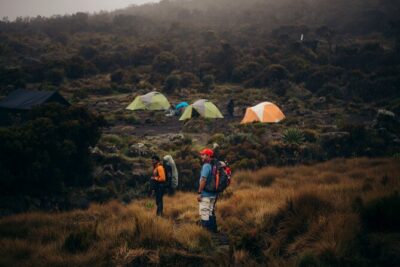
On Day 2 you rise from about 2,800m to 3,750m and hike 14 km for roughly 7 to 8 hours. This is the big transition day. The rainforest fades, and you move into heath and moorland, which feels colder and more open. Even if you’re not at “summit cold” yet, you’ll likely notice the temperature shift and the way wind changes how warm you feel.
You’ll reach the Shira ridge and then continue to Shira 2 Camp for the night. The practical value here is acclimatization through gradual upward movement. You’re going higher, but you’re also moving in a way that aligns with the trek’s later rhythm.
Potential drawback: Day 2 is the longer day on paper. If your fitness is solid but your altitude tolerance is unknown, you’ll need to be disciplined about pace. Slow and steady usually wins on Kilimanjaro, especially right after you change environments.
Day 3: Toward Kibo and Lava Tower, then down to Barranco Camp
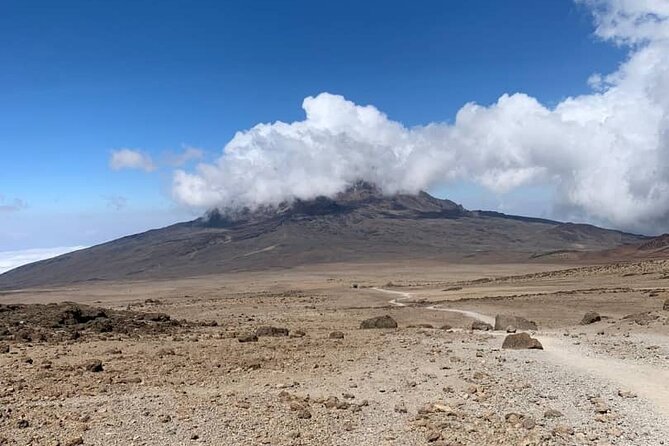
Day 3 climbs from about 3,750m to 3,950m, covering 10 km and taking around 6 to 8 hours. You continue toward Kibo Peak, then head to Lava Tower, also called sharkstooth, before passing the Arrow Glacier and continuing to Barranco Camp.
This is one of the most memorable days visually, because it’s where the mountain starts feeling fully “alpine.” The trek is in alpine desert habitat, which means less vegetation, more stark rock, and a stronger sense that you’ve left the comfort of lower slopes.
Here’s the value in how the day is structured: you’re not just going up and then camping at the same high level. You push through high terrain, hit key landmarks like the Lava Tower area, then finish at Barranco Camp, which sets you up for the next day’s stepping-stone approach.
Real consideration: with higher altitude and colder air, this can be where hydration and warm clothing choices matter most. If your layers are wrong, you’ll feel it.
A few more Moshi trips to compare
- Safari Serengeti And Ngorongoro
★ 5.0 · 288 reviews - Climbing Kilimanjaro – Machame Route
★ 5.0 · 170 reviews - Climbing Kilimanjaro through 7 days Machame Route
★ 5.0 · 151 reviews - Kilimanjaro climb, Lemosho Route (8-day)
★ 5.0 · 148 reviews
Day 4: Barranco Wall to Karanga Valley, then Karanga Camp at 4,040m-ish
Day 4 is shorter on distance: about 5 km and 4 to 5 hours, going from roughly 3,950m to 4,040m. You pass the Barranco Wall and move into the Karanga Valley, then overnight at Karanga Camp.
The Barranco Wall section is famous for a reason: it gives you a physical focus point in a region that otherwise can feel like a long, grinding climb. The upside of that is mental clarity. You can break the day into chunks instead of just “slog, slog, slog.”
The drawback is also simple: because the altitude is still high, effort feels heavier. Even when the hike is short, you’re working against thin air, so plan to move carefully and stay consistent with your pace.
Day 5: Karanga to Barafu Hut, finishing the south circuit and prepping for summit night
On Day 5 you move from about 4,040m to 4,700m, hiking around 4 km for 4 to 5 hours. The day includes heading toward the junction that connects with the Mweka Trail, then continuing up to Barafu Hut.
This is described as completing the south circuit, and the key point for you is what it does to your mindset. You’re not just hiking for views anymore. You’re hiking to set up the summit push.
Overnight is at Barafu Camp, and this is where you’ll want to be ready: rest as much as you can, eat what you can, and keep your kit organized. Cold, fatigue, and altitude all combine here, so reducing small frustrations becomes part of the strategy.
Day 6: Summit night from Stella Point to Uhuru Peak, then down to 3,100m at Mweka Hut
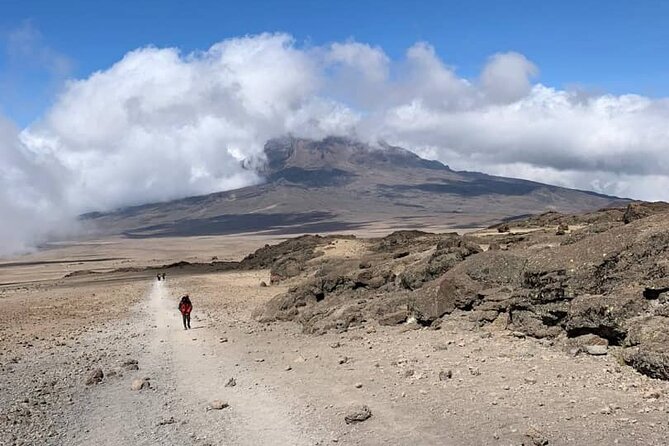
Day 6 is the star of the whole trip, and it’s where you feel the mountain’s scale. You start at around 4,700m and summit at 5,895m, then descend back to about 3,100m. Hiking time is listed as 5 to 7 hours up and 5 to 7 hours down.
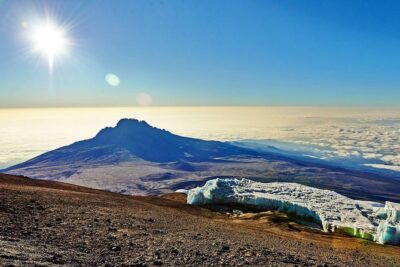
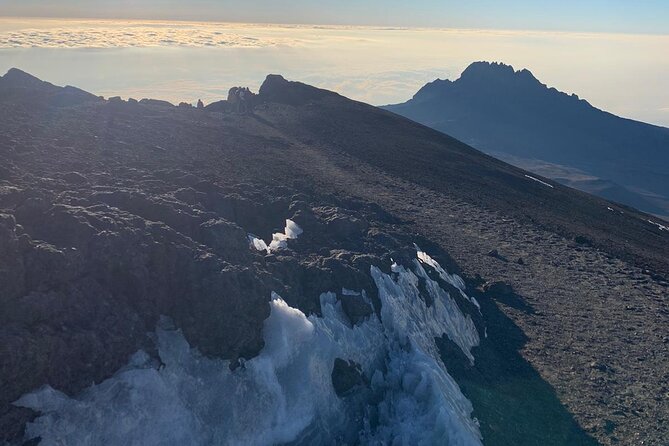
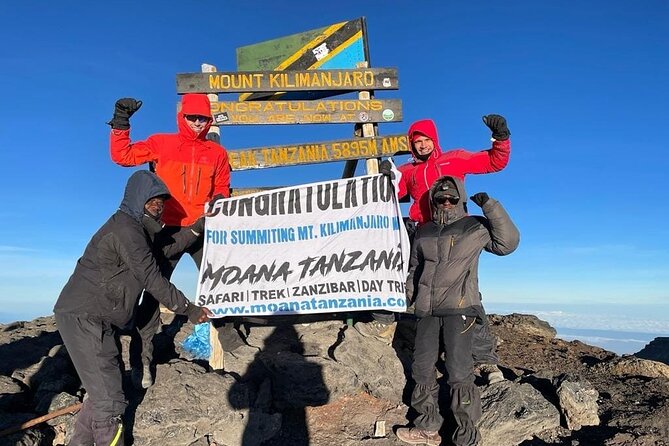
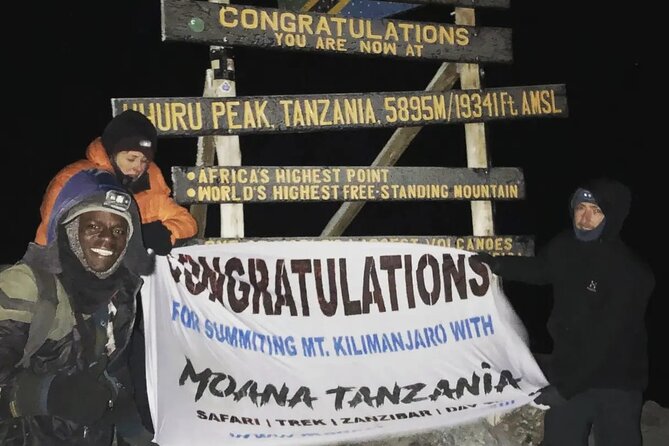
The summit push begins between the Rebmann and Ratzell glaciers, then you make your way to Stella Point. After that, you summit Uhuru Peak, celebrate and take pictures, then descend to Mweka Hut overnight.
A practical note: summit day is not just “walking uphill.” It’s timing, temperature management, and breathing discipline. The fact that oxygen tanks and an ox meter are included matters here in a purely practical way. They are not magic, but having them can add a layer of altitude safety planning.
From the reviews, the strongest theme is that guides keep encouragement going while treating safety seriously. That combination, steady pace plus constant morale support, is what helps people stay focused instead of panicking.
Day 7: Mweka descent, from 3,100m to 1,650m and down to Mweka Gate
On Day 7 you finish the climb with a descent from roughly 3,100m down to 1,650m, hiking about 3 to 4 hours through forest. It ends with the trek reaching Mweka Gate, and the activity ends back at the meeting point.
This is the day when your legs might feel like they’re made of rubber. The good news is the terrain is in forest habitat again, which usually brings a different feel to the air. Mentally, it can also feel like relief. You did it.
Practical tip: even though it’s “just descent,” keep an eye on your footing. Kilimanjaro is hard on knees, and rushing makes it worse.
What you’re really paying for: price, support, and the value of camp care
The listed price is $2,900 per person for about 7 days. That’s not a small number. But for Kilimanjaro, it often reflects what you’re buying: a trained guide team, a working camp crew, permits and park fees, and a logistics system that runs every day of the trek.
Here’s what this package includes that you’ll feel in real life:
- Private transportation and all fees and taxes
- Guides, cook, and porters
- Drinking water and hot water for washing
- Portable oxygen tanks and an ox meter
- Portable first-aid kit
- Meals: breakfast (6), lunch (7), dinner (6)
From the reviews, food is a standout. People described meals as clean and fresh, with enough food to keep you fueled. There was also a mention of vegetarian options, which is a big deal on a trek where you need energy even when appetite dips.
What’s not included is also important for your budgeting reality:
- personal items and toiletries
- personal mountainclimbing gear
- travel insurance
- flight tickets
- laundry service
- tips for guides, cook, and porters
My value take: you’re paying for daily operations plus risk management elements like first-aid support and altitude tools. If you’ve ever trekked somewhere where the camp setup was half-cooked, you’ll recognize the difference quickly. Here, the design aims to keep you fed, warm enough, and medically supported when needed.
The team side: why encouragement and safety matter as much as permits
Kilimanjaro treks live or die on pacing and morale. The reviews you provided highlight a dedicated, fun, caring team. Multiple people specifically praised the guides for continuing to encourage the group all the way to the summit, while also taking safety seriously.
Names that showed up in the feedback include Gea (running the company), David (chef), and guides/crew members like Gasper, Robson, Salim, Herbert, and Gewa. Even if you do not get those exact people on your dates, it gives you a clue about the standards they aim for: professional leadership, good food, and a calm team energy.
This matters because summit nights can turn into a mental contest. If your guide stays focused on safety and keeps you moving with consistent encouragement, it helps you ignore the fear thoughts and stick to what your body can do right now.
Who this Lemosho trek suits best, and who should think twice
This tour is designed for people with a strong physical fitness level. That’s not just a box-checking statement. The trek involves multiple high-elevation days, including a summit push to 5,895m.
It’s a great fit if you:
- want one of Kilimanjaro’s longer, acclimatization-friendly routes
- like the idea of changing habitats day by day, from rainforest to alpine desert and back down into forest
- want a team that handles logistics and keeps you motivated
Think twice if you:
- struggle with sustained uphill effort for many hours
- are very sensitive to cold and high altitude
- are not able to plan for summit day conditions, including early start, long hiking hours, and the need to keep going even when you feel tired
Should you book this Moana Tanzania Kilimanjaro Lemosho trek?
If your goal is a classic Kilimanjaro journey with a route that supports acclimatization, this Lemosho plan makes sense. I like the stepwise itinerary, the included camp support, and the altitude safety extras like oxygen tanks and an ox meter. Add in the camp care details, especially hot water for washing and well-regarded meals, and the experience feels more “organized adventure” than rough expedition.
Still, go in with respect. Summit night is never guaranteed, and high elevation asks a lot of your body. If you train, pack smart, and listen to your guides, this trek can deliver exactly what you hope for: a once-in-a-lifetime achievement, ending with the real satisfaction of walking back down to greener air.
FAQ
How long is the Mount Kilimanjaro Lemosho Route trek?
The trek is listed as 7 days (approx.).
Where does the trek start and end?
It starts in Moshi, Tanzania, and it ends back at the same meeting point.
What is included in the price besides the guides?
The package includes private transportation, all fees and taxes, guides, cook and porters, drinking water and hot water for washing, portable oxygen tanks and an ox meter, a portable first-aid kit, and meals (breakfast 6, lunch 7, dinner 6). It also notes pickup offered and mobile ticket.
What is not included that I should plan for?
Not included: personal items and toiletries, personal mountainclimbing gear, travel insurance, flight tickets, laundry service, and tips for guides, cook, and porters.
What fitness level do I need?
The experience states you should have a strong physical fitness level.
What are the operating hours for this activity?
The activity shows operating dates from 11/15/2021 to 06/18/2026, and the listed meeting window is Monday to Sunday, 7:00 AM to 11:00 AM.
What are my options if the trek is canceled due to poor weather or if I need to cancel?
The data says the experience requires good weather, and if it is canceled due to poor weather you will be offered a different date or a full refund. Cancellation refunds depend on when you cancel: you can cancel up to 6 days in advance for a full refund, and shorter timelines reduce or remove refunds.
Just posted around Moshi
- machame route★ 5.0 · 16 reviews
- Mt Kilimanjaro 6 days Marangu route hike★ 5.0 · 3 reviews
- Kilimanjaro Climbing Umbwe Route★ 5.0 · 3 reviews
- Wildlife Extravaganza: Manyara, Tarangire & Ngorongoro in 3 Days★ 5.0 · 3 reviews
- 3 Days Private E-Bike Tour in West Kilimanjaro★ 5.0 · 3 reviews
- West Kilimanjaro cycling Adventures★ 4.5 · 8 reviews
- Kilimanjaro Climb • Marangu Route ~ 9 Day★ 5.0 · 4 reviews
- Private Cycle to Kilimanjaro Bike Park Safari★ 5.0 · 6 reviews
Kilimanjaro Climbs, compared.
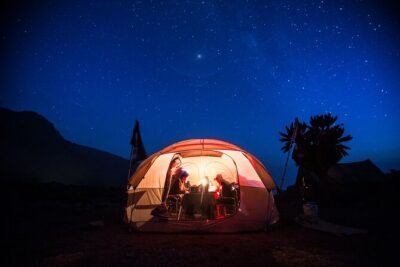
8-Day Small-group Lemosho Kilimanjaro Summit Trekking
Read our review →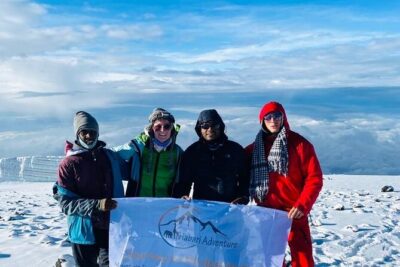
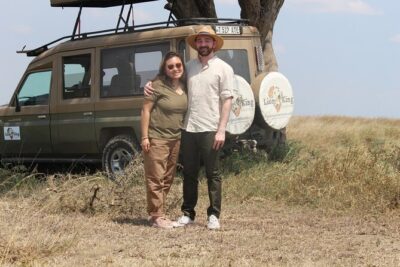
5 Days Best of Tanzania Luxury Safari Northern Circuit
Read our review →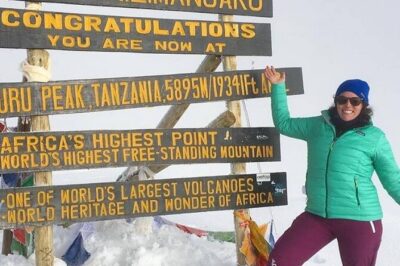
Climbing Kilimanjaro through 7 days Machame Route
Read our review →