Reviewed · KILIMANJARO CLIMBS
Lemosho Route 8 Days 7 Nights/Kilimanjaro Climb
Eight days to the roof of Africa. This Lemosho route is a smart way to climb Kilimanjaro, built around rest that matters for summit day, including a split over Barranco to Barafu so you get a short breather before the midnight start. I like the crew support too, from the cooks and porters who keep camp running to guides such as Zacariah, Epa, Eric, and Nicholas who help you stay calm, warm, and moving when the mountain gets tough.
The main drawback is the schedule on summit night. You’ll start between midnight and 2 a.m., and Day 7 is a brutally long push, followed by a descent while you’re still running on little sleep. If you hate early mornings, you’re going to feel it here, even with good pacing.
In This Review
- Key things I’d focus on
- Why the 8-Day Lemosho Schedule Works for Summit Day
- Moshi Start: The 9:00 a.m. Begin and the 45-Minute Park-Entry Drive
- Rainforest Footing to the Shira Plateau Rim (Days 1 to 2)
- Shira Plateau and Lent Hills Acclimatization (Day 3)
- Lava Tower, Arrow Glacier, and the Barranco Arrival (Day 4)
- Barranco Wall to Karanga Valley: Where Your Legs Learn Discipline (Day 5)
- South Circuit Views and Early Rest at Barafu (Day 6)
- The Midnight Summit Push to Stella Point and Back (Day 7)
- Mweka Descent, Certificates, and a Proper Crew Farewell (Day 8)
- Price and Logistics: What $2,600 Covers and Why It Matters
- What to Pack: The Stuff Kilimanjaro Actually Punishes You For
- Fitness Fit: Who Should Do This Climb, and Who Should Rethink It
- Who This Trek Suits Best
- Should You Book This 8-Day Lemosho Climb?
- FAQ
- Where does the trek start and finish?
- What time does the tour start?
- How long is the climb?
- What is included in the price?
- What is not included?
- Do you offer pickup and tickets?
- How much should I tip the crew?
- Is free cancellation available?
- How many travelers can be in the group?
Key things I’d focus on
- Smart pacing before summit night, thanks to the 8-day rhythm between Barranco and Barafu
- Real acclimatization days, including a Shira Plateau exploration and options over Lent Hills
- A dramatic, athletic mid-trek day on the Barranco Wall into Karanga Valley
- Solid logistics for fewer headaches, with camping gear, water, permits, and rescue fees handled
- A long, guided summit day that targets Stella Point for sunrise on the crater rim
Why the 8-Day Lemosho Schedule Works for Summit Day
Kilimanjaro punishes bad timing. The hardest day is always the summit push, because you leave camp extremely early, usually between midnight and 2 a.m. That means you’re sleep deprived going into the longest, steepest part of the climb.
That’s exactly why the 8-day Lemosho variation feels so practical. Instead of forcing Barranco to Barafu in one continuous gulp, the route stretches it out so Day 6 can be more of a prep day. You get a proper early dinner and rest at Barafu, not just a last-minute scramble.
In plain terms, you’re buying yourself a chance to arrive at summit night with your energy intact. It’s not a magic trick, but it’s good strategy.
More Kilimanjaro climbs:
- Kilimanjaro climb by Lemosho Route (7-day)
★ 5.0 · 651 reviews - Kilimanjaro climb, Machame Route (7-day)
★ 5.0 · 262 reviews - Kilimanjaro Climbing Lemosho Route 8 Days.
★ 5.0 · 186 reviews
Moshi Start: The 9:00 a.m. Begin and the 45-Minute Park-Entry Drive
Your day starts in Moshi, and the tour begins at 9:00 a.m. From there, you take a roughly 45-minute drive through mountain villages to the Kilimanjaro National Park gate.
There’s a lot happening at the gate area, and that’s normal. Crews are staging gear, permits are being processed, and you’re waiting your turn. I actually like this part, because it’s a quick reality check, you see how many teams are out there and how organized everything has to be.
Then you move into the first hiking zone, where the trail can be muddy and slippery. This is when you want to be set up with trekking poles and gaiters, because your feet will thank you later.
Rainforest Footing to the Shira Plateau Rim (Days 1 to 2)
Day 1 is all about getting into motion and staying steady as elevation rises. You’ll hike through rainforest scenery on windy trails at lower elevations where temperatures can be more comfortable, but mud is the big issue. It’s a “slow and sure” day.
On Day 2, you continue ascending and eventually leave the forest behind. The route climbs steadily toward the rim of the Shira Plateau, and temperatures start to drop. Wide views begin to replace the dense trees, and that shift changes how your body feels: more chill, more breathing effort, and a need to keep your pace controlled.
This is a good place to lock in habits for the climb. I’d suggest you treat Day 2 as training for the mountain’s rhythm, not as a day to prove anything. Save the big effort for later.
Shira Plateau and Lent Hills Acclimatization (Day 3)
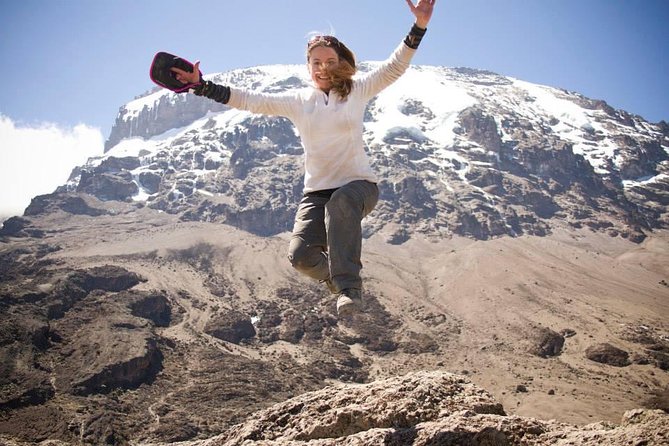
Day 3 is a standout because it’s not just transit. You explore the Shira Plateau for a full day, walking east toward Kibo’s glaciered peak.
You’ll cross moorland meadows and reach Shira 2 camp near a stream, then continue on to Moir Hut, a lesser-used site at the base of the Lent Hills. Lent Hills matter because they offer excellent acclimatization opportunities. In other words, you can move, explore options, and let your body adjust without jumping straight to the next big altitude step.
The overall payoff is mental too. A plateau day gives you time to settle in, learn the pace you can sustain, and stop feeling like every step is a sprint toward summit day. On Kilimanjaro, calm usually beats bravado.
A few more Moshi trips to compare
- Safari Serengeti And Ngorongoro
★ 5.0 · 288 reviews - Climbing Kilimanjaro – Machame Route
★ 5.0 · 170 reviews - Climbing Kilimanjaro through 7 days Machame Route
★ 5.0 · 151 reviews - Kilimanjaro climb, Lemosho Route (8-day)
★ 5.0 · 148 reviews
Lava Tower, Arrow Glacier, and the Barranco Arrival (Day 4)
Day 4 is where the route turns from “steady climb” into “scenery with teeth.” Starting from the Shira area at about 4,200 m, you move east up a ridge, passing a junction toward the Kibo peak, then continuing southeast.
The highlight is Lava Tower, often called Shark’s Tooth, with an elevation listed around 4,650 m. Shortly after, you reach another junction that leads toward the Arrow Glacier.
Then you descend to Barranco Camp. This part is important. You get dramatic views while you’re still climbing, but you also finish the day by lowering your height, which helps your overall acclimatization plan.
You’ll feel this day in your legs, but it’s also a morale boost. You get proof the route is going somewhere, fast.
Barranco Wall to Karanga Valley: Where Your Legs Learn Discipline (Day 5)
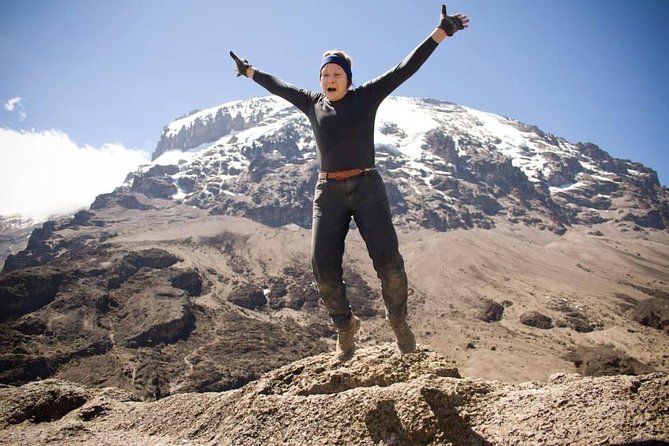
Day 5 is one of the most memorable days for pure trekking energy. After breakfast, you continue on a steep ridge and tackle the Barranco Wall.
Then you arrive in the Karanga Valley and reach a junction that connects with the Mweka Trail. The Barranco Wall section is a reality check for balance and strength. You might see how quickly a well-trained crew can move over the wall, but you still want to keep your own pace.
Overnight at Karanga Camp. This is another acclimatization-reinforcing step, because you’re moving toward higher elevations without skipping the built-in rhythm of rest and adaptation.
If you’ve been nursing tired knees up to this point, this is where trekking poles become non-negotiable. Keep your weight centered and step carefully.
South Circuit Views and Early Rest at Barafu (Day 6)
By Day 6, you’re heading toward Barafu Camp. Once you reach it, you’ve completed the South Circuit, and you get a better picture of what the summit route will feel like.
One detail I like here: the route offers a variety of breathtaking views of the summit from different angles. That matters because it gives you time to mentally prepare. You get to see what’s ahead, not just guess at it.
Then comes the key part. You have early dinner and rest, because summit night starts unbelievably early. Barafu is not the time to be late, chatty, or slow to settle.
If you can manage your routine well here, you’ll buy yourself a small advantage on Day 7, when the mountain turns serious.
The Midnight Summit Push to Stella Point and Back (Day 7)
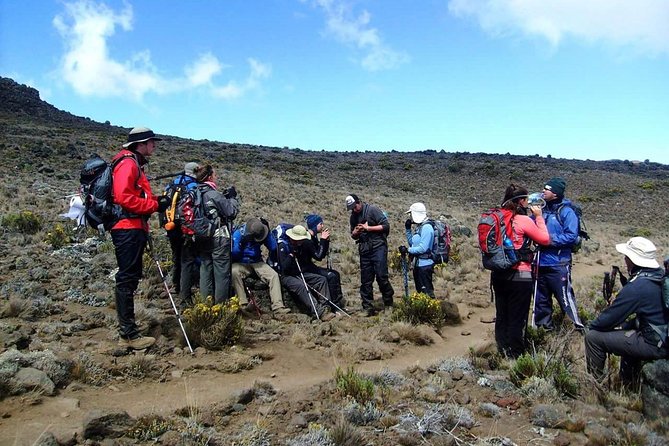
This is the day you train for, and it’s exactly as hard as you’d expect. The schedule starts between midnight and 2 a.m., and the trek covers the most mentally and physically challenging portion of the climb.
You continue your way to the summit between the Rebmann and Ratzel glaciers. The ascent includes switchbacks in a northwesterly direction, and the route goes through heavy scree as you work your way toward Stella Point on the crater rim.
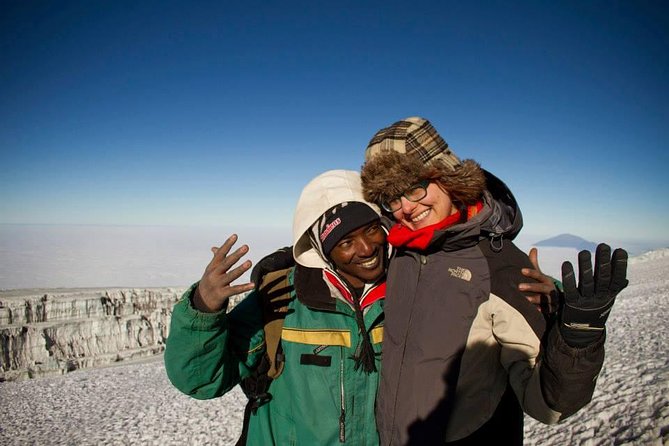
At Stella Point, you’ll get one of Kilimanjaro’s classic rewards: sunrise from the crater rim. Even if you’re exhausted, sunrise gives you that “we’re really doing this” feeling.
Then you descend to around 3,090 m (about 10,150 ft). This is a long day, and the descent portion matters too, because your legs will be tired and the temperature will still be cold enough to make you feel every step.
Mweka Descent, Certificates, and a Proper Crew Farewell (Day 8)
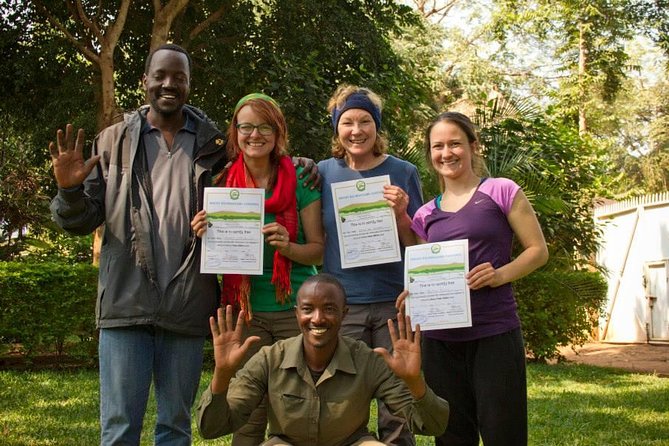
Day 8 starts after breakfast with a ceremony that’s focused on appreciation and team bonding with your crew. That’s more than a feel-good tradition. It’s also a psychological wrap-up after days of relying on your team for warmth, food, and safe logistics.
Then you descend to the Mweka Park Gate to receive your summit certificates. After that, a vehicle meets you at Mweka village and drives you back to your hotel in Moshi, about 30 minutes away.
As the weather becomes warmer, the terrain is wet, muddy, and steep. So even on the last day, keep your gaiters and trekking poles mindset. A slippery finish can still mess up your ankles.
Finally, you get a well-earned hot shower, dinner, and celebrations. You don’t just reach the top, you come back with the kind of fatigue that makes a normal meal feel like a holiday.
Price and Logistics: What $2,600 Covers and Why It Matters
At $2,600 per person, this climb isn’t cheap. But the value is in what the price actually includes.
You’re paying for park fees, rescue fees, camping equipment, and water. You’re also covering salaries for the guide, cooks, and porters, plus transport to and from the mountain for you and for the crew. On top of that, crew park fees and certificates of achievement are included.
Meals are handled too, with dinner on 8 days, lunch on 8 days, and breakfast on 7 days. If you’ve ever tried to do a complicated itinerary in a place where logistics can get messy, you’ll appreciate how much this removes from your stress.
Also note the included airport transfers, two ways. That matters because getting to Moshi and getting back without confusion can be the difference between feeling relaxed or frazzled.
What’s not included is also clear. You’ll handle international flights, visas, travel insurance, and additional personal equipment. So the real planning job is about you, your packing list, and your documents.
What to Pack: The Stuff Kilimanjaro Actually Punishes You For
The itinerary repeatedly points out what can go wrong: slippery trails, mud, and steep sections. Day 1 can be muddy and slippery in the rainforest, and Day 8 is also wet, muddy, and steep as temperatures warm.
That means your comfort depends a lot on traction and foot protection. Plan on bringing gaiters and trekking poles, since the route specifically recommends them for the muddy and slippery days.
For summit night, you’re told to stay warm and focused. That’s a direct clue that temperatures will be cold during the early hours. Even if you’ve climbed before, don’t show up underpacked. Cold discomfort drains energy fast.
Other personal equipment isn’t listed in detail, so make sure you confirm the organizer’s expectations before you go. But the two items they highlight for slippery footing are a sure bet.
Fitness Fit: Who Should Do This Climb, and Who Should Rethink It
This trek calls for moderate physical fitness. That doesn’t mean it’s easy. It means the plan is structured for people who can handle long hiking days with elevation gains and descents.
Day 7 alone is a reminder that stamina matters more than speed. You’ll hike for about 13 hours that day, starting extremely early, then still continue with a descent afterward.
If you’re someone who gets grumpy with poor sleep, make peace with summit night now. If you can manage pacing, keep your steps careful on muddy terrain, and follow your guide’s cues, you’ll be in good shape.
This is also a good fit if you want a team-based experience. The tour runs with guides, cooks, and porters, and the whole system is designed for safety and consistent camp operations.
Who This Trek Suits Best
- First-time Kilimanjaro climbers who want a schedule that supports acclimatization and a realistic summit build-up
- People who want strong logistics handled, including camping gear, water, permits, and meals
- Anyone who values teamwork, because your crew support is a central part of the journey, not an afterthought
Should You Book This 8-Day Lemosho Climb?
I’d book it if you’re serious about getting to the summit with a plan that respects the toughest day. The 8-day pacing is the key selling point, especially the way it helps you arrive at summit night rested enough to function.
I’d hesitate if you know you struggle with extreme early starts, because the midnight to 2 a.m. window is real. Also, you should be comfortable with muddy, steep hiking and long days, even at the end of the climb.
If those points sound manageable, this is a strong value for a fully supported, permit-covered, gear-provided Kilimanjaro climb out of Moshi.
FAQ
Where does the trek start and finish?
The trip starts in Moshi. You drive about 45 minutes to the Kilimanjaro National Park gate, and at the end you descend to Mweka Park Gate, then ride about 30 minutes back to your hotel in Moshi.
What time does the tour start?
The start time is 9:00 a.m.
How long is the climb?
It runs for 8 days, 7 nights (approx.).
What is included in the price?
Park fees, camping equipment, rescue fees, water, salaries for the guide, cooks, and porters, transport to and from the mountain for you and the crew, crew park fees, certificates of achievement, airport transfer 2 ways, and meals (breakfast 7 days, lunch 8 days, dinner 8 days).
What is not included?
International flights, visas, travel insurance, and additional personal equipment.
Do you offer pickup and tickets?
Pickup is offered, and you receive a mobile ticket.
How much should I tip the crew?
Tipping is recommended for group sharing as follows: Guide $15 to $20 per guide per day, Cook $10 to $15 per day, and Porters $8 to $10 per porter per day.
Is free cancellation available?
Yes, you can cancel up to 24 hours in advance for a full refund.
How many travelers can be in the group?
This tour has a maximum of 2 travelers.
Just posted around Moshi
- machame route★ 5.0 · 16 reviews
- Kilimanjaro Climbing Umbwe Route★ 5.0 · 3 reviews
- Wildlife Extravaganza: Manyara, Tarangire & Ngorongoro in 3 Days★ 5.0 · 3 reviews
- Mt Kilimanjaro 6 days Marangu route hike★ 5.0 · 3 reviews
- 3 Days Private E-Bike Tour in West Kilimanjaro★ 5.0 · 3 reviews
- West Kilimanjaro cycling Adventures★ 4.5 · 8 reviews
- Private Cycle to Kilimanjaro Bike Park Safari★ 5.0 · 6 reviews
- Kilimanjaro Climb • Marangu Route ~ 9 Day★ 5.0 · 4 reviews
Kilimanjaro Climbs, compared.
8-Day Small-group Lemosho Kilimanjaro Summit Trekking
Read our review →
5 Days Best of Tanzania Luxury Safari Northern Circuit
Read our review →
Climbing Kilimanjaro through 7 days Machame Route
Read our review →