Reviewed · KILIMANJARO CLIMBS
Kilimanjaro Northern Circuit Route 8 Days
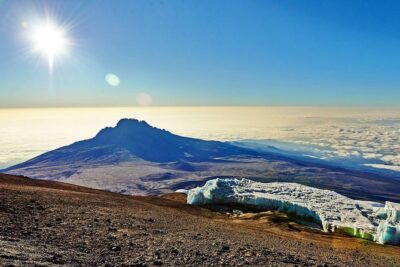
Quiet trails, big altitude work. The Kilimanjaro Northern Circuit is the longest route, and that extra time helps you pace the altitude, while you also spend more days away from the main crowds. I like that this route starts on the Lemosho side, then gradually shifts you toward the mountain’s northern slopes for a more personal climb.
I also like the way the support is built into the trip. You get a full tent setup, meals, hot washing water, and real safety gear like a Gamow bag plus emergency oxygen and continuous vital sign monitoring. The main drawback is simple, this is not a casual hike, with a very long summit day (often 13-16 hours) and steep, cold conditions to manage.
In This Review
- Key points I’d plan around
- Why the Northern Circuit feels calmer than most Kilimanjaro routes
- From Moshi and Londorossi Gate, the first altitude jump is planned
- Day 2 up through moorland: pole pole really matters
- Day 3 into alpine desert near Shark’s Tooth
- Day 4 around Kibo’s northern face, expect ups and downs
- Day 5 to Third Cave Camp: the northern slopes finally feel yours
- Day 6 sharp ascent to School Hut, views and altitude gain
- Summit day from midnight to Uhuru Peak via Gillman’s and Stella
- Descent through lush Mweka forest and the certificate moment
- What you really get for $3,000 per person, and what it costs you in effort
- The support team vibe: why guides and porters matter on a long route
- Who this 8-day Northern Circuit fits best, and who should reconsider
- Should you book this Kilimanjaro Northern Circuit?
- FAQ
- How many days is the Kilimanjaro Northern Circuit route?
- Where does the trek begin and which gate do you use?
- What does the trip include for on-mountain camping and fees?
- What are the main summit route landmarks?
- Are summit certificates awarded, and what colors mean what?
- What medical and safety equipment is included?
- What accommodations are included before the climb?
- What is not included in the price?
Key points I’d plan around
- Northern Circuit pacing gives you more time to adjust, which matters on Kilimanjaro
- Lemosho start, northern traverse means more solitude and different scenery each day
- Medical backup is explicit (Gamow bag, emergency oxygen, pulse oximeter, vital sign monitoring)
- Comfort on the climb includes a wash tent, private flush toilet, and steamy towels at camp
- Summit logistics are structured with Gillman’s Point and Stella Point before Uhuru Peak
- Your summit day is long so bring realistic expectations for early starts and night hiking
Why the Northern Circuit feels calmer than most Kilimanjaro routes
This is the route for people who want Kilimanjaro, minus the constant crowd pressure. The Northern Circuit spends more days on the mountain than the shorter options, and that extra time helps you go slower. On Kilimanjaro, slow is not just a motto, it’s a survival strategy.
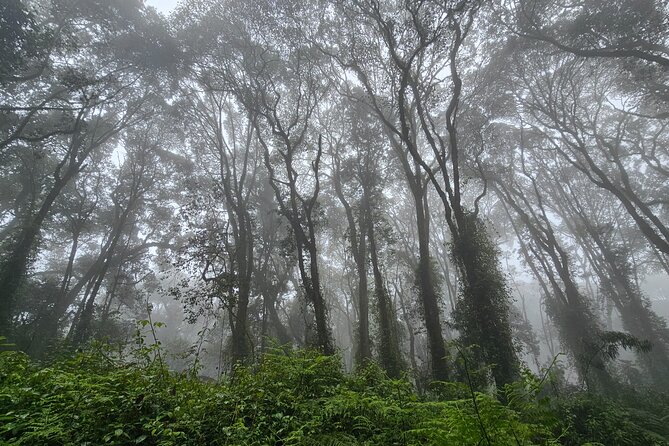
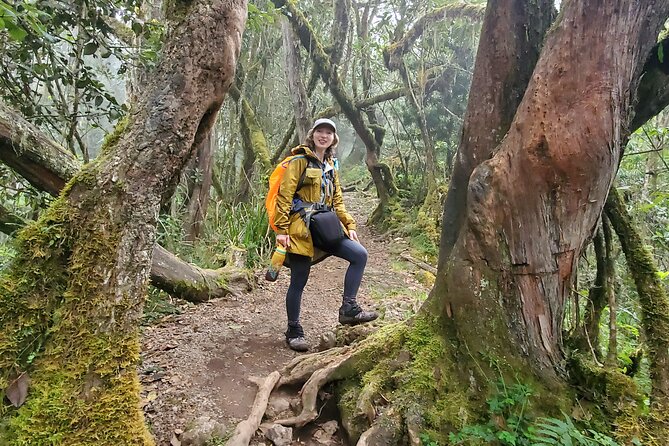
Starting on the Lemosho side also sets you up for a natural progression. You build from rain forest into moorland, then into the alpine desert and scree. That means you’re not just changing altitude, you’re also changing conditions, so your body has to adapt again and again. I like that this itinerary gives you that adaptation time instead of trying to rush to the top.
The other big reason this route feels “quieter” is where it takes you. As you work around the northern face of Kilimanjaro, you’re generally farther from the most common traffic patterns. You still have a team around you, but your day feels more like a private trek than a conveyor belt.
More Kilimanjaro climbs:
- Kilimanjaro climb by Lemosho Route (7-day)
★ 5.0 · 651 reviews - Kilimanjaro climb, Machame Route (7-day)
★ 5.0 · 262 reviews - Kilimanjaro Climbing Lemosho Route 8 Days.
★ 5.0 · 186 reviews
From Moshi and Londorossi Gate, the first altitude jump is planned
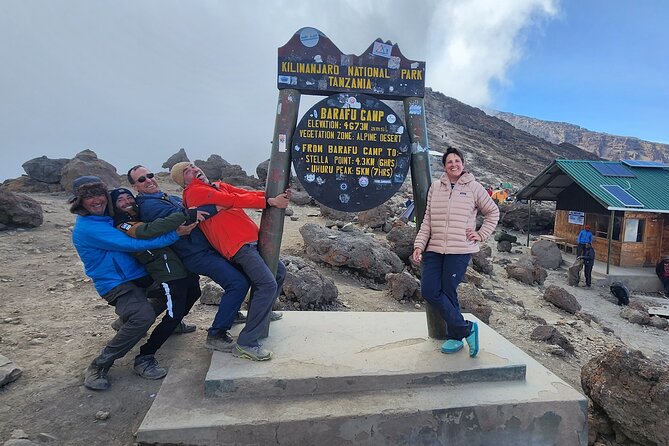
Most people feel Kilimanjaro before they ever hike it. You’ll start in Moshi and then travel by 4WD to Londorossi gate, where you meet your guides and the mountain crew. Registration happens there, including formalities with the national park and a duffle bag weighing step to keep porter loads within the mandatory 20 kg limit.
After registration, the drive continues along narrow dirt roads through pine plantations. You’ll climb gradually toward the Lemosho glades, where your trek begins. Even though Day 1 hiking time is moderate (about 4-5 hours and around 7 km), you get a lot of value from the setup phase. You’ll know your team, you’ll get the rhythm, and you’ll start with a route that keeps things slow and orderly.
Day 1 also climbs from about 1981 m (6890 ft) to around 2780 m (9222 ft), in a montane rain forest environment. That’s a nice first day because the trail is manageable, and you still get exposure to colder, thinner-air effects without going straight into the harshest conditions.
Practical tip: line up your mindset for wet weather on day one. The environment is described as montane forest with rain, so treat the first camp as a “settling in” day and focus on staying warm and dry early.
Day 2 up through moorland: pole pole really matters
Day 2 is where the route starts feeling serious. It’s listed as a long hiking day, about 7 hours and around 12 km, with altitude climbing from roughly 2780 m to 3511 m (11520 ft). The environment shifts through montane forest into moorland, and that change can feel like stepping into a different planet: cooler air, more wind, and vegetation that looks tough enough to survive anything.
The scenic bonus is real. You’ll pass giant heather and erica, and climb toward the distinctive high-altitude plants like giant lobelias and giant groundsel. This is the kind of day where you’ll notice how Kilimanjaro’s biology changes with altitude.
The big instruction for the day is pole pole, meaning slowly slowly in Swahili. You’ll get told this because it’s the right approach. The route is long, but the real success factor is not speed. Slow movement helps you manage breathing, keep your energy stable, and reduce the chance of pushing too hard before your body has acclimatized.
Drawback to consider on Day 2: because it’s long, you’ll feel it later even if you move calmly. The best move is to take breaks before you feel desperate, keep your pace steady, and don’t let excitement turn into overexertion.
Day 3 into alpine desert near Shark’s Tooth
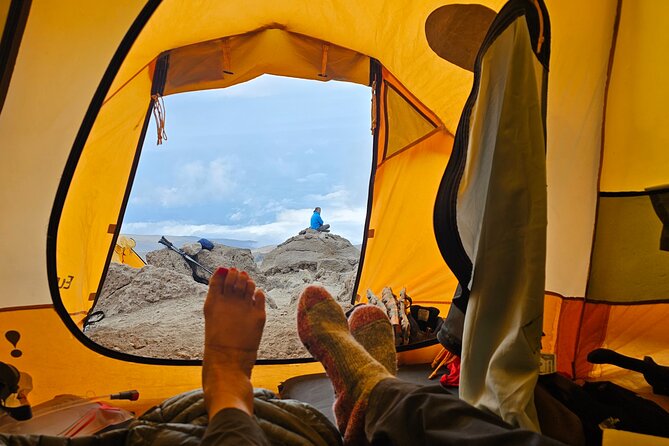
On Day 3, you transition into alpine desert. Hiking time is about 5-6 hours and roughly 9 km, with altitude rising from 3511 m to 4175 m (13700 ft). If you’re expecting jungle views, Day 3 will recalibrate your expectations fast.
The trail heads northward through heather and into barren high-altitude desert toward Shark’s Tooth, a natural landmark. You’ll gain altitude slowly to keep acclimatization on track. The scenery here is striking because the plants are minimal and the rock formations are dramatic.
A few specific features to look for:
- a huge circular bowl created by glaciers above you
- lava tube caves visible in cliff edges near the upper side
- the Kibo Massif and the Northern Ice Field above, plus wide views back toward the Shira Plateau
This is also a day where your hydration and clothing choices matter more than usual. In alpine desert, you can feel dry and cold, even when you’re moving. Bring layers you can adjust quickly, because temperature can swing.
A few more Moshi trips to compare
- Safari Serengeti And Ngorongoro
★ 5.0 · 288 reviews - Climbing Kilimanjaro – Machame Route
★ 5.0 · 170 reviews - Climbing Kilimanjaro through 7 days Machame Route
★ 5.0 · 151 reviews - Kilimanjaro climb, Lemosho Route (8-day)
★ 5.0 · 148 reviews
Day 4 around Kibo’s northern face, expect ups and downs
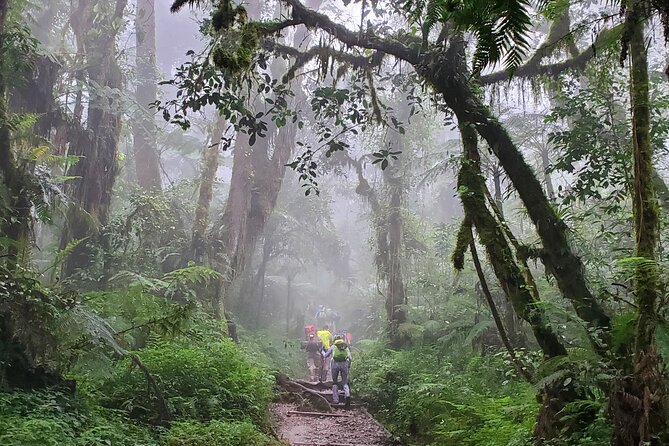
Day 4 is described as strenuous and it shows. You’re trekking about 7-8 hours and around 12 km, with starting altitude near 4175 m and ending near 4020 m. That means you’ll climb and descend a lot as you move around the northern side of Kibo, working through valleys that branch out from the base of the summit region.
The vegetation changes rapidly from valley to valley, so even though you’re doing a circuit, it doesn’t feel repetitive. Each ridge crest gives different views of Kibo and the surrounding terrain, and then you drop into another valley with different ground and wind exposure.
Your camp is Pofu Campsite, perched on a remote rocky ridge. That’s good if you like feeling far from everything. It can be challenging if you’re sensitive to exposure and wind.
Practical reality check: plan for a sore body from the constant vertical motion. This day can turn your legs into jelly, even if the hiking speed stays slow.
Day 5 to Third Cave Camp: the northern slopes finally feel yours
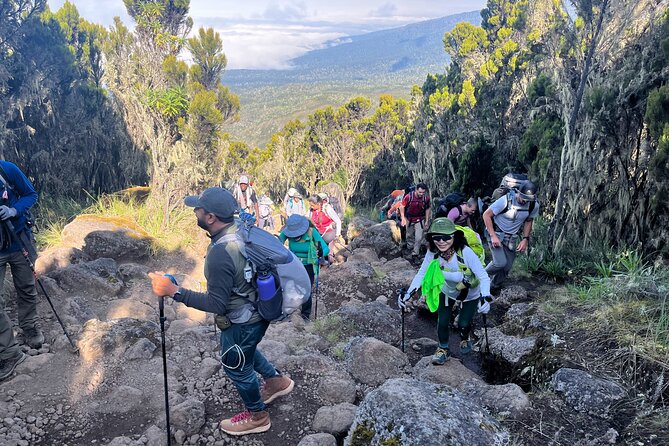
Day 5 continues the less-visited feel of the northern circuit, with about 6 hours and 7 km of trekking. Altitude is mostly stable, roughly 4020 m to 3960 m, and the environment stays alpine desert with sparse moorland.
You’ll keep heading around the “little visited” northern slopes, with frequent ascents and descents. This is the kind of day where your progress feels more like a set of chapters than a single long push. Each time you crest, you get stunning views as Kibo and Mawenzi loom above you.
Eventually you reach Third Cave Camp, and the day is marked as the point where you complete the Northern Circuit. Even if the idea sounds like “almost there,” don’t get lazy. You’ve finished the circuit leg, but you still need to earn the final summit push.
What to watch for: stable altitude doesn’t mean lower effort. Frequent ups and downs still burn calories. Keep eating on schedule and don’t wait until you feel exhausted to fuel.
Day 6 sharp ascent to School Hut, views and altitude gain
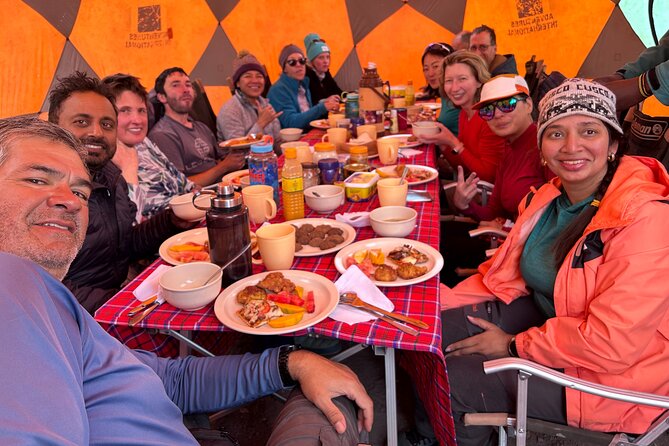
Day 6 brings a sharp climb. You’ll hike about 5 hours over roughly 6 km, going from 3960 m up to 4790 m. The environment is alpine desert, and the big number here is the altitude gain of around 780 m to School Hut.
This is a day for steady movement and frequent pauses. You’ll get staggering views along the ascent, and the instruction is basically to stop often to catch your breath and look around.
School Hut is described as a training facility for park rangers. That detail makes the stop feel more meaningful. It also puts you in an impressive position with wonderful views of Kibo Peak.
Potential drawback: after several days of slow pacing, a big gain day can still knock you back. The best preparation is the same thing that works every day on Kilimanjaro: slow steps, consistent breathing, and no surprise sprints.
Summit day from midnight to Uhuru Peak via Gillman’s and Stella
Day 7 is the big one. Hiking time is listed as 13-16 hours with a distance around 19 km. You’ll start at about 4790 m and climb to the day’s highest point near 5895 m, then finish at around 3100 m by the end of the day (meaning this day includes both the summit push and the descent back to camp area).
You leave camp around midnight, which means you’re climbing in the dark or near-dark with cold air and fatigue already in your legs. The route goes via Gillman’s Point and Stella Point, with Stella Point used as a rest and lunch stop when you reach it.
From Stella Point, the trail is normally snow-covered, and the final ascent is the toughest: about two hours to Uhuru Peak. Every step can feel like effort stacked on top of effort, especially after the long cold start.
Once you reach the summit, you get a huge sense of achievement. That part is not measurable, but it is real. Even if you don’t feel “ready,” the route is designed to get you to the top through careful staging.
What to plan for: the summit day is hard, plain and simple. Your goal is to finish the final climb safely, not to prove anything.
Descent through lush Mweka forest and the certificate moment
Day 8 starts at around 3100 m and drops to about 1800 m, with roughly 3-4 hours of hiking and a distance near 8 km. The environment shifts back into montane forest and the trail descends steeply through Mweka rain forest.
This is good for the soul because the scenery changes and you’re moving away from the thin air. It’s also hard on your body because steep descents can be rough on knees and ankles. Wet conditions can make the route slippery, so traction and careful foot placement matter.
You’ll follow a broad ridge crest between river valleys, then the route meets a road for the final 40 minutes to Mweka Park Gates. The day ends with a picnic lunch and summit certificates.
Certificate detail: gold for Uhuru Peale and green for Stella point. That means the trip recognizes partial summit success too, which can be meaningful if you have to turn around on the final ascent.
Then you transfer back to your hotel for the night, so you can actually relax instead of immediately heading into another travel day.
What you really get for $3,000 per person, and what it costs you in effort
At $3,000 per person for an 8-day trek, you’re paying for far more than a guide leading you uphill. This package includes a strong baseline of logistics, safety systems, and staff support.
Here’s what stands out as real value:
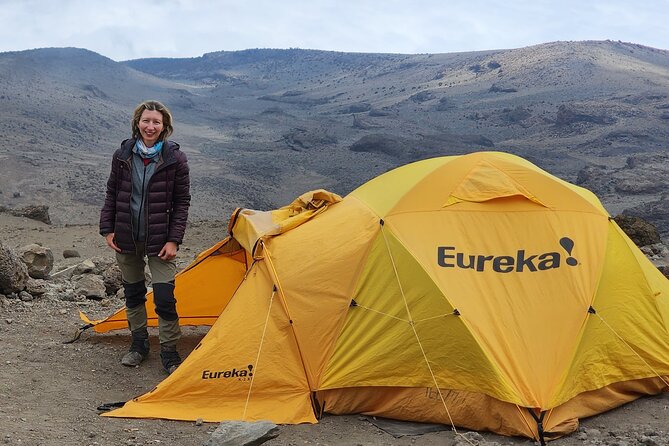
- 3-person expedition tents with 2 clients per tent, plus sleeping gear like mountaineering mattresses
- a shower/wash tent, hot washing water mornings and evenings, and even a hot steamy towel at camp
- a portable private flush toilet, which is not a small thing on long treks
- large portions of fresh, healthy food, served in a walk-in mess tent
- communication and coordination tools like two-way radio and a mobile phone for mountain team use
- medical planning built in: an expedition medical kit, pulse oximeter, comprehensive vital sign monitoring, emergency oxygen, and a Gamow bag
- serious emergency back-up: AMREF Flying Doctors included for medical evacuations
- Kilimanjaro National Park fees, camping/hut fees, and rescue fees included
- porter and crew pay included, plus fair and ethical treatment of porters
- summit celebration extras like wine and champagne at the summit
And you do get real-world comfort elements too, like a light weight mess setup and even luxury chairs with back rests for camp life.
What you should mentally budget beyond the listed price:
- personal trekking equipment is not included
- staff gratuities are not included
- international airfare and visas are not included
- immunizations are not included
- personal expenses and souvenirs are not included
- if you need extra evacuation beyond what’s covered, extra medical or evacuation fees are not included
So the value equation is: you pay a premium, but it buys you safety systems and camp comfort that reduce daily friction. That can matter a lot when your energy is finite.
The support team vibe: why guides and porters matter on a long route
On long climbs, your success is a group project. When your guides are organized, you move more steadily. When the porters are treated fairly and carry within the load limits, your body feels less punished.
This operator, Jaribu Africa Adventures, is associated with teams that get singled out for professionalism and friendliness in prior experiences I’ve seen shared. Names that come up in connection with this provider include Joseph and Goodluck for guide roles, Samuel for guiding on other safari days, and Kisali for trip coordination support. That doesn’t guarantee the exact same people will be assigned to your dates, but it does signal a pattern: organized operations and competent people are a big part of how they run trips.
Look at what they provide in the on-mountain workflow. You’re given radio contact tools, medical equipment, purified water while on the mountain, and structured meals. That reduces guesswork for you, which is exactly what you want at altitude.
Who this 8-day Northern Circuit fits best, and who should reconsider
This route is for you if:
- you want more acclimatization time and a calmer feel than shorter routes
- you like variety, from forest to moorland to alpine desert to scree and back
- you want a serious summit attempt with medical gear and monitoring built in
- you’ll follow instructions like pole pole without arguing with the mountain
You should think twice if:
- you hate long days, especially a summit day that can stretch 13-16 hours leaving around midnight
- you’re not comfortable with steep descents, wet slippery sections, and cold night trekking
- you’re expecting a gentle hike. This is a big altitude mission, even when the route is designed to support acclimatization
In practical terms, bring solid hiking fitness and a willingness to move slowly. Your plan should be built around finishing safely, not beating anyone’s pace.
Should you book this Kilimanjaro Northern Circuit?
I’d book this 8-day Northern Circuit if you care about acclimatization and want to spend more time on the mountain feeling less rushed, with a route that takes you into the northern slopes for a quieter feel. The package is also strong for first-timers because it includes the camp comforts that keep you functioning, plus real medical gear like a Gamow bag, oxygen, and pulse oximeter monitoring.
Skip it if you’re looking for the shortest or easiest path, because this route demands patience, stamina, and comfort with a very long summit push. But if you want a serious, well-supported Kilimanjaro attempt that gives your body time to adjust, this is one of the more sensible choices.
FAQ
How many days is the Kilimanjaro Northern Circuit route?
The trek is listed as 8 days (approx.).
Where does the trek begin and which gate do you use?
It starts from Moshi, and Day 1 includes a drive to Londorossi gate for registration and formalities.
What does the trip include for on-mountain camping and fees?
The package includes Kilimanjaro National Park entrance, camping/hut fees, and rescue fees, plus camping items like expedition tents and mattresses.
What are the main summit route landmarks?
The summit push goes via Gillman’s Point and Stella Point, and you aim for Uhuru Peak.
Are summit certificates awarded, and what colors mean what?
Yes. After reaching the summit you receive certificates, with gold for Uhuru Peale and green for Stella point.
What medical and safety equipment is included?
The trip includes an expedition medical kit, emergency oxygen, a Gamow bag, comprehensive vital sign monitoring, a pulse oximeter, and staff trained as wilderness first responders (or equivalent).
What accommodations are included before the climb?
You get 2 nights of accommodations on BB at either Ameg Lodge or Salinero Hotels.
What is not included in the price?
Not included items include international airfare, visa costs, personal trekking equipment, staff gratuities, and immunizations, along with personal expenses and any extra evacuation or medical fees not covered.
Just posted around Moshi
- machame route★ 5.0 · 16 reviews
- Mt Kilimanjaro 6 days Marangu route hike★ 5.0 · 3 reviews
- Kilimanjaro Climbing Umbwe Route★ 5.0 · 3 reviews
- Wildlife Extravaganza: Manyara, Tarangire & Ngorongoro in 3 Days★ 5.0 · 3 reviews
- 3 Days Private E-Bike Tour in West Kilimanjaro★ 5.0 · 3 reviews
- West Kilimanjaro cycling Adventures★ 4.5 · 8 reviews
- Kilimanjaro Climb • Marangu Route ~ 9 Day★ 5.0 · 4 reviews
- Private Cycle to Kilimanjaro Bike Park Safari★ 5.0 · 6 reviews
Kilimanjaro Climbs, compared.
8-Day Small-group Lemosho Kilimanjaro Summit Trekking
Read our review →
5 Days Best of Tanzania Luxury Safari Northern Circuit
Read our review →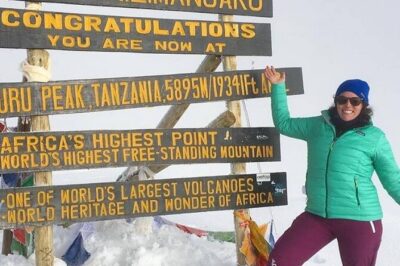
Climbing Kilimanjaro through 7 days Machame Route
Read our review →