Reviewed · KILIMANJARO CLIMBS
Kilimanjaro-marangu Route 6 Days Itinerary
Kilimanjaro feels close on the Marangu route. I like that this plan starts and ends at Kilimanjaro Mountain Resort, right on the lower slopes, so you spend less time in transit and more time getting your body ready. You also get private airport transfers to and from JRO, which makes the whole trip feel smoother from day one.
My favorite part is the pacing. There’s an intentional acclimatization stop at Horombo, then a slow crawl toward Kibo Hut before the big night push. One drawback to consider: you must have the right medical coverage and travel insurance, and I recommend you double-check pickup timing, since at least one past booking reported a late hotel pickup with no heads-up.
In This Review
- Key things to know before you go on Marangu Route
- How the “6-day” Marangu climb turns into an 8-day trip
- Your Moshi foothold: Kilimanjaro Mountain Resort and the briefing
- Day 2: Marangu Gate to Mandara Hut through tropical rainforest
- Day 3: Mandara to Horombo Hut, moorland, and first big peak views
- Day 4: Zebra Rocks and the extra acclimatization night at Horombo
- Day 5: Horombo to Kibo Hut and the “lunar desert” feeling
- Day 6: Summit night from Kibo, Gillman’s Rim, then down to Horombo
- Day 7: Horombo to Marangu Gate and your summit certificate
- Day 8: Private departure transfer to JRO, with optional add-ons
- Weather planning: the months that typically work best
- Value check: is $1,950 per person a fair deal?
- Who this Marangu Route experience fits best
- Practical tips that can help you enjoy the climb
- Should you book this Kilimanjaro Marangu Route 6 Days?
- FAQ
- Where does the climb start and where do you return to?
- Are airport transfers included?
- How long does the main trek take each day?
- Is there an acclimatization day on this route?
- Is water available at Kibo Hut?
- What months are best for climbing?
Key things to know before you go on Marangu Route
- Kilimanjaro Mountain Resort base in Marangu makes logistics simpler and cuts down on stress
- Private airport transfers included (arrival from JRO, departure back to JRO)
- Mandara, Horombo, Kibo, and summit hut stages keep you in rhythm instead of forcing a single long day
- Extra acclimatization night at Horombo helps you handle the altitude better
- Kibo Hut has no running water, so hydration habits matter a lot
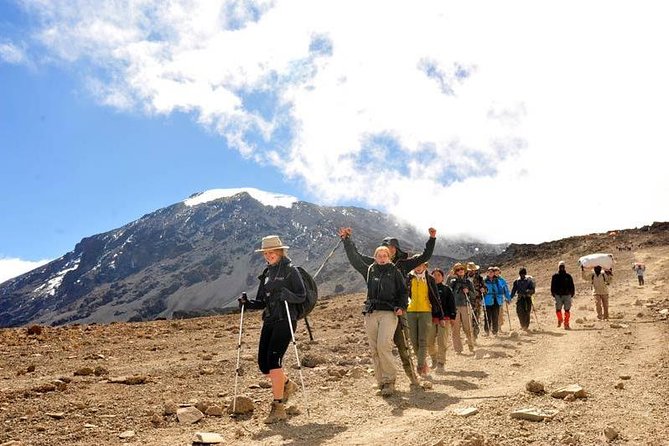
- The summit day starts before midnight with a steep climb to Gillman’s at 5,685 m
How the “6-day” Marangu climb turns into an 8-day trip
The itinerary is built as a 6-day climb, but the full experience runs about 8 days. That extra time covers the welcome, the pre-climb briefing and equipment check, plus the transfer back to Kilimanjaro International Airport (JRO) at the end. It’s a practical setup because Kilimanjaro is not just a hiking timeline, it’s also paperwork, gear checks, and getting your sleep schedule ready.
The meeting point lists a start time of 8:30 am, but on day 1 you’ll gather at 5:30 pm for briefing and an equipment check. So expect day 1 to feel like setup day, not “put boots on and go.”
More Kilimanjaro climbs:
- Kilimanjaro climb by Lemosho Route (7-day)
★ 5.0 · 651 reviews - Kilimanjaro climb, Machame Route (7-day)
★ 5.0 · 262 reviews - Kilimanjaro Climbing Lemosho Route 8 Days.
★ 5.0 · 186 reviews
Your Moshi foothold: Kilimanjaro Mountain Resort and the briefing
You’ll stay at Kilimanjaro Mountain Resort on the lower slopes of Kilimanjaro. That matters because it’s a calm base close to the action, so you can eat, rest, and focus before you enter the park. After you arrive (your timing depends on your flight), there’s a private transfer waiting for you at JRO to bring you to Marangu.
On day 1, you meet at 5:30 pm for a pre-climb briefing and an equipment check. This is also when they confirm you have the mandatory medical coverage and travel insurance. I like that this step happens early, because it prevents the worst kind of surprise right after you’ve committed to the climb.
Dinner and overnight are included at the resort, and the stay includes bed, dinner, and breakfast.
Day 2: Marangu Gate to Mandara Hut through tropical rainforest
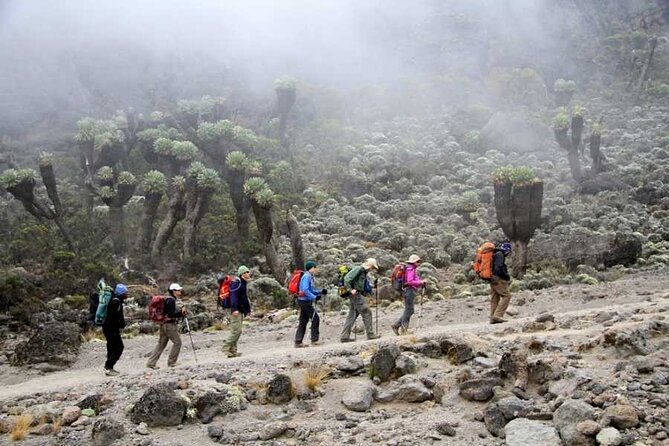
After breakfast, you travel a short distance from your hotel in Marangu to the National Park gate for the formalities. Then the real walking begins through tropical rain forest, which is a big part of why Marangu feels different from routes that go straight into alpine terrain right away.
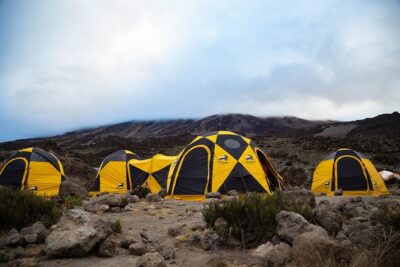
You’ll reach Mandara Hut at about 2,700 m for dinner and overnight. The walk takes about 5 to 6 hours. If the day is misty or rainy, forest hiking can actually feel pleasant, because the air is cooler and the terrain stays covered and steady underfoot.
Practical takeaway: this is not the day to race. Your job is to start comfortably so you can recover tonight, and you’ll thank yourself when you hit higher altitude tomorrow.
Day 3: Mandara to Horombo Hut, moorland, and first big peak views
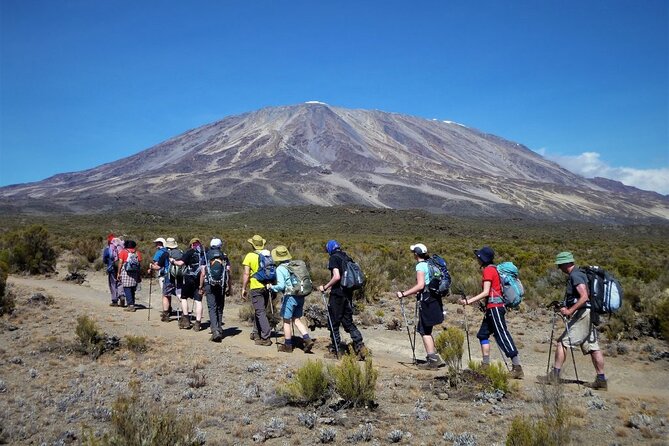
Day 3 climbs from the forest and the path soon opens out into moorland. When visibility is good, you can get strong views of the Kibo and Mawenzi peaks. That’s a morale booster, because it makes the mountain feel real and close.
You’ll arrive at Horombo Hut mid-afternoon at about 3,720 m, then you can relax around camp. The walk is listed as 4 to 6 hours, typically around 5 hours. This is also a good day to practice your routine: steady steps, consistent drinking, and keeping your body from overheating.
One note I’d take seriously: Horombo is often where altitude starts to be noticeable for people. Your job is to keep moving lightly, even if your mind wants to push.
A few more Moshi trips to compare
- Safari Serengeti And Ngorongoro
★ 5.0 · 288 reviews - Climbing Kilimanjaro – Machame Route
★ 5.0 · 170 reviews - Climbing Kilimanjaro through 7 days Machame Route
★ 5.0 · 151 reviews - Kilimanjaro climb, Lemosho Route (8-day)
★ 5.0 · 148 reviews
Day 4: Zebra Rocks and the extra acclimatization night at Horombo
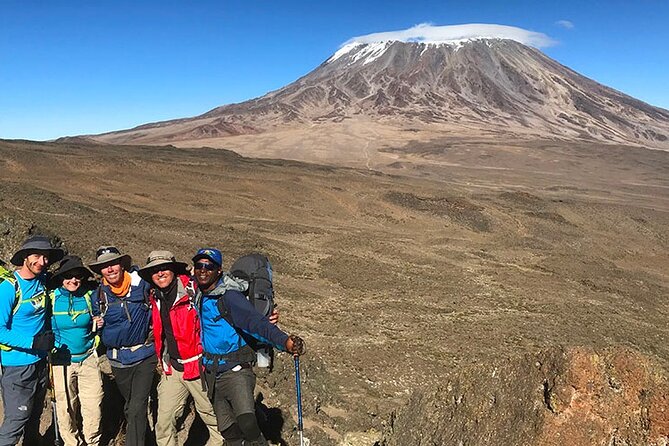
Today includes the steep-to-moorland transition toward Mawenzi hut, and you pass Zebra Rocks along the way. The key detail is what comes next: this extra day and night at Horombo is for additional acclimatization.
So you’re not just walking, you’re giving your body time to adjust before the big push to Kibo Hut. The itinerary keeps you at Horombo for a shorter walk segment of about 3 hours, and it mentions that all meals for the day are provided at Horrombo hut. I like this structure because it reduces decision fatigue. You know where you’ll be fed and how the rhythm works.
They also strongly encourage drinking enough water and walking slowly. That’s not fluff. On Kilimanjaro, dehydration can sneak up on you, and slower walking helps your breathing and energy stay steady.
Day 5: Horombo to Kibo Hut and the “lunar desert” feeling
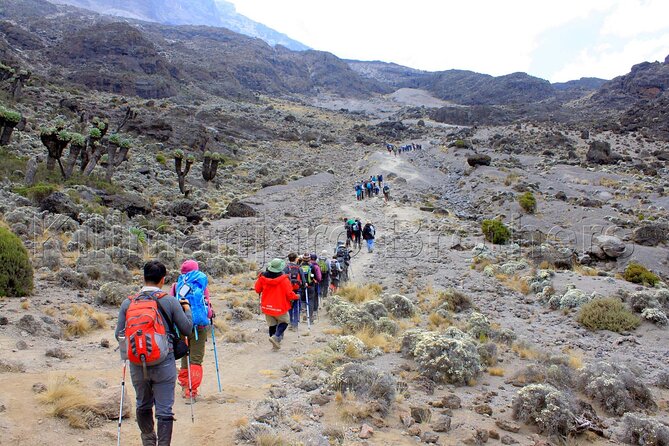
Day 5 moves you gradually toward the saddle between Mawenzi and Kibo, which the plan describes as a lunar desert. The walking time is 6 to 7 hours at a slow pace until you reach Kibo Hut around 4,700 m for the night.
This is the part of the climb where many people feel the altitude more clearly. The itinerary supports that reality by keeping the pace gradual. When you reach Kibo Hut, the rest of the day is for relaxing and preparing for the final ascent, with an early night.
Important detail: there is no running water at Kibo Hut. That means you should manage water carefully earlier in the day, and you should follow your guides on how much to drink and when. This is one of those small “infrastructure” points that can affect how comfortable you feel on summit night.
Day 6: Summit night from Kibo, Gillman’s Rim, then down to Horombo
This is the day you plan your energy around. The itinerary says you wake up before midnight, then you begin a steep climb over loose volcanic scree. Expect slow, steady zig-zags as you work your way upward.
You reach Gillman’s at about 5,685 m, typically stopping briefly at the rim of the main crater to enjoy sunrise over Mawenzi. If you still feel good, you can continue along the crater rim for a three hour round trip to Uhuru Peak at 5,895 m, the highest point in Africa. After the summit moment, you descend fast, with stops that include Kiko Hut, then Kibo Hut for refreshment, and then continuing down to Horombo Hut.
The total listed walking time for the summit day is about 13 to 15 hours. That is a long day. This is also where good guide work makes a difference, since they’re helping pace you through darkness, altitude, and the physical grind of loose rock.
My practical advice: treat summit night like a test of consistency, not speed. The people who do best usually keep breathing calm and steps controlled. If you’re anxious, slow down your pace even more than you think you need to.
Day 7: Horombo to Marangu Gate and your summit certificate
Day 7 shifts from “climb” to “finish.” You descend past Mandara Hut to Marangu National Park, and successful climbers receive their summit certificates.
The walk to Marangu Gate is listed as 6 to 7 hours. After that, you’re transferred back to Kilimanjaro Mountain Resort for dinner and overnight. This is the day you’ll feel both relief and fatigue, so it’s smart that the schedule includes proper rest after you exit the park.
If you can, spend this evening eating slowly and sleeping early. You want your body to recover before your final departure transfer.
Day 8: Private departure transfer to JRO, with optional add-ons
After saying bye to your guides, you take a private departure transfer included from Moshi to Kilimanjaro International Airport (JRO). Unless you choose to add a short safari or another option, that’s your clean jump-off point.
I like this because it reduces the need to coordinate last-minute transport. You already have the travel rhythm handled, so you can focus on leaving Tanzania with as little stress as possible.
Weather planning: the months that typically work best
Kilimanjaro is weather-dependent. The plan lays out specific seasonal guidance:
- March, April, and May have long rains and should be avoided.
- November is usually short rains, not every day, so climbing is possible.
- January, February, August, and September are described as the best months for climbing.
- July can be colder.
- November to December can be wet.
Also noted: January to February are the warmest months, with mornings and evenings that are almost clear of clouds. That can make views from higher altitudes more reliable, especially during sunrise or early morning on summit day.
My rule of thumb: if your goal is the best odds for good visibility, plan for the drier windows, but still expect cool temperatures at night at altitude.
Value check: is $1,950 per person a fair deal?
At $1,950 per person, you’re paying for more than just walking. You’re buying a full package that includes:
- Private transfer from JRO to Kilimanjaro Mountain Resort on arrival
- All airport transfers included
- A structured climb plan with multiple hut stages
- Pre-climb briefing, equipment check, and confirmation of medical coverage and insurance
- Private touring, meaning your group is the only group participating
The itinerary also includes key overnight points at huts and resort meals, with details like dinner and breakfast on day 1, dinner and overnight at Mandara, and meals provided at Horombo on day 4. If you price out just the transfers plus guiding plus logistics, the package starts to make sense.
The one “value risk” is service quality. The overall rating is 4.3 across 9 reviews, and one negative report criticized an operator response to pickup timing. That doesn’t mean the trip is doomed, but it does mean you should be proactive: confirm your pickup time and keep your contact information ready the night before travel days.
Who this Marangu Route experience fits best
This is listed for moderate physical fitness, and the itinerary’s pace is built around gradual altitude gain and acclimatization. If you’re nervous about “fast and brutal,” this route’s rhythm is a good fit because it includes a real acclimatization night at Horombo.
It’s also a strong option if you want hut-based trekking rather than camping, since you’ll be sleeping at Mandara, Horombo, Kibo, and on summit day the itinerary references additional crater-rim hut stops during descent.
Practical tips that can help you enjoy the climb
A few things the itinerary highlights that you should take seriously:
- Walk slowly on the ascent and treat the climbs as pacing exercises.
- Drink enough water, especially with altitude and that no-running-water detail at Kibo Hut.
- Be ready for a before-midnight start on summit day, and plan your sleep schedule accordingly.
- Pack for big temperature swings. The plan notes that July can be colder, and nights at altitude are always chilly by nature.
Most of all, trust the schedule. The extra acclimatization night at Horombo is there for a reason. When people skip those “buffer” days, they feel it later.
Should you book this Kilimanjaro Marangu Route 6 Days?
I’d book this if you want a structured Marangu climb with included private airport transfers and a plan that treats acclimatization as non-negotiable. The route’s hut staging, the early setup at Kilimanjaro Mountain Resort, and the summit-night timing are all built into the experience in a way that feels workable.
I would think twice or at least plan carefully if you’re the type who hates last-minute changes or missed timing. I recommend confirming pickup timing and staying reachable the day before key transfer days.
If you want the Marangu experience with logistics handled and a clear summit plan, this one is worth serious consideration.
FAQ
Where does the climb start and where do you return to?
The itinerary begins at Kilimanjaro Mountain Resort in Marangu and ends there as well, with departure transport to Kilimanjaro International Airport (JRO) included.
Are airport transfers included?
Yes. A private transfer is waiting at JRO for your arrival, and a private departure transfer from Moshi to JRO is included.
How long does the main trek take each day?
Walking times are listed per day. For example, Marangu Gate to Mandara Hut is about 5 to 6 hours, Mandara to Horombo about 4 to 6 hours, and the summit day is about 13 to 15 hours walking.
Is there an acclimatization day on this route?
Yes. The itinerary includes an extra day and night at Horombo Hut to improve acclimatization, with walking time listed as about 3 hours for the day spent there.
Is water available at Kibo Hut?
No. The itinerary specifically notes that there is no running water at Kibo Hut.
What months are best for climbing?
The plan notes January, February, August, and September as best months. It also says to avoid March, April, and May due to long rains, and it mentions November as a possible climbing time with short rains that do not usually rain every day.
Just posted around Moshi
- machame route★ 5.0 · 16 reviews
- Mt Kilimanjaro 6 days Marangu route hike★ 5.0 · 3 reviews
- Kilimanjaro Climbing Umbwe Route★ 5.0 · 3 reviews
- Wildlife Extravaganza: Manyara, Tarangire & Ngorongoro in 3 Days★ 5.0 · 3 reviews
- 3 Days Private E-Bike Tour in West Kilimanjaro★ 5.0 · 3 reviews
- West Kilimanjaro cycling Adventures★ 4.5 · 8 reviews
- Kilimanjaro Climb • Marangu Route ~ 9 Day★ 5.0 · 4 reviews
- Private Cycle to Kilimanjaro Bike Park Safari★ 5.0 · 6 reviews
Kilimanjaro Climbs, compared.
8-Day Small-group Lemosho Kilimanjaro Summit Trekking
Read our review →
5 Days Best of Tanzania Luxury Safari Northern Circuit
Read our review →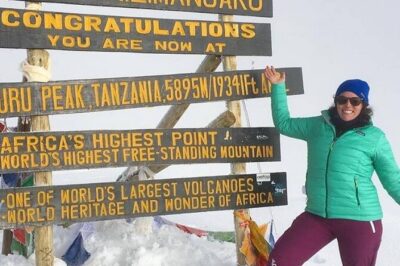
Climbing Kilimanjaro through 7 days Machame Route
Read our review →