Reviewed · KILIMANJARO CLIMBS
Kilimanjaro Lemosho Route 8 Days
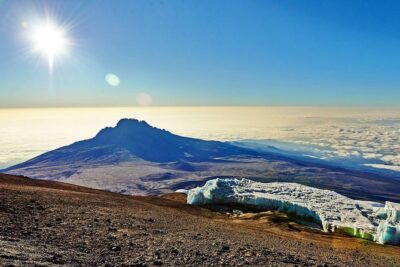
A sunrise summit is the goal. This 8-day Kilimanjaro Lemosho route from Moshi is designed to help you reach Uhuru Peak in daylight, with sunrise timing as part of the plan. You’ll start at Londorossi Park Gate, cross the Shira Plateau, and work your way toward the Kibo crater rim and the inner Reusch crater area for big high-altitude views.
Two things I like a lot are the gradual altitude rhythm across the first 4 trek days, and the way the package emphasizes safety gear on the mountain. You also get support you can actually use, like VHF radios on each trek and a Gamow bag on hand.
One possible drawback: this is still Kilimanjaro, and Day 7 is a heavy day, with a 7-8 hour push to Uhuru Peak followed by a long descent to Mweka Camp. If you don’t handle altitude well, you’ll want to be very honest about pacing and stopping early rather than forcing it.
In This Review
- Quick hits before you choose
- Why this Lemosho plan aims for a sunrise moment
- Moshi setup and getting to Londorossi Park Gate
- Days 1-3: Mti Mkubwa Camp, then Shira Camp 1 and 2
- Days 4-6: Barranco to Karanga Valley, then Barafu Camp
- Day 7 summit to Uhuru Peak, then down to Mweka Camp
- Day 8: Mweka Gate, certificate, and the Park View Inn ceremony
- Safety and support you actually feel on the trek
- Camps, tents, and the daily routine that keeps you sane
- The team: guides, named support, and porter treatment
- Price and value: where the $2,833.34 per person can make sense
- Who this 8-day Lemosho trek is best for
- Should you book it?
- FAQ
- Where does this Kilimanjaro Lemosho trek start and end?
- What is the highest point on the itinerary?
- How many days are spent on the mountain?
- What safety and medical items are included?
- Are meals included during the trek?
- Do you get accommodation before and after the climb?
- Is the trek private?
- What is not included in the price?
- Is free cancellation available?
Quick hits before you choose
- Sunrise and daylight summit focus so your summit moment is planned around seeing the sky change, not just finishing in the dark
- Safety gear beyond the basics, including emergency oxygen tanks, VHF radios, pulse-oximeter checks, and a Gamow bag
- Scenic Lemosho routing, with views of the Great Rift Valley, Mt Meru, and Longido, plus some wildlife chances
- Thoughtful pacing across camps, including Shira Camp 1 and 2, then Barranco, Karanga Valley, Barafu, and finally Mweka
- Camp creature comforts that matter, like warm water daily for washing and purified drinking water
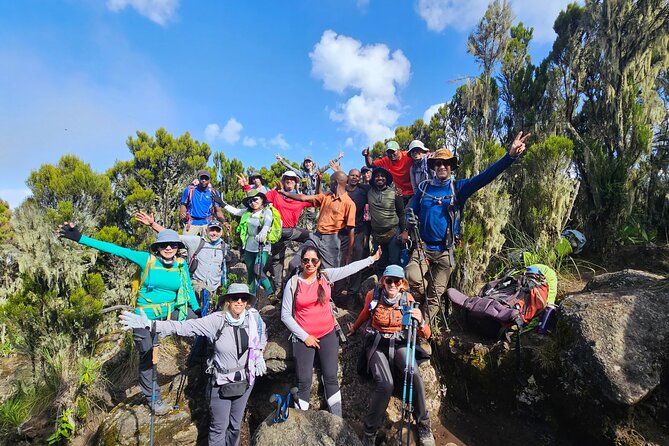
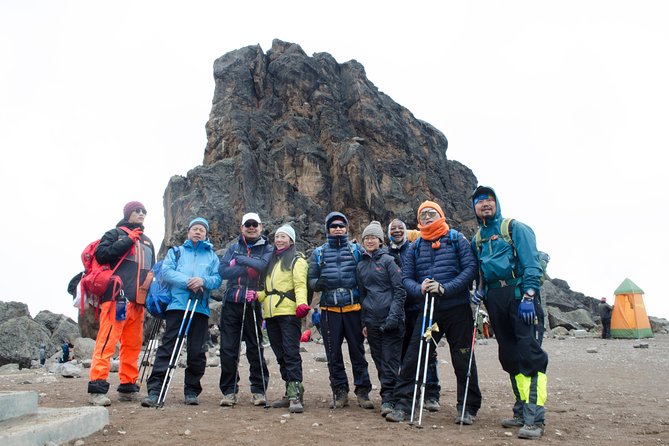
- A team that shows up, with guides and porters repeatedly named in trip feedback, including Abel, Eli, George, and others
Why this Lemosho plan aims for a sunrise moment
Most Kilimanjaro itineraries are about getting you to the summit, full stop. This one also cares about the timing of that summit experience, aiming for a daytime ascent and sunrise as part of the design. That matters because the weather, visibility, and your own mental state can feel very different when you start to see the colors of the horizon.
Lemosho also tends to feel more scenic because it’s not the shortest route. The tradeoff is that you spend more days moving uphill and acclimatizing rather than just rushing straight toward the next landmark. If your goal is a thoughtful, steady trek where you have time to settle into altitude, this route style fits that idea.
Also, you are not just “walking.” You’re moving through specific altitude stages on purpose: Shira Plateau terrain early, then camps that set you up for the Barafu summit push. The route description highlights big viewing areas, including Kibo crater rim and the inner Reusch crater, with wider views toward the Great Rift Valley, Mt Meru, and Longido.
More Kilimanjaro climbs:
- Kilimanjaro climb by Lemosho Route (7-day)
★ 5.0 · 651 reviews - Kilimanjaro climb, Machame Route (7-day)
★ 5.0 · 262 reviews - Kilimanjaro Climbing Lemosho Route 8 Days.
★ 5.0 · 186 reviews
Moshi setup and getting to Londorossi Park Gate
You’ll base in Moshi, Tanzania, and the package includes arrival and departure transfers, plus all transportation in the destination location. There’s also pickup offered, which is helpful if you’re arriving with minimal time to handle local logistics.
Day 1 begins at Londorossi Park Gate (2,385 m / 7,825 ft). From there, you climb to Mti Mkubwa Camp (2,700 m / 8,858 ft). The hiking time listed is 3-4 hours over about 8 km.
This first day is not about winning a distance contest. It’s about turning your body from “travel mode” into “walking mode” while altitude begins to tick upward. If you keep your effort controlled, Day 1 often sets the tone for the rest of your trek day-to-day.
Days 1-3: Mti Mkubwa Camp, then Shira Camp 1 and 2
Day 2: Mti Mkubwa to Shira Camp 1
You go from 2,700 m to 3,500 m, hiking around 5-6 hours over about 6 km. Expect a steady uphill effort, the kind where you feel the air thinning but you can still focus on rhythm.
Day 3: Shira Camp 1 to Shira Camp 2
Now you climb higher, from 3,500 m to 3,840 m. The plan lists about 3-4 hours and roughly 8 km.
These Shira days are the core of the Lemosho experience because they’re tied to crossing the Shira Plateau and building acclimatization before you commit to the later stages. You’ll also be in the zone where route descriptions commonly promise wider views, including the Great Rift Valley direction and big mountain horizons.
A practical note: Shira Camp days are long enough to feel real, but short enough that you’re not crushed by a brutal day every single time. That pacing is one reason many trekkers prefer Lemosho for planning a summit day that feels more controlled.
Days 4-6: Barranco to Karanga Valley, then Barafu Camp
Day 4: Shira Camp 2 to Barranco Camp
You climb to 3,950 m, with about 6-7 hours and roughly 8 km. This is a longer day in the middle of the trek, which can feel like the point where your legs start asking for patience.
Day 5: Barranco Camp to Karanga Valley Camp
You continue up slightly to 3,995 m, with about 4-5 hours over 5 km.
Day 6: Karanga Valley to Barafu Camp
This is the big step to 4,550 m. The hike is listed as 4-5 hours, but only about 4 km, which tells you this is likely steep and demanding rather than about distance.
This three-day section has a clear purpose. You build time in the 3,900-4,500 m range, then you arrive at Barafu ready for the summit push. Barafu is often the “how did we get here so fast” camp, but in a good way: you get the anticipation without losing the rhythm built earlier.
One more route detail you should expect here: the later approach is where the plan’s crater-focused storytelling starts to feel real in your eyes. The overall route is described as passing by Kibo crater rim and reaching the inner Reusch crater top area. Even if weather changes what you can see, the movement through these zones is part of why Lemosho is considered more scenic.
A few more Moshi trips to compare
- Safari Serengeti And Ngorongoro
★ 5.0 · 288 reviews - Climbing Kilimanjaro – Machame Route
★ 5.0 · 170 reviews - Climbing Kilimanjaro through 7 days Machame Route
★ 5.0 · 151 reviews - Kilimanjaro climb, Lemosho Route (8-day)
★ 5.0 · 148 reviews
Day 7 summit to Uhuru Peak, then down to Mweka Camp
Day 7 is the defining day. The plan lists a push to Uhuru Peak (5,895 m / 19,341 ft) with about 7-8 hours and roughly 5 km. After that, you descend through Barafu for a short rest and continue on to Mweka Camp (3,060 m / 10,065 ft) for 4-6 hours, about 12 km.
This is the day where your strategy matters more than your fitness stats on paper. The included porter support during the summit attempt is a big deal: you’ll have a porter to carry your day-pack during the summit attempt, so you can focus on pacing, balance, and keeping your hands and feet working.
Two small but important realities.
First, a long summit day plus a long descent means you should treat the descent as part of the summit effort, not as a victory lap. Second, this itinerary is designed around reaching the summit in daylight hours, but you still need to respect altitude, slow down if you’re struggling, and listen to your guide team.
If you’ve got anxiety about summit day, use this to your advantage. The package includes a pulse-oximeter and a Gamow bag, plus emergency oxygen tanks. That doesn’t mean you should ignore symptoms. It means your team has tools to respond if someone is affected.
Day 8: Mweka Gate, certificate, and the Park View Inn ceremony
Day 8 is a down day with an emotional payoff. You descend to Mweka Gate (4,600 m) in about 3-4 hours over roughly 4 km. Then you transfer to Park View Inn for a certificate and summit party ceremony.
The key point for you: don’t treat Day 8 as a casual stroll just because it’s shorter on paper. Your legs are tired from Day 7 and your body is adjusting after big altitude changes. Your mind often feels lighter, but your joints may not.
That ceremony part is small, but it’s meaningful. It gives you a moment where the climb becomes a story you can actually carry home, not just a memory of fatigue and cold.
Safety and support you actually feel on the trek
This package is unusually specific about safety equipment and communication. It includes emergency oxygen tanks, VHF handheld radios carried on each trek, a Gamow bag (hyperbaric chamber), and a pulse-oximeter to measure oxygen level. Rescue fees on the mountain are also included.
Here’s why that matters for your decision. Kilimanjaro is not just a hike, it’s an altitude project. The risky situations tend to come from how quickly the body can fall behind the altitude rate. Having response tools ready reduces the time between noticing a problem and taking action.
You also get portable personal flash toilet and a clean toilet setup with toilet tents, plus warm water for washing every day. That last part can sound like comfort fluff, but sanitation and feeling human after a cold day makes you more willing to keep going steadily.
Also included is purified drinking water. That may not be the headline feature, but it can help you focus on hydrating consistently rather than managing water logistics every day.
Camps, tents, and the daily routine that keeps you sane
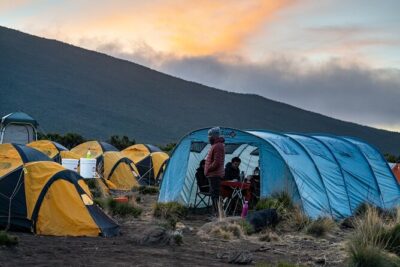
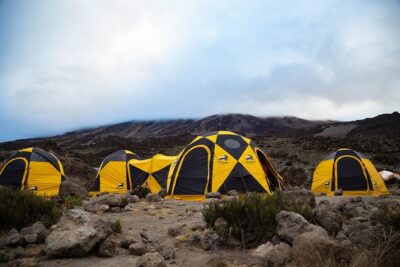
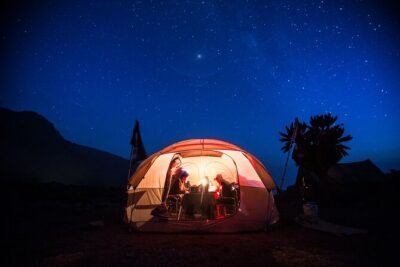
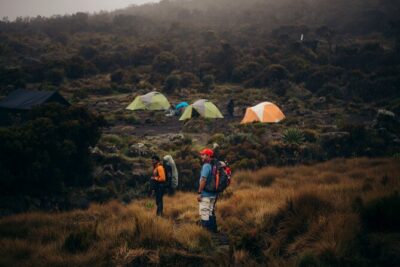
On Kilimanjaro, comfort is not about luxury. It’s about reducing stress so you can concentrate on acclimatization and energy. This package includes waterproof tents and sleeping mats, plus high powered solar LED lights.
Meals are included while on the mountain, and the food is described as large portions of fresh, healthy and nutritious foods. After long hours walking uphill, the difference between decent calories and under-fueling can be huge for how you feel at night and the next morning.
You also get warm water for washing daily, which helps you maintain a bit of dignity when the cold air makes everything feel harder.
Dining setup is included too: aluminum dining tables and large aluminum chairs with backs and armrests for meals. That might sound minor, but it changes the feel of camp. You can sit, eat, recover, and talk without balancing on the edge of a rock or freezing through the act of eating.
The team: guides, named support, and porter treatment
The trekking staff is a big part of why this route works well in the real world. Multiple people in trip feedback called out calm, experienced guides such as Abel and Eli, and also mentioned Richard and Justin. In other accounts, guides like Abdul and Priscus were praised for support and knowledge. Cooks named in feedback include William and Thomas, which is a nice reminder that camp success depends on more than just the mountain guide.
The company representative George is also mentioned as helpful before arrival, which matters if you want clear expectations on timing, altitude approach, and what to do with your energy on summit day.
Porter treatment is explicitly included as fair and ethical, and the package mentions the right balance of porters and guide support. You are also promised porter involvement for your day-pack on summit attempt, which is practical support rather than a gimmick.
For value-focused travelers, this is where the reviews seem aligned with the package design: good communication, real safety gear, and staff that show up day after day.
Price and value: where the $2,833.34 per person can make sense
At $2,833.34 per person for an 8-day Lemosho trek, you should look at what you get rather than the number alone. Here’s what’s included that tends to raise the real cost of a trek:
- Safety gear: oxygen tanks, Gamow bag, pulse-oximeter, VHF radios
- Meals while on the mountain
- Camp essentials: tents, sleeping mats, solar LED lights, toilet tents
- Guides and porter support, including summit day day-pack carry
- Government taxes and park entrance fees
- Rescue fees on the mountain
- Hotels before and after: 2 nights classic standard and 2 nights comfort, bed and breakfast
- Arrival and departure transfers and all destination transport
When all that is included, you’re not just paying for a leader and a route map. You’re paying for logistics, compliance fees, and safety capacity.
A fair caution: the trek is demanding, so the most expensive part of a Kilimanjaro plan can be a mismatch between your expectations and your ability to pace. If you’re unsure about moderate physical fitness, consider training before you go and be prepared for the fact that altitude slows even strong hikers.
Who this 8-day Lemosho trek is best for
I’d point you to this itinerary if you want:
- A route designed for sunrise and daylight summit timing
- Time to acclimatize through a staged schedule
- Strong safety and medical readiness like oxygen, Gamow bag, and oxygen monitoring
- More comfort in camp, with warm washing water, purified drinking water, and proper dining setup
- A private-group format where only your group participates
You might want a second look if you:
- Know you get overwhelmed by long days, especially Day 7’s ascent and Day 7 descent
- Expect a short trek or want a “mostly easy” experience
- Are looking for a budget-only climb, because this package includes safety and support tools that cost money to run
Should you book it?
If your goal is a well-supported Lemosho climb from Moshi with safety gear that goes beyond the basics, this is a strong match. The combination of sunrise/daylight summit planning, thoughtful multi-day acclimatization, and practical camp support is exactly what I’d want if I were choosing an 8-day route.
My decision rule is simple: if you’re ready to commit to steady pacing and you want a team that’s equipped for altitude realities, book. If you’re hoping for a light schedule or you’re not confident about your altitude tolerance, train first, then choose the route style that gives you more room to breathe.
FAQ
Where does this Kilimanjaro Lemosho trek start and end?
The trek starts at Londorossi Park Gate and ends with a descent to Mweka Gate on Day 8. After reaching the gate, you transfer to Park View Inn for a certificate and summit party ceremony.
What is the highest point on the itinerary?
The highest point listed is Uhuru Peak at 5,895 m (19,341 ft).
How many days are spent on the mountain?
The itinerary is 8 days total, with day-by-day hiking and camp stops culminating in the summit day (Day 7) and the final descent (Day 8).
What safety and medical items are included?
Included items are emergency oxygen tanks, VHF handheld radios carried on each trek, a Gamow bag, a pulse-oximeter, and rescue fees on the mountain.
Are meals included during the trek?
Yes. All meals while on the mountain are included, and the package lists breakfast, lunch, and dinner during the trek days.
Do you get accommodation before and after the climb?
Yes. The package includes 2 nights in classic standard hotel accommodations and 2 nights in comfort hotel accommodations, both before and after the trek, with bed and breakfast.
Is the trek private?
Yes. This is a private tour or activity, and only your group will participate.
What is not included in the price?
Not included are tips, the Tanzania visa on arrival, personal expenses (like laundry or beverages), and optional tours such as a short safari after the climb.
Is free cancellation available?
Yes. You can cancel up to 24 hours in advance for a full refund, and the experience can be canceled due to poor weather with a different date offered or a full refund.
Just posted around Moshi
- machame route★ 5.0 · 16 reviews
- Mt Kilimanjaro 6 days Marangu route hike★ 5.0 · 3 reviews
- Kilimanjaro Climbing Umbwe Route★ 5.0 · 3 reviews
- Wildlife Extravaganza: Manyara, Tarangire & Ngorongoro in 3 Days★ 5.0 · 3 reviews
- 3 Days Private E-Bike Tour in West Kilimanjaro★ 5.0 · 3 reviews
- West Kilimanjaro cycling Adventures★ 4.5 · 8 reviews
- Kilimanjaro Climb • Marangu Route ~ 9 Day★ 5.0 · 4 reviews
- Private Cycle to Kilimanjaro Bike Park Safari★ 5.0 · 6 reviews
Kilimanjaro Climbs, compared.
8-Day Small-group Lemosho Kilimanjaro Summit Trekking
Read our review →
5 Days Best of Tanzania Luxury Safari Northern Circuit
Read our review →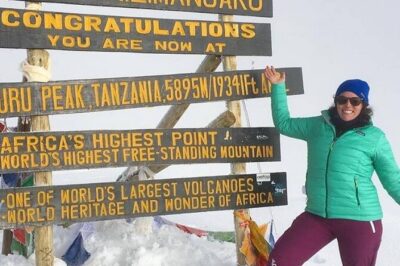
Climbing Kilimanjaro through 7 days Machame Route
Read our review →