Reviewed · KILIMANJARO CLIMBS
Kilimanjaro Lemosho Route 8 Days
Lemosho makes Kilimanjaro feel methodical. This 8-day Kilimanjaro Lemosho route from Moshi, run by Jaribu Africa Adventures, is built around high and sleep low pacing, then pays you back with Shira Plateau drama, Lava Tower panoramas, the Great Barranco Wall, and a summit push toward Uhuru Peak. People in my inbox talk about guides like Manase and Ayumwe, and it shows in the calm, steady rhythm.
What I like most is that they take altitude seriously, using that slow, patient pole pole style to help your body adjust. I also like the support setup, including continuous vital sign monitoring, Gamow bag safety gear, and emergency oxygen if things turn. One thing to consider up front: the summit day is long, early, and strenuous, with a final ascent that is often snow-covered.
In This Review
- Key things to know before you go
- The Lemosho idea: why high starts and low sleeping can help
- From Moshi to Londrossi Gate: the work happens before the first step
- Days in motion: forest, moorland, and the shift into alpine desert
- Lava Tower and Great Barranco: where the views come with effort
- The summit push: Stella Point, Uhuru Peak, and what makes it hard
- Descent through Mweka rain forest: steep, slippery, and satisfying
- Price and value: what $3,000 is really covering
- Camp life that keeps you functional, not just comfortable
- Safety, medicine, and the kind of monitoring you want to see
- Who this route suits best, and who should be cautious
- Should you book Jaribu Africa Adventures on the Lemosho route?
- FAQ
- How long is the Kilimanjaro Lemosho route on this trip?
- Where does the trek start, and is pickup included?
- What is included in the trip price?
- Do I need to bring my own trekking equipment?
- What summit points are mentioned in the itinerary?
- What medical or safety support is provided on the mountain?
- Is cancellation free if plans change?
Key things to know before you go
- High and sleep low pacing helps reduce altitude risk compared with jumpier itineraries.
- Lava Tower option lets you add a non-technical rock scramble for 360-degree views.
- Great Barranco Wall is the “earned it” moment, steep and rocky but unforgettable.
- Stella Point timing: the plan rests at 5685m before the toughest part toward Uhuru Peak.
- Heavy medical kit on hand: pulse oximeter monitoring, emergency oxygen, and AMREF Flying Doctors evac support.
- Camp comfort details matter: hot washing water, shower/wash tent, private flush toilet, and hot towels.
The Lemosho idea: why high starts and low sleeping can help
The Lemosho route is popular for a reason, and it is not just the scenery. The big concept is called high and sleep low, meaning you keep gaining altitude in the day but try to sleep at a relatively lower, safer-feeling height. On Kilimanjaro, that style matters because your summit is not the only challenge. Your body has to handle the climb in the days before the summit attempt.
Here, that approach shows up in how the route unfolds: after starting at Londrossi Gate and pushing into the higher areas, you still get acclimatization-building days rather than a nonstop staircase upward. Day 2 is described as a long day over narrow tracks, and the mantra pole pole is used for a reason. Day 3 pushes into the high desert zone, with you moving toward Shark’s Tooth and then camp below the Lent Group. That progression helps you feel the altitude change gradually, not all at once.
Do not treat it like a guarantee. Altitude illness can happen to anyone. But this route design is a sensible choice if you want a plan that takes physiology seriously, not just fit-for-the-moment enthusiasm.
More Kilimanjaro climbs:
- Kilimanjaro climb by Lemosho Route (7-day)
★ 5.0 · 651 reviews - Kilimanjaro climb, Machame Route (7-day)
★ 5.0 · 262 reviews - Kilimanjaro Climbing Lemosho Route 8 Days.
★ 5.0 · 186 reviews
From Moshi to Londrossi Gate: the work happens before the first step
In Moshi, you are not just dropped off with a backpack and a prayer. This trip starts with travel by 4WD to Londrossi Gate, where you meet your guides and mountain crew. That is where the real logistics get handled: the team registers climbers with the national park, and they weigh duffle bags to keep porter loads within the mandatory 20 kg limit.
I like that you are not guessing how your gear will be managed. If you arrive with everything packed sensibly, the mountain side of the operation runs more smoothly. The drive itself also gives your brain time to wake up. You travel about 11 km along narrow dirt roads through pine plantations, climbing gradually toward Lemosho Glades where the trek begins.
If you are the type who likes structure, this start is a comfort. If you are the type who hates paperwork, you may still appreciate that the team does it for you, so you can focus on your first hike and not on forms.
Days in motion: forest, moorland, and the shift into alpine desert
The Lemosho route changes environments in a way that feels like watching Kilimanjaro evolve in fast-forward. You start in montane forest conditions, then move into moorland, and later into alpine desert. That matters because it changes how you breathe, how you pace, and even how you move on the ground.
Day 1 brings you from Londrossi Gate up toward Lemosho Glades. The hiking time listed is about 4 to 5 hours, around 7 km, climbing from 1981 m to 2780 m. This is a strong first day, but not a gut-check marathon. You also have the option for lunch at the gate depending on program and weather.
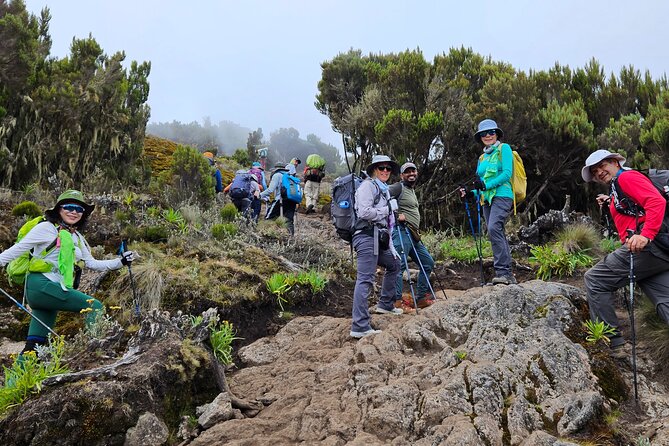
Day 2 is the longer one, about 7 hours and 12 km, climbing to 3511 m. You are walking on narrow tracks that weave over ridges, and the environment is montane forest into moorland. You will notice plants like giant heather and erica, then later giant levelia and giant groundsel (senecio kilimanjari). I think this is a nice touch because it keeps your attention on what is around you while your body is adapting.
Day 3 shifts hard into the alpine desert at 4175 m after about 5 to 6 hours. You trek northwards through heather into barren high altitude desert toward Shark’s Tooth. Then you work up a ridge and into a valley, climb to camp, and arrive in time for lunch. This day is where you really feel the thin air, and only hardy plants survive, with small senecios and hardy everlastings. Even if you do not care about botany, it is a reminder that you are high enough for the mountain to change its rules.
Lava Tower and Great Barranco: where the views come with effort
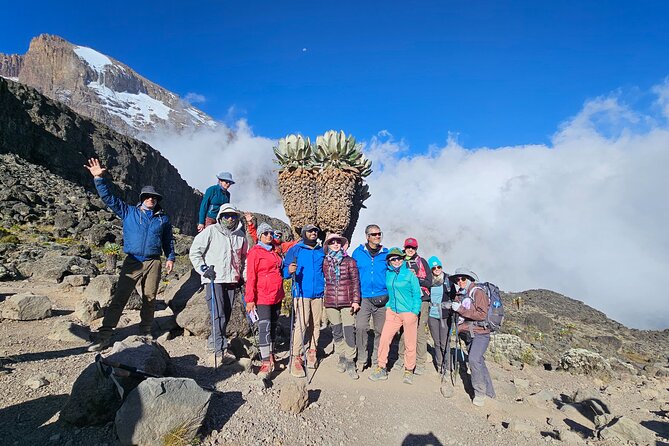
This is where the trek starts to feel more like a classic adventure movie. You earn the views, not just walk into them.
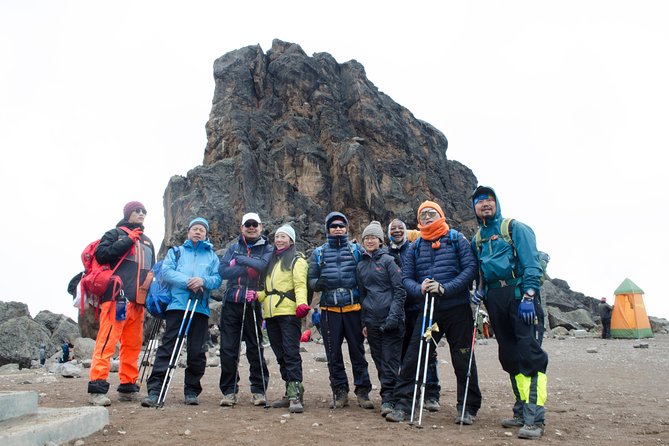
Day 4 descends the rocky scree path to Lava Tower for lunch at 4530 m. For hikers who feel up to it, there is an optional non-technical rock scramble to the top of Lava Tower. That is your chance for spectacular panoramas over the Karanga Valley, the Shira Plateau, and the Western Breach area. Even if you skip the scramble, you still get the reward of arriving at a high viewpoint.
Then comes the work. After Lava Tower, you descend steeply for about 2 hours down more than 600 m into the Great Barranco Valley. Expect photo opportunities, but also expect your legs to complain.
Day 5 is described as the Great Barranco Wall, a steep face above Barranco Camp. The climb takes you just below the Heim Glacier area, where you may get breathtaking views depending on weather and cloud cover. Then the route continues down into the alpine desert of the Karanga Valley, and temperatures can get colder as you go. This day is not about speed. It is about grip, balance, and steady pacing.
If you have knee issues, pay attention here. The wall and the changing footing can be demanding. Trekking poles can be a big help, even if they are not listed in what is included.
A few more Moshi trips to compare
- Safari Serengeti And Ngorongoro
★ 5.0 · 288 reviews - Climbing Kilimanjaro – Machame Route
★ 5.0 · 170 reviews - Climbing Kilimanjaro through 7 days Machame Route
★ 5.0 · 151 reviews - Kilimanjaro climb, Lemosho Route (8-day)
★ 5.0 · 148 reviews
The summit push: Stella Point, Uhuru Peak, and what makes it hard
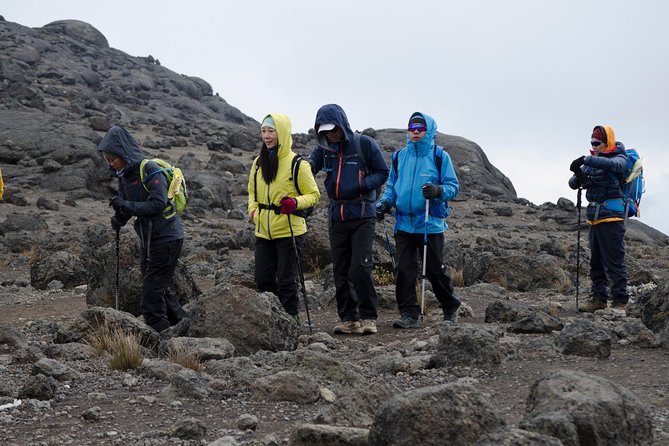
Day 6 is the big one. The plan is to rise early and leave camp around 12:00am, after a warm drink and a light snack. This is not the moment for a dramatic mindset. You just start walking, slowly, with focus on consistent breathing.
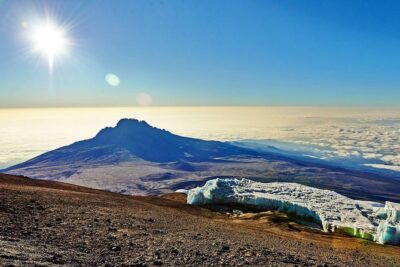
After about 6 hours of slow but strenuous hiking, you reach the rim of the main crater at Stella Point (5685 m). You stop to rest and eat lunch while looking out over the clouds. This stop is important. It is not just a break, it is a checkpoint before the final push.
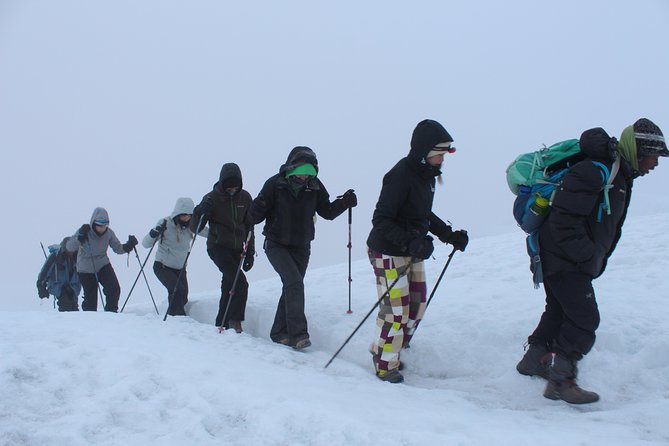
From Stella Point, the trail is normally snow-covered, and the final ascent to Uhuru Peak is listed as about 2 hours, challenging with every step. You pass alongside the Rebmann and Tarzel glaciers and reach Elveda Point (5882 m) where Uhuru Peak is only minutes away.
A key consideration: this day is long, cold, and mentally sharp. Even if the itinerary times seem manageable on paper, the altitude makes effort feel heavier. Plan for that. Pack smart for warmth and footing. And rely on your guide team and any vital sign checks during the approach.
Descent through Mweka rain forest: steep, slippery, and satisfying
Day 7 is often underestimated, but it can be tough. Your legs have already done a lot. Then the route descends steeply through lush Mweka rain forest.
The trail is steep in places and can be slippery if wet. The route follows the crest of a broad ridge separating two river valleys until it meets a road that brings you for the last 40 minutes to the Mweka Park Gates. Here you stop for a well-deserved picnic lunch and summit certificates.
Certificates are part of the pride moment:
- Gold for Uhuru Peale
- Green for Stella Point
After the celebration, you are taken by private bus or Jeep to your hotel in Arusha. That last transfer is more than convenience. It helps you avoid turning the last day into more walking and more confusion.
Price and value: what $3,000 is really covering
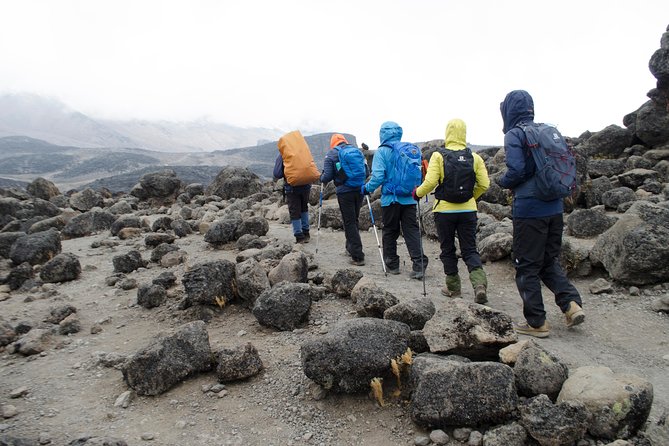
$3,000 per person is not small money. The question is what you are buying, beyond the mountain name.
This package includes a lot of the usual Kilimanjaro extras that can otherwise surprise you:
- 2 nights accommodations on BB at either Ameg Lodge or Salinero Hotels
- 3-person expedition tents (with 2 clients per tent), plus mountaineering mattresses
- Shower/wash tent and a portable tented private flush toilet
- Walk-in mess tent, light aluminum table, and even a luxury chair with a back rest
- A full food plan for the trekking days, including 7 dinners, 7 breakfasts, and 7 lunches
- Wine and Champagne at the summit
- Kilimanjaro National Park entrance, camping, hut, and rescue fees, plus VAT on park entrance fees
- Medical evacuations with AMREF Flying doctors, emergency oxygen, and emergency support items
- Comprehensive vital sign monitoring and pulse oximeter checks
And you also get operational support that many people do not think about until they are tired: 2-way radio, expedition medical kit, and trained wilderness first responder or equivalent assistance guide support.
One more practical angle: they handle airport transfers and return transfer from Arusha hotel to the park gate, plus return to your Arusha hotel after the trek. Those pieces add up, especially if you arrive in Tanzania without extra buffer time.
Personal trekking equipment is not included, so you still need to prepare your own boots and layers. But the day-to-day mountain running costs, the core safety gear, and the park fees are covered. That is the value story here.
Camp life that keeps you functional, not just comfortable
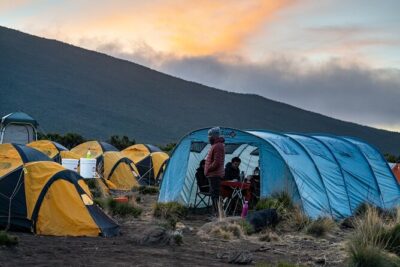
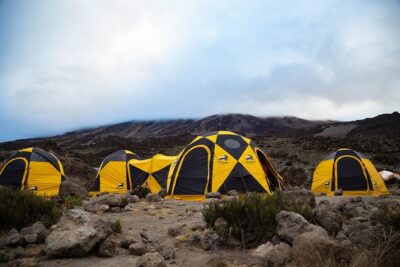
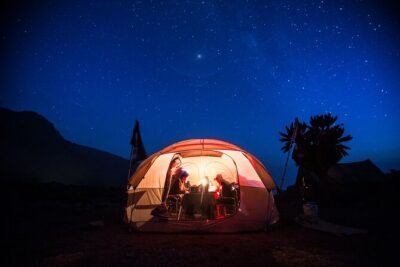
Kilimanjaro camps can feel chaotic if the setup is sloppy. This plan includes a lot of small comfort details that, in practice, help you recover for the next day.
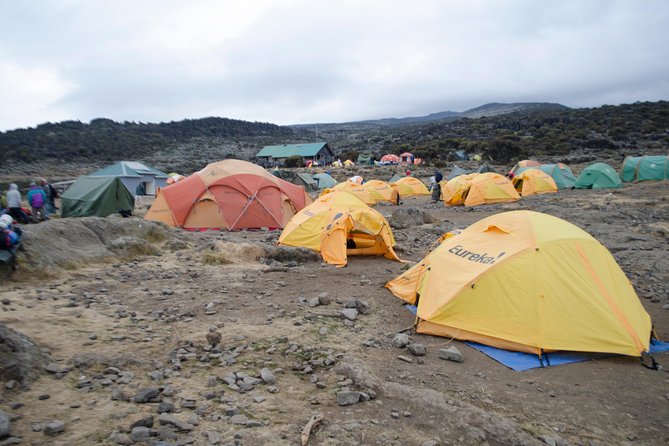
You get expedition tents, mountaineering mattresses, and a shower/wash tent, plus a private flush toilet tent. There is an expeditions walk-in mess tent and even a “hot steamy towel” mentioned for camp. You also get purified water while on the mountain and bowls of hot washing water in the morning and evening.
The food plan is described as large portions of fresh, healthy, nutritious food. That matters because you do not want to spend summit week under-eating while your body is already working in high altitude conditions.
And yes, wine and Champagne on summit day can feel a little ceremonial, but I also see it as a morale tool. You need something to mark the moment so the hard work does not blur into one long grind.
Safety, medicine, and the kind of monitoring you want to see
I look for three things on a Kilimanjaro operator: early warning systems, emergency readiness, and real medical evacuation support.
On this trip, there is emergency oxygen and a Gamow bag, which is a portable hyperbaric chamber. You also get comprehensive vital sign monitoring and a pulse oximeter. There is an expedition medical kit, and the guides are listed as trained in wilderness first responder skills or equivalent assistance guide support.
The evacuation support is also spelled out: medical evacuations with AMREF Flying doctors. That does not mean you will need it, but it does mean the provider plans for worst-case outcomes.
Another practical safety detail: they use 2-way radios. Communication matters in fog, at night, or when weather shifts.
I still want you to understand the limits: no operator can remove risk from altitude. But this is the kind of safety package that lets your guides spot trouble earlier and respond faster.
Who this route suits best, and who should be cautious
This experience is a fit if you have moderate physical fitness and you understand that summit week is demanding. The hiking times range from about 4 to 7 hours on multiple days, with a long summit day listed as about 12 hours. Even the “shorter” days are at altitude.
You will enjoy this more if you like steady pacing and you trust a plan that prioritizes acclimatization over aggressive daily gains. The route also has a rock scramble option at Lava Tower and a demanding rock challenge at Great Barranco Wall, so some comfort with uneven ground helps.
Who should be cautious? If you are not confident with steep, slippery descents, or if you have knee or balance limits, take that seriously. If you get anxious at early hours, remember that Day 6 starts around midnight, and the final ascent can be snow-covered.
Should you book Jaribu Africa Adventures on the Lemosho route?
I would book this if you want a Lemosho plan that treats acclimatization as the main job, not just a bonus. The combination of high and sleep low pacing and real medical gear like pulse oximeter monitoring, emergency oxygen, and a Gamow bag is exactly what I want on Kilimanjaro.
I would hesitate if you are looking for a “scenic walk” version of Kilimanjaro. This itinerary includes a tough summit push, a big Great Barranco climb, and a steep final forest descent. Also, at $3,000 per person, you should confirm your own gear needs, especially personal trekking equipment, so you are not scrambling at the last minute.
If your goal is a classic route with strong support, this is a solid choice, and the guide teams cited by past climbers, including Manase, Ayumwe, Stephen, and Joseph, suggest the operation runs with real mountain know-how.
FAQ
How long is the Kilimanjaro Lemosho route on this trip?
The trek is listed as 7 days (about 8 days). The schedule includes Day 1 through Day 7, with the summit attempt on Day 6 and descent on Day 7.
Where does the trek start, and is pickup included?
The trip is based in Moshi, Tanzania. Pickup is offered, and on the first day you travel by 4WD to Londrossi Gate to meet your guides and crew.
What is included in the trip price?
The package includes 2 nights accommodations on a bed and breakfast basis, tents and mattresses, meals (7 breakfasts, 7 lunches, 7 dinners), park entrance and camping fees, airport transfers, emergency oxygen, a Gamow bag, vital sign monitoring, and medical evacuation coverage with AMREF Flying Doctors, among other items.
Do I need to bring my own trekking equipment?
Yes. Personal trekking equipment is not included. The camp setup provides items like tents and mattresses, but you are responsible for your own trekking gear.
What summit points are mentioned in the itinerary?
The plan references Stella Point at 5685 m and Elveda Point at 5882 m on the way to Uhuru Peak. Summit certificates are listed as gold for Uhuru Peale and green for Stella Point.
What medical or safety support is provided on the mountain?
Included safety support includes a pulse oximeter and comprehensive vital sign monitoring, emergency oxygen, a Gamow bag, and an expedition medical kit. Medical evacuations are covered with AMREF Flying Doctors.
Is cancellation free if plans change?
Yes, there is free cancellation. You can cancel up to 24 hours in advance for a full refund. If the experience is canceled due to poor weather, you are offered a different date or a full refund.
Just posted around Moshi
- machame route★ 5.0 · 16 reviews
- Kilimanjaro Climbing Umbwe Route★ 5.0 · 3 reviews
- Wildlife Extravaganza: Manyara, Tarangire & Ngorongoro in 3 Days★ 5.0 · 3 reviews
- Mt Kilimanjaro 6 days Marangu route hike★ 5.0 · 3 reviews
- 3 Days Private E-Bike Tour in West Kilimanjaro★ 5.0 · 3 reviews
- West Kilimanjaro cycling Adventures★ 4.5 · 8 reviews
- Kilimanjaro Climb • Marangu Route ~ 9 Day★ 5.0 · 4 reviews
- Private Cycle to Kilimanjaro Bike Park Safari★ 5.0 · 6 reviews
Kilimanjaro Climbs, compared.
8-Day Small-group Lemosho Kilimanjaro Summit Trekking
Read our review →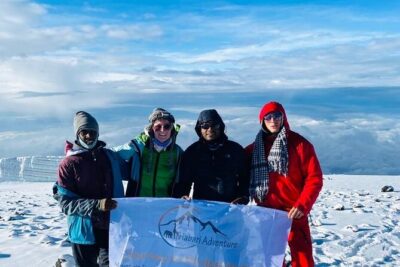
5 Days Best of Tanzania Luxury Safari Northern Circuit
Read our review →
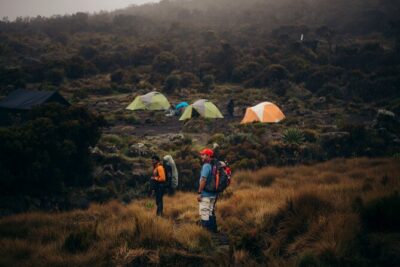
Climbing Kilimanjaro through 7 days Machame Route
Read our review →