Reviewed · KILIMANJARO CLIMBS
Kilimanjaro Lemosho Route 7 Days
Kilimanjaro through the Lemosho route feels like a slow climb with big payoffs. I like that it is built around trek high, sleep low, which can help your body handle altitude more gently. I also love the way the itinerary strings together scenery that changes daily, from forest paths to the Shira Plateau and the crater rim.
You should know the trek is not a casual hike. Day 6 is an early, very hard summit push, and even fit people sometimes find the overall altitude and steep sections tougher than they expected.
In This Review
- Key Things That Make This Kilimanjaro Lemosho Trek Worth It
- Trek High, Sleep Low: What the Lemosho Route Is Really Doing
- A quick reality check
- Day 1: Londorossi Gate Setup, Porter Load Checks, and Pine Plantation Hiking
- Day 2: From Montane Forest to Shira Plateau, Giant Plants and Pole Pole Rhythm
- Day 3: Alpine Desert Toward Shark’s Tooth and the Lent Dykes Area
- Day 4: Lava Tower Lunch, Optional Non-Technical Scramble, Then Barranco Descent
- Day 5: Great Barranco Wall for the Classic Rocky Challenge
- Day 6: Midnight Summit Push, Stella Point at 5685 m, and Uhuru Peak
- Day 7: Steep Mweka Rain Forest Descent, Mweka Park Gates, and Summit Certificates
- Included Gear and Medical Setup: What “Safety” Looks Like Here
- Price and Value: Is $2,500 a Smart Deal for 7 Days?
- Who Should Choose This Lemosho Trek (and Who Should Rethink It)
- Should You Book the Kilimanjaro Lemosho 7 Days with Jaribu Africa Adventures?
- FAQ
- How long is the Kilimanjaro Lemosho route?
- What is the highest altitude mentioned on this itinerary?
- Is pickup and transportation included?
- What accommodation is included before and after the trek?
- What medical and safety items are included?
- What is included in meals during the trek?
- What if weather is poor?
Key Things That Make This Kilimanjaro Lemosho Trek Worth It
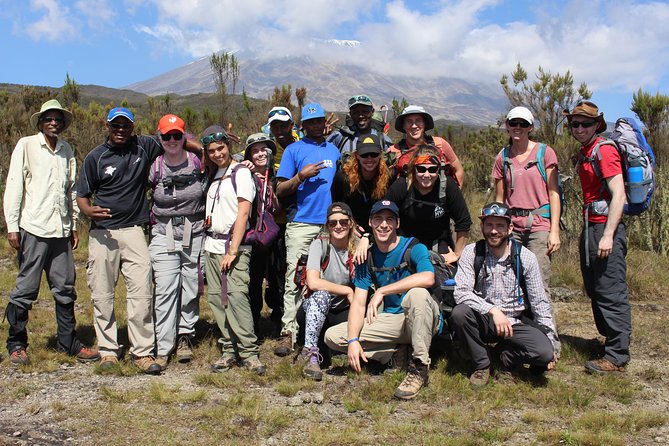
- Trek high, sleep low pacing that helps you climb in a smarter rhythm rather than rushing.
- Lava Tower and optional scramble for panoramic views over multiple valleys.
- Great Barranco Wall for that classic Kilimanjaro rock-climbing feeling, without technical gear.
- Stella Point to Uhuru summit timing starting around midnight, so you reach the rim and then push higher in stages.
- Strong safety and comfort package, including oxygen, a Gamow bag, vital sign monitoring, and even summit wine and Champagne.
- A reputable operator setup with smooth transfers and team support noted in past client experiences (including guides such as Joseph and Jacob, when they are part of a group).
Trek High, Sleep Low: What the Lemosho Route Is Really Doing
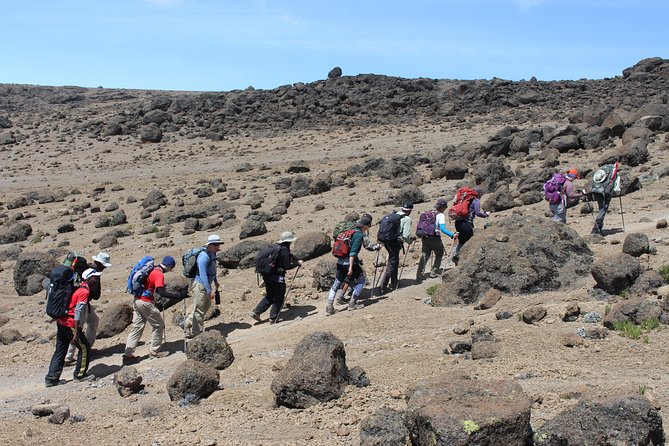
Lemosho is one of the routes that tries to respect how altitude works. The big idea is simple: you go higher during the day, then you sleep lower at night. That pattern repeats enough times along this route to give you more chances to adjust before the next step upward.
You’ll feel it in the way the days are planned. The first couple of days rise steadily, with long, slow hiking where the goal is not speed. The route then pushes you into higher terrain around the Shira side and into the alpine desert before you work your way toward Lava Tower and the Barranco area.
For you, that means two things. First, you are less likely to feel like you are being yanked upward. Second, you can enjoy the scenery along the way, because the pacing leaves room to stop, breathe, and take in the views when they open up. Kilimanjaro rewards patience, and this route is tuned for that.
More Kilimanjaro climbs:
- Kilimanjaro climb by Lemosho Route (7-day)
★ 5.0 · 651 reviews - Kilimanjaro climb, Machame Route (7-day)
★ 5.0 · 262 reviews - Kilimanjaro Climbing Lemosho Route 8 Days.
★ 5.0 · 186 reviews
A quick reality check
Even with good pacing, altitude sickness is not something you can fully prevent. You still need to take the slow pace seriously, report symptoms early, and use the safety tools your guides provide.
Day 1: Londorossi Gate Setup, Porter Load Checks, and Pine Plantation Hiking
Your start is in and around Moshi, Tanzania, and the climb begins after transport to Londorossi gate. This is where the important admin happens: you meet your mountain team and guides, national park formalities get handled, and your group’s details are registered. The tour also includes the weighing of duffle bags so the porter load stays within the mandatory 20 kg limit.
Then you drive along narrow dirt roads through pine plantations, climbing gradually to the Lemosho Glades area. Day 1 is about getting you moving, not crushing you. The plan is a hike of about 4 to 5 hours and roughly 7 km, starting at 1981 m and ending around 2780 m.
Why this matters for you:
- It sets a gentle pace before the days that climb higher.
- It reduces the chaos factor. If paperwork, kit checks, and logistics are running cleanly on Day 1, you spend less time stressed about what comes next.
Possible drawback:
- Depending on your arrival timing and weather, you might feel like Day 1 is more “process and travel” than “pure hiking.” That is normal, but it helps to plan your energy for the week ahead.
Day 2: From Montane Forest to Shira Plateau, Giant Plants and Pole Pole Rhythm
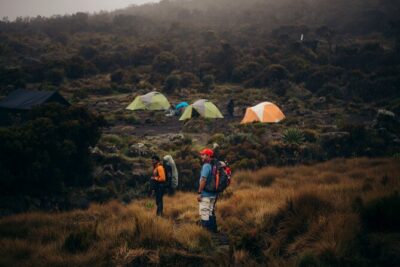
Day 2 turns the volume up. Your hike is about 7 hours and around 12 km, climbing from 2780 m to roughly 3511 m. The environment shifts from montane forest into moorland, and the trail follows narrow tracks that weave along ridges.
What I like about this day is how it blends effort with wonder. As you gain altitude, you’ll pass trees such as giant heather and erica, then see giant levelia and giant groundsel. These aren’t just random plant names. They are part of the reason Kilimanjaro is famous: the ecology changes fast as you climb.
The itinerary also calls out the “pole pole” approach, which is Swahili for slowly slowly. That is not just cultural flavor. It is the method. You will get the best results if you actually hike like you mean it.
Value for you:
- This is where a smart group can make altitude feel manageable.
- The forest and moorland zones often feel cooler and more comfortable than the later high desert, so you can acclimatize while still enjoying the trail.
Consideration:
- Day 2 is a long day. Even if you are not rushing, a long ridge hike is still work.
A few more Moshi trips to compare
- Safari Serengeti And Ngorongoro
★ 5.0 · 288 reviews - Climbing Kilimanjaro – Machame Route
★ 5.0 · 170 reviews - Climbing Kilimanjaro through 7 days Machame Route
★ 5.0 · 151 reviews - Kilimanjaro climb, Lemosho Route (8-day)
★ 5.0 · 148 reviews
Day 3: Alpine Desert Toward Shark’s Tooth and the Lent Dykes Area
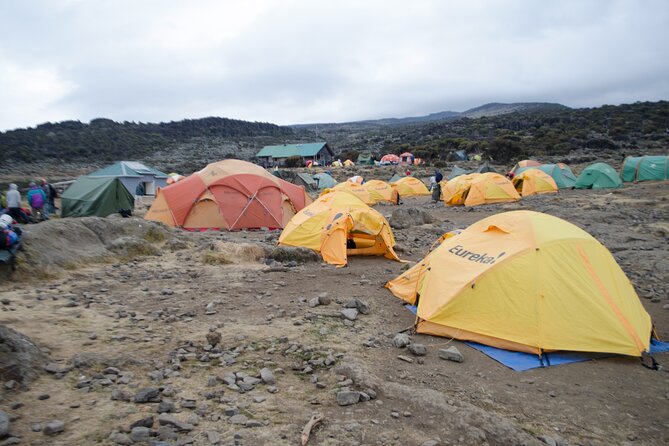
By Day 3, you’re in high gear and high altitude. The plan is around 5 to 6 hours and about 9 km, rising from 3511 m to approximately 4175 m. The environment shifts to alpine desert.
The trail heads northward through heather and into barren high-altitude terrain toward a natural landmark called Shark’s Tooth. You’ll continue acclimatizing as you gain altitude gradually, then walk up a ridge and into a valley before climbing to camp.
This is also when the scenery changes in a way you can feel in your lungs. Higher, drier air plus less oxygen can make even steady walking feel slower than normal. The good news is that this route gives you that “slowly, keep going” structure.
Why Day 3 is special:
- You’ll notice fewer plants and more rock and sky, with a harsh beauty that feels distinctly different from forest hiking.
- You camp near the Lent Group, described as massive volcanic dykes. That kind of geology is one reason this route is loved by people who enjoy seeing how mountains are put together.
Practical tip for you:
- Keep your pace controlled. If you go too fast here, the later days will punish you.
Day 4: Lava Tower Lunch, Optional Non-Technical Scramble, Then Barranco Descent
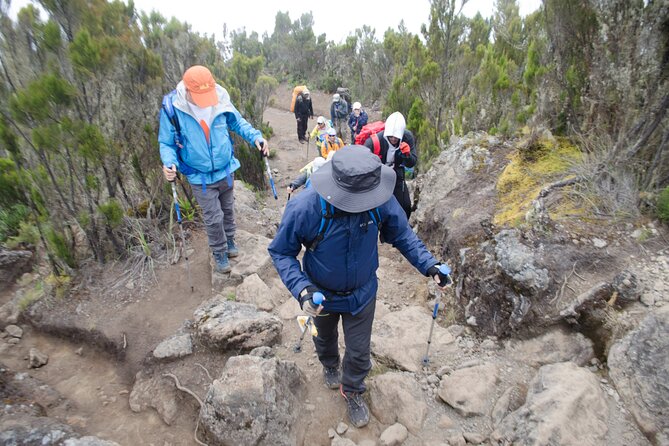
Day 4 is a classic Kilimanjaro highlight day. You spend about 5 to 6 hours over roughly 6 km, moving from 4175 m to about 4642 m. Then, after lunch at Lava Tower (4530 m), the day continues with a steep descent into the Great Barranco Valley.
Before lunch, the itinerary notes descending down the rocky scree path to Lava Tower. If you feel up to it, there is an optional rock scramble to the top, described as non-technical. This is for people who want the extra viewpoint without adding technical climbing risk.
From Lava Tower, you get spectacular panoramic views:
- Karanga Valley below
- Shira Plateau
- The Western Breach area above
Then you descend steeply for about 2 hours, losing more than 600 m into Barranco. That steep downhill is not just scenic. It’s also good training for your knees and balance because Day 7 later brings its own steep walking.
What you should consider:
- Scree and steep descents can be slippery, especially if the weather shifts.
- If you have knee issues, bring trekking poles and use them from the start of the descent.
Day 5: Great Barranco Wall for the Classic Rocky Challenge
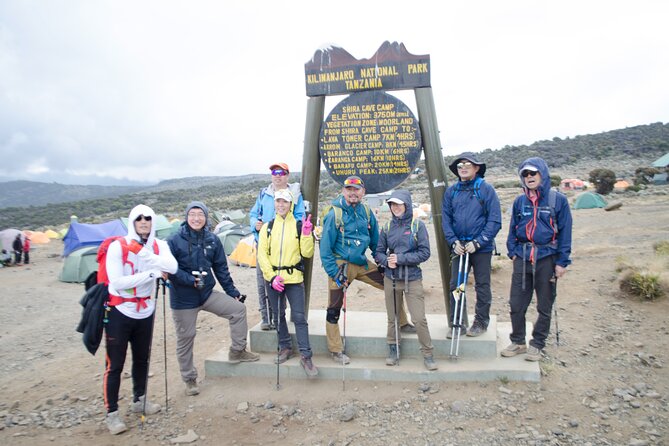
Day 5 is about earning your views. The hike is around 6 to 7 hours and about 9 km, starting near 4039 m and reaching up to around 4600 m.
This is the day of the Great Barranco Wall, described as an imposing face above Barranco camp. The route climbs the eastern wall steadily, and you may get breathtaking views of the Heim Glacier depending on cloud cover.
As you keep going, the itinerary moves into the alpine desert of the Karanga Valley. It also notes the temperature growing colder as you climb and walk through that section.
Why this day is highly praised in spirit, even when people find it hard:
- It gives you a different kind of climbing than the forest and ridge hiking earlier.
- It often feels exhilarating, because you can see the mountain structure and the path clearly as you climb.
Your planning takeaway:
- Do not assume you can power up this wall. Treat it like an altitude day, not a fitness test. Slow steps, steady breathing, and good footing matter more than pushing speed.
Day 6: Midnight Summit Push, Stella Point at 5685 m, and Uhuru Peak
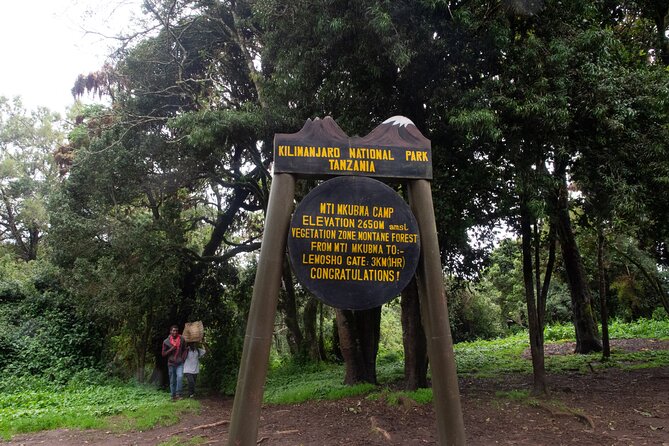
Day 6 is the big one. You rise early to leave camp at around 12:00 am, with a warm drink and a light snack before you start the most difficult part of the trek.
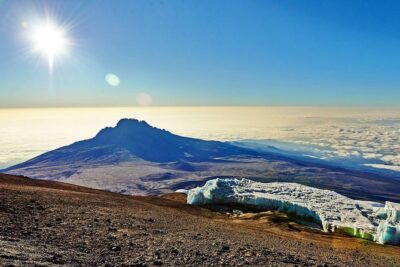
Hiking time is listed as about 12 hours, and the work is steady but strenuous. You climb for roughly 6 hours to reach the rim of the main crater at Stella Point (5685 m). At the rim, you stop to rest, eat lunch, and take in views over the clouds.
From Stella Point, the itinerary says the trail is normally snow-covered, and the final ascent to Uhuru peak takes about 2 hours and is challenging with steps that can feel difficult at altitude.
You’ll also pass alongside Rebmann and Tarzel glaciers before reaching Elveda Point (5882), where Uhuru peak is minutes away.
What this means for you:
- You will likely spend the night climbing in colder conditions, so warm layers and a steady pace are non-negotiable.
- The day is staged. Stella Point is not the summit. It is a major milestone, and it’s where your energy management really matters.
A realistic expectation:
- Some people reach Uhuru peak and some do not. What you can control is how you respond to altitude at Stella and how carefully you follow the guide’s instructions.
Day 7: Steep Mweka Rain Forest Descent, Mweka Park Gates, and Summit Certificates
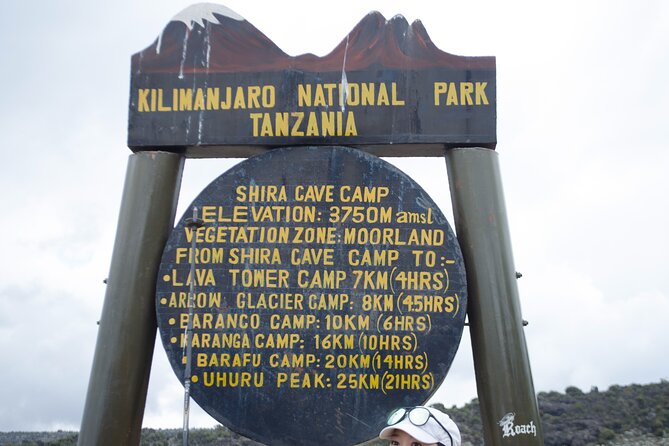
After the summit day, Day 7 is about getting down safely and finishing strong. You hike about 5 to 6 hours over 13.5 km, descending from 3819 m down to around 1652 m.
The route drops steeply through lush Mweka rain forest. The itinerary notes that the going can be slippery if wet, which is common on rainforest trails. The trail follows a broad ridge separating river valleys until it meets a road. You then have a final 40 minutes to the Mweka Park Gates.
At the gates, you stop for a picnic lunch and summit certificates from the Kilimanjaro National Park Authority:
- Gold for Uhuru Peale
- Green for Stella point
After that, you get taken by private bus or Jeep to your hotel in Arusha.
Why the end feels meaningful:
- The rainforest descent is a relief after high, cold altitude.
- Certificates create a clean finish line, even if your summit path differs from another person’s.
Included Gear and Medical Setup: What “Safety” Looks Like Here
This tour includes more than tents and food. The package is built to manage altitude risk and everyday mountain comfort.
On the comfort side, you get:
- 3 person expedition tents for two clients per tent
- Mountaineering mattress
- Shower/wash tent and hot steamy towel on the camp
- A portable tented private flush toilet
- A mess tent and even a lightweight aluminum table plus luxury chair with back rest
- Purified water while on the mountain
On the medical side, the list is the reason many people feel confident choosing a more structured operator:
- Expedition medical kit
- Gamow bag, which is a portable hyperbaric chamber
- Emergency oxygen
- Comprehensive vital sign monitoring plus a pulse oximeter
- A professional up to date wilderness first responder trained guide (or equivalent)
- Emergency evacuation support noted with AMREF Flying doctors
- Government taxes covered and a dedicated emergency approach
You also get communications support:
- 2-way radio
- Mobile phone included
Add in the human side. The tour includes salaries for guides, cooks, and porters. It also specifically calls out fair and ethical treatment of porters. That matters because Kilimanjaro runs on teamwork, and you want that teamwork to be respected.
Small consideration:
- You still need personal gear. Trekking equipment is not included. You’ll need to plan for what you personally bring, especially warm layers and rain protection.
Price and Value: Is $2,500 a Smart Deal for 7 Days?
At $2,500 per person for a 7-day trek, the price is not cheap. But you are not paying only for footsteps. You are paying for the whole system: park fees, medical and safety gear, trained staff, and mountain logistics.
Here’s what you’re getting that usually costs real money if it is not included:
- Kilimanjaro National Park entrance, camping and rescue fees
- A full staffed climb: guides, cooks, and porters
- Medical evacuation support with AMREF Flying doctors
- Safety items like Gamow bag and emergency oxygen
- Daily meals across the trek (breakfast, lunch, dinner)
- Two nights of bed and breakfast at Ameg Lodge or Salinero Hotels
- Airport transfers and return transfer between Arusha and the park gate
Value is also about how the package reduces stress. When guides handle registration, weight checks, camp setup, and safety monitoring, you can focus on your body and your pace.
My practical advice on value:
- If you’re comparing prices, compare what is inside the package, especially oxygen, vital sign monitoring, and rescue planning. Those are the items that turn a good climb into a safer one.
Who Should Choose This Lemosho Trek (and Who Should Rethink It)
This trek fits people with moderate physical fitness who want a structured climb and a route known for “trek high, sleep low.” If you enjoy changing ecosystems and you are the type who likes stopping for viewpoints, you’ll probably enjoy this.
It is also a good fit if you want a team that does the heavy lifting on logistics and safety. The included medical monitoring and equipment are a big signal that the operator takes altitude seriously.
Who might rethink it:
- If you know you cannot handle long days on steep terrain, Day 5 and the summit night push are tough. You do not have to be an athlete, but you do need to be ready for real exertion.
- If you rely on perfect weather, take a deep breath. The experience requires good weather, and conditions can change how the climb feels from day to day.
Should You Book the Kilimanjaro Lemosho 7 Days with Jaribu Africa Adventures?
I’d book this if you want a classic Kilimanjaro route built for altitude acclimatization, and you like the idea of real mountain support rather than just a basic guide service. The combination of smart pacing, major scenic moments like Lava Tower and Great Barranco Wall, and the included medical and monitoring gear makes it feel like a serious climb.
Also, the operator’s reputation shows up in patterns: smooth transfers, friendly staff, and guides who go above and beyond. In prior experiences with this company, people have specifically called out support from the team, and guides named Joseph and Jacob were highlighted in client write-ups.
Final decision rule for you:
- If you can commit to the slow pace, follow safety instructions, and plan for a demanding summit night, this is a strong option.
- If you want something easy, go elsewhere. Kilimanjaro is supposed to test you, even on the best-planned routes.
FAQ
How long is the Kilimanjaro Lemosho route?
The trek is listed as about 7 days, with a Day 6 summit push and a Day 7 descent to Mweka Park Gates and onward to Arusha.
What is the highest altitude mentioned on this itinerary?
The itinerary specifically mentions Stella Point at 5685 m and Elveda Point at 5882 m. Your final ascent reaches Uhuru peak, but the itinerary does not list its exact altitude.
Is pickup and transportation included?
Yes. Pickup is offered, and airport transfers are included. The itinerary also includes a return transfer between Arusha and the park gate area.
What accommodation is included before and after the trek?
The tour includes 2 nights of accommodations on a bed and breakfast basis at either Ameg Lodge or Salinero Hotels.
What medical and safety items are included?
The included package lists a medical kit, emergency oxygen, a Gamow bag, and comprehensive vital sign monitoring with a pulse oximeter, plus an AMREF flying doctors evacuation support component.
What is included in meals during the trek?
Breakfast and dinner are included for 7 days, and lunch is included for 7 days.
What if weather is poor?
The experience requires good weather. If it is canceled due to poor weather, you are offered a different date or a full refund. The policy also states free cancellation if you cancel up to 24 hours in advance for a full refund.
Just posted around Moshi
- machame route★ 5.0 · 16 reviews
- Kilimanjaro Climbing Umbwe Route★ 5.0 · 3 reviews
- Wildlife Extravaganza: Manyara, Tarangire & Ngorongoro in 3 Days★ 5.0 · 3 reviews
- Mt Kilimanjaro 6 days Marangu route hike★ 5.0 · 3 reviews
- 3 Days Private E-Bike Tour in West Kilimanjaro★ 5.0 · 3 reviews
- West Kilimanjaro cycling Adventures★ 4.5 · 8 reviews
- Kilimanjaro Climb • Marangu Route ~ 9 Day★ 5.0 · 4 reviews
- Private Cycle to Kilimanjaro Bike Park Safari★ 5.0 · 6 reviews
Kilimanjaro Climbs, compared.
8-Day Small-group Lemosho Kilimanjaro Summit Trekking
Read our review →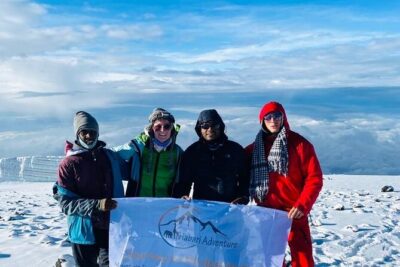
5 Days Best of Tanzania Luxury Safari Northern Circuit
Read our review →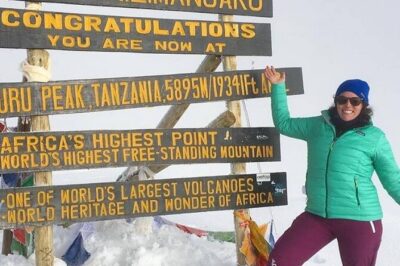
Climbing Kilimanjaro through 7 days Machame Route
Read our review →