Reviewed · KILIMANJARO CLIMBS
Kilimanjaro Climbing Rongai Route
Rongai is a calm way to tackle Kilimanjaro. You start at Nalemoru Gate near the Kenyan border, then walk from rain forest into moorland and up toward the high crater rim for a midnight push. I especially like the local, safety-trained guides and the fact that park admissions are included throughout the climb.
One real consideration is the midnight summit day, which is the steepest and most demanding part of the route, with hours spent moving in darkness.
In This Review
- Key things to know before you climb Rongai
- Rongai route pacing: from rain forest to midnight summit
- Your guide team: locals, safety first aid, and real storytelling
- Price and value for a 7-day Kilimanjaro supported climb
- Day-by-day Rongai: what you do at each elevation
- Day 1: Moshi to Nalemoru Gate, rain forest start
- Day 2: Moorland hiking, Kibo views, and 2nd Cave Camp
- Day 3: From moorland toward Mawenzi’s jagged peaks
- Day 4: Short day, steep grassy climb, and Mawenzi Tan Hut
- Day 5: The saddle to Kibo Hut, then waiting for midnight
- Day 6: Summit night from 00:00, Gilman’s Point to Uhuru Peak
- Day 7: Heath and moorland down to Mandara Hut, then tropical rain forest exit
- What acclimatization and pacing really mean on this route
- Who this 7-day Rongai trek is best for
- Should you book this Rongai trek with Habari Adventure?
- FAQ
- How long is the Kilimanjaro Rongai route trek?
- Where do we meet, and what time does the experience start?
- Is pickup included, and will I get a mobile ticket?
- What physical fitness level is required?
- How large is the group?
- Are admission tickets included?
- Are the guides trained for safety?
- What is the cancellation policy if plans change or weather is bad?
Key things to know before you climb Rongai
- Local guides with safety and first aid training who also share context on Tanzania’s natural world and culture
- Park admissions included for each day of the trek, so you are not piecing together add-ons
- A 7-day rhythm that gives you time to adjust, including a calmer, steep-grass day for acclimatization
- A true night-summit experience starting around 00:00, reaching Gilman’s Point for sunrise and then Uhuru Peak
- Small groups up to 15 travelers, which usually makes it easier to manage pace and keep everyone together
Rongai route pacing: from rain forest to midnight summit
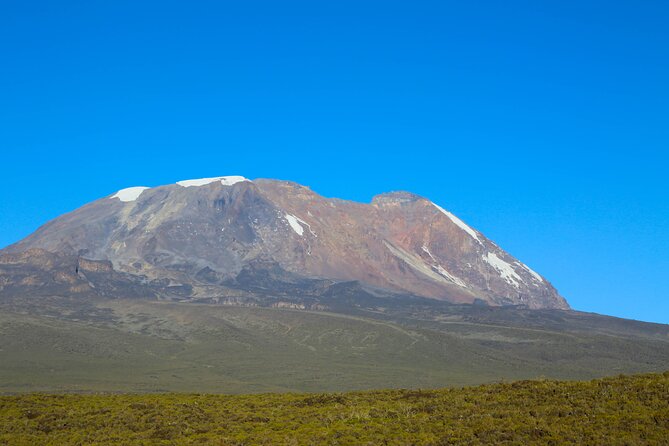
This 7-day Rongai climb is built around steady movement and gradual altitude changes, not a fast sprint. Your first days focus on getting your body used to higher elevations, while later you switch from forest and moorland to harsher, more exposed zones.
You also get something practical: the itinerary clearly separates easier hiking days from the hard one. That matters on Kilimanjaro, because the summit push is not the day to gamble with your pacing.
Starting in Moshi also helps your logistics. You meet at Kilimanjaro Airport at 8:00 am, then the trek begins with a drive into the park via Nalemoru Gate. From there, you’re not rushing around town trying to line up transport or tickets.
More Kilimanjaro climbs:
- Kilimanjaro climb by Lemosho Route (7-day)
★ 5.0 · 651 reviews - Kilimanjaro climb, Machame Route (7-day)
★ 5.0 · 262 reviews - Kilimanjaro Climbing Lemosho Route 8 Days.
★ 5.0 · 186 reviews
Your guide team: locals, safety first aid, and real storytelling
The biggest strength here is the guide lineup. Habari Adventure uses local guides from Kilimanjaro and other parts of Tanzania, and they’re trained in safety and first aid. That is the kind of detail you want to see, especially on a mountain where conditions can change fast.
These guides also bring more than directions. They have expertise that covers local flora and fauna, geography, history, archaeology, anthropology, and astronomy. On a trek, that translates to you learning while you walk, not waiting until you’re back in a lodge to make sense of where you are.
One more smart piece: the route includes structured moments for acclimatization. You get time to rest and recover, which is often where good guidance makes a difference, because it turns suffering into strategy.
Price and value for a 7-day Kilimanjaro supported climb
The price is $2,840.39 per person for this roughly 7-day experience. That’s not a bargain. It is also not a mystery cost if you look at what’s clearly included.
What you can count on from the provided details:
- Park admission tickets are included for the trekking days
- Pickup is offered
- A mobile ticket is part of the process
- You have local trained guides focused on safety and education
- You finish with certificates and a drive back to your hotel in Moshi, followed by the chance for a warm shower
So the value is less about extras and more about the fundamentals. You are paying for a guided climb, park access, and an organized schedule that gets you to the summit window.
What you should double-check before you pay (just to protect your budget and expectations): confirm what is included regarding gear, meals beyond the hot lunch mentions, and camp setup. The essentials listed here are strong, but you should still ask for the full inclusions list in writing.
Day-by-day Rongai: what you do at each elevation
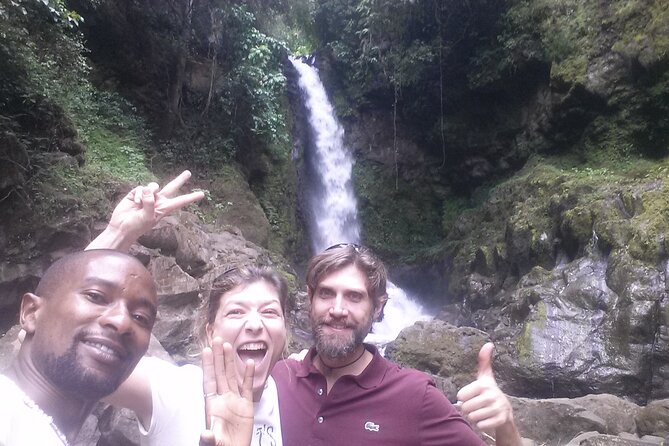
Below is how the route unfolds, day by day, and what each day is likely to feel like in real life.
A few more Moshi trips to compare
- Safari Serengeti And Ngorongoro
★ 5.0 · 288 reviews - Climbing Kilimanjaro – Machame Route
★ 5.0 · 170 reviews - Climbing Kilimanjaro through 7 days Machame Route
★ 5.0 · 151 reviews - Kilimanjaro climb, Lemosho Route (8-day)
★ 5.0 · 148 reviews
Day 1: Moshi to Nalemoru Gate, rain forest start
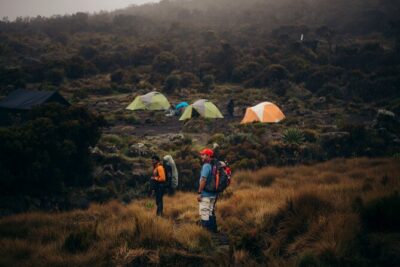
You leave your hotel in Moshi after breakfast and drive to Nalemoru Gate near the Kenyan border. The walk starts as a gradual ascent through rain forest, and if you’re lucky you might spot wildlife like zebras, elephants, buffalo, and monkeys.
This day is about easing into the rhythm. It is also your first chance to notice how your breathing responds to the climb, even before altitude really hits hard.
Practical note: you’re hiking about 3 hours on this day. For many people, that feels manageable, but rain forest hikes can still be slow and damp.
Day 2: Moorland hiking, Kibo views, and 2nd Cave Camp
You continue upward into the moorland zone, and the payoff starts visually. You get a good view of Kibo and the eastern ice fields on the crater rim.
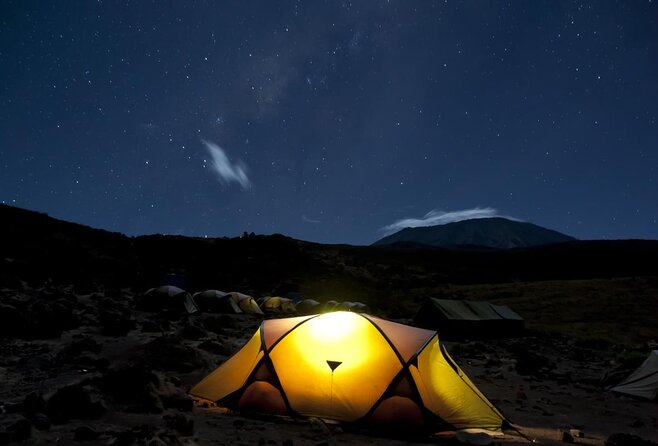
You end at 2nd Cave Camp (3,450 m) for overnight. The hiking time is around 4 hours, which keeps the day structured without being overly long.
The moorland zone is often where you start feeling the mountain weather more directly. Even if you do not feel “sick,” you may feel slower than you expect.
Day 3: From moorland toward Mawenzi’s jagged peaks
Another good view day. You cross the moorland and head toward the jagged peaks of Mawenzi (listed around 5,140 m). You reach Kikelelwa for lunch and overnight.
This day runs about 5 hours and it’s a nice bridge between scenery-heavy trekking and the more dramatic terrain that follows.
The main drawback to be aware of is simple: five hours at increasing elevation is where you either settle into a sustainable pace or you burn energy too early.
Day 4: Short day, steep grassy climb, and Mawenzi Tan Hut
Today is described as a short day, but it includes a steep climb over grassy slopes. You end up in a cirque directly beneath Mawenzi’s towering spires, which sounds like the kind of view that makes sore legs easier to ignore.
You also get free time in the afternoon to rest or explore the surrounding areas as part of acclimatization. Overnight is Mawenzi Tan Hut (4,330 m).
If you tend to rush, resist the urge today. Use the afternoon to recover so Day 5 and Day 6 do not feel like punishment.
Day 5: The saddle to Kibo Hut, then waiting for midnight
You cross the saddle between Kibo and Mawenzi, described as lunar desert, to reach Kibo Hut. You spend your afternoon at Kibo for lunch and resting, then wait for the final ascent that starts at midnight.
This day is about mental management as much as physical effort. You’ll likely feel more “stuck waiting” than you did on prior days, because you are preparing for a night summit rather than just keeping momentum.
Hiking time is about 5 hours, but the bigger factor is what happens afterward: the waiting window before the big climb.
Day 6: Summit night from 00:00, Gilman’s Point to Uhuru Peak
This is the big one. You start climbing around 00:00, and the route notes it as the steepest and most demanding section. Your guide sets a standard pace and asks you to walk slowly.
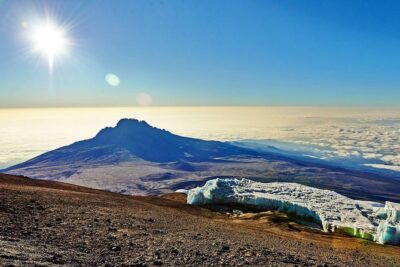
In the dark, it takes about 5 hours to reach the crater rim at Gilman’s Point (5,685 m). You get a short rest with a cup of tea and then a sunrise view over Mawenzi.
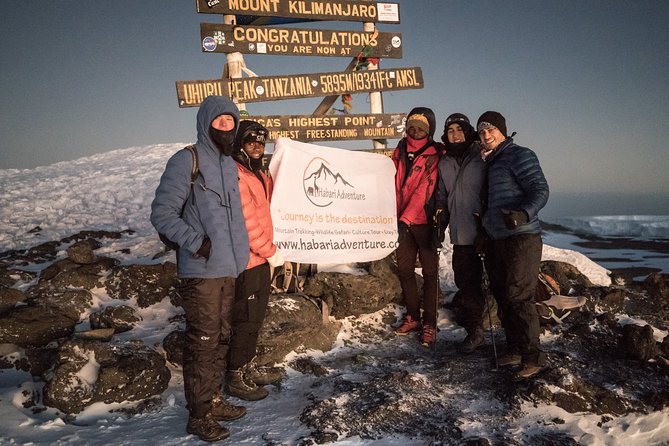
After that, it’s almost an hour to Uhuru Peak (5,895 m). You pass close to glacier and ice drifts still occupying parts of the summit area. After photos, you descend to Kibo Hut for a short rest and hot lunch, then continue down to Horombo Hut for overnight (3,700 m).
The practical takeaway: treat this day as two halves. The first half is endurance and cold-night climbing. The second half is descent stamina and keeping your energy steady on the way down.
The obvious drawback is also clear: if you hate climbing in darkness, or if you’re not comfortable with long, slow uphill movement, this day will test you.
Day 7: Heath and moorland down to Mandara Hut, then tropical rain forest exit
You pass through heath and moorland zone to Mandara Hut (2,700 m) for hot lunch. Then you continue descending through tropical rain forest to the Kilimanjaro National Park Gate.
At the gate, you collect your certificates, finish the park formalities, and your car takes you back to your hotel in Moshi for a warm shower. This day runs about 7 hours, which can feel long after the summit day.
Still, it’s a rewarding ending. You’re dropping to a lower altitude and getting your paperwork done while the mountain is behind you.
What acclimatization and pacing really mean on this route
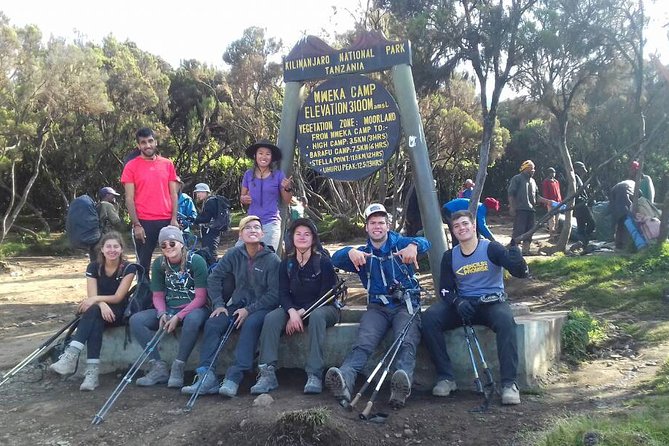
This climb gives you a few built-in “breathers.” Day 4 includes an afternoon block for acclimatization and rest. Day 5 is a transition day where you stop at Kibo and hold steady before the midnight push. Day 6 is where pacing becomes non-negotiable, because the guide’s job is to keep you moving without burning out too early.
A solid rule for you on summit night: assume slow is fast. The route specifically calls out a very standard pace and moving slowly, especially during the steep section. That matches what most people need at high altitude, where pushing hard makes you feel worse quickly.
Also, notice the route’s structure around rest moments:
- Short rest with tea at Gilman’s Point
- A recovery pause at Kibo Hut with hot lunch after Uhuru Peak
- An easier-feeling day at the end that focuses on descent and getting certificates
That’s not just comfort. It’s how you increase your odds of finishing.
Who this 7-day Rongai trek is best for
This experience is listed for moderate physical fitness. That means it is not a casual walk, but it is also not presented as a marathon sprint.
I think this fits you best if:
- You want a guided climb with trained local experts
- You prefer a route with clear pacing and planned acclimatization time
- You are willing to handle a midnight summit and long summit-day hours
- You like learning while you hike, since guides cover topics like geography and astronomy
It might not be the right match if:
- You strongly dislike climbing in darkness
- You’re looking for a very short, easy trip with minimal exertion
- You are not prepared for long days, especially the summit day
Should you book this Rongai trek with Habari Adventure?
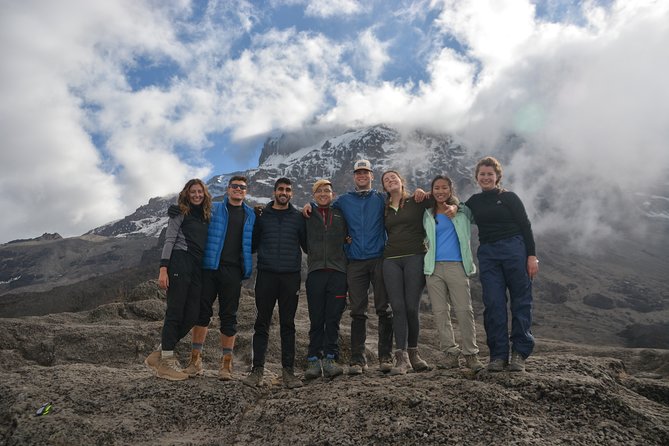
If you want a structured 7-day Kilimanjaro climb with local guides trained in safety and first aid, and you like the idea of park admissions included, this is an easy one to take seriously. The route’s schedule is built around acclimatization, then a clear summit window, then a descent with certificates and a warm shower back in Moshi.
My advice: book if you’re comfortable with the reality that Day 6 is long and steep, starting around 00:00. If that sounds daunting, ask hard questions before you commit, especially about what the day feels like in your group and what support is provided beyond the items explicitly mentioned here.
FAQ
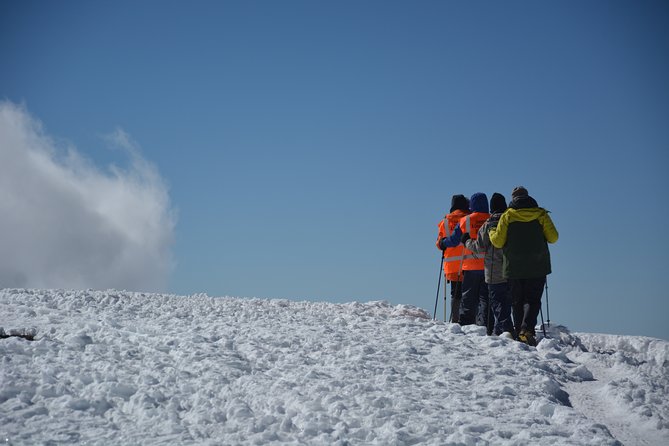
How long is the Kilimanjaro Rongai route trek?
It’s listed as 7 days (approx.).
Where do we meet, and what time does the experience start?
The start is Kilimanjaro Airport, Tanzania with a start time of 8:00 am. You then drive to Nalemoru Gate near the Kenyan border to begin the trek.
Is pickup included, and will I get a mobile ticket?
Pickup is offered, and the experience includes a mobile ticket.
What physical fitness level is required?
Travelers should have a moderate physical fitness level.
How large is the group?
The maximum group size is 15 travelers.
Are admission tickets included?
Yes, admission tickets are included for the trekking days listed.
Are the guides trained for safety?
Yes. The guides are locals and are trained in safety and first aid.
What is the cancellation policy if plans change or weather is bad?
You can cancel for a full refund up to 24 hours in advance of the experience start time. The experience requires good weather, and if it’s canceled due to poor weather, you’ll be offered a different date or a full refund.
Just posted around Moshi
- machame route★ 5.0 · 16 reviews
- Kilimanjaro Climbing Umbwe Route★ 5.0 · 3 reviews
- Wildlife Extravaganza: Manyara, Tarangire & Ngorongoro in 3 Days★ 5.0 · 3 reviews
- Mt Kilimanjaro 6 days Marangu route hike★ 5.0 · 3 reviews
- 3 Days Private E-Bike Tour in West Kilimanjaro★ 5.0 · 3 reviews
- West Kilimanjaro cycling Adventures★ 4.5 · 8 reviews
- Kilimanjaro Climb • Marangu Route ~ 9 Day★ 5.0 · 4 reviews
- Private Cycle to Kilimanjaro Bike Park Safari★ 5.0 · 6 reviews
Kilimanjaro Climbs, compared.
8-Day Small-group Lemosho Kilimanjaro Summit Trekking
Read our review →
5 Days Best of Tanzania Luxury Safari Northern Circuit
Read our review →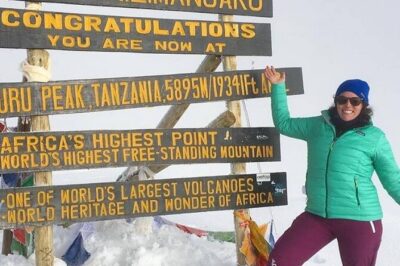
Climbing Kilimanjaro through 7 days Machame Route
Read our review →