Reviewed · KILIMANJARO CLIMBS
Kilimanjaro climb, Northern Circuit route (8-day)
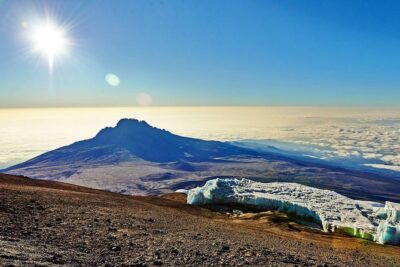
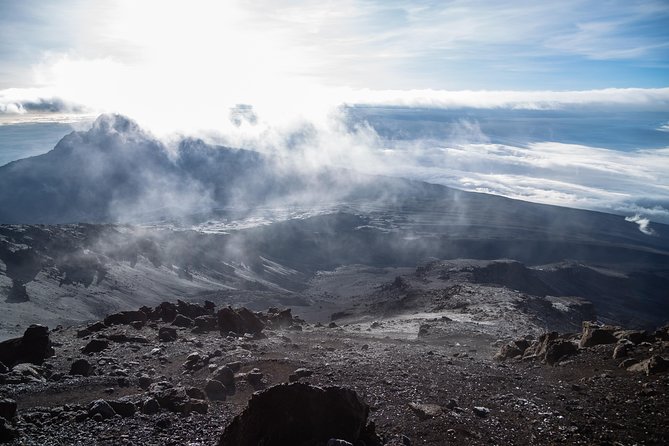
The Northern Circuit is Kilimanjaro’s long game. It threads through newer northern-slope terrain and is designed for strong acclimatization, with enough time to enjoy the scenery instead of racing it. I like that this route is often quiet, so your days feel more like remote trekking than a crowded checklist.
Two things I really like: the way the program builds altitude step by step, and the safety culture on summit night. You also get real comforts that matter in the cold, like quality camp gear (including tents), hot meals three times a day, and support that includes oxygen tanks and altimeters.
One drawback to plan for up front: the summit push starts around midnight and the descent is physically demanding. If you go in thinking this is just a hike, you will feel surprised by how hard the last stretch is.
In This Review
- Northern Circuit Highlights You Should Know
- Why the Northern Circuit Route Feels Less Crowded
- Price and What You Actually Get for $4,010
- Day 1 in Moshi: Airport Arrival and Your First Hotel Night
- Day 2: Londorossi Gate to Shira 1 at 3,500 m
- Day 3: Shira 1 to Shira 2, Plus a Lava Tower Acclimatization Walk
- Day 4: Lava Tower, Moir Hut Camp, and the Altitude Options
- Day 5: Around the Northern Slope with Big Valley Views
- Day 6: Shorter Trek, 3rd Cave Camp, and the Rongai Connection
- Day 7: School Hut Summit Camp to Uhuru Peak Night
- Day 8: Midnight Summit Start, Glacier Option, and Descent Care
- Day 9: Millennium Camp to Mweka Exit at 1,650 m, Plus Certificates
- Day 10: One More Night in Moshi and Airport Transfer
- Crew and Medical Support: The Difference Maker at High Altitude
- What to Pack and How to Train for This Specific Trek
- Who This Northern Circuit Climb Suits Best
- Should You Book This Tour for Northern Circuit Kilimanjaro?
- FAQ
- Where do you pick me up and drop me off?
- What time does the program start?
- How many nights and what hotel are included?
- Are oxygen and medical support included?
- What food options are available?
- Can I cancel for a full refund?
Northern Circuit Highlights You Should Know
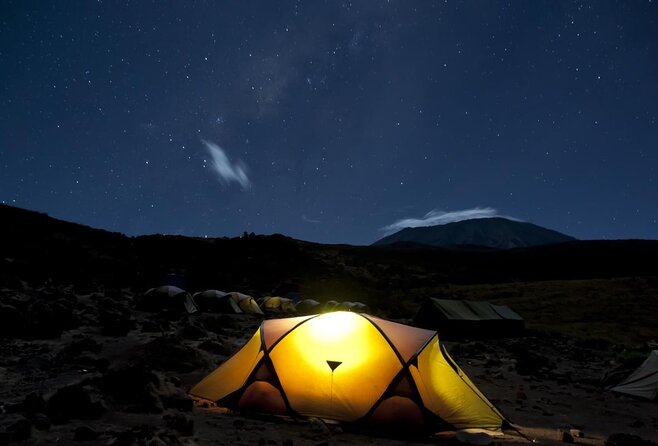
- Lower crowds on the northern route: a newer trail with limited foot traffic means calmer trekking days
- Shira to Lava Tower timing: early altitude gains are structured for acclimatization, not suffering
- Optional Lava Tower adjustment: your guide may reroute to match how the group is tolerating altitude
- Clear summit-night safety system: one guide per every two climbers, plus medical supplies
- Descent-focused mindset: the plan openly warns that most accidents happen on the way down
- Crew names you will hear again and again: support and medical help are a recurring theme, including people like Denis, Khatib, Albert, Bosco, and Osman
Why the Northern Circuit Route Feels Less Crowded
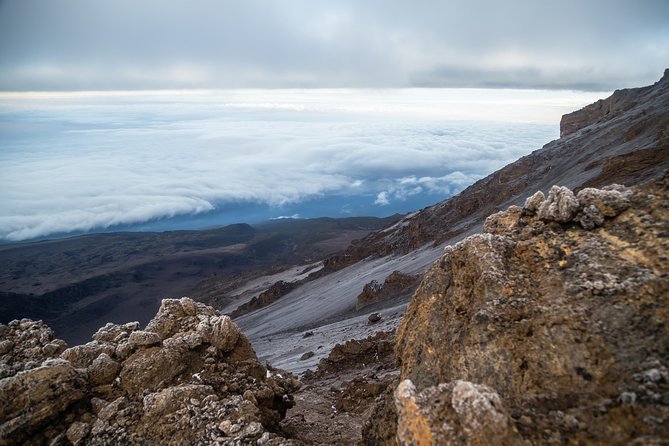
The big personality of the Northern Circuit is that it is not the main, famous, heavily tracked Kilimanjaro line. It is one of the longer and newer routes, and that usually translates into fewer people on trail. For many hikers, that alone changes the whole feel of the climb. You spend more time listening to wind, hearing your own breathing, and watching the mountain unfold.
You also get a special kind of variety. This route takes you past the northern slopes and gives wide views that focus on the northern side of Kilimanjaro, not just the classic western angles. On a clear day, you will be staring at the northern slopes while other routes may feel like they are rushing to the next checkpoint.
More Kilimanjaro climbs:
- Kilimanjaro climb by Lemosho Route (7-day)
★ 5.0 · 651 reviews - Kilimanjaro climb, Machame Route (7-day)
★ 5.0 · 262 reviews - Kilimanjaro Climbing Lemosho Route 8 Days.
★ 5.0 · 186 reviews
Price and What You Actually Get for $4,010
At $4,010 per person, this is not a budget hike. But it is priced like a full-service expedition, with a lot included that would cost you extra if you tried to piece it together yourself.
Here is what stands out as “value,” not just “extras”:
- Park fees and core logistics are included, plus JRO airport pickup and drop-off
- Wilderness First Responder guides are part of the team, not just generic hiking guides
- Oxygen tanks and altimeters are included, which is the kind of safety detail you want on Kilimanjaro
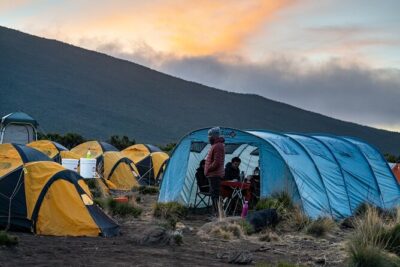
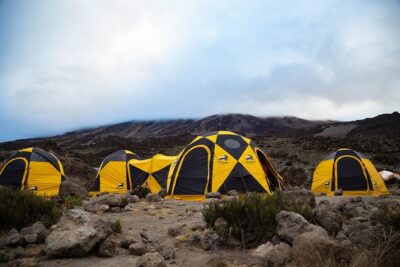
- You get high-quality branded group equipment (tents, pads, camp dining setup)
- Meals are covered (three per day on the mountain), with diet options like vegetarian, vegan, lactose-free, gluten-free, halal, and more
- A full mountain crew handles portering, camp setup, and cooking
What is not included is also important for value math. You will still need to budget for visa fees, travel to Tanzania, tips for the crew, and optional mountaineering insurance (strongly recommended). You also bring personal gear like your boots and sleeping bag, though hiring is mentioned as an option.
Day 1 in Moshi: Airport Arrival and Your First Hotel Night
You start in Moshi, with pickup at Kilimanjaro International Airport (JRO). The plan is to meet an Altezza Travel representative, then transfer to the hotel. Check-in starts at 2:00 PM, and that matters because Kilimanjaro days start early, even when you are still on the ground.
Your first night is at Aishi Machame Hotel, and the included basics are exactly what you want after flying: a comfortable room, hot water, and staff who handle the expedition briefing. There is also a briefing in the evening with managers to confirm you are ready to climb.
In practical terms, this day helps you do two things well before altitude ever hits: get your documents and permitting handled, and get mentally organized for the days ahead. That is underrated. A calm start makes the trek feel more controlled.
Day 2: Londorossi Gate to Shira 1 at 3,500 m
Day 2 moves you from the road world to the mountain world. You travel by vehicle for roughly 3 to 4 hours to the western entrance of Kilimanjaro National Park: Londorossi Gate (2,200 m). After permits and registration with search and rescue, you get off-road transport up to around 3,500 m, where you begin with views over the Shira Plateau.
Then comes the first camp: Shira 1. This stretch is described as a small altitude gain with not-too-heavy effort. That does not mean it is easy. It means the plan is trying to avoid pushing you too hard on day one.
If you are the type who likes to know the shape of a day, this one is clear and manageable. It gives you a first taste of high altitude without draining you before the real rhythm begins.
A few more Moshi trips to compare
- Safari Serengeti And Ngorongoro
★ 5.0 · 288 reviews - Climbing Kilimanjaro – Machame Route
★ 5.0 · 170 reviews - Climbing Kilimanjaro through 7 days Machame Route
★ 5.0 · 151 reviews - Kilimanjaro climb, Lemosho Route (8-day)
★ 5.0 · 148 reviews
Day 3: Shira 1 to Shira 2, Plus a Lava Tower Acclimatization Walk
On Day 3 the route continues with modest altitude work from Shira 1 to Shira 2 Camp, gaining about 300 m. The idea is simple: keep your body learning how to function at altitude without turning each day into a battle.
After that, you get a lunch break plus an acclimatization walk toward Lava Tower. The plan notes another 300 m gain as part of that. Weather can control what you see, but when conditions are favorable you may also catch views of Mount Meru, which is the fifth-highest mountain in Africa.
This is one of those days where pacing is everything. The climb is not mainly about speed. It is about breathing, staying calm, and letting your body adapt. If you go fast here, you can pay for it later.
Day 4: Lava Tower, Moir Hut Camp, and the Altitude Options
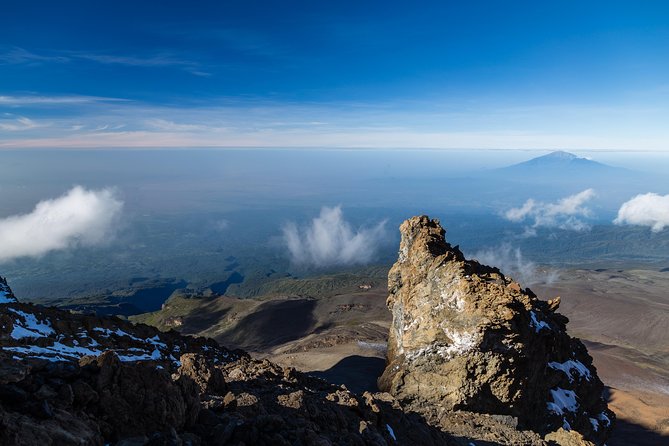
Day 4 starts from around 3,900 m at Shira Camp and heads toward Lava Tower (4,630 m). This part can bring more discomfort because it includes ups and downs and time spent at higher altitude. The plan explicitly tells you to spend one or two hours at higher altitude to acclimatize properly.
There is also a key flexibility: in the afternoon, the trek climbs slightly then descends toward Moir Hut Camp. Your guide may bypass Lava Tower altogether and take a porter trail if members of the group need more time to adjust. If you are paying attention, that option is a big deal. It is an admission that altitude tolerance varies, and the route has a built-in safety valve.
What you should take from this day: you do not win Kilimanjaro by forcing your body to “perform.” You win by staying responsive to how altitude actually feels that day.
Day 5: Around the Northern Slope with Big Valley Views
Day 5 is longer, but still described as easy, with a longer time on trail rather than steep gains. After a short steep climb out of Moir Valley, you start trekking along the northern slope of Kilimanjaro.
The route passes close to the border with Kenya, and that is where the views sharpen. You can get amazing looks toward Tsavo and Amboseli Valleys depending on conditions.
If you like trekking days that feel steady, this is often a morale boost. It is the kind of day where you can enjoy ecosystems and not just focus on surviving the next hour.
Day 6: Shorter Trek, 3rd Cave Camp, and the Rongai Connection
Day 6 is a shorter day than Day 5, ending at 3rd Cave Camp, where the route meets up with the traditional Rongai route. The plan notes that by this point you are acclimated to around 4,000 m, and that translates into feeling better overall.
I like the way this day is positioned. It is not just another camp night. It is a pacing reset. When a climb gives you a day that feels less punishing, you recover more effectively for summit night.
Day 7: School Hut Summit Camp to Uhuru Peak Night
Day 7 is the summit setup day. You trek to School Hut Summit Camp (4,750 m), and the climb is described as not very hard technically. The main challenge is altitude, so your pace matters. The plan tells you to choose a rhythm that keeps strength for the final push.
Once you reach camp, you are told to sleep well, avoid strenuous activity, and drink fluids. That night you head to Uhuru Peak (5,895 m).
This is where Kilimanjaro becomes more than a trekking trip. You are managing energy, hydration, and nerves, all while being cold and tired. The best summit outcomes usually come from quiet, disciplined behavior, not hero moves.
Day 8: Midnight Summit Start, Glacier Option, and Descent Care
Summit night starts at School Hut around midnight. The route says one guide is nominated per every two climbers, and their responsibility is monitoring health during the walk to Uhuru Peak (5,895 m).
Technically, the climb is described as relatively easy, but high altitude makes it hard. There is also an option mentioned: walking upon the nearest glacier after a successful summit.
Then you descend to Barafu Camp for a two-hour lunch and rest before ending at Millennium Camp (3,820 m). The plan also gives you a blunt safety reminder: 9 out of 10 accidents occur during descent. That is why your feet matter most on this day. Take your time. Keep your steps deliberate. This is not the day to prove anything.
If you want a simple mental checklist for this day, it is: slow down, watch footing, drink, and follow the guide.
Day 9: Millennium Camp to Mweka Exit at 1,650 m, Plus Certificates
Day 9 shifts from high-altitude survival into recovery mode. Millennium Camp sits amidst tropical rainforest, so once you are lower, the air feels different. After a hot breakfast, you do the final descent to the park’s exit gate: Mweka (1,650 m).
There is also a handoff moment after the exit. You transfer to the offices to receive your accomplishment certificates, then you drive to the hotel for rest.
I like how this day is framed. You get a real completion ritual, not just “walk out and go home.” It helps you process what you did and celebrate properly.
Day 10: One More Night in Moshi and Airport Transfer
On the last day you rest at Aishi Machame Hotel and then transfer to the airport. Hotel check-out is at 11:00 AM. If you have an evening flight, you can extend your hotel stay for an extra fee.
This final buffer is practical. Kilimanjaro can drain you longer than you expect, especially if you are sore in new places. Having time to recover before the airport keeps the ending from feeling rushed.
Crew and Medical Support: The Difference Maker at High Altitude
The strongest repeated strength in this climb is the way the team leans hard into safety and care. You are not just hiring people who carry bags. You are getting a system: Wilderness First Responder guides, medical kits, medical check-ups, and oxygen tanks and altimeters.
That combination matters most on Kilimanjaro, because altitude problems can escalate quickly. The summit night guide ratio, one guide per every two climbers, is part of how they manage that risk.
Personal support also shows up in how crew members are credited for help with sickness and mobility issues. Specific names come up again and again, including Denis for logistics, Aya as a tour manager, and guides like Khatib and Albert. Other credited support includes Bosco and Osman. When multiple hikers mention medical help and consistent encouragement, it points to culture, not luck.
My advice: treat the briefing seriously. Ask questions that make you feel calmer, not questions that make you feel clever. Follow the hydration and pace guidance. Those basics work.
What to Pack and How to Train for This Specific Trek
The trip expects you to have moderate physical fitness. That is not a casual statement. This climb includes multiple high-altitude days, long trekking stretches, and a summit night that starts around midnight.
On summit night and descent day, your fitness shows up as steadiness: steady steps, steady breathing, steady energy. If you train for stamina but ignore footing and balance, the descent can feel scarier than expected.
About gear: your personal equipment is not included. The plan specifically notes hiking outfit, boots, and sleeping bag are your responsibility. There is mention that hiring some personal gear is available, but the data does not list exactly what. So it is smart to confirm what is rentable before you arrive.
Practical training idea based on this route: practice long walks on varied terrain and do some work on recovery between efforts. If you can handle back-to-back days of hiking at a moderate pace, you will match the route’s rhythm.
Who This Northern Circuit Climb Suits Best
This Northern Circuit climb is a strong match if you want:
- a longer route with time for acclimatization rather than rushing
- a less crowded feel and quieter days on trail
- a guided team with real medical readiness
- a full-service expedition style, including tents, meals, and camp support
It is also a good fit if you enjoy wilderness trekking and want variety: Shira Plateau views early, Lava Tower area acclimatization, then northern-slope trekking with valley views near the Kenya border.
It may not fit you if you are looking for a short, low-effort Kilimanjaro day hike. Even with good pacing, this is still a serious mountain trek with a summit-night challenge and a descent you must treat with care.
Should You Book This Tour for Northern Circuit Kilimanjaro?
I would book this one if you want a Northern Circuit experience that takes altitude seriously and pays attention to safety. The included support items, from oxygen tanks to Wilderness First Responder guides, are exactly the kind of details that matter when you are heading toward Uhuru Peak.
I would hesitate only if you know you cannot handle the time commitment and the summit-night schedule. Also make sure you are ready for the reality that descent is where risk climbs, so you need to move carefully even after you feel done.
If you are choosing between Kilimanjaro routes, this Northern Circuit version makes a compelling case: fewer crowds, strong acclimatization structure, and a crew that earns trust through safety-focused operations.
FAQ
Where do you pick me up and drop me off?
You get JRO (Kilimanjaro International Airport) pickup and drop-off as part of the included service. On the last day, you also get a transfer to the airport after your hotel stay.
What time does the program start?
The meeting point lists a start time of 9:00 am.
How many nights and what hotel are included?
The package includes two nights in Aishi Machame Hotel, with rooms set up for 2 guests per room (except for solo climbs).
Are oxygen and medical support included?
Yes. The included items list oxygen tanks and altimeters, plus medical kits and medical check-ups. Certified Wilderness First Responder guides are also included.
What food options are available?
Three meals a day are included on Kilimanjaro, with options for vegetarian, vegan, lactose-free, gluten-free, halal, and other meal plans.
Can I cancel for a full refund?
Yes. You can cancel up to 24 hours in advance for a full refund. If you cancel less than 24 hours before the start time, the amount paid is not refunded.
Just posted around Moshi
- machame route★ 5.0 · 16 reviews
- Kilimanjaro Climbing Umbwe Route★ 5.0 · 3 reviews
- Wildlife Extravaganza: Manyara, Tarangire & Ngorongoro in 3 Days★ 5.0 · 3 reviews
- Mt Kilimanjaro 6 days Marangu route hike★ 5.0 · 3 reviews
- 3 Days Private E-Bike Tour in West Kilimanjaro★ 5.0 · 3 reviews
- West Kilimanjaro cycling Adventures★ 4.5 · 8 reviews
- Kilimanjaro Climb • Marangu Route ~ 9 Day★ 5.0 · 4 reviews
- Private Cycle to Kilimanjaro Bike Park Safari★ 5.0 · 6 reviews
Kilimanjaro Climbs, compared.
8-Day Small-group Lemosho Kilimanjaro Summit Trekking
Read our review →
5 Days Best of Tanzania Luxury Safari Northern Circuit
Read our review →
Climbing Kilimanjaro through 7 days Machame Route
Read our review →