Reviewed · KILIMANJARO CLIMBS
Kilimanjaro Climb • Machame Route ~ 10 Day
Kilimanjaro tests you, then rewards you. The 10-day Machame Route from Moshi strings together rain-forest, lava landscapes, and a sunrise push to Uhuru Peak, with a big emphasis on camp comfort and medical-grade support. You hike through towering glaciers and high-altitude zones that change fast, so every day feels like a new world.
I especially like the trained high-altitude team approach, plus the way the camp crew sets up each night so you spend your energy moving, not managing gear. A possible drawback is the altitude challenge: this route asks you to hike when the air gets thin, so you need realistic expectations and good pacing.
In This Review
- Key things that make this Machame climb worth your time
- From Moshi to Kilimanjaro: what this climb feels like
- Machame Route value: why this itinerary is designed for altitude
- Day 1 and Day 2 in Moshi: setup, orientation, gear check
- Day 3: Machame gate into the rain forest to Machame Camp
- Day 4: leaving the forest, first big altitude bite to Shira
- Day 5: Lava Tower to Barranco, glaciers in the spotlight
- Day 6: Barranco Wall day, tough but scenic
- Day 7: to Barafu, when the air gets thin
- Day 8: Barafu to Uhuru Peak then down to Millennium
- Day 9: Mweka descent through rainforest, celebration at the gate
- Days 10 and beyond: depart or add safari time
- Price and what you actually get for $5,628 per person
- Who this Machame Route with Tusker suits best
- Should you book this Machame Route climb?
- FAQ
- Where is the climb based?
- How long is the Kilimanjaro Machame Route?
- What route is this, and where is the summit?
- Is pickup included?
- Are park admission tickets included?
- Are meals included?
- Is climbing gear rental included?
- Is this a private tour?
- When does the experience start?
- Can I cancel for a full refund?
Key things that make this Machame climb worth your time
- Sunrise summit attempt gives you steep-path visibility and early-day views
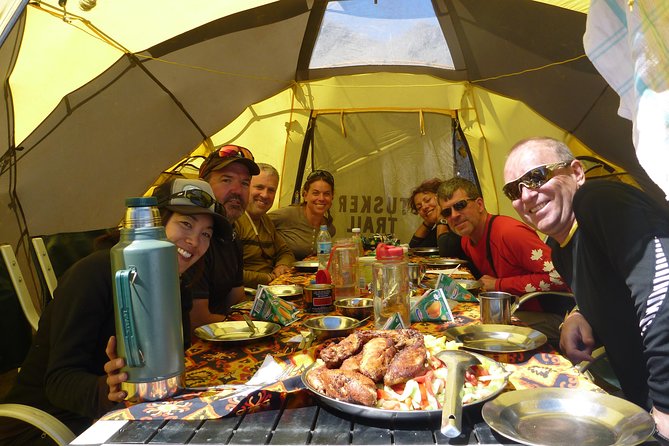
- Camp set-up on arrival means more rest, less fuss, better morale
- Medically trained High Altitude First Responders for extra reassurance at elevation
- Park entry support and crew handling paperwork so you start climbing smoothly
- A classic Machame rhythm with Shira to Barranco to Barafu to the crater rim
From Moshi to Kilimanjaro: what this climb feels like
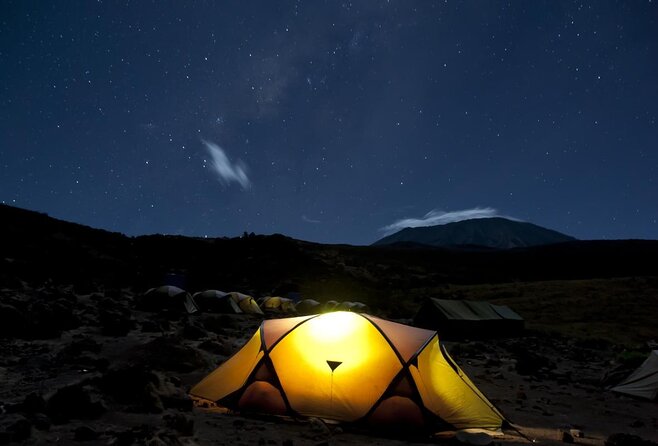
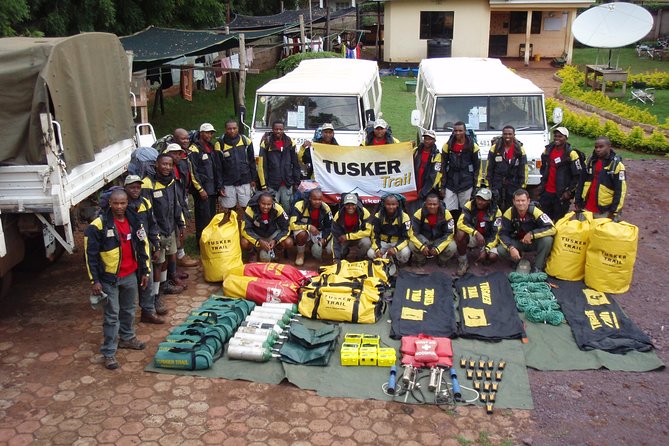
Based in Moshi, Tanzania, this Machame Route plan balances hard hiking with practical support. You start by settling in, meeting the people who will guide and support you, and getting the gear check and orientation done before you ever hit the national park trail. That matters. Kilimanjaro is not the place to figure things out on the fly.
The overall flow is also smart: you move through rain-forest, then step into heather and high-altitude vegetation, then into the colder, harsher zones that sit closer to the summit. Even if you are experienced with hiking, the speed of the environmental change is what makes Kilimanjaro feel like a different planet as you go up.
This trip also leans into team care. Names came up from the crew, including Kombe, Guadance, Nemis, and Ureo, and the common thread is the same: guides and staff who stay engaged, keep you moving at a safe pace, and pay attention to how you are doing.
More Kilimanjaro climbs:
- Kilimanjaro climb by Lemosho Route (7-day)
★ 5.0 · 651 reviews - Kilimanjaro climb, Machame Route (7-day)
★ 5.0 · 262 reviews - Kilimanjaro Climbing Lemosho Route 8 Days.
★ 5.0 · 186 reviews
Machame Route value: why this itinerary is designed for altitude
On Kilimanjaro, your success often comes down to acclimatization and consistency. The Machame itinerary uses a route profile that pushes elevation gradually, gives you time in key zones, and then lands you on the classic summit sequence.
You’ll see that rhythm in the day structure: hiking hours build, the terrain shifts from forest to alpine to rocky slopes, then the final ascent comes with a long, steep grind. The plan even includes the moment many climbers remember most: when the air thins and you can feel your breathing rate change. That is not just discomfort. It is your body learning the new normal.
Also, the trip is built to reduce logistical stress. You are not managing camp systems every day. Instead, the crew sets up and you focus on walking, drinking, and resting. That can make a big difference when fatigue stacks up and you start judging every step.
Day 1 and Day 2 in Moshi: setup, orientation, gear check
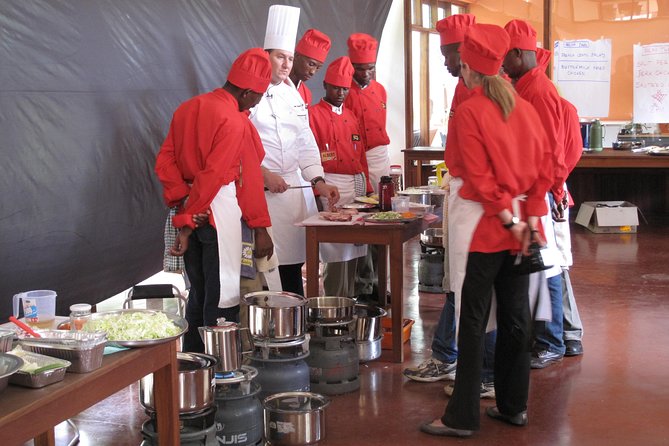
Your first day is about getting grounded. You arrive in Moshi and check into a family-owned hotel to relax, settle in, and prepare. Then day two is a full prep block. You spend time in Moshi getting to know your guides and doing a detailed climb orientation plus a gear check.
For me, this is one of the most underrated parts of Kilimanjaro. If you get your boots and layers right early, the mountain stays a challenge, not a problem. Orientation also helps you understand pacing, hydration, and what the early symptoms of altitude can feel like so you recognize them instead of ignoring them.
You’ll also be going into the climb with a clearer picture of how the team operates. That matters for morale. When you trust the process, you tend to climb more steadily, which is often the difference between a tough day and a dangerous one.
Day 3: Machame gate into the rain forest to Machame Camp
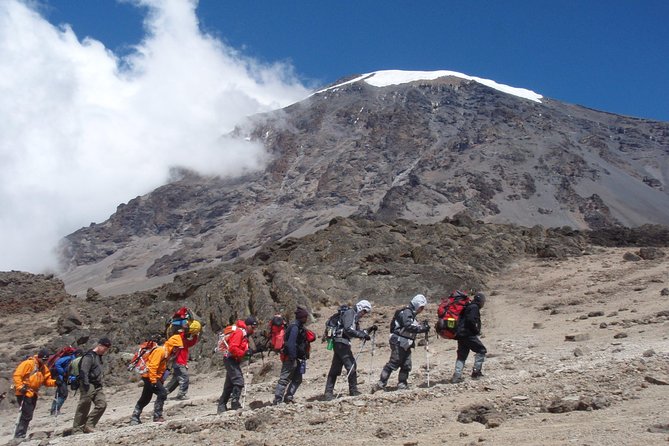
Day three starts with the drive to the Machame gate where you sign into the national park. Your guide handles the paperwork, and then you’re walking. The trail narrows and heads uphill through tropical rain-forest, where the canopy is alive with birds and primates, including colobus monkeys.
This is a day to go easy on purpose. Rain-forest Kilimanjaro can feel deceptively manageable because the air may not be as thin yet. Still, the climb begins. Your best tool early is self-control: slow steps, steady breathing, and consistent water intake.
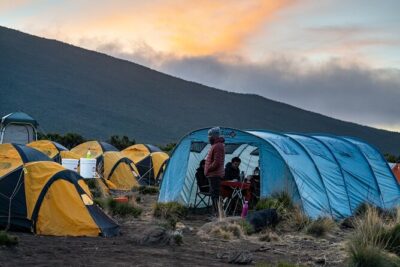
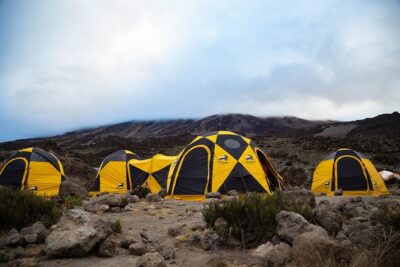
You finish at Machame Camp after about 7 hours on the trail. The key practical win here is that the camp crew has your camp set up by the time you arrive, so you can focus on recovery routines instead of building camp from scratch.
A few more Moshi trips to compare
- Safari Serengeti And Ngorongoro
★ 5.0 · 288 reviews - Climbing Kilimanjaro – Machame Route
★ 5.0 · 170 reviews - Climbing Kilimanjaro through 7 days Machame Route
★ 5.0 · 151 reviews - Kilimanjaro climb, Lemosho Route (8-day)
★ 5.0 · 148 reviews
Day 4: leaving the forest, first big altitude bite to Shira
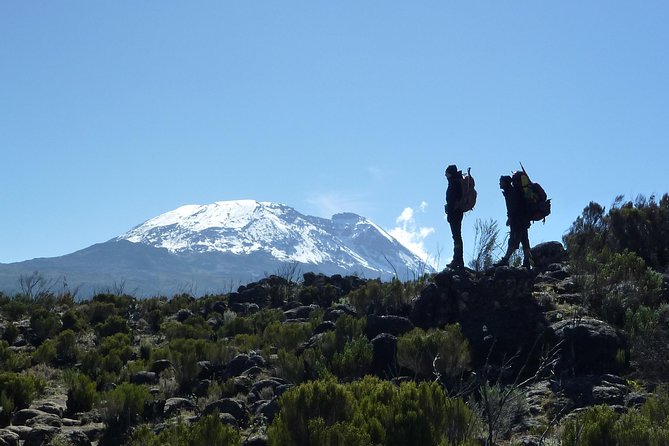
The fourth day is when the trees thin out and the mountain starts to feel more alpine. You leave the last glades of the rain forest behind and hike toward the Shira Plateau, while altitude starts to show up in your breathing and pace.
If the weather is clear, you get your first close-up look at Kibo Peak from a distance. Along the way you pass iconic high-elevation plants: after about 9,000 ft, you’ll encounter the first lobelia, protea, and giant Senecio. Then you reach Shira in roughly 7 to 8 hours.
Why this day matters: it bridges rainforest walking into high-altitude walking. You learn how quickly effort feels different when oxygen drops. And because the plan uses a slower, steadier style, you get a chance to adjust before you push into colder and rockier terrain.
Day 5: Lava Tower to Barranco, glaciers in the spotlight
Day five takes you uphill past the Lava Tower, then into a slow descent through giant Senecios toward Barranco. This shift to downhill walking is not a trick. It’s part of altitude strategy. You still gain elevation overall, but the route gives your body a chance to breathe easier for stretches.
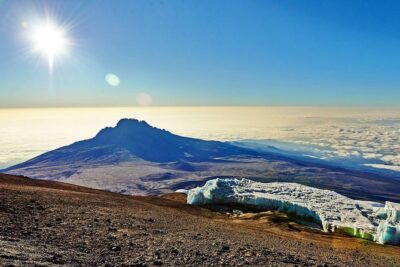
The views are part of the payoff. You’ll be looking out toward Kibo’s south-facing glaciers, with the towering peaks feeling much closer as the terrain opens up. The day ends at Barranco Camp after about 8 hours.
A small consideration: Barranco’s weather can change fast. If clouds roll in, you may hike with reduced visibility. Still, the upside is that you keep moving through a landscape that feels vast and dramatic without needing technical climbing.
Day 6: Barranco Wall day, tough but scenic
Day six is the signature terrain day for many people. You head up the Barranco Wall, with hikes up and down in valley terrain. This is one of those days where your legs work, but your mind stays engaged because the views are constantly changing.
You’ll likely see Kibo Peak hovering to the left and Mawenzi looming to the right. That contrast helps you stay oriented even when the mountain weather shifts.
Time on trail is about 5 hours, and then you settle into camp. This is also a good day to watch your hydration and energy. When the effort spikes, your water needs do not magically shrink. You want to stay ahead of fatigue so day seven doesn’t feel like a surprise.
Day 7: to Barafu, when the air gets thin
On day seven, the air starts getting thinner in a noticeable way, and you may feel yourself taking smaller breaths for longer stretches. The climb to the craggy slopes at Barafu Camp is tough, but it is also motivating because you can feel you are getting closer to the summit push.
“Barafu” means ice in Swahili, and it can be brutally cold at this altitude. That cold can be a mental hurdle, too. The strategy here is simple: dress for warmth, eat what you can, and keep moving smoothly rather than rushing.
The day is about 4 hours and the atmosphere is charged with anticipation. As clouds move in and out, you may catch glimpses of Mawenzi rising from the plains below. If visibility improves, it can make the day feel less like work and more like momentum building.
Day 8: Barafu to Uhuru Peak then down to Millennium
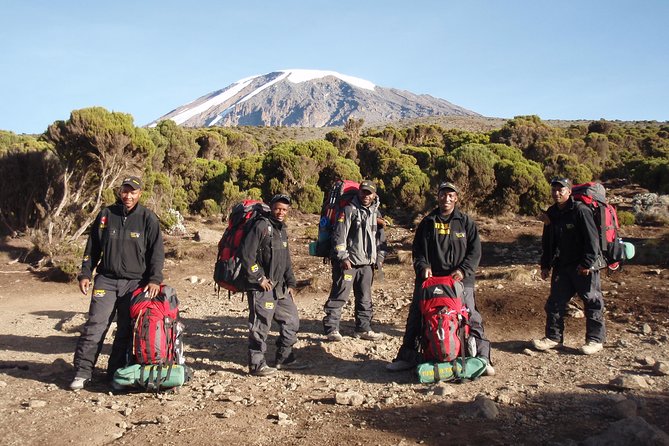
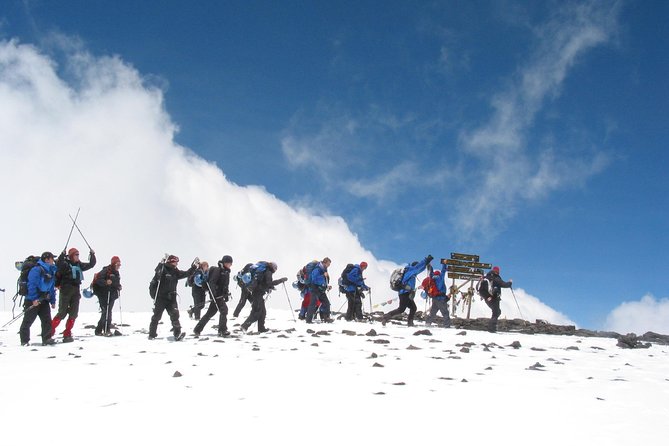
Day eight is the big one. The plan starts climbing a couple hours before sunrise, and you move through the steepest, most demanding part of the mountain. The route targets the Crater rim after lunch, then continues toward Uhuru Peak at 19,341 ft / 5,895 m.
You’ll hike from Barafu to Summit roughly 2.75 miles / 4.5 km in about 7 to 9 hours, then transition into the summit to Millennium segment of about 6.3 miles / 10.1 km in 5 to 6 hours. The total day is long. That is normal for Kilimanjaro summit days.
Why this works: starting before sunrise often means you avoid the harshest heat while still keeping enough light to see your footing later. Also, the crater terrain has a way of making time feel slow, so having a structured route through the crater area and then down helps prevent panic.
After Uhuru Peak, the descent is invigorating, not easy. You rest again at Barafu Camp, then continue to Millennium Camp for your last night up high.
Practical note: after you summit, you still have to get safely down. Your sense of relief should not shorten your attention span. Keep taking it one step at a time.
Day 9: Mweka descent through rainforest, celebration at the gate
Day nine is when Kilimanjaro starts giving back. You hike about 2 hours to Mweka Camp, then continue down through rainforest for around 4 hours to the gate.
From the gate, you enjoy a final lunch and a celebration with your guides and porters. Then you drive back to the hotel for a well-earned shower.
This day is meaningful because it turns the whole climb into closure. The rainforest can feel almost unbelievable after weeks of alpine wind and altitude air. If you are feeling sore, you might still get moving slower than you want, but that is fine. The goal is controlled, steady walking to the finish line.
Days 10 and beyond: depart or add safari time
Day ten is departure from Tanzania, or you can continue on safari through wildlife reserves. If your budget and time allow, I like pairing Kilimanjaro with safari, because it gives your body time to recover while you switch from mountains and altitude to living at ground level with animals.
It also helps you avoid the “climb hangover” where you are tempted to jump into a new intense activity too fast. After the summit, most people want normal food, sleep, and a bit of calm.
Price and what you actually get for $5,628 per person
At $5,628 per person, this Machame climb sits in the premium range. The question is what is included, because Kilimanjaro costs add up quickly when you consider park access, a large support team, and days of meals.
Here’s what you can count on from what’s listed:
- Meals included: 9 breakfasts, 10 lunches, 8 dinners
- Admission tickets included (not just one day, but across the climb)
- Pickup offered and a mobile ticket
- A crew that carries equipment and sets up camp nightly
- High-altitude medical support via medically trained first responders
- A private setup where only your group participates
What is not included:
- Climbing gear and clothing rental
That last point is the big practical planning item. If you do not already have the right layers, boots, and essentials, you’ll need to budget time and money for rentals or purchases before you fly. If you skip that planning, you can end up with discomfort that makes the whole climb harder than it needs to be.
Who this Machame Route with Tusker suits best
This plan is a strong fit if you want:
- structured pacing with a team that sets up camp and keeps the day moving
- medically trained first responders as part of the guiding approach
- an itinerary that hits the classics: Shira, Barranco, Barafu, crater terrain, then the descent through rainforest
It can suit different traveler types, including solo hikers and families with teen to young adult groups, as long as everyone is prepared for strenuous, high-altitude walking. The group format is private, so you should feel less pressure than on big public trekking groups.
If you dislike long hiking days, or you want a more leisurely climb style, Kilimanjaro is not designed for that. You are signing up for physical effort. You just want a system that reduces distractions and protects your safety.
Should you book this Machame Route climb?
I would book this if you value camp comfort, active guide support, and medical-grade altitude care, and you want the standard Machame path that many climbers use to reach the summit area. The sunrise summit timing and the way the route transitions across climates also makes sense for people who want to earn the top without improvising logistics.
Before you commit, do two things. First, check that you have a plan for climbing gear and clothing, since rentals are not included. Second, be honest about altitude. If you can climb steadily and you take pacing seriously, this trip is a great way to chase Uhuru Peak with a capable team at your side.
FAQ
Where is the climb based?
The tour is based in Moshi, Tanzania. You’ll also drive to the mountain from there.
How long is the Kilimanjaro Machame Route?
It’s listed as 10 days (approx.).
What route is this, and where is the summit?
This is the Machame Route. The summit includes Uhuru Peak at 19,341 ft / 5,895 m.
Is pickup included?
Yes, pickup is offered.
Are park admission tickets included?
Yes. Admission ticket access is included across the climb days listed.
Are meals included?
Yes. Meals included are 9 breakfasts, 10 lunches, and 8 dinners.
Is climbing gear rental included?
No. Climbing gear and clothing rental are not included.
Is this a private tour?
Yes. It is a private tour/activity, meaning only your group participates.
When does the experience start?
The listed start time is 12:00 am, so plan your travel and arrival timing accordingly.
Can I cancel for a full refund?
You can cancel up to 24 hours in advance for a full refund. If you cancel less than 24 hours before the experience’s start time, you will not be refunded.
Just posted around Moshi
- machame route★ 5.0 · 16 reviews
- Kilimanjaro Climbing Umbwe Route★ 5.0 · 3 reviews
- Wildlife Extravaganza: Manyara, Tarangire & Ngorongoro in 3 Days★ 5.0 · 3 reviews
- Mt Kilimanjaro 6 days Marangu route hike★ 5.0 · 3 reviews
- 3 Days Private E-Bike Tour in West Kilimanjaro★ 5.0 · 3 reviews
- West Kilimanjaro cycling Adventures★ 4.5 · 8 reviews
- Kilimanjaro Climb • Marangu Route ~ 9 Day★ 5.0 · 4 reviews
- Private Cycle to Kilimanjaro Bike Park Safari★ 5.0 · 6 reviews
Kilimanjaro Climbs, compared.
8-Day Small-group Lemosho Kilimanjaro Summit Trekking
Read our review →
5 Days Best of Tanzania Luxury Safari Northern Circuit
Read our review →
Climbing Kilimanjaro through 7 days Machame Route
Read our review →