Reviewed · KILIMANJARO CLIMBS
Kilimanjaro climb, Kilimanjaro Crater route (10-day)
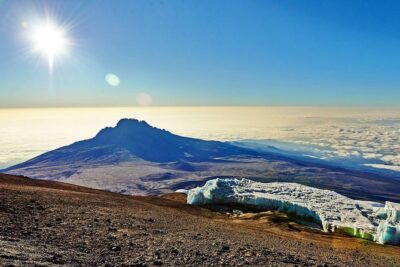
Sleeping in the crater changes the whole feel of Kilimanjaro. This 10-day Kilimanjaro Northern Circuit route is built for excellent acclimatization and the kind of high-altitude views you do not get on the more common paths. It also has a rare, low-crowd vibe, plus the jaw-dropping bonus of camping overnight near glaciated scenery on the upper slopes.
What I like most is the way the itinerary balances work and recovery, starting with gentler days around the Shira area before you build toward the summit night. I also really appreciate the safety net in the plan, from certified Wilderness First Responder guides to medical check-ups at least twice a day, oxygen tanks and oximeters, and solid camp logistics. One consideration: crater camping adds extra risk and strain at high altitude, so you need a realistic fitness baseline and comfort with altitude before you say yes.
In This Review
- Quick hits before you commit
- Why the Northern Circuit and crater night are such a big deal
- Day 1 in Moshi: airport pickup and a real hotel reset
- Days 2 to 3: Londorossi Gate, Shira camps, and Lava Tower acclimation
- Day 4 to 5: Lava Tower zone, Moir Hut, and northern-slope views toward Kenya
- Days 6 to 8: 3rd Cave Camp, School Hut, and Uhuru Peak from midnight
- Days 9 to 10: Mweka Gate exit, certificates, and a recovery night in Moshi
- Price and value: what your $6,466 buys on this Kilimanjaro climb
- Gear, fitness, and crater risk: what to plan before you climb
- Who this climb suits best
- Should you book Altezza Travel’s 10-day crater route?
- FAQ
- What is the duration of this Kilimanjaro climb?
- Where does the tour start and is airport pickup included?
- Is the crater camping part of this program?
- What safety and medical support is included on the mountain?
- Does it include tents and meals?
- Can I cancel for a full refund?
Quick hits before you commit
- Crater camping built in: a one-of-a-kind night higher than most places on Earth, with glacier views that are changing year to year
- Northern Circuit pacing: gradual altitude increases with acclimatization walks that keep the climb steady
- Medical and oxygen support included: unlimited oxygen tanks and oximeters, plus medical kits and frequent checks
- Strong camp setup: North Face VE-25 tents, sleeping pads, and daily meals that keep your energy up
- Summit day structure: one guide per every two climbers and a focus on health monitoring starting at midnight
- Descent caution is taken seriously: the plan flags that most accidents happen on the way down, so footwork matters
Why the Northern Circuit and crater night are such a big deal
The Northern Circuit is often described as Kilimanjaro’s longest and newest route, and the benefit shows up in the experience. You get more time at the altitudes that matter, more opportunities to acclimatize properly, and more chances to enjoy views of Kilimanjaro’s northern slopes and the broader region. It is also known for being far less crowded than the classic routes, which matters because Kilimanjaro is not just about the summit, it is also about how calm your days feel on the trail.
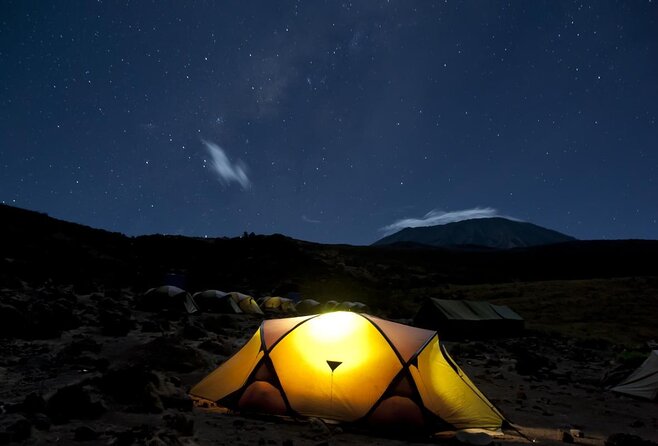
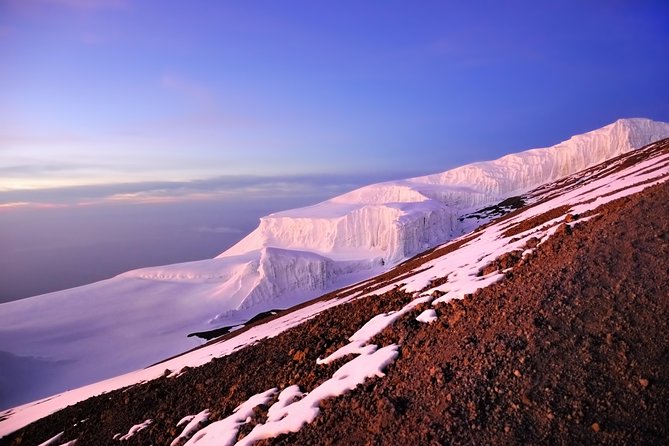
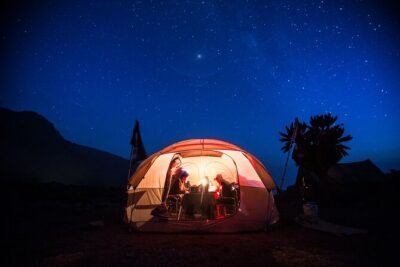
Then there is the crater night. You are sleeping higher than most places on Earth, and the reward is not only the altitude, it is the quality of the sky and the sense of being surrounded by massive ice and rock. The plan specifically calls out glaciers that are diminishing yearly due to wind erosion, which adds a bittersweet urgency. Even if you have climbed before, this part is different because crater camping is harder to manage. You are already at altitude, and your margins get thinner if you rush, push too hard, or ignore early symptoms.
That is why the route’s “slow then build” logic matters. When the itinerary gives you shorter days, rest points, and acclimatization breaks, it is not luxury. It is strategy.
More Kilimanjaro climbs:
- Kilimanjaro climb by Lemosho Route (7-day)
★ 5.0 · 651 reviews - Kilimanjaro climb, Machame Route (7-day)
★ 5.0 · 262 reviews - Kilimanjaro Climbing Lemosho Route 8 Days.
★ 5.0 · 186 reviews
Day 1 in Moshi: airport pickup and a real hotel reset
Your climb starts in Moshi, and the plan begins with a straightforward arrival flow. When you land at Kilimanjaro International Airport (JRO), you meet an Altezza Travel representative and transfer to your hotel. Check-in starts at 2:00 PM, so if you arrive early, you will want to keep a bit of slack in your schedule.
The hotel is not just a place to drop bags. It is described as having cozy rooms, hot water, polite staff, a swimming pool, and internet access. For a mountain trip, that matters because you want a normal night of sleep before Day 2 altitude work begins. You also get a briefing in the evening with managers, and they make sure you are ready to start.
One practical note: this climb is not “one day of trekking and done.” It is a full 10-day rhythm. Day 1 is your chance to get your logistics sorted, manage hydration, and do any small prep tasks like organizing gear for mornings that start early.
Days 2 to 3: Londorossi Gate, Shira camps, and Lava Tower acclimation
Day 2 is your first altitude day, and it is designed to feel manageable. You transfer by vehicle to Kilimanjaro National Park’s western entrance, Londorossi Gate at 2,200 m. After permits and registering with search and rescue, you continue uphill by off-road vehicle to a drop-off point around 3,500 m. Then the route threads toward your first high-altitude camp, Shira 1.
The Shira 1 to Shira 2 segment (Day 3) adds a modest 300 m. That low gain is intentional. You get time to settle into thinner air without burning your legs too early. If weather plays nice, you also get a chance to see Mount Meru, which is the fifth-highest mountain in Africa. After lunch, the plan includes an acclimatization walk toward Lava Tower, followed by rest.
This is where you should pay attention to your body. Even on days labeled easy, altitude can sneak up. Your goal is not to “win” the first trekking day, it is to keep breathing controlled and start building the habit of steady pace.
Day 4 to 5: Lava Tower zone, Moir Hut, and northern-slope views toward Kenya
By Day 4, you leave the Shira area (around 3,900 m) and head toward Lava Tower at 4,630 m. This section includes ups and downs that can feel tough, even if the technical challenge is not the main issue. The plan explicitly notes you will need 1 to 2 hours at higher altitude to acclimatize, and the lunch break happens at Lava Tower itself.
There is also a smart safety option in the plan. Your guide may decide to bypass Lava Tower and take a porter trail if someone in the group is not acclimatizing properly. If that happens, the highest altitude reached is 4,400 m instead of 4,630 m. That kind of adaptive decision is what you want when altitude is the real boss.
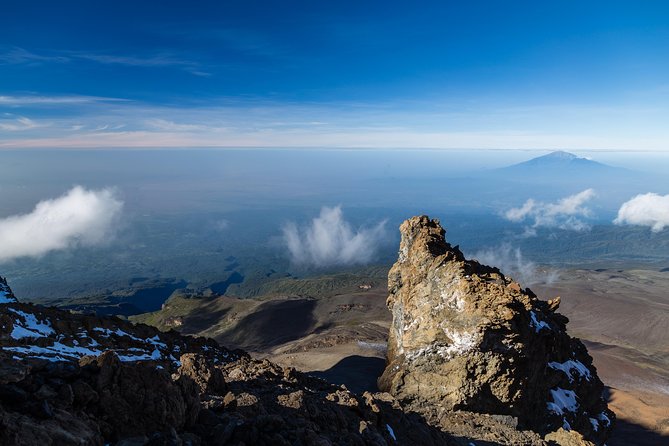
Day 5 is a longer day but described as easy. You travel around the northern slope of Kilimanjaro with plenty of high and low sections, but without steep altitude grabs. The route also passes close to the Kenya border, and you get treated to big valley views, including Tsavo and Amboseli. This is one of those days where you can keep moving, take in scenery, and still protect your energy for what comes later.
A few more Moshi trips to compare
- Safari Serengeti And Ngorongoro
★ 5.0 · 288 reviews - Climbing Kilimanjaro – Machame Route
★ 5.0 · 170 reviews - Climbing Kilimanjaro through 7 days Machame Route
★ 5.0 · 151 reviews - Kilimanjaro climb, Lemosho Route (8-day)
★ 5.0 · 148 reviews
Days 6 to 8: 3rd Cave Camp, School Hut, and Uhuru Peak from midnight
Day 6 shortens the trekking time, and it matters because your body is already adapting to around 4,000 m. You finish up the northern slope trek and spend the night at 3rd Cave Camp. The route on Day 6 also meets up with the traditional Rongai route, which is useful for understanding the geography of the climb and why the plan shifts into summit preparation mode.
Day 7 moves you to School Hut Summit Camp at 4,750 m. This day is not described as hard, but pace is everything. You need to preserve strength because that night you will go for Uhuru Peak at 5,895 m. The plan recommends you sleep well, avoid strenuous activity, and drink plenty of fluids after reaching camp. At this altitude, “I feel okay” can be misleading, so stick to the plan even if you feel strong.
Then comes the summit attempt on Day 8, starting at around midnight from School Hut. The plan is clear about safety: one guide is nominated per every two climbers, and the guide’s main job is monitoring client health through the push to Uhuru Peak. Even when the climb is “relatively easy technically,” altitude is still the main challenge.
After summiting, there is an option to walk on the nearest glacier if conditions and success allow. Then you descend to Barafu Camp for a two-hour lunch and rest before ending the night at Millennium Camp around 3,820 m. The plan also warns that 9 out of 10 accidents occur during descent, so treat footing like it is sacred. Take your time, keep steps short, and do not rush because the summit high wears off fast.
Days 9 to 10: Mweka Gate exit, certificates, and a recovery night in Moshi
Day 9 drops you from Millennium Camp down to the Mweka exit gate at 1,650 m. Millennium Camp sits amidst a rainforest, so after nights at much higher elevation, you get the feeling of trees, lower altitude air, and a calmer finish. Hot breakfast starts the day, and the descent helps your body come down from the summit effort.
After reaching the Mweka gate, you transfer back toward Altezza Travel offices to receive your accomplishment certificates, then drive to your hotel. This is a nice moment because it turns the whole climb from a physical grind into a documented achievement.
Day 10 is recovery and logistics. You rest in the hotel and transfer to the airport. Check-out is at 11:00 AM, and if you have an evening flight you can extend your stay for an extra fee.
Price and value: what your $6,466 buys on this Kilimanjaro climb
At $6,466 per person, this is a serious investment. The value comes from how many of the critical pieces are included, especially the parts that protect you when altitude turns unpredictable.
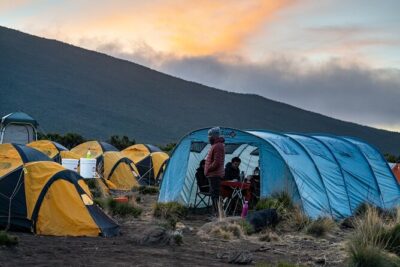
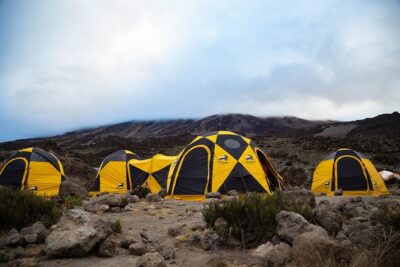
You get airport pickup and drop-off at JRO, all ground transportation, permits and fees collected by the Kilimanjaro National Park, and two nights in the Aishi Machame Hotel (2 guests per room, except solo climbs). You also get camp infrastructure and gear support: North Face VE-25 tents with two hikers per tent (except solo), sleeping pads, a mess tent, and table and chairs, plus crockery and cutlery.
Food and hydration are also covered. You get three meals per day, with vegetarian, gluten-free, and halal options available, plus drinks on Kilimanjaro like tea, coffee, juices, and soda. That is not just comfort. Fuel and fluids matter for acclimatization and for your ability to perform on summit night.
Safety is where the package feels most thoughtful. The plan includes medical check-ups at least twice a day, medical kits, unlimited oxygen tanks and oximeters, and guides who are certified Wilderness First Responders with 7+ years of professional experience. If you care about risk management, this is a big part of the price justification.
Gear, fitness, and crater risk: what to plan before you climb
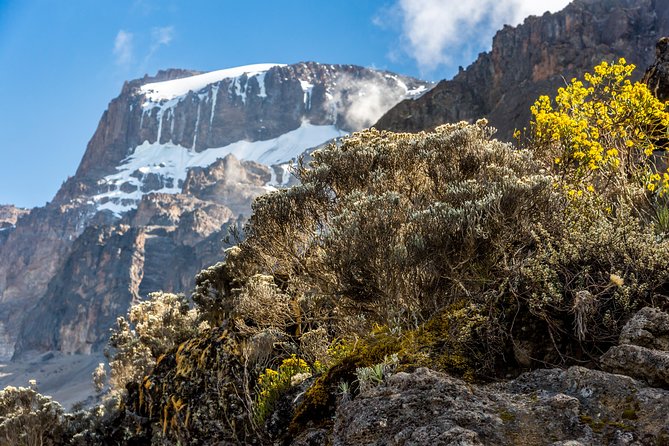
This route includes crater camping, and altitude is not negotiable. The plan directly states that crater camping adds challenge and risk due to high altitude, so you need a realistic assessment of your physical condition and high-altitude experience. If you have never done high altitude treks, treat this as a sign to train more and ask tough questions before booking.
Moderate physical fitness is listed as the baseline. That said, “moderate” is not the same as “casual.” You should expect long days, uneven ground, and cold nights at altitude. Even the easier days include highs and lows, and the plan includes rest and acclimatization walks, not easy strolls.
Your personal gear is not included, but you can hire some items. That list is not provided here, so plan to confirm what you need and what you can rent. At minimum, your boots and sleeping setup matter a lot for comfort and safety, especially during descent when fatigue increases slip risk.
Who this climb suits best
This 10-day Kilimanjaro Northern Circuit with crater camping is a strong fit if you want the best chance at acclimatization, you are excited by lower crowd levels, and you like the idea of a true high-altitude night under the stars. The route also fits groups who value structured safety, because summit day includes a tight guide-to-climber monitoring plan.
It may not be the best choice if crater camping is a leap for you without prior altitude experience. If you know you get sick at altitude, or you struggle with steady pacing on long days, you should think hard and talk through options with the operator.
Should you book Altezza Travel’s 10-day crater route?
If your priority is a well-managed climb with acclimatization time, strong medical and oxygen support, and the most unusual overnight moment on Kilimanjaro, then this is a compelling option. The crater night is the headline, but the real win is the way the itinerary and safety systems work together from Londorossi Gate through the midnight summit push and careful descent.
If you are excited but nervous about crater camping, do not ignore that instinct. Train for the effort, be honest about altitude experience, and ask yourself whether you can stick to a slower, smarter pace even when you feel like pushing.
FAQ
What is the duration of this Kilimanjaro climb?
The experience runs for about 10 days.
Where does the tour start and is airport pickup included?
You start from Moshi, and pickup and drop-off at Kilimanjaro International Airport (JRO) are included.
Is the crater camping part of this program?
Yes. The program is described as an extended 10-day trek that includes crater camping.
What safety and medical support is included on the mountain?
The tour includes medical check-ups at least twice a day, medical kits, unlimited oxygen tanks and oximeters, and certified Wilderness First Responder guides with 7+ years of experience.
Does it include tents and meals?
Yes. North Face VE-25 tents and sleeping pads are included, and you receive three energy-rich meals per day, plus drinks on Kilimanjaro. Vegetarian, gluten-free, and halal options are available.
Can I cancel for a full refund?
You can cancel up to 24 hours in advance for a full refund. If you cancel less than 24 hours before the start time, the amount paid is not refunded.
Just posted around Moshi
- machame route★ 5.0 · 16 reviews
- Kilimanjaro Climbing Umbwe Route★ 5.0 · 3 reviews
- Wildlife Extravaganza: Manyara, Tarangire & Ngorongoro in 3 Days★ 5.0 · 3 reviews
- Mt Kilimanjaro 6 days Marangu route hike★ 5.0 · 3 reviews
- 3 Days Private E-Bike Tour in West Kilimanjaro★ 5.0 · 3 reviews
- West Kilimanjaro cycling Adventures★ 4.5 · 8 reviews
- Kilimanjaro Climb • Marangu Route ~ 9 Day★ 5.0 · 4 reviews
- Private Cycle to Kilimanjaro Bike Park Safari★ 5.0 · 6 reviews
Kilimanjaro Climbs, compared.
8-Day Small-group Lemosho Kilimanjaro Summit Trekking
Read our review →
5 Days Best of Tanzania Luxury Safari Northern Circuit
Read our review →
Climbing Kilimanjaro through 7 days Machame Route
Read our review →