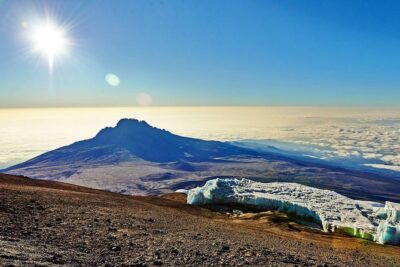
Reviewed · KILIMANJARO CLIMBS
Kilimanjaro Climb by Rongai Route 6 days
Midnight on Kilimanjaro feels unreal. The Rongai (Nalemuru) route approaches from the north, close to Kenya, and it’s often chosen for less rain during the wetter seasons. You also get that early sense of real wilderness, before crowds and traffic start to feel like part of the trek.
I also like the way this trip handles the annoying parts for you. From pickup at Kilimanjaro International Airport (JRO) to hotel transfers and gear checks, you spend your energy on walking, not paperwork. And the crew support sounds strong, with English-speaking, National Park licensed guides and a team of porters and cooks who take care of mountain life.
One consideration: this is not a casual hike. You should plan for a steep summit day that starts at midnight and then finishes with a very long time on your feet, so you’ll want a truly moderate fitness base before you arrive in Moshi.
In This Review
- Key highlights you’ll actually care about
- Rongai route: the north-side Kilimanjaro that often stays calmer
- Price and value: what $2,282 includes (and why it can matter)
- Your crew on Kilimanjaro: the quiet difference between good and great
- Day 1 to Day 8: walking the Rongai route from Nalemuru to the finish
- Day 1: JRO arrival, hotel night, briefing, and gear checks
- Day 2: Marangu Gate registration, then Nalemuru start through rainforest
- Day 3: Moorland, second cave lunch, and turning toward Mawenzi
- Day 4: Alpine desert hike to Mawenzi Tarn Hut, with an acclimatize afternoon
- Day 5: Saddle and Lunner desert toward Kibo Hut
- Day 6: summit day begins at midnight, with stops at major points
- Day 7: long descent, Mandara Hut, and finish at Marangu Gate for certificates
- Day 8: early transfer to JRO for your departure flight
- What you’ll actually do all day: trail rhythm, food, and support
- Meals and drinks
- Tents and camp setup
- Oxygen and medical support
- Group size and timing
- Who this Rongai Kilimanjaro climb fits best
- Should you book this Rongai Route with Hilbas Tours?
- FAQ
- FAQ
- When does the tour start and how do I meet?
- What’s included in the price?
- Does the package include meals and dietary options?
- Do I need to bring all gear?
- Are airport transfers included?
- How big is the group?
- Will I have accommodation on the mountain?
- What is the summit night schedule?
- Where does the hike start and where do you finish?
- What is the cancellation policy?
Key highlights you’ll actually care about
- Rongai from the Nalemuru side means a quieter, more remote feel early on, especially in the rainy season
- Midnight summit start with a structured night plan, including stops at well-known points like William, Hans Meyer Cave, and Gillman’s point
- Small group size (max 15 travelers) helps keep the experience organized and more personal
- Support that includes oxygen cylinders and oximeters, plus medical kits and certified guides
- Meals and dietary options are built into the package, including vegetarian, vegan, lactose-free, gluten-free, and halal choices
- Pre and post-climb comfort are included, so you’re not scrambling for lodging right after the mountain
Rongai route: the north-side Kilimanjaro that often stays calmer
Kilimanjaro is Kilimanjaro, so weather can still be moody. But the Rongai route has a reputation for being one of the friendlier options when the rainy season rolls in, because the north side tends to receive less precipitation than the southern approaches.
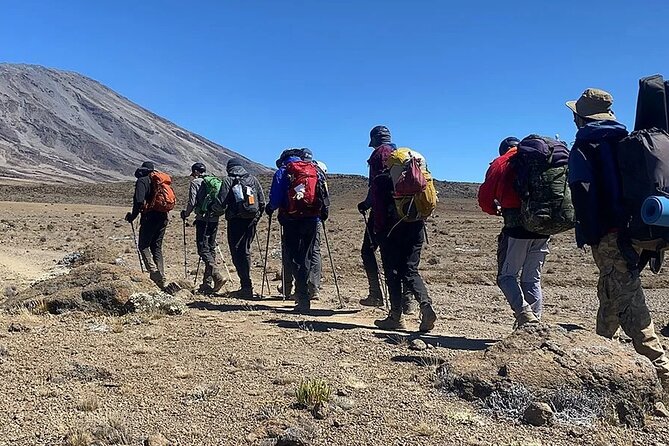
What you’ll feel on the trek is a change in scenery and mood as you climb. Day 2 starts you in rainforest, then you transition into moorland, then alpine desert, and finally the higher, harsher zones where vegetation thins out. That shift matters. It’s not just pretty, it affects trail conditions, wind exposure, and how your body responds as the days stack up.
Also, this route approaches from the direction of the Kenyan border, close to the Nalemuru area. If you’re looking for a quieter start compared with more famous access routes, Rongai gives you that sense early, when the landscape feels truly wild and you’re not constantly sharing the path with other expeditions.
More Kilimanjaro climbs:
- Kilimanjaro climb by Lemosho Route (7-day)
★ 5.0 · 651 reviews - Kilimanjaro climb, Machame Route (7-day)
★ 5.0 · 262 reviews - Kilimanjaro Climbing Lemosho Route 8 Days.
★ 5.0 · 186 reviews
Price and value: what $2,282 includes (and why it can matter)
At $2,282 per person, this is a serious chunk of change. The value comes from what’s bundled in, not from a single headline number.
Here’s the practical way to think about it. This package includes:
- airport and hotel transfers (JRO pickup and return)
- park and camping related fees collected by the Kilimanjaro National Park, including rescue fees
- guided support, porters, and a full kitchen team
- all meals on the mountain (3 meals a day, plus drinks on the hike)
- tents and mountain cooking setup, like a dining tent and table/chairs
- oxygen cylinders and oximeters, along with medical kits
- hotel accommodation before and after the climb
- group equipment and mountain entry costs
Then there are the invisible time-savers. You don’t have to coordinate separate transportation to gates, hunt down park fees, or pay for basic on-mountain logistics. You also don’t have to guess how meals work, because breakfast, lunch, and dinner are built into each day.
If you’re the type who wants the mountain part to be the only complicated part, this kind of all-in setup tends to be worth it.
Your crew on Kilimanjaro: the quiet difference between good and great
Kilimanjaro success is mostly about pace, planning, and staying safe when conditions get tough. This trip leans hard into the people side of that.
You get:
- Professional, experienced English-speaking guides licensed by Kilimanjaro National Park
- Guides holding Wilderness First Aid certifications
- A dedicated support crew (assistant guides, camp masters, porters, cooks, and more)
- Porters carrying mountain equipment, so you’re not hauling everything uphill
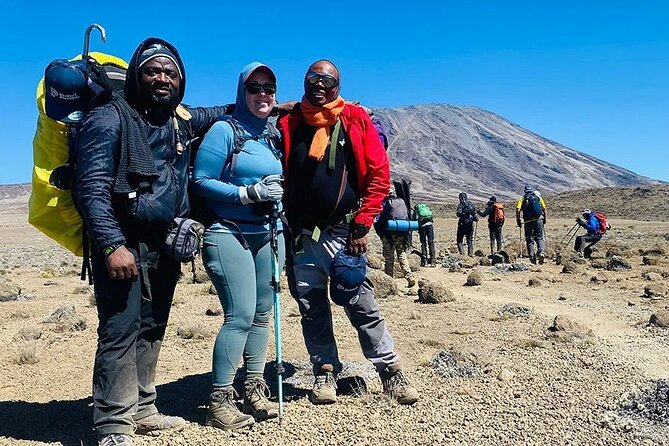
In the feedback connected to Hilbas Tours, names like Hillary, Emmanuel, and Felix show up alongside praise for professionalism and calm encouragement. That matters on a mountain where the hours can feel endless, especially near the summit.
And you’re not stuck in a mega-group. The tour caps at 15 travelers, which usually means quicker answers, less crowding at stops, and more attention if someone needs extra help.
Day 1 to Day 8: walking the Rongai route from Nalemuru to the finish
This schedule is built around steady altitude progress, plus some strategic “rest and adjust” moments. Even without getting lost in climbing theory, you can see the design in the daily elevation changes and the choice of where long days happen.
A few more Moshi trips to compare
- Safari Serengeti And Ngorongoro
★ 5.0 · 288 reviews - Climbing Kilimanjaro – Machame Route
★ 5.0 · 170 reviews - Climbing Kilimanjaro through 7 days Machame Route
★ 5.0 · 151 reviews - Kilimanjaro climb, Lemosho Route (8-day)
★ 5.0 · 148 reviews
Day 1: JRO arrival, hotel night, briefing, and gear checks
You arrive at Kilimanjaro International Airport (JRO), meet Hilbas representatives, then get transferred to the hotel for hot showers, a comfortable bed, and a briefing. This is where you get gear checked and you can arrange rentals for anything you didn’t bring.
Why this day matters: Kilimanjaro is easier when you start the trek mentally ready and physically not already tired from travel logistics. A real gear check helps too, because on a cold, high-altitude mountain, one wrong item can become a problem fast.
Day 2: Marangu Gate registration, then Nalemuru start through rainforest
You start with transport from the hotel to Marangu Gate for registration, while guides and porters set up your equipment. After that, you transfer to Rongai Gate (Nalemuru), about a 3-hour drive.
Then the hike begins at Nalemuru village. You’ll walk past maize, beans, and potatoes fields, and then enter a pine forest zone. Wildlife is part of the deal here, including black-and-white colobus monkeys (based on the route description).
Details that help you plan your day:
- Elevation: roughly 1,900 m to about 2,626 m (plus gradual movement during the day)
- Distance: about 8 km
- Walking time: around 6 hours
- Vegetation zone: rainforest
Possible drawback: it’s a full hiking day, but it’s also the start of a climb. If you push hard on Day 2 just because you feel good, you’ll feel it later. The smartest move is to stay controlled and treat this as your warm-up into the rhythm.
Day 3: Moorland, second cave lunch, and turning toward Mawenzi
After breakfast, you continue slowly through moorland toward the second cave, where lunch is planned. After lunch, you move slowly again across rolling moorland terrain toward Mawenzi’s peak.
Campsite note: your camp is in a sheltered valley, which matters if wind and weather try to swing around.
Details:
- Elevation: about 2,626 m up toward 3,600 m, then settling around 3,450 m for the night
- Distance: about 12 km
- Walking time: around 7 hours
- Vegetation zone: moorland
This day is a good example of why Rongai can feel remote. Moorland stretches can feel quiet and open, and you get more “space” with the trail rather than constant interruptions.
Day 4: Alpine desert hike to Mawenzi Tarn Hut, with an acclimatize afternoon
Today is shorter on paper, but it’s described as a steep hike up grassy slopes. At the top you get views from a different angle of the National Park and Mawenzi Peak.
You arrive at Mawenzi Tarn Hut in time for lunch, then you get the whole afternoon to explore the area and acclimatize.
Details:
- Elevation: about 3,600 m to 4,300 m
- Distance: about 5 km
- Walking time: around 6 hours
- Vegetation zone: alpine desert
What to watch for: short days can tempt you to relax too much, then you find out your legs still need time to adjust after a steep climb. Treat the afternoon as part of the process, not “free time with no plan.”
Day 5: Saddle and Lunner desert toward Kibo Hut
After breakfast, you hike west through the Saddle and Lunner desert, the area formed between the peaks of Kibo and Mawenzi. The description calls it dry but spectacular, and you’re moving in that high, exposed zone where the environment feels more barren.
Lunch is either packed or you stop for it, depending on your speed, and there’s also the option of a hot lunch at Kibo Hut. You reach Kibo Hut after about 5 to 6 hours. Dinner is early, and you go to bed.
Details:
- Elevation: about 4,300 m to roughly 4,720 m
- Distance: about 10 km
- Walking time: around 6 hours
- Vegetation zone: alpine desert
This is one of the key “set up for summit night” days. You’re not just hiking, you’re positioning your body and your energy for the long effort to come.
Day 6: summit day begins at midnight, with stops at major points
This is the day you came for. Your guide wakes you around 11:00 pm for tea and biscuits, then you start the summit around midnight.
The route follows switchbacks up to a volcanic scree slope. You pass:
- William Point (about 5,000 m)
- Hans Meyer Cave (about 5,200 m), noted as a best resting spot for drinking
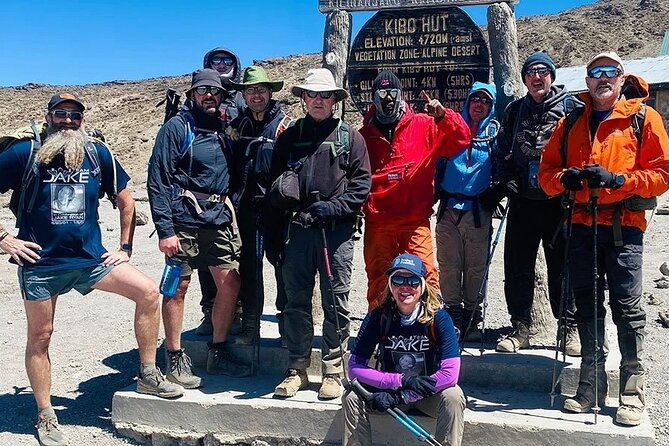
- Gillman’s point (about 5,681 m), located on the crater rim
The description emphasizes the steep section with stone scree, and this is where both physical effort and mental focus matter most.
Details:
- Elevation: about 4,720 m up to around 5,895 m, then down toward about 3,720 m
- Distance: listed as about 21 km
- Walking time: around 15 hours
- Vegetation zones: alpine desert, arctic zone, then moorland
Practical takeaway: you’ll be moving for a very long time. If you’re tempted to “save energy” by going too slowly early, don’t. The balance is to stay steady, use the early-rest moments, and trust your guide’s pacing. The plan is built around long-duration climbing, not quick sprinting.
Day 7: long descent, Mandara Hut, and finish at Marangu Gate for certificates
After an early breakfast, you begin descending. You pass Mandara Hut and continue until you reach Marangu Gate, where everyone signs out to receive completion certificates. Then you transfer back to your hotel with a driver.
Along the way you’ll pass through coffee and banana farms around Marangu villages. That change of scenery feels like a release after hours of high-altitude trekking.
Details:
- Elevation: about 3,720 m down to around 2,720 m
- Distance: about 19 km
- Walking time: around 8 hours
- Vegetation zone: moorland to rainforest
Drawback to plan for: descending still beats up your legs, especially after a summit night. Your job today is not to conquer the mountain, it’s to get off it carefully.
Day 8: early transfer to JRO for your departure flight
After an early breakfast, you transfer to Kilimanjaro airport for your home flight.
Why it’s nice: you’re not left guessing transportation timing after the climb. The trip builds in that final link, so you can focus on getting home.
What you’ll actually do all day: trail rhythm, food, and support
Most Kilimanjaro trips live or die by day-to-day comfort. This one includes the basics that prevent small problems from becoming big ones.
Meals and drinks
You get three standard meals a day on the mountain (breakfast, lunch, dinner). Drinks on the hike include coffee, tea, Milo tea, and water.
Dietary options are explicitly listed, including vegetarian, vegan, lactose-free, gluten-free, halal, and other meal plans. If you have dietary constraints, this is a comfort factor worth taking seriously, because a mountain trek is not the moment to gamble on food availability.
Tents and camp setup
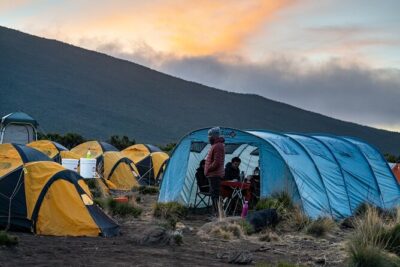
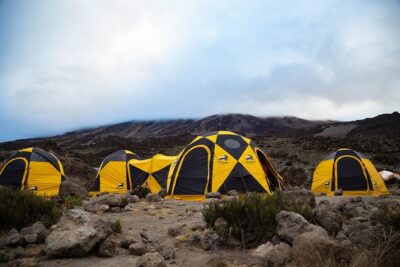
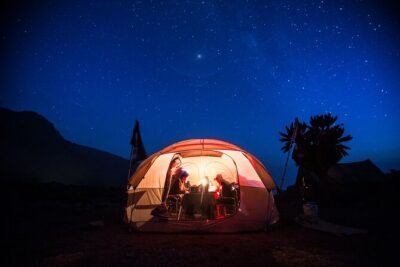
You share a tent on the mountain with two hikers (unless you book solo accommodation at extra charge). There’s also group equipment like a spacious dining tent and camping furniture, plus crockery and tableware for meals.
That “camp setup” sounds basic, but it’s the difference between feeling human again at night and feeling like you’re sleeping on the edge of a mess.
Oxygen and medical support
The package includes oxygen cylinders and oximeters, along with medical kits. Guides are trained with Wilderness First Aid. That does not remove altitude risk, but it tells you the trip has equipment and training for emergencies.
Group size and timing
With a maximum of 15 travelers, you won’t feel swallowed by a crowd. Also, the summit night has a clear structure: 11:00 pm wake-up for tea and biscuits, then summit at midnight. Clarity helps on a day where everyone’s emotions run hot.
Who this Rongai Kilimanjaro climb fits best
This trip is a strong match if you want:
- a remote-feeling route early in the trek
- a rainy-season-friendly approach (the north side gets less precipitation)
- a well-supported expedition with certified guides and a large supporting crew
- included logistics so you can show up, walk, and come down without running your own supply chain
It’s also ideal if you’re okay with camping and trekking for multiple days, including a very long summit push.
If you’re not comfortable with steep climbs, especially on summit day and the alpine desert sections, you’ll want to build fitness first or consider a different itinerary structure. The schedule is not built for casual walkers.
Should you book this Rongai Route with Hilbas Tours?
I’d book it if your priorities are a calmer-feeling route in wetter months, solid support, and a package that covers the big logistical headaches. The inclusion of park fees, rescue fees, transfers, meals, tents, and mountain medical gear makes this easier to compare and plan for, even when the total cost feels high.
I’d think twice if you know you struggle with long days on your feet or you’re still building basic hiking endurance. This climb asks a lot of stamina, and the summit day is extremely demanding.
If you do book, plan to arrive with realistic fitness, pack for cold and exposure conditions even when the forecast looks “fine,” and listen closely to your guide’s pacing all week. On Kilimanjaro, good planning is the secret ingredient you can control.
FAQ
FAQ
When does the tour start and how do I meet?
The start time is 9:00 am. You’ll also be met at Kilimanjaro International Airport (JRO) for pickup and transfers.
What’s included in the price?
Transportation for airport pickup and drop-off, transportation between your hotel and Kilimanjaro National Park, hotel accommodation before and after the climb, park and camping fees, guides and porters, meals on the mountain, drinks while hiking, tents and group camping equipment, oxygen cylinders and oximeters, and medical kits.
Does the package include meals and dietary options?
Yes. You get three standard meals a day on the mountain, and drinks during the hike. Vegetarian, vegan, lactose-free, gluten-free, halal, and other meal plans are available.
Do I need to bring all gear?
Personal gear like hiking clothes and footwear and sleeping bags is not included, but it is available for rent. Gear checks happen early, so you can confirm what you need.
Are airport transfers included?
Yes. The tour includes transportation from JRO for pickup and drop-off, plus transfers between the hotel and the mountain gates.
How big is the group?
The maximum group size is 15 travelers.
Will I have accommodation on the mountain?
Yes. You share a tent with two hikers on Mount Kilimanjaro (solo accommodation in a tent is available for an extra charge).
What is the summit night schedule?
Your guide wakes you around 11:00 pm for tea and biscuits, and the summit begins at midnight.
Where does the hike start and where do you finish?
You start at Rongai Gate/Nalemuru after registration steps, and the trek ends at Marangu Gate, where you sign out for completion certificates.
What is the cancellation policy?
You can cancel up to 6 days in advance for a full refund. Cancel 2 to 6 days before for a 50 percent refund. If you cancel within 2 days, there is no refund.
Just posted around Moshi
- machame route★ 5.0 · 16 reviews
- Kilimanjaro Climbing Umbwe Route★ 5.0 · 3 reviews
- Wildlife Extravaganza: Manyara, Tarangire & Ngorongoro in 3 Days★ 5.0 · 3 reviews
- Mt Kilimanjaro 6 days Marangu route hike★ 5.0 · 3 reviews
- 3 Days Private E-Bike Tour in West Kilimanjaro★ 5.0 · 3 reviews
- West Kilimanjaro cycling Adventures★ 4.5 · 8 reviews
- Kilimanjaro Climb • Marangu Route ~ 9 Day★ 5.0 · 4 reviews
- Private Cycle to Kilimanjaro Bike Park Safari★ 5.0 · 6 reviews
Kilimanjaro Climbs, compared.
8-Day Small-group Lemosho Kilimanjaro Summit Trekking
Read our review →
5 Days Best of Tanzania Luxury Safari Northern Circuit
Read our review →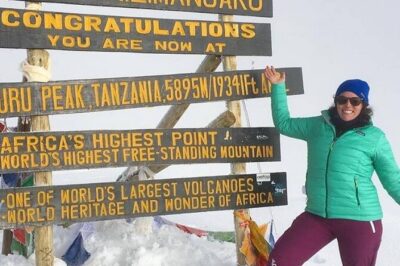
Climbing Kilimanjaro through 7 days Machame Route
Read our review →