Reviewed · KILIMANJARO CLIMBS
Kilimanjaro 360
Cycle Kilimanjaro from Maasai plains to crater lake. This 8-day biking route out of Moshi pairs big riding effort with up-close culture, wildlife areas, and stunning views of peaks like Kibo and Mawenzi. I especially like the bike fitting and the fact that you ride with a support vehicle and bike mechanic, so a flat tire does not turn into your whole day.
What I really value is the mix of human and natural stops: you visit the Olpopongi Maasai Cultural Village & Museum, then ride through Enduimet Wildlife Management Area, then finish in Moshi after a route that touches Chagga communities and landmarks like Kinukamori waterfalls. The route is varied, too, with tarmac and dirt segments, plantations, acacia woodlands, and at least one true downhill-style day.
One real consideration is effort. The cycling includes steep ascents and descents, plus long riding days on mixed surfaces, so you should be comfortable with moderate fitness and sustained time in the saddle.
In This Review
- Key things to know before you ride
- Kilimanjaro 360 in plain words, what kind of ride this is
- Arrival in Moshi: bike fitting and your Keys Hotel start
- Day 2 to Olpopongi Maasai Village: plantations, acacia plains, real culture
- Enduimet Wildlife Management Area to Simba Farm: elephants on the move
- Rongai-side riding from Nalemoru to Snowcap Cottages: Kibo and Mawenzi views
- Lake Chala downhill day and crater-lake camping
- Marangu foothills and Kinukamori waterfalls: Chagga stories on the route
- Finish in Moshi: back-roads ride, dinner, and winding down
- Bikes, support crew, and day-to-day comfort that matter
- Price and value of $2,690 per person
- Who should book, and who should think twice
- Should you book Kilimanjaro 360 around Kilimanjaro?
- FAQ
- What time does the tour start?
- Where does the tour begin, and is airport pickup included?
- What kind of bike and helmet do I get?
- What meals and water are included?
- What fitness level do I need?
- Is there free cancellation, and what if weather is poor?
Key things to know before you ride
- Support all day: a support vehicle, driver, cook, guide(s), and a bike mechanic for repairs and peace of mind
- Village culture stops: Olpopongi (Maasai) plus Chagga communities around Marangu and Moshi
- Wildlife area riding: Enduimet Wildlife Management Area is part of the route plan
- Big scenic payoff points: Snowcap Cottages near the Rongai forest edge, plus crater-lake vibes at Lake Chala
- Camping gear is provided: tents, sleeping bags, mattress, and camp tables with chairs
- Small group size: maximum 16 people
Kilimanjaro 360 in plain words, what kind of ride this is
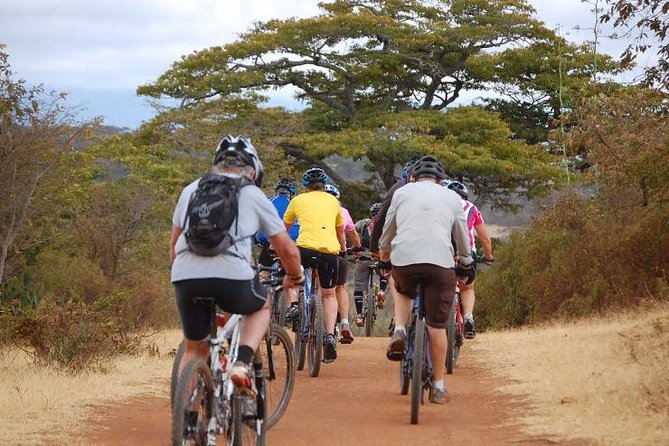
This is a true around-Kilimanjaro cycling route, based out of Moshi. You’ll spend about 6 days on the bike, with Day 1 focused on arrival and Day 8 left free for flight timing and Moshi wandering. Expect a mix of wide, open riding and sections where you’re rolling through villages and towns, sharing roads with local traffic.
The “360” idea matters because it’s not just one scenic valley. You cycle from the greener southern side toward the drier western plains, then swing through areas linked to migratory wildlife corridors, and finish back down into Moshi from the slopes. You’re also alternating terrain, so the trip does not feel like one endless climb.
The energy of the week is part hard work, part “look around, wow.” On clear days, the route even sets you up for peak views from the Rongai-side area. If you like your travel practical, this format is strong because you get that long-distance daily rhythm, not just short sightseeing stops.
More Kilimanjaro climbs:
- Kilimanjaro climb by Lemosho Route (7-day)
★ 5.0 · 651 reviews - Kilimanjaro climb, Machame Route (7-day)
★ 5.0 · 262 reviews - Kilimanjaro Climbing Lemosho Route 8 Days.
★ 5.0 · 186 reviews
Arrival in Moshi: bike fitting and your Keys Hotel start
Day 1 begins with a transfer from Kilimanjaro International Airport (JRO) to Moshi, right at the foot of Mt. Kilimanjaro. You meet your guide and do bike fitting, which is a big deal on long rides. A good fit can mean less numbness, less strain, and more enjoyment on Day 3 or Day 4 when fatigue sets in.
If your flight lands in the morning or afternoon, you’ll have time for a quick test ride through nearby sugar cane plantation areas and surrounding villages. That’s a smart way to get your legs rolling before you commit to longer daily distances.
You’ll also be staying at Keys Hotel for dinner on Day 1, and that matters because the first day is about comfort and setup. Your hotel meals are included, so you can focus on getting ready rather than tracking food logistics.
Day 2 to Olpopongi Maasai Village: plantations, acacia plains, real culture
On Day 2, you start moving from the greener southern side toward the more arid western side. The riding begins through coffee and banana plantations, then gradually shifts into open plains and acacia woodlands as the route heads west.
This day has two types of rewards. First, you get wide open views of Mt. Kilimanjaro. Second, you connect that view to people living in the region, especially when you visit Olpopongi – Maasai Cultural Village & Museum.
A cultural village visit is only useful if it feels like more than a photo stop, so I like that your ride leads into it naturally. You’re already out on the land, moving through it, which makes the cultural context easier to absorb. You also get a clearer sense of how Maasai life coexists with the wildlife in these plains.
The practical note: this is a day with real riding time, not just a museum break. Plan your energy like a cyclist, bring snacks when offered, and keep hydrated.
Enduimet Wildlife Management Area to Simba Farm: elephants on the move
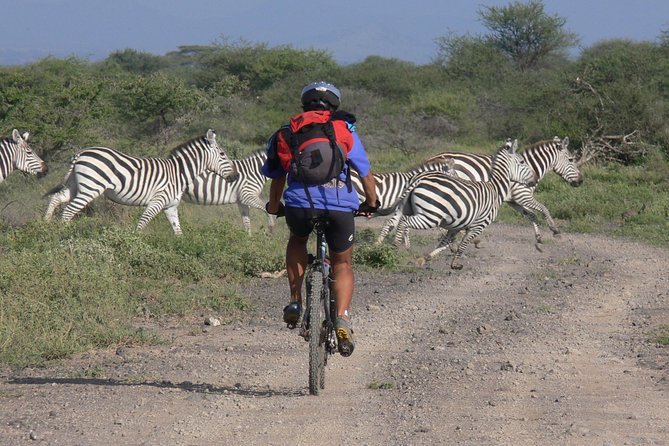
Day 3 is one of the more “out on the route” days. You ride through the Enduimet Wildlife Management Area, described as one of Tanzania’s best kept secrets, and it sits near Amboseli National Park as part of an important migratory route.
Enduimet is also inhabited mainly by Maasai communities, with other tribes present too. The point for you is that wildlife and people share these spaces, so the scenery you’re pedaling through is not fenced-off in a way that removes local life from the frame.
As you cycle, the terrain shifts. It starts on wide open plains dotted with acacia trees, then gets greener as you approach lower Kilimanjaro slopes where cultivation takes place. That rhythm is great for your legs because you’re not stuck in one constant type of surface for the whole day.
You end at Simba Farm, perched above wheat and barley fields. That kind of finish helps the day feel grounded. Instead of ending in a generic lodge, you’re wrapping up in an agricultural setting that matches what you rode through.
A few more Moshi trips to compare
- Safari Serengeti And Ngorongoro
★ 5.0 · 288 reviews - Climbing Kilimanjaro – Machame Route
★ 5.0 · 170 reviews - Climbing Kilimanjaro through 7 days Machame Route
★ 5.0 · 151 reviews - Kilimanjaro climb, Lemosho Route (8-day)
★ 5.0 · 148 reviews
Rongai-side riding from Nalemoru to Snowcap Cottages: Kibo and Mawenzi views
Day 4 turns toward the north east side of Mt. Kilimanjaro to Nalemoru Village, near the Kenyan border. Nalemoru is where the Rongai route up Kilimanjaro starts, so this day carries a specific Kilimanjaro context even though you’re not hiking.
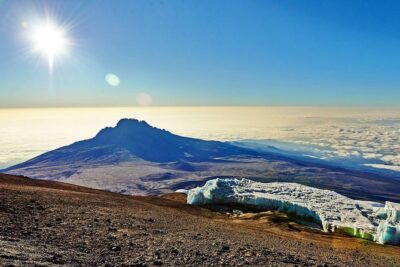
The ride is described as taking you through open farmlands with views of the western plains behind you. Then you cycle through several towns as you continue toward the foothills and the Rongai forest area. On a clear day, you can get amazing views of Kibo and Mawenzi peaks, which is the kind of payoff that makes the whole week feel like one connected loop.
You end at Snowcap Cottages, right on the edge of the Rongai forest, and you camp there. This is also one of the longer quantified bike days, at 73 km, with a mix of tarmac and dirt roads.
If you’re trying to gauge difficulty, this is where your bike fit and your pacing really show. You want to avoid the trap of going too hard early. Save your energy for when the surfaces and rhythm change, not when your motivation is highest.
Lake Chala downhill day and crater-lake camping
Day 5 drops you toward Lake Chala, a crater lake on the Kenya and Tanzania border. The description says the lake is fed entirely by underground springs from Mt. Kilimanjaro, which is exactly the kind of “how is this here?” detail that makes a place feel real instead of staged.
You’ll enjoy a downward hill ride. That usually feels like a morale boost because you’re gaining speed rather than losing it, even if you still have to keep control and stay alert around roads and village areas.
You’ll camp at Lake Challa Campsite on the edge of the caldera lake, with a dramatic volcanic backdrop. This is a great night in the trip because it gives you a break from the constant motion. After days of farms, plains, and forest edges, crater-lake scenery and calm water sounds give your body permission to recover.
Distance is listed at 65 km, again on a mix of tarmac and dirt roads. That means you should think of this as a long “downward riding” day, not a lazy ride. Your legs still do work, especially if you have to brake frequently or if the road surface changes under you.
Marangu foothills and Kinukamori waterfalls: Chagga stories on the route
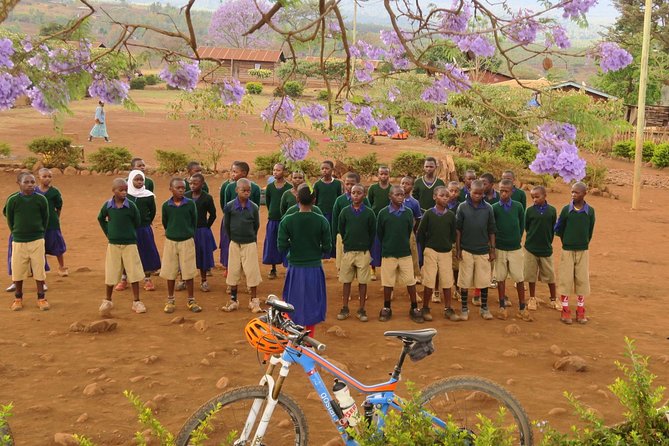
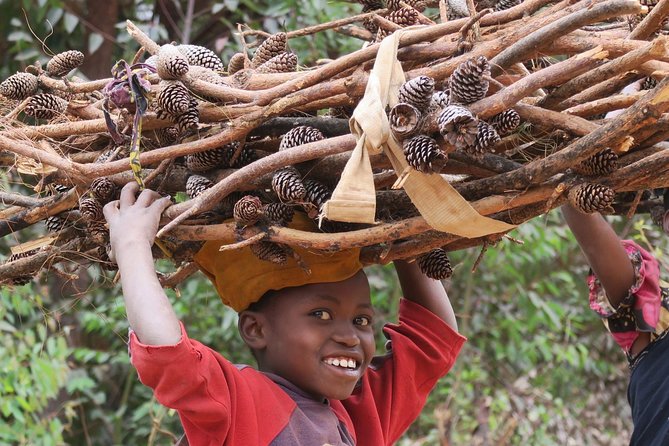
Day 6 is described as short but challenging, as you ride up to Marangu village in the foothills. Expect banana and coffee plantations along the way, plus interaction with the Chagga people. There’s a specific moment in the description, people waving and shouting Jambo, which is the kind of spontaneous contact you rarely get on a bus route.
Before your camp, you detour to Kinukamori waterfalls. You can stretch your legs and walk down to the base of the waterfalls. A local Chagga guide shares history of the area, traditions and customs, plus a legend tied to the waterfalls.
I like this stop because it breaks the cycling pattern without turning the day into a full hike. It’s also a chance to practice a different travel mode: listening, asking questions, and slowing down so you actually absorb what you’re seeing.
This day being “short but challenging” is also useful for your planning. If the week has one more demanding feeling day, it can help to know it might show up as a steep push in the foothills rather than as another marathon distance day.
Finish in Moshi: back-roads ride, dinner, and winding down
Day 7 takes you through villages and plantations on the slopes, then into Moshi town. The first half includes several steep ascents and descents, while the second half becomes a more gradual downhill ride.
The final push matters, because you’ll cycle on back roads along the outskirts of Moshi, then end at Keys Hotel again. Dinner is included, and the description adds a celebratory touch with sparkling wine to toast to the achievement.
Distance is listed at 37 km, with tarmac and dirt roads. This is shorter than the Day 4 and Day 5 distances, which helps your body roll home instead of feeling completely wrecked. Still, don’t assume it’s easy just because the number is smaller. The day is shaped by those steep sections early on.
Day 8 is free time, depending on your flight schedule. You can explore Moshi and pick up souvenirs if you have the hours.
Bikes, support crew, and day-to-day comfort that matter
What you’re really buying in a tour like this is not just scenery, it’s how smoothly the week runs.
Here’s the practical foundation:
- Mountain bikes and helmets are included
- Snacks and fruits plus water 2 to 3 liters per day are included
- A support vehicle follows along
- There’s a bike mechanic and crew support on the ground
- You get quality camping gear like tents, sleeping bags, mattress, and camp tables with chairs
- Meals are included across the week, with breakfast, lunch, and dinner
- An on-hand first aid medical kit is included
In the feedback I saw, people repeatedly praised the support and planning. A couple of accounts specifically call out that guides handled details well, accommodations and camping sites exceeded expectations, and that bikes and service were strong. One person even noted having multiple bike sizes available, which is key because a fit mismatch is rough over many days.
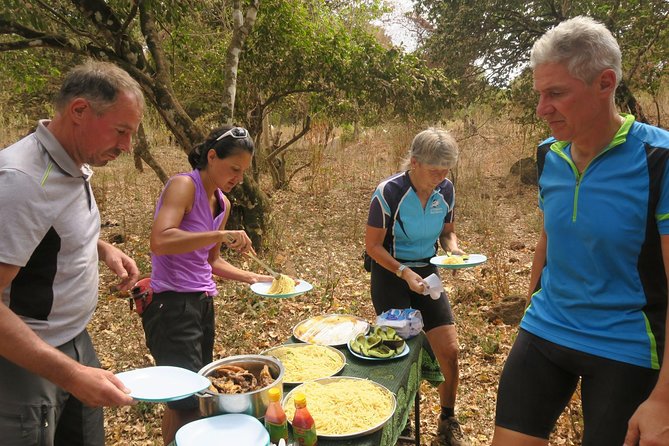
Also, there’s a clear human element. Your crew includes not just tour guides but also cooks and porters. That matters because it’s easy to eat poorly and sleep badly on multi-day bike trips. Here, you’re set up to eat properly and rest in camps that include the basics.
Price and value of $2,690 per person
At $2,690 per person, this is not a budget outing. But it may still feel reasonable when you look at what’s included.
You get:
- Bikes and helmets
- Airport pickup and transfer back
- A support vehicle and a bike mechanic
- Camping gear and camp setups
- Meals for multiple days plus snacks, fruit, and large water supply
- Entry and village fees, including WMA fees (Wildlife Management Conservation Area)
- Hotel stays before and after at a 3-star property
- Tour guide(s), driver, and cook
If you tried to piece this together yourself, the costs add up fast: vehicle support, guides, bike rental with the right sizes, bike transportation, plus all the local access fees. This tour also limits the headache factor, which is part of what you’re paying for.
Now, I’ll also tell you the fairness check I apply to pricey tours: the value only works if the operator delivers consistently. There’s at least one very serious negative account stating the organizer Roy cancelled after full payment and the reviewer said they lost over $2,000. I cannot verify how that situation played out, but it is enough of a warning that you should protect yourself.
My advice: pay in a way that gives you recourse if something changes, get the terms in writing, and confirm how refunds are handled in your case. The tour does list free cancellation in advance, but you still want a clean paper trail before you send money.
Who should book, and who should think twice
This is best for you if:
- You have moderate physical fitness and want a multi-day cycling challenge
- You enjoy mixing culture visits with active travel
- You want support, bike help, and planned meals instead of self-guided chaos
- You’re comfortable riding on both tarmac and dirt roads, including some sections through towns and villages
This may be a tough fit if:
- You dislike any chance of steep riding or long days
- You want a vacation that is mostly flat sightseeing with minimal effort
- You’re only comfortable on smooth bike paths and want zero contact with road traffic
Group size is capped at 16 people, which usually helps keep coordination manageable. If you’re traveling as a group, there’s also evidence that the tour can be customized for different skill levels. If you’re a newer rider or bringing someone with a different fitness level, it’s worth asking how they handle pacing and route adjustments.
Should you book Kilimanjaro 360 around Kilimanjaro?
I’d book Kilimanjaro 360 if you want the “active circle” version of Kilimanjaro travel, not a single-day view and not a hike-based itinerary. The combination of village visits, wildlife area riding, camping with real gear, and the structure of daily support makes this a trip where the hard parts are physical, not logistical.
Before you commit, do two things. First, honestly assess your fitness for steep sections and mixed surfaces. Second, take the payment risk seriously given the one account about cancellation and lost funds. That kind of red flag is rare, but it’s loud enough that you should confirm refund procedures and keep records.
If you’re ready to earn those peak views and crater-lake evenings, this is a strong way to see Tanzania around Kilimanjaro on two wheels.
FAQ
What time does the tour start?
The tour start time is listed as 7:00 am.
Where does the tour begin, and is airport pickup included?
You are picked up from Kilimanjaro International Airport (JRO) and transferred to Moshi at the start of the tour.
What kind of bike and helmet do I get?
The tour includes mountain bikes and helmets.
What meals and water are included?
Meals are included with dinner, breakfast, and lunch provided over the tour, plus snacks and fruits. Water is provided in the amount of 2 to 3 liters per day.
What fitness level do I need?
The tour notes that travelers should have moderate physical fitness.
Is there free cancellation, and what if weather is poor?
Yes, you can cancel for a full refund if you cancel at least 24 hours before the experience starts. The tour requires good weather, and if it is canceled due to poor weather, you’ll be offered a different date or a full refund.
Just posted around Moshi
- machame route★ 5.0 · 16 reviews
- Kilimanjaro Climbing Umbwe Route★ 5.0 · 3 reviews
- Wildlife Extravaganza: Manyara, Tarangire & Ngorongoro in 3 Days★ 5.0 · 3 reviews
- Mt Kilimanjaro 6 days Marangu route hike★ 5.0 · 3 reviews
- 3 Days Private E-Bike Tour in West Kilimanjaro★ 5.0 · 3 reviews
- West Kilimanjaro cycling Adventures★ 4.5 · 8 reviews
- Kilimanjaro Climb • Marangu Route ~ 9 Day★ 5.0 · 4 reviews
- Private Cycle to Kilimanjaro Bike Park Safari★ 5.0 · 6 reviews
Kilimanjaro Climbs, compared.
8-Day Small-group Lemosho Kilimanjaro Summit Trekking
Read our review →
5 Days Best of Tanzania Luxury Safari Northern Circuit
Read our review →
Climbing Kilimanjaro through 7 days Machame Route
Read our review →