Reviewed · KILIMANJARO CLIMBS
Discover The Best 7-day Kilimanjaro climbing via Machame route
Big altitude, smart pacing, and classic Kili views. This 7-day Machame-route climb from Moshi puts you with a guide and a set camp plan, so you can focus on breathing and footsteps while camp meals and lodging are handled for you. I especially love the included hotel pickup and the way meals and overnight camps take decision-making off your plate. The one drawback to plan for is that this is an advanced trek, with steep days and slippery sections early on, so you need solid fitness and gear like trekking poles and gaiters.
Machame is popular for a reason: Lava Tower (the Shark’s Tooth) and a summit push that starts in the dark, then climbs up to Stella Point before sunrise. You also hike in a group capped at 50 travelers, so it feels social on the mountain, not silent and private.
If you want a structured climb with real mountain support, this Machame plan is a strong value at $1,200 per person, as long as you budget the extra items that are not included.
In This Review
- Key things I’d watch before you climb Machame
- Machame Route in 7 Days, and what $1,200 really buys you
- Moshi hotel pickup, park gates, and the crew rhythm
- Day 1: Machame Gate to Machame Camp through rainforest and slippery mud
- Day 2: Machame Camp to Shira Cave Camp and the moorland shift
- Day 3: Shira Cave Camp to Lava Tower, then down to Barranco Camp
- Day 4: Barranco Camp to Karanga Camp, with Heim Glacier views nearby
- Day 5: Karanga Camp to Barafu Camp and the summit-eve setup
- Day 6: Barafu midnight-to-dawn summit push via Stella Point
- Day 7: Mweka Camp to Moshi, certificates, and the wet-mud finish
- Is this a good fit for you on Kilimanjaro?
- Practical packing and pacing tips from the way this route runs
- Should you book this 7-day Machame Kilimanjaro climb?
- FAQ
- How long is the Kilimanjaro climb on the Machame route?
- Where does the climb start and where do you finish?
- What’s included in the price?
- Are Kilimanjaro park fees included?
- Do I need to bring my own hiking gear?
- What fitness level should I have?
- How many people are in the group?
Key things I’d watch before you climb Machame
- Hotel pickup and return in Moshi so you start and finish with less stress
- Camp meals and lodging included across the trekking days
- Lava Tower and Stella Point as true Kilimanjaro highlight moments
- Acclimatization pacing with higher and lower days built into the route
- Summit timing is fixed with an early start between midnight and 2:00am
- A crew you can count on with guide names frequently credited like Henry Tuma, Solomon, and Mathew
Machame Route in 7 Days, and what $1,200 really buys you
At $1,200 per person, this Machame climb is priced for a guided, fully supported Kilimanjaro week, not a DIY hike. The big value is that the essentials of life on the mountain are handled: breakfast, lunch, and dinner during the trek plus lodging at the camps each night. You also get a briefing, a trekking certificate, and Moshi-based transfers between your hotel and the park gates.
What you should not count on is that $1,200 is the full bill. Kilimanjaro park fees are not included, and neither are tips to the mountain crew, flights, hotel costs in town, or personal hiking gear. That matters because Kilimanjaro is expensive even when the hiking package looks simple on paper.
The other thing I like for decision-making is the shape of the week itself. The Machame route is known for classic scenery and multiple altitude shifts, and this itinerary matches that. You are not just walking in a straight line; you are gaining and losing elevation on purpose to help your body adjust.
Booked around 45 days in advance on average, this is also the kind of departure many people plan early, which usually means you’ll want to choose dates sooner rather than later if you’re flexible.
More Kilimanjaro climbs:
- Kilimanjaro climb by Lemosho Route (7-day)
★ 5.0 · 651 reviews - Kilimanjaro climb, Machame Route (7-day)
★ 5.0 · 262 reviews - Kilimanjaro Climbing Lemosho Route 8 Days.
★ 5.0 · 186 reviews
Moshi hotel pickup, park gates, and the crew rhythm
This climb starts in Moshi and connects to Mount Kilimanjaro National Park via the Machame Gate. The drive is about 50 minutes, so you are not losing half a day to logistics before you even start hiking.
Your operator includes pickup from your Moshi hotel to the Machame Gate, then after the descent you get a drop-off from Mweka Gate back to your Moshi hotel. You also receive a briefing before the days roll on.
One practical note: this is a group trek with a maximum of 50 travelers. In real terms, that usually means you’ll move at a team pace, camp stays organized, and the summit plan is managed with schedules you can’t freestyle.
In the feedback tied to this operator, certain guide names show up more than once, including Henry Tuma, Solomon, and Mathew. Other credited crew names include Godfrey Ngazia and a mix of guides and staff like Emanuel, Justin, Pao, Edward, Elia, Geoffrey Aba, Godson, and Godwin. I can’t promise you’ll have those exact people, but it does suggest a team that clients remember for communication and on-the-mountain support.
Day 1: Machame Gate to Machame Camp through rainforest and slippery mud
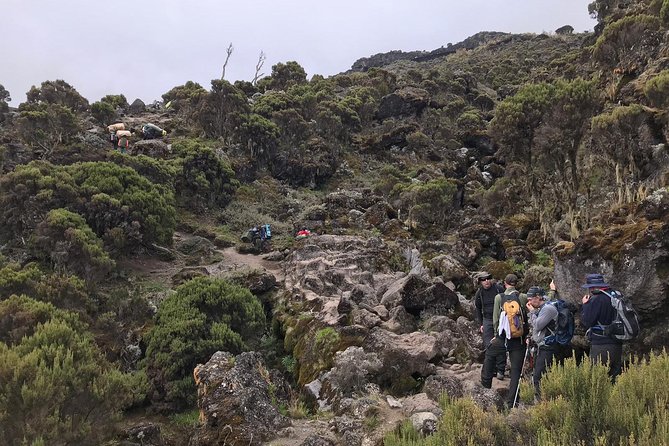
Day 1 is a push from about 5,400 ft to 9,400 ft over roughly 11 km. Expect 5 to 7 hours of hiking, with the habitat shifting through rainforest and montane forest.
Here’s what matters most for Day 1: lower trails can be muddy and slippery. This is where gaiters and trekking poles become more than optional. If you’ve ever regretted skipping poles on a steep, wet slope, this is that day. Your aim is steady feet, not hero speed.
Also, the first day sets your “how am I pacing?” baseline. You want to start building the habit of controlled breathing early, because Kilimanjaro rewards patience.
By the end of the day, you’ll reach Machame Camp for your first night of included camp lodging.
Day 2: Machame Camp to Shira Cave Camp and the moorland shift
Day 2 climbs again, from about 9,400 ft to 12,500 ft. It’s shorter on paper at 5 km, with roughly 4 to 6 hours of hiking.
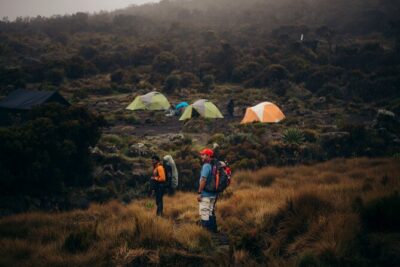
The terrain changes in a noticeable way. You leave the glades of rainforest and move into moorland, including heather-covered paths and rocky ridges. The day includes crossing a little valley and walking a steep ridge, then turning west to reach Shira camp via a river gorge.
This is where I like the route’s structure. The walking time is manageable, but you still gain altitude. That mix is helpful because it gives your lungs a reason to adapt without forcing you into a brutal all-day grind.
Meals are included again: breakfast, lunch, and dinner, and you’ll spend the night at Shira Cave Camp.
A few more Moshi trips to compare
- Safari Serengeti And Ngorongoro
★ 5.0 · 288 reviews - Climbing Kilimanjaro – Machame Route
★ 5.0 · 170 reviews - Climbing Kilimanjaro through 7 days Machame Route
★ 5.0 · 151 reviews - Kilimanjaro climb, Lemosho Route (8-day)
★ 5.0 · 148 reviews
Day 3: Shira Cave Camp to Lava Tower, then down to Barranco Camp
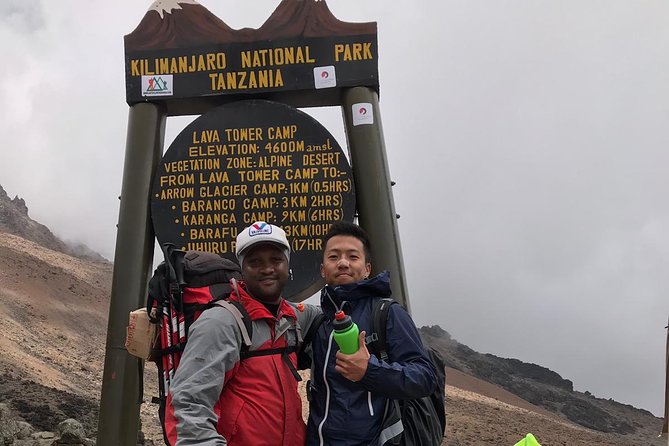
Day 3 moves you from around 12,500 ft to 13,000 ft over 10 km in 5 to 6 hours. It’s long enough to feel like work, but the big story is the altitude experience and the famous stop you’re heading toward.
From the Shira Plateau you go east along a ridge toward a junction, then the route turns south east toward Lava Tower, commonly called the Shark’s Tooth. After Lava Tower, you come to a second junction that connects toward the Arrow Glacier area at about 16,000 ft.
Then the day pivots into something many people appreciate. Even though you’ve experienced higher altitude “feeling points,” you still descend to Barranco Camp. For your body, that higher-then-lower pattern can be part of what makes this 7-day format work better than an overly aggressive single-line push.
Lava Tower is a physical marker, but it’s also a mental one. Reaching that area tells you you’re past the early learning phase and into the “real Kilimanjaro” segment.
Day 4: Barranco Camp to Karanga Camp, with Heim Glacier views nearby
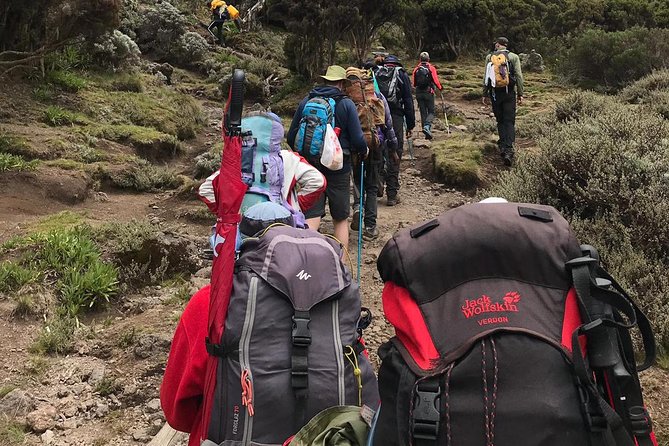
Day 4 is relatively short at 5 km and about 4 to 5 hours, moving from roughly 13,000 ft to 13,100 ft. You’ll be in moorland and the alpine desert edges of the route.
After breakfast, you trek a steep section up the eastern wall toward an area just below the Heim Glacier, where views of Mount Kilimanjaro can be spectacular if the weather is cooperating. Then comes another demanding piece: an exit up the Great Barranco Wall that divides you from the southeastern slopes of Kibo.
Finally, you drop down into the Karanga Valley to Karanga Campsite.
Why I call this a helpful day: it’s short, but it isn’t a rest day. That’s a smart contrast. You get acclimatization benefits without turning the day into a lazy stop, and you keep the rhythm going so your summit push later feels less like a sudden shock.
Day 5: Karanga Camp to Barafu Camp and the summit-eve setup
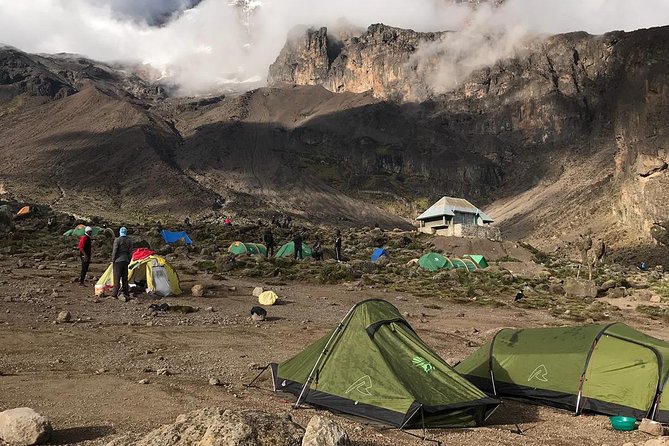
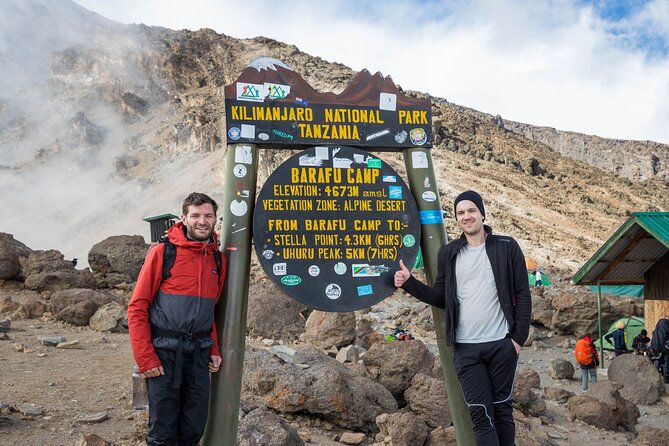
Day 5 goes up sharply, climbing from about 13,100 ft to 15,300 ft over 4 km in 3 to 4 hours. You’ll be in alpine desert, which means fewer trees, more exposed walking, and a stronger feeling of altitude.
This is where the South Circuit concept shows up. You hit a junction that connects with the Mweka Trail, and you’re basically setting yourself up for summit day by reaching Barafu Camp.
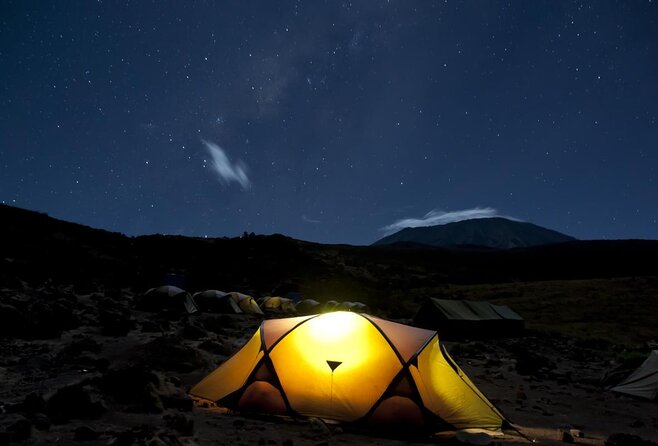
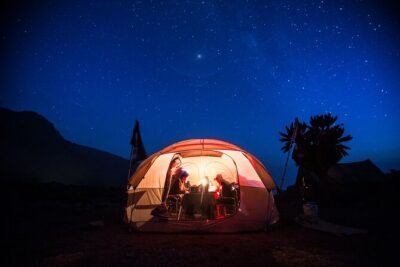
You’ll camp, rest, enjoy dinner, and prepare for the next morning. Also, Barafu is one of those camps where you can often see key landmarks like Mawenzi and Kibo, which helps you orient yourself in a way that’s hard to do when everything is just steep and dark.
This is the day to think less about chasing the trail and more about controlling your energy. You’ll want to arrive with enough focus to handle the night start.
Day 6: Barafu midnight-to-dawn summit push via Stella Point
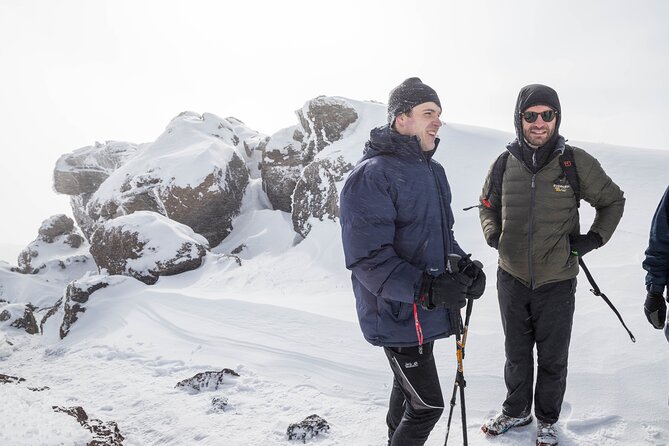
Day 6 is the big one. You start from Barafu Camp and move up toward the peak between midnight and 2:00am, which is early enough that even experienced hikers feel it in their bones.
The climb involves around 5 km of ascent and 12 km of descent. Total time can run 7 to 8 hours ascent, plus 4 to 6 hours descent.
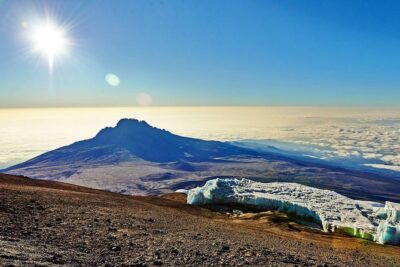
After the night start, you travel northwest and make your way over steep scree toward Stella Point on the crater rim at about 18,600 ft. You take a break there. If weather permits, you get the most spectacular sunrise you’re likely to see.
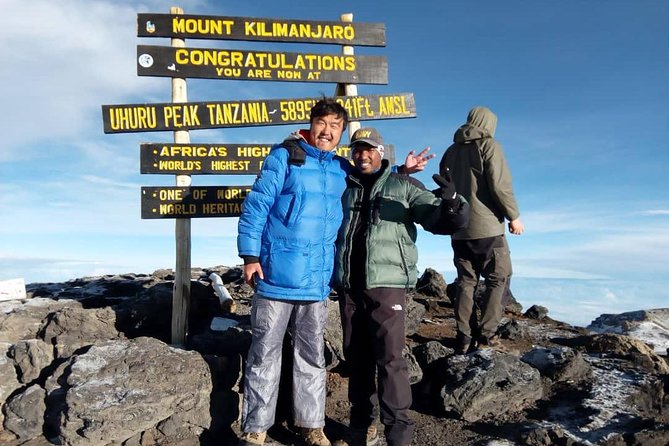
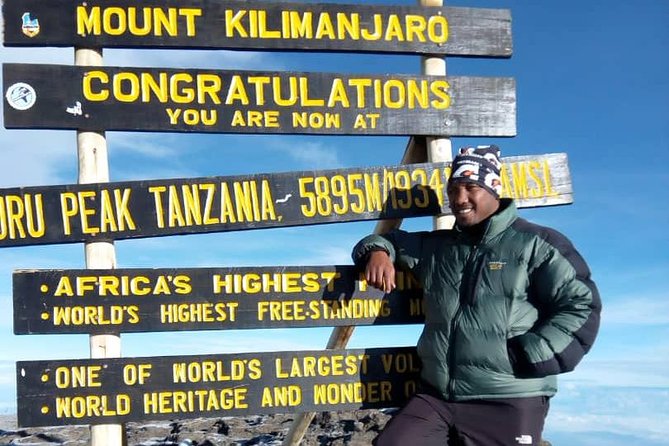
From Stella Point, the final summit push is about 1 hour up to Uhuru Peak.
This is also described as the hardest physical and mental part of the climb. I’d agree with that logic even without romanticizing it. You are moving in cold and darkness, relying on effort control and steady foot placement rather than motivation alone. The faster you accept it as hard, the calmer you tend to stay.
Then you descend to Mweka Camp. That descent is long, but it’s part of how the week ends with momentum instead of exhaustion.
Day 7: Mweka Camp to Moshi, certificates, and the wet-mud finish
Day 7 drops from about 10,000 ft down to 5,400 ft over 10 km, with 4 to 5 hours of hiking. The habitat returns to rainforest.
You start after breakfast and descend to the Mweka Park Gate. That’s where you receive your summit certificates. Then you continue another hour to Mweka Village, where a vehicle meets you to drive you back to Moshi.
Here’s the practical catch: at lower elevations, it can be wet and muddy. The same tools that help early in the trek still matter here, especially gaiters and trekking poles. You’ll probably end up wearing shorts and t-shirts for the lower hike, but keep rain gear and warmer clothing handy since summit-day timing and weather swings can still surprise you.
When the car finally pulls away, it feels like the end of a long tunnel. Not because you’re not tired, but because you’re done with altitude math.
Is this a good fit for you on Kilimanjaro?
This Machame trek is aimed at hikers with moderate physical fitness level and it’s described as a climb with other advanced hikers. That means you’re not on a flat sightseeing walk. You’re dealing with steep days, shifting terrain, and long hours at altitude.
I’d say this tour fits best if:
- You can hike for 4 to 7 hours most days without panicking when it gets steep
- You take packing seriously, especially traction and rain layers
- You’re comfortable with the early summit start between midnight and 2:00am
- You want a guided structure with meals, lodging, and transfers already organized
I’d reconsider if you have major doubts about altitude tolerance, or if you’re looking for a low-effort trek. Kilimanjaro is never just one tough day. It’s the whole system working together, from pacing on Day 1 through the mental grind on Day 6.
Practical packing and pacing tips from the way this route runs
A few details from this Machame plan make packing and day strategy much easier:
- Use gaiters and trekking poles. You’re told that early trails can be muddy and slippery, and the finish can be wet-muddy too. Poles save knees on descents.
- Expect rain and temperature swings. Shorts and t-shirts may be enough lower down, but you should keep rain gear and warmer clothing accessible.
- Respect the summit timing. The schedule pushes you to start early, so plan to sleep and eat like you mean it before the night.
- Treat short days as work, not breaks. Day 4 and Day 5 are shorter on distance but still steep. Move carefully and don’t assume speed equals stamina.
If you do these things, you’ll spend less time fighting the mountain and more time working with it.
Should you book this 7-day Machame Kilimanjaro climb?
Yes, if you want a guided, organized Kilimanjaro week built around classic Machame highlights and included mountain basics. The biggest reason to book is the value of camps plus meals plus Moshi transfers, especially if you’d rather focus on hiking than logistics.
Just be honest with yourself about the non-included costs and the effort level. Park fees, tips, flights, hotel nights in town, and personal gear all add up. And this route is demanding, with slippery sections and a summit push that tests both body and mind.
If you’re ready for that trade, this Machame plan is a solid, practical way to target the summit with a clear rhythm and supportive mountain staff.
FAQ
How long is the Kilimanjaro climb on the Machame route?
The tour lasts about 7 days.
Where does the climb start and where do you finish?
You start from Moshi and drive to the Machame Gate to begin hiking, then you descend to the Mweka Park Gate for summit certificates and return to Moshi.
What’s included in the price?
The package includes breakfast, lunch, and dinner during the trekking, hotel pickup from Moshi to the Machame Gate, drop-off from Mweka Gate back to your Moshi hotel, a briefing, and a trekking certificate.
Are Kilimanjaro park fees included?
No. All Mount Kilimanjaro Park fees are not included and can be paid direct to the park or via the tour operator.
Do I need to bring my own hiking gear?
Yes. Personal hiking gears are not included. The plan specifically suggests gaiters and trekking poles for muddy or slippery sections.
What fitness level should I have?
The tour is intended for travelers with a moderate physical fitness level, and it’s described as an advanced route.
How many people are in the group?
The tour has a maximum of 50 travelers.
Just posted around Moshi
- machame route★ 5.0 · 16 reviews
- Kilimanjaro Climbing Umbwe Route★ 5.0 · 3 reviews
- Wildlife Extravaganza: Manyara, Tarangire & Ngorongoro in 3 Days★ 5.0 · 3 reviews
- Mt Kilimanjaro 6 days Marangu route hike★ 5.0 · 3 reviews
- 3 Days Private E-Bike Tour in West Kilimanjaro★ 5.0 · 3 reviews
- West Kilimanjaro cycling Adventures★ 4.5 · 8 reviews
- Kilimanjaro Climb • Marangu Route ~ 9 Day★ 5.0 · 4 reviews
- Private Cycle to Kilimanjaro Bike Park Safari★ 5.0 · 6 reviews
Kilimanjaro Climbs, compared.
8-Day Small-group Lemosho Kilimanjaro Summit Trekking
Read our review →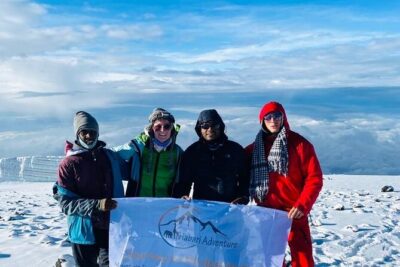
5 Days Best of Tanzania Luxury Safari Northern Circuit
Read our review →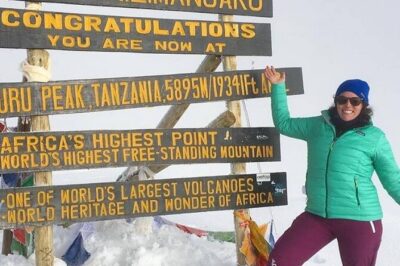
Climbing Kilimanjaro through 7 days Machame Route
Read our review →