Reviewed · KILIMANJARO CLIMBS
Discover Our Latest 6 Days Climbing Kilimanjaro – Marangu Route
Kilimanjaro feels close, then suddenly it isn’t. This private Marangu-route trek from Moshi gives you the classic hut-based experience and a full plan for getting used to the altitude. I like that you can stay in your own party instead of being shuffled into a random group.
Two things I really like: a private guide and your own group means more teamwork and less awkward “who’s doing what” moments, and the schedule builds in an acclimatization day at Horombo Huts to improve your odds on summit night. One potential drawback is that Marangu huts are dorm-style with limited amenities, so if you want total privacy, this route is not built for that.
In This Review
- Key Points at a Glance
- Why the Marangu Route Fits So Many Hikers
- Your 6 Days on Kilimanjaro, the Real Rhythm
- Day 1: Marangu Gate to Mandara Huts, Forest Magic and Quick Altitude Gain
- Day 2: Mandara to Horombo Huts, Rainforest to High-Meadow Views
- Day 3: Horombo Acclimatization Day, the Mawenzi Base Walk
- Day 4: Horombo to Kibo Hut, Stony Ground and the Saddle Approach
- Day 5: Uhuru Summit Night, Hans Meyer’s Cave to Dawn at Gillman’s Point
- Day 6: Descent Back to Moshi, Faster Steps Through Mandara and Rainforest
- Huts, Meals, and the Crew Support That Makes It Easier
- Price and Logistics, What the $1,150 Really Covers
- Gear, Pace, and Altitude: What You Should Plan For
- Who Should Book This Private 6-Day Marangu Climb
- Should You Book This Tour?
- FAQ
- How long is the Kilimanjaro trek on this option?
- Where does the climb start and where do you end?
- What route do we take up Kilimanjaro?
- What kind of accommodation is included?
- Are meals included?
- Is the guide private to my group?
- Is there an acclimatization day?
- When is the summit attempt?
- What costs are not included in the price?
- Can this experience be canceled for a refund?
Key Points at a Glance
- Private guided climb on the Marangu route, tailored to your own party
- Horombo acclimatization day with a famous walk toward Mawenzi’s area
- Hut accommodation on the easier, more classic Kilimanjaro route
- Meals included during the trekking days (breakfast, lunch, dinner)
- Private pickup and drop-off in Moshi to and from Marangu Gate
- Summit plan starts after midnight, with sunrise timing built in
Why the Marangu Route Fits So Many Hikers
If your goal is to reach Kilimanjaro’s summit without technical climbing, Marangu is one of the most straightforward choices. It’s known for using huts rather than camping, and that alone can make planning simpler and sleep more predictable. On this 6-day plan, you still work for it, but the route is designed around steady walking rather than demanding climbing skills.
I also like the way Marangu spreads your effort over the days. You don’t just go up, up, and up. You gain elevation, then you pause at Horombo Huts to let your body catch up. The operator even notes that an acclimatization day can significantly improve your chances of summiting.
Just note the tradeoff: huts are basic. You’ll sleep in dorm-style lodging with limited amenities, and that means heat, noise, and simple bathroom setups are part of the deal.
More Kilimanjaro climbs:
- Kilimanjaro climb by Lemosho Route (7-day)
★ 5.0 · 651 reviews - Kilimanjaro climb, Machame Route (7-day)
★ 5.0 · 262 reviews - Kilimanjaro Climbing Lemosho Route 8 Days.
★ 5.0 · 186 reviews
Your 6 Days on Kilimanjaro, the Real Rhythm
This climb is paced for human lungs, not machine speed. The big story is that day five is your summit push, starting shortly after midnight, and then day six is your descent back to Moshi.
The route moves through recognizable Kilimanjaro zones: forest, alpine meadows, high-altitude tundra, then the crater area. Even when your legs are tired, you’ll get constant visual reminders that you’re climbing a world-class mountain.
A practical bonus: you get a hike briefing, a trekking certificate, and a professional guide with a crew to support you. That matters because Kilimanjaro is not just about willpower. It’s also about timing, pace, and staying calm when you feel slow.
Day 1: Marangu Gate to Mandara Huts, Forest Magic and Quick Altitude Gain
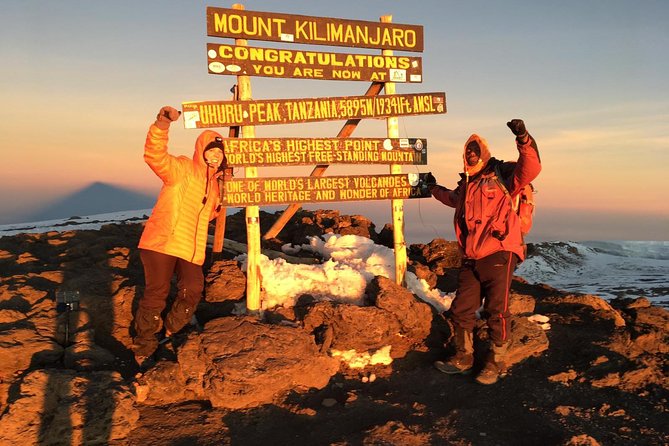
You start early with pickup from your Moshi hotel to Marangu Gate. After registration, you begin climbing out of the park buildings with your guides and porters team waiting at the start line.
The first hiking hours feel like a nature walk with altitude. In the forest, you might spot colorful birds, colobus monkeys, and other monkey species. The greenery is full of details too, with mosses, lichens, flowers, and orchids that you’ll notice more once the path slows and you look around.
This first leg typically takes about 4 to 5 hours, ending at Mandara Huts. The win here is that you’re not overwhelmed on day one. You’re warmed up, surrounded by life, and building a routine.
Day 2: Mandara to Horombo Huts, Rainforest to High-Meadow Views
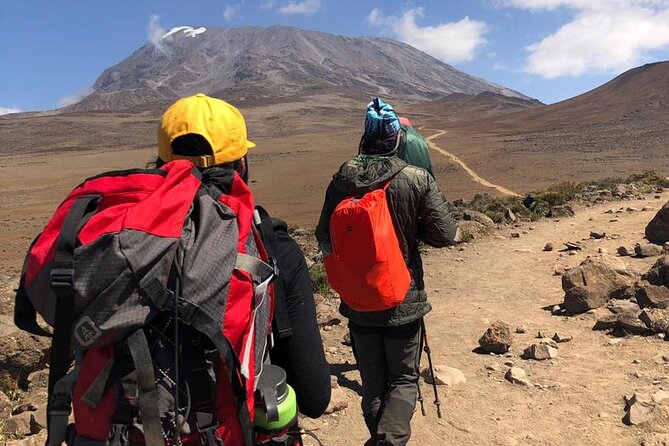
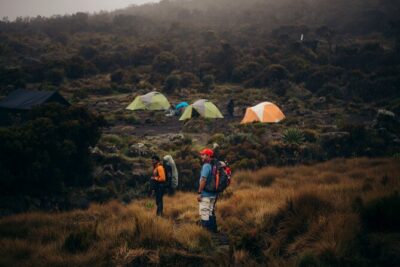
After breakfast, the climb continues through the final stretch of rainforest, then it opens into rolling alpine meadow. You’ll see enormous heather, and the air and lighting change fast as the forest disappears.
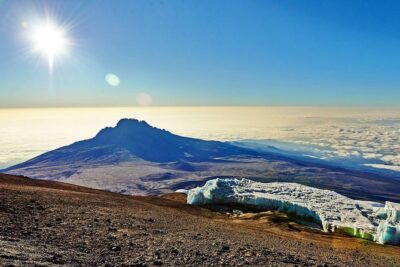
Once you emerge from the trees, the views become the main event. The skyline shows Kibo and Mawenzi side by side, snow-capped Kibo in front and Mawenzi’s rocky presence to one side. The day’s elevation gain is around 1,000 meters, and the trek usually takes 5 to 7 hours, depending on pace.
You’ll hear the slow-walk advice for a reason. The plan emphasizes pole pole, slow and steady. It’s not a motivational slogan. On Kilimanjaro, pacing is how you avoid burning matches too early.
You sleep at Horombo Huts, at roughly 3,720 meters. This is also the setting for your acclimatization day, so day two matters more than it feels.
A few more Moshi trips to compare
- Safari Serengeti And Ngorongoro
★ 5.0 · 288 reviews - Climbing Kilimanjaro – Machame Route
★ 5.0 · 170 reviews - Climbing Kilimanjaro through 7 days Machame Route
★ 5.0 · 151 reviews - Kilimanjaro climb, Lemosho Route (8-day)
★ 5.0 · 148 reviews
Day 3: Horombo Acclimatization Day, the Mawenzi Base Walk
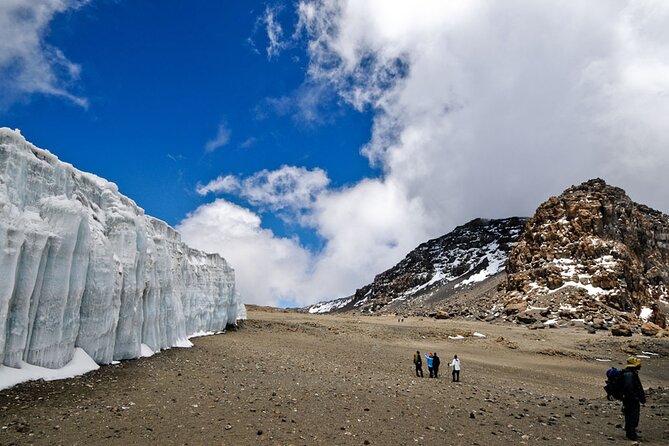
Day three is not a free rest day. It’s a smart training day for altitude. The point is to acclimatize step by step, and the itinerary includes a well-known walk that most people take for adjustment.
You’ll choose the famous acclimatization walk leading toward the base of Mawenzi Peak, the dramatic eastern summit. This round trip takes about 4 to 5 hours, and you reach roughly 4,600 meters before turning back to Horombo for dinner and overnight.
Here’s why this day is valuable: you’re teaching your body how to function higher up, while still getting the sleep you need at your main hut. It’s also a mental break, because you can hike without the pressure of “summit soon.”
Even if your legs feel heavy, the walk helps you feel the altitude rather than just fear it. And on Kilimanjaro, calm is a superpower.
Day 4: Horombo to Kibo Hut, Stony Ground and the Saddle Approach
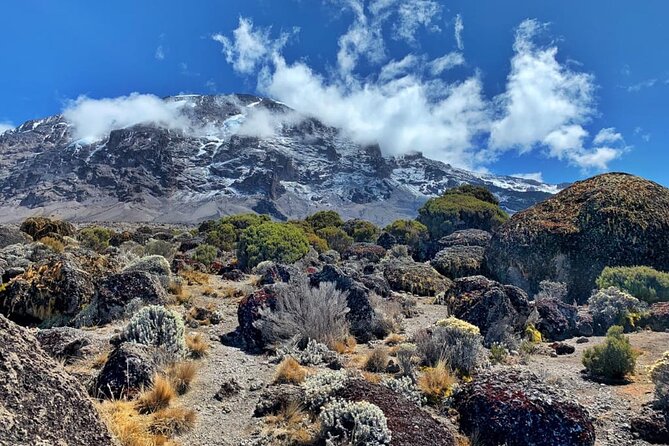
On day four, the environment shifts again. The terrain becomes more stony and arid, and the plants you see look different, too, with high-altitude alpine flowers and unusual flora.
The walk heads past Last Water and then into a desolate, almost lunar stretch where Mawenzi sits off to the side as you move toward the Saddle, the broad tundra desert between Mawenzi and Kibo. This is one of those sections where the mountain looks close, but you still have real distance to cover.
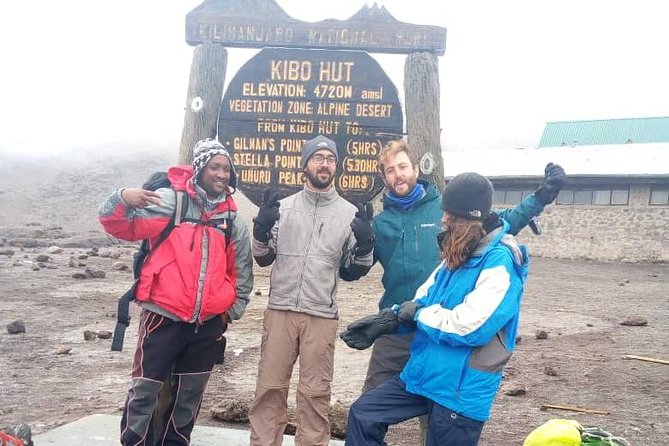
Expect 5 to 7 hours walking. You’ll arrive at Kibo Hut at around 4,705 meters. This hut has dorms and limited amenities, so treat it as a staging area, not a hotel.
That evening you’ll prepare for the summit attempt. The plan specifically advises you to repack and give any unnecessary stuff to porters, which is good practical sense when you’re carrying less for the big climb.
Day 5: Uhuru Summit Night, Hans Meyer’s Cave to Dawn at Gillman’s Point
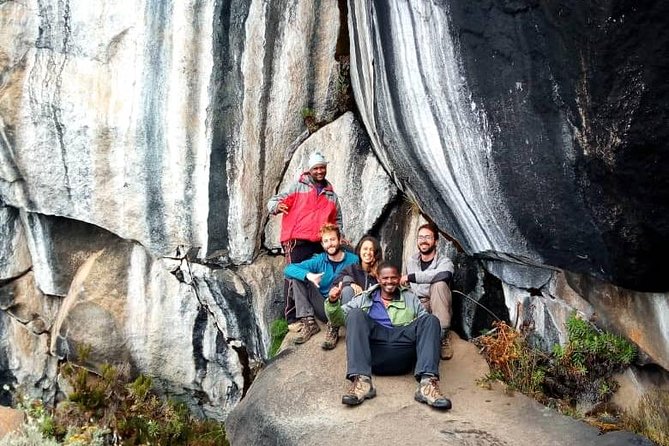
This is the longest and most demanding day. Guides wake you shortly after midnight, and you start upward with a torch so you can see where your feet are going.
The route goes over scree. Early on, it’s described as frozen, which can make walking less slippery than you might expect. Still, it’s slow work. After about two hours, you aim for Hans Meyer’s Cave.
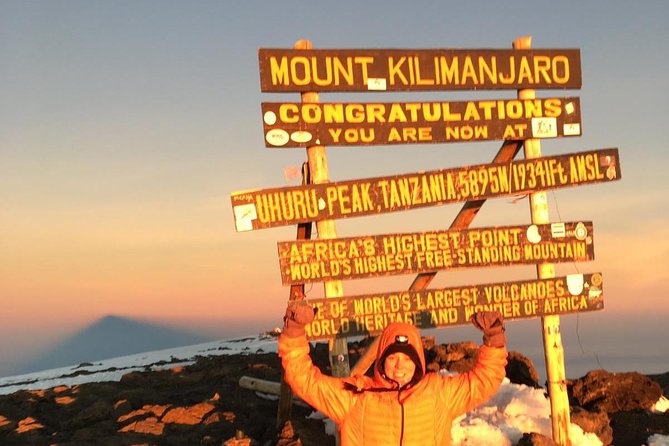
Then the climb keeps steepening toward the crater area. After around three hours, you reach Johanne’s Notch, where the crater rim sits. From there, the push to Gillman’s Point (5,685 meters) is timed so you can arrive in time for dawn.
And yes, the sunrise is the payoff. The plan highlights the dramatic scene of the sun rising over the ice fields and jagged peaks of Mawenzi. That moment is the one you remember on the hard days later.
Even if you don’t feel strong at midnight, this plan is built for a gradual, consistent push. One review emphasized that a supportive guide helped them keep going and reach the summit, and that kind of encouragement can matter a lot when the “tough part” starts.
Day 6: Descent Back to Moshi, Faster Steps Through Mandara and Rainforest
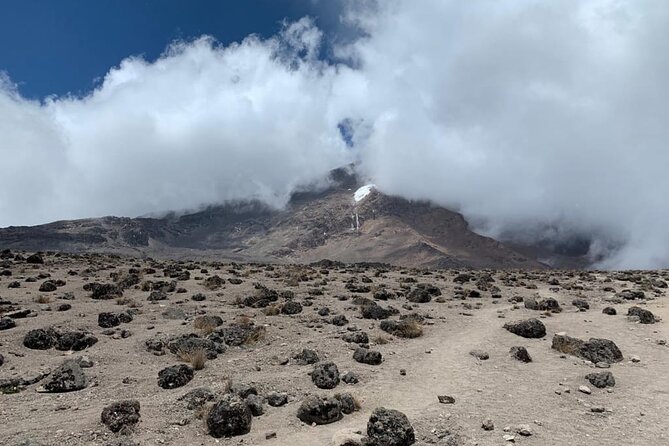
After sunrise and the summit experience, you return downward across the high meadows. The pace picks up, because downhill feels easier on the body even when you’re tired.
You’ll move from alpine meadow back through the rainforest past Mandara Hut, then reach Marangu Gate. From there, you board your vehicle for the drive back to Moshi.
The descent is listed at about 8 hours, and the distance is noted as roughly 20.8 km. Meals are included for the day as breakfast and lunch, which is exactly what you want when you’ll likely feel hungry but also want to start recovering quickly.
This is also a good day to hydrate and let your legs reset. Kilimanjaro doesn’t end when the summit is done. Your body still needs time.
Huts, Meals, and the Crew Support That Makes It Easier
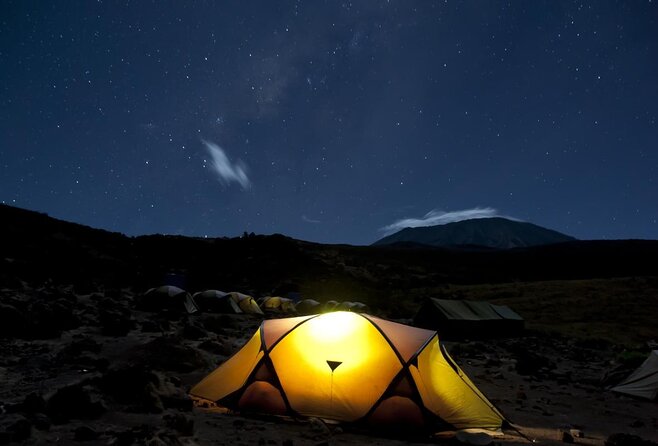
The experience is built around hut stays. You’ll be sleeping in dormitory-style hut accommodation each night, with limited amenities. That sounds simple, but it’s important. If you know you’ll be sharing space and accepting basic conditions, you’ll worry less and focus more.
Meals are included during the trekking days: breakfast, lunch, and dinner. That takes away a major budgeting headache and helps you keep your energy steady during long hiking hours.
One of the most highly praised parts of the experience is the crew. In a top review, the writer singled out their porters and chef, and most importantly their guide, as being supportive enough to help them keep pushing to the finish. That’s the real value of a good mountain team. They manage pace, respond to altitude stress, and keep morale from collapsing.
Price and Logistics, What the $1,150 Really Covers
At $1,150 per person, this is priced like a true trek package, not a bare-bones outline. The value is strongest in what’s included for your daily life on the mountain:
- Pickup from your Moshi hotel to Marangu Gate
- Drop-off back to your Moshi hotel
- Briefing plus a trekking certificate
- A professional guide
- Hut accommodation and meals while trekking
- Camping fees included
That said, the costs that are not included can matter in your total budget. You’ll still need to plan for:
- All Mount Kilimanjaro Park Fees
- Travel and medical insurance
- Tips for the mountain crew
- Hotel nights in town before and after the trek
- Airport pickup and drop-off
- Flights (domestic and international)
- Personal hiking gears
Also pay attention to the “private” wording. The tour is described as private guided for your own party, but the activity notes a maximum of 90 travelers. If privacy is a top priority, confirm how your group stays managed throughout the climb.
Finally, the plan requires good weather. Weather on Kilimanjaro can change quickly, so keep flexible expectations and follow your guide’s decisions.
Gear, Pace, and Altitude: What You Should Plan For
This climb requires personal hiking gear, and you should not expect everything to be handed to you. You’ll also be hiking in dark conditions on summit night. The plan specifically says guides awaken you shortly after midnight and you begin with help from your torch, so bring your own reliable light source.
Pace is the silent rule across all days. The itinerary repeatedly points out slower walking, and the Day 2 text emphasizes pole pole. That tells you how to survive Marangu: don’t chase others up the trail, and don’t turn every section into a race.
Most people can participate, and Marangu is one of the less technical ways to reach Uhuru. Still, altitude is altitude. If you have health concerns, you’ll want to discuss them before you go, and insurance is a smart part of that planning since it’s not included.
Who Should Book This Private 6-Day Marangu Climb
This one is a strong match if you want:
- Hut accommodation rather than camping
- A route that’s planned for acclimatization, not just brute ascent
- A private guided climb so you stay with your own group
- Easy-to-follow structure, with summit timing designed around dawn
It’s also good for people who like a classic Kilimanjaro feel: forest walking on day one, open meadows later, then the stark crater-zone drama on summit night.
If your top priority is quiet, private rooms, or zero shared space, you might feel frustrated by the dorm-style huts and the limited amenities.
Should You Book This Tour?
If you want a classic, organized Kilimanjaro attempt with a plan that includes Horombo acclimatization and a clear summit night schedule, this is a solid choice. The private-party setup and strong focus on meals, guides, and transfers makes it easier to focus on the hike instead of the logistics.
I’d only hesitate if you dislike basic shared lodging, hate early midnight starts, or you’re trying to keep your total cost ultra-low since park fees, tips, and personal gear are extra.
In short: if you’re aiming for a well-supported, hut-based Marangu climb with a realistic path to the summit, this is the kind of package that helps you show up ready.
FAQ
How long is the Kilimanjaro trek on this option?
The trek is listed as 6 days (approx.).
Where does the climb start and where do you end?
You’re picked up in Moshi and driven to Marangu Gate to start. After the trek, you’re dropped back at your Moshi hotel from Marangu Gate.
What route do we take up Kilimanjaro?
This experience climbs Kilimanjaro using the Marangu route.
What kind of accommodation is included?
The trek includes dormitory-style hut accommodation.
Are meals included?
Yes. Breakfast, lunch, and dinner are included during the trekking days. The final day specifically includes breakfast and lunch.
Is the guide private to my group?
The experience is described as a private guided hike with your own private party.
Is there an acclimatization day?
Yes. Day three is an acclimatization day at Horombo Huts, with a walk that takes you to about 4,600 meters before returning.
When is the summit attempt?
The summit push happens on day five, with guides waking you shortly after midnight, then climbing toward dawn.
What costs are not included in the price?
Not included are travel and medical insurance, Mount Kilimanjaro park fees, tips, hotel nights before and after the trek, airport transfers, flights, and personal hiking gear.
Can this experience be canceled for a refund?
Yes. Free cancellation is offered if you cancel up to 24 hours in advance of the experience start time, based on local time. If it’s canceled due to poor weather, you’ll be offered a different date or a full refund.
Just posted around Moshi
- machame route★ 5.0 · 16 reviews
- Kilimanjaro Climbing Umbwe Route★ 5.0 · 3 reviews
- Wildlife Extravaganza: Manyara, Tarangire & Ngorongoro in 3 Days★ 5.0 · 3 reviews
- Mt Kilimanjaro 6 days Marangu route hike★ 5.0 · 3 reviews
- 3 Days Private E-Bike Tour in West Kilimanjaro★ 5.0 · 3 reviews
- West Kilimanjaro cycling Adventures★ 4.5 · 8 reviews
- Kilimanjaro Climb • Marangu Route ~ 9 Day★ 5.0 · 4 reviews
- Private Cycle to Kilimanjaro Bike Park Safari★ 5.0 · 6 reviews
Kilimanjaro Climbs, compared.
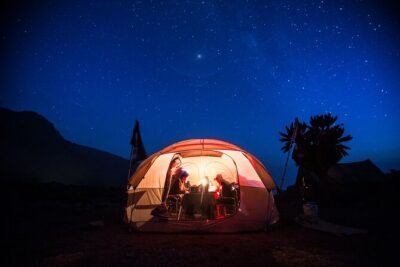
8-Day Small-group Lemosho Kilimanjaro Summit Trekking
Read our review →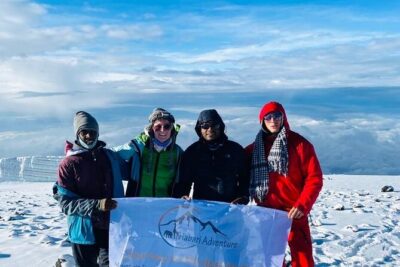
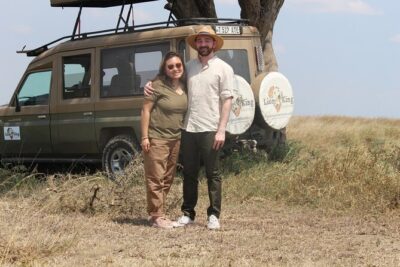
5 Days Best of Tanzania Luxury Safari Northern Circuit
Read our review →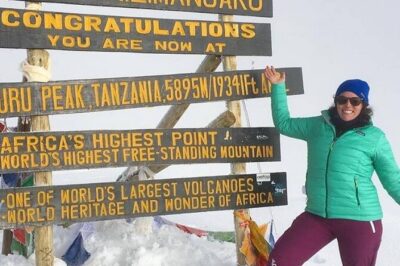
Climbing Kilimanjaro through 7 days Machame Route
Read our review →