Reviewed · KILIMANJARO CLIMBS
Climb Mount Kilimanjaro: 7 Days Machame Route
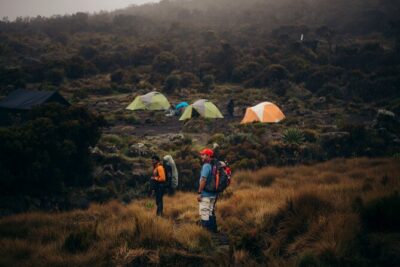
Kilimanjaro is earned one slow step at a time. What makes this 7-day Machame Route stand out is the mix of smart pacing, real climbing logistics handled for you, and comfort touches like warm sleeping pads and modern tents. I like that the week includes guided trekking with a full crew, including porters and a cook, so you can focus on moving and acclimatizing.
My favorite part is the practical support plan for altitude, including oxygen systems and pulse oximeters, plus the team’s helpful, friendly, supportive vibe. The one consideration: this is still a long, physical trek, with a midnight-to-dawn summit push that can feel brutally demanding even if you are prepared.
In This Review
- Key Highlights to Know Before You Go
- Machame Route, 7 Days: A Good Balance of Views and Pacing
- Moshi Setup: Airport Pickup and Getting to Machame Gate Smoothly
- Crew and Comfort: Porters, Cook, Modern Tents, and Oxygen
- Day 1: Machame Gate to Rainforest Trek and Park Formalities
- Day 2: Low Alpine Zone to Shira Camp 2 Views
- Day 3: High Moorland Walking Up to 4600 m, Then Sleep Low
- Day 4: Great Barranco Descent and Wall Climb to Karanga Camp
- Day 5: Barafu Camp, Summit Angles, and South Circuit Finish
- Day 6: Midnight Summit Push, Stella Point Sunrise, Uhuru Peak
- Day 7: Mweka Gate Descent Through Rainforest and Certificates
- Price and Value: What $3,034 Really Buys You
- Who This Machame 7-Day Trek Fits Best
- Should You Book This 7 Days Machame Route Climb?
- FAQ
- What route is this 7-day Kilimanjaro trek using?
- Where are the start and meeting points?
- What’s included for sleeping and camping?
- Is oxygen support included?
- What meals are included during the trek?
- Are park permits and rescue fees included?
- Are there any toilet options at camp?
- How do transfers work?
Key Highlights to Know Before You Go
- Porter support with 15 kg per porter means you carry less, which helps you keep your energy for higher altitude days
- Modern tents plus 2-inch sleeping pads make nights more tolerable, especially when temperatures drop fast
- Oxygen systems and pulse oximeters are included, not an add-on you have to hunt down at the last minute
- Shira Camp 2, Karanga Camp, and Barafu Camp set up the day-by-day acclimatization rhythm you want on Machame
- Stella Point and Uhuru Peak are the payoff, with a summit day designed for sunrise timing and big views
Machame Route, 7 Days: A Good Balance of Views and Pacing
This itinerary is built around the Machame climb through changing altitude zones, so the scenery keeps shifting even when your legs are not thrilled. On paper, it looks like “just” a seven-day timeline, but the rhythm matters: you gain height, you get some good perspective from camp locations, and you get that key acclimatization pattern where you climb higher and sleep lower.
I like that Day 3 is treated as an acclimatization moment. You spend time walking at altitude up to about 4600 m, then you end the day roughly where you started. That is the kind of compromise your body often needs on Kilimanjaro. If you are the type who tries to “power through” every day, this schedule nudges you back toward a safer tempo.
More Kilimanjaro climbs:
- Kilimanjaro climb by Lemosho Route (7-day)
★ 5.0 · 651 reviews - Kilimanjaro climb, Machame Route (7-day)
★ 5.0 · 262 reviews - Kilimanjaro Climbing Lemosho Route 8 Days.
★ 5.0 · 186 reviews
Moshi Setup: Airport Pickup and Getting to Machame Gate Smoothly
The trek starts with comfort on the logistics side. You get picked up at Kilimanjaro International Airport, transferred to your arranged hotel in Moshi before the climb, then transported to the trail head to meet your crew at Machame Gate.
This matters more than it sounds. When you land, the clock is already running on your adjustment to Tanzania time, sleep, and humidity. Having transfers and trail-head movement handled means you spend less energy on coordination and more on hydrating, eating, and getting an early night when the summit push is looming.
Crew and Comfort: Porters, Cook, Modern Tents, and Oxygen
Kilimanjaro is not a solo sport. This is a crew-led trek with a professional mountain team (over 6 years of climbing experience) and a structure you will feel immediately once you meet them at the gate. You assemble park formalities, then you’re moving with your guide and support staff ready to keep the operation running.
Here is what comfort and safety look like on this trip:
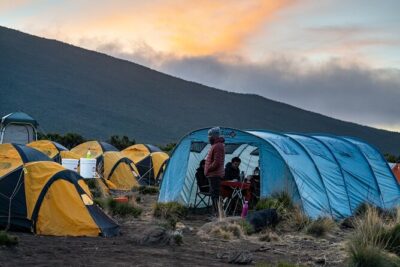
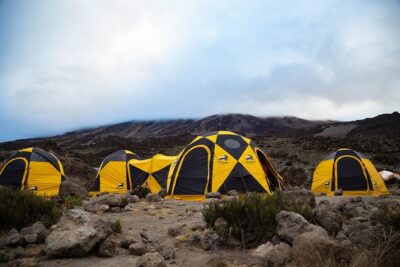
- Modern tents for camp nights
- Warm sleeping pads (2 inches thick) for insulation and less misery in colder temperatures
- Oxygen systems and pulse oximeters included, so altitude monitoring and support tools are on hand
- First aid kit plus group equipment like a dining tent, tables, chairs, and crockery
- Portable flush toilets available on request (free), which is a practical upgrade for multi-day camping
You also share a tent with 1 to 2 other climbers. It is not private, but it is normal for this style of trekking and can be a plus if you want company during the slower evening moments.
One subtle value point: porters. You each have porters carrying about 15 kg. That is one of the biggest reasons a climb like this becomes a climb instead of a survival march.
And yes, the crew tone counts. The strongest positive feedback centers on the team being helpful, friendly, and supportive throughout the week. On summit day, encouragement is not fluff. It helps you keep going when the terrain and the clock both get loud.
Day 1: Machame Gate to Rainforest Trek and Park Formalities
Day 1 begins at Machame Gate, about an hour from Moshi. The gate is busy in a good way. Porters assemble gear, you do park formalities, and you meet the core crew: your guide, cook, and porters.
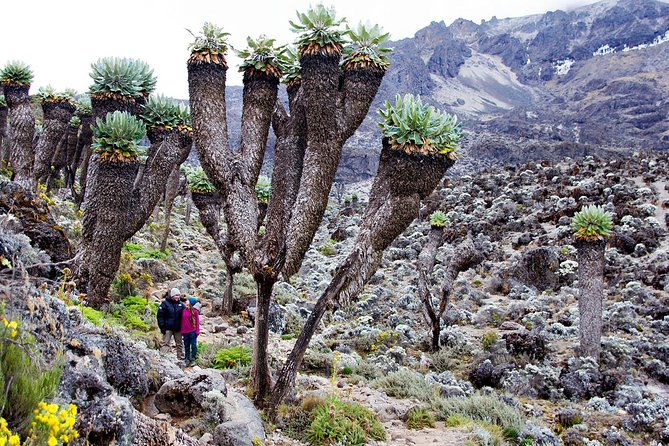
From there, the first walking section climbs steadily through dense rainforest. This is the zone where humidity can feel like a second layer of clothing. The good news is that your pace can stay smooth. You are not yet in the high-alpine crunch, so the goal is to get into trekking mode, not to chase speed.
Practical note: you’ll be hiking for about 6 hours on Day 1, and your energy matters for tomorrow’s altitude shifts.
A few more Moshi trips to compare
- Safari Serengeti And Ngorongoro
★ 5.0 · 288 reviews - Climbing Kilimanjaro – Machame Route
★ 5.0 · 170 reviews - Climbing Kilimanjaro through 7 days Machame Route
★ 5.0 · 151 reviews - Kilimanjaro climb, Lemosho Route (8-day)
★ 5.0 · 148 reviews
Day 2: Low Alpine Zone to Shira Camp 2 Views
Day 2 moves you into a more “serious” altitude feel as you enter the low alpine zone with moorlands and grasslands. The trek is described as relatively steep here, which is your cue to keep steps steady and breathing controlled.
You end at Shira Camp 2, set on a plateau. This is one of the first major view windows, with Kibo visible to the north-west and Mount Meru to the east. Even if your legs feel heavy, this is the kind of camp location that reminds you why the climb is worth it.
Plan for about 5 hours walking. The day is shorter than Day 1, but it can still feel demanding because of the slope.
Day 3: High Moorland Walking Up to 4600 m, Then Sleep Low
Day 3 is the acclimatization day that makes the rest of the week more workable. You shift into high moorland, and you spend time at altitude, reaching up to about 4600 m.
The key point is what you do with that altitude. You climb high, then end the day at a similar elevation to where you started from Shira Camp. That climb high, sleep low approach helps many climbers reduce the risk of altitude stress later.
This is also where mental stamina matters. You might feel like you are doing the same thing at two different times, but your body is actually learning. Day 3 is about teaching your system to adapt.
Walking time here is about 6 hours.
Day 4: Great Barranco Descent and Wall Climb to Karanga Camp
On Day 4 you drop into the start of the Great Barranco, a huge ravine. Then you climb out of it by taking on the Barranco Wall, which divides you from the south-eastern slopes of Kibo.
This part is described as a long, tiring rock climb. It is not technical, but your legs still pay the price. Expect effort more than scrambling skill. The main skill is pacing and foot placement.
You then climb up to Karanga Camp at around 3963 m, where you spend the night. The walking time on Day 4 is about 4 hours, but don’t let “4 hours” trick you into thinking it is easy. This is a day where the difficulty comes in bursts, and the payoff is getting into position for the next camp push.
Day 5: Barafu Camp, Summit Angles, and South Circuit Finish
Day 5 continues up to Barafu Camp. This is where you’ve essentially completed the South Circuit, and the terrain sets you up for summit angles from different angles.
Once you arrive, you rest, eat dinner, and prepare for the summit day. This camp phase is important because you are about to switch from regular trekking to a midnight start.
If you are thinking ahead, this is where you should be conservative. Do not burn extra energy “just because you feel okay.” The summit day is long, and it starts before most humans even know morning exists.
Walking time is about 4 hours.
Day 6: Midnight Summit Push, Stella Point Sunrise, Uhuru Peak
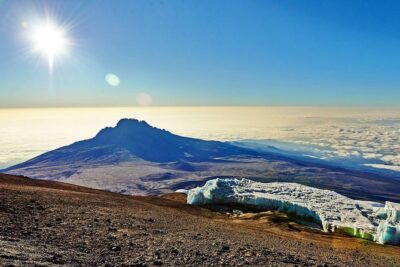
This is the day. It starts early, between midnight and 2 am, when you begin the ascent toward the summit between the Rebmann and Ratzel glaciers.
You head north-west and ascend through heavy scree toward Stella Point on the crater rim. This is described as the most mentally and physically challenging part of the trek. The challenge is real, but what helps is knowing what to expect: repeated uphill effort on unstable ground, with short rests that keep you moving.
At Stella Point, you stop briefly. Then you are rewarded with the most magnificent sunrise you are likely to see. Faster hikers may reach earlier and view the sunrise from the summit, but even if you are not in that group, Stella Point is still the moment.
From Stella Point, you might encounter snow on your roughly 1-hour ascent to Uhuru Peak, the highest point on Kilimanjaro and the continent of Africa. Once you reach Uhuru Peak, you begin your descent, continuing down toward the Mweka area for your final day.
Walking time is listed at 13 hours. That is long even by Kilimanjaro standards, and it is another reason why the included altitude support tools are valuable.
Day 7: Mweka Gate Descent Through Rainforest and Certificates
Your final day brings you down. You trek gently through rainforest to Mweka Gate, where you finish park formalities and receive certificates.
This is the emotional day. The hardest portion is behind you, but you will still feel the effects of long hours, cold early starts, and steep descents. The walk may be described as gentle, yet “gentle” on Kilimanjaro still means you are dealing with gravity and sore quads.
Afterward, you move on to an arranged hotel for an overnight, then later you’re transferred back to Kilimanjaro International Airport.
Walking time is about 4 hours.
Price and Value: What $3,034 Really Buys You
At $3,034, this is not a bargain-basement option, but it is also not trying to be ultra-luxury. The best way to judge value here is to look at what is included versus what is typically extra on Kilimanjaro.
Included items that affect day-to-day comfort and safety:
- Park permits and Kilimanjaro National Park rescue fees
- Camping and hut fees
- Modern tents and 2-inch sleeping pads
- Oxygen systems and pulse oximeters
- Bottled water, plus coffee and/or tea
- Three meals each day during the climb (breakfast, lunch, dinner are listed as 6 each total for the trek days)
Also included are accommodations before and after the climb (sharing twin rooms) and key transfers, including pickup at the airport and returns to the airport.
What is not included (and can add up if you choose to pay on top):
- Guide, cook, and porter daily fees are listed as separate costs
- International flights and insurance
- Personal gear rental
So, is the price fair? For a 7-day Machame climb with modern tents, included altitude support equipment, and full crew logistics, yes, it looks like a structured package. If you were hiring everything yourself, you would likely end up assembling a similar set of services, but at a higher hassle cost. Here, you’re paying to remove guesswork.
Who This Machame 7-Day Trek Fits Best
This tour fits well if you:
- Want the Machame Route style of climb and are prepared for a full week in altitude
- Prefer to travel with a full support crew and less worry about carrying your own heavy load
- Value camp comfort like modern tents and thicker sleeping pads
- Are aiming for an acclimatization-focused schedule rather than a rush
The tour also notes moderate physical fitness as the baseline. That does not mean casual. The summit day is still a major effort, and Day 4 and Day 6 are the kinds of days that test consistency more than athletic speed.
Consider this tour carefully if you:
- Know you struggle with very early starts
- Have had prior altitude issues and need a very customized medical plan
- Want private, solo tenting, because tent sharing is part of this setup
Should You Book This 7 Days Machame Route Climb?
If you want a Kilimanjaro climb where logistics feel handled, and you care about comfort and altitude support, this looks like a strong pick. The standout for me is the combination of crew support, included oxygen and monitoring tools, and the practical night setup with modern tents and warm sleeping pads. That is what helps you stay calmer and more consistent, especially on the toughest hours.
On the other hand, if you are chasing a “light” hike, be honest with yourself. This is physically serious, and the itinerary includes a full summit attempt that starts around midnight and runs many hours. If that is what you signed up for, then booking makes sense.
FAQ
What route is this 7-day Kilimanjaro trek using?
It uses the Machame Route, starting at Machame Gate and finishing at Mweka Gate.
Where are the start and meeting points?
You meet your crew at Machame Gate, which is normally about one hour from Moshi, with a start time of 8:00 am.
What’s included for sleeping and camping?
During the climb you share a tent with 1 to 2 other climbers, and you get modern tents plus warm sleeping pads that are 2 inches thick.
Is oxygen support included?
Yes. Oxygen systems and pulse oximeters are included.
What meals are included during the trek?
The package lists breakfast, lunch, and dinner during the climb (each listed as 6 total).
Are park permits and rescue fees included?
Yes. Kilimanjaro National Park permits and rescue fees are included, along with camping or hut fees.
Are there any toilet options at camp?
Portable flush toilets can be provided for free upon your request.
How do transfers work?
Pick up is offered at Kilimanjaro International Airport, with transfers to your hotel before the climb and to the trail head, and return transfers after the climb back to Kilimanjaro airport.
Just posted around Moshi
- machame route★ 5.0 · 16 reviews
- Kilimanjaro Climbing Umbwe Route★ 5.0 · 3 reviews
- Wildlife Extravaganza: Manyara, Tarangire & Ngorongoro in 3 Days★ 5.0 · 3 reviews
- Mt Kilimanjaro 6 days Marangu route hike★ 5.0 · 3 reviews
- 3 Days Private E-Bike Tour in West Kilimanjaro★ 5.0 · 3 reviews
- West Kilimanjaro cycling Adventures★ 4.5 · 8 reviews
- Kilimanjaro Climb • Marangu Route ~ 9 Day★ 5.0 · 4 reviews
- Private Cycle to Kilimanjaro Bike Park Safari★ 5.0 · 6 reviews
Kilimanjaro Climbs, compared.
8-Day Small-group Lemosho Kilimanjaro Summit Trekking
Read our review →
5 Days Best of Tanzania Luxury Safari Northern Circuit
Read our review →
Climbing Kilimanjaro through 7 days Machame Route
Read our review →