Reviewed · KILIMANJARO CLIMBS
9 Days Kilimanjaro Climb via Lemosho Route
Kilimanjaro on Lemosho feels like a slow reveal. This 9-day climb from Moshi gives you a west-of-the-mountain start, plenty of acclimatization time, and camp-to-camp hiking that stays varied from rainforest to alpine desert. I really like how the route sets you up for success with pacing that is built for altitude, not just ambition, and I also like the support and preparation vibe, including clear pre-trip communication and a team that keeps morale up. One possible drawback is that it is still a serious mountain, so you need to be ready for cold, winds, and the very early midnight summit push.
If you want the full Kilimanjaro story, Lemosho delivers. You’ll spend your days moving through very different ecosystems, from monkeys and birds in the rainforest to frozen volcanic dust under headlamps. Nights can feel brutally cold near Barafu and the summit rim, and you should confirm your comfort basics early since sleeping bags are not included.
In This Review
- Key things I’d watch for before you go
- Why the Lemosho Route is such a smart Kilimanjaro plan
- Moshi arrival day: Keys Hotel, real downtime, and a morning start
- Day 2 to Big Tree Camp: Londorossi Gate and the rainforest opener
- Day 3 to Shira 1 Camp: Podocarpus and Juniper, then out to the plateau
- Day 4 to Shira 2 Camp: a short day with a big job, acclimatization
- Day 5 to Lava Tower Camp: the alpine desert shift
- Day 6 to Karanga Camp: the long altitude day and the “wow” sunsets
- Day 7 to Barafu Camp: short hike, big winds, and Mawenzi in your sights
- Day 8 summit night: Stella Point, Uhuru Peak, then down to Mweka Camp
- Day 9 Mweka Gate to Moshi: forest descent, farewell ceremony, and a hot shower
- Support team, communication, and that human factor that matters
- Price and what you actually get for $3,450
- Who this Lemosho climb suits best
- Should you book the 9 Days Kilimanjaro via Lemosho?
- FAQ
- What city does this Kilimanjaro climb start from?
- What time does the experience start?
- Is pickup included?
- How long is the trek?
- What are some key inclusions for safety and comfort?
- Are meals included?
- What should I bring since it is not included?
- Is there a cancellation option with a full refund?
Key things I’d watch for before you go
- Lemosho’s west approach gives you a calmer build-up and a more complete feel of Kilimanjaro.
- Strategic altitude days (like the Shira Plateau stop) help you acclimatize instead of racing higher.
- A cold, dark summit schedule means packing and warming up correctly matters more than you think.
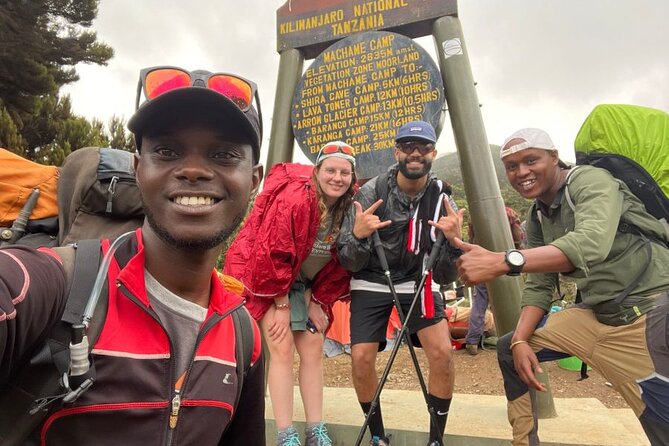
- A strong human support system is a standout, with guides and porters acting like a real team.
- Permits, meals, and safety gear are included, but you still must bring key items like a sleeping bag.
Why the Lemosho Route is such a smart Kilimanjaro plan
The Lemosho route is popular for good reason, and it is not just because it sounds good on a brochure. The big idea is time. You do not just climb, you grow used to altitude step by step. That matters because Kilimanjaro is not only about strength, it is about how your body handles lower oxygen night after night.
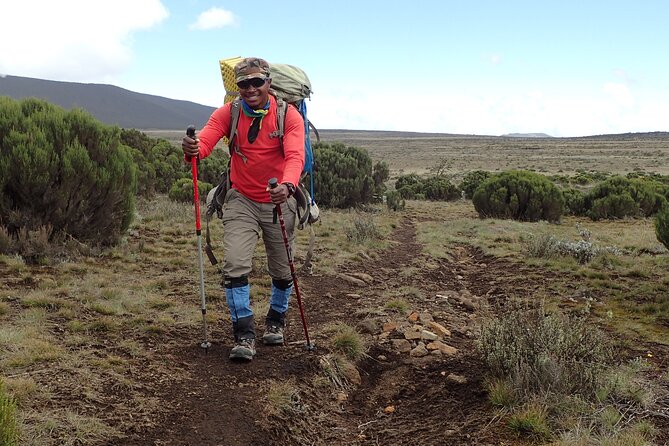
Another thing I like is how the trail doesn’t get boring. You start deep in rainforest country, then you climb into heath and plateau zones, and later you step into the alpine desert where life is sparse and the weather can turn fast. That ecosystem shift is part of why this route feels like a complete mountain journey instead of a single long slog.
Also, the route is often described as having high summit success rates, and the reason usually comes down to the pacing. You are given more chances to acclimatize before the big push. Still, remember: the summit is never guaranteed on any route. You’re stacking favorable conditions, not removing risk.
More Kilimanjaro climbs:
- Kilimanjaro climb by Lemosho Route (7-day)
★ 5.0 · 651 reviews - Kilimanjaro climb, Machame Route (7-day)
★ 5.0 · 262 reviews - Kilimanjaro Climbing Lemosho Route 8 Days.
★ 5.0 · 186 reviews
Moshi arrival day: Keys Hotel, real downtime, and a morning start
Your trip starts with a pickup from Kilimanjaro International Airport (JRO) to Keys Hotel in Moshi, plus a briefing and an overnight stay. This first night is more important than it sounds. You want your body off the plane rhythm and into Tanzania time before you climb.
Most days start early, and your experience here has a listed start time of 8:00 am for the overall trek timing. That helps keep the long hiking days predictable. It also means you’ll want a good bedtime on Day 1, because Day 2 is your first real mountain day.
From a practical value standpoint, this is also where you can sort out the stuff people forget. Check your headlamp batteries. Confirm your clothing layers. Make sure your water plan makes sense for you. If anything feels off, this is your last easy moment to fix it.
Day 2 to Big Tree Camp: Londorossi Gate and the rainforest opener
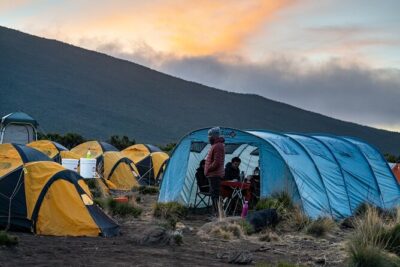
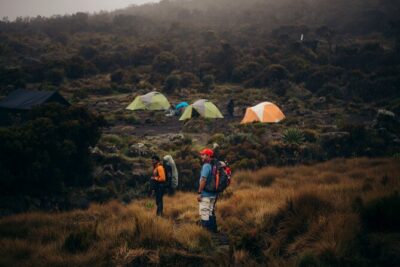
Day 2 is your entry day. You drive about 2.5 hours to Londorossi Gate, where you’re registered by park authorities, then you drive another 15 km into dense rainforest before starting to hike. The route is moderately steep to Big Tree Camp (2780 m), and you arrive with tents already set up, plus hot tea and washing water waiting.
This is the day I’d frame as your mindset shift. The rainforest makes everything feel softer and more alive, even while altitude is still rising. You’ll likely notice monkeys and interesting birds along the way, and that wildlife element is more than a nice bonus. It’s a reminder that you’re not just walking through scenery, you’re moving through an actual ecosystem with animals doing their thing.
Possible drawback to keep in mind: rainforest hiking can still be slow and damp. Even if the grade is manageable, the conditions can drain energy. Go steady, don’t overpace, and treat it like a warm start, not Day 1 of a race.
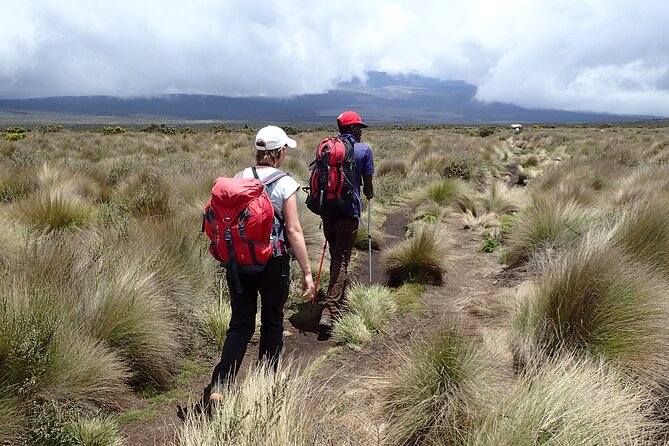
Day 3 to Shira 1 Camp: Podocarpus and Juniper, then out to the plateau
On Day 3 you climb from the forested slopes through Podocarpus and Juniper forest, then break out into the heath zone and the Shira Plateau. You take lunch on trail and arrive at camp mid-afternoon for an overnight at Shira 1 Camp.
This day matters because it is where the mountain starts to feel larger. In the forest, the air can feel cooler and heavier, and you’re surrounded by life. When you leave the forest and reach plateau country, you can feel the exposure and the emptiness of higher ground. That transition can be dramatic, especially if the clouds roll in.
For most people, Day 3 is also a mental checkpoint. You’ll see how your body responds to the climb rate. If you’re feeling unusually wiped out, that is not a reason to quit. It is a reason to speak up and slow down.
A few more Moshi trips to compare
- Safari Serengeti And Ngorongoro
★ 5.0 · 288 reviews - Climbing Kilimanjaro – Machame Route
★ 5.0 · 170 reviews - Climbing Kilimanjaro through 7 days Machame Route
★ 5.0 · 151 reviews - Kilimanjaro climb, Lemosho Route (8-day)
★ 5.0 · 148 reviews
Day 4 to Shira 2 Camp: a short day with a big job, acclimatization
Day 4 is described as a relatively short day after a significant altitude gain. You hike to Shira 2 Camp in time for lunch, and you overnight there. This is a classic acclimatization move: gain enough altitude to keep progress going, but not so much that your body is punished.
You also have the option of an afternoon walk with your guides. That kind of gentle movement can help your breathing and circulation, and it gives you something useful to do besides sit shivering in a tent.
Here is the balanced truth: a short day can feel suspicious if you want to conquer faster. But altitude climbs are not built for impatience. If you’re serious about having the best chance to summit comfortably, these “smaller” days are often the difference between feeling strong and feeling wrecked later.
Day 5 to Lava Tower Camp: the alpine desert shift
Day 5 sends you from the heath zone into the alpine desert zone on the way to Lava Tower. In this zone, there is relatively little flora and fauna because temperatures can swing hard. In other words, the mountain gets harsher, and the trail can feel more exposed.
You spend a half day where lunch is taken in camp. In the afternoon, depending on weather conditions, you can scramble to Lava Tower. If conditions are rough, the scramble might be skipped or modified by your guides. Follow their call. They’re planning for safety as much as views.
Why I like this day: the scenery changes in a way you can feel in your lungs. You go from green and shaded to stark and cold. The payoff is that when you later look back, you understand Kilimanjaro as a vertical journey across climates, not just a straight line upward.
Possible drawback: weather. If clouds and wind show up, this zone can feel cold and remote. Pack layers you can actually manage while walking, not just a thick jacket you can’t zip.
Day 6 to Karanga Camp: the long altitude day and the “wow” sunsets
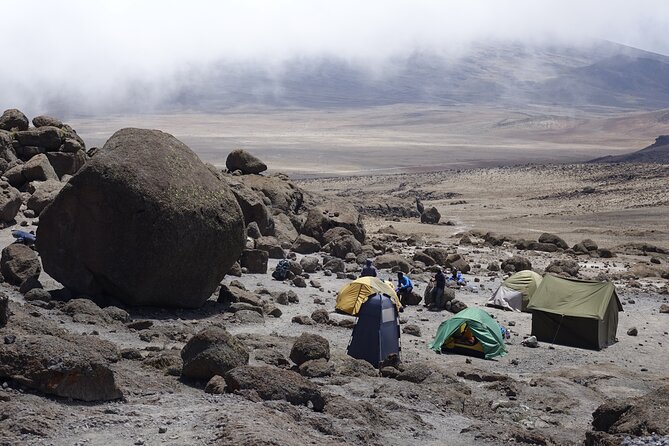
Day 6 is a relatively long day to Karanga Camp. It’s also a strategic choice, since significant time at altitude is described as essential for safe acclimatization. You arrive in camp late afternoon.
Then comes one of the best reasons to take this route: sunsets. The views here are described as spectacular, including southern glacial valleys and ice fields towering about 1000 m above you. Even if you don’t memorize the height numbers, you’ll likely remember the feeling of looking across big glacial country while you’re perched high on the crater rim approach.
This is also where you should be extra disciplined about your routine. Drink fluids. Eat what you can. Keep your layers ready for temperature swings. A lot of summit success is boring behavior done consistently.
Day 7 to Barafu Camp: short hike, big winds, and Mawenzi in your sights
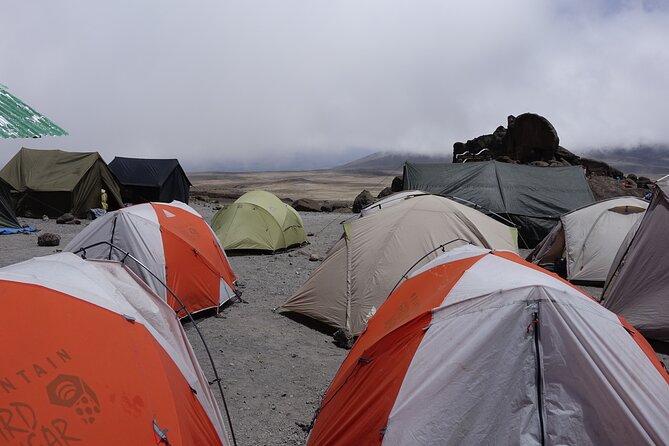
Day 7 is another half-day ascent to Barafu Camp. Lunch is taken in camp so you have time to relax before the summit night. This camp sits in a desolate alpine desert, and at times strong winds can rip over it.
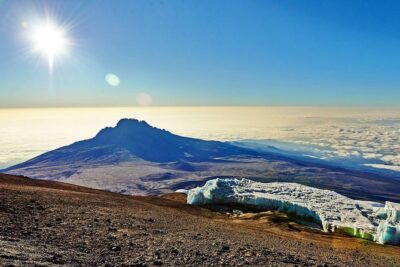
Even with that, the evening views of Mawenzi volcano are described as the norm. That means you may get a clear look at a major feature of Kilimanjaro while you’re still high, tired, and gearing up mentally for the next night.
Practical tip for this day: don’t save your comfort for later. If you can, manage your warmth, your headlamp setup, and your snacks before it gets too late. When you’re about to start climbing in the dark, small mistakes become annoying fast.
Day 8 summit night: Stella Point, Uhuru Peak, then down to Mweka Camp
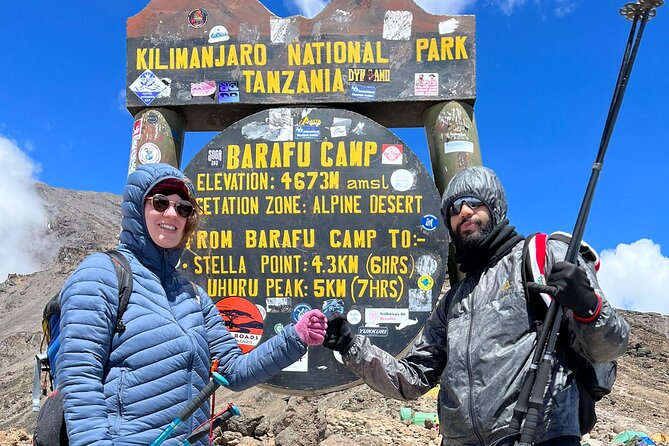
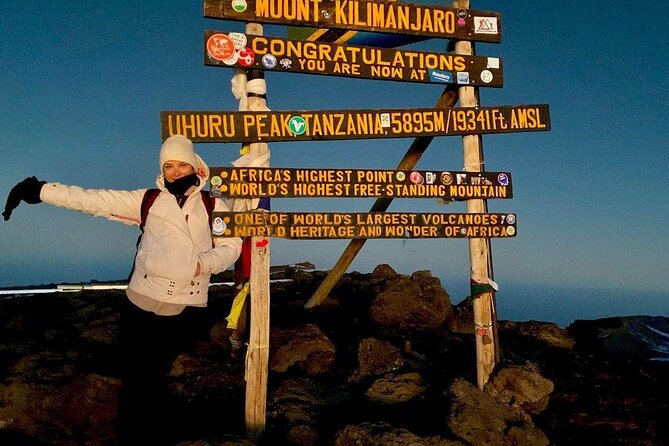
Day 8 is the iconic Kilimanjaro moment. You set off just after midnight in darkness and cold, climbing frozen volcanic dust by headlamp toward Stella Point on the crater rim. The climb to Stella is about six hours, and the sun should rise when you arrive there. Then you keep going for about one to two more hours to reach the highest point, Uhuru Peak.
Take the break you’re allowed. Photos, quick celebration, a few hugs. Then you get back to business, because the descent is steep and dusty.
After the summit, you stop for a short tea break at Barafu, then continue downhill about three hours to Mweka Camp (3080 m) for your overnight. Refuel by drinking lots of fluids and eat at supper time.
This day is also where your kit choices show up. Your feet matter, your layers matter, and your hydration plan matters. Also remember: altitude night climbing can feel harder than you expect because your body is already tired and everything is cold and slow.
Day 9 Mweka Gate to Moshi: forest descent, farewell ceremony, and a hot shower
You start Day 9 with a traditional farewell ceremony from the porters. It’s a nice closure to the relationship side of the climb, and it’s also a reminder that you’re not soloing this mountain. Then you descend about three hours through the forest, reaching Mweka Gate.
Your driver meets you and takes you back to Keys Hotel in Moshi for a hot shower, a cold drink, a debrief, and your certificate of achievement.
I love that the last day is not rushed into a full travel marathon. You get a comfortable finish line where you can actually clean up and reflect, instead of immediately hopping into another long bus ride. Also, this is where you finally feel how much your body worked. A hot shower after Mweka Gate can feel like luxury goods and pain medicine in one.
Support team, communication, and that human factor that matters
What turns a Kilimanjaro trek from a logistics problem into a life memory is your team. In the experiences I’ve seen, the standout theme is how people are cared for, not just guided.
One thing you can look for in this setup is consistent communication before you arrive. There is mention of daily, timely contact via WhatsApp in the weeks leading up to the trip, which helps you show up less confused and more prepared.
Once on the mountain, the support is described in warm, practical terms. People talk about guides and a summit push that feels motivating day after day. Names that come up include Siza, Mwinyi, David, and Gasper, and the tone is that the team treats you like part of their family, including humor and encouragement.
Also pay attention to food and pacing. Meals are handled as part of the trek rhythm, and that matters because eating is one of the hardest things to do when you are tired or nauseated. If your guides keep your meals consistent and your spirits up, you’re more likely to stay steady through the harder days.
Price and what you actually get for $3,450
At $3,450 per person for 9 days, you should judge value by what is included, not by what you hope is included.
This trip lists these inclusions:
- First aid kit and a pulse oximeter
- Oxygen cylinder for emergencies only
- 3 liters of bottled drinking water on the first day
- Meals: breakfast, lunch, and dinner across the trek
- Admission ticket(s) included each hiking day segment
- Camp logistics like tents set up and basic support such as hot tea and washing water at camp
Not included:
- Sleeping bags
- Health insurance
- Visa fees
- Laundry is available at the hotel for $1 per cloth
So the real value is this: you pay for guided, permitted trekking with safety tools and meal support across nine days, plus the mountain logistics that otherwise become a headache. If you were trying to DIY it, the hardest parts are permits, trained guides, organized camps, and reliable safety gear.
Your main “you still need to handle it” items are insurance, sleeping bag, and personal packing. That is normal for Kilimanjaro. The difference is whether those essentials are on your checklist before you fly. Get that right, and the price starts to look fair for a full, structured route.
Who this Lemosho climb suits best
This climb is listed for travelers with a moderate physical fitness level. That doesn’t mean it’s easy. It means you should be able to handle multi-day hiking with altitude, and you should be willing to walk at a steady pace rather than sprint sections.
It also helps if you like structured days, because you won’t be “figuring it out” on the fly. The route has clear camp nights, defined hiking segments, and guided options like the afternoon walk on Day 4 and possible Lava Tower scrambling on Day 5.
This is also a great fit if you want a strong support team. Private tour means it’s only your group, which tends to make the experience feel more personal. If you’re traveling with friends or as a couple and you want a more tailored pace and encouragement, this format fits well.
If you hate cold early mornings, you should still consider this carefully. The summit night starts just after midnight, and you’ll be outside in frigid conditions for a long time. You can prepare for that, but you can’t dodge it.
Should you book the 9 Days Kilimanjaro via Lemosho?
I’d recommend booking if you want:
- A route with time to acclimatize, not just a sprint upward
- A trail that moves through multiple ecosystems, rainforest to alpine desert
- A trip where your team plays a big role, including encouragement and consistent planning
- Included meals and safety essentials like a pulse oximeter and emergency oxygen
I would hesitate if:
- You’re not prepared to manage cold on summit night and invest in proper gear (especially a sleeping bag)
- You want a casual, low-effort experience. This is serious trekking, even when the hike days are “short”
Bottom line: Lemosho is a “do it right” route. If you respect the pacing and show up ready, it gives you the full Kilimanjaro experience with strong odds and real support.
FAQ
What city does this Kilimanjaro climb start from?
The experience is based in Moshi, Tanzania. You’re picked up from Kilimanjaro International Airport (JRO) and taken to Keys Hotel in Moshi.
What time does the experience start?
The listed start time is 8:00 am.
Is pickup included?
Pickup is offered.
How long is the trek?
It runs for 9 days (approx.).
What are some key inclusions for safety and comfort?
The tour includes a first aid kit and a pulse oximeter, plus an oxygen cylinder for emergencies only.
Are meals included?
Yes. Breakfast, lunch, and dinner are included as listed for the days of the hike.
What should I bring since it is not included?
Sleeping bags and health insurance are not included. Visa fees are also not included.
Is there a cancellation option with a full refund?
Yes, free cancellation is available. You can cancel up to 24 hours in advance for a full refund, and changes made less than 24 hours before the experience’s start time are not accepted.
Just posted around Moshi
- machame route★ 5.0 · 16 reviews
- Mt Kilimanjaro 6 days Marangu route hike★ 5.0 · 3 reviews
- Kilimanjaro Climbing Umbwe Route★ 5.0 · 3 reviews
- Wildlife Extravaganza: Manyara, Tarangire & Ngorongoro in 3 Days★ 5.0 · 3 reviews
- 3 Days Private E-Bike Tour in West Kilimanjaro★ 5.0 · 3 reviews
- West Kilimanjaro cycling Adventures★ 4.5 · 8 reviews
- Kilimanjaro Climb • Marangu Route ~ 9 Day★ 5.0 · 4 reviews
- Private Cycle to Kilimanjaro Bike Park Safari★ 5.0 · 6 reviews
Kilimanjaro Climbs, compared.
8-Day Small-group Lemosho Kilimanjaro Summit Trekking
Read our review →
5 Days Best of Tanzania Luxury Safari Northern Circuit
Read our review →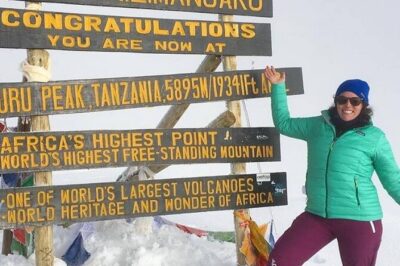
Climbing Kilimanjaro through 7 days Machame Route
Read our review →