
Reviewed · KILIMANJARO CLIMBS
8 Days Lemosho Route Kilimanjaro Trekking
Kilimanjaro starts in the rainforest, then changes gears fast. This 8-day Lemosho Route trek from Arusha, run by Mafie Adventures, takes you from quiet forest walking onto the Shira Plateau, then merges with Machame for wider southern-circuit viewpoints and low-crowd vibes. I love the route’s varied rhythm, because each day feels like a new section of the mountain, not a repeat of the last. I also love the built-in acclimatization flow, with special time at spots like Lent Hills and a deliberate Barranco day.
Your biggest consideration is the summit night and the harsh conditions near the top. You’ll start the climb at about 23:30, and when you reach Barafu Camp you deal with an exposed rocky ridge plus no accessible water at that point. If you dislike early wake-ups and cold, this trip will test your attitude, even if you are in good shape.
Planning feels solid because you are not juggling a bunch of logistics alone. Mafie Adventures, with Erastus organizing and guides like Oliver leading, focuses on getting you from Arusha to the trail and keeping camp running with porters and proper meal schedules. You also get camping equipment and park-related fees handled, which is a big value boost when you add everything up.
In This Review
- Key highlights to know before you go
- Arusha to Londorossi Gate: the day you set your pace
- Day 1 rainforest to Day 2 Shira Ridge: tall grasses, lichen, and Kibo’s first show
- Shira Plateau walking to Shira 2 and Moir Hut: a high-altitude plateau day
- Lava Tower and Arrow Glacier to Barranco Hut: why this day matters
- Great Barranco Wall to Karanga Valley: short day, big effort
- Barafu Camp at 4550m: the day before summit night
- Summit push to Uhuru Peak: Stella Point sunrise, then the long descent
- Mweka Gate finish: certificates, dancing, and a forest descent
- Price and what you really get for $2,700.52
- Crew quality: why Erastus and Oliver matter on a long trek
- Who this 8-day Lemosho trek fits best
- Should you book this 8 Days Lemosho Route?
- FAQ
- How long is the 8 Days Lemosho Route trekking experience?
- Where does the trek start and end?
- What time does the experience start?
- Is pickup from Arusha included?
- Is this a private trek?
- What is included in the price?
- What is not included?
- Does the schedule include a summit attempt?
- What certificates do you get at the end?
- Is the booking refundable or changeable?
Key highlights to know before you go
- Low-crowd start on Lemosho, before it combines with Machame for shared viewpoints
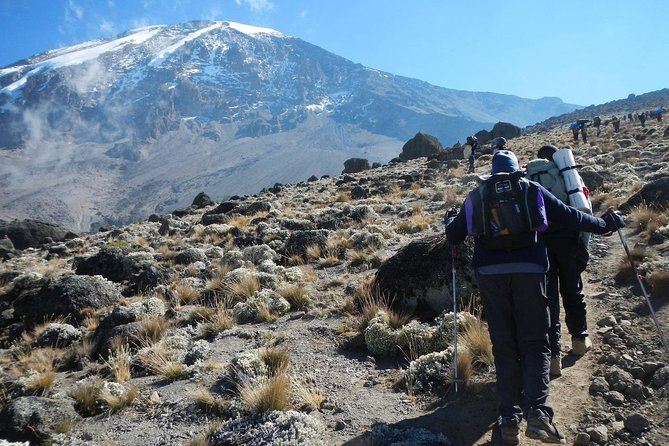
- Shira Plateau Kibo views, including a memorable look at the glaciered peak
- True acclimatization structure, with Lent Hills walking options and altitude-gain days that make sense
- Summit-night pacing, wake around 23:30, first major milestone at Stella Point, then Uhuru Peak
- A real finish ritual, with dancing and singing, tip presentation, and green or gold completion certificates
Arusha to Londorossi Gate: the day you set your pace
The trip begins in Arusha, with a 6:00 am start time. Your driver takes you for about two hours from Arusha (around 1400m) up to Londorossi Park Gate (around 2100m), which is a good warm-up for your body and for your gear organization.
After entry formalities near Londorossi, you drive another hour to the Lemosho trailhead. Then you have lunch and start hiking into undisturbed forest, which is exactly the kind of start I like on Kilimanjaro. It is not about speed on Day 1. It is about finding your stride while the air feels cooler under the canopy.
Day 1 is about 6 km with roughly 3 to 4 hours of hiking through rainforest. It is a gentle on-ramp, and it sets expectations for the rest of the route: you’ll change habitats, altitudes, and landscapes fast, so go slow early and save your legs.
More Hiking Trips in Arusha
- 8-Day Small-group Lemosho Kilimanjaro Summit Trekking
★ 5.0 · 186 reviews - Mountain Kilimanjaro Day Hike
★ 5.0 · 102 reviews - Private Full Day Hiking Experience to Marangu Route
★ 5.0 · 61 reviews
Day 1 rainforest to Day 2 Shira Ridge: tall grasses, lichen, and Kibo’s first show
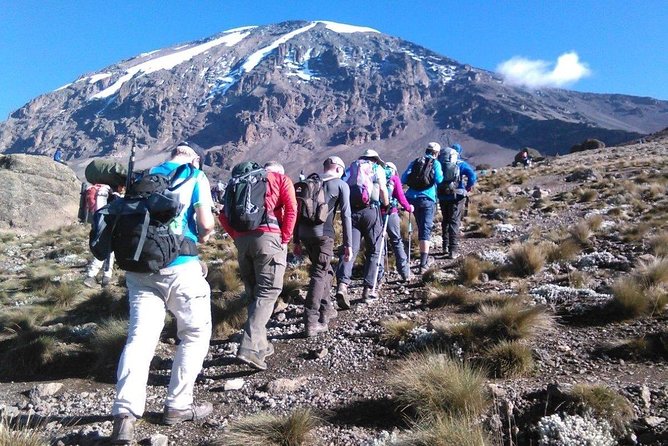
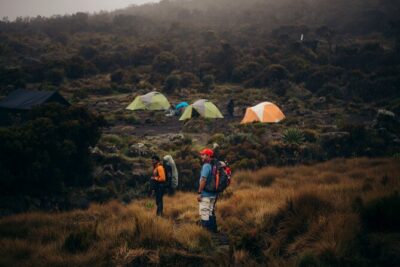
On Day 2, the trail leads you out of the forest and into a savannah of tall grasses, heather, and volcanic rock draped with lichen. This is one of those days where the world looks different every few steps.
You’ll hike about 8 km for roughly 5.5 hours, crossing streams and rolling hills as you ascend toward Shira Ridge. Then you drop gently down to Shira 1 Camp.
Here is the payoff: you get an amazing view of Kibo from across the plateau. That matters because it gives you a mental anchor for what you are climbing toward, not just numbers on a map.
Shira Plateau walking to Shira 2 and Moir Hut: a high-altitude plateau day
Day 3 is a long one by time, about 5 to 7 hours over roughly 15 km. You’ll do a gentle walk east toward Kibo’s glaciered peak, crossing the plateau toward Shira 2 Camp on moorland meadows near a stream.
From there you continue to Moir Hut, described as a little-used site on the base of Lent Hills. This is where acclimatization becomes practical, not theoretical. The area around Lent Hills offers a variety of walks, which is a smart way to help your body adjust while you stay busy but not reckless.
If you like the idea of grinding altitude while still feeling like you have options for your day, this stop hits the right note. Plus, the setting is tied to the higher ice-field zone beneath the northern part of the mountain, so you get that big Kilimanjaro atmosphere without rushing straight to the summit push.
Lava Tower and Arrow Glacier to Barranco Hut: why this day matters
Day 4 runs about 7 hours for roughly 7 km. You leave Moir Hut and head east up a ridge, passing a junction that points toward the peak of Kibo. Then your direction shifts south-east toward Lava Tower, often nicknamed the Shark’s Tooth.
After Lava Tower, you continue to a second junction and up to the Arrow Glacier at about 16,000 ft. Then you descend to Barranco Hut at about 13,000 ft, where you rest for the night.
Even though the hike ends with similar elevation to where you started, this day is still important. The route works your system in a way that helps you get ready for the harder steps ahead. You’re not just walking for distance, you’re training your body for the next couple of days of altitude changes.
More Kilimanjaro climbs:
- 5 Days Best of Tanzania Luxury Safari Northern Circuit
★ 5.0 · 174 reviews - 7-Day Machame Kilimanjaro Summit Tour from Arusha
★ 5.0 · 125 reviews - 4 days Best experience Kilimanjaro Hike, Serengeti &Ngorongoro
★ 5.0 · 54 reviews - From Arusha/Moshi: Kilimanjaro Hike Marangu Route Day Trip
★ 4.5 · 54 reviews
Great Barranco Wall to Karanga Valley: short day, big effort
Day 5 is shorter on paper, about 4 to 5 hours and roughly 5 km, but it is a day people remember. You tackle the Great Barranco Wall, described as Class 2, and most hikers find it easier than it first looks.
At the top, you get a view of Heim Glacier and you are above the clouds. That is a nice combination: effort plus a reward you can feel immediately.
After the Wall, the trail winds up and down in the Karanga Valley. You sleep at Karanga Camp (about 3950m) and you get dinner and washing at the site. If you want a day that feels like a training montage for summit legs, this is it. It is not a rest day, but it is also not the longest slog.
Barafu Camp at 4550m: the day before summit night
Day 6 is about 3 to 4 hours over roughly 4 km. After breakfast, you start your ascent and intersect with the Mweka Route, the trail used for descent on the final days. Then, after about an hour, you reach Barafu Hut.
This is a key practical moment. Barafu Camp has no accessible water, so it is the last water stop for the porters. That means you need to be sensible about hydration and drink planning before you settle into the exposed conditions.
Barafu itself is on a rocky, exposed ridge around 4550m. The tents are described as exposed to wind and rocks, so you want to get familiar with where you will set up before it gets dark. You’ll have an early dinner so you can rest for the next day’s early start.
This is one of those days where calm beats confidence. The route is pushing you toward the summit, but your job is to conserve energy and do the prep tasks well.
Summit push to Uhuru Peak: Stella Point sunrise, then the long descent
Summit day is the hardest day, plain and simple, and it starts on schedule at about 23:30. You get tea and biscuits, then begin the climb.
The route heads northwest and you ascend over stone scree. Many hikers find this segment the most mentally and physically challenging part. It makes sense. It is steady effort over a terrain that does not let you forget how high you are getting.
After about 6 hours, you reach Stella Point (5685m) on the crater rim. Then comes one of the best moments on the entire mountain: sunrise from there. After that, you continue ascending for around 2 more hours on a snow-covered trail to Uhuru Peak (5895m).
From Uhuru, it is not a celebration-and-quit situation. You descend for 7 to 8 hours to Mweka, covering about 23 km of downhill. The number is big for a reason. Your legs work in a different way on the descent, and it can feel surprisingly punishing after you already earned the top.
If you are the type who likes clear milestones, this day gives them. Stella Point is your first major check, Uhuru Peak is your target, and then you earn your way to the long walk back down.
Mweka Gate finish: certificates, dancing, and a forest descent
Day 8 is about a recovery day with structure. After breakfast, your staff celebrates with dancing and singing on the mountain. You then present tips to the guide, assistant guides, chef(s), and porters, which is a real part of the culture of these climbs.
Then you head down for about 3 hours to Mweka Gate. The National Park requires everyone to sign for completion certificates. The certificate color is based on your highest point: green certificates for reaching Stella Point (5685m), and gold certificates for reaching Uhuru Peak (5895m).
After the gate formalities, you continue descending into the Mweka village for about 1 hour. The habitat is described as forest, so the last stretch has that shift back toward lower altitude breathing and green surroundings.
Price and what you really get for $2,700.52
At $2,700.52 per person for an approximately 8-day trek, the value depends on whether you hate piecing a trip together. This package is built to reduce that headache.
Included items cover the big costs people forget:
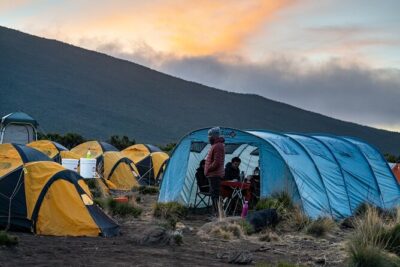
- Camping equipment, including a mess tent, mattress, and cooking equipment
- Accommodation during the trek
- Porterage
- A professional driver/guide
- Park-related costs like parking and rescue fees, plus all taxes/VAT
- Meals: 7 breakfasts, 8 lunches, and 7 dinners
What is not included matters for your final budget:
- Climbing gear (available for rent)
- Sleeping bag (available for rent)
- Bath towels
- Tips
- International flights and any accommodation before or after the trek
- Personal items, plus any potential government-imposed tax or park fee increases
To me, the best value signal here is not the camp gear alone. It is the combination of meals, porter support, and included park and rescue fees. That means less scrambling for essentials once you are already on the mountain.
Crew quality: why Erastus and Oliver matter on a long trek
On Kilimanjaro, you are not only paying for route and altitude. You are paying for people who keep the trip running when you are tired.
The organizer Erastus is highlighted for quick communication and for handling adjustments when needed. The expedition main guide Oliver is described as friendly and central to the experience, and John is also mentioned as part of the team.
You should still go in with realistic expectations. A summit climb runs on teamwork. If you communicate calmly, follow the schedule, and listen to your guide on pacing and rest, the crew becomes the difference between a stressful trip and a focused one.
Who this 8-day Lemosho trek fits best
This version of the Lemosho route fits best if you want:
- Varied habitats across rainforest, moorland, alpine desert, and forest finish
- Kibo views from the Shira Plateau
- A climb structure that includes acclimatization time and a shorter preparation pattern before summit push
- A route that is described as low-crowd until it combines with Machame
It may be less suitable if you know you dislike:
- Very early summit-night wake-ups around 23:30
- Wind-exposed camping on a rocky ridge like Barafu
- A long downhill after Uhuru, with 23 km descent to Mweka
Should you book this 8 Days Lemosho Route?
I’d book this if your goal is a route with real altitude variety, strong acclimatization logic, and a finish that feels meaningful, not rushed. The included structure is also a plus if you want to spend less time negotiating logistics and more time focusing on walking, resting, and adjusting to height.
I would think twice if you are on the fence about summit-night conditions, or if you are not comfortable with the “workday rhythm” of Kilimanjaro, from Barafu prep to the Stella Point sunrise push.
If you do book it, plan your budget for the items that are not included, especially a sleeping bag and climbing gear (rent is available), plus tips. Then show up ready to follow the pacing plan. On Kilimanjaro, that is the difference between surviving the mountain and actually getting something out of it.
FAQ
How long is the 8 Days Lemosho Route trekking experience?
It runs for about 8 days (approximately).
Where does the trek start and end?
It starts in Arusha, Tanzania, and ends back at the meeting point.
What time does the experience start?
The start time is 6:00 am.
Is pickup from Arusha included?
Pickup is offered.
Is this a private trek?
Yes. It is a private tour/activity, with only your group participating.
What is included in the price?
Included items cover camping equipment (mess tent, mattress, and cooking equipment), parking fees, rescue fees, all taxes/VAT, all accommodation during the trek, a professional driver/guide, porterage, and meals (7 dinners, 7 breakfasts, 8 lunches).
What is not included?
Not included: climbing gear (available for rent), sleeping bag (available for rent), bath towels, tips, personal items, international flights, accommodation before and at the end of the tour, and any government-imposed increase of taxes or park fees.
Does the schedule include a summit attempt?
Yes. You wake around 23:30 for the summit attempt, aiming for Stella Point and Uhuru Peak, then you descend to Mweka.
What certificates do you get at the end?
You receive certificates based on your highest point. Green certificates are for reaching Stella Point (5685m), and gold certificates are for reaching Uhuru Peak (5895m).
Is the booking refundable or changeable?
No. The experience is non-refundable and cannot be changed for any reason.
More Hiking & Trekking in Arusha
- 4 Days Mount Meru Trekking
★ 5.0 · 55 reviews - 6 Days Serengeti Safari(hiking waterfalls &coffee tour)
★ 5.0 · 48 reviews - Arusha: Napuru Waterfalls Guided Hike
★ 4.8 · 39 reviews - Mount Kilimanjaro Day Hike Through Marangu Route to Mandara Hut
★ 5.0 · 37 reviews
Just posted around Arusha
- 8 Days Serengeti Migration safari★ 5.0 · 11 reviews
- tarangire & ngorongoro 2 days tour★ 5.0 · 14 reviews
- serengeti, ngorongoro & tarangire 4 days private tour★ 5.0 · 18 reviews
- tarangire, ngorongoro & lake manyara park 3 days private tour★ 5.0 · 11 reviews
- Mt. Kilimanjaro: Shira plateau to Cathedral point 3872m Day hike★ 5.0 · 7 reviews
- serengeti & ngorongoro 3 days private tour★ 5.0 · 15 reviews
- climb the KILIMANJARO via Lemosho route★ 5.0 · 4 reviews
- Kilimanjaro Waterfalls Hike & Moshi Hot Springs Day Trip Tour★ 5.0 · 4 reviews
Kilimanjaro Climbs, compared.
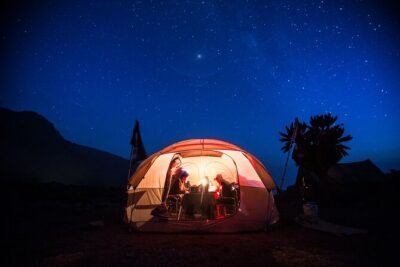
8-Day Small-group Lemosho Kilimanjaro Summit Trekking
Read our review →
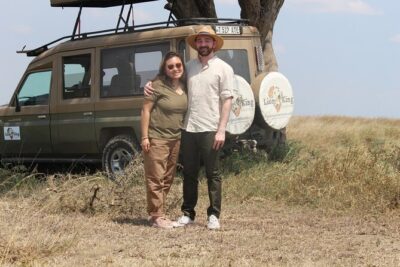
5 Days Best of Tanzania Luxury Safari Northern Circuit
Read our review →
Climbing Kilimanjaro through 7 days Machame Route
Read our review →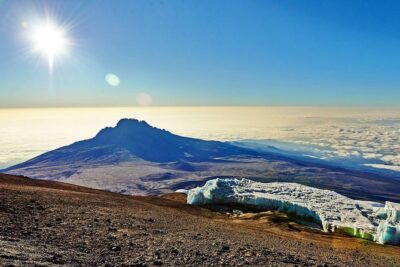
Browse the lists this tour appears in