Reviewed · KILIMANJARO CLIMBS
8 days Lemosho route Climbing Mt. Kilimanjaro
Eight days, one mountain, big changes. The Lemosho route is paced for acclimatization and ends with a proper summit sunrise, organized end to end by Kilisa Tours and Safaris.
I especially liked two things. First, the human side, with guides such as Goodluck and Abraham and a very responsive owner named Naick during planning. Second, the built-in mountain support, including hot meals, treated water, hot water for washing, and safety gear like an emergency first-aid kit plus oxygen tanks and an ox meter.
One thing to consider: this is still a serious climb, with a 23:30 wake-up for summit night. Also, at Barafu Camp there is no accessible water, so you will feel that lack on a long, exposed ridge.
In This Review
- Key highlights (what makes this climb tick)
- Moshi to Londorossi Gate: the smooth start at altitude
- Rain forest to Shira Ridge: Shira 1 and the Kibo moment
- Shira Plateau, Lent Hills, and moir hut: acclimatization with purpose
- Lava Tower and Arrow Glacier to Barranco Hut: a smart drop day
- Great Barranco Wall to Karanga Camp: confidence-building climbing
- Barafu ridge to summit night: the long wait begins early
- Uhuru Peak at sunrise: Stella Point then the final push
- Mweka Gate celebration: certificates in green and gold
- Price and logistics: what $3,100 really buys you
- What you’re really paying for: the team system
- Who should choose this 8-day Lemosho route
- Should you book Kilisa Tours and Safaris for Kilimanjaro?
- FAQ
- How long is the Kilimanjaro Lemosho climb?
- Where does the trek start and end?
- What time does the tour start?
- What’s included with the mountain trek?
- What is not included?
- How many travelers are on the group?
- Can I cancel and get a full refund?
Key highlights (what makes this climb tick)
- A true Lemosho arc, starting in rain forest and steadily working up through moorland to alpine desert
- Kibo views from Shira Ridge, plus glacier scenery around the Lava Tower and Arrow Glacier area
- Acclimatization logic built into the route, including a day that drops in elevation for better adjustment
- Summit milestones that matter, Stella Point at 5,685m before the final push to Uhuru Peak at 5,895m
- Safety and comfort add-ons included, oxygen tanks, ox meter, treated water, and hot water for washing
- A small group cap, with a maximum of 15 travelers, which helps keep things organized on the trek
Moshi to Londorossi Gate: the smooth start at altitude
You begin in Moshi, with the schedule anchored around an 8:30 am start time. Kilisa also handles private transport between Kilimanjaro International Airport and your Moshi stay, plus transport to and from the park gate.
Day 1 starts above many people’s comfort zone, with the drive to Londorossi Park Gate (2,100m). After entry formalities, you continue to the Lemosho trailhead, then begin hiking through undisturbed rain forest.
That first day matters more than it looks. A forest start gives you time to settle in, find your rhythm, and get used to the “walking uphill forever” feeling without immediately going brutal.
More Kilimanjaro climbs:
- Kilimanjaro climb by Lemosho Route (7-day)
★ 5.0 · 651 reviews - Kilimanjaro climb, Machame Route (7-day)
★ 5.0 · 262 reviews - Kilimanjaro Climbing Lemosho Route 8 Days.
★ 5.0 · 186 reviews
Rain forest to Shira Ridge: Shira 1 and the Kibo moment
Day 2 takes you out of the forest and into tall-grass savannah, heather, and volcanic rock dotted with lichens. You keep ascending, cross streams, and reach Shira Ridge, then descend gently to Shira 1 Camp.
The big payoff here is the view angle. Seeing Kibo from across the plateau gives the climb a target you can aim for, even when you feel tired that day.
At a hike time of around 5.5 hours and a distance listed at about 8 km, this is a day that challenges you, but still leaves your body time to adjust. It’s also a good day to practice pacing, because Kilimanjaro rewards patience far more than speed.
Shira Plateau, Lent Hills, and moir hut: acclimatization with purpose
Day 3 is about more altitude gain without sounding dramatic. You hike east toward Kibo’s northern ice fields, moving across the plateau to Shira 2 Camp on moorland meadows by a stream.
From there, you continue to Moir Hut, described as a less-used site near the base of the Lent Hills. The route notes that you’ll have options for acclimatization walks there, which is exactly the kind of “stay active, don’t overdo it” strategy that helps most hikers.
This day is also emotionally satisfying. Shira is one of the highest plateaus on earth, so even when your legs are working, the setting makes you feel like you’ve truly entered another world.
Lava Tower and Arrow Glacier to Barranco Hut: a smart drop day
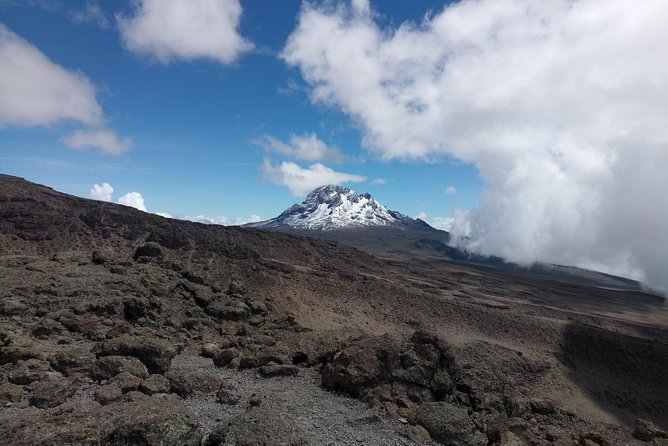
Day 4 is a shift from “walk and climb” into “climb, check points, then reset.” You head east up a ridge, pass toward Kibo’s junctions, and then continue southeast toward the Lava Tower, also called the “Shark’s Tooth.”
After the Lava Tower, you reach the Arrow Glacier area at about 16,000 ft. Then comes the acclimatization trick: you continue down to Barranco Hut at about 13,000 ft.
That’s important. You end the day around the same elevation you started, but your body gets the benefit of a higher exposure day followed by a drop. For most hikers, that pattern improves how you handle the later altitude steps.
A few more Moshi trips to compare
- Safari Serengeti And Ngorongoro
★ 5.0 · 288 reviews - Climbing Kilimanjaro – Machame Route
★ 5.0 · 170 reviews - Climbing Kilimanjaro through 7 days Machame Route
★ 5.0 · 151 reviews - Kilimanjaro climb, Lemosho Route (8-day)
★ 5.0 · 148 reviews
Great Barranco Wall to Karanga Camp: confidence-building climbing
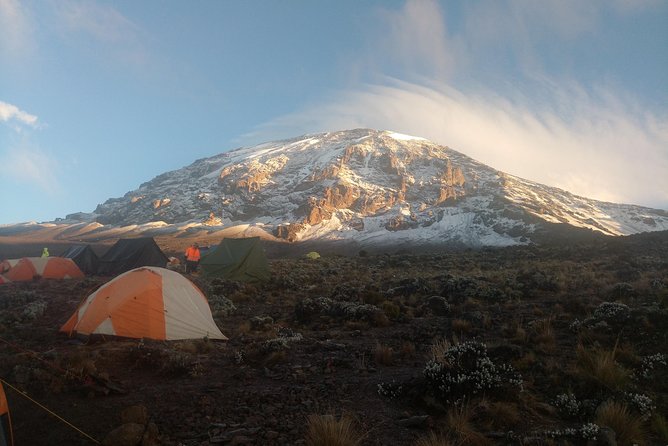
Day 5 is shorter on paper, about 4 to 5 hours and around 5 km, but it includes the kind of feature that feels like a rite of passage: the Great Barranco Wall.
The route describes it as a Class 2 hike, and many hikers find it easier than they expect when they arrive and settle into the moves. Once you get to the top, you’re rewarded with views including Heim Glacier, and you often end up above the clouds.
From the wall, the trail winds in the Karanga Valley to Karanga Camp (3,950m). I like this day because it’s not just “another camp change.” It’s a skills day, even if you’re not doing technical climbing.
Barafu ridge to summit night: the long wait begins early
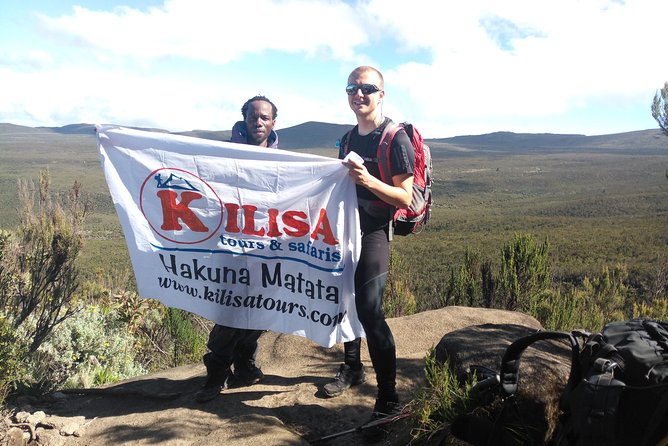
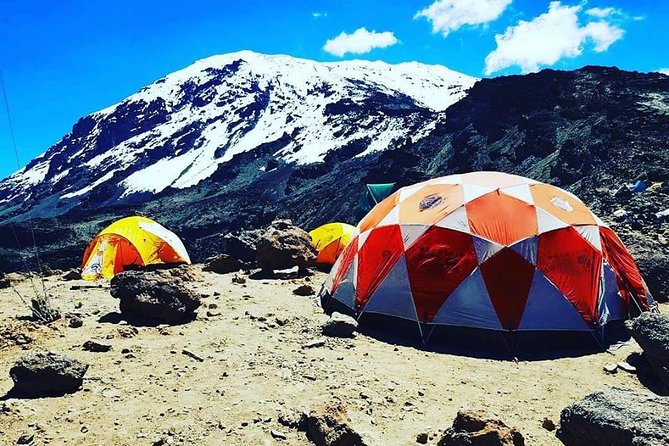
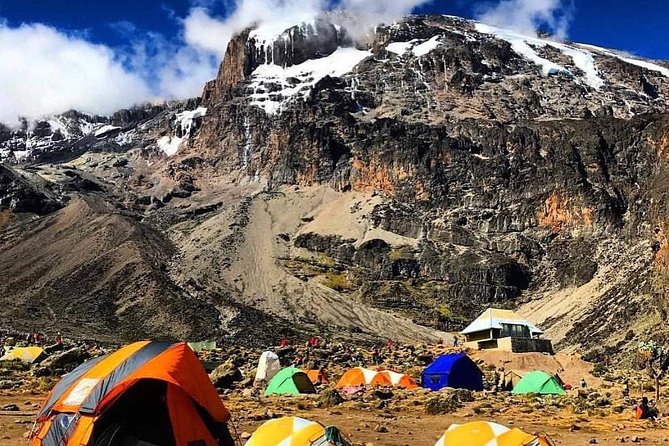
Day 6 is the final approach into summit territory. After breakfast, you climb and reach Barafu Hut after about an hour of hiking. The route notes this is the last water stop for porters because there is no accessible water at Barafu Camp (4,550m).
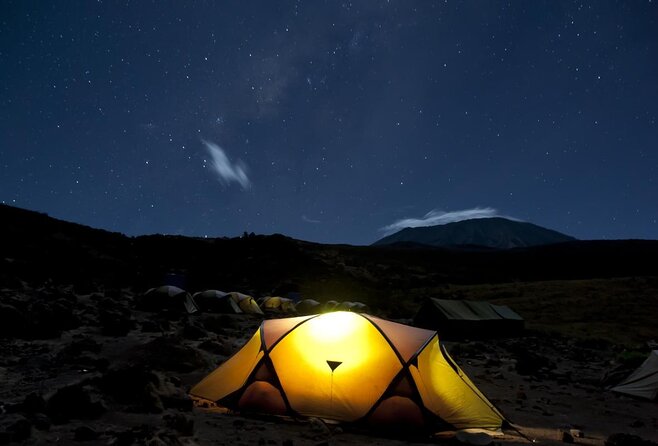
That detail matters. When water access changes, you feel it in your planning, your hydration habits, and your pace. The camp itself is exposed to wind and rocks, so you want your night routine to be ready before darkness.
Dinner comes early, and then the key instruction is simple: get to sleep by 19:00. That’s because summit night starts later, with you being woken around 23:30.
If you tend to struggle with late-night wake-ups, I’d treat this day like the main part of the challenge, not just the climb before it.
Uhuru Peak at sunrise: Stella Point then the final push
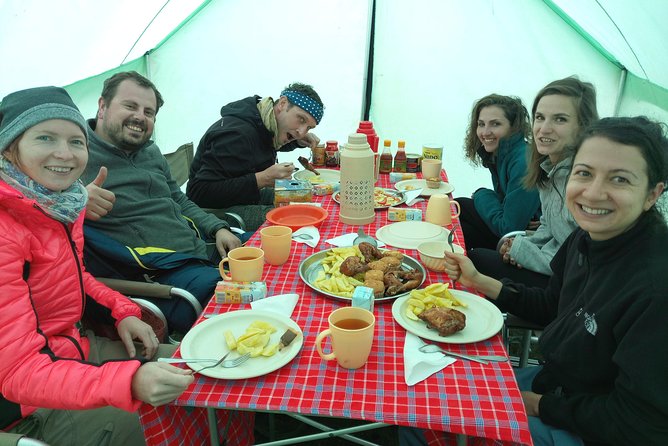
Day 7 is the day you came for. You wake around 23:30 for tea and biscuits, then start the summit attempt.
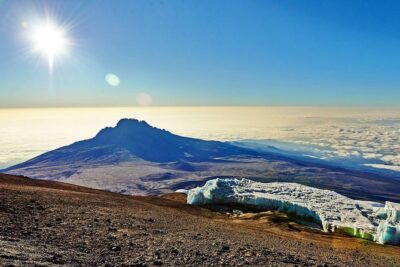
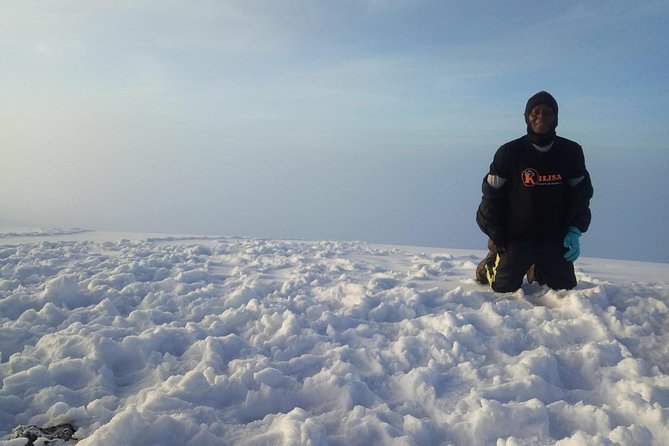
The route ascends over stone scree toward Stella Point (5,685m), on the crater rim, about six hours into the climb. After that sunrise moment, you keep going on a snow-covered trail for about two more hours to Uhuru Peak (5,895m).
The distance looks small compared to many hikes, but the time cost is huge because the altitude does the heavy work. Expect this to be the hardest mentally and physically.
After summit, you descend to Mweka, with the schedule allowing 7 to 8 hours down. You’re tired, cold, and sometimes oddly emotional, because your brain finally stops fighting the same battle it fought for days.
Mweka Gate celebration: certificates in green and gold
Day 8 starts with breakfast and a celebration with dancing and singing. This is the moment where you hand over tips your staff, including guides and porters, have been relying on to make the operation feel personal.
Then you descend about three hours back to Mweka Gate. The national park requires you to sign your name to receive completion certificates.
Here’s the fun reward system: hikers who reached Stella Point (5,685m) receive green certificates, while hikers who reached Uhuru Peak (5,895m) get gold certificates.
After certificates, the schedule continues into Mweka village for about an hour, followed by hot lunch and the drive back to Moshi. That return is not just logistics, it’s the chance to clean up, dry out, and sleep like a human again.
Price and logistics: what $3,100 really buys you
The price is $3,100 per person for the 8-day Lemosho route, and it’s not just “guides and permits.” The included list covers a lot of the cost centers that usually surprise people.
You get 2 nights accommodation in Moshi, private transport to and from the Kilimanjaro gate, and park and camping fees. On top of that, Kilisa includes Team Kilimanjaro Rescue fees, which is a safety-related cost you’ll appreciate if anything goes sideways.
You also get the comfort items that matter in cold weather: 4-season mountain tents, sleeping mats, hot water for washing, and enough treated and filtered drinking water. Meals are handled as three hot meals daily while on the mountain.
Safety gear is also included, including portable oxygen tanks and an ox meter, plus an emergency first-aid kit. Not every operator clearly includes oxygen-related equipment, so it’s worth reading that line carefully.
What’s not included is typical but still important: travel insurance and flights are not included, and tips for guides, porters, and cook are not included. If you skip travel insurance to save money, you’re betting on a lot. This climb punishes bad luck.
Lastly, the group size cap of 15 travelers helps keep the support feeling coordinated rather than chaotic.
What you’re really paying for: the team system
The reviews attached to this company are consistent on one theme, you don’t feel like a number. Names show up, including guides Goodluck and Abraham, and planning support is tied to the owner, Naick.
That matters because Kilimanjaro runs on systems: timing, rationing energy, hydration, and morale on days when you’d rather be horizontal. The day-by-day pacing here also reflects a team that understands acclimatization, not just a schedule that looks nice.
The included support staff, guides, cook, and porters, are part of why you can focus on breathing, stepping, and staying warm. When that works, the whole climb feels smoother.
Who should choose this 8-day Lemosho route
This trek is a strong fit if you:
- Have strong physical fitness, since the schedule includes summit night and long climbs at altitude
- Want the Lemosho experience with rain forest, plateau walking, and big glacier scenery
- Prefer an operator with organized logistics such as airport and gate transfers and set meals
If you’re very sensitive to sleep disruption, or you know you struggle with early late-night wake-ups, be ready for the summit routine. This route asks you to get sleep in earlier and then switch gears quickly.
Also, because it’s an 8-day timeline, you should take acclimatization seriously and follow your guide’s pacing. Going faster than the plan is usually not heroic, it’s just expensive in energy.
Should you book Kilisa Tours and Safaris for Kilimanjaro?
If you want an organized climb with safety gear included, Kilisa is an easy “yes, consider it.” The value is strong for what you receive on the mountain: tents, mats, treated water, hot meals, hot water for washing, plus oxygen equipment and rescue fees.
I’d book it if you feel comfortable with a route that includes a hard summit night start and exposed camp conditions. I would hesitate only if you’re not confident about the fitness demand or if you know sleep disruption will sabotage you.
FAQ
How long is the Kilimanjaro Lemosho climb?
The tour duration is listed as 8 days (approx.).
Where does the trek start and end?
It starts in Moshi, Tanzania and ends back at the same meeting point.
What time does the tour start?
The start time is listed as 8:30 am.
What’s included with the mountain trek?
Included items cover guides, cook, and porters, camping fees, park entry fees, 3 hot meals daily on the mountain, sleeping mats, 4-season mountain tents, treated filtered drinking water, and hot water for washing. Safety items include an emergency first-aid kit, portable oxygen tanks, and an ox meter.
What is not included?
Travel insurance, flights, and tips for guides, porters, and cook are not included.
How many travelers are on the group?
The maximum group size is listed as 15 travelers.
Can I cancel and get a full refund?
You can cancel up to 24 hours in advance for a full refund. Changes inside that window are not accepted, and if the experience is canceled due to poor weather you will be offered a different date or a full refund.
Just posted around Moshi
- machame route★ 5.0 · 16 reviews
- Mt Kilimanjaro 6 days Marangu route hike★ 5.0 · 3 reviews
- Kilimanjaro Climbing Umbwe Route★ 5.0 · 3 reviews
- Wildlife Extravaganza: Manyara, Tarangire & Ngorongoro in 3 Days★ 5.0 · 3 reviews
- 3 Days Private E-Bike Tour in West Kilimanjaro★ 5.0 · 3 reviews
- West Kilimanjaro cycling Adventures★ 4.5 · 8 reviews
- Kilimanjaro Climb • Marangu Route ~ 9 Day★ 5.0 · 4 reviews
- Private Cycle to Kilimanjaro Bike Park Safari★ 5.0 · 6 reviews
Kilimanjaro Climbs, compared.
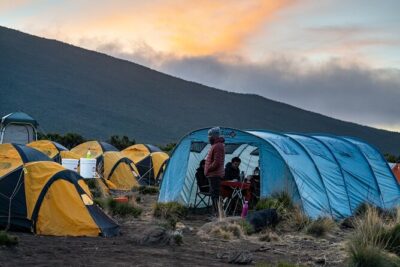
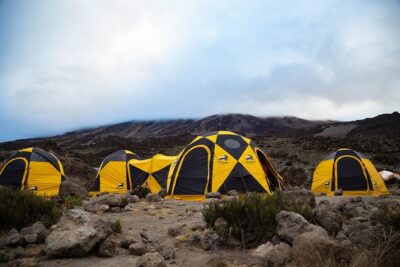
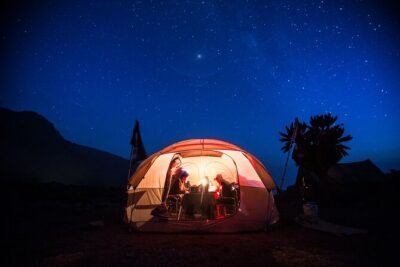
8-Day Small-group Lemosho Kilimanjaro Summit Trekking
Read our review →
5 Days Best of Tanzania Luxury Safari Northern Circuit
Read our review →
Climbing Kilimanjaro through 7 days Machame Route
Read our review →