Reviewed · KILIMANJARO CLIMBS
8 Days Kilimanjaro Climbing Lemosho Route
The first night starts in the cool green forest. This 8-day Lemosho Route climbs through changing Kilimanjaro zones, keeps crowds lower early on, and gives you a bit more time to acclimatize before the summit push. I especially like how the plan balances forward progress with altitude sense, not just brute effort.
What really makes this trek click is the structure of the itinerary and the way the crew supports you along the way. You also get practical touches like a pre-trek orientation in Moshi and gear checks before you’re out on the mountain. One thing to keep in mind: on rainy, muddy days, the vehicles may not reach the true trailhead, so you could walk a little extra even on day one.
In This Review
- Key highlights worth noting
- Why the 8-Day Lemosho Route is such a smart choice
- Price and what you actually get for about $2,300
- Moshi setup: airport pickup and orientation that actually helps
- Day 1, Londorossi Gate to Forest Camp: warm up in the mossy world
- Day 2, Shira Plateau reaches 11,500 feet: views and the first real acclimatization work
- Day 3, Heath zone to Moir Camp, with Scott Fisher memorial lunch
- Day 4, Lava Camp altitude play and Barranco Valley landing
- Day 5, the Great Barranco Wall to Karanga Camp
- Day 6, Barafu Camp safety training and the midnight wake-up
- Day 7, Uhuru Peak summit try at sunrise, then down to Mweka
- Day 8, final descent: goodbye to the mountain and back to Moshi
- Weather, crowds, and the real meaning of the Lemosho pacing
- Tents, water, and food: the small things that keep you moving
- Who this trek suits best (and who should think twice)
- Should you book this 8-Day Lemosho climb?
- FAQ
- How many days is the Kilimanjaro Lemosho trek?
- Where does the hike start, and do you pick me up from the airport?
- What route is used for the ascent and what route is used for the descent?
- Are park fees and mountain staff included in the price?
- Are meals included while on the mountain?
- What safety equipment is included or demonstrated?
- Is drinking water provided?
- Do you include an oximeter?
- When do you start the summit ascent?
- Can I cancel for a full refund?
Key highlights worth noting
- Lemosho’s scenery first, crowds later, with lower traffic until the route meets up near Lava Tower
- Extra acclimatization time thanks to the 8-day pacing (useful when altitude is the boss)
- Summit night starts around 11:00 PM to midnight, aiming for sunrise at Uhuru Peak
- Safety training included, including a demo on the Gamow hyperbolic bag and oxygen
- Purified drinking water, all mountain meals, and an oximeter included for day-to-day comfort and monitoring
- Private tour for your group, with guides and porters, plus airport transfers and hotel orientation
Why the 8-Day Lemosho Route is such a smart choice
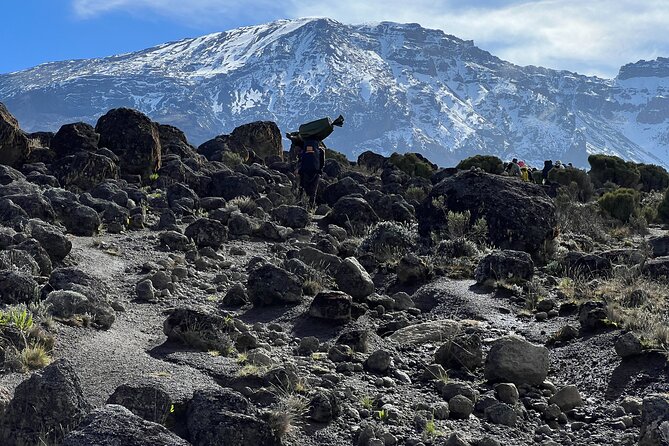
The Lemosho Route is often described as the most scenic way up, and the route design backs that up. You cross the Shira Plateau from west to east with a relatively pleasant start, then gradually build toward higher terrain. That west-to-east feel matters because it changes what you see each day, not just how high you go.
I like routes that give you both view time and breathing room, and this one does. You get a long runway of trekking days before the big summit push, so your body has time to adjust. And because crowds tend to stay low until the route joins the Machame route near Lava Tower, you can often hike with more space earlier on.
More Kilimanjaro climbs:
- Kilimanjaro climb by Lemosho Route (7-day)
★ 5.0 · 651 reviews - Kilimanjaro climb, Machame Route (7-day)
★ 5.0 · 262 reviews - Kilimanjaro Climbing Lemosho Route 8 Days.
★ 5.0 · 186 reviews
Price and what you actually get for about $2,300
At $2,300 per person, this trek is not a budget deal. But it also is not priced like a bare-bones hike where you buy everything yourself. Your included package covers core costs that add up quickly on Kilimanjaro: park fees, guides and porters, cook salaries, rescue fees, and most mountain logistics.
The value improves because you’re not just paying for a guide. You’re paying for a whole mountain team plus the basics you need to function at high altitude: quality waterproof four-season private mountain tents, purified drinking water, and all meals while on the mountain. There’s also an oximeter included, and that is a real comfort when you are trying to make good decisions at altitude.
What’s not included is also clear. Tips, alcohol, and soft drinks are your responsibility. If you like to splurge on drinks or you tip heavily, budget extra.
Moshi setup: airport pickup and orientation that actually helps
The trip starts with airport pickup, then a drive to Moshi for orientation. That matters because you can get your bearings fast before the mountain grind begins. You’ll meet your guides, talk through trek details, and they’ll check your trekking gear, which is where small problems can be prevented early.
Also note the practical side: you’ll have a mobile ticket, and confirmation happens at booking. That reduces the last-minute chaos that can derail a trip.
Day 1, Londorossi Gate to Forest Camp: warm up in the mossy world
Day one begins at the Londorossi gate on Kilimanjaro’s western side. You drive a few hours from Arusha to get to the trailhead area, then start hiking on the Lemosho path. In rainy or muddy conditions, vehicles sometimes can’t reach the true trailhead, so plan for the possibility of some extra walking before you settle in.
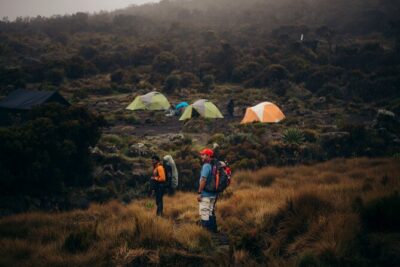
After a picnic lunch, you hike about 3 to 4 hours into the forest to reach Forest Camp. This is the part of the trek that feels like a slow exhale. You can expect thick mountain vegetation, exotic moss and flowers, and bird calls. You may spot Black and White Colobus monkeys, and you might see signs of elephants that move through the area.
Overnight altitude is around 9,498 feet. That’s a manageable first step, and it helps you avoid jumping too fast into thin air.
A few more Moshi trips to compare
- Safari Serengeti And Ngorongoro
★ 5.0 · 288 reviews - Climbing Kilimanjaro – Machame Route
★ 5.0 · 170 reviews - Climbing Kilimanjaro through 7 days Machame Route
★ 5.0 · 151 reviews - Kilimanjaro climb, Lemosho Route (8-day)
★ 5.0 · 148 reviews
Day 2, Shira Plateau reaches 11,500 feet: views and the first real acclimatization work
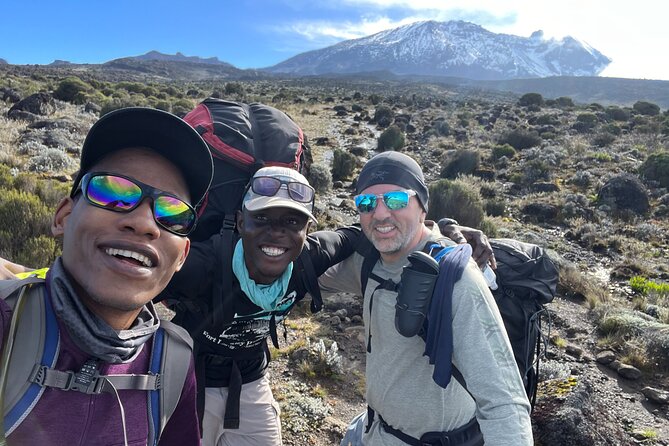
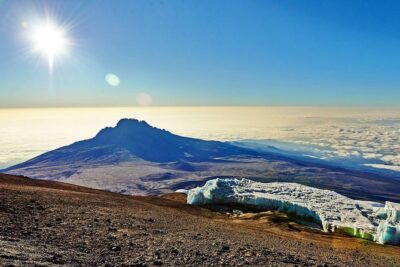
On day two, you leave montane forest and enter the Hagenia zone, and then the views start opening. You’ll get some of your first strong looks toward Kibo peak, which is a big psychological boost when you’re still fresh.
This day is also where the trek starts doing its altitude job. You’ll go up and down several ridges, reaching your highest point of the day at about 11,500 feet, then descend to camp at Shira 1 Camp. Expect a long day by hiking time, roughly 6 to 9 hours.
The practical advantage here is that your body gets repeated exposure to altitude without the brutal jump straight up. You’re practicing pacing and breathing, not just moving forward.
Day 3, Heath zone to Moir Camp, with Scott Fisher memorial lunch
Day three continues across the Heath zone of the Shira Plateau. This is where the route starts to feel more serious because the terrain shifts and the air can feel thinner as the day goes on.
You’ll begin climbing the western slope of the Kibo massif, and you’ll stop for a picnic lunch at Scott Fisher memorial camp, named after the famous Everest climber. That stop is more than a photo moment, it’s a mental marker that you are moving from forested trekking into high-altitude Kilimanjaro territory.
From there, you continue into the upper heath zone to Moir Camp. Overnight altitude is around 13,650 feet, and you might also get late-afternoon acclimatization hikes depending on weather. Hiking time is typically 5 to 6 hours.
Day 4, Lava Camp altitude play and Barranco Valley landing
By day four, you leave the heath zone for the alpine zone. You’ll hike past Lava Camp up to around 14,300 feet, then go down a bit into Barranco Valley for camp.
This day is shorter than summit day but still meaningful: roughly 4 to 6 hours. The volcanic scenery around Lava Camp adds variety, and then the Barranco Valley shift gives your legs a different kind of terrain.
Overnight altitude is about 13,044 feet. I like this kind of swing because it supports acclimatization while keeping the daily grind in a reasonable range.
Day 5, the Great Barranco Wall to Karanga Camp
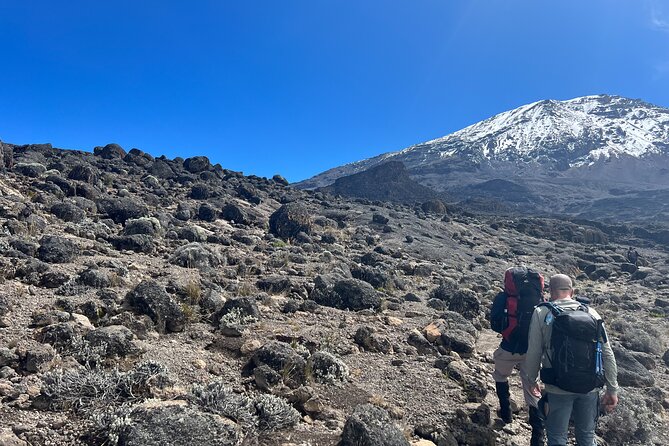
Day five is where the trek tests your confidence on steeper sections. You’ll ascend the Great Barranco Wall, with views that include Kilimanjaro’s ice fields. Even if you’re not thinking about summit day yet, this is a solid reminder that the mountain is not done with you.
After that, you’ll hike across small valleys up and down until reaching Karanga Camp. Hiking time is roughly 3 to 5 hours.
Overnight altitude is around 13,106 feet. This day also acts like a checkpoint, because by now you know how your body reacts to each altitude jump and each day’s pace.
Day 6, Barafu Camp safety training and the midnight wake-up
Day six climbs to Barafu Camp, with more ups and downs across small valleys along the way. Hiking time is usually 3 to 5 hours, and overnight altitude is about 15,100 feet.
Here’s what I consider one of the more valuable parts of the whole trip: after you settle in, you get a demonstration on safety equipment and protocols. You’ll receive instruction on how to use the Gamow (hyperbolic) bag and learn about oxygen. Then you eat early and rest, because your wake-up call sets up the summit ascent.
You start your summit hike around 11:00 PM or midnight. That timing is not random. It’s designed so you reach the highest point around sunrise, when conditions can be more favorable for visibility.
Day 7, Uhuru Peak summit try at sunrise, then down to Mweka
Summit day is the day you’ll remember for the rest of your life. It is also the day that makes everything else feel worth it. Your ascent begins around 11:00 PM or midnight and aims for sunrise at the summit.
You’ll hike with headlamps and should plan for cold, dark conditions. The trek info specifically calls out bringing extra lithium batteries, because they last better in cold weather.
The climb is long and variable. Many hikers take 12 to 17 hours total on this day, depending on pace and altitude. You go first to Stella Point for about 6 to 7 hours, then another 1 to 2 hours to reach Uhuru Peak.
The summit altitude is 19,341 feet (5,896 meters). After the summit celebration and photos, you descend back down to Barafu Camp for lunch, then continue to Mweka Camp to sleep. Overnight altitude drops to about 10,448 feet, which is a huge relief for your breathing and energy.
From the positive feedback I saw, the biggest satisfaction factor is how the team keeps you supported through this grind, especially when your pace changes and the altitude makes effort feel uneven. If you want a summit attempt that feels organized and cared for, this is where that shows.
Day 8, final descent: goodbye to the mountain and back to Moshi
Day eight is the payoff, because you finally see the trail turn back toward town life. You hike about 3 to 5 hours down to the trailhead, stop for lunch, then say goodbye to the mountain crew.
After that, you head back to Moshi. You typically arrive between 3 and 5 PM, which is a big help if you’re trying to plan dinner, a shower, and proper sleep the same day.
Weather, crowds, and the real meaning of the Lemosho pacing
The Lemosho route choice is not just about aesthetics. It’s about timing and flow. Early on, crowds are low until the route meets the Machame route near Lava Tower. That can translate into a calmer hiking rhythm and more chances to take in views without constant traffic.
Still, you’re on Kilimanjaro, so weather is real. The itinerary already accounts for terrain changes and possible vehicle access issues in rainy or muddy conditions. That’s why having a day plan with gradual acclimatization is so important.
And that 8-day format helps. The route gives you an additional acclimatization day compared with shorter versions, which can matter if you get altitude-sensitive. You’re not just chasing speed, you’re building a body strategy.
Tents, water, and food: the small things that keep you moving
This trek includes private mountain sleeping tents that are waterproof and four-season rated. That matters because high-altitude conditions can shift quickly, and wet gear can turn a long day into a miserable night.
You also get clean, purified drinking water. That removes a big decision from your day-to-day routine. Instead of managing water sources, you can focus on pacing and staying hydrated.
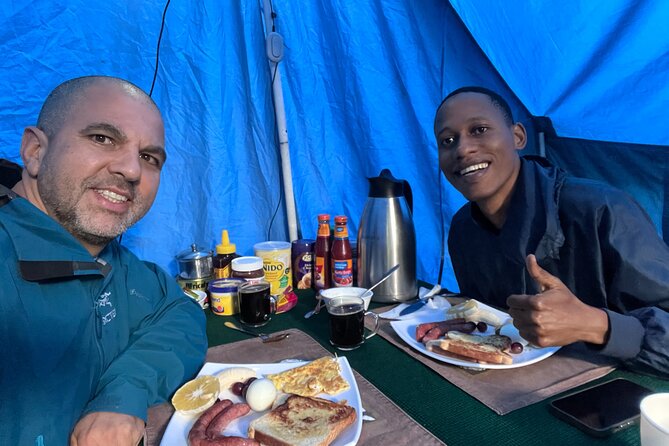
Meals are included while on the mountain: breakfast (8), lunch (8), and dinner (7). Good food is not a luxury on Kilimanjaro. It is fuel and morale, especially once summit day turns into a long night hike.
Who this trek suits best (and who should think twice)
This private 8-day Lemosho experience fits most people who want a balanced Kilimanjaro challenge with a real acclimatization plan. If you’re aiming for the Uhuru Peak sunrise and you like having a structured, guided approach, this is a strong match.
It also suits people who care about team support. The feedback I saw repeatedly praised guide support and professional planning, and even mentioned successful summit outcomes as a shared team effort.
The main caution is the obvious one: the summit day is long, and you start in the middle of the night. If you know you struggle with extreme early hours or you hate long, variable hiking days, you should be honest with yourself before booking.
Should you book this 8-Day Lemosho climb?
I’d book this trek if you want a route that mixes scenic variety with a smart acclimatization timeline, and you prefer a trip where safety and planning are taken seriously. The included items add real value too, especially the oximeter, purified water, all mountain meals, and safety gear training.
I’d think twice if you’re trying to keep costs as low as possible, because tips and personal expenses are not included, and that summit day effort is not a casual hike. Also factor in the possibility of extra walking if weather affects vehicle access on day one.
If your goal is a well-run Kilimanjaro week with a strong chance at sunrise summiting, the 8-day Lemosho route has the right ingredients.
FAQ
How many days is the Kilimanjaro Lemosho trek?
It is an 8-day trek on Mount Kilimanjaro.
Where does the hike start, and do you pick me up from the airport?
You’re picked up from the airport and taken to Moshi for an orientation. The trek starts at the Londorossi gate on the western side of Kilimanjaro.
What route is used for the ascent and what route is used for the descent?
The climb uses the Lemosho Route, and the descent uses the Mweka Route.
Are park fees and mountain staff included in the price?
Yes. The package includes all park fees, guides and porters, cook salaries, and rescue fees.
Are meals included while on the mountain?
Yes. All meals while on the mountain are included, including breakfast, lunch, and dinner.
What safety equipment is included or demonstrated?
You’ll receive a demonstration on using safety equipment such as the Gamow (hyperbolic) bag and oxygen.
Is drinking water provided?
Yes. Clean, purified drinking water is included.
Do you include an oximeter?
Yes. An oximeter is included.
When do you start the summit ascent?
You start the summit ascent around 11:00 PM or midnight.
Can I cancel for a full refund?
Yes. You can cancel up to 24 hours in advance for a full refund. If you cancel less than 24 hours before the start time, the amount paid is not refunded.
Just posted around Moshi
- machame route★ 5.0 · 16 reviews
- Kilimanjaro Climbing Umbwe Route★ 5.0 · 3 reviews
- Wildlife Extravaganza: Manyara, Tarangire & Ngorongoro in 3 Days★ 5.0 · 3 reviews
- Mt Kilimanjaro 6 days Marangu route hike★ 5.0 · 3 reviews
- 3 Days Private E-Bike Tour in West Kilimanjaro★ 5.0 · 3 reviews
- West Kilimanjaro cycling Adventures★ 4.5 · 8 reviews
- Kilimanjaro Climb • Marangu Route ~ 9 Day★ 5.0 · 4 reviews
- Private Cycle to Kilimanjaro Bike Park Safari★ 5.0 · 6 reviews
Kilimanjaro Climbs, compared.
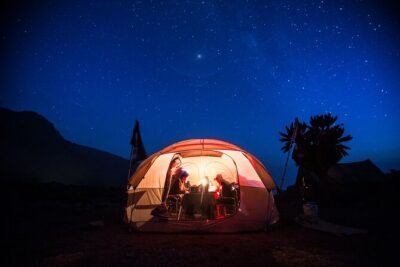
8-Day Small-group Lemosho Kilimanjaro Summit Trekking
Read our review →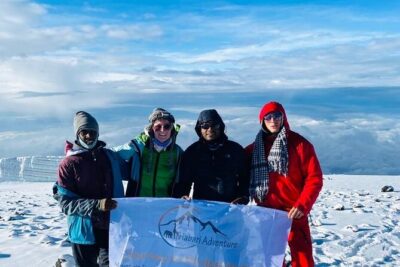
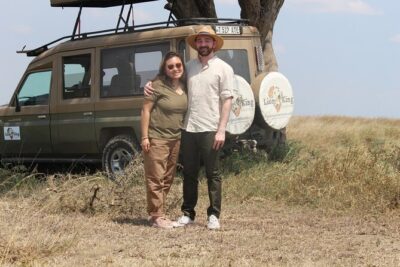
5 Days Best of Tanzania Luxury Safari Northern Circuit
Read our review →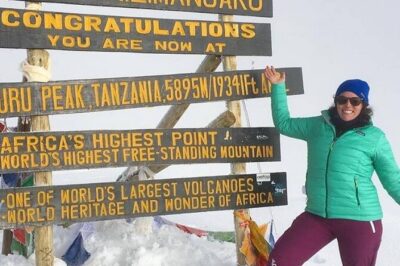
Climbing Kilimanjaro through 7 days Machame Route
Read our review →